
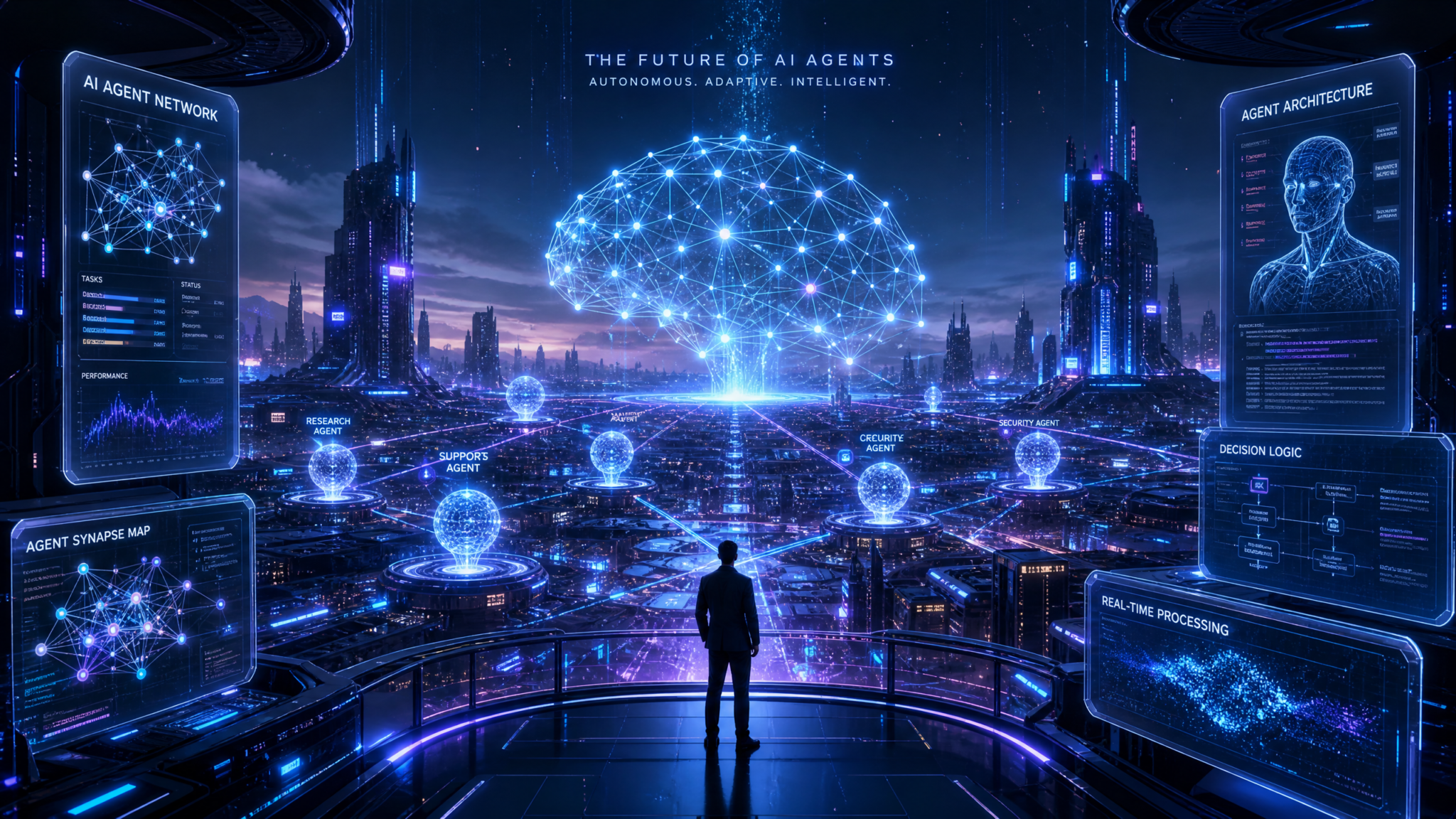
Artificial Intelligence (AI) has perpetually been at the forefront of technological innovation, rapidly evolving each year. As of August 2026, AI agents — systems designed to autonomously perform tasks, learn, and adapt — have reached unprecedented levels of sophistication. This article delves deep into the latest trends and breakthroughs driving the future of AI agents, their applications, challenges, and what businesses and developers should anticipate in the coming years.
1. Emerging Trends in AI Agent Development
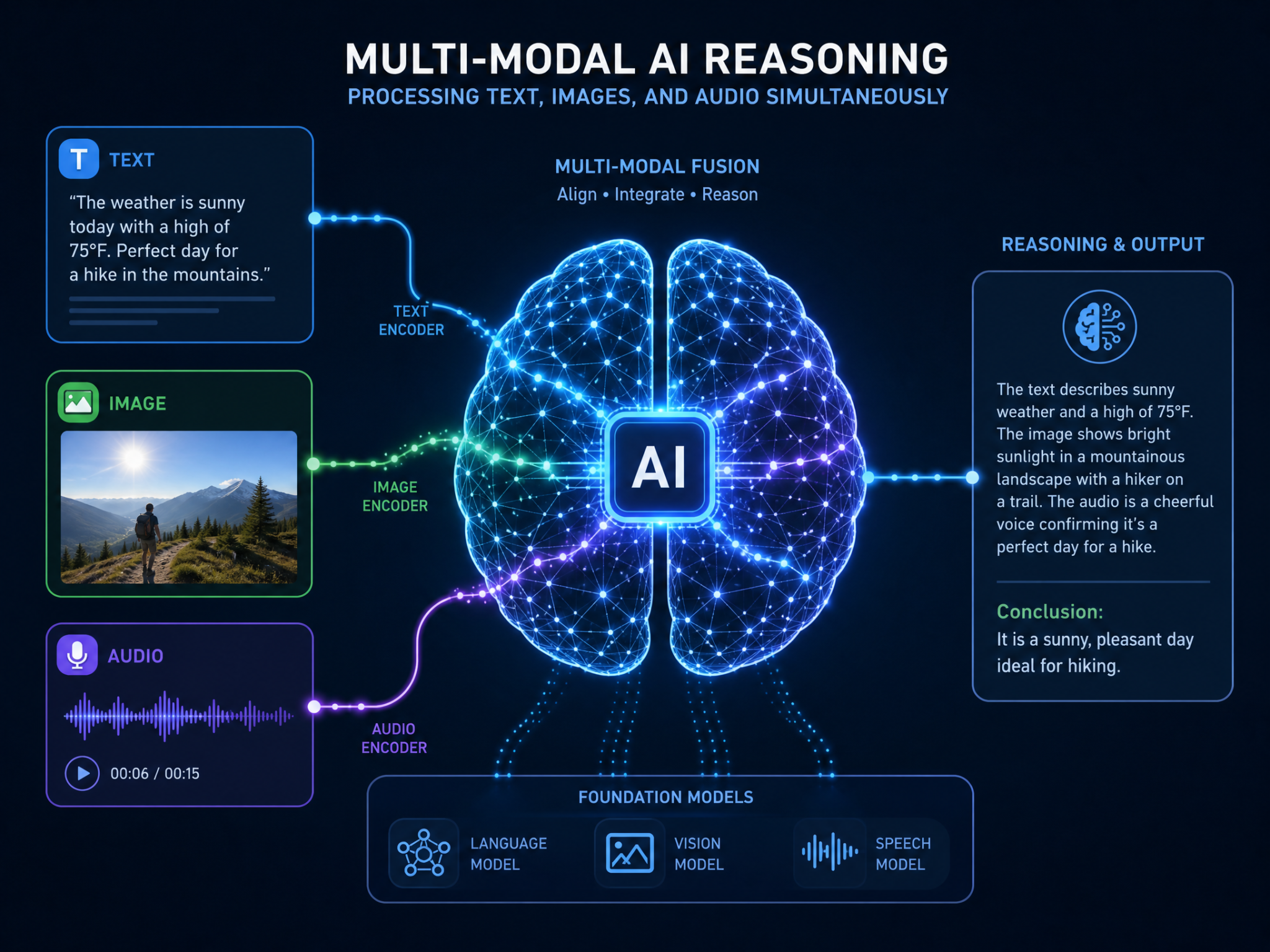
The landscape of AI agents in 2026 is shaped by several key trends that reflect advances in underlying algorithms, computational power, and the growing demand for intelligent automation.
1.1 Multi-Modal Reasoning and Perception
Modern AI agents are no longer restricted to analyzing text or numerical data alone. They now seamlessly integrate multi-modal data — including images, videos, audio, and sensor inputs — to perform complex reasoning tasks. This capability enables agents to understand and respond to environments richer than ever before.
- Example: An AI agent in a smart home can interpret voice commands, analyze visual inputs from cameras, and monitor environmental sensors concurrently to optimize energy usage and enhance security.
- Advancements: Specialized architectures like Transformer variants adapted for multi-modal inputs have accelerated this trend.
1.2 Autonomous Continual Learning
One of the greatest challenges for AI agents has been the ability to learn continually in dynamic environments without forgetting prior knowledge (known as catastrophic forgetting). In 2026, breakthroughs in continual learning algorithms allow AI agents to adapt rapidly to new data streams while retaining previously acquired competencies.
- Techniques: Meta-learning, memory-augmented networks, and few-shot learning are at the core of these advancements.
- Impact: Autonomous vehicles, personalized virtual assistants, and industrial robots benefit greatly by adapting in real-time to evolving scenarios.
1.3 Explainability and Ethical AI
Transparency has become an imperative in AI agent design. Organizations and regulators are demanding models that can articulate their decision-making processes ethically and understandably. Explainable AI (XAI) methods now accompany most agent architectures, facilitating trust and legal compliance.
- Agents can generate human-readable justifications for their actions.
- Ethical AI frameworks prevent bias, prioritize fairness, and ensure accountability.
2. Breakthrough Technologies Enabling Next-Gen AI Agents

Several technological breakthroughs have accelerated the capabilities and deployment of AI agents in real-world applications.
2.1 Neuromorphic Computing and Edge AI
Neuromorphic chips, which mimic biological neural networks, offer unparalleled computing efficiency and low latency, especially in edge devices. By the middle of 2020s, these processors have become mainstream for powering AI agents embedded in IoT devices.
| Technology | Benefit | Application |
|---|---|---|
| Neuromorphic Computing | Low power consumption, real-time processing | Smart sensors, autonomous drones |
| Edge AI | Reduced latency, enhanced privacy | Wearables, onsite industrial monitoring |
2.2 Large Language Models (LLMs) and Agent Frameworks
Building on the success of transformer-based LLMs, AI agents leverage these models as foundational building blocks. Frameworks now integrate LLMs with planning, memory, and execution modules to create autonomous agents capable of multi-step reasoning across various domains.
- Examples: Autonomous customer service agents that handle complex queries, creative content generation assistants, and research aids capable of hypothesis generation.
- Developer Tools: Open-source agent frameworks and APIs have democratized access to sophisticated agent design.
2.3 Quantum Computing Integration
Although quantum computing is still emergent, hybrid quantum-classical AI agents are beginning to harness quantum algorithms for optimization and probabilistic reasoning tasks that classical computers handle inefficiently. These integrations, though nascent, offer a glimpse into future AI capabilities.
3. Applications Revolutionized by AI Agents
AI agents in 2026 are no longer confined to laboratory experiments or constrained niches. Their practical applications span numerous industries, transforming workflows, improving efficiencies, and generating new business models.
3.1 Healthcare and Life Sciences
- Personalized Medicine: AI agents analyze genetic, lifestyle, and environmental data to formulate individualized treatment plans.
- Medical Imaging: Multi-modal AI agents detect anomalies in scans more accurately than human specialists, enabling early diagnosis of diseases such as cancer and neurological disorders.
- Virtual Health Assistants: 24/7 AI agents provide continuous monitoring and proactive health recommendations for chronic disease management.
3.2 Finance and Risk Management
- Fraud Detection: AI agents continuously scrutinize transactions using multi-modal inputs and behavioral analytics.
- Algorithmic Trading: Autonomous agents execute trades based on complex predictive analytics and adaptive strategies.
- Regulatory Compliance: AI systems enforce compliance by analyzing regulations in real-time and auditing enterprise operations.
3.3 Industrial Automation and Robotics
- Smart Factories: AI agents coordinate robots, human workers, and supply chains to optimize production with minimal downtime.
- Predictive Maintenance: Agents predict equipment failures before they occur by analyzing sensor data streams.
- Autonomous Vehicles: Sophisticated agents enable navigation, obstacle detection, and decision-making in complex environments.
3.4 Education and Knowledge Management
- Intelligent Tutors: AI agents customize learning paths, provide instant feedback, and adapt to student progress.
- Content Creation: Generative AI aids educators in preparing teaching materials and evaluating student output.
- Knowledge Workers: AI agents assist professionals by summarizing content, extracting insights, and automating routine research.
4. Challenges and Ethical Considerations for the Future of AI Agents
Despite remarkable progress, deploying AI agents at scale entails significant challenges, ranging from technical hurdles to societal concerns.
4.1 Data Privacy and Security
AI agents often require access to sensitive personal or enterprise data. Ensuring secure data handling, mitigating risks of data breaches, and complying with strict privacy regulations like GDPR and CCPA remain critical priorities.
4.2 Bias, Fairness, and Representation
AI agents trained on biased datasets can perpetuate harmful stereotypes or unfair practices, especially in high-stakes domains like criminal justice or hiring. Continued investment in auditing, de-biasing methods, and diverse data representation is essential.
4.3 Explainability vs. Performance Tradeoffs
Highly complex AI agents often achieve superior performance but at the cost of transparency. Balancing interpretability with effectiveness remains an active research focus, driving innovations in explainability techniques.
4.4 Regulation and Governance
The rapid proliferation of autonomous AI agents necessitates comprehensive policy frameworks to govern their behavior, liability, and ethical use. International collaboration and adaptable regulatory mechanisms will play a pivotal role moving forward.
4.5 Technical Limitations and Robustness
Despite advances, AI agents can still face failures due to adversarial inputs, environmental unpredictability, or incomplete knowledge. Building robust, fault-tolerant systems requires continuous refinement of algorithms and rigorous testing.
Useful Links
- NVIDIA Neuromorphic Computing Overview
- OpenAI Research Publications
- Privacy International – AI and Data Privacy
- ACM Digital Library: Explainable AI Research
- WIPO Magazine – AI and Intellectual Property
- Forbes: How AI Agents Are Transforming Businesses
- Arxiv: Continual Learning for Autonomous Agents
- ISO Standards for AI Ethics and Frameworks
