
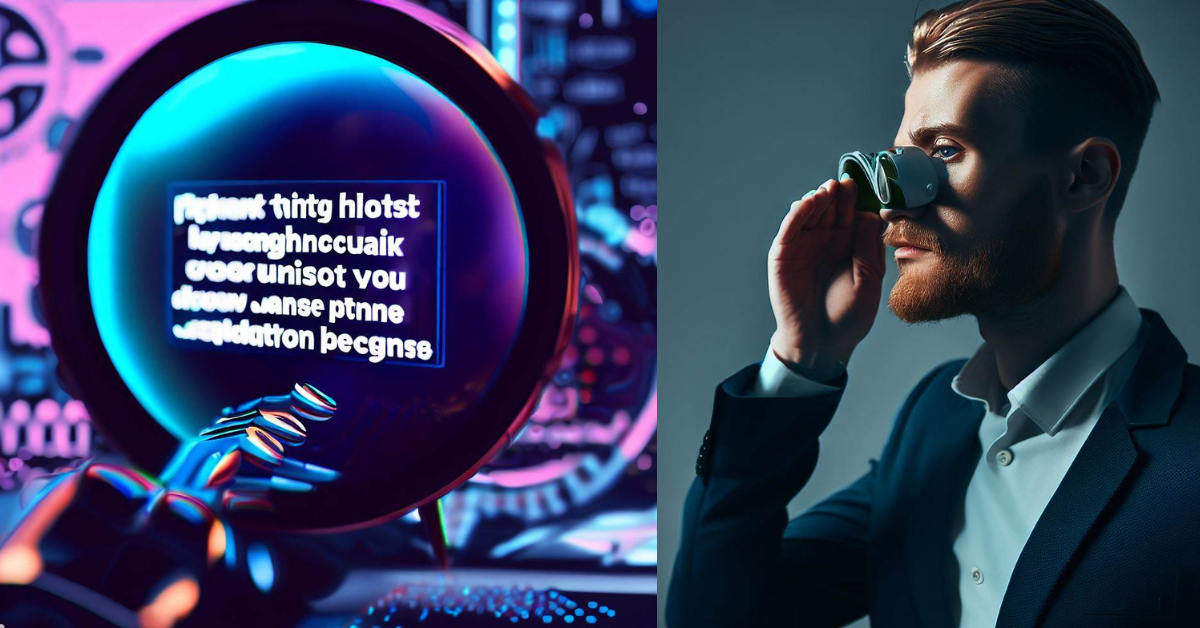
Technology is continuously transforming the way we communicate with one another. A Stanford University computer science student, Bryan Chiang, has developed an AI-powered monocle called RizzGPT that transforms conversations into text and provides responses through the AI model ChatGPT. Technology could be a game-changer for people struggling with social anxiety or communication difficulties.
✓ Instant access✓ No spam✓ Unsubscribe anytime
Capturing Conversations Through an AI Monocle
RizzGPT captures ongoing conversations through an AI-powered monocle equipped with a camera and microphone. The monocle sends the conversation to the ChatGPT language model through Wi-Fi. ChatGPT, in turn, generates real-time responses, which appear on a small internal projector screen. During a demonstration, Chiang showcased the monocle, revealing that it listens to ongoing conversations and tells people exactly what to say next, providing “charisma on demand.”
The Limitations of the Prototype
While the prototype proves fascinating, it has limitations in naturalness and charisma. The delay and response generated by the monocle lack the empathy that comes with human communication. However, innovators remain resolute in their belief that with further development, the monocle can drastically enhance communication and lead to a significant improvement in human-computer interaction.
Empowering Conversations While Boosting Emotional Intelligence
The RizzGPT prototype is the tip of the iceberg of the potential held by the combination of 5G connectivity, AI intelligence, and augmented reality technology. Chiang hopes that the monocle can be an empowering communication aid, not as a replacement for human communication but as support. RizzGPT could boost emotional intelligence by subtly reminding the wearer of their strengths, and weaknesses and offer encouragement, making it a helpful aid for people with social anxiety or difficulties speaking to others.
A New Era of Human-Computer Interaction
Chiang’s project illustrates how innovative hardware, intelligent algorithms, and seamless connectivity could revolutionize human-computer interaction. As the prototype is re-engineered to improve naturalness and charisma in responses, it could become even more compelling. The RizzGPT monocle could become a vital component of everyday conversations in the near future.
Access 40,000+ AI Prompts for ChatGPT, Claude & Codex — Free!
Subscribe to get instant access to our complete Notion Prompt Library — the largest curated collection of prompts for ChatGPT, Claude, OpenAI Codex, and other leading AI models. Optimized for real-world workflows across coding, research, content creation, and business.
Conclusion:
Bryan Chiang’s RizzGPT prototype has the potential to revolutionize the way we communicate with one another. It combines 5G connectivity, AI intelligence, and augmented reality to enhance conversations and provide support to those who find communication difficult. As the prototype is further developed, it could help empower conversations and promote emotional intelligence. Chiang’s project highlights the exciting potential that innovative hardware, intelligent algorithms, and seamless connectivity bring to human-computer interaction.
🚀 Ready to Supercharge Your ChatGPT Skills?
Join 25,000+ professionals and get FREE access to our complete library of 40,000+ ChatGPT prompts across 41+ categories.
