
In 2026, ChatGPT’s free tier gives you access to GPT-5.5 Instant, web browsing, basic image generation, file uploads, and limited voice mode—all without a credit card. The free plan is genuinely useful for casual users, but hits hard limits on message volume, advanced reasoning, and tool access.

Quick answer (direct): what “chatgpt free 2026” actually gives you
The free tier in 2026 is a fully functional consumer entry point: you can run GPT-5.5 Instant sessions in the ChatGPT app and web, use integrated web browsing for live information, generate images at basic quality and variety, upload files for short analyses, and engage voice chat in limited sessions. It is intentionally capped for message throughput, context size, and tool/plugin access so casual users get a powerful experience while advanced or commercial uses require a paid plan.
What You Get for Free in 2026 (complete feature list)
This section lists every meaningful capability available on the free plan in 2026, with immediate examples and actionable tips for using each feature efficiently. These are the concrete tools you can expect right away without paying.
- GPT-5.5 Instant model access
Free accounts default to GPT-5.5 Instant. It delivers faster responses than earlier models and handles most everyday tasks—summaries, brainstorming, code snippets, emails, translations, and conversational queries. Actionable tip: for iterative edits, prompt “Edit only” with explicit constraints to reduce tokens used and avoid hitting message caps.
- Web browsing (live search)
Built-in browsing lets the assistant retrieve current facts and cite sources. Use it to verify current events, product availability, or technical documentation. Actionable prompt: “Browse and return top three authoritative sources with one-sentence summaries and URLs.” This produces concise, verifiable results while using fewer tokens.
- Basic image generation
Free tier includes limited daily image generations at lower priority and smaller canvas sizes (examples: up to 1024×1024, limited style options). You can create concept images, social media visuals, and simple diagrams. Actionable tip: include specific style, camera angle, and color constraints to reduce trial-and-error iterations.
- File uploads and light document analysis
Upload PDFs, DOCX, CSV, and image attachments for targeted Q&A and short summarization (e.g., 10–15 pages in a single request). Use for quick contract reads, summarizing meeting notes, or extracting bullets. Actionable workflow: upload as “meeting.pdf” and ask “Extract three action items per participant and create an agenda for follow-up.” That yields high-value outputs within the free limits.
- Limited voice mode
Voice-to-text and text-to-voice are available for short sessions: voice queries up to ~90 seconds and voice responses up to ~90–120 seconds. Use for quick dictation, hands-free searches, or short readbacks. Actionable tip: for longer spoken interactions, chunk content into 60–90 second segments and use the assistant to produce session timestamps.
- Conversation memory (basic)
Basic memory retains user preferences like display name, preferred language, and default tone across sessions for a limited duration. It does not store long-term project context. Actionable tip: store persistent project notes externally (Google Docs or a private note app) and paste a one-paragraph context at the start of a session to keep replies focused without consuming memory tokens.
- Multimodal inputs
Free users can combine text, images, and small tables in a single prompt (e.g., attach a photo and ask for a caption or identify objects). Actionable use: run image OCR by uploading a photo of printed text and asking “Return a cleaned, formatted transcription and three summary bullets.”
- Basic code editing and debugging
Good for short code fixes and explanations across popular languages (Python, JavaScript, SQL). Actionable prompt: paste the failing function, the error message, and ask “Explain root cause and provide minimal patch.” This reduces back-and-forth and keeps token consumption low.
- Templates and system prompts
Prebuilt templates for cover letters, meeting summaries, and social posts are included. Customize templates by editing a single field to avoid long prompt engineering. Actionable step: save your preferred template text externally and paste it into the session to bypass repeated setting of system instructions.
- Accessibility and platform parity
Free access is available across web, Android, iOS, and lightweight desktop clients, with consistent feature parity for the core free capabilities. Actionable tip: install the mobile app and enable offline draft saving for composing long prompts when connectivity is intermittent.
Each capability is paired with practical examples because the free tier intentionally reduces friction—so use these examples as templates you can paste and adapt.
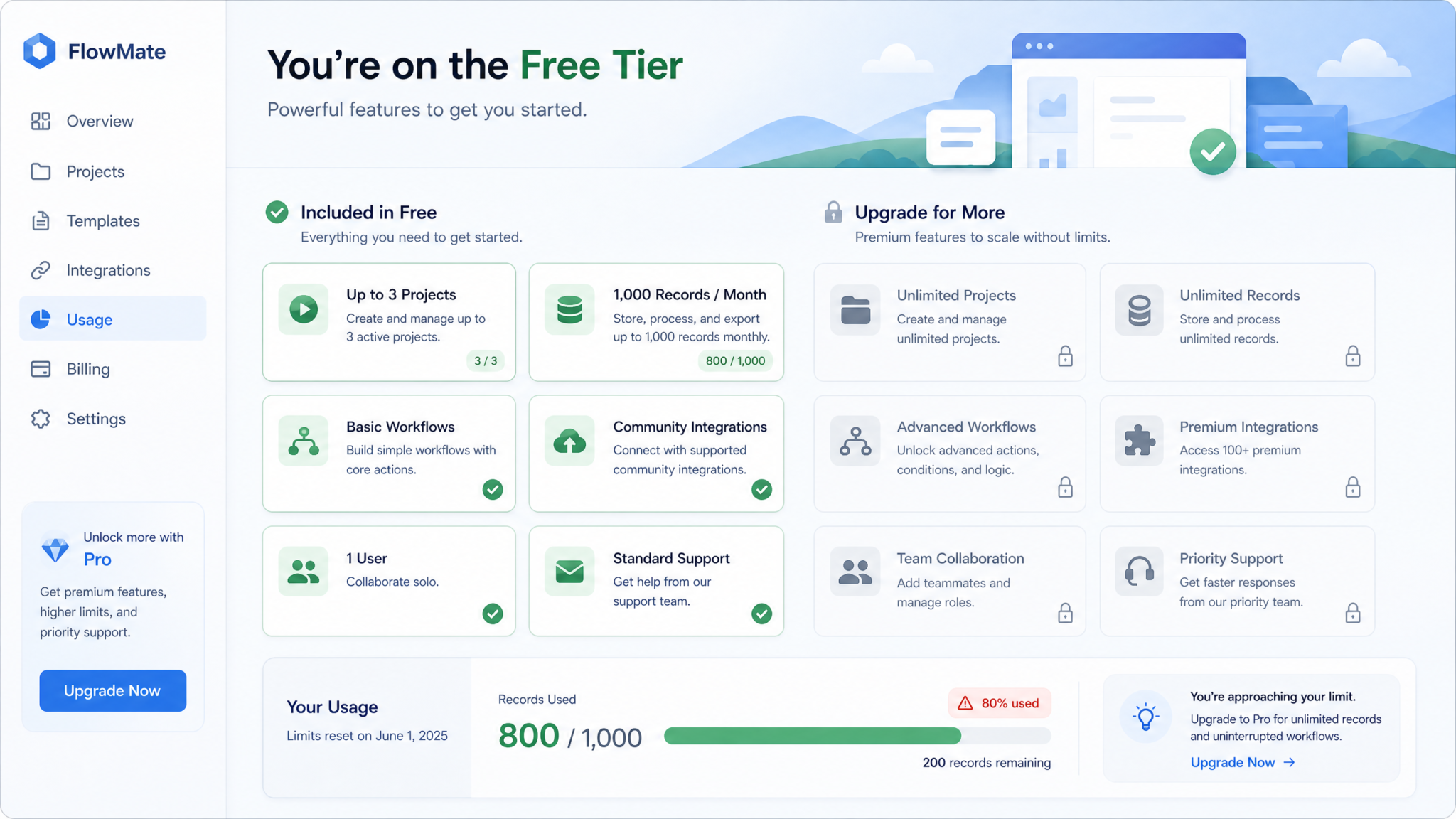
Free Tier Limits and Restrictions
This section documents the measurable limits you will encounter, explains the why behind them, and gives precise workarounds you can implement immediately to remain productive.
Common enforced limits (exact behaviors you will see)
- Daily / rolling message caps: Free accounts typically have a rolling cap of messages measured over a 3-hour and 24-hour window. Practical patterns: ~50–120 messages per 3 hours and ~500–1,000 messages per day depending on global load management. These are dynamic ceilings that may tighten during high demand.
- Per-message token / context limit: GPT-5.5 Instant on free may accept conversation contexts up to ~40K tokens but will truncate older messages aggressively. Actionable: when maintaining long threads, export conversation history and provide a condensed 1–2 paragraph recap to preserve continuity.
- Rate limits / concurrency: Simultaneous streams from multiple devices are restricted; you may see “rate limited” errors when opening more than 2 concurrent sessions. Best practice: close unused sessions and use one active tab per device.
- Image generation quotas: A limited number of free image generations per day (e.g., 5–25 images/day with smaller sizes prioritized). Attempting many iterations triggers a queue or lockout for the remainder of the day.
- File upload size and processing limits: Free users can upload files up to ~25–50 MB and request short summaries or extractions (e.g., up to 10–15 pages PDF processed in a single call). Large datasets require splitting and processing across multiple prompts.
- Tool/plugin access: Paid tiers get priority access to external tools (code interpreter, advanced web plugins, third-party connectors). Free tier may have a small set of curated tools or none at peak times.
- Advanced multimodal features: High-resolution image edits, complex video/audio analysis, and long-form code execution are reserved for paid plans or enterprise offerings.
- Commercial usage and SLA: Free tier carries no uptime SLA and is not recommended for production or commercial services requiring predictable throughput or confidentiality guarantees.
How you’ll notice these limits in practice
- Slower responses or “server busy” messages during peak hours.
- Requests to retry later after hitting daily image generation quotas.
- Truncated context in long conversations leading to loss of prior details.
- Inability to enable a high-cost plugin or tool unless you upgrade.
- Limits on file analysis size causing the assistant to ask you to split files.
Actionable monitoring and avoidance strategies
Follow these steps to detect and extend your usable capacity without paying:
- Track token usage per session: Copy the assistant’s summary of token usage (many client apps show token estimates). If not shown, estimate by text length (4–5 characters per token average) and plan to reduce verbosity.
- Use concise system prompts: Replace long system messages with brief role tags (“You are my concise editor. Answer in max 120 words.”). This lowers token overhead while retaining behavior.
- Batch operations: Instead of 10 separate small prompts, batch them into one structured request with numbered items. Example: “Edit these 10 subject lines into click-worthy variants and return bullets labeled 1–10.”
- Schedule heavy tasks for off-peak: If you must run image batches or long analyses, run them overnight or early morning when throttling is lower.
- Export and archive conversations: Save important threads externally so you can recreate context with a brief summary rather than recounting the whole thread.
What You Cannot Do on Free (detailed list with workarounds)
The free tier is feature-rich but intentionally deprived of some advanced capabilities. This section lists what is blocked or degraded, explains why, and gives precise workarounds you can implement immediately.
1. No guaranteed access to advanced models and recent large updates
Limitation: flagship models beyond GPT-5.5 (e.g., GPT-6 families or specialized expert models) are reserved for paid plans and enterprise customers.
Workarounds:
- Use targeted prompt engineering to replicate complex behaviors in GPT-5.5 (provide step-by-step chains-of-thought style prompts to coax deeper reasoning).
- Leverage open-source expert models locally for heavy inference (see alternatives section for instructions to run quantized LLMs).
2. No or limited access to powerful toolsets (code interpreter, data connectors)
Limitation: interactive Python runtimes, large CSV analyzers, or direct Google Drive/Sheets connectors are often reserved for paid tiers.
Workarounds:
- Preprocess data locally: clean and reduce CSVs to key columns before uploading small excerpts for analysis.
- Use local notebooks (Jupyter/Colab) for heavy computation and call ChatGPT for explanation and code review of results.
- For simple calculations, ask the assistant to provide code you can run locally or on free Colab sessions.
3. Limited context retention and session memory
Limitation: long-term project memory and unlimited conversation history are curtailed.
Workarounds:
- Maintain a one-page project brief in Google Docs or Notion and paste the brief at the start of sessions.
- Use concise labels: “Context: Marketing Q3—target audience X; tone: witty” to reduce token use.
4. Lower priority during peak times
Limitation: free users are deprioritized in load balancing and may experience slower latency.
Workarounds:
- Use “fast hours” scheduling: identify local off-peak times and process heavy jobs then.
- Use local tools for low-latency needs (note-taking, quick calculate) and reserve ChatGPT for insight-generating tasks.
5. Reduced quota for image generations and edits
Limitation: daily image generations are limited and advanced image editing tools are gated.
Workarounds:
- Batch creative prompts into one generation request that asks for multiple variants in a single output when supported.
- Use open-source image models (Stable Diffusion variants) locally or on low-cost GPUs for larger batch runs—see alternatives for setup steps.
6. No production-grade SLA or compliance features
Limitation: free plans lack enterprise features like SOC2, HIPAA-ready connectors, or custom domain hosting.
Workarounds:
- For sensitive data, use local or self-hosted models under internal security controls.
- Onboard a paid plan for projects requiring compliance and documented SLAs.
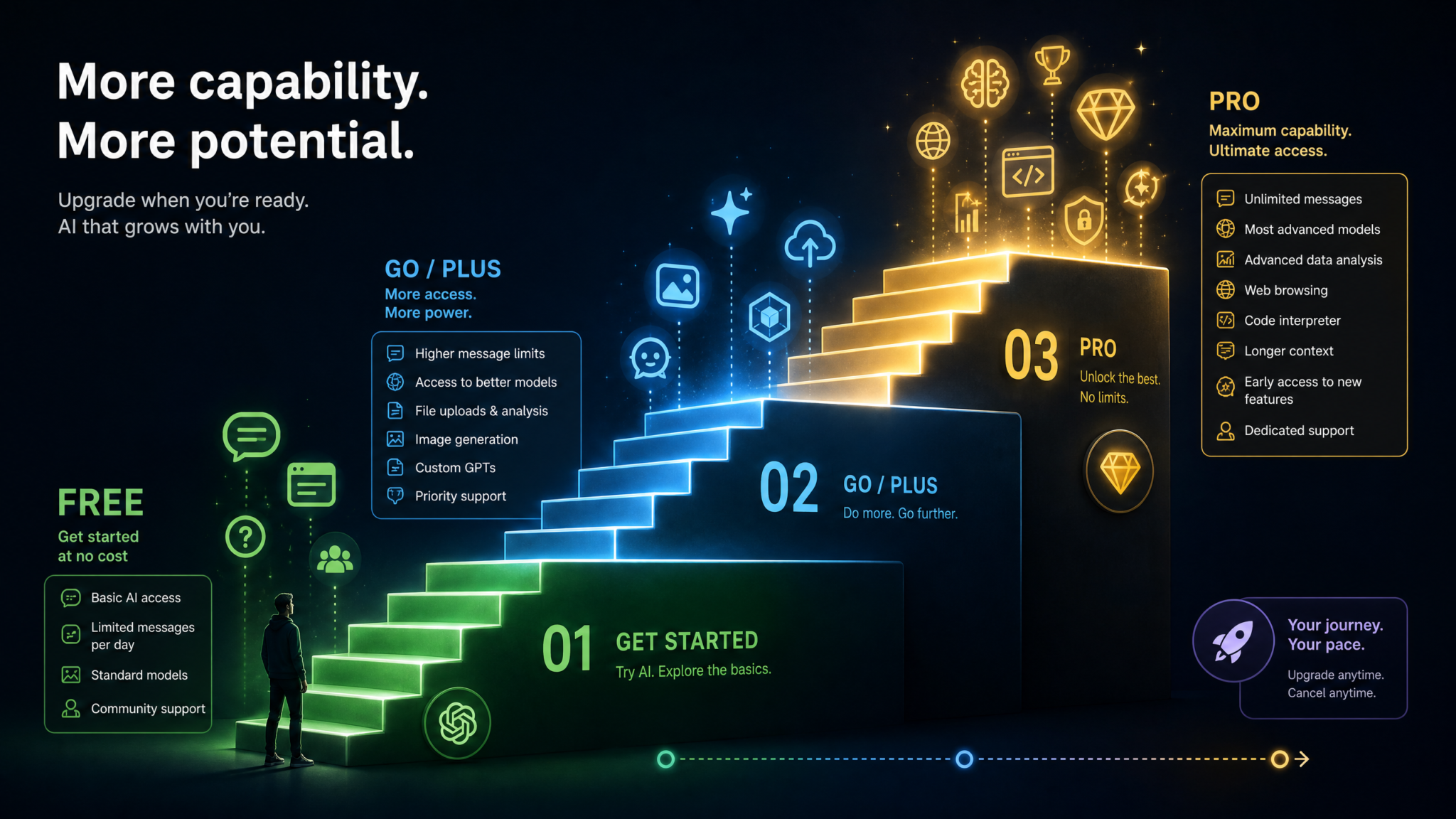
Free vs Go ($8) vs Plus ($20) – Feature Comparison Table
The table below summarizes feature differences so you can decide when upgrading is cost-effective. Use the “Actionability” column to judge how the upgrade impacts specific workflows.
| Feature | Free (2026) | Go ($8) | Plus ($20) |
|---|---|---|---|
| Default model | GPT-5.5 Instant | GPT-5.5 Enhanced (higher throughput) | GPT-6-s or GPT-5.5+Priority (higher reasoning) |
| Message throughput | Low/rolling caps | Increased daily cap (~2–3x) | High cap and higher concurrency |
| Priority during peak | Low | Medium | High |
| Image generation | Small quota, basic options | Higher quota, more sizes | Highest quota, advanced edit tools |
| Advanced tools (code/data) | Limited / none | Some tools (restricted) | Full access (code interpreter, connectors) |
| File upload and processing | Small files, shorter analyses | Larger files, longer analyses | Maximum sizes and batch processing |
| Commercial use / SLA | No SLA | Basic SLA/discounted commercial add-ons | Priority SLA and business-grade options |
| Price | $0 | $8 / month | $20 / month |
| Best for | Casual users, quick tasks | Active users who need more throughput | Power users and professionals needing stronger tools |
How to read this table for decision-making:
- If you hit message caps frequently or need faster response times during peak hours, Go ($8) is a cost-effective step-up.
- If you rely on advanced tools like code interpreters, large file processing, or require commercial SLA, Plus ($20) is usually necessary.
- For occasional high-cost tasks (e.g., a one-week sprint requiring heavy analysis), consider a monthly upgrade for that period and revert afterward—most subscriptions support pausing or canceling.
For a deeper exploration of this topic and related AI capabilities, our comprehensive resource on ChatGPT Ads Custom Audiences: How OpenAI’s New Targeting Tools Change Digital Marketing in 2026 provides additional context, practical examples, and actionable strategies that complement the techniques discussed in this article.
7 Signs You Need to Upgrade
If one or more of these apply, upgrading will likely save you time and money overall because it removes constraints that impede productivity.
Access 40,000+ AI Prompts for ChatGPT, Claude & Codex — Free!
Subscribe to get instant access to our complete Notion Prompt Library — the largest curated collection of prompts for ChatGPT, Claude, OpenAI Codex, and other leading AI models. Optimized for real-world workflows across coding, research, content creation, and business.
- You hit rate limits during work hours: Repeated “try again later” messages make workflows unpredictable. Upgrade for higher throughput and priority routing.
- Image generation bottlenecks: You depend on frequent high-resolution images or many iterations per design sprint—paid plans increase quotas and priority queues.
- You need advanced tool access: If you require the code interpreter for data cleaning or model prototyping, a paid tier unlocks these capabilities.
- Project continuity matters: When you need persistent memory across projects, paid plans offer extended memory features or enterprise options with longer retention.
- Commercial or compliance requirements: Contracts, SLAs, and security compliance demand a paid plan or enterprise agreement.
- Latency affects your product: If your product integrates ChatGPT in production systems, the paid plans provide predictable performance and higher concurrency.
- You perform heavy file or dataset processing: Frequent large-file analysis or batch processing is bulky on free; paid plans support larger file sizes and more complex analyses.
How to Maximize the Free Tier (tips and tricks you can use today)
This section contains tactical, battle-tested techniques to stretch free-tier utility. Implement these steps to avoid upgrade costs while preserving output quality.
1. Efficient prompt and session management
- Use a one-line system role: “You are my concise assistant. Return results in numbered bullets when possible.”
- Batch similar requests into a single prompt: numbered lists are processed in one pass and reduce message count.
- When editing, request “minimal patch” or “diff-style change” so the assistant returns shorter outputs with only necessary edits.
2. Reduce token usage without losing context
- Summarize previous conversation externally into a 1–4 sentence “session brief” and paste the brief at the top of a new chat to recreate context cheaply.
- Trim system messages: avoid repeating lengthy background data in each prompt; link to external content and paste the essential 60–120 word summary instead.
3. Use external tools to offload heavy work
- Compute-heavy tasks: run data transformations and calculations in free Google Colab instances, then paste results for interpretation.
- Image batching: use free Stable Diffusion web UIs or local setups for many iterations, then use ChatGPT to craft copy or analyze image metadata.
4. Smart file handling
- Split and number large documents: upload “part-1.pdf”, “part-2.pdf” and ask for per-part summaries to stay within upload processing limits.
- Supply extraction templates: give the assistant a table schema and ask it to fill that exact schema when extracting data from documents to reduce follow-up edits.
5. Optimize image generation attempts
- Start with a single prompt requesting multiple variations (e.g., “Produce 4 variants in different color palettes and camera angles”).
- Be explicit about negative prompts and constraints to avoid iterative correction cycles.
6. Reduce needless back-and-forth for code debugging
- Send minimal runnable reproduction (10–30 lines) with environment details and exact error messages.
- Ask for a “two-step fix”: (1) identify root cause in one sentence, (2) provide the minimal patch. This avoids long explanatory text unless requested.
7. Use templates and macros
- Store common prompts as local snippets you paste instead of retyping. Include role, constraints, and output format in the snippet.
- Maintain a prompt library organized by task (brainstorm, summarize, rewrite, code review) and time-slice heavy creative sessions.
Advanced actionable prompt examples you can copy and adjust:
Prompt: "You are my concise editor. Edit the text below to make it 20% shorter, preserve the main claims, and return only the edited text. Text: {paste-article}."
Prompt: "Analyze this CSV excerpt (paste first 100 rows). Return the top 5 anomalies with a one-sentence explanation each and a recommended single-line SQL to filter them."
For a deeper exploration of this topic and related AI capabilities, our comprehensive resource on ChatGPT Ads Custom Audiences: How OpenAI’s New Targeting Tools Change Digital Marketing in 2026 provides additional context, practical examples, and actionable strategies that complement the techniques discussed in this article.
Student and Education Access (special programs)
Students, educators, and academic institutions have tailored options that extend free-tier capabilities. This section explains who qualifies and how to apply, with templates to use when requesting institutional access.
Available education-specific benefits
- Discounted subscriptions: Many providers offer tiered discounts (50% or more) for students with verified .edu or similar addresses.
- Classroom licenses: Faculty can request classroom packages that unlock features like longer memory windows and teacher admin controls.
- Research credits: Short-term compute credits may be granted for approved academic experiments or theses.
- SSO and data controls: University SSO integrations and data governance options for institutionally-managed accounts.
How to apply (step-by-step)
- Gather proof: student ID, university email, or course enrollment screenshot.
- Visit the platform’s education page and complete the verification form (look for “education” or “academic” in billing/plan settings).
- If you represent a class, prepare a short syllabus and expected usage outline and request a classroom license through the education contact form.
- For research credits, prepare an abstract, expected compute needs, and an ethical review statement (IRB or advisor endorsement if applicable).
Email template for faculty requesting a classroom license
Subject: Request for Classroom License - [Course Name]

Hello [Provider Education Team],

I teach [Course Name] at [University]. Enrollment is [# students]. We intend to use ChatGPT for [brief use cases: e.g., coding exercises, peer feedback]. Please advise on classroom license options and any required agreements. Attached: syllabus excerpt and student count.

Best,
[Name]
[Title]
[Contact]
Actionable tips for safe classroom use
- Set explicit academic integrity rules for use and require students to include assistant-generated material tags when submitting work.
- Use prompts that require students to add personal reflection or code comments that standardize attribution and understanding.
- Limit free-tier reliance for graded high-stakes assessments: require in-class supervised exams or oral defenses.
Free Alternatives If ChatGPT Limits Frustrate You
If free ChatGPT constraints block your work, the market offers alternatives—open-source models, low-cost commercial models, and hybrid approaches that can reduce or eliminate recurring subscription costs. Below are practical, step-by-step options and setup instructions.
Option A: Local open-source models (offline)
Run lightweight LLMs on your laptop or a low-cost cloud instance. This is ideal for privacy-savvy users who need unlimited local inference.
Recommended models and runtimes
- LLama 3 or Mistral small variants (quantized versions for CPU use)
- ggml/llama.cpp for CPU-based inference
- GPTQ quantized weights for efficient memory footprint
Quick-start: run a quantized model with llama.cpp (practical steps)
- Install dependencies: on macOS/Linux: sudo apt-get install build-essential python3-pip; pip3 install -U pip setuptools
- Clone llama.cpp: git clone https://github.com/ggerganov/llama.cpp (replace with maintained fork).
- Compile and download quantized weights: follow the model provider’s instructions to get ggml.Q4_0 or similar weight files.
- Run: ./main -m ./models/llama-quant.bin -p “Summarize the following text: {paste text}” -n 256
Actionable tradeoffs
- Pros: no per-message charge, data stays local, low latency once set up.
- Cons: lower model quality than cloud flagship models, setup complexity, and need for local compute.
Option B: Low-cost hosted alternatives
Several providers offer competitive hosted models with free tiers or low monthly costs; they can be cheaper for consistent high-volume use.
When evaluating, measure cost-per-1K tokens and latency. Run cross-check tests: have each model answer the same 10 prompts and score outputs for correctness, creativity, and safety.
Option C: Hybrid workflow—combine free ChatGPT with local tools
Use ChatGPT for high-level summarization and creativity and local models for iterative, high-volume or sensitive tasks. Practical pattern:
- Idea generation in ChatGPT (free) with high-quality prompts.
- Export instructions to local model for bulk generation or transformation.
- Import results back into ChatGPT to refine and synthesize final outputs.
For a deeper exploration of this topic and related AI capabilities, our comprehensive resource on ChatGPT Ads Custom Audiences: How OpenAI’s New Targeting Tools Change Digital Marketing in 2026 provides additional context, practical examples, and actionable strategies that complement the techniques discussed in this article.
FAQ
Is “chatgpt free 2026” actually usable for real work?
Yes. For one-off tasks, brainstorming, short document summaries, and conversational use, the free tier is genuinely useful. It is not recommended for continuous heavy workloads, production integrations, or long-term project memory—those use cases need a paid plan or alternative setups described above.
What are the exact “chatgpt free tier limits” I should expect?
Expect rolling message caps (measured in 3-hour and daily windows), limited image generation quotas, smaller upload and processing sizes, truncated conversation history, and lower priority during peaks. Exact numeric thresholds are dynamic and may change with demand; monitor your account indicators and use the tips earlier to avoid hitting hard caps.
How does “chatgpt free vs paid” compare for developers?
For developers embedding models into applications, the free plan is not a substitute for API access or paid tiers. Paid plans provide higher throughput, API keys, SLAs, larger context windows, and enterprise-grade connectors. If you are experimenting, the free tier is great for prototyping prompts and UX flows, but production requires paid API plans or third-party hosting.
Can I “use chatgpt without paying” for long-term projects?
Short answer: only up to a point. For ongoing, heavy, or production projects you will likely hit limits or need features reserved for paid plans (tool access, file sizes, higher quotas). Use the free tier for prototyping and user research, then budget for a paid plan or hybrid approach when moving to production.
How to avoid running out of free image generations?
Batch generate variants, use a more specific prompt to reduce iterations, and switch to open-source image models for bulk runs. Keep a local library of prompt variations that produce good results so you need fewer attempts in the future.
Will the free tier change over time?
Yes. Providers adjust quotas, available models, and feature parity over time. Expect incremental improvements in model efficiency and occasional reallocation of features between free and paid tiers. The sections above describe common behaviors and stable workarounds that remain useful regardless of churn.
How do I escalate if I think my account is rate-limited unfairly?
First, check the platform status page and account notifications. If limits persist and harm legitimate use, contact support with session timestamps and example prompts. For critical business impact, upgrading temporarily to a paid plan often resolves throttling immediately while you work with support to diagnose underlying causes.
Is it safe to upload sensitive documents to the free plan?
Exercise caution. Free tiers typically do not include enterprise data handling guarantees. If the document contains personal data, trade secrets, or PHI, use local models or a paid plan with explicit data processing agreements and compliance features.
Actionable next steps (practical checklist)
Use this checklist to decide whether to stay on the free tier, optimize usage, or upgrade:
- Identify core tasks you need the assistant to do: classify as light, medium, or heavy use.
- Run a seven-day usage log: note message volumes, images, and file sizes to measure true needs.
- If limits were hit more than twice in 7 days, trial Go ($8) for a month and measure change.
- If you need advanced tools or SLA, trial Plus ($20) and test the exact workflows that matter.
- Prepare fallbacks: maintain a local prompt library and a lightweight open-source model for offline or heavy batch needs.
Final recommendations
For most casual users, the free tier in 2026 is a powerful tool—capable of handling everyday productivity, learning, and small-scale creative work. For professionals, teams, or anyone relying on consistent throughput and advanced tools, upgrading is an investment in predictability and capability. Use the optimization tactics in this guide to squeeze more value from the free tier before committing to a paid plan, and follow the upgrade checklist when demands grow.
For more in-depth guides and prompt libraries that help you “use chatgpt without paying” for longer, consult the detailed tutorials and templates on our site.
