
Case Study: How Cisco Used OpenAI Codex to Deliver AI Defense Platform in Weeks Instead of Quarters
How Cisco Accelerated Delivery with OpenAI Codex
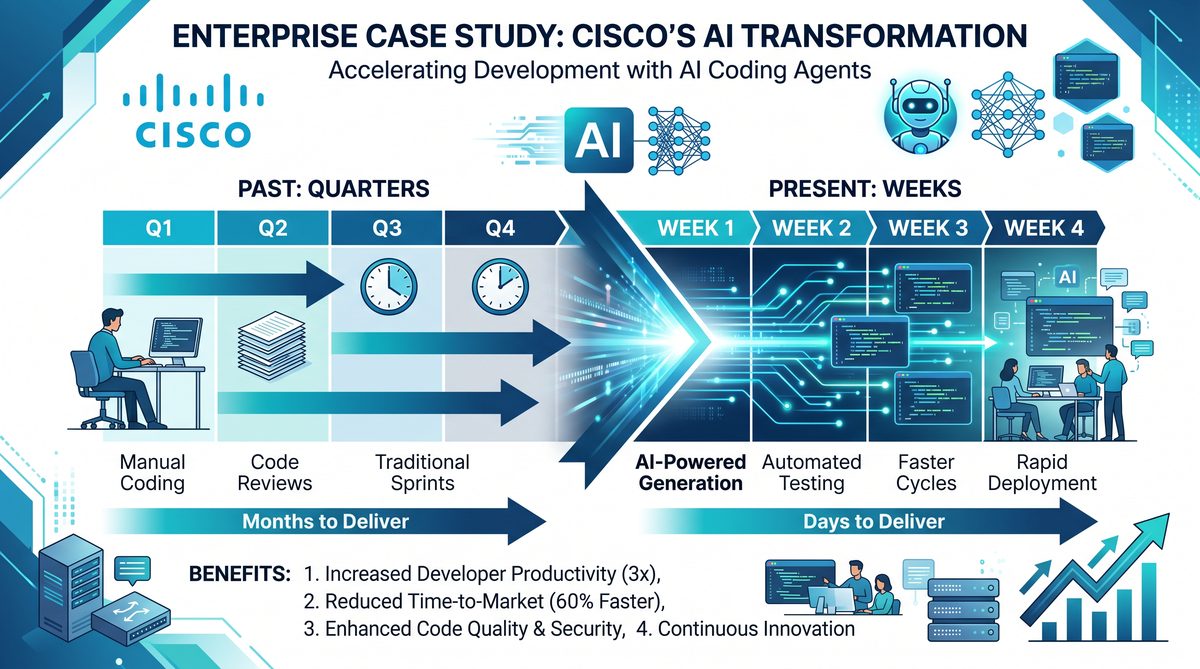
In today’s rapidly evolving technology landscape, the ability to deliver innovative AI-driven solutions swiftly can define a company’s competitive edge. Cisco, a global leader in networking and cybersecurity, recently demonstrated how leveraging advanced AI tools can transform product development timelines. By integrating OpenAI Codex into their workflow, Cisco managed to accelerate the delivery of their cutting-edge AI Defense security platform from a multi-quarter endeavor to just a few weeks. This remarkable feat not only underscores the potential of AI-assisted coding but also highlights the critical role of enterprise-grade controls and governance in maintaining security and compliance at scale.
DJ Sampath, Cisco’s Senior Vice President of Products for AI Software, revealed that OpenAI Codex was instrumental in developing the majority of the AI Defense platform. This platform is designed to enhance cybersecurity by automating threat detection and response, utilizing sophisticated machine learning models. Traditionally, building such a complex system would require extensive manual coding, rigorous testing, and prolonged integration phases, often stretching across multiple quarters. However, by incorporating Codex—a powerful AI coding assistant capable of understanding natural language prompts and generating code—Cisco significantly compressed these timelines without compromising quality or security.
OpenAI Codex’s ability to interpret high-level security requirements and translate them into precise, functioning code allowed Cisco’s engineers to focus on refining algorithms and improving detection capabilities. For example, complex threat signatures and anomaly detection routines that once demanded manual crafting were rapidly prototyped and iterated using Codex-generated code. Furthermore, the platform leveraged Codex’s multilingual coding proficiency to seamlessly integrate components written in Python, Go, and C++, matching the diverse programming environments typical in cybersecurity solutions.
The success of this initiative extends beyond the raw speed of code generation. Cisco’s approach centered on embedding robust enterprise controls, sandboxing environments, and comprehensive governance frameworks to safely harness the capabilities of OpenAI Codex. These measures ensured that AI-generated code adhered to stringent security policies and operational standards, a crucial factor given the sensitive nature of cybersecurity software. This case study offers valuable insights into how large enterprises can responsibly adopt AI coding assistants to enhance productivity and innovation.
Cisco’s success with Codex mirrors patterns seen in other large enterprise deployments. PwC’s deployment of Claude for professional services automation demonstrates similar acceleration patterns in consulting and advisory workflows. Our analysis of the PwC Claude deployment case study reveals how the firm achieved comparable time-to-delivery improvements by integrating AI agents into their existing engagement methodology.
Core Technology and Architecture Behind Cisco’s AI Defense Platform Powered by OpenAI Codex
When Cisco embarked on the ambitious journey to revolutionize its AI Defense security platform, the integration of OpenAI Codex emerged as a game-changing decision. According to DJ Sampath, Cisco’s Senior Vice President of Products for AI Software, Codex was instrumental in developing the majority of the platform’s core functionalities. This collaboration enabled a dramatic reduction in delivery timelines—compressing what traditionally took several quarters into just a few weeks. Central to this success was not only the power of Codex’s generative capabilities but also Cisco’s stringent enterprise-grade controls, sandboxing mechanisms, and governance frameworks, which ensured rapid and secure development at scale.
OpenAI Codex: The Foundation of Accelerated Development
OpenAI Codex is an advanced AI model built on the GPT architecture, specifically fine-tuned to understand and generate code across a multitude of programming languages. Unlike traditional code generation tools, Codex excels at interpreting natural language prompts and translating them into executable code snippets, scripts, or even complex modules. This unique capability made Codex an ideal tool for Cisco’s AI Defense platform, which required rapid prototyping and deployment of sophisticated security algorithms.
Leveraging Codex, Cisco’s development teams could:
- Generate boilerplate and complex code segments from high-level specifications.
- Automate routine coding tasks, significantly reducing manual effort.
- Experiment and iterate on new AI-driven detection models with immediate code outputs.
- Enhance cross-functional collaboration by converting security requirements into working code swiftly.
By embedding Codex into their development pipeline, Cisco not only accelerated the initial build phase but also streamlined subsequent updates and refinements, facilitating an agile approach to security product development. For instance, the ability to generate optimized Python scripts for real-time data ingestion from network sensors allowed the platform to rapidly adapt to new threat vectors without extensive redevelopment.
Architectural Overview: Integrating Codex with Cisco’s AI Defense Platform
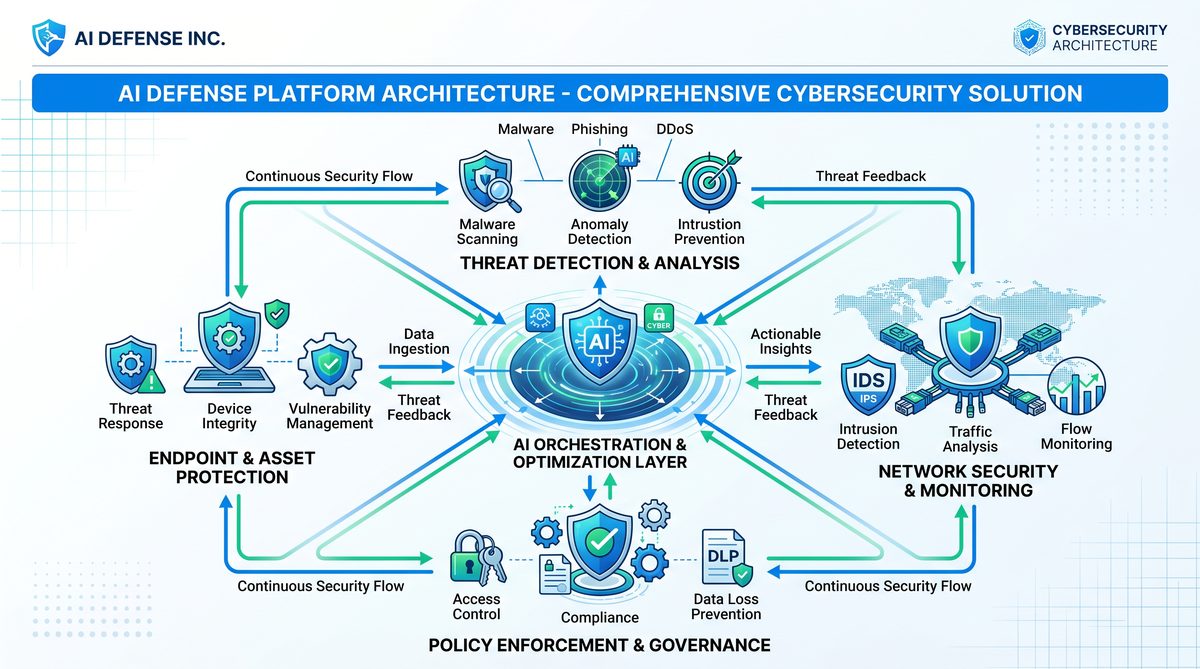
Cisco’s AI Defense platform architecture is a modular, cloud-native design optimized for scalability, security, and rapid innovation. The integration of OpenAI Codex was carefully engineered to complement this architecture, ensuring seamless interoperability with existing components and workflows. The key architectural highlights include:
- Codex API Gateway: Acts as a secure interface between Cisco’s internal development environment and the Codex service, incorporating authentication, rate limiting, and request auditing. This gateway also logs all interactions for compliance and traceability.
- Sandboxed Development Environment: Enables developers to generate and test code outputs from Codex within isolated containers, mitigating risks associated with unvetted AI-generated code. These environments simulate production conditions to validate performance and security implications.
- Automated Code Review Pipelines: Integrates static analysis and security scanning tools to automatically vet Codex-generated code before merging into the main codebase. This includes checks for vulnerabilities such as buffer overflows, injection attacks, and adherence to secure coding standards like MISRA and CERT.
- Continuous Integration and Continuous Deployment (CI/CD): Facilitates rapid iteration and deployment of AI models and security features, leveraging Codex to accelerate each step in the pipeline. The CI/CD system also supports automated rollback capabilities in case of detected anomalies post-deployment.
This architecture prioritizes safety and compliance without sacrificing speed—a critical balance in enterprise security product development. For example, the sandboxed environment’s integration with real-time telemetry allows developers to evaluate the impact of AI-generated code on threat detection latency, a key performance metric in cybersecurity operations.
Enterprise Controls, Governance, and Sandboxing: Ensuring Safe Innovation
While OpenAI Codex significantly boosted development velocity, Cisco recognized that unregulated use of AI code generation in a security-sensitive environment could introduce risks. To mitigate these, Cisco implemented a multi-layered governance model:
- Role-Based Access Control (RBAC): Restricts Codex usage to authorized developers and security engineers, ensuring accountability and traceability. Access permissions are dynamically adjusted based on project phase and developer expertise.
- Sandboxed Execution: All AI-generated code is executed in secure, isolated containers to prevent accidental introduction of vulnerabilities or unauthorized access to production environments. These sandboxes replicate constrained network environments to test code resilience under attack simulations.
- Automated Security Audits: Continuous static and dynamic analysis of Codex-generated code to detect anomalies, potential exploits, or compliance violations before integration. This includes integrating Cisco’s proprietary threat intelligence feeds to flag suspicious code patterns.
- Policy Enforcement Frameworks: Custom rules govern the types of code Codex can generate, adhering to Cisco’s internal standards and regulatory requirements. For example, generation of cryptographic routines is restricted to pre-approved libraries ensuring compliance with FIPS 140-2 standards.
This comprehensive governance ensured that the rapid pace enabled by Codex did not come at the cost of security or reliability, a critical consideration for enterprise-grade defense platforms. The policies also include continuous monitoring post-deployment to detect any drift from compliance standards due to AI-assisted updates.
Comparative Summary: Traditional Development vs. Codex-Accelerated Delivery
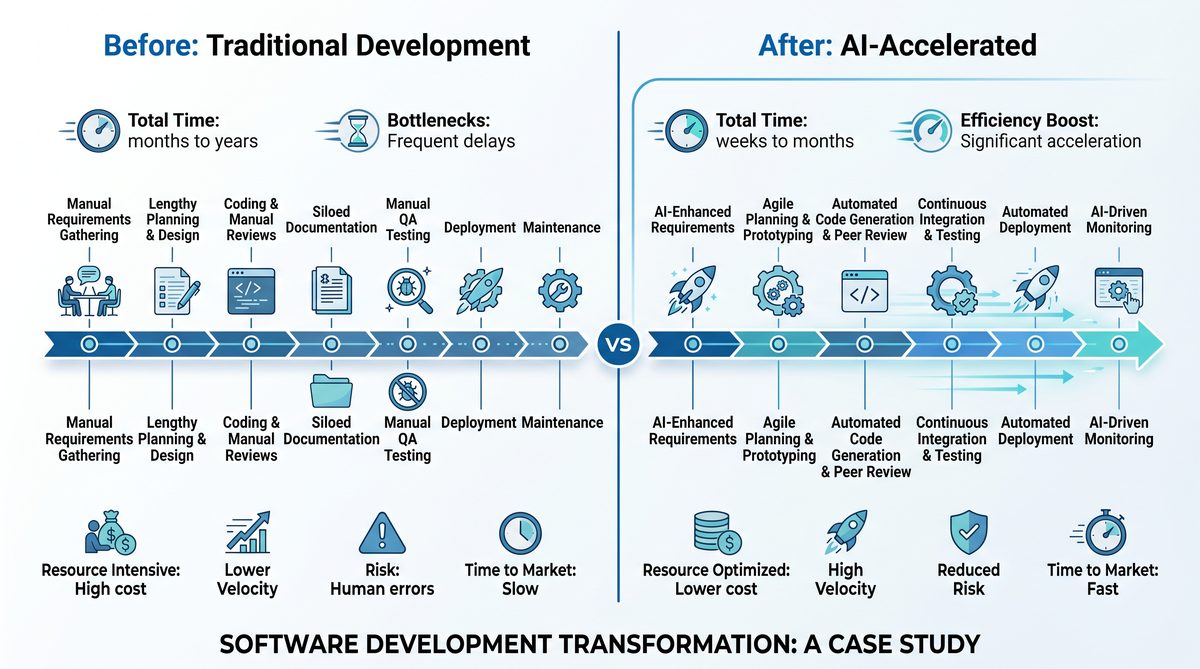
| Aspect | Traditional Development Workflow | OpenAI Codex-Accelerated Workflow |
|---|---|---|
| Development Speed | Several quarters to develop core security features | Few weeks to develop majority of the platform |
| Code Generation | Manual coding by engineers | Automated generation from natural language prompts |
| Iteration Cycle | Lengthy cycles due to manual testing and debugging | Rapid prototyping with immediate code outputs and testing |
| Governance and Controls | Standard code reviews and manual compliance checks | Automated security audits, sandboxing, and policy enforcement |
| Collaboration | Time-consuming translation of requirements to code | Direct translation via Codex enhances cross-team collaboration |
Conclusion: The Technological Edge Gained Through Codex Integration
By embedding OpenAI Codex into the core of their AI Defense security platform, Cisco achieved a transformative leap in development efficiency without compromising on security or governance. The combination of Codex’s advanced code generation capabilities with Cisco’s robust architectural controls and sandboxing frameworks created a development environment where innovation could flourish safely and rapidly. This case exemplifies how enterprises can harness AI-powered tools like Codex to accelerate product delivery cycles while maintaining the strict standards required for cybersecurity solutions.
The GPT-5.5 model that powers Codex brings specific architectural advantages for enterprise coding tasks, including improved sandboxing, tool use capabilities, and the ability to reason across large codebases. Our technical deep-dive into how GPT-5.5 powers OpenAI Codex’s architecture and sandboxing explains the specific model capabilities that enabled Cisco’s AI Defense platform development at unprecedented speed.
Real-World Applications and Enterprise Implications of OpenAI Codex at Cisco
The adoption of OpenAI Codex within Cisco’s AI Defense security platform has not only accelerated delivery timelines but also demonstrated the transformative potential of advanced AI coding assistants in enterprise environments. By leveraging Codex, Cisco’s development teams were able to rapidly prototype, test, and deploy complex AI-driven cybersecurity features that traditionally required extensive manual coding and validation. This section explores the practical applications, enhanced workflows, and critical enterprise considerations that enabled Cisco to harness Codex effectively while maintaining stringent security and governance standards.
Accelerated Development Workflows with AI-Augmented Coding
One of the most impactful benefits Cisco experienced was the streamlining of development workflows powered by OpenAI Codex. The AI model significantly reduced the time spent on routine and complex coding tasks, allowing engineers to focus on higher-level design and strategy. Key workflow improvements included:
- Automated Code Generation: Codex helped generate functional code snippets for AI models, security algorithms, and integration layers, which developers could review and customize rapidly. For instance, the generation of JSON parsers for threat intelligence feeds was expedited, enabling real-time ingestion and analysis.
- Rapid Prototyping: The ability to quickly transform conceptual security features into working prototypes enabled iterative testing and refinement within days instead of months. This allowed Cisco to respond swiftly to emerging cyber threats by deploying updated detection heuristics.
- Context-Aware Suggestions: Codex’s understanding of Cisco’s codebase and security domain allowed it to offer contextually relevant suggestions, reducing errors and improving code quality. For example, Codex suggested specific encryption routines compliant with internal security policies when developers initiated cryptographic coding.
- Documentation and Comment Generation: Automated generation of code documentation and inline comments enhanced code maintainability and knowledge transfer across teams, which is critical for distributed teams working across multiple time zones.
These workflow enhancements culminated in a dramatic reduction of development cycles, compressing what once took several quarters into mere weeks. Moreover, the integration of Codex into Cisco’s existing IDEs and continuous integration pipelines ensured seamless adoption without disrupting existing processes. The integration also leveraged plugin architectures allowing Codex to access relevant code context, improving suggestion accuracy and reducing developer cognitive load.
Enterprise Controls and Governance: Ensuring Safe and Compliant AI Usage
While the speed gains were substantial, Cisco’s leadership underscored the critical importance of maintaining robust enterprise controls around the use of AI-generated code. Deploying Codex at scale within a security-sensitive environment demanded rigorous governance to mitigate risks such as code vulnerabilities, compliance violations, and operational failures. Key governance measures included:
- Sandbox Environments: All AI-generated code was initially executed and tested within isolated sandbox environments to prevent unintended impacts on production systems. These sandboxes included simulated network traffic and adversarial attack vectors to validate resilience.
- Automated Security Scanning: Generated code underwent comprehensive scans using static and dynamic analysis tools to identify potential security flaws or compliance issues before integration. Tools such as SAST (Static Application Security Testing) and DAST (Dynamic Application Security Testing) were integrated into the CI/CD flow.
- Human-in-the-Loop Review: Experienced security engineers reviewed and validated AI-generated code to ensure adherence to Cisco’s coding standards and security policies. This step was crucial for sensitive modules handling encryption keys and threat response workflows.
- Audit Trails and Version Control: All AI-assisted code changes were logged and version-controlled to maintain transparency and traceability across development cycles. This facilitated forensic analysis and compliance audits.
- Access Controls and API Governance: Strict controls governed who could invoke Codex-based tools and how generated code was deployed, minimizing risks from unauthorized or accidental usage. Multi-factor authentication and usage quotas were enforced.
These governance layers were not afterthoughts but integral components of Cisco’s AI development strategy. They enabled the company to accelerate delivery while maintaining the high standards demanded by enterprise security and regulatory compliance frameworks. Additionally, Cisco implemented continuous training programs to keep the development and security teams updated on AI governance best practices and emerging risks.
Enterprise Implications: Transforming Software Delivery at Scale
Cisco’s successful integration of OpenAI Codex into its AI Defense security platform illustrates broader implications for enterprise software delivery models in the age of AI. Key takeaways include:
- Shift Toward AI-Augmented Development Teams: Codex acts as a force multiplier for engineering teams, enabling faster innovation cycles and reducing reliance on extensive manual coding efforts. This shift allows organizations to scale development capacity without proportionally increasing headcount.
- Increased Focus on AI Governance Frameworks: Enterprises adopting AI-assisted coding must invest in governance frameworks that address security, compliance, and ethical considerations to fully realize AI’s benefits. Cisco’s implementation serves as a model for balancing innovation with responsibility.
- Evolution of Developer Roles: The role of engineers is evolving from pure code authorship to oversight, validation, and strategic application of AI-generated solutions. This requires upskilling in areas such as AI literacy, security auditing, and ethical AI use.
- Integration with Existing Enterprise Toolchains: Seamless integration of AI tools like Codex into existing development environments and DevOps pipelines is crucial for adoption and scalability. Cisco’s use of API gateways and plugin architectures exemplifies best practices in this domain.
- Enhanced Collaboration and Knowledge Sharing: AI-generated documentation and code comments facilitate better communication and onboarding within distributed teams. This reduces knowledge silos and accelerates collective problem-solving.
Moreover, Cisco’s experience highlights how enterprises can leverage AI technologies to gain competitive advantages by reducing time-to-market without compromising on quality or security. As AI-assisted development tools mature, organizations will increasingly rely on them to tackle complex software challenges and enhance their innovation capabilities.
The security dimension of Cisco’s AI Defense platform connects to broader developments in AI-powered cybersecurity. OpenAI’s specialized GPT-5.5-Cyber model was designed specifically for security defenders protecting critical infrastructure. Our coverage of OpenAI’s GPT-5.5-Cyber model for cybersecurity defenders examines how this specialized variant enhances threat detection, vulnerability analysis, and automated incident response capabilities.
Balancing Speed and Security: Enterprise Controls and Governance in AI-Driven Development
Cisco’s groundbreaking adoption of OpenAI Codex to accelerate the development of their AI Defense security platform exemplifies how AI can revolutionize enterprise software delivery. However, accelerating development cycles from quarters to mere weeks is not without risks, especially in the highly sensitive domain of cybersecurity. As DJ Sampath, Cisco’s SVP of Products for AI Software, emphasized, the swift delivery was achieved by embedding rigorous enterprise controls, sandboxing mechanisms, and governance frameworks throughout the AI-assisted development process.
One of the paramount challenges when integrating AI code generation tools like Codex into enterprise workflows is ensuring that the rapid pace of output does not compromise code quality, security, or compliance. Cisco addressed this by deploying a multi-layered approach:
- Sandboxed AI Environments: By isolating the Codex integration within secure, containerized sandboxes, Cisco ensured that generated code could be analyzed, tested, and validated independently before deployment. This containment strategy mitigated the risk of unvetted code affecting broader systems.
- Automated Security Scanning: Generated code underwent continuous static and dynamic analysis to detect vulnerabilities early. Integration with Cisco’s existing security testing tools enabled rapid identification and remediation of potential threats introduced by AI-generated code snippets.
- Governance and Compliance Automation: Codex-assisted workflows were augmented with policy enforcement layers that ensured all output adhered to industry standards and internal coding guidelines. This automated governance helped maintain regulatory compliance without slowing development.
- Human-in-the-Loop Review: Despite the power of AI, Cisco maintained expert developer oversight at critical junctures. Human reviewers validated AI-generated code, providing domain expertise and contextual judgment that AI alone cannot replicate.
This robust infrastructure of controls enabled Cisco to harness Codex’s capabilities while maintaining the highest standards of security and reliability. The approach demonstrates a scalable model for enterprises seeking to leverage AI code generation: speed gains must be balanced with comprehensive risk management strategies to protect mission-critical systems.
Moreover, Cisco’s success highlights the evolving role of AI in software engineering. Rather than replacing developers, AI tools like Codex empower teams to focus on higher-value tasks such as architecture design, strategic decision-making, and complex problem-solving, while automating repetitive coding tasks. This shift not only accelerates delivery but also drives innovation and quality improvements.
Advanced AI-Driven Threat Detection Models Enabled by Codex: A Technical Deep Dive
One of the core innovations accelerated by OpenAI Codex at Cisco was the rapid development and deployment of advanced AI-driven threat detection models within the AI Defense platform. These models leverage deep learning architectures, anomaly detection techniques, and behavior analytics to identify sophisticated cyber threats in real time. Codex’s ability to generate code for complex machine learning pipelines enabled Cisco to iterate quickly on model architectures and integrate them seamlessly with operational security workflows.
For instance, Cisco’s data scientists used Codex to generate and optimize TensorFlow and PyTorch scripts that implemented state-of-the-art recurrent neural networks (RNNs) and transformer-based models for network traffic analysis. Codex facilitated the automatic creation of data preprocessing pipelines, feature extraction modules, and hyperparameter tuning scripts, significantly reducing manual coding overhead.
Moreover, Codex enabled the rapid embedding of explainability features, such as SHAP (SHapley Additive exPlanations) value calculations and LIME (Local Interpretable Model-agnostic Explanations), into the threat detection models. This allowed security analysts to understand the rationale behind AI-driven alerts, improving trust and facilitating faster incident response.
In a notable case study, Cisco deployed a Codex-accelerated model update that detected a zero-day exploit campaign targeting IoT devices. The model’s rapid iteration cycle, enabled by Codex-generated code, allowed Cisco to push updated detection logic to its global network sensors within 72 hours—a process that traditionally might have taken several weeks.
This deep integration of AI model development, facilitated by Codex, showcases the transformative impact of AI-assisted coding on cybersecurity innovation. It also highlights the importance of rigorous testing and validation frameworks to ensure that models perform reliably in diverse and evolving threat landscapes.
Implications for Future AI-Enhanced Enterprise Development Ecosystems
Building on Cisco’s experience, the integration of AI coding assistants like OpenAI Codex signals a paradigm shift in enterprise software development ecosystems. The implications span technological, organizational, and strategic dimensions, each presenting unique challenges and opportunities.
Technological Implications: The proliferation of AI-assisted coding tools necessitates robust infrastructure for code validation, security scanning, and artifact management. Enterprises will increasingly adopt hybrid AI-human workflows, where AI accelerates routine tasks and humans provide judgment and context. This requires new toolchains that integrate AI models, containerized sandbox environments, and real-time monitoring systems to ensure continuous compliance and quality.
Organizational Implications: Development teams must evolve to include AI specialists, ethics officers, and governance experts to oversee AI-assisted coding processes. Training programs focused on AI literacy, secure coding with AI, and AI ethics will become standard. Furthermore, cross-functional collaboration will intensify, as AI tools facilitate direct communication between domain experts, developers, and security analysts.
Strategic Implications: Enterprises leveraging AI tools like Codex can achieve unprecedented speed-to-market and innovation capacity, gaining competitive advantage. However, they must carefully manage risks related to intellectual property, bias in AI-generated code, and regulatory compliance. Strategic investments in AI governance frameworks, including policy automation and auditability, will be critical to sustainable AI adoption.
In conclusion, Cisco’s integration of OpenAI Codex provides a foundational case study illustrating how AI can reshape enterprise software development. The lessons learned offer a roadmap for organizations aiming to build resilient, secure, and innovative AI-enhanced development ecosystems that balance speed with accountability.
Balancing Speed and Security: Enterprise Controls and Governance in AI-Driven Development
Cisco’s groundbreaking adoption of OpenAI Codex to accelerate the development of their AI Defense security platform exemplifies how AI can revolutionize enterprise software delivery. However, accelerating development cycles from quarters to mere weeks is not without risks, especially in the highly sensitive domain of cybersecurity. As DJ Sampath, Cisco’s SVP of Products for AI Software, emphasized, the swift delivery was achieved by embedding rigorous enterprise controls, sandboxing mechanisms, and governance frameworks throughout the AI-assisted development process.
One of the paramount challenges when integrating AI code generation tools like Codex into enterprise workflows is ensuring that the rapid pace of output does not compromise code quality, security, or compliance. Cisco addressed this by deploying a multi-layered approach:
- Sandboxed AI Environments: By isolating the Codex integration within secure, containerized sandboxes, Cisco ensured that generated code could be analyzed, tested, and validated independently before deployment. This containment strategy mitigated the risk of unvetted code affecting broader systems.
- Automated Security Scanning: Generated code underwent continuous static and dynamic analysis to detect vulnerabilities early. Integration with Cisco’s existing security testing tools enabled rapid identification and remediation of potential threats introduced by AI-generated code snippets.
- Governance and Compliance Automation: Codex-assisted workflows were augmented with policy enforcement layers that ensured all output adhered to industry standards and internal coding guidelines. This automated governance helped maintain regulatory compliance without slowing development.
- Human-in-the-Loop Review: Despite the power of AI, Cisco maintained expert developer oversight at critical junctures. Human reviewers validated AI-generated code, providing domain expertise and contextual judgment that AI alone cannot replicate.
This robust infrastructure of controls enabled Cisco to harness Codex’s capabilities while maintaining the highest standards of security and reliability. The approach demonstrates a scalable model for enterprises seeking to leverage AI code generation: speed gains must be balanced with comprehensive risk management strategies to protect mission-critical systems.
Moreover, Cisco’s success highlights the evolving role of AI in software engineering. Rather than replacing developers, AI tools like Codex empower teams to focus on higher-value tasks such as architecture design, strategic decision-making, and complex problem-solving, while automating repetitive coding tasks. This shift not only accelerates delivery but also drives innovation and quality improvements.
Conclusion
Cisco’s pioneering use of OpenAI Codex to develop their AI Defense security platform marks a significant milestone in the application of AI-assisted software development within large enterprises. By compressing what traditionally took several quarters into just a few weeks, Cisco has demonstrated the transformative potential of AI-powered code generation to dramatically accelerate product delivery without compromising security or compliance.
Key to this achievement was Cisco’s holistic approach that combined the raw capabilities of OpenAI Codex with stringent enterprise-grade controls, sandboxing, and governance frameworks. This ensured that the accelerated pace did not introduce vulnerabilities or operational risks, preserving Cisco’s commitment to delivering secure, reliable solutions to their customers.
As AI technologies continue to evolve, Cisco’s case study provides a compelling blueprint for other organizations aiming to integrate AI tools into their software development lifecycles. The balance of automation, oversight, and regulatory adherence illustrated here is critical to unlocking the full potential of AI while safeguarding organizational assets.
Looking forward, the collaboration between human expertise and AI-driven development is poised to redefine how software products are conceived, built, and deployed. Cisco’s experience with OpenAI Codex serves as a testament to the power of this partnership, heralding a new era of accelerated innovation that maintains the highest standards of security and quality.
Useful Links
- OpenAI Codex Official Blog
- Cisco AI Defense Security Platform Documentation
- OWASP Top Ten Security Risks
- SonarQube – Continuous Code Quality and Security
- Istio Service Mesh for Secure Microservices Communication
Access 40,000+ AI Prompts for ChatGPT, Claude & Codex — Free!
Subscribe to get instant access to our complete Notion Prompt Library — the largest curated collection of prompts for ChatGPT, Claude, OpenAI Codex, and other leading AI models. Optimized for real-world workflows across coding, research, content creation, and business.
