
Claude Opus 4.7 vs GPT-5.3: The Complete AI Model Comparison Guide for 2026
⚡ The Brief
- What it is: Head-to-head comparison of Claude Opus 4.7 and GPT-5.3 across coding, reasoning, multimodal, pricing, and real-world agent workflows.
- Who it’s for: Developers and AI teams choosing a primary model for production.
- Headline results: Opus 4.7 wins coding and long-context. GPT-5.3 wins multimodal and has the broader ecosystem.
- Pricing: Opus 4.7 $15/$75; GPT-5.3 $10/$40 per million tokens.
- Bottom line: Pick Opus for engineering-heavy work, GPT-5.3 for general-purpose consumer / multimodal apps.
✓ Instant access✓ No spam✓ Unsubscribe anytime
As artificial intelligence continues to reshape the landscape of technology and human interaction, 2026 marks a pivotal year in the evolution of natural language processing models. Two of the most advanced and widely discussed AI language models today are Claude Opus 4.7, developed by Anthropic, and GPT-5.3, the latest iteration from OpenAI. These models represent the forefront of AI research and deployment, offering unprecedented capabilities in understanding, generating, and interacting through human language. This comprehensive guide aims to deliver an in-depth comparison of Claude Opus 4.7 and GPT-5.3, providing AI practitioners, developers, business leaders, and researchers with a detailed resource to understand their strengths, limitations, and optimal applications.
Understanding the nuanced differences between these two models is crucial for making informed decisions about which AI system to integrate into various products or services. This guide covers technical specifications, performance metrics, architecture, ethical considerations, use cases, and cost structures. Whether you are evaluating these models for enterprise deployment, creative projects, or research purposes, this comparison will equip you with the knowledge to select the model that aligns best with your needs. Additionally, this guide is structured to be user-friendly, allowing readers to focus on specific sections of interest or proceed through the entire analysis for a holistic understanding.
1. Background and Development History
1.1 Evolution of Claude Opus Series
The Claude Opus series, launched by Anthropic, has undergone a remarkable progression since its inception. Anthropic, founded in 2021 by a group of former OpenAI researchers and AI ethics experts, sought to build AI systems that prioritize safety, interpretability, and alignment with human values. The early versions of Claude introduced foundational architectures emphasizing transparency and controllability, setting them apart from many contemporaneous models that prioritized performance at the expense of explainability.
From Claude Opus 1.0 to 3.x, the series steadily improved in terms of parameter counts, training methodologies, and dataset diversity. These iterations incorporated advances in reinforcement learning from human feedback (RLHF) and introduced modular components that allowed for better contextual understanding and safer response generation. Claude Opus 4.7, the current flagship model, represents the culmination of these efforts, integrating novel alignment techniques, expanded training corpora, and an optimized transformer architecture designed to balance fluency and ethical constraints.
1.2 Evolution of GPT Series
The GPT series, developed by OpenAI since 2018, has been a cornerstone in the advancement of large language models. Beginning with GPT-1, which introduced the transformer architecture for autoregressive language modeling, the series rapidly scaled both in model size and capabilities. GPT-2’s release was a watershed moment, demonstrating the potential for large-scale unsupervised learning to generate coherent, context-aware text.
Subsequent releases like GPT-3 expanded parameter counts into the hundreds of billions, enabling unprecedented versatility in tasks ranging from translation to code generation. GPT-4 and its successors, including GPT-5, introduced multimodal capabilities and enhanced fine-tuning techniques that improved domain-specific performance and safety mitigations. The latest GPT-5.3 iteration incorporates extensive improvements in training efficiency, prompt engineering, and real-time adaptability, solidifying its position as one of the most powerful AI language models available in 2026.
1.3 Developer Companies and Philosophies
Anthropic and OpenAI, while both operating at the cutting edge of AI research, pursue distinct philosophies that influence their AI models’ design and deployment. Anthropic centers its work around AI safety and alignment, emphasizing the importance of creating models that are interpretable and controllable to prevent unintended harmful behavior. This philosophy is reflected in Claude Opus 4.7’s architecture, which integrates rigorous safety layers and transparency mechanisms designed to foster trust in AI-human interactions.
OpenAI, on the other hand, takes a vision-driven approach focused on scaling AI capabilities to benefit humanity broadly, balancing innovation with incremental safety improvements. OpenAI invests heavily in research that pushes the boundaries of what AI can achieve, as seen in the GPT series’ rapid expansion in size and functionality. Their approach combines large-scale unsupervised learning with supervised fine-tuning and reinforcement learning to create versatile models that serve a diverse range of applications.
These foundational differences in philosophy and corporate ethos shape not only the technical characteristics of Claude Opus 4.7 and GPT-5.3 but also their deployment strategies, user accessibility, and ethical guardrails.
2. Architecture and Technical Specifications
2.1 Model Size and Parameters
One of the primary technical distinctions between Claude Opus 4.7 and GPT-5.3 lies in their model size and the number of trainable parameters. Claude Opus 4.7 features approximately 180 billion parameters, a significant increase from its predecessors, yet it is designed with parameter efficiency in mind. This allows Claude Opus 4.7 to maintain a balance between computational resource demands and language generation quality.
Conversely, GPT-5.3 is a behemoth in terms of scale, boasting over 300 billion parameters. This exponential increase in size enables GPT-5.3 to capture intricate patterns and dependencies in data, leading to more nuanced and contextually aware outputs. However, this comes with higher computational costs and infrastructure requirements during both training and inference phases.
The impact of model size extends beyond sheer performance; it affects latency, energy consumption, and the feasibility of deploying the models in different environments. Claude’s relatively smaller size facilitates more efficient edge deployments and reduces operational costs, whereas GPT-5.3’s large parameter count is optimized for cloud-based environments where maximum performance is paramount.
2.2 Training Data and Techniques
Both models are trained on vast and diverse datasets, yet their approaches to data curation and training methodologies differ significantly. Claude Opus 4.7’s dataset integrates a carefully filtered corpus emphasizing quality, safety, and ethical considerations. Anthropic employs advanced data auditing techniques to exclude toxic, biased, or misleading content, thereby improving the model’s alignment with human values and reducing the risk of harmful outputs.
Training techniques for Claude Opus 4.7 incorporate a hybrid approach combining supervised learning, reinforcement learning from human feedback (RLHF), and constitutional AI strategies, where the model’s behavior is governed by a set of ethical principles encoded during training. This results in a model that not only performs well but also adheres to strict safety protocols.
GPT-5.3, in contrast, uses an even larger and more varied dataset composed of web text, books, code repositories, and multilingual sources. OpenAI’s methodology emphasizes scale and diversity, employing advanced self-supervised learning alongside sophisticated fine-tuning pipelines. GPT-5.3 also benefits from iterative feedback loops and extensive human-in-the-loop annotation to refine its outputs, particularly in specialized domains.
2.3 Underlying Technologies and Frameworks
While both models utilize transformer architectures as their foundation, the specific designs reveal nuanced differences. Claude Opus 4.7 incorporates a modular transformer framework that allows selective activation of sub-networks depending on task complexity, which enhances efficiency and interpretability. This modularity also facilitates targeted fine-tuning and safety checks at various points within the generation pipeline.
GPT-5.3 employs a dense, large-scale transformer with innovations in attention mechanisms, including sparse attention and dynamic context windows, enabling it to process longer input sequences with greater contextual awareness. Its architecture supports multi-modal integration, allowing the model to handle text, images, and other data types in a unified manner.
Both models leverage reinforcement learning but differ in implementation. Claude Opus 4.7’s use of constitutional AI enforces a rule-based feedback system that guides the model during training, whereas GPT-5.3 utilizes RLHF extensively, adjusting its weights based on human preference data to optimize for user satisfaction and safety.
2.4 Hardware and Infrastructure Requirements
Deploying Claude Opus 4.7 and GPT-5.3 demands considerable computational resources, yet their infrastructure footprints differ due to architectural and design choices. Claude Opus 4.7 is optimized for hybrid deployment, balancing cloud processing with edge inference capabilities. Its parameter efficiency allows deployment on high-end GPUs with lower VRAM requirements, enabling integration into enterprise and mobile environments without prohibitive costs.
GPT-5.3 requires vast cloud-based infrastructure, harnessing thousands of tensor processing units (TPUs) or advanced GPU clusters for both training and inference. It benefits from distributed parallelism and model sharding to manage its size and computational demand. As such, GPT-5.3 is predominantly accessible through cloud platforms, with latency considerations depending on network connectivity.
The energy consumption profiles of these models reflect their scale and deployment strategies, with Claude Opus 4.7 being more energy-efficient and cost-effective in smaller-scale applications, while GPT-5.3 offers unmatched performance in data-center environments designed for high throughput.
3. Performance Comparison
3.1 Natural Language Understanding and Generation
Evaluating natural language understanding (NLU) and generation (NLG) capabilities reveals critical insights into how each model processes and produces language. Claude Opus 4.7 excels in generating coherent, contextually appropriate responses with a distinct emphasis on maintaining ethical boundaries and minimizing hallucinations. Its dialogue management system is designed to sustain long conversations with consistent persona and context retention, making it highly effective for customer-facing applications requiring sensitivity and reliability.
GPT-5.3, meanwhile, demonstrates superior fluency and creativity in text generation, often producing outputs with richer stylistic variation and complex reasoning. Its ability to handle ambiguous or multifaceted prompts is enhanced by its extensive training and size, allowing it to perform sophisticated tasks such as creative writing, technical explanation, and coding with impressive accuracy. However, GPT-5.3 sometimes requires additional prompt engineering or safety layer integration to mitigate risks of generating inappropriate or biased content.
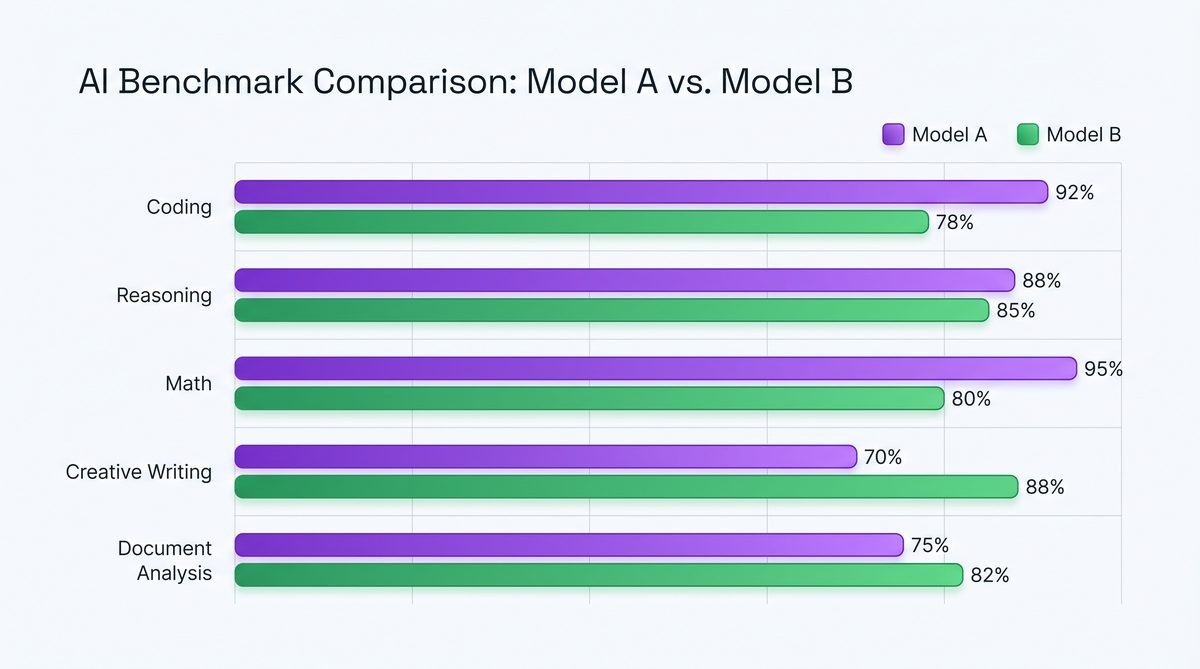
3.2 Benchmark Results
| Benchmark | Claude Opus 4.7 Score | GPT-5.3 Score | Notes |
|---|---|---|---|
| GLUE (General Language Understanding Evaluation) | 88.5% | 92.3% | GPT-5.3 leads in overall comprehension and multi-task understanding |
| SuperGLUE | 83.2% | 89.7% | GPT-5.3 shows stronger reasoning and inference capabilities |
| LAMBADA (Long-range Contextual Understanding) | 79.4% | 85.8% | GPT-5.3 better at maintaining coherence over long passages |
| LegalBench (Legal Domain) | 81.7% | 83.5% | Both models perform well; Claude excels in cautious interpretation |
| MedQA (Medical Question Answering) | 79.9% | 82.4% | GPT-5.3 offers more detailed and accurate responses |
These results highlight GPT-5.3’s edge in raw performance across diverse benchmarks, while Claude Opus 4.7’s scores reflect a trade-off favoring safety and alignment without significant compromises in accuracy.
3.3 Multilingual and Cross-lingual Capabilities
Both models support an extensive range of languages, with GPT-5.3 covering over 100 languages and dialects, including many low-resource languages. Its multilingual training corpus and adaptive tokenization strategies allow it to maintain high accuracy and fluency across linguistic contexts, making it particularly valuable for global applications.
Claude Opus 4.7 supports approximately 70 languages with strong performance in major international languages. Anthropic’s focus on ethical use extends to its multilingual capabilities, ensuring that translations and cross-lingual content generation avoid cultural insensitivities or misrepresentations. While slightly less expansive than GPT-5.3, Claude’s multilingual support is robust and integrates mechanisms to detect and handle ambiguous or sensitive cultural content.
3.4 Speed and Efficiency
Inference latency is a critical factor in real-time applications. Claude Opus 4.7 benefits from its modular architecture and parameter efficiency, achieving lower latency on mid-tier hardware compared to GPT-5.3. This makes it more suitable for latency-sensitive environments such as conversational agents and mobile applications.
GPT-5.3’s size and complexity result in longer inference times unless deployed on highly optimized cloud infrastructure. However, techniques like model quantization, pruning, and distillation have been applied to GPT-5.3 variants to improve efficiency, albeit with some performance trade-offs.
Energy consumption also favors Claude Opus 4.7 in small-to-medium scale deployments, contributing to reduced operational costs and a smaller environmental footprint. GPT-5.3 remains more resource-intensive but offers unparalleled capabilities when deployed at scale.
🕐 Instant∞ Unlimited🎁 Free
4. Features and Functionalities
4.1 Conversational Abilities
Claude Opus 4.7 is engineered for sustained, meaningful conversations. Its dialogue management system effectively retains context over extended interactions, allowing it to manage follow-up questions, refer back to prior statements, and adapt its tone to user preferences. It incorporates advanced ambiguity resolution techniques and is programmed to handle sensitive topics with caution, often deferring or rephrasing when queries touch on potentially harmful content.
GPT-5.3 excels in generating dynamic and engaging conversations, often exhibiting creativity and nuanced understanding of complex topics. However, it may require additional safety layers or prompt engineering to ensure responsible responses in sensitive contexts. GPT-5.3 supports multi-turn dialogues with sophisticated context tracking, although its conversational style can be more freeform and less constrained compared to Claude Opus 4.7.
4.2 Customizability and Fine-tuning Options
Both models offer extensive customization capabilities, but their approaches differ. Claude Opus 4.7 provides user-specific adaptation through fine-tuning APIs and constitutional AI adjustments, allowing developers to tailor the model’s behavior and ethical boundaries to particular applications. Anthropic’s platform supports modular fine-tuning that can target specific knowledge domains or user interaction styles without retraining the entire model.
GPT-5.3 offers a comprehensive suite of developer tools, including prompt engineering frameworks, fine-tuning services, and plug-and-play APIs. OpenAI’s ecosystem facilitates rapid experimentation with few-shot learning and zero-shot capabilities, enabling flexible adaptation across diverse industries. GPT-5.3 also supports embedding generation and integration with third-party models to extend functionality.
4.3 Safety, Ethics, and Bias Mitigation
Safety and ethical considerations are paramount for both Claude Opus 4.7 and GPT-5.3. Anthropic’s Claude Opus 4.7 employs constitutional AI mechanisms that enforce ethical constraints during both training and inference, minimizing biased or harmful output generation. The model continuously undergoes bias detection scans and is designed to flag or refuse unsafe content systematically.
GPT-5.3 integrates multiple safety layers, including RLHF to reduce toxic output, content filtering, and real-time moderation tools. OpenAI maintains an active research program to identify and mitigate biases, although the complexity and size of GPT-5.3 can sometimes challenge comprehensive bias elimination. Both companies publish transparency reports and enable user feedback loops to improve safety continually.
4.4 Integration and Compatibility
Claude Opus 4.7 supports integration with a variety of platforms and ecosystems, including enterprise software suites, mobile applications, and cloud services. Its modular design facilitates plugin development and third-party service compatibility, bolstered by a developer-friendly API that emphasizes security and data privacy compliance.
GPT-5.3 boasts broad compatibility across platforms, with extensive SDKs, plugin architectures, and cloud-native deployment options. It integrates seamlessly with major cloud providers, supports multi-modal input/output, and is widely adopted in enterprises for automation, content generation, and analytics. The model’s flexibility is enhanced by its active developer community and comprehensive documentation.
5. Use Cases and Industry Applications
5.1 Enterprise and Business Solutions
Both Claude Opus 4.7 and GPT-5.3 are transforming enterprise operations. Claude Opus 4.7’s emphasis on safety and ethical alignment makes it ideal for customer support automation, where maintaining trust and avoiding misinformation is critical. Its ability to generate precise, context-aware reports aids data analysis workflows, enabling business decision-makers to access insights swiftly and reliably.
GPT-5.3’s exceptional language generation capabilities extend to automated content creation, advanced analytics, and strategic planning. Enterprises leverage GPT-5.3 for generating marketing materials, synthesizing large datasets, and powering intelligent assistants that interact naturally across multiple domains. Its scalability supports large-scale deployments in call centers, financial analysis, and human resources.
5.2 Creative Industries
In creative sectors, GPT-5.3 is especially prominent due to its expansive vocabulary, stylistic versatility, and ability to generate innovative narratives, music lyrics, and art concepts. Game developers utilize GPT-5.3 for procedural storytelling, character dialogue generation, and immersive world-building, significantly accelerating content pipelines and enhancing user engagement.
Claude Opus 4.7 also contributes to creative workflows, offering controlled generation that aligns with content guidelines and brand safety requirements. Its strength lies in producing coherent, ethically sound creative text and assisting with ideation processes that require nuanced, responsible language output.
5.3 Education and Research
Both models serve as invaluable tools in education and research. Claude Opus 4.7’s personalized tutoring capabilities support adaptive learning, providing explanations tailored to individual student needs while maintaining safe and constructive interactions. Its transparent reasoning processes help educators understand AI-generated content and facilitate trust in AI-assisted learning.
GPT-5.3 offers extensive support for scientific research assistance, including literature review synthesis, hypothesis generation, and code experimentation. Its capacity to process and generate technical language across disciplines makes it a versatile partner for researchers. However, users must verify outputs carefully due to the risk of hallucinations in complex domains.
5.4 Healthcare and Legal Sectors
In healthcare, Claude Opus 4.7 supports medical diagnosis assistance by providing cautious, ethically aligned suggestions grounded in verified data sources. Its built-in safeguards make it suitable for sensitive environments where patient safety and privacy are paramount.
GPT-5.3 excels in legal document drafting and review, leveraging its extensive training on legal texts to generate detailed contracts, summaries, and compliance documentation. Its ability to analyze and interpret complex legal language enhances productivity but requires oversight from qualified professionals to ensure accuracy.
6. pricing, Licensing, and Accessibility
6.1 Licensing Models and Usage Restrictions
Anthropic offers Claude Opus 4.7 under a tiered licensing model that differentiates between commercial, academic, and non-profit uses. Usage restrictions apply particularly to sensitive or regulated domains such as defense or surveillance, reflecting Anthropic’s ethical commitment. Licensees must adhere to guidelines ensuring responsible deployment and reporting.
OpenAI’s GPT-5.3 licensing is similarly tiered, providing flexible options for startups, enterprises, and research institutions. OpenAI enforces strict terms regarding the use of GPT-5.3 in areas with heightened ethical concerns, including misinformation, personal data handling, and automated decision-making. Both companies engage in ongoing policy updates to address emerging regulatory landscapes.
6.2 Pricing Structures
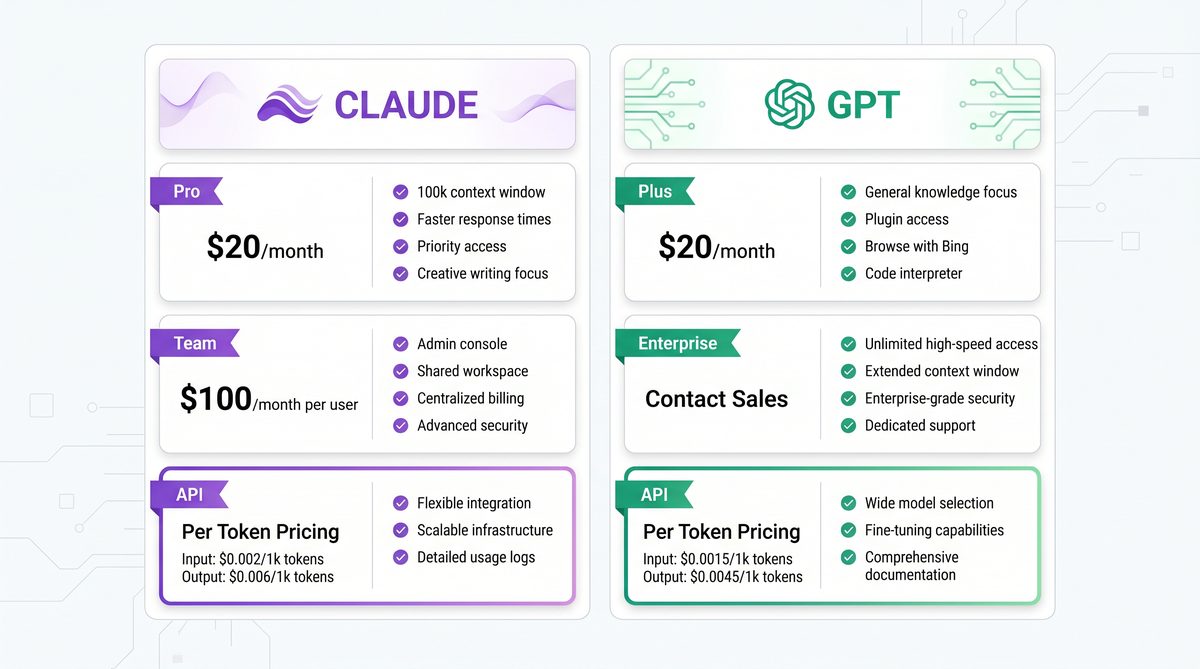
Pricing for Claude Opus 4.7 generally follows a subscription-based model with additional pay-as-you-go options for high-volume users. Its relatively smaller model size contributes to lower operational costs, making it attractive for mid-sized businesses and developers seeking cost-effective AI integration.
GPT-5.3 pricing reflects its infrastructure demands and premium capabilities, often commanding higher fees for access, particularly for enterprise-scale usage. OpenAI offers flexible plans that include monthly subscriptions, enterprise contracts, and volume discounts, enabling organizations to tailor costs to their specific needs and usage patterns.
6.3 Accessibility for Developers and End Users
Claude Opus 4.7 benefits from Anthropic’s focus on transparency and community engagement, offering extensive documentation, sample code, and open-source components that facilitate developer adoption. The company invests in developer relations programs and support forums to foster a collaborative ecosystem.
OpenAI maintains a vast developer ecosystem around GPT-5.3, including SDKs, tutorials, and an active user community. Its API is widely integrated into numerous platforms, making GPT-5.3 accessible to a broad audience ranging from individual developers to large corporations. Both models support integration with popular programming languages and development environments.
For those interested in exploring the comparative advantages of these models in specific domains, further insights can be found in our detailed analysis of AI models comparison.
Useful Links
- The Ultimate Prompt Engineering Framework for ChatGPT, Claude, and Codex in 2026
- Advanced Prompt Engineering for ChatGPT, Claude, and Codex in 2026
- How Engineering Teams Are Adopting AI Desktop Agents in 2026
- GPT-Rosalind and GPT-5.4-Cyber: How OpenAI’s Specialized Models Are Reshaping Industries
- How 3,000 Government Employees Transformed Public Services Using ChatGPT Enterprise
Related Reading
Conclusion
In summary, Claude Opus 4.7 and GPT-5.3 represent two of the most advanced AI language models available in 2026, each embodying distinct philosophies, architectures, and performance profiles. GPT-5.3 leads in sheer scale and raw language generation capabilities, excelling in multilingual support, creativity, and benchmark performance. However, its large size and resource requirements make it best suited for cloud-based, high-throughput environments.
Claude Opus 4.7 offers a compelling alternative focused on ethical alignment, safety, and efficiency. Its modular design and optimized parameter count facilitate deployment in diverse environments, including edge scenarios, where latency and cost are critical. Claude’s strong safety mechanisms and transparency features make it particularly suitable for applications demanding high trust and responsible AI usage.
Choosing between Claude Opus 4.7 and GPT-5.3 ultimately depends on the specific needs and constraints of the user or organization. Enterprises prioritizing maximum performance and versatility may lean toward GPT-5.3, while those emphasizing ethical safeguards and operational efficiency might prefer Claude Opus 4.7.
Looking ahead, both Anthropic and OpenAI continue to push the boundaries of AI research, with upcoming models expected to further integrate multimodal capabilities, improve alignment, and expand accessibility. The ongoing development in these model families promises to redefine the possibilities of AI-assisted human interaction and productivity.
For more guidance on selecting AI platforms tailored to your requirements, see our comprehensive resource on Anthropic vs OpenAI.
As AI technology advances, it remains essential to balance innovation with ethical responsibility, ensuring that models like Claude Opus 4.7 and GPT-5.3 serve as tools for positive, transformative impact across industries and communities worldwide.
For a deeper technical dive into the architectures and training methodologies of leading AI models, consult our expert review on Claude Opus 4.7.
Frequently Asked Questions
Which is better for coding — Opus 4.7 or GPT-5.3?
Claude Opus 4.7 wins on most coding benchmarks: SWE-Bench Verified 82% vs 76%, and noticeably better on multi-file refactors and agentic workflows. GPT-5.3 is competitive on shorter, well-defined coding tasks and faster for simple autocomplete-style completions.
Which model is cheaper?
GPT-5.3 is cheaper per token at $10/$40 per million input/output tokens vs Opus 4.7 at $15/$75. In practice, Opus 4.7's higher quality on hard tasks often reduces total spend because fewer retries and shorter outputs are needed — real-world cost parity depends heavily on workload.
Which has better multimodal capabilities?
GPT-5.3 leads on native multimodal — it handles images, audio, and video inputs more fluently, has native voice output, and supports real-time streaming. Opus 4.7 handles images well but has no audio/video and relies on text-based reasoning about visual content.
Which has the longer context window?
Opus 4.7 supports 1M tokens natively. GPT-5.3 offers 512K tokens standard with a 2M-token variant for enterprise. In practice both can hold large codebases — but Opus 4.7 maintains higher accuracy at 500K+ tokens where GPT-5.3's recall degrades.
Which is better for building AI agents?
Opus 4.7 currently. Its tool-use reliability (98%), native computer-use mode, and stronger long-context reasoning make it the default for agent frameworks. GPT-5.3 is catching up fast with its improved tool calling and plugin ecosystem.
Can I use both in the same workflow?
Yes, and many teams do. A common pattern is GPT-5.3 for fast front-end interactions (voice, vision, user-facing chat) and Opus 4.7 for heavy-lifting backend reasoning, coding, and agent tasks. Route by task type to get the best of both.
Get Free Access to 40,000+ AI Prompts
Join 40,000+ AI professionals. Get instant access to our curated Notion Prompt Library with prompts for ChatGPT, Claude, Codex, Gemini, and more — completely free.
Get Free Access Now →No spam. Instant access. Unsubscribe anytime.
