
The evolution of artificial intelligence in software development has drastically shifted the way developers interact with code. Command-line interface (CLI) coding agents have become integral tools, enabling programmers to boost productivity, automate workflows, and generate code snippets efficiently. In this comprehensive tutorial, we explore how to master three leading CLI coding agents in 2026: Claude Code, OpenAI’s Codex, and Antigravity. We dive into their installation, configuration, use cases, and best practices to empower developers to leverage these AI assistants effectively in their daily work.
Overview of CLI Coding Agents in 2026
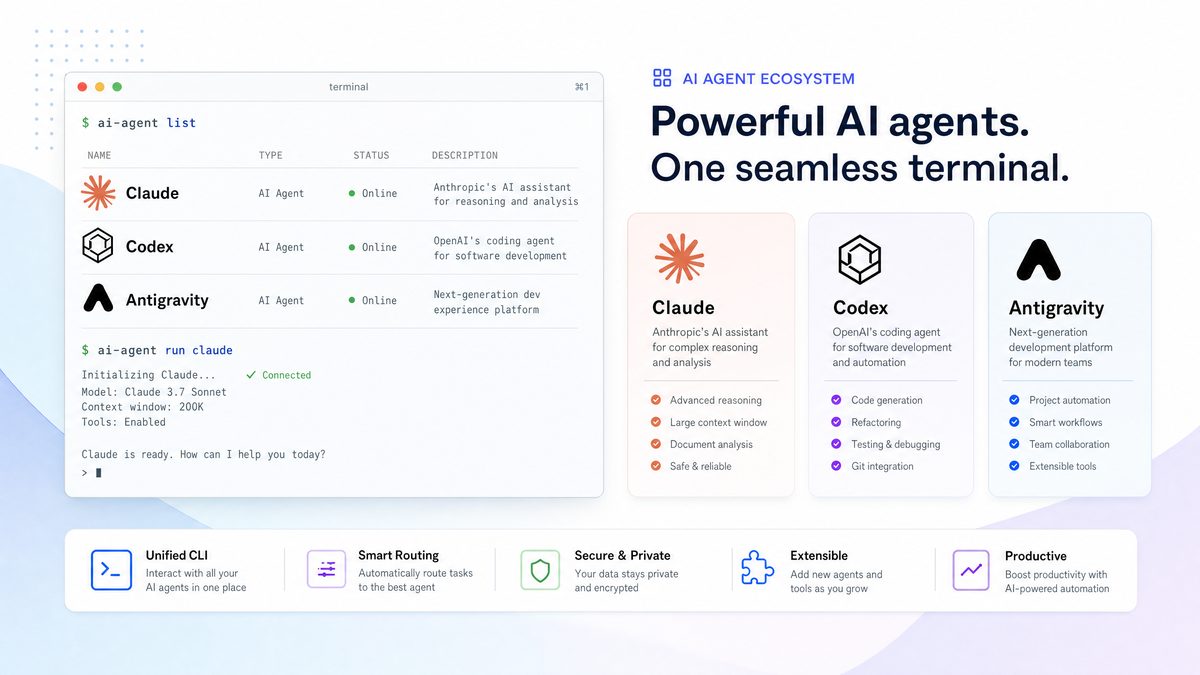
CLI coding agents are AI-powered tools accessed via the terminal that assist developers by interpreting natural language inputs, generating, refactoring, or debugging code, and automating routine tasks. Unlike traditional IDE plugins or web-based AI assistants, CLI agents focus on seamless integration into developer command-line workflows.
In 2026, three prominent AI coding assistants dominate the CLI space:
- Claude Code — Developed by Anthropic, Claude Code is praised for its contextual understanding and ethical code generation.
- Codex — OpenAI’s Codex remains a versatile AI coding model supporting dozens of programming languages and deep integration with GitHub Copilot and other tools.
- Antigravity — A cutting-edge open-source AI CLI agent known for its speed, customizable pipelines, and seamless integration with cloud-based code repositories.
Each tool offers distinct strengths and interfaces, making them complementary for modern developers. This tutorial will walk through setting up each agent, show typical command structures, and share advanced usage examples.
Installing and Configuring Your CLI Coding Agents
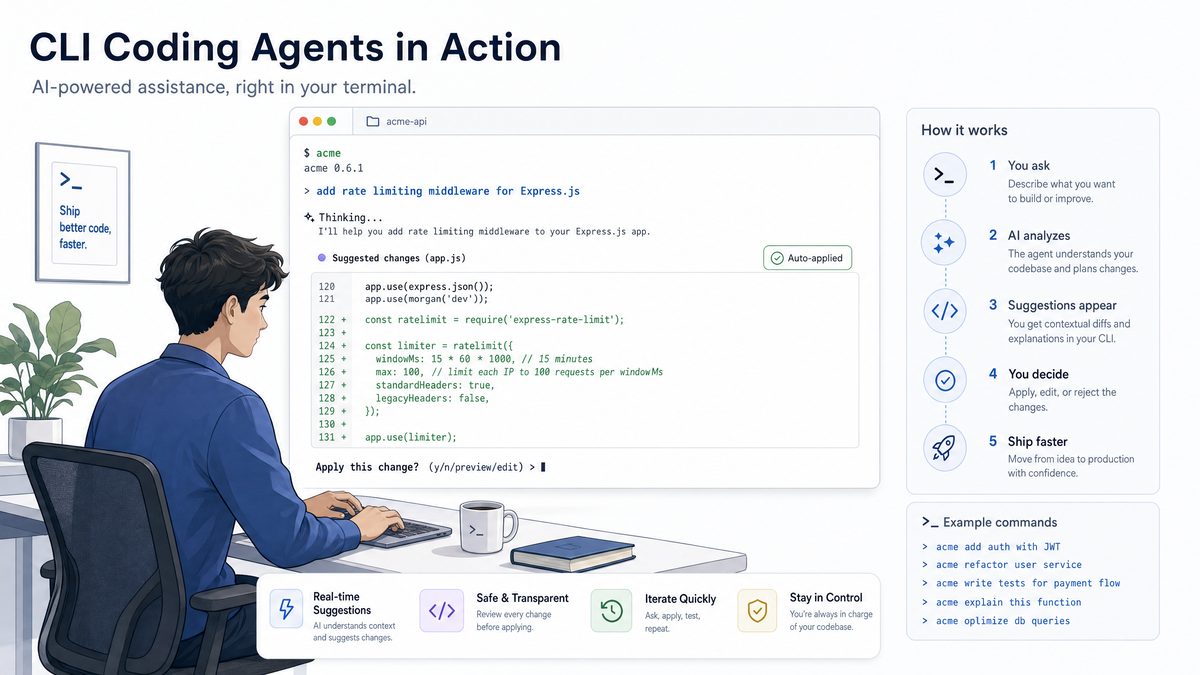
Getting started with CLI coding agents in 2026 requires careful installation and configuration to ensure optimal performance and seamless integration with your projects.
Claude Code Installation and Setup
Claude Code is accessible via a dedicated CLI tool called claudecode-cli. To install it:
- Ensure Python 3.10+ and pip are installed.
- Run the following command to install the CLI client:
pip install claudecode-cli
Next, authenticate your installation by obtaining an API key from the Anthropic developer portal and configure it with:
claudecode-cli configure --api-key YOUR_API_KEY
The configuration is stored securely in your user directory. You can verify the installation using:
claudecode-cli status
Additional CLI parameters allow adjusting context window size, verbosity, and output formats. Refer to the comprehensive flags via:
claudecode-cli --help
Codex CLI Agent Installation
OpenAI’s Codex CLI is bundled within the popular openai-cli package. To install:
npm install -g openai-cli
After installation, set your API key obtained from the OpenAI platform environment variable:
export OPENAI_API_KEY="your_openai_api_key_here"
Confirm setup with:
openai status
Codex CLI supports several programming languages and provides autocomplete, code generation, and reasoning commands. Use:
openai help
to explore the full range of options.
Installing Antigravity AI Agent
Antigravity is distributed as a binary compatible with Linux, macOS, and Windows. To install:
- Download the latest release from the official Antigravity GitHub repository.
- Unpack and move the binary to a directory in your
PATH. - Configure with:
antigravity --init
This step sets up authentication with your preferred cloud repository, such as GitHub or GitLab, and configures AI model preferences.
Antigravity excels in multi-stage command pipelines and custom workflow creation. Access its documentation for advanced configuration options.
Using CLI Coding Agents: Basic to Advanced Commands
Once installed, understanding how to communicate effectively with these AI agents through CLI commands is crucial.
Basic Operations: Generating and Refining Code
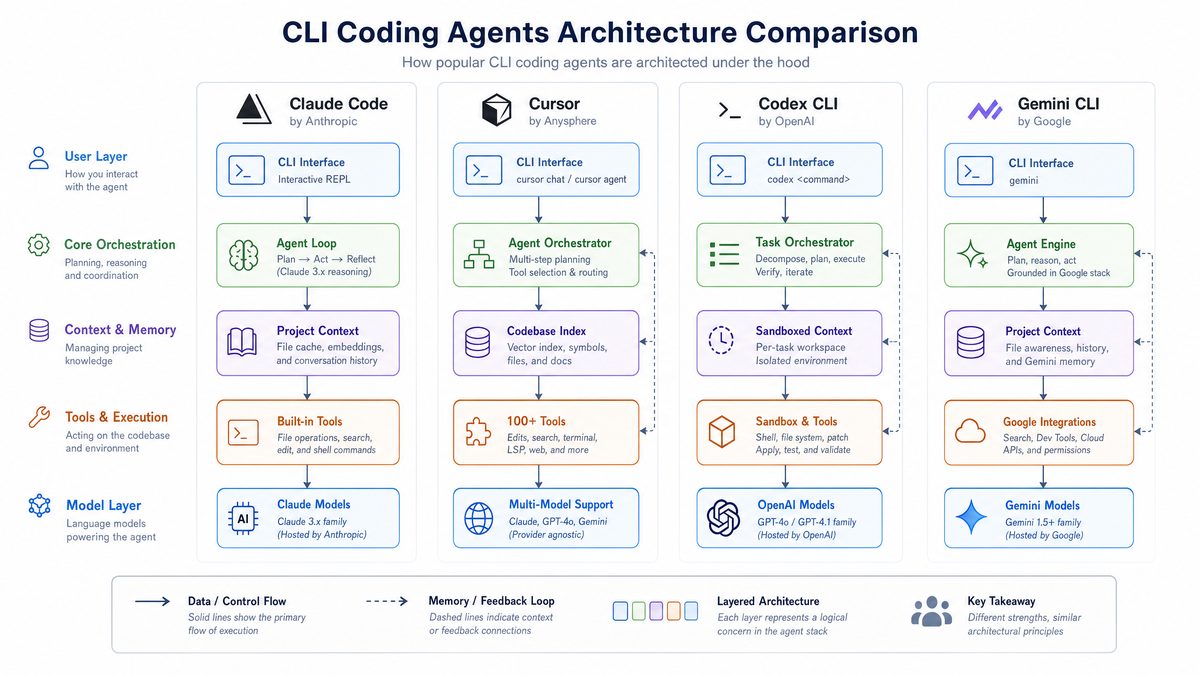
Let’s compare typical commands for performing code generation with all three agents:
| Agent | Command Example | Description |
|---|---|---|
| Claude Code | claudecode-cli generate --lang python --prompt "Write a function to sort a list using quicksort" |
Generates a quicksort function in Python with explanations of algorithm choices. |
| Codex | openai code create --language javascript --description "Chat app with WebSocket" |
Creates JavaScript code scaffolding for a WebSocket-based chat application. |
| Antigravity | antigravity generate --description "REST API endpoint in Go to handle user login" |
Outputs Go code implementing user login API endpoint, integrated with JWT authentication. |
These commands output code directly to the terminal or save to files based on optional flags. Common flags include:
--output <file_path>— Save output to a file.--explain— Requests step-by-step comments explaining the generated code.--optimize— Prioritizes performance or security improvements.
Advanced Interaction: Refactoring and Debugging
Besides generating new code, these agents assist with refactoring and debugging. Here are typical examples:
- Refactoring:
claudecode-cli refactor --file main.py --instructions "Convert functions to async and improve error handling"This command modifies the specified file asynchronously and enhances robustness.
- Debugging:
openai code debug --file app.js --error "TypeError: undefined is not a function"Codex analyzes the JavaScript file and provides troubleshooting suggestions.
- Antigravity’s Multi-Stage Debug Pipeline:
antigravity debug --pipeline "lint static-analysis dynamic-trace" --project ./myprojectRuns multiple diagnostic checks and generates a consolidated report.
In these contexts, clear and precise instructions yield the best AI responses. Incorporating domain-specific terminology or providing sample code snippets in prompts improves accuracy significantly. For further insight on optimizing prompt engineering, see our detailed guide on prompt strategies How to Use Claude Code’s New Computer Use Feature: Complete CLI Tutorial for 2026.
Integrating with Version Control and CI/CD
Modern development workflows require AI agents to fit seamlessly with Git, CI/CD pipelines, and containerization environments.
For example, Claude Code and Antigravity provide built-in commands to create git commit messages or generate pull request descriptions based on code changes:
claudecode-cli git commit --message "Optimize database queries in user model"
antigravity git pr describe --branch feature/login-enhancement
Codex integrates well within CI systems by generating test cases dynamically from user stories within pipelines:
openai test create --file payments.py --description "Unit tests for payment processing edge cases"
These AI-powered integrations accelerate continuous integration workloads, allowing teams to maintain higher code quality with lower manual effort. For those interested in advanced CI/CD automation, explore our resources on AI-driven deployment workflows AI Coding Agents in 2026: Codex vs Claude Code vs Gemini — Which Wins?.
Differentiating Features and Choosing the Right CLI Agent
Although Claude Code, Codex, and Antigravity overlap in functionality, they suit different developer needs based on unique features and ecosystems.
Comparison Table of CLI Coding Agents
| Feature | Claude Code | Codex | Antigravity |
|---|---|---|---|
| Developer | Anthropic | OpenAI | Open-source Community |
| Language Support | Python, JavaScript, TypeScript, Java, Ruby, and others | Broad, 20+ languages including Python, JavaScript, Go, Rust | Broad with focus on mainstream languages: Go, Python, Java |
| Contextual Understanding | Strong long-form context and ethical constraints | Advanced code synthesis and debugging | High-speed context switching, pipeline customization |
| Integration | CLI, API, IDE extensions, Git | CLI, API, GitHub Copilot, CI/CD integrations | CLI, Git hooks, cloud repos, container support |
| Customization | Moderate prompt tuning | Prompt-based control and plugin ecosystem | Highly customizable pipelines and workflows |
| Cost Model | Subscription with free tier | Pay-as-you-go API usage | Free and paid enterprise options |
| Best Use Case | Ethical code generation, complex text/code comprehension | Rapid prototyping, debugging help, broad coverage | Custom workflows and rapid integrations |
Depending on your project needs, environment, and language, choosing the suitable AI CLI agent will enhance your development speed and accuracy. Developers focusing on governance and ethical coding may prefer Claude Code, while rapid prototyping teams may lean towards Codex. Projects requiring custom automation pipelines will benefit greatly from Antigravity’s flexible architecture.
To explore how these agents fit into specific domains like web development, data science, or system programming, check out our sector-specific AI coding guides Claude Code vs OpenAI Codex CLI in 2026: Performance, Pricing, and Workflow Comparison.
Best Practices and Tips for Effective Usage
Maximizing productivity with CLI coding agents involves not only technical setup but also practical tips that improve interaction and output quality.
- Craft Clear Prompts: Use precise and descriptive language, include desired variables, expected data types, or algorithm preferences to get tailored code snippets.
- Iterative Refinement: Use agent capabilities to review, refine, and optimize code by issuing follow-up commands and accepting incremental improvements.
- Leverage Explanations: When unsure about generated code, use explanation flags to enhance understanding and build trust in AI suggestions.
- Validate and Test: Always run generated code through linters, static analyzers, and test suites to avoid introducing bugs.
- Secure API Keys: Store authentication credentials using environment variables or secure vaults to prevent accidental exposure.
- Integrate into DevOps: Embed these agents into build scripts, pre-commit hooks, and CI/CD pipelines for automating mundane code tasks.
By applying these techniques, developers will unlock the full potential of CLI coding agents, enabling faster, smarter, and more reliable software creation.
Deep Dive: Customizing and Extending CLI Coding Agents
In 2026, the power of CLI coding agents extends beyond basic code generation and debugging. Developers increasingly demand customization options that adapt AI behavior to specific project requirements and coding standards. This section explores advanced customization features and extension mechanisms available in Claude Code, Codex, and Antigravity.
Prompt Tuning and Custom Templates
While all three agents allow natural language prompts for code generation, fine-tuning prompt templates enhances consistency, style adherence, and domain-specific behaviors.
- Claude Code: Supports custom prompt profiles saved as JSON or YAML configurations. Developers can define templates specifying variable slots, comment styles, coding conventions, and ethical/quality constraints. For example:
{
  "template_name": "Python_API_Standard",
  "prompt": "Generate a Python API client with type hinting conforming to PEP 8 standards. Include docstrings.",
  "constraints": {
    "max_tokens": 500,
    "no_unsafe_code": true
  }
}
Invoke tailored prompts via:
claudecode-cli generate --template Python_API_Standard --vars "endpoint='users/list'"
- Codex: Enables prompt chaining and plugin extension to incorporate validated prompt libraries. Developers can create modular prompt blocks — function definitions, testing stubs, documentation generation — which Codex intelligently combines based on context.
- Antigravity: Utilizes YAML-based pipeline configurations allowing multi-step prompt processing, enrichment, and conditional branches. This is useful for workflows requiring verification, unit test scaffolding, or cross-language translation embedded in the generation process.
Plugin and Hook System
Extensibility via plugins and hooks enables AI agents to adapt across custom toolchains and organizational policies.
| Agent | Plugin Type | Use Cases | Installation |
|---|---|---|---|
| Claude Code | Prompt Hook Scripts | Ethics filters, domain-specific compliance checks | Via claudecode-cli plugin add <plugin_url> |
| Codex | Custom Plugins (Node.js) | Code linters, test case generation, specialized domain logic | By creating npm modules and linking via openai plugin install |
| Antigravity | Pipeline Extensions (YAML) | Pre-processing source files, orchestrating multi-step code generation | Through configuration files and CLI antigravity extension add |
Best Practices for Customization
- Version Control Your Templates and Plugins: Treat prompt templates and plugins as first-class source code artifacts to simplify collaboration and rollbacks.
- Sandbox and Test Extensively: Run customized pipelines on representative codebases before introducing into production environments.
- Enforce Consistent Style Guides: Whenever possible, incorporate automation to align generated code with team style guides such as PEP 8, Airbnb JavaScript Style, etc.
- Monitor Output Quality: Periodically assess logs and audit AI-generated artifacts to detect drift or unexpected behaviors.
Case Study: Building a Full-Stack Web Application using CLI Coding Agents
To illustrate practical usage, this case study outlines a step-by-step workflow employing Claude Code, Codex, and Antigravity in building a full-stack web application with REST API backend, React frontend, and CI pipeline automation.
Step 1: Backend API Development with Claude Code
We start by generating a REST API in Python using the FastAPI framework:
claudecode-cli generate --lang python --prompt "Create a FastAPI backend with user registration and authentication using JWT tokens"
Claude Code’s contextual understanding allows it to generate secure code with proper data validation and error handling. Use the --explain flag to understand implementation details.
Next, refactor the code to async and add database hooks:
claudecode-cli refactor --file backend/app.py --instructions "Convert to async, add SQLAlchemy ORM integration with PostgreSQL"
Step 2: Frontend Interface via Codex
Using Codex, we scaffold a React.js frontend that consumes the backend API:
openai code create --language javascript --description "React app with login form and dashboard fetching user data from FastAPI backend"
Codex supports rapid prototyping and incremental refinement: after initial generation, adjust UI components or add state management with instructions such as:
openai code update --file src/components/Login.js --description "Add form validation and error handling"
Step 3: Antigravity for CI/CD and Deployment Automation
Antigravity’s workflows power the build/test/deploy pipelines. Define YAML pipelines to:
- Run linting and static analysis (
eslintfor JS,flake8for Python) - Execute unit and integration tests
- Build Docker containers
- Deploy to Kubernetes cluster with rolling updates
Sample Antigravity pipeline snippet:
pipeline:
  - name: lint
    command: antigravity run lint --projects frontend backend
  - name: test
    command: antigravity run test --projects frontend backend
  - name: build
    command: antigravity container build --path ./ -t myapp:latest
  - name: deploy
    command: antigravity deploy kubernetes --config k8s/deployment.yaml
Antigravity’s modular pipeline can trigger AI-powered commit message generation for every CI step:
antigravity git commit --auto --message "CI: Run lint and tests before build"
Step 4: Continuous Improvement with AI Feedback Loops
Integrate automatic bug report generation from CI test failures using Codex’s debugging interface:
openai code debug --file backend/app.py --error "IntegrityError: duplicate key value violates unique constraint"
Simultaneously, Claude Code can suggest code improvements prompted by code coverage reports, and Antigravity can orchestrate triggering these commands automatically upon pull request creation.
Security Considerations When Using CLI Coding Agents
While AI agents offer immense productivity benefits, it is crucial to recognize and mitigate potential security risks arising from generated code and API usage.
Common Security Concerns
- Injection Vulnerabilities: Generated code might not sanitize inputs properly, potentially introducing SQL injection or command injection flaws.
- Credential Leakage: API keys or sensitive information inadvertently embedded in AI prompts or outputs.
- Dependency Risks: Auto-generated packages or code snippets may rely on outdated or vulnerable libraries.
- Over-Privileged Access: Scripts with excessive permissions or access rights that violate least privilege principles.
Mitigation Strategies
- Enforce Secure Coding Guidelines: Incorporate static and dynamic security analyzers into your AI-augmented workflows. For example, use
banditfor Python andnpm auditfor JavaScript. - Prompt for Security Awareness: Explicitly include security constraints in prompts, e.g., “sanitize all user inputs”, “use parameterized SQL queries”.
- Review AI-Generated Code Manually: Treat AI outputs as draft code requiring human expert review, especially for security-sensitive components.
- Secure API Keys Handling: Never hardcode keys in scripts. Use environment variables, secret managers, or encrypted vaults.
- Scope AI Access: Apply granular permissions and API usage limits to avoid data exposure or misuse.
Security Features in Each CLI Agent
| Feature | Claude Code | Codex | Antigravity |
|---|---|---|---|
| Ethical Code Filters | Built-in checks preventing harmful code generation | Moderate, relies on user prompt enforcement | Configurable security rule pipelines |
| Audit Trails | Automatic logging of user prompts and outputs | Logging via integration with GitHub and API dashboards | Extensive pipeline logs with custom tags |
| Credentials Management | Encrypted config stores and API key rotation support | Environment variable support and secret vault integrations | Supports Hashicorp Vault and cloud secret managers |
| Code Security Analysis | Optional static analysis integration during generation | Combination with third-party security plugins | Native support for linters and security scanners in pipelines |
Exploring Multi-Agent Collaboration and Orchestration
With multiple CLI coding agents available, developers can harness complementary strengths by orchestrating multi-agent workflows. In complex projects, chaining outputs and commands across agents enhances overall code quality and efficiency.
Use Cases for Multi-Agent Workflows
- Code Generation and Explanation: Use Claude Code to generate ethically compliant and well-commented core code, then employ Codex to scaffold tests and UI components.
- Automated Refactoring and Validation: Have Antigravity perform pipeline-based code refactoring, with Claude Code providing contextual suggestions for error handling improvements.
- CI/CD Pipeline Orchestration: Combine Antigravity’s workflow engine to execute Codex-generated test scripts and Claude Code-generated documentation updates automatically on merges.
Example Multi-Agent Workflow Script
#!/bin/bash

# Step 1: Generate core business logic using Claude Code
claudecode-cli generate --lang python --prompt "Implement payment processing logic with fraud detection" --output payment.py

# Step 2: Create unit tests for payment.py with Codex
openai code create --language python --description "Unit tests for payment.py payment processing functions" --output test_payment.py

# Step 3: Run Antigravity pipeline for linting and building
antigravity pipeline run --file antigravity-pipeline.yaml

# Step 4: Commit all changes with auto-generated summaries
claudecode-cli git commit --message "Add payment processing module with unit tests"
antigravity git pr create --title "Payment Module Completion" --branch feature/payment-module
Tips for Building Robust Multi-Agent Pipelines
- Define Clear Interfaces: Use consistent file formats, naming conventions, and prompt designs to ensure smooth handoffs between agents.
- Automate Error Handling: Implement retry and rollback mechanisms within pipeline orchestration, especially with dynamic AI outputs.
- Use Metadata and Tags: Annotate generated files and artifacts with agent information, timestamps, and version identifiers for traceability.
- Continuously Monitor Performance: Track pipeline duration, resource usage, and output quality metrics to optimize workflow efficiency.
Optimizing Performance and Resource Usage of CLI Coding Agents
As AI-powered CLI coding agents become embedded at the heart of software development workflows, efficient management of performance and resource consumption is paramount. This section dives into strategies for optimizing runtime efficiency, managing API usage costs, and tuning agent responsiveness to maximize productivity without incurring unnecessary overhead.
Managing Latency and Response Times
Low latency is critical for developers relying on CLI coding agents during iterative coding sessions. Techniques to reduce response time include:
- Local Caching: Agents like Antigravity support caching of previously generated code snippets and prompt responses. Leverage local or network caches to avoid repeating identical generation requests, especially for boilerplate code.
- Context Window Optimization: Long context windows increase processing time. Adjust context size based on task complexity using flags such as
--context-sizeinclaudecode-clior configuration options in Antigravity pipelines. - Parallel Requests: For batch processing of similar prompts (e.g., generating multiple test cases), orchestrate parallel CLI invocations or pipeline stages to utilize multi-core execution and keep agent idle times low.
Cost-Effective API Usage
Many AI CLI agents, especially those relying on cloud-hosted models like Claude Code and Codex, use pay-as-you-go or subscription models with cost tied to tokens or processing time. Consider these practices:
- Prompt Efficiency: Use concise yet specific prompts to minimize token consumption. Avoid redundant explanations if the same context is already persisted.
- Batching Requests: When generating multiple code snippets or refactorings, submit combined prompts or multi-part requests where supported, reducing per-call overhead.
- Monitoring and Alerts: Utilize agent-specific usage dashboards and integrate cost monitoring tools to track expenditure and detect anomalies early.
- Use Free Tiers and Local Modes: Where possible, test with free quotas or limited local offline models before scaling to full API usage.
Memory and CPU Considerations in Local Environments
When running CLI agents locally or self-hosted (such as Antigravity’s open-source build), resource management is crucial:
- Model Size and Resource Allocation: Adjust model size parameters or choose lightweight variants for low-powered machines.
- Resource Throttling: Configure CPU and memory limits inside Docker containers or OS-level cgroups to ensure AI agents do not preempt vital developer tools.
- Incremental Loading: For large projects, use incremental context loading to keep processing memory manageable, loading only relevant source files dynamically.
- Background Preprocessing: Offload linting or static analysis pipelines to background jobs or CI agents to avoid out-of-memory errors during coding sessions.
Example: Adjusting Context Size in Claude Code
claudecode-cli configure --context-size 2048
This command reduces the context window to 2048 tokens, lowering memory consumption and speeding up responses for small feature requests.
Example: Using Antigravity Cache for Repeated Requests
antigravity generate --description "Create authentication middleware in Node.js" --cache enable
Retries on a previously generated middleware utilize cached content, minimizing API calls and reducing latency.
Extending CLI Coding Agents with Language-Specific Features
Beyond generic code generation and refactoring capabilities, several CLI coding agents provide specialized support tailored to particular programming languages and ecosystems in 2026. Understanding and exploiting these extensions yields more relevant, idiomatic, and performant code output.
Claude Code’s Support for Python Scientific and ML Stacks
Claude Code excels in Python, especially in scientific computing and machine learning domains, thanks to deep integration with common libraries and frameworks. Key features include:
- Automatic Docstring Generation: Generate detailed NumPy- or Google-style docstrings for data science functions.
- Code Snippets for Popular Libraries: Prebuilt prompt templates for TensorFlow, PyTorch, pandas, and scikit-learn accelerate model prototyping and data wrangling tasks.
- Data Visualization Integration: Commands can generate matplotlib or seaborn visualizations with prompts like
--prompt "plot correlation heatmap from DataFrame df". - Environment Setup Automation: Generate
requirements.txtor Conda environment files using code introspection and dependency analysis.
Example command:
claudecode-cli generate --lang python --prompt "Create a CNN model using PyTorch for image classification with CIFAR-10 dataset"
Codex’s JavaScript and Web Development Ecosystem
Codex provides specialized support for the vibrant JavaScript ecosystem and rapid frontend development:
- Framework-Specific Snippets: Supports React, Vue, Angular, and Next.js project scaffolding with generation commands tuned for component lifecycles and state management.
- Package.json and Dependency Management: Generate and update
package.jsonfiles dynamically based on requested features. - Automated Testing Framework Integration: Generate Jest and Cypress test suites seamlessly paired with generated UI components.
- Browser API Interactions: Create scripts interacting with browser APIs or Service Workers using natural language commands.
Example command:
openai code create --language javascript --description "React dashboard with charting using Recharts library and responsive layout"
Antigravity for Systems Programming and DevOps Languages
Antigravity emphasizes backend, systems programming, and infrastructure automation languages with the following advanced capabilities:
- Go and Rust Idiomatic Code: Use pipelines that enforce error handling patterns, zero-cost abstractions, and concurrency best practices.
- Infrastructure as Code (IaC): Generate Terraform, Ansible, and Kubernetes YAML manifests from high-level descriptions, facilitating DevOps automation.
- Container and Orchestration Support: Automate Dockerfile and Helm chart generation within workflows.
- Security-Focused Code Generation: Include hardening flags in pipelines, e.g., automatically inserting secure coding patterns or dependency pinning.
Example command:
antigravity generate --description "Kubernetes deployment manifest for scalable backend service in Go with health checks and resource limits"
Comparison: Language-Specific Feature Support
| Feature | Claude Code | Codex | Antigravity |
|---|---|---|---|
| Python ML & Data Science | Specialized prompt templates, docstrings, visualization code | General support, test generation for ML projects | Limited; focus more on backend automation |
| JavaScript & Frontend Frameworks | Basic JS support with ethical coding constraints | Extensive React/Vue/Angular scaffolding, testing | Integration with linting and deployment pipelines |
| Systems & Infrastructure Languages | Moderate Go and Java support | Support for Go, Rust, but less pipeline control | Advanced Go, Rust idiomatic code, IaC pipelines |
| DevOps Automation | Limited direct generation, but good for scripting | Script generation and CI tests for pipelines | Full pipelines for Docker, Kubernetes, Terraform |
Tips for Leveraging Language-Specific Features
- Use Dedicated Templates: Whenever available, use language or framework-specific prompt templates to reduce manual corrections.
- Combine Agents Strategically: For example, generate core logic with Claude Code Python ML features and produce frontend JS UI with Codex.
- Extend Pipelines with Post-Processing: Use Antigravity to validate and format language-specific code output via linting or style check steps after generation.
Advanced Debugging and Testing with AI CLI Agents
Debugging and testing are central to software engineering, and in 2026, CLI coding agents provide powerful tools to automate and augment these phases, boosting software quality and developer confidence.
Automated Bug Reproduction and Diagnostics
AI CLI agents can analyze error logs, stack traces, and source code to reproduce bugs and suggest fixes efficiently, often reducing manual triage efforts.
- Error Pattern Detection: Agents parse error messages and related code to identify common patterns such as null dereferences, race conditions, or off-by-one errors.
- Test Case Generation for Bugs: Generate minimal reproducible test cases that trigger bugs, which accelerates root cause analysis.
- Fix Suggestion and Patch Creation: Receive automated code patches or refactor instructions with explanations to guide developers.
Example Codex bug reproduction command:
openai code debug --file server.go --error "panic: index out of range"
Regression Testing and Coverage Enhancement
Maintaining high code coverage and preventing regressions is easier with AI-generated tests:
- Unit, Integration, and E2E Test Generation: Generate tests across different abstraction levels based on function descriptions or user stories.
- Test Flakiness Mitigation: Agents suggest resilient test patterns and mocks to avoid flaky tests in CI.
- Coverage Reports Interpretation: AI agents parse coverage data to identify critical untested code paths and propose appropriate tests.
Example Antigravity test generation snippet within pipeline:
pipeline:
  - name: generate_tests
    command: antigravity test create --files backend/*.py --coverage-report coverage.xml
Continuous Monitoring and Alerting of Code Health
Integrate AI agents into live DevOps monitoring to continuously evaluate code quality:
- Linting and Style Checks: Generate automated code fixes for linting violations consistently during commits.
- Security Monitoring: Trigger vulnerability scans and fixes through pipelines integrated with AI.
- Performance Profiling Suggestions: Analyze profiling outputs and recommend optimized code or architecture changes.
Comparison of Debugging and Testing Capabilities
| Capability | Claude Code | Codex | Antigravity |
|---|---|---|---|
| Bug Reproduction | Context-aware error handling suggestions, code patches | Automated bug test case generation and fixes | Pipeline-based multi-stage debugging and analysis |
| Test Generation | Supports unit and integration tests, ML model validation | Rich support for frontend/backend unit tests, mocks | Automated tests integrated into CI/CD pipelines |
| Coverage Awareness | Can consume and analyze coverage reports to guide generation | Limited direct support, relies on external coverage tools | Native pipeline support for coverage-driven test generation |
| Security and Performance Analysis | Static code analysis plugins for security checks | Third-party plugin integration for vulnerability scanning | Built-in support for linters, security scanning, profiling |
Practical Tips for Effective Debugging and Testing
- Annotate Errors Clearly: Provide full error messages and relevant code snippets as input to improve context sensitivity.
- Iterative Testing: Generate initial tests, run them, then refine tests or code using follow-up agent commands to improve coverage incrementally.
- Combine Static and Dynamic Tools: Augment AI-generated diagnostics with traditional static analyzers and runtime monitors for comprehensive coverage.
- Keep Tests Lightweight: Use mocks or stubs generated by AI to minimize dependency on external systems for faster CI feedback.
Useful Links
- Anthropic Claude Code Official Site
- OpenAI Codex Documentation
- Antigravity CLI Agent GitHub Repository
- Prompt Optimization Guide – ChatGPT AI Hub
- GitHub Actions for CI/CD
- Docker CLI Reference
- PEP 8 – Style Guide for Python Code
- ESLint CLI Documentation
Access 40,000+ AI Prompts for ChatGPT, Claude & Codex — Free!
Subscribe to get instant access to our complete Notion Prompt Library — the largest curated collection of prompts for ChatGPT, Claude, OpenAI Codex, and other leading AI models. Optimized for real-world workflows across coding, research, content creation, and business.Access Free Prompt Library
