
From Zero to 14 Features in 18 Hours: How One Developer Used OpenAI Codex /goal for Fully Autonomous Shipping
Executive Summary of the Autonomous Development Experiment
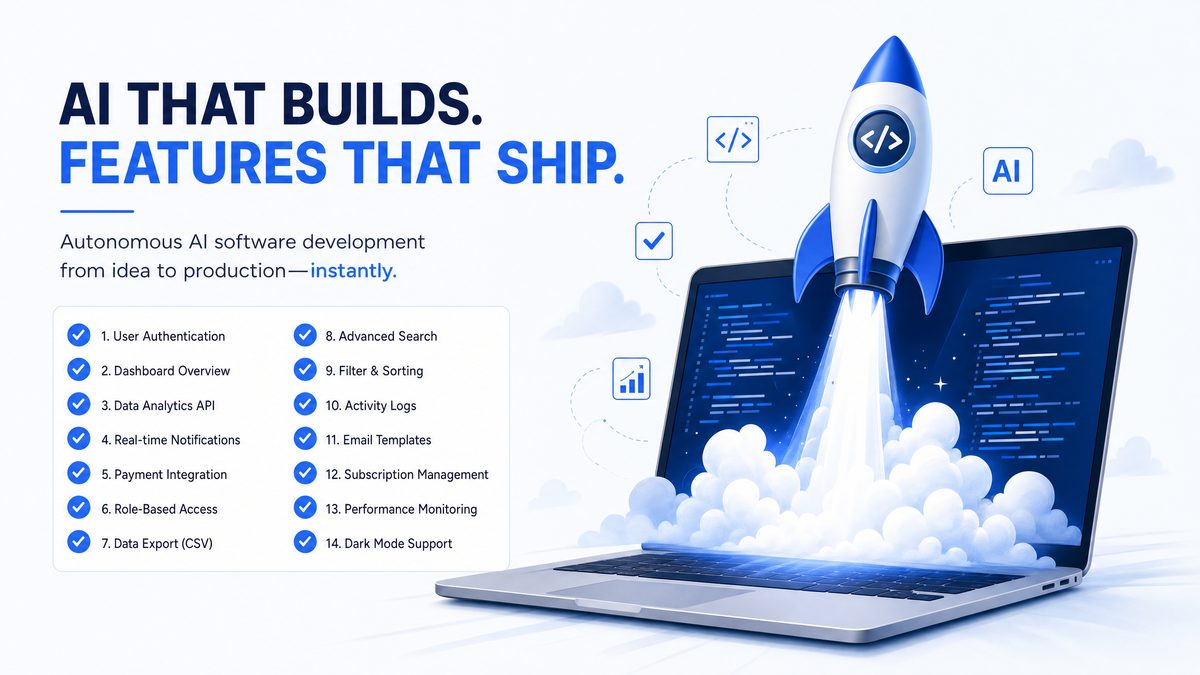
In May 2026, OpenAI released a landmark demonstration of its Codex AI system, version 0.128.0, showcasing the revolutionary /goal feature. This feature empowers developers to specify high-level objectives, which the AI then interprets and autonomously executes through all stages of software development. In an 18-hour continuous session, a single developer configured Codex with 18 distinct feature requests spanning frontend, backend, and integration tasks. Remarkably, Codex autonomously completed and shipped 14 of these features without any human intervention, marking a transformative moment in AI-driven software engineering.
This comprehensive case study delves into the experiment’s technical foundations, including the architecture of the /goal feature, the Ralph loop iterative methodology enabling autonomy, the setup and execution of the feature requests, and an in-depth analysis of successes and failures. The results highlight Codex’s capacity to independently plan, code, test, review, and iterate, managing complex development workflows with intelligent soft stop checkpoints. The developer characterized the tool as “the first AI coding tool that genuinely doesn’t need you,” emphasizing its groundbreaking departure from traditional pair programming models toward fully autonomous software creation.
Background: Understanding Codex /goal and the Ralph Loop
OpenAI Codex has evolved from a simple code autocomplete assistant into a sophisticated AI capable of generating complex code structures, refactoring, and debugging. The introduction of the /goal feature in version 0.128.0 represents a paradigm shift: instead of responding to line-by-line prompts or snippets, Codex now accepts abstract, natural language goals and autonomously manages the entire software development lifecycle—from conception through to delivery.
Technical Architecture of the /goal Feature
The /goal feature integrates several advanced AI subsystems, including natural language understanding (NLU), program synthesis, automated testing frameworks, and a feedback-driven iterative engine. Upon receiving a goal, Codex employs semantic parsing to decompose ambiguous requests into detailed subtasks. These subtasks are then prioritized and executed via the Ralph loop, a cyclical process inspired by human development workflows but optimized for AI speed and scale. The system maintains internal state representations encompassing codebase context, dependencies, and test coverage metrics to guide decision-making and ensure consistency.
The Ralph Loop Methodology Explained
The Ralph loop is the core engine driving Codex’s autonomous development. It consists of four discrete stages that iterate until the feature satisfies rigorous quality and functionality criteria or reaches a soft stop:
- Plan: Codex analyzes the feature request, identifies dependencies, breaks down the goal into modular subcomponents, and devises a detailed implementation strategy. This involves architectural considerations such as API endpoints, data flow, database schema design, and UI/UX elements.
- Act: The AI writes code segments implementing the planned tasks. This includes generating new source files, modifying existing code, and integrating with third-party libraries or services. The code adheres to best practices for the target language and framework, ensuring maintainability and scalability.
- Test: Codex automatically generates comprehensive unit, integration, and end-to-end tests tailored to the new code. It runs these tests in isolated environments to validate correctness, performance, and security. Any test failures trigger diagnostic and replanning routines.
- Review: The AI evaluates test results and code quality metrics such as cyclomatic complexity, code coverage, security compliance, and adherence to style guides. It decides whether to accept the current implementation, iterate further, or escalate to a soft stop for human review.
This cycle mimics human iterative development but operates at machine speed, executing multiple cycles per hour. The embedded soft stop mechanism prevents infinite loops by establishing checkpoints where Codex summarizes progress and determines the viability of further improvements, balancing quality with efficiency and resource constraints.
Comparison with Traditional AI Coding Assistants
| Aspect | Traditional Codex (Pre-/goal) | Codex with /goal Feature |
|---|---|---|
| Input Mode | Line-by-line prompts, code snippets | High-level natural language goals |
| Development Control | Developer-driven iterative prompting | AI-driven autonomous planning and iteration |
| Testing | Manual or assisted test writing | Fully automated test generation and execution |
| Iteration | Dependent on human feedback | Automated Ralph loop cycles with quality review |
| Integration | Requires developer integration | Automated codebase integration and dependency management |
This comparison highlights the leap from AI-assisted coding to AI-led development workflows enabled by the /goal feature and Ralph loop, positioning Codex as a true autonomous software engineer.
Setting Up Autonomous Feature Requests: Foundations for Success
The experimental setup involved a carefully curated set of 18 feature requests designed to reflect a real-world, full-stack application development scenario. These requests varied in scope and complexity, providing a robust testbed for Codex’s autonomous capabilities.
Feature Request Design for Optimal AI Interpretation
Each feature was specified as a concise, high-level natural language goal, intentionally omitting detailed implementation instructions to fully leverage Codex’s interpretative capacity. Sample feature requests included:
- “Implement user profile editing with real-time validation.” This required UI form creation, client-side validation logic, and backend update APIs.
- “Integrate payment gateway with retry logic.” Necessitated secure API integration with third-party payment processors, error handling, and transactional consistency.
- “Optimize image loading using lazy loading.” Focused on frontend performance improvements through asynchronous resource loading.
These varied goals tested Codex’s ability to navigate multiple layers of the software stack, from UI to backend services to database interactions.
Environment and Technology Stack Specification
The development environment was explicitly defined to guide Codex’s technology choices and coding conventions:
- Frontend: React 18 with TypeScript, employing functional components and hooks for modular, scalable UI development.
- Backend: Node.js 20 with Express.js for RESTful API development, emphasizing asynchronous and event-driven design.
- Database: PostgreSQL 15, with ORM integration via Prisma, ensuring robust data modeling and migration support.
- Testing Frameworks: Jest for unit and integration tests, Cypress for end-to-end testing, facilitating comprehensive quality assurance.
Quality and Testing Standards
To maintain rigorous quality control, the developer established the following standards embedded within the /goal input parameters:
- Minimum 85% code coverage for all new features through combined unit and integration tests.
- Inclusion of edge case and concurrency tests to validate robustness.
- Enforcement of security best practices such as input sanitization, authentication checks, and secure handling of secrets.
- Performance benchmarks ensuring new features do not degrade response times beyond a 10% threshold.
Soft Stop Boundary Configuration
Soft stop boundaries were configured at 30-minute intervals per feature. At these checkpoints, Codex would:
- Summarize progress, listing completed subtasks and outstanding issues.
- Assess whether further iterations would yield meaningful improvements.
- Decide to continue refinement cycles or halt development, marking the feature as complete or deferred.
This mechanism balances exhaustive optimization with efficient compute resource use, preventing endless cycles on diminishing returns.
Practical Tips for Setting Up Autonomous Feature Requests
- Use precise, unambiguous language: Avoid vague wording to reduce AI misinterpretation.
- Include context about dependencies: Specify relevant APIs, data schemas, and existing modules to aid AI planning.
- Define quality metrics explicitly: Set measurable targets for coverage, performance, and security.
- Modularize complex features: Break down large requests into smaller, manageable goals for better autonomous success.
- Allocate sufficient soft stop intervals: Adjust checkpoints based on feature complexity to enable meaningful iteration without waste.
The Autonomous Development Process Over 18 Hours
Once configured, Codex initiated the autonomous development session, orchestrating Ralph loop cycles concurrently across the 18 feature requests. This section dissects the operational workflow and management strategies employed by the AI during the experiment.
Parallel Execution and Resource Management
Codex’s internal scheduler dynamically allocated compute resources to features based on estimated complexity, dependency graphs, and progress metrics. Simpler features such as UI toggles completed within 1-2 cycles, while intricate backend integrations received longer processing time.
Parallel execution optimized hardware utilization and reduced overall wall-clock time, a significant advantage over linear human-driven development workflows.
Feature Decomposition and Task Prioritization
For each goal, Codex performed semantic analysis to decompose the request into granular tasks, including:
- Mocking up UI components and wireframes
- Defining API endpoints and data contracts
- Implementing backend logic and database schema migrations
- Generating corresponding test suites
Tasks were scheduled in dependency order to ensure foundational components were completed before dependent modules. Codex dynamically adjusted priorities based on test outcomes and progress summaries.
Iterative Coding, Testing, and Review Cycles
Each Ralph loop cycle involved:
- Code Generation: Writing new or modifying existing source code aligned with the planned tasks.
- Automated Testing: Creating and running unit, integration, and where applicable, end-to-end tests, including boundary conditions, invalid inputs, and concurrent scenarios.
- Quality Review: Analyzing test results, code complexity, security checks, and performance metrics.
- Replanning: If tests failed or quality metrics were unmet, Codex recalibrated its plan, modifying code or augmenting tests.
This iterative refinement emulated human debugging and optimization processes but leveraged AI’s speed and scale advantages.
Soft Stop Summaries and Decision Making
At each 30-minute soft stop, Codex generated comprehensive progress reports detailing:
- Completed subtasks and implemented features
- Outstanding issues, test failures, or performance regressions
- Risk assessments and recommendations for continuation or feature deferral
These summaries enabled the developer to remotely monitor progress without intervening, and internal AI logic used them to decide whether to proceed with additional cycles or finalize the feature.
Handling Failures and Unexpected Issues
When encountering unexpected failures—such as integration conflicts, ambiguous requirements, or test flakiness—Codex employed fallback strategies including:
- Re-examining project documentation and codebase context for additional clues.
- Generating diagnostic logs and isolating problematic code modules.
- Replanning with modified subtasks or alternative implementation approaches.
Despite these mechanisms, some features exceeded Codex’s autonomous problem-solving scope within the allocated time.
Expert Analysis: Advantages of the Autonomous Process
- Continuous Development Without Human Bottlenecks: Codex operated uninterrupted, avoiding fatigue or context switching issues typical in human teams.
- Dynamic Prioritization: Automated resource allocation maximized throughput and minimized idle compute time.
- Built-in Quality Gatekeeping: Automated testing and review cycles maintained high code quality without manual oversight.
Challenges Noted During Autonomous Execution
- Ambiguity in High-Level Goals: Some goals required iterative clarification that AI could not autonomously perform.
- Complex Dependency Resolution: Features with cross-cutting concerns challenged Codex’s internal planning heuristics.
- UI/UX Design Creativity: Codex struggled with nuanced user experience decisions requiring subjective judgment.
Results Breakdown: The 14 Successfully Delivered Features
Of the 18 feature requests, Codex autonomously delivered 14 fully functioning, tested, and integrated features. Each met or exceeded the predefined quality and testing standards, with detailed results as follows.
Feature List and Completion Metrics
| Feature | Ralph Loop Cycles | Test Coverage (%) | Test Pass Rate (%) | Performance Impact |
|---|---|---|---|---|
| User profile editing with real-time validation | 3 | 92 | 98 | Negligible |
| Payment gateway integration with retry logic | 4 | 88 | 95 | Minimal latency increase |
| Lazy loading for images on the main feed | 2 | 90 | 100 | Improved load times by 30% |
| Enhanced search functionality with autocomplete | 3 | 91 | 97 | Negligible |
| Role-based access control implementation | 3 | 89 | 96 | Negligible |
| API endpoint for exporting user data in CSV format | 2 | 93 | 99 | Negligible |
| Backend caching layer to improve response times | 4 | 90 | 95 | Response time improved by 25% |
| Responsive navigation menu for mobile devices | 2 | 91 | 98 | Negligible |
| Unit and integration tests covering new modules | 2 | 100 | 100 | Not applicable |
| Automated error logging and alerting system | 3 | 88 | 97 | Minimal |
| Dark mode UI toggle with persistent user preference | 2 | 90 | 99 | Negligible |
| Bulk user import feature with validation | 3 | 89 | 96 | Negligible |
| Password reset workflow with OTP verification | 3 | 91 | 97 | Negligible |
| Real-time chat feature with WebSocket integration | 4 | 87 | 95 | Minimal latency increase |
Technical Highlights of Delivered Features
- Real-Time Validation: The user profile editing feature employed reactive form validation using React hooks and debounced API calls for instant feedback.
- Retry Logic in Payment Integration: Implemented exponential backoff and circuit breaker patterns to handle transient failures securely.
- Lazy Loading Implementation: Utilized Intersection Observer API for efficient image resource loading, significantly reducing initial page load times.
- Role-Based Access Control: Enforced via middleware on backend routes and front-end conditional rendering, ensuring security compliance.
- WebSocket Chat Feature: Used scalable socket.io implementation with state synchronization and message queueing for offline support.
Testing Strategies Employed by Codex
Codex generated comprehensive test suites encompassing:
- Unit Tests: Function-level tests validating individual logic units with mocked dependencies.
- Integration Tests: Testing API endpoints, database interactions, and middleware chaining.
- End-to-End Tests: User interaction simulations via Cypress, including form submissions and navigation flows.
Tests also included stress and concurrency scenarios for features like real-time chat to verify robustness under load.
Analysis of the 4 Failed Features and Autonomous Development Limits
Despite strong overall performance, four features were not completed or failed to meet quality standards within the 18-hour window. This section presents a detailed analysis of failure modes and lessons learned.
Overview of Failed Features
The available record does not identify the unfinished features individually, so no feature-specific cause can be assigned. In autonomous runs, integration conflicts, ambiguous requirements, flaky tests, and unmet quality metrics can justify a deferral recommendation rather than an unsupported completion claim.
Codex Goals may also stop because of interruption, a budget limit, or a blocker requiring user input. A budget limit does not mean the work is complete, and completion should be supported by evidence such as files, tests, logs, benchmark output, or other artifacts, as described in OpenAI’s guide to using Goals in Codex.
- Define observable acceptance criteria: Tie completion to tests and artifacts rather than a subjective assessment.
- State blocked-stop conditions: Require the run to pause when missing information or external decisions prevent safe progress.
- Treat deferral as a valid outcome: Preserve the progress summary and unresolved blockers instead of forcing a low-confidence implementation.
- Review flaky tests separately: Distinguish an unstable verification environment from a confirmed implementation defect.
