
Mastering OpenAI Codex’s Goal Mode on macOS, IDE Extensions, and CLI: A Comprehensive Prompting Guide
By Markos Symeonides
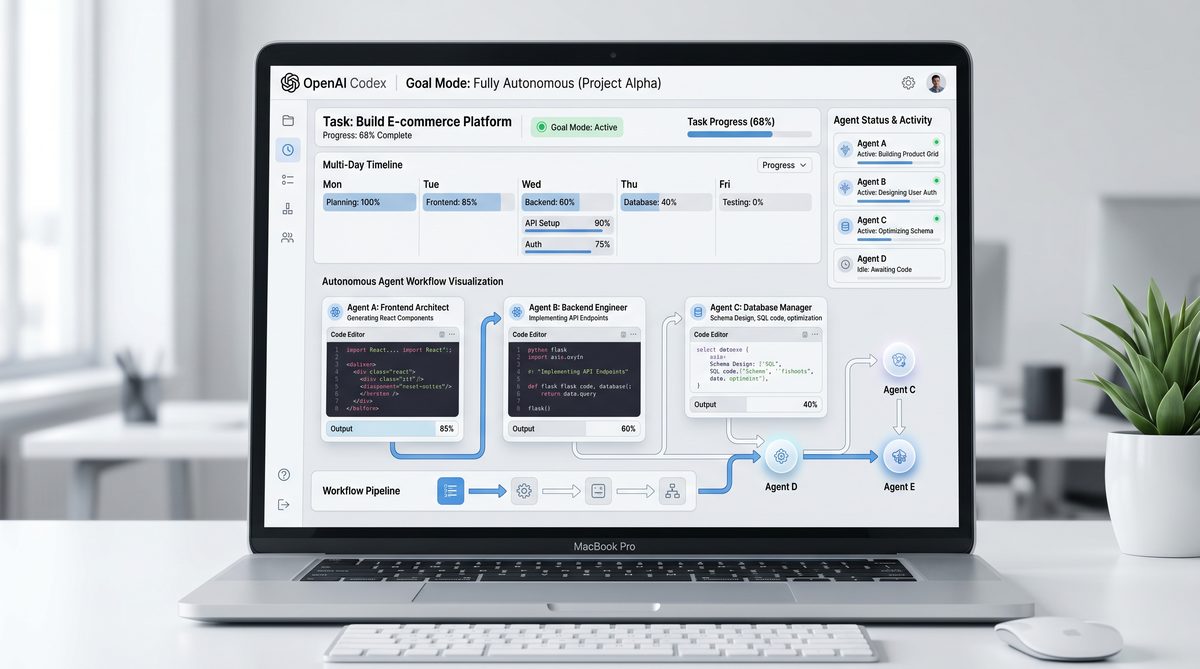
OpenAI Codex has ushered in a new era in the realm of artificial intelligence-assisted software development by fundamentally transforming how developers conceive, generate, and interact with code. This powerful AI model, built upon the foundations of GPT architecture, excels in understanding natural language prompts and translating them into functional code across multiple programming languages. Among the many groundbreaking enhancements to Codex, the advent of “Goal Mode” stands as a pivotal advancement, enabling the AI to autonomously undertake complex, multi-step programming objectives that extend over prolonged time frames.
Goal Mode is not merely an incremental feature; it signifies a paradigm shift in AI-assisted coding by empowering Codex agents to maintain persistent focus on end-to-end goals, dynamically adapt their strategies based on intermediate feedback, and seamlessly integrate with diverse computing environments. Whether utilized on macOS, embedded within Integrated Development Environment (IDE) extensions, or operated through command-line interfaces (CLI), Goal Mode facilitates unprecedented levels of automation in software development workflows. This capability is particularly transformative in contexts requiring iterative debugging, large-scale codebase refactoring, or orchestrated project management, where human oversight is sparse or impractical.
This article offers an exhaustive and methodical exploration of OpenAI Codex’s Goal Mode, with a dedicated focus on deploying and mastering it within macOS platforms, IDE ecosystems, and CLI environments. We will begin by unpacking the conceptual architecture and operational context of Goal Mode, proceed to dissect advanced prompting frameworks and structural syntax essential for maximizing its effectiveness, and delve into sophisticated instruction design principles aimed at preventing agent drift and managing error escalation. Extensive practical insights and best practice recommendations will be provided to equip developers and AI practitioners with the tools necessary to harness Goal Mode’s full potential for autonomous, reliable, and efficient software engineering.
Understanding OpenAI Codex’s Goal Mode: Conceptual Foundations and Operational Context
At its core, Goal Mode represents a sophisticated operational paradigm within the OpenAI Codex ecosystem, architected to sustain an AI agent’s engagement with a clearly defined objective over extended durations that may range from several hours to multiple days. This approach diverges fundamentally from the conventional interactive model of prompt-response exchanges, where an AI model processes discrete queries and returns singular outputs without persistent state or long-term planning.
Instead, Goal Mode equips Codex with the capability to function as an autonomous agent capable of iterative decision-making, strategic planning, execution, verification, and refinement. This multi-faceted process involves the agent decomposing complex, high-level goals into a hierarchy of manageable sub-tasks, executing these tasks in sequence or parallel as appropriate, and continuously monitoring progress through embedded feedback loops. Such feedback mechanisms enable dynamic adaptation, allowing the agent to recalibrate its approach in response to encountered challenges, environmental changes, or newly acquired information.
The conceptual breakthrough underlying Goal Mode is its ability to maintain and evolve a rich contextual representation of the task at hand throughout the session. This includes tracking completed milestones, outstanding sub-tasks, encountered errors, and rationale for decisions made. Maintaining this persistent context is critical for ensuring goal alignment and coherence, especially when the AI agent interacts with complex codebases or integrates with multiple system components.
When deployed on macOS, Goal Mode leverages the operating system’s native capabilities, including its robust Unix-based file system, process management utilities, and networking stack, to execute commands, manipulate code files, and interact with external APIs or services. This native integration facilitates smooth orchestration of multi-layered programming workflows, including tasks such as code analysis, automated testing, and deployment scripting.
Within IDE extensions—particularly those crafted for industry-standard platforms like Visual Studio Code, IntelliJ IDEA, and PyCharm—Goal Mode enhances developer productivity by embedding autonomous AI agents directly into the development workflow. These extensions provide interactive interfaces for defining goals, monitoring agent progress, reviewing generated code, and incorporating user feedback, effectively creating a symbiotic relationship between human expertise and AI-driven automation.
Command-line interface (CLI) implementations of Goal Mode cater to automation specialists, DevOps engineers, and power users who require scriptable, headless operation of Codex agents. In these environments, Goal Mode integrates seamlessly with existing automation pipelines, continuous integration/continuous deployment (CI/CD) systems, and batch processing workflows, enabling scalable and reproducible autonomous coding tasks.
Critically, the efficacy of Goal Mode hinges on a sophisticated interplay between prompt design, agent autonomy, and environmental constraints. Unlike traditional prompt engineering focused on eliciting immediate, isolated responses, Goal Mode demands a holistic approach to instruction design that embeds hierarchical task structures, explicit constraints, and adaptive feedback mechanisms. This rigor is essential to prevent agent drift—a phenomenon where the AI diverges from its intended objective over time—and to manage error escalation, where minor faults compound into significant failures if left unchecked.
In essence, Goal Mode represents a transformative leap in AI-assisted programming, demanding a comprehensive understanding of its architectural principles, operational nuances, and strategic prompting techniques to fully realize its transformative potential.
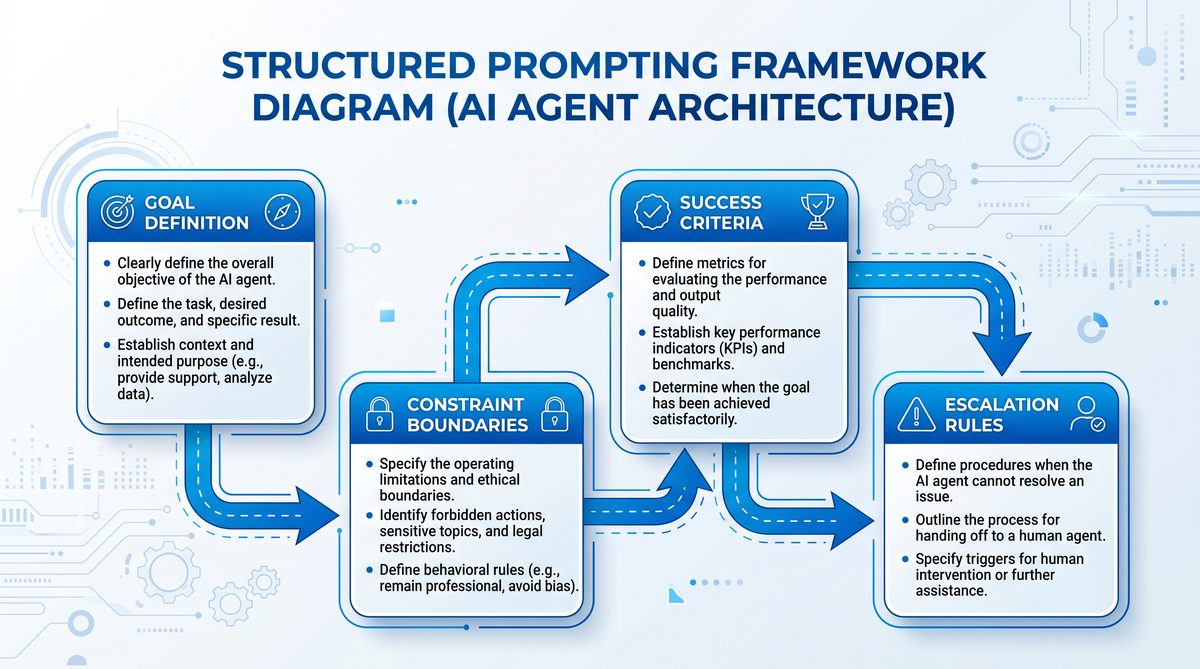
Structural Syntax and Prompting Frameworks for Effective Goal Mode Utilization
Harnessing the full capabilities of Goal Mode necessitates mastery over advanced prompting frameworks and an intimate understanding of the structural syntax that governs the AI agent’s behavior. Unlike simplistic command prompts, Goal Mode prompts function as comprehensive, multi-layered documents that articulate not only the ultimate objective but also the operational constraints, intermediate milestones, evaluation metrics, and error handling protocols.
At a foundational level, a well-constructed Goal Mode prompt is segmented into several distinct sections, each fulfilling a critical role in guiding the Codex agent through the autonomous task execution lifecycle. This segmentation enhances clarity, facilitates modularity, and enables dynamic adaptability within the AI’s operational logic.
Foremost among these sections is the Objective Definition. This opening segment explicitly articulates the primary goal the agent must achieve, delineating success criteria, performance metrics, and any domain-specific constraints that govern acceptable solutions. Precision and unambiguity here are paramount, as any vagueness can lead to divergent interpretations and consequent agent drift. For example, specifying “improve maintainability” should be accompanied by measurable indicators such as code coverage thresholds or adherence to specific design patterns.
Following the objective, the Task Decomposition section breaks down the overarching goal into a logically ordered sequence of sub-tasks or stages. This hierarchical decomposition serves multiple purposes: it simplifies problem complexity, enables incremental progress tracking, and facilitates targeted troubleshooting when issues arise. Effective decomposition often leverages established software engineering methodologies, such as modularization, separation of concerns, or iterative refinement.
The Execution Instructions segment provides detailed procedural guidelines that inform Codex on permissible methods, coding standards, environmental considerations, and tool usage. This might include directives on which programming languages or frameworks to use, adherence to style guides (e.g., PEP8 for Python), or constraints on resource usage. These instructions act as guardrails, ensuring that the agent’s output aligns with project conventions and technical requirements.
Integral to Goal Mode’s robustness is the Monitoring and Feedback Schema. This section codifies mechanisms for validating intermediate outputs, detecting anomalies, and dynamically adjusting strategies. It typically embeds conditional logic for error detection and recovery, specifying automated retries, fallback procedures, or escalation protocols. The feedback schema ensures that the agent maintains alignment with the objective throughout execution and provides transparency into ongoing progress.
Finally, the Termination Criteria section establishes clear conditions under which the Goal Mode session concludes. These might include successful completion of all tasks, exhaustion of retry attempts, detection of unrecoverable errors, or explicit user interruption. Defining termination criteria prevents endless execution loops and facilitates resource management.
To illustrate these principles concretely, consider the following exemplary Goal Mode prompt skeleton designed for an autonomous code refactoring task on macOS:
Objective:
Refactor the legacy payment processing module to improve maintainability and performance without altering existing functionality. Success is measured by passing all unit tests and achieving a 20% reduction in execution time.

Task Decomposition:
1. Analyze and document current code structure.
2. Identify redundant or duplicated code blocks.
3. Implement modular functions adhering to SOLID principles.
4. Optimize critical loops and database queries.
5. Validate changes through automated testing.

Execution Instructions:
- Use macOS native file system commands for code navigation.
- Follow PEP8 style conventions.
- Maintain backward compatibility with existing APIs.

Monitoring and Feedback Schema:
- After each sub-task, run the test suite and log results.
- On test failures, attempt automated debugging up to two retries.
- Escalate unresolved errors for manual review.

Termination Criteria:
- Session ends upon successful test completion or after three consecutive error escalations.
This prompt structure equips the Codex agent with a comprehensive roadmap, enabling autonomous progression toward the goal while embedding rigorous checkpoints to maintain alignment and quality.
Another critical dimension in effective prompting involves the application of explicit syntax markers and delimiters to demarcate instructions, code snippets, and outputs. For example, enclosing code fragments within triple backticks (```) or specifying JSON schemas for configuration data enhances the AI’s ability to accurately parse, interpret, and generate structured responses. These syntactical conventions reduce ambiguity and improve the reliability of multi-turn interactions, especially when prompts and responses involve nested data types or complex code constructs.
Moreover, the incorporation of meta-prompts—higher-order directives that instruct Codex on self-monitoring and reflective behaviors—significantly enhances Goal Mode performance. Such meta-prompts may include instructions like “Periodically summarize progress,” “Flag uncertainties or assumptions,” or “Request clarification prior to executing ambiguous instructions.” By embedding these reflective checkpoints, the prompt design anticipates potential sources of drift and ambiguity, enabling proactive course corrections and fostering a dialogic interaction style even within autonomous operation.
In practice, the iterative refinement of prompt frameworks is vital to achieving optimal Goal Mode outcomes. Developers should employ rigorous prompt testing, progressively adjusting instruction granularity, feedback mechanisms, and error handling protocols based on observed agent behavior. This iterative engineering process parallels software development best practices, underscoring that effective AI prompting is itself an evolving discipline demanding experimentation, analysis, and continuous improvement.
Preventing Agent Drift and Handling Error Escalation: Instruction Design Strategies
One of the most formidable challenges in deploying autonomous AI agents in extended Goal Mode sessions is the phenomenon of agent drift. Drift occurs when the AI gradually deviates from its intended objective, often due to ambiguous instructions, cumulative errors, or dynamic environmental changes. Left unchecked, drift can lead to wasted computation, suboptimal outcomes, or even detrimental modifications to critical codebases.
Preventing agent drift requires a meticulously crafted instruction design that prioritizes clarity, redundancy, and adaptive feedback. A foundational approach involves embedding explicit alignment checkpoints within the prompt, compelling the Codex agent to periodically validate its outputs against predefined success criteria. These checkpoints function as internal audits, forcing the agent to self-assess adherence to the objective and enabling course corrections before divergence becomes significant.
For instance, a prompt might instruct:
"After completing each sub-task, verify that the output conforms to the specified API schema. If deviations exceed the allowed threshold, revert changes and reattempt implementation with adjusted parameters."
Such conditional instructions promote rigorous self-validation and instill a disciplined execution flow, substantially mitigating drift risks. Beyond verification, embedding rollback protocols within prompts empowers the agent to undo or discard problematic actions, preserving system integrity and facilitating recovery from errors. These protocols are especially critical in environments where changes may have cascading effects, such as production codebases or complex dependency trees.
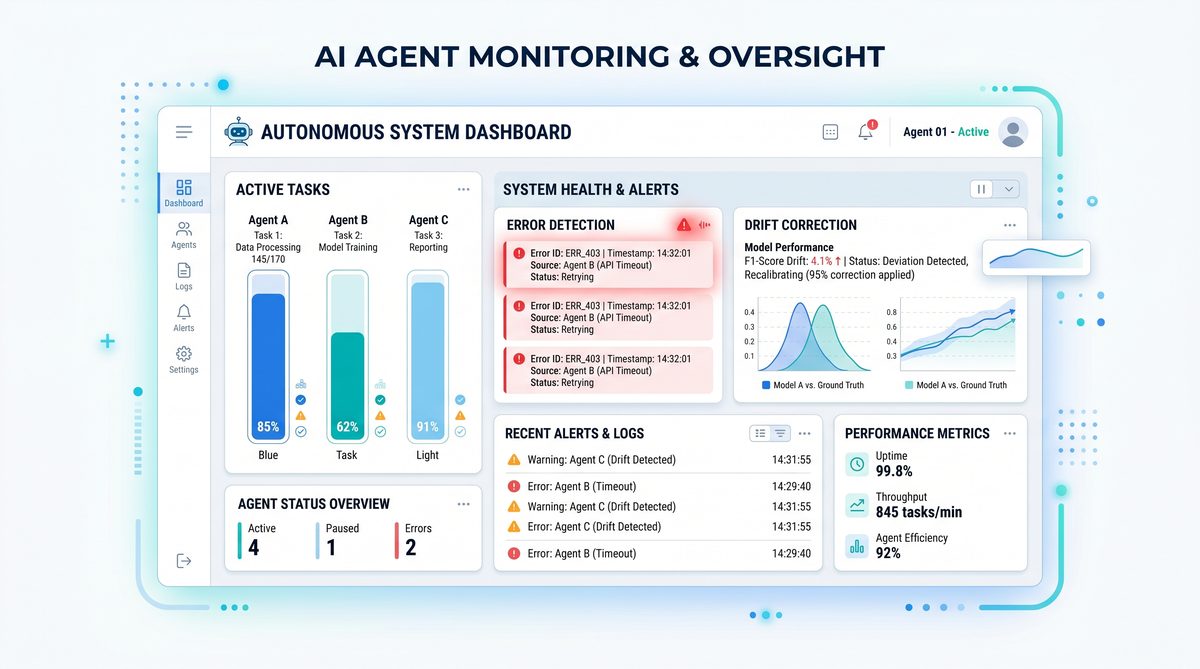
Handling error escalation is another vital dimension in instruction design. In multi-step, autonomous processes, errors can propagate and magnify, jeopardizing the entire objective if not properly managed. Effective prompt design incorporates graded error handling strategies that differentiate responses based on error severity and frequency.
Minor transient errors—such as network timeouts, temporary unavailability of external services, or syntactic glitches—may be addressed with automated retries, local workarounds, or fallback heuristics. For example, the agent might attempt to re-execute a failed network call a predefined number of times before proceeding. Conversely, serious errors—such as logical inconsistencies, failed test cases, or security violations—should trigger escalation protocols. These protocols may pause Goal Mode execution, generate detailed diagnostic reports, and solicit human intervention to prevent further damage.
An illustrative error escalation framework within a Goal Mode prompt might be articulated as follows:
"On encountering recoverable errors, attempt up to three automated fixes using available debugging tools. If errors persist beyond this threshold, generate a detailed error report and pause execution awaiting user input."
This tiered approach balances the twin imperatives of autonomy and safety, ensuring that the AI agent neither halts prematurely for minor issues nor blindly advances in the face of critical failures.
Beyond error handling, instructing Codex to maintain an internal state summary is an advanced technique that enhances transparency, recovery, and auditability. This summary captures the current progress status, encountered errors, decision rationale, and contextual metadata. By periodically outputting or externally storing this state information, developers gain valuable insights into the agent’s operational trajectory and can facilitate session resumption or post-mortem analysis.
Moreover, anticipating environmental variability is crucial. Development environments are rarely static; dependencies evolve, file structures shift, and external APIs change. Effective Goal Mode prompts incorporate adaptive strategies that instruct Codex to validate environment consistency before proceeding. This might include checking for version compatibility, verifying the presence and integrity of required files, and validating input formats. These preemptive checks empower the agent to dynamically adjust its behavior in response to environmental changes, thereby sustaining alignment and robustness.
In sum, preventing agent drift and managing error escalation demand a holistic, nuanced approach to instruction design. By integrating explicit checkpoints, rollback mechanisms, graded error protocols, state summaries, and environmental validation into Goal Mode prompts, developers can orchestrate autonomous AI workflows that are resilient, transparent, and aligned with user intentions.
Implementing Goal Mode on macOS, IDE Extensions, and CLI: Practical Workflows and Best Practices
With a comprehensive understanding of Goal Mode’s conceptual framework and instruction design strategies, we now turn to practical considerations for implementing Goal Mode across three primary environments: macOS, IDE extensions, and command-line interfaces. Each environment presents unique opportunities and challenges, necessitating tailored workflows and best practices to maximize the efficacy of Goal Mode agents.
Goal Mode on macOS
macOS offers a uniquely powerful platform for running OpenAI Codex in Goal Mode, benefiting from its Unix-based architecture, robust security model, and extensive native scripting capabilities. This operating system’s combination of graphical user interface elements with a powerful Terminal environment enables seamless orchestration of AI-driven workflows that span both GUI-based and command-line interactions.
To initiate a Goal Mode session on macOS, developers often encapsulate their prompts as structured text files or JSON payloads that can be programmatically fed into the Codex API via custom scripts or command-line utilities. This approach facilitates automation, reproducibility, and version control of prompt definitions.
The macOS environment also empowers sophisticated integration with native utilities. For example, launchd can be employed to schedule and manage long-running Goal Mode processes, enabling persistent agent sessions that survive system reboots or user logouts. Additionally, osascript and AppleScript provide mechanisms for interacting with GUI applications, allowing Goal Mode agents to automate tasks that extend beyond the command line, such as manipulating Xcode projects or triggering macOS-native build tools.
One exemplary workflow involves the use of Terminal-based tools to instantiate a persistent Goal Mode agent tasked with autonomously refactoring a complex codebase. By leveraging fswatch, the agent can monitor real-time file system events, dynamically updating its contextual prompt to reflect recent code changes and thus maintaining up-to-date situational awareness. This continuous feedback loop enables the agent to respond proactively to evolving code structures, ensuring that refactoring efforts remain relevant and coherent.
Complementing these capabilities, macOS’s native notification system can be harnessed to provide unobtrusive alerts to users upon task completion, error escalation, or requests for input. This facilitates smooth human-AI collaboration, even when the agent operates asynchronously or in background sessions.
To optimize performance during extended Goal Mode operations, developers should consider macOS power management and resource scheduling features. Configuring background task priorities, preventing system sleep during critical operations, and monitoring CPU and memory usage help ensure that the AI agent runs efficiently without adversely affecting overall system responsiveness.
Furthermore, the macOS security framework, including Gatekeeper and System Integrity Protection, necessitates careful consideration when the Goal Mode agent requires elevated permissions or interacts with protected resources. Developers should employ best practices for sandboxing, code signing, and permission requests to maintain system security and user trust.
Goal Mode within IDE Extensions
Integrating Goal Mode directly into popular Integrated Development Environments elevates the developer experience by embedding autonomous AI capabilities within familiar and feature-rich coding environments. IDE extensions for platforms such as Visual Studio Code, IntelliJ IDEA, and PyCharm facilitate seamless interaction with Codex agents by providing intuitive user interfaces, real-time feedback, and tight integration with project artifacts.
Within an IDE, Goal Mode can be initiated through command palettes, context menus, or dedicated sidebars, enabling developers to define objectives, configure instruction sets, and monitor agent progress interactively. These extensions manage prompt transmission to the Codex backend, handle streaming outputs for real-time insights, and synchronize generated code with the active project workspace, ensuring coherence and minimizing disruption.
Best practices for IDE-based Goal Mode include leveraging the language server protocol (LSP) to provide real-time syntax validation, code completion, and error highlighting. This integration allows the AI agent to produce syntactically correct and semantically meaningful code, reducing the iteration cycle and enhancing output quality.
Moreover, IDE extensions typically integrate with version control systems such as Git, enabling safe management of changes introduced by the Goal Mode agent. Features like automatic branch creation, commit staging, and diff visualization empower developers to review, accept, or revert AI-generated modifications, maintaining full control over the codebase.
To enhance alignment and reduce agent drift, many IDE extensions support user feedback mechanisms that allow manual corrections or annotations to be fed back into the Goal Mode agent. This iterative feedback loop fosters agent learning and refinement, progressively improving output relevance and accuracy.
Another innovative feature commonly found in IDE integrations is the implementation of breakpoint-style interaction points within Goal Mode sessions. Here, the agent pauses execution after completing defined sub-tasks, prompting the user to review generated code, provide clarifications, or modify instructions before proceeding. This hybrid autonomy model strikes a balance between AI-driven efficiency and human expertise, particularly valuable in safety-critical or high-complexity projects.
Additionally, IDE extensions can offer visualization tools such as progress dashboards, task hierarchies, and error logs, providing developers with comprehensive situational awareness. These interfaces facilitate proactive intervention, informed decision-making, and collaborative problem-solving.
Goal Mode via Command-Line Interface (CLI)
For automation engineers, DevOps professionals, and power users, accessing Goal Mode through command-line interfaces offers unparalleled flexibility, scalability, and integration potential. CLI implementations cater to environments emphasizing scriptability, headless operation, and integration with complex automation pipelines.
CLI tools designed for Goal Mode typically accept prompt definitions as input files or command-line arguments, allowing for parameterization, templating, and dynamic prompt generation. This flexibility enables users to embed Goal Mode invocations within shell scripts, cron jobs, or orchestration frameworks, facilitating seamless incorporation into larger workflows.
One sophisticated CLI use case involves nightly build systems where Goal Mode autonomously analyzes build failures, identifies regression sources, generates candidate patches, and submits pull requests for review. By integrating with continuous integration platforms such as Jenkins, GitLab CI, or GitHub Actions, these workflows enable rapid, autonomous detection and remediation of code quality issues.
To maximize reliability in CLI environments, developers should implement robust error handling within shell scripts, including retry loops, timeout mechanisms, and resource monitoring. Capturing verbose logs enriched with timestamps, context metadata, and diagnostic information is critical for troubleshooting and audit compliance.
Moreover, CLI-based Goal Mode workflows can be extended to support multi-agent orchestration, where multiple Codex instances collaborate or operate in parallel to tackle complex objectives. This distributed approach enables scaling autonomous coding tasks across large codebases or heterogeneous environments.
Security considerations are paramount in CLI deployments, especially when the Goal Mode agent accesses sensitive repositories, credentials, or production systems. Employing environment isolation, secure token management, and audit logging ensures compliance with organizational policies and regulatory requirements.
Across all environments—macOS, IDE extensions, and CLI—the iterative refinement of prompts remains a cornerstone best practice. By continuously analyzing agent behavior, output quality, and error patterns, developers can optimize instruction sets to enhance alignment, efficiency, and robustness. This ongoing process transforms prompt engineering into a dynamic discipline integral to successful Goal Mode utilization.
The ability to control Codex remotely opens new possibilities for developers who need to manage coding tasks on the go. Our tutorial on using OpenAI Codex from mobile devices via remote SSH, hooks, and mobile steering provides step-by-step instructions for configuring remote access and managing Codex sessions from iPhone and iPad.
Effective prompting remains the critical skill for extracting maximum value from AI coding tools. Our comprehensive guide on advanced prompting techniques for steering Codex and Claude Code provides tested frameworks for structuring instructions that produce reliable, production-quality code output from autonomous coding agents.
Deploying AI agents at enterprise scale requires careful orchestration across multiple systems and workflows. Our guide on enterprise AI agent orchestration from pilot to production details the architectural patterns, governance frameworks, and scaling strategies that organizations need to move beyond proof-of-concept deployments.
Useful Links
- OpenAI Codex Official Documentation
- Visual Studio Code Extension Marketplace
- JetBrains Plugin Development Guide
- AppleScript and Scripting Bridge Documentation
- GitLab Continuous Integration Documentation
Conclusion
OpenAI Codex’s Goal Mode embodies a transformative leap in AI-driven software development, enabling sustained, autonomous pursuit of intricate, multi-step programming objectives with remarkable adaptability and precision. This capability fundamentally expands the horizons of what AI agents can achieve, transcending simple code completion to encompass comprehensive project orchestration, iterative refinement, and dynamic error management.
Mastery of Goal Mode demands a deep and nuanced understanding of its conceptual underpinnings, complemented by rigorous prompt engineering that incorporates structured syntax, hierarchical task definitions, and adaptive instruction design. By systematically embedding alignment checkpoints, rollback protocols, and graded error escalation mechanisms, developers can safeguard against agent drift and cascading failures, ensuring that Codex operates reliably and in alignment with user intentions.
Practical implementation across macOS, IDE extensions, and CLI environments requires thoughtful integration with native platform capabilities, security considerations, and development workflows. Leveraging macOS’s Unix-based architecture and native utilities enables robust autonomous operations, while IDE extensions enrich the developer experience through interactive feedback and version control integration. CLI implementations empower automation specialists to embed Goal Mode within scalable and scriptable pipelines, facilitating continuous and headless AI-driven coding tasks.
As Goal Mode technology continues to evolve, iterative refinement of prompting frameworks and expansion of contextual awareness will further amplify its autonomous problem-solving capacities. For software practitioners and AI developers seeking to unlock the full potential of OpenAI Codex, embracing Goal Mode through disciplined instruction design, environment-specific best practices, and continuous prompt optimization is essential. This approach not only maximizes productivity and code quality but also pioneers new frontiers in human-AI collaboration within software engineering.
Access 40,000+ AI Prompts for ChatGPT, Claude & Codex — Free!
Subscribe to get instant access to our complete Notion Prompt Library — the largest curated collection of prompts for ChatGPT, Claude, OpenAI Codex, and other leading AI models. Optimized for real-world workflows across coding, research, content creation, and business.
