
How Enterprises Are Achieving ROI with AI: Real-World Adoption Case Studies in 2026

How Enterprises Are Achieving ROI with AI: Real-World Adoption in 2026
Artificial Intelligence (AI) adoption in enterprise environments has reached unprecedented levels in 2026, fundamentally transforming industries, workflows, and competitive landscapes. As organizations move beyond experimentation and pilot phases, measurable return on investment (ROI) from AI technologies is becoming the decisive factor driving large-scale deployment. This case study explores the latest trends, data, and success stories surrounding enterprise AI adoption, highlighting the critical factors enabling companies to realize substantial benefits.
✓ Instant access✓ No spam✓ Unsubscribe anytime
The Current Landscape of Enterprise AI Adoption in 2026
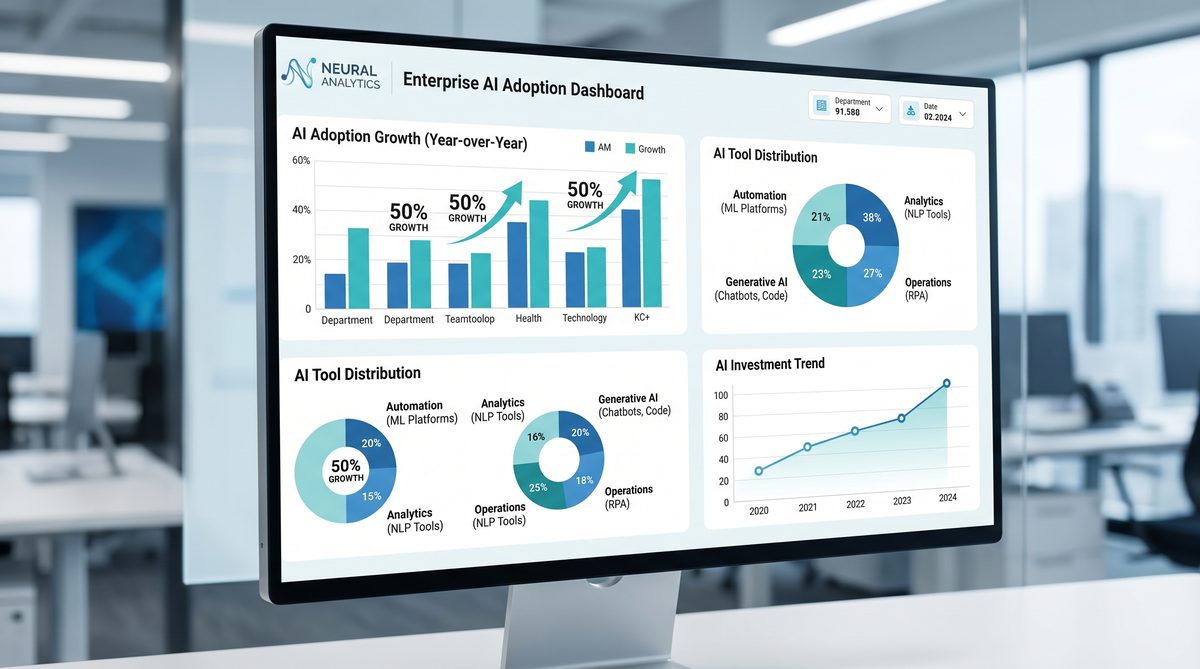
The momentum behind AI adoption has accelerated rapidly in recent years. According to the Deloitte State of AI 2026 report, worker access to AI tools surged by 50% during 2025 alone. This influx is not limited to niche teams or specialized roles; AI is now embedded across departments including marketing, operations, finance, and customer service. The democratization of AI capabilities within organizations is enabling a broader workforce to harness machine learning, natural language processing (NLP), and automation to enhance productivity and decision-making.
This widespread accessibility has profound implications for enterprise ROI. Early adopters are reporting significant cost savings, improved efficiencies, and even new revenue streams generated from AI-driven innovation. The Deloitte report underscores that enterprises shifting from isolated pilots to full-scale AI integration exhibit the most promising financial outcomes.
Enterprise AI Adoption Metrics and Growth Drivers
Several factors have converged to catalyze this AI adoption surge in enterprises:
- Cloud Infrastructure Maturity: Scalable AI workloads on cloud platforms allow enterprises to deploy models rapidly without upfront capital expense.
- Advancements in AI Models: Large language models (LLMs) and multimodal AI systems enable more accurate and versatile applications.
- Improved Data Pipelines: Robust data governance and integration facilitate reliable inputs for AI analytics and automation.
- Regulatory and Security Frameworks: Compliance with standards such as SOC2 builds trust in AI deployment, especially in sensitive sectors.
- Talent and Training: Enterprises are investing in upskilling workers to “tokenmaxx” their AI usage, maximizing the utility of available AI tools.
These elements have collectively lowered barriers to scaling AI projects from proofs-of-concept to production-grade solutions, unlocking tangible business value. For organizations evaluating AI strategies, understanding these enablers is critical. Our detailed exploration of ChatGPT Enterprise vs Claude for Business in 2026: The Complete Decision Guide unpacks how infrastructure choices impact AI scalability and ROI realization.
Sector-by-Sector AI Adoption Trends
Different industries exhibit varying adoption patterns and ROI profiles due to unique operational needs and regulatory environments:
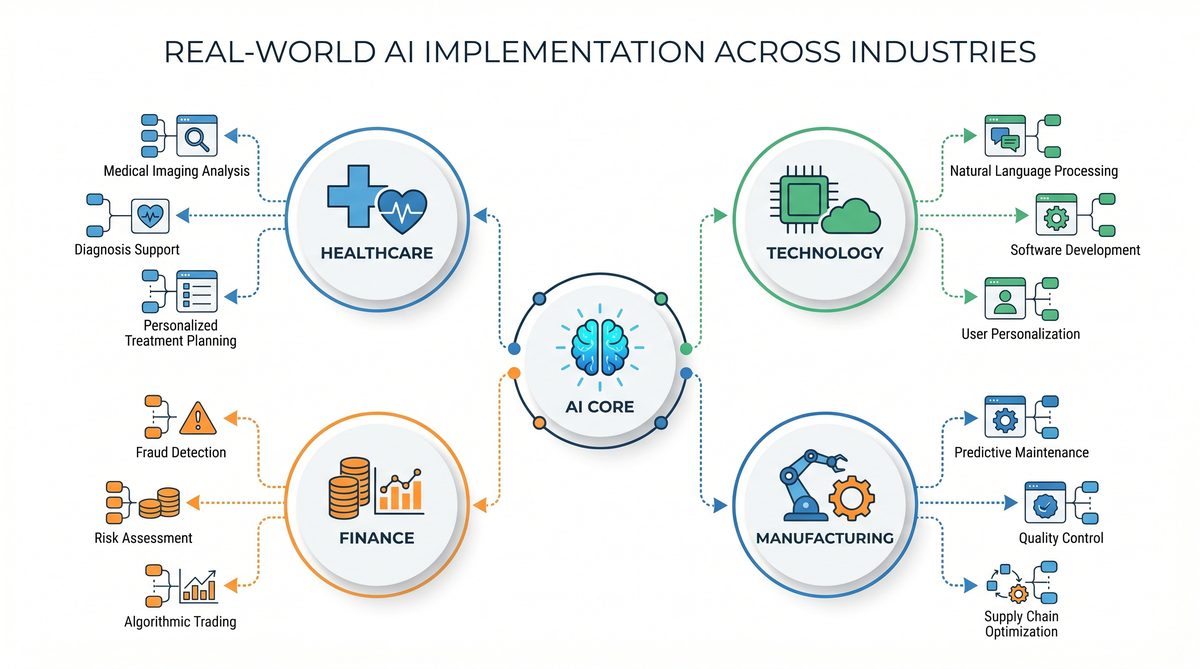
- Financial Services: AI-powered fraud detection, risk assessment, and personalized banking have matured, with many banks reporting up to 30% operational cost reduction.
- Healthcare: Enhanced diagnostics, patient data management, and drug discovery leveraging AI models are accelerating treatment innovation and lowering expenses.
- Retail and E-commerce: AI-driven customer insights, supply chain optimization, and dynamic pricing models generate improved margins and customer retention.
- Manufacturing: Predictive maintenance and automated quality control reduce downtime and defects, significantly improving throughput.
- Government and Public Sector: Agencies are adopting AI for citizen services, regulatory compliance, and economic forecasting, as monitored by institutions like the Federal Reserve.
Scaling from Pilot to Production: Overcoming Enterprise Challenges
One of the most critical phases in the enterprise AI journey is transitioning from isolated pilot projects to widespread production deployment. Industry research from a16z highlights that while 70% of enterprises initiated AI pilots by 2024, fewer than 40% successfully scaled these projects enterprise-wide. By 2026, this gap is closing as organizations refine their approach to integration, governance, and measurement.
Key challenges in scaling AI include:
- Data Silos and Quality: Fragmented data systems impede AI model training and accuracy.
- Change Management: Employee resistance and lack of AI fluency can stall adoption.
- Security and Compliance: Ensuring AI systems meet stringent SOC2 and other regulatory requirements is non-negotiable.
- Cost Control: Balancing AI infrastructure expenses with demonstrable ROI.
Organizations overcoming these hurdles typically adopt a phased, cross-functional strategy incorporating strong executive sponsorship, continuous monitoring, and iterative improvement. For instance, a leading global bank integrated AI into its loan underwriting process by first aligning data governance teams, then deploying interpretable models to comply with regulatory scrutiny. This approach delivered a 25% increase in loan processing speed and a 15% reduction in default rates within 18 months.
Another example is a multinational retailer that used AI-powered demand forecasting tools to optimize inventory across hundreds of stores. By piloting in select regions and gradually scaling with real-time feedback loops, the company achieved a 40% reduction in stockouts and a 12% decrease in excess inventory holding costs.
These success stories illustrate that enterprise AI ROI is not merely a function of technology but also organizational readiness and strategic execution. The nuances of this transformation are further detailed in our analysis of From Prompts to AI Skills: How to Build Reusable Prompt Workflows for ChatGPT, Claude, and Codex, which examines best practices in AI project lifecycle management.
Emerging Trends Impacting Enterprise AI ROI
As enterprises deepen their AI investments in 2026, several significant trends are shaping the ROI landscape:
SMBs Transitioning from ChatGPT to Claude
Small and medium-sized businesses (SMBs) are rapidly adopting AI-driven conversational agents and content generators to boost customer engagement and internal productivity. According to Forbes, there is a growing trend where SMBs are switching from OpenAI’s ChatGPT to Anthropic’s Claude, citing improved contextual understanding, safety features, and cost-effectiveness.
This shift is particularly relevant for customer support centers and marketing teams that rely on consistent and secure AI interactions. Claude’s emphasis on AI alignment and reduced hallucinations helps SMBs mitigate risks associated with AI-generated misinformation, which can have disproportionate impacts on smaller enterprises.
The cost implications are also noteworthy; SMBs report up to 30% savings in AI subscription fees by choosing Claude, directly contributing to improved ROI. This migration highlights the importance of selecting AI platforms aligned with enterprise-specific needs and risk tolerances.
Federal Reserve Monitoring AI’s Economic Impact
The Federal Reserve has taken an active role in tracking AI adoption across the US economy, recognizing its transformative potential and systemic risks. In 2026, the Fed released a comprehensive report analyzing AI’s influence on productivity growth, labor markets, and financial stability.
The report indicates that AI-driven automation has led to measurable productivity gains in sectors such as manufacturing, logistics, and professional services, contributing to an estimated 1.2% GDP growth in 2025. However, it also cautions about uneven adoption rates and the displacement of certain job categories, underscoring the need for policy interventions and workforce reskilling.
For enterprises, this macroeconomic perspective reinforces the importance of responsible AI integration that balances efficiency gains with social considerations. Understanding these dynamics is crucial for long-term ROI sustainability. Our in-depth discussion on The Ultimate Prompt Engineering Framework for ChatGPT, Claude, and Codex in 2026 explores AI’s socioeconomic impact and strategic enterprise responses.
Security and Compliance: SOC2 as a Benchmark
Security concerns remain paramount as enterprises handle sensitive data through AI systems. SOC2 compliance has emerged as a de facto standard for evaluating AI providers and internal deployments, ensuring controls around data confidentiality, integrity, and availability.
Enterprises adopting AI frameworks with SOC2 certification report up to 40% reductions in costs related to data breaches, compliance audits, and incident response. This metric reflects not only direct financial savings but also enhanced customer trust and reduced regulatory risk.
Moreover, embedding security-by-design principles in AI workflows, such as encrypted data pipelines and continuous monitoring, helps enterprises avoid costly remediation efforts post-deployment. Examples from the financial and healthcare sectors demonstrate how SOC2-aligned AI systems support both innovation and regulatory adherence.
The Tokenmaxxing Phenomenon Among Tech Workers
A novel trend influencing enterprise AI ROI is “tokenmaxxing,” where tech-savvy workers maximize their utilization of AI models by effectively optimizing token consumption during interactions. In 2026, this practice is widespread among developers, data scientists, and analysts who leverage AI to automate coding, generate insights, and accelerate workflows.
Tokenmaxxing involves strategic prompt engineering, selective model usage, and cost-aware API interactions to extract maximal value from AI resources without incurring prohibitive expenses. Enterprises encouraging this behavior report:
- Increased output quality and speed
- Lower AI service costs via efficient token management
- Enhanced employee satisfaction and innovation capacity
This grassroots optimization complements organizational AI governance, demonstrating how cultural and behavioral factors significantly affect ROI outcomes. Detailed techniques and case examples of tokenmaxxing are elaborated in our specialized feature on .
Comparative Analysis: AI ROI Metrics Across Leading Enterprises
To provide a quantitative perspective, the following table summarizes AI ROI metrics reported by select enterprises across different sectors in 2026:
| Enterprise | Sector | AI Application | ROI Metric | Time to Scale | Cost Reduction | Revenue Impact |
|---|---|---|---|---|---|---|
| GlobalBank | Financial Services | Loan Underwriting Automation | 25% faster processing | 18 months | 15% | +10% new loans issued |
| RetailMax | Retail | Demand Forecasting AI | 40% stockout reduction | 12 months | 12% | +8% same-store sales |
| HealthInnovate | Healthcare | Diagnostic Image Analysis | 30% faster diagnosis | 24 months | 20% | Improved patient outcomes |
| CloudTech | Technology | AI DevOps Automation | 50% reduction in deployment time | 9 months | 18% | Increased platform uptime |
This comparative snapshot illustrates that while ROI varies by industry and AI use case, common patterns emerge around accelerated processes, cost efficiency, and revenue uplift. Enterprises prioritizing robust infrastructure, security compliance, and workforce enablement consistently outperform peers in ROI realization.
Best Practices for Maximizing Enterprise AI ROI in 2026
Drawing on current data and real-world case studies, the following best practices are recommended for enterprises aiming to maximize AI ROI:
- Adopt a Clear AI Strategy: Define specific business objectives and align AI initiatives accordingly rather than chasing technology trends.
- Invest in Data Quality and Governance: Reliable data is the foundation of effective AI models; establish comprehensive data management frameworks.
- Foster an AI-Ready Culture: Encourage employee training, promote tokenmaxxing behaviors, and incentivize AI adoption.
- Ensure Security and Compliance: Obtain certifications such as SOC2 and conduct regular audits to mitigate risks.
- Leverage Scalable Infrastructure: Utilize cloud and hybrid architectures optimized for AI workloads to enable rapid scaling.
- Measure and Iterate: Continuously track AI performance metrics and adjust models and processes to sustain ROI improvements.
- Collaborate with Trusted Vendors: Choose AI technology partners with proven enterprise-grade offerings and transparent pricing.
Implementing these recommendations can significantly increase the chances that AI investments deliver lasting financial and operational benefits. Enterprises ignoring these fundamentals risk costly failures and missed opportunities.
Useful Links and Resources
Here are some valuable resources to help you explore the topics covered in this article:
- McKinsey AI Report
- Gartner AI Hype Cycle
- Stanford AI Index
- MIT Technology Review AI
- Deloitte AI Institute
- World Economic Forum AI
Looking Ahead: The Future of Enterprise AI ROI
As we progress through 2026 and beyond, enterprise AI adoption will continue to evolve in complexity and scope. Emerging technologies such as multimodal AI, generative design, and autonomous systems promise to unlock new dimensions of value. However, the principles of strategic alignment, security, and workforce enablement will remain central to achieving ROI.
Furthermore, regulatory landscapes are expected to tighten, particularly around AI ethics, transparency, and data privacy. Enterprises proactively adapting to these changes will not only safeguard investments but also differentiate themselves competitively.
The role of economic institutions like the Federal Reserve in monitoring AI’s broader impact will shape policy frameworks and labor market dynamics, influencing how enterprises approach AI workforce integration.
Finally, cultural phenomena such as tokenmaxxing highlight the importance of human factors in AI success. Empowering employees to optimize AI usage will be a critical lever in maximizing returns.
For a comprehensive understanding of how AI model architectures influence enterprise applications and ROI, our detailed breakdown in offers valuable insights into choosing and fine-tuning AI technologies for specific business needs.
Useful Links
- Deloitte State of AI in Business 2026 Report
- Andreessen Horowitz (a16z) Enterprise AI Research
- Forbes: SMBs Switching from ChatGPT to Claude Analysis
- Federal Reserve Report on AI Adoption and Economic Impact
- SOC2 Compliance Official Site
- Anthropic Claude AI Platform
- OpenAI ChatGPT Overview
- Google Cloud AI and ML Services
- Microsoft Azure Cognitive Services
Conclusion
Enterprise AI adoption in 2026 is no longer a futuristic concept but a present-day reality delivering measurable ROI across diverse industries. By leveraging advanced AI technologies, robust infrastructure, and strategic governance, organizations are overcoming traditional barriers and scaling AI from pilots to full production. Trends such as SMB migration to safer AI platforms, federal economic monitoring, SOC2-driven security frameworks, and tokenmaxxing behaviors among tech workers all contribute to a dynamic ecosystem where AI value creation is optimized.
Enterprises committed to continuous learning, operational excellence, and ethical AI deployment will lead the way in achieving sustained financial returns and competitive advantage in the AI-driven economy.
🕐 Instant∞ Unlimited🎁 Free
Get Free Access to 40,000+ AI Prompts
Join 40,000+ AI professionals. Get instant access to our curated Notion Prompt Library with prompts for ChatGPT, Claude, Codex, Gemini, and more — completely free.
Get Free Access Now →No spam. Instant access. Unsubscribe anytime.
