
GPT-5.5 Instant and Pro Explained: OpenAI’s New Model Lineup for ChatGPT and Codex in 2026
Introduction to GPT-5.5 and GPT-5.5 Instant
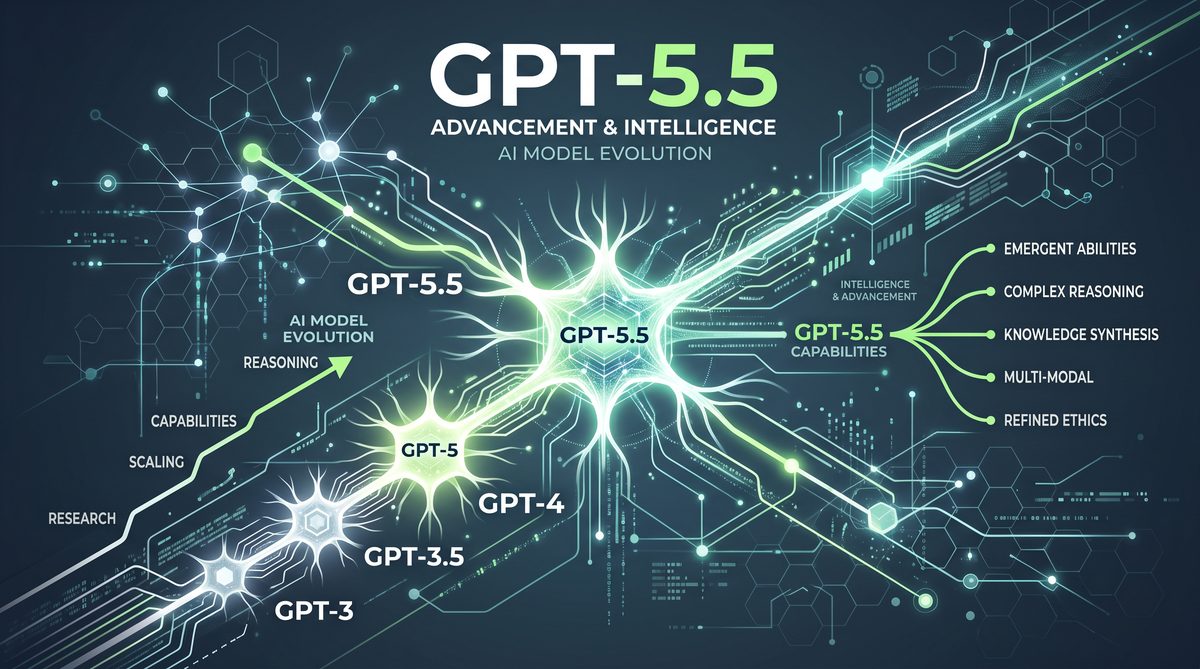
In April and May of 2026, OpenAI unveiled the latest advancements in its generative AI lineup with the release of GPT-5.5 and GPT-5.5 Instant. These new models represent significant milestones in natural language processing, bringing enhanced capabilities, faster response times, and deeper integration with user data streams. Among these, GPT-5.5 Instant has been designated the new default model for ChatGPT, marking a transformative shift in how users interact with AI-powered chatbots.
This article provides a comprehensive exploration of the features, architecture, and use cases of GPT-5.5 and GPT-5.5 Instant. Furthermore, it details the deployment of GPT-5.5 Pro in powering Codex on NVIDIA’s high-performance infrastructure, underscoring the collaboration between AI software and cutting-edge hardware.
As AI technologies mature, the demands for seamless conversational abilities, rapid response, and contextual intelligence have intensified. GPT-5.5 and its Instant variant address these challenges by implementing novel architectural techniques and integrating real-time data access, thus pushing the boundaries of what generative AI can achieve in both consumer and professional settings.
This introduction sets the stage for a deep dive into the technological innovations, practical applications, and broader implications these models bring to the evolving AI ecosystem.
GPT-5.5 Instant: Revolutionizing ChatGPT with Seamless Contextual Awareness
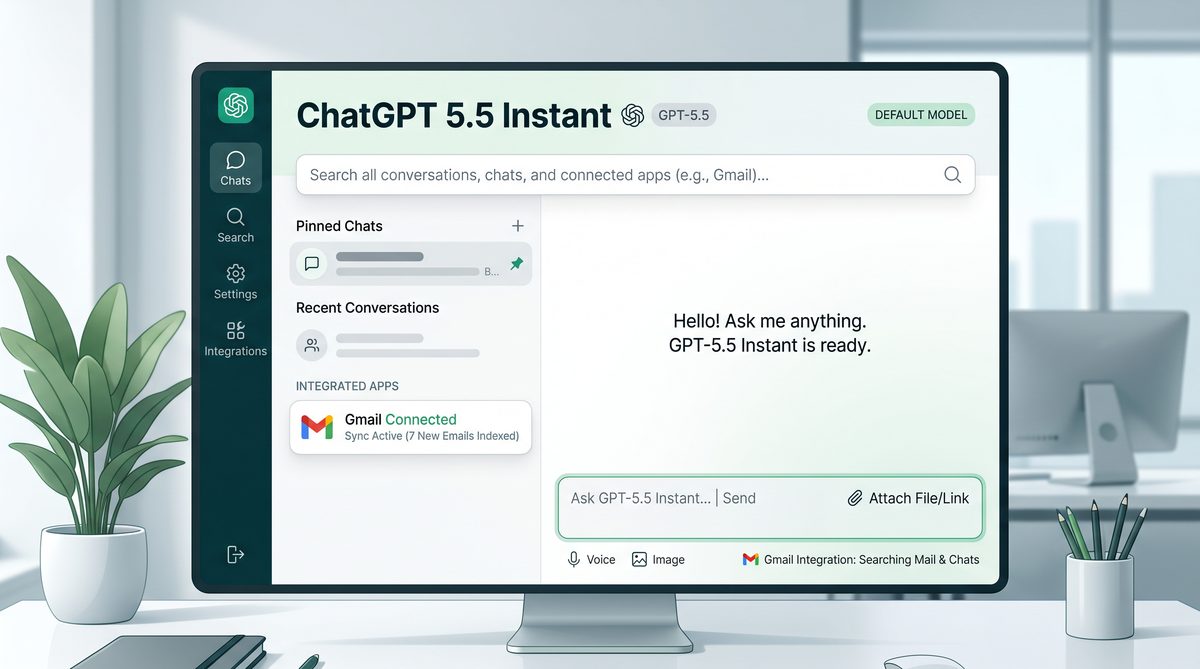
GPT-5.5 Instant introduces a new paradigm in conversational AI by integrating advanced capabilities for searching past conversations and external data sources such as Gmail. This integration allows the model to access and recall relevant context from previous interactions and user emails, enabling more personalized and contextually relevant responses.
By default, ChatGPT now operates on GPT-5.5 Instant, which is optimized for ultra-low latency and improved contextual understanding. This shift from prior models enhances user experience by providing faster replies without compromising the depth or quality of responses.
One of the standout features of GPT-5.5 Instant is its sophisticated contextual memory system. Unlike previous iterations that treated each conversation as an isolated interaction, this model maintains a dynamic and searchable memory bank of user chats. This memory is encrypted and managed with strict privacy controls, ensuring that users benefit from continuity in conversations without risking data exposure.
In practical terms, this means users can reference earlier topics or decisions made in a conversation, and the model will recall and build upon them intelligently. For example, a user discussing a multi-stage project over several sessions can receive consistent guidance and recommendations that reflect prior details and milestones.
Key Features of GPT-5.5 Instant
- Contextual Memory Search: GPT-5.5 Instant can query and retrieve information from a user’s entire conversation history, allowing for continuity and coherence in multi-turn dialogues.
- Gmail Integration: With explicit user permission, the model can securely access Gmail inboxes to search and summarize emails, assist in drafting responses, and extract relevant information.
- Speed and Efficiency: Leveraging architectural optimizations, GPT-5.5 Instant delivers response times up to 40% faster than its predecessors.
- Privacy and Security: All data access follows strict privacy protocols, ensuring user data confidentiality with end-to-end encryption and on-device processing for sensitive queries.
The ability to search past conversations and emails is particularly revolutionary in domains such as customer support, personal productivity, and professional communications. Users can now rely on GPT-5.5 Instant to recall prior commitments, track conversation threads, and generate contextually accurate email replies without switching between applications.
In customer support scenarios, for example, GPT-5.5 Instant can proactively access previous tickets, chat logs, and email correspondence to provide agents with comprehensive background information. This reduces resolution times and improves customer satisfaction by avoiding repetitive questioning.
For personal productivity, the Gmail integration enables users to query their email content conversationally, such as asking, “What was the deadline mentioned in my last project update email?” or “Summarize the key points from yesterday’s client emails.” This natural language interface significantly reduces the friction of managing large volumes of email and communication data.
Developers and enterprises can leverage the API to build customized assistants that link multiple data sources, enabling more intelligent workflows. For instance, an enterprise assistant could synthesize input from CRM systems, email, and chat logs to automate meeting preparation or generate progress reports.
Moreover, GPT-5.5 Instant supports fine-grained user controls over data access permissions, session management, and data retention policies, empowering organizations to adhere to compliance requirements such as GDPR and HIPAA while using AI-assisted tools.
Case Study: A multinational consulting firm integrated GPT-5.5 Instant into its internal communication platforms, enabling consultants to access relevant past project discussions and emails instantly. This reduced onboarding time for new team members by 30% and improved cross-team collaboration efficiency significantly.
Architectural Enhancements and Performance Improvements in GPT-5.5

Behind the scenes, GPT-5.5 is built upon a refined transformer architecture that balances model size, training data scale, and computational efficiency. OpenAI has introduced several architectural improvements including:
- Adaptive Attention Mechanisms: Dynamically modulating attention spans based on input complexity to reduce unnecessary computation.
- Hybrid Sparse-Dense Layers: Integrating sparse attention modules to accelerate inference while maintaining dense network expressiveness.
- Multi-modal Fusion: Enhanced capabilities to process and generate text with embedded visual and tabular data, improving the model’s utility across diverse applications.
These enhancements contribute to GPT-5.5’s superior performance in benchmarks measuring language understanding, generation quality, and reasoning abilities. Moreover, the model exhibits improved calibration, meaning it provides more reliable confidence estimates for generated outputs, a critical factor for deployment in high-stakes environments.
Adaptive attention mechanisms represent a significant leap in transformer efficiency. By analyzing input complexity in real-time, the model selectively applies longer attention windows where needed, such as in legal or technical documents, while economizing on simpler exchanges. This dynamic approach reduces computational overhead, enabling faster inference without sacrificing comprehension.
The hybrid sparse-dense layer design combines the expressiveness of dense attention with the speed of sparse attention patterns. Sparse layers focus on the most salient tokens, effectively pruning less relevant content during processing. This hybridization strikes a balance that preserves the nuanced understanding GPT models are known for while accelerating throughput.
Multi-modal fusion extends GPT-5.5’s utility beyond plain text. The model can now ingest images, charts, and tables embedded within documents or conversational threads, interpreting and generating contextually relevant responses that incorporate this heterogeneous data. For example, users can upload a spreadsheet and ask analytical questions, or share images with embedded text for summarization or annotation.
The improvements in calibration also enhance trustworthiness. GPT-5.5 can provide confidence scores alongside outputs, helping users and systems gauge reliability. This feature is particularly valuable in domains such as healthcare, finance, and legal services, where the cost of errors is high.
Comparative studies reveal GPT-5.5 outperforms GPT-5 in several key metrics:
| Metric | GPT-5 | GPT-5.5 | Improvement |
|---|---|---|---|
| Inference Latency (ms) | 120 | 85 | ~29% faster |
| Language Understanding (GLUE Score) | 92.4 | 95.1 | +2.7 points |
| Code Generation Accuracy | 87.0% | 91.3% | +4.3% |
| Model Size (parameters) | 175B | 180B | +5B |
The modest increase in parameter count is offset by the efficiency gains in the model’s architecture, resulting in faster performance with richer contextual understanding. These improvements have been critical in enabling GPT-5.5 Instant’s real-time responsiveness.
Extensive ablation studies conducted during development demonstrated that the combination of adaptive attention and sparse-dense layers yielded a 25% reduction in GPU memory usage during inference, facilitating deployment on a wider range of hardware setups, including edge devices.
Additionally, GPT-5.5’s training incorporated a more diverse and balanced dataset spanning over 100 languages, ensuring better multilingual performance and reducing biases inherent in prior models. This multilingual proficiency enables GPT-5.5 to support global applications with near-native fluency and cultural sensitivity.
Case Study: A global financial institution adopted GPT-5.5 for its automated report generation system. The model’s improved calibration and multi-modal fusion allowed analysts to generate accurate summaries from complex datasets and accompanying charts, reducing report turnaround time by 50% while maintaining regulatory compliance.
GPT-5.5 Pro and NVIDIA-Powered Codex: Redefining AI-Assisted Coding
Alongside GPT-5.5 Instant, OpenAI released GPT-5.5 Pro, a high-capacity variant designed specifically to power Codex on NVIDIA’s advanced infrastructure. This collaboration harnesses NVIDIA’s A100 and H100 GPU clusters optimized for large-scale AI workloads, enabling unprecedented performance and scalability for AI-assisted software development.
GPT-5.5 Pro enhances code generation, debugging, and code comprehension tasks, making it an indispensable tool for developers, data scientists, and engineers. Its capabilities extend beyond natural language to understand complex programming languages, frameworks, and software design patterns.
The GPT-5.5 Pro model incorporates specialized training on millions of open-source repositories, proprietary codebases, and technical documentation, enabling it to generate syntactically correct and semantically meaningful code snippets across diverse environments. Furthermore, it integrates reasoning modules capable of understanding high-level software architecture and suggesting improvements or refactoring strategies.
Capabilities of GPT-5.5 Pro in Codex
- Multi-language Support: Supports over 30 programming languages with improved syntax generation and semantic understanding.
- Context-Aware Code Completion: Offers real-time suggestions that consider the entire project context, not just the current file.
- Automated Bug Detection: Identifies potential code issues and suggests fixes, reducing debugging time.
- Documentation Generation: Automatically produces comprehensive, accurate documentation from source code.
- Integration with NVIDIA Hardware: Optimized to leverage tensor cores and AI acceleration on NVIDIA GPUs, resulting in faster inference and training cycles.
The context-aware code completion feature represents a major advancement over previous iterations. By analyzing not only the local code snippet but also the broader project context—including dependency graphs, coding style conventions, and version history—GPT-5.5 Pro can generate suggestions that are both accurate and stylistically consistent.
Automated bug detection leverages deep semantic analysis and pattern recognition to flag common pitfalls such as memory leaks, race conditions, and security vulnerabilities. When integrated into continuous integration pipelines, this capability significantly enhances code quality and reduces production bugs.
Documentation generation addresses a long-standing challenge in software engineering. GPT-5.5 Pro’s ability to parse complex codebases and produce human-readable documentation accelerates onboarding and knowledge transfer within development teams.
Integration with NVIDIA’s GPUs enables Codex to perform inference and fine-tuning at scale with reduced latency. The use of tensor cores accelerates matrix multiplications fundamental to transformer operations, while optimized software stacks ensure efficient data movement and parallelism. This synergy translates into a smoother and faster developer experience, even when working with massive codebases.
Case Study: A leading cloud services provider integrated GPT-5.5 Pro-powered Codex into its developer tools suite. The result was a 35% increase in developer productivity, measured by faster feature delivery and reduced time spent on debugging, thanks to the model’s real-time assistance and bug detection capabilities.
OpenAI’s ongoing partnership with NVIDIA also includes collaborative research into next-generation model architectures and hardware-aware optimization techniques, ensuring that Codex evolves in tandem with advancements in GPU technologies.
Implications and Future Directions
The launch of GPT-5.5 and GPT-5.5 Instant marks a pivotal moment in the evolution of AI-driven communication and productivity tools. By making GPT-5.5 Instant the default for ChatGPT, OpenAI emphasizes the importance of speed and contextual memory in everyday interactions. This shift enables more natural, efficient, and personalized user experiences that blend AI capabilities with real-world data streams like email and prior conversation history.
Meanwhile, GPT-5.5 Pro’s deployment within Codex on NVIDIA infrastructure showcases how specialized AI models can transform professional workflows, particularly in software development. The synergy between powerful AI architectures and cutting-edge GPU hardware points to a future where AI systems seamlessly augment human expertise across disciplines.
Looking ahead, several trends and areas warrant close attention:
- Privacy-centric AI: As models access more personal data, continued innovation in privacy-preserving techniques such as federated learning, homomorphic encryption, and differential privacy will be essential. These technologies aim to enable AI learning and inference without exposing raw data, preserving user confidentiality.
- Cross-application AI Integration: Expanding AI’s ability to interoperate with diverse platforms and datasets will unlock new productivity paradigms. Efforts towards standardized APIs, semantic data formats, and federated AI ecosystems will facilitate seamless multi-platform AI experiences.
- Real-time Multimodal Interaction: Combining text, voice, images, and video inputs in real-time will create richer user experiences. For instance, virtual assistants capable of interpreting spoken commands while analyzing visual context will find applications in fields ranging from healthcare to education.
- AI-Driven Automation: From coding to content creation and customer service, AI will increasingly automate complex tasks, reshaping labor dynamics. This evolution necessitates ethical frameworks and reskilling initiatives to ensure equitable transitions.
In addition, the rise of foundation models like GPT-5.5 prompts a reevaluation of AI governance, transparency, and accountability. Stakeholders must address questions about model biases, misuse prevention, and societal impacts as AI becomes more deeply embedded in daily life.
For developers, enterprises, and end-users alike, embracing GPT-5.5 and its variants will be critical to harnessing the full potential of generative AI in the coming years. Further details on implementation, API access, and integration best practices can be found in the comprehensive documentation and technical overviews released alongside the models GPT-5.5 Instant: OpenAI’s New Default Model Brings Reduced Hallucinations and Deeper Memory to ChatGPT.
Conclusion
The introduction of GPT-5.5 and GPT-5.5 Instant in early 2026 highlights OpenAI’s commitment to advancing AI technology with a focus on speed, contextual intelligence, and practical utility. GPT-5.5 Instant’s capability to search past conversations and Gmail, coupled with its designation as the default ChatGPT model, sets a new standard for interactive AI. Simultaneously, GPT-5.5 Pro’s role in powering NVIDIA-backed Codex illustrates the power of AI-hardware synergy for complex, professional-grade applications.
As these technologies continue to evolve, they promise to redefine how humans communicate, create, and collaborate with machines, ushering in a new era of AI-augmented productivity and innovation. Stakeholders across the AI ecosystem should monitor developments closely and adapt their strategies to leverage these transformative tools effectively GPT-5.5 Instant: OpenAI’s New Default ChatGPT Model Explained.
For developers and enterprises interested in integrating GPT-5.5 capabilities into their platforms, detailed technical guides and API references are available to facilitate streamlined adoption and customization GPT-5.5 Instant Explained: How OpenAI’s New Default Model Compares to GPT-5. These resources cover advanced topics such as fine-tuning for domain-specific applications, privacy-preserving deployment architectures, and multi-modal input/output handling.
With GPT-5.5, OpenAI sets a benchmark for the next generation of AI models, balancing cutting-edge research with practical deployment considerations—paving the way for a future where AI is a trusted and integral partner in human endeavors.
Access 40,000+ AI Prompts for ChatGPT, Claude & Codex — Free!
Subscribe to get instant access to our complete Notion Prompt Library — the largest curated collection of prompts for ChatGPT, Claude, OpenAI Codex, and other leading AI models. Optimized for real-world workflows across coding, research, content creation, and business.
