
As enterprises accelerate their adoption of AI-driven automation, the paradigm is shifting from isolated, single-agent AI models to complex, multi-agent workflows that deliver unprecedented operational capabilities. This evolution is particularly pronounced with the advent of multi-agent workflows GPT-5.5, which enable collaborative AI systems to tackle multifaceted tasks with greater efficiency, flexibility, and scalability than ever before. In 2026, we’re witnessing organizations across industries—from finance and healthcare to manufacturing and supply chain—deploying multi-agent architectures that leverage the complementary strengths of GPT-5.5 and Codex models to automate end-to-end processes, reduce human intervention, and accelerate decision-making cycles.
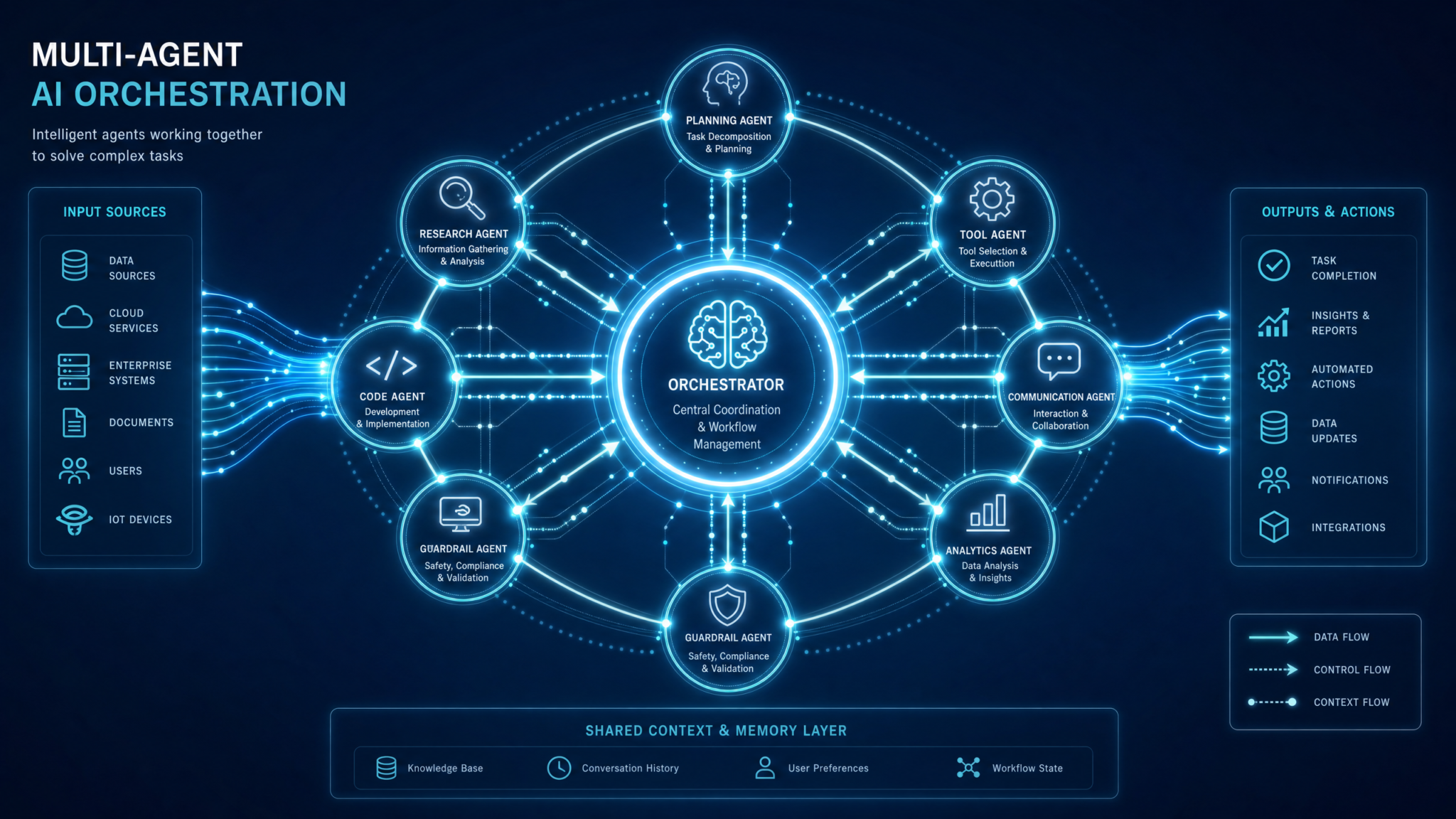
At the core of these advanced workflows is the orchestration of diverse AI agents—each specialized for distinct subtasks such as natural language understanding, code generation, data extraction, or real-time analytics—into cohesive, goal-oriented processes. The synergy between GPT-5.5’s deep contextual reasoning and Codex’s unparalleled programming fluency allows enterprises to build modular, reusable, and dynamically adaptive AI ecosystems. These systems can self-optimize by redistributing workloads, handling exceptions autonomously, and executing complex logic flows that were previously infeasible with monolithic AI models.
This comprehensive guide provides a detailed framework for building and orchestrating multi-agent workflows using GPT-5.5 and Codex. We begin by exploring the paradigm shift from traditional single-agent AI operations to sophisticated multi-agent collaborations that mirror real-world organizational structures and workflows. The guide then systematically dissects key orchestration patterns—including hierarchical architectures where agents operate in layered command chains; sequential pipelines optimized for task handoffs; and peer-to-peer networks that enable decentralized agent cooperation and consensus-building.
Furthermore, we delve into Codex’s unique agentic capabilities that facilitate automated deployment pipelines, real-time performance monitoring dashboards, and adaptive control mechanisms. These capabilities empower enterprises to maintain operational continuity, optimize resource allocation, and rapidly iterate on workflow designs with minimal manual oversight. The integration of GPT-5.5’s natural language interface with Codex’s programmatic control mechanisms creates a powerful feedback loop that enhances multi-agent system responsiveness and fault tolerance in complex, dynamic enterprise environments.
Key Advantages of Multi-Agent Workflows with GPT-5.5 and Codex
| Feature | Description | Enterprise Impact |
|---|---|---|
| Specialized Agent Roles | Agents specialized for NLP, code generation, data analytics, and decision-making collaborate seamlessly. | Improves task accuracy and reduces processing latency by parallelizing subtasks. |
| Dynamic Workload Distribution | Adaptive mechanisms shift tasks between agents based on real-time performance metrics. | Maximizes resource utilization and ensures high availability. |
| Hierarchical & Peer Architectures | Supports layered control as well as decentralized collaboration models. | Facilitates complex decision trees and consensus-based outcomes for enterprise workflows. |
| Automated Deployment & Monitoring | Codex-driven CI/CD pipelines push workflow updates with built-in health checks and telemetry. | Enables continuous delivery and rapid incident response. |
Step-by-Step Guide to Building Multi-Agent Workflows
- Define Workflow Objectives: Clearly identify the business goals and workflow outcomes. Map these to discrete subtasks that can be assigned to specialized agents (e.g., data ingestion, validation, transformation, reporting).
- Design Agent Roles and Interfaces: Specify the capabilities of each AI agent using GPT-5.5 for natural language tasks and Codex for coding and automation. Define APIs and communication protocols (e.g., REST, gRPC, event streaming) for inter-agent messaging.
- Implement Orchestration Logic: Choose orchestration patterns such as hierarchical control for command-driven workflows or peer-to-peer coordination for decentralized decision-making. Use Codex to program workflow controllers that manage task scheduling, error handling, and state transitions.
- Develop and Integrate Agents: Build individual agents leveraging GPT-5.5 models fine-tuned for context-specific subtasks, and Codex agents for code synthesis and automation. Integrate agents into your orchestration layer ensuring robust communication and data exchange.
- Deploy with Automated Pipelines: Use Codex-powered CI/CD pipelines for automated deployment, versioning, and rollback mechanisms. Incorporate monitoring hooks for real-time metrics collection and alerting.
- Monitor, Analyze, and Optimize: Continuously monitor agent performance, workflow throughput, and error rates using integrated dashboards. Use GPT-5.5’s analytical capabilities to generate insights and recommend adaptive improvements.
Illustrative Example: Multi-Agent Invoice Processing Workflow
Consider an enterprise scenario where invoices must be processed automatically with minimal human oversight. The workflow involves:
- Extracting invoice data from scanned PDFs (NLP agent powered by GPT-5.5).
- Validating data against purchase orders (business rules engine agent).
- Generating payment authorization code snippets (Codex agent).
- Logging transactions and sending notifications (workflow orchestration agent).
The following code snippet demonstrates how an orchestration agent can manage these subtasks using GPT-5.5 and Codex APIs:
import openai

# Initialize GPT-5.5 for NLP tasks and Codex for code generation
gpt_client = openai.ChatCompletion.create(model="gpt-5.5")
codex_client = openai.Completion.create(model="codex-2026")

def extract_invoice_data(pdf_text):
    prompt = f"Extract key fields (vendor, date, total) from this invoice text:\n{pdf_text}"
    response = gpt_client.create(messages=[{"role": "user", "content": prompt}])
    return response.choices[0].message.content

def generate_payment_code(invoice_data):
    code_prompt = f"Generate Python code to authorize payment for invoice:\n{invoice_data}"
    response = codex_client.create(prompt=code_prompt, max_tokens=150)
    return response.choices[0].text

def orchestrate_invoice_processing(pdf_text):
    # Step 1: Extract data
    invoice_data = extract_invoice_data(pdf_text)

    # Step 2: Validate data (simplified)
    if "total" not in invoice_data or float(invoice_data.get("total", 0)) <= 0:
        raise ValueError("Invalid invoice total")

    # Step 3: Generate payment authorization code
    payment_code = generate_payment_code(invoice_data)

    # Step 4: Log and notify
    print("Invoice processed:", invoice_data)
    print("Payment code generated:\n", payment_code)
    # (Code to execute payment and send notification would follow)

# Example usage
pdf_text_example = "Vendor: Acme Corp\nDate: 2026-05-01\nTotal: 1234.56"
orchestrate_invoice_processing(pdf_text_example)
This example highlights the seamless collaboration between GPT-5.5 for advanced language understanding and Codex for executable automation, orchestrated by a supervisory process that ensures data integrity, error handling, and workflow progression.
For detailed orchestration pattern implementations and further best practices, refer to .
The Shift from Single-Agent to Multi-Agent AI Workflows
Historically, many AI applications have relied on single-agent models executing isolated tasks—whether that be natural language understanding, autonomous code generation, or complex data summarization. While these single-agent approaches have proven effective for relatively straightforward or narrowly scoped use cases, they inherently lack the capacity to scale efficiently in the face of complex, multi-dimensional challenges that demand diverse expertise, dynamic adaptability, or concurrent processing. For example, a single model tasked with both natural language understanding and financial forecasting often struggles to optimize for both domains simultaneously, leading to suboptimal outcomes.
The advent of multi-agent workflows powered by GPT-5.5 fundamentally transforms this paradigm. By enabling multiple AI agents—each specialized in distinct capabilities—to collaborate, communicate, and synchronize their efforts within a unified orchestration framework, enterprises can now tackle intricate business processes with greater precision, speed, and resilience. These multi-agent systems simulate a virtual team of expert agents working in concert, allowing for modular, scalable, and highly customizable AI-driven workflows.
To illustrate, consider a financial compliance workflow in 2026: one GPT-5.5 agent is dedicated to regulatory text interpretation, another to transaction anomaly detection, while a Codex-powered agent generates audit-ready reports automatically. These agents interact seamlessly through a dynamic orchestration layer, sharing intermediate outputs and adjusting strategies based on real-time feedback.
Multi-agent AI systems offer several critical advantages over their single-agent counterparts, summarized in the table below:
| Advantage | Description | Enterprise Impact |
|---|---|---|
| Specialization | Agents can be fine-tuned or configured for specific task domains such as natural language processing, code synthesis, or data analytics. | Improves accuracy and operational efficiency by leveraging domain-expert models working in concert. |
| Parallelism | Multiple agents operate simultaneously, handling discrete subtasks without waiting for sequential completion. | Significantly reduces latency and increases throughput, enabling real-time enterprise applications. |
| Robustness | Distributed responsibilities allow the system to detect, isolate, and compensate for failures or inaccuracies within individual agents. | Enhances reliability and fault tolerance critical for mission-critical workflows. |
| Scalability | Agents can be dynamically added, removed, or reconfigured to adapt to changing workload demands or business requirements. | Supports elastic scaling and cost optimization in cloud-native enterprise environments. |
Implementing multi-agent workflows, however, is not a trivial upgrade; it necessitates a sophisticated orchestration layer that governs agent interactions, manages data flow pipelines, and intelligently delegates tasks. This orchestration must reconcile asynchronous agent outputs, handle error propagation, and optimize resource allocation dynamically.
GPT-5.5’s advanced contextual understanding capabilities, combined with Codex’s agentic programming features, enable the construction of an intelligent, programmable orchestration framework. This framework facilitates:
- Dynamic Task Allocation: Assigning subtasks to the most appropriate agents based on their specialization and current system load.
- Inter-Agent Communication: Enabling agents to exchange intermediate results, hypotheses, and feedback loops to refine outputs iteratively.
- Context Preservation: Maintaining shared contextual memory across agents to ensure coherent and consistent workflow progression.
- Fault Detection and Recovery: Automatically identifying agent failures or degraded performance and rerouting tasks accordingly.
- Performance Monitoring: Continuously tracking agent metrics to optimize throughput and accuracy over time.
Below is an example of a Python-based orchestration snippet leveraging GPT-5.5 and Codex APIs to coordinate a multi-agent workflow for a document processing pipeline. Here, agents for OCR text extraction, semantic analysis, and compliance verification operate concurrently with results synchronized via an orchestration controller:
import asyncio
from gpt_5_5_sdk import GPTAgent
from codex_sdk import CodexAgent

class OrchestrationController:
    def __init__(self):
        self.ocr_agent = GPTAgent(name="OCRAgent", model="gpt-5.5-ocr-specialized")
        self.semantic_agent = GPTAgent(name="SemanticAgent", model="gpt-5.5-nlp-specialized")
        self.compliance_agent = CodexAgent(name="ComplianceAgent", model="codex-2026-compliance")

    async def process_document(self, document_path):
        # Step 1: OCR extraction
        ocr_task = asyncio.create_task(self.ocr_agent.extract_text(document_path))

        # Step 2: Semantic analysis (waits for OCR)
        async def semantic_task():
            text = await ocr_task
            return await self.semantic_agent.analyze_text(text)

        semantic_analysis_task = asyncio.create_task(semantic_task())

        # Step 3: Compliance check (depends on semantic output)
        async def compliance_task():
            semantic_data = await semantic_analysis_task
            return await self.compliance_agent.verify_compliance(semantic_data)

        compliance_check_task = asyncio.create_task(compliance_task())

        # Await final result
        compliance_report = await compliance_check_task
        return compliance_report

# Usage
controller = OrchestrationController()
result = asyncio.run(controller.process_document("/path/to/financial_report.pdf"))
print("Compliance Report:", result)
This example demonstrates key orchestration concepts such as asynchronous task execution, dependency chaining, and modular agent invocation. Enterprises can extend this pattern to more complex workflows involving dozens of agents with conditional branching and adaptive task reassignment.
As multi-agent AI systems continue to evolve in 2026, leading organizations are adopting advanced orchestration strategies integrating GPT-5.5 and Codex not only to automate workflows but also to embed continuous learning loops, enabling agents to improve collaboratively over time. For an in-depth exploration of orchestration frameworks and real-world enterprise deployments, refer to our comprehensive guide on Enterprise AI Orchestration with GPT-5.5 and Codex.
Orchestration Patterns for Multi-Agent Workflows
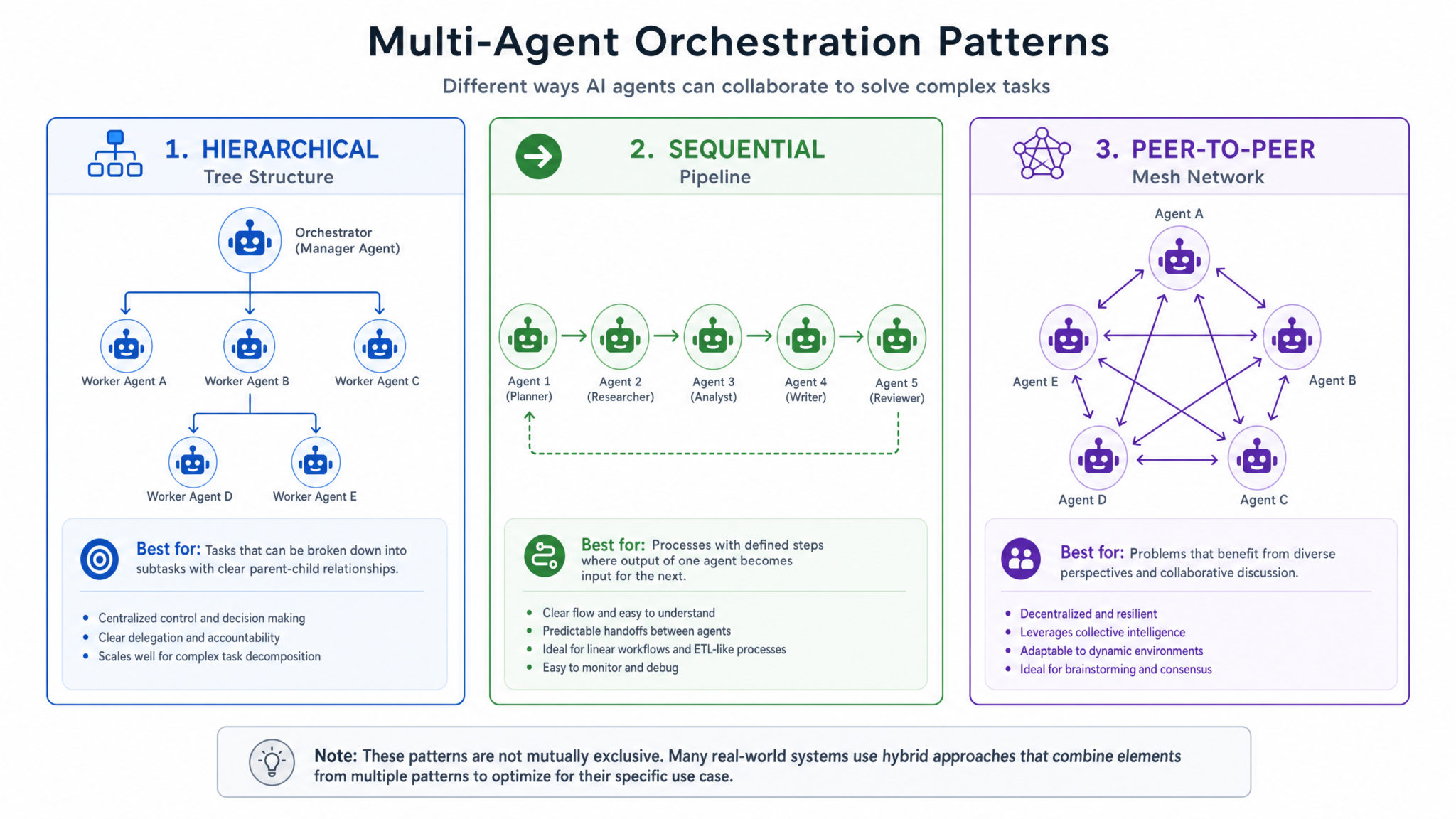
Effective orchestration of multiple AI agents necessitates choosing an architectural pattern that aligns with the use case’s complexity, scalability requirements, and overarching business objectives. As of 2026, enterprises deploying GPT-5.5 and Codex-driven multi-agent workflows must carefully evaluate these patterns in light of their operational context, latency constraints, and fault tolerance needs. The three primary orchestration patterns widely adopted in enterprise-grade AI workflows are hierarchical, sequential, and peer-to-peer. Each pattern offers distinct advantages and trade-offs, which we will explore in detail, accompanied by practical implementation strategies and real-world case studies.
1. Hierarchical Orchestration Pattern
In hierarchical orchestration, agents are organized in a tree-like structure with a central coordinator (root node) delegating tasks down to subordinate agents. This pattern is especially useful in complex workflows requiring multi-level decision making, aggregation, and error handling at various layers.
| Layer | Role | Example Agents | Use Case |
|---|---|---|---|
| Root Coordinator | Global task orchestration, priority management | Master GPT-5.5 Orchestrator | Oversee multi-domain AI workflows |
| Intermediate Agents | Domain-specific task decomposition | Industry-specific Codex agents | Legal document review, financial analysis |
| Leaf Agents | Atomic task execution, data retrieval | API connectors, data scrapers, microservices | Real-time data extraction, code synthesis |
Below is a sample Python snippet illustrating a hierarchical orchestration using asynchronous calls and message passing between agents:
import asyncio

class Agent:
    def __init__(self, name):
        self.name = name

    async def execute(self, task):
        print(f"{self.name} executing {task}")
        await asyncio.sleep(1)  # Simulate processing delay
        return f"{self.name} result for {task}"

class HierarchicalOrchestrator:
    def __init__(self):
        self.root = Agent("RootCoordinator")
        self.intermediates = [Agent("FinanceAgent"), Agent("LegalAgent")]
        self.leaf_agents = [Agent("APIAgent"), Agent("ScraperAgent")]

    async def run(self):
        print("Starting hierarchical orchestration...")
        root_result = await self.root.execute("Initiate Workflow")

        # Delegate to intermediate agents concurrently
        intermediate_tasks = [agent.execute("Domain Task") for agent in self.intermediates]
        intermediate_results = await asyncio.gather(*intermediate_tasks)

        # Further delegate to leaf agents based on intermediate results
        leaf_tasks = [agent.execute(f"Subtask based on {res}") for agent, res in zip(self.leaf_agents, intermediate_results)]
        leaf_results = await asyncio.gather(*leaf_tasks)

        print("Orchestration complete. Results:")
        print(root_result)
        print(intermediate_results)
        print(leaf_results)

asyncio.run(HierarchicalOrchestrator().run())
Real-World Enterprise Case Study (2026): A multinational bank deployed a hierarchical multi-agent workflow to automate compliance auditing across multiple jurisdictions. The root agent coordinated regional agents specializing in local regulations, which in turn delegated tasks to data extraction agents interfacing with diverse databases. This architecture reduced compliance review time by 60% while ensuring high accuracy and traceability.
2. Sequential Orchestration Pattern
The sequential pattern involves agents executing tasks in a predefined linear order, where the output of one agent serves as the input to the next. This pattern is ideal for pipelines requiring strict stepwise processing, such as document transformation, multi-stage code generation, or data enrichment workflows.
| Step | Agent Role | Functionality | Example Use Case |
|---|---|---|---|
| 1 | Input Processor | Normalize and validate input data | Preprocessing textual documents |
| 2 | Core Logic Agent | Apply domain-specific transformations or reasoning | Semantic analysis and summarization |
| 3 | Output Formatter | Format and export results in required schema | Generating structured JSON reports |
Example of a sequential orchestration implemented in Node.js using async/await to chain GPT-5.5 agents for document processing:
async function inputProcessor(text) {
  // Normalize text input
  return text.trim().toLowerCase();
}

async function coreLogicAgent(processedText) {
  // Simulate GPT-5.5 summarization API call
  const summary = await gpt5_5.summarize(processedText);
  return summary;
}

async function outputFormatter(summary) {
  // Format summary as JSON report
  return JSON.stringify({ summary, timestamp: new Date().toISOString() });
}

async function sequentialOrchestration(rawText) {
  const normalized = await inputProcessor(rawText);
  const summary = await coreLogicAgent(normalized);
  const report = await outputFormatter(summary);
  return report;
}

// Usage example
const document = "   This is a sample document to be processed by GPT-5.5 agents.   ";
sequentialOrchestration(document).then(console.log);
2026 Enterprise Insight: Leading SaaS providers in customer support automate ticket triaging through sequential multi-agent pipelines, reducing average handling time by 40% and improving resolution accuracy due to clear task delineation.
3. Peer-to-Peer Orchestration Pattern
Peer-to-peer (P2P) orchestration enables agents to operate on a decentralized model where each agent communicates directly with others without a centralized coordinator. This model provides high resilience, scalability, and flexibility, facilitating collaborative problem-solving and dynamic task allocation.
| Aspect | Description | Advantages | Example Use Case |
|---|---|---|---|
| Communication Model | Direct agent-to-agent messaging with decentralized coordination | Low latency, fault tolerance | Distributed knowledge graph construction |
| Task Allocation | Dynamic, based on agent availability and expertise | Scalability, adaptability | Real-time fraud detection via collaborative pattern analysis |
| Failure Handling | Self-healing through redundant peer communication | Increased system robustness | Resilient autonomous vehicle fleet coordination |
Below is an advanced example demonstrating peer-to-peer messaging in Python using the asyncio and websockets libraries to simulate decentralized GPT-5.5 agents collaborating on a shared task:
import asyncio
import websockets
import json

# Simple P2P agent class with message handling
class P2PAgent:
    def __init__(self, name, peers):
        self.name = name
        self.peers = peers  # List of peer websocket URIs
        self.tasks = []

    async def send_message(self, peer_uri, message):
        async with websockets.connect(peer_uri) as websocket:
            await websocket.send(json.dumps(message))
            response = await websocket.recv()
            print(f"{self.name} received response from {peer_uri}: {response}")

    async def handle_message(self, websocket, path):
        data = await websocket.recv()
        message = json.loads(data)
        print(f"{self.name} received message: {message}")
        # Process message (simulate GPT-5.5 reasoning)
        result = f"Processed by {self.name}: {message['task']}"
        await websocket.send(result)

    async def run(self):
        # Start websocket server to accept incoming connections
        server = await websockets.serve(self.handle_message, "localhost", 8765)
        print(f"{self.name} listening on port 8765")

        # Send task to peers asynchronously
        for peer in self.peers:
            msg = {"task": f"Collaborate on data chunk from {self.name}"}
            asyncio.create_task(self.send_message(peer, msg))

        await asyncio.Future()  # Run forever

# Initialize two agents with peer URIs
agentA = P2PAgent("AgentA", ["ws://localhost:8766"])
agentB = P2PAgent("AgentB", ["ws://localhost:8765"])

async def main():
    await asyncio.gather(agentA.run(), agentB.run())

asyncio.run(main())
Cutting-Edge Application: In 2026, logistics companies leverage peer-to-peer GPT-5.5 agents embedded in autonomous delivery drones, enabling them to communicate and re-route dynamically based on real-time environmental data and traffic conditions without centralized control, dramatically improving delivery efficiency and safety.
Choosing the right orchestration pattern depends on the workflow’s complexity, the need for fault tolerance, latency sensitivity, and the nature of inter-agent dependencies. Enterprises often combine these patterns in hybrid architectures to harness their complementary strengths. For a comprehensive overview of designing hybrid multi-agent workflows, consult .
1. Hierarchical Orchestration
In hierarchical orchestration, a central “master” agent functions as the primary coordinator, overseeing multiple subordinate “worker” agents that are each specialized in distinct tasks or domains. The master agent’s role is to decompose complex, high-level objectives into manageable subtasks, assign these subtasks to the appropriate worker agents based on their expertise, and then integrate the disparate outputs into a coherent, unified result. This architecture excels in scenarios demanding layered decision-making, multi-stage refinement, and parallel processing, enabling scalable and maintainable workflow automation across enterprise environments.
By 2026, hierarchical orchestration frameworks have evolved to incorporate advanced capabilities such as dynamic agent discovery, context-aware task assignment, and real-time feedback loops between master and worker agents. These features allow for adaptive workflows that respond to changing conditions or emerging data insights, ensuring optimal task allocation and improved overall system efficiency.
Consider a sophisticated customer support system leveraging GPT-5.5 and Codex agents. The master GPT-5.5 agent first ingests and analyzes incoming support tickets, extracting key metadata such as issue type, urgency, and customer sentiment. Based on this analysis, it dynamically delegates subtasks: a Codex agent handles complex language translation across over 50 supported languages, while another Codex agent performs sentiment analysis and emotion detection using fine-tuned models trained on customer feedback. The master agent then synthesizes these processed outputs to generate a personalized, contextually relevant response, ensuring high customer satisfaction and operational efficiency.
Below is an example orchestration flow illustrating the delegation and integration process using the GPT-5.5 and Codex API:
const masterAgent = new GPT5_5Agent({
  model: 'gpt-5.5-master',
  maxTokens: 2048,
  temperature: 0.7,
});

const translationAgent = new CodexAgent({
  model: 'codex-lang-translate-2026',
  languagesSupported: 50,
});

const sentimentAgent = new CodexAgent({
  model: 'codex-sentiment-2026',
  fineTunedOn: 'customer_feedback_dataset_v3',
});

// Step 1: Master agent analyzes incoming ticket
const ticket = {
  text: "Bonjour, j'ai un problème avec ma commande #12345",
  language: "fr",
};

async function processTicket(ticket) {
  const analysis = await masterAgent.analyze({
    prompt: `Extract issue type, urgency, and sentiment from the following ticket:\n${ticket.text}`,
  });

  // Step 2: Delegate translation subtask if ticket language is not English
  let translatedText = ticket.text;
  if (ticket.language !== 'en') {
    translatedText = await translationAgent.translate({
      text: ticket.text,
      targetLanguage: 'en',
    });
  }

  // Step 3: Delegate sentiment analysis
  const sentiment = await sentimentAgent.analyzeSentiment({
    text: translatedText,
  });

  // Step 4: Master agent synthesizes final response
  const response = await masterAgent.generateResponse({
    prompt: `Using the following information:\n- Original Text: ${ticket.text}\n- Translated Text: ${translatedText}\n- Sentiment: ${sentiment}\n- Issue Analysis: ${analysis}\nGenerate a personalized customer support reply.`,
  });

  return response;
}
Implementing hierarchical orchestration requires careful attention to agent capabilities, communication protocols, and error handling. The following table summarizes best practices for each stage of the orchestration process:
| Orchestration Stage | Best Practices | Technical Considerations |
|---|---|---|
| Task Decomposition | Use semantic parsing to break down complex goals into atomic subtasks, leveraging GPT-5.5’s advanced reasoning capabilities. | Optimize prompt engineering for accurate subtask extraction; implement fallback mechanisms for ambiguous inputs. |
| Specialized Agent Assignment | Maintain a registry of worker agents with metadata detailing specialization, performance metrics, and current load. | Implement dynamic load balancing and capability matching algorithms to assign tasks efficiently. |
| Output Integration | Use structured data schemas (e.g., JSON-LD) to standardize worker agent outputs for seamless aggregation. | Develop robust validation pipelines to detect inconsistencies or conflicts in aggregated data. |
| Error Handling & Recovery | Implement retry logic, fallback agents, and escalation protocols within master agent workflows. | Incorporate real-time monitoring and alerting to detect failures early and trigger corrective actions. |
Additionally, enterprises deploying hierarchical multi-agent systems must consider latency, security, and compliance requirements. Leveraging edge deployment of worker agents can minimize latency for time-sensitive subtasks, while encrypted communication channels and role-based access control (RBAC) ensure secure orchestration. Furthermore, audit logs maintained by the master agent provide traceability essential for regulatory compliance in sectors such as finance and healthcare.
For an in-depth tutorial on implementing hierarchical orchestration with GPT-5.5 and Codex, including advanced debugging techniques and performance optimization, see .
2. Sequential Orchestration
Sequential orchestration is a foundational design pattern in multi-agent workflows, organizing agents into a linear pipeline where the output of each agent seamlessly feeds as the input to the subsequent one. This architecture is particularly effective for workflows requiring strict task order enforcement, ensuring that each step is fully completed and validated before progressing. Common use cases include complex data processing pipelines such as data extraction, transformation, validation, and reporting, where the integrity and consistency of intermediate data are paramount.
In enterprise environments circa 2026, this pattern supports advanced automation scenarios by combining specialized AI agents like Codex for code and structured data extraction, GPT-5.5 for nuanced natural language understanding and insight generation, and domain-specific agents for visualization or compliance verification. The sequential approach simplifies debugging and monitoring, as each stage can be independently audited and optimized, reducing error propagation in mission-critical workflows.
Real-World Example: Sales Data Analysis Pipeline
Consider an enterprise sales analytics pipeline where raw sales documents are first ingested, processed, analyzed, and finally reported:
- Stage 1 - Data Extraction: A Codex agent parses unstructured sales contracts and invoices, extracting structured fields such as product IDs, quantities, prices, and dates.
- Stage 2 - Insight Generation: A GPT-5.5 agent takes the structured dataset to identify sales trends, anomalies, and customer segmentation insights using advanced contextual reasoning.
- Stage 3 - Reporting: A reporting agent consumes the insights to generate dynamic, visually rich dashboards and PDF reports tailored for different corporate stakeholders.
This sequential orchestration guarantees that each stage’s output is validated before triggering the next, preserving data fidelity and enabling traceability.
Step-by-Step Implementation Guide
- Define Agent Interfaces: Establish clear input/output schemas for each agent to ensure compatibility and reduce integration friction.
- Develop Agents Independently: Build and test each agent in isolation, using mock data to validate functionality.
- Integrate via Orchestration Layer: Implement a controller module or workflow engine that manages the sequential invocation and data passing between agents.
- Add Error Handling and Validation: Incorporate checkpoints after each agent to verify output correctness and trigger retries or alerts if anomalies occur.
- Monitor and Optimize: Use telemetry to track latency, resource usage, and accuracy at each stage, enabling continuous improvement.
Example Code Snippet: Sequential Orchestration Controller in Python
class SequentialOrchestrator:
    def __init__(self, agents):
        """
        Initialize with a list of agents following the interface:
        each agent must implement a process(data) method.
        """
        self.agents = agents

    def run(self, initial_input):
        data = initial_input
        for i, agent in enumerate(self.agents):
            try:
                data = agent.process(data)
                print(f"Agent {i+1} completed successfully.")
            except Exception as e:
                print(f"Error at agent {i+1}: {str(e)}")
                raise
        return data

# Example agent implementations:
class CodexAgent:
    def process(self, raw_text):
        # Simulated extraction logic
        structured_data = {"product_id": 123, "quantity": 10, "price": 299.99}
        return structured_data

class GPT55Agent:
    def process(self, structured_data):
        # Simulated insight generation
        insights = {"trend": "increasing sales", "recommendation": "increase inventory"}
        return insights

class ReportingAgent:
    def process(self, insights):
        # Simulated report generation
        report = f"Sales Report: Trend - {insights['trend']}, Recommendation - {insights['recommendation']}"
        return report

# Orchestration example
agents = [CodexAgent(), GPT55Agent(), ReportingAgent()]
orchestrator = SequentialOrchestrator(agents)
final_report = orchestrator.run("Raw sales document text here.")
print(final_report)
Comparison Table: Sequential vs. Parallel Orchestration
| Aspect | Sequential Orchestration | Parallel Orchestration |
|---|---|---|
| Workflow Structure | Linear pipeline, strict step order | Concurrent task execution |
| Data Dependency | Output of one agent is input to next | Tasks operate independently or on shared data |
| Use Case Suitability | Ordered processing, validation-heavy workflows | High throughput, independent tasks |
| Error Handling | Stepwise rollback and retry possible | Complex due to concurrency |
| Monitoring & Debugging | Simplified linear traceability | Requires sophisticated correlation |
By leveraging sequential orchestration with GPT-5.5 and Codex agents in 2026 enterprise workflows, organizations can build resilient, auditable, and high-fidelity pipelines that not only automate complex tasks but also provide clear insight and control at each processing stage. This pattern is ideal where data quality and regulatory compliance demands are strict, such as finance, healthcare, and supply chain domains.
For an in-depth discussion on integrating multi-agent orchestration with enterprise-grade workflow engines, refer to our comprehensive guide: .
3. Peer-to-Peer Orchestration
Peer-to-peer (P2P) orchestration in multi-agent systems is an advanced method that enables decentralized collaboration among autonomous agents without relying on a centralized coordinator or orchestrator. This architecture empowers agents to communicate directly, negotiate task assignments dynamically, and coordinate their actions based on real-time contextual information and agent availability. The P2P model is particularly advantageous in scenarios demanding high fault tolerance, scalability, and operational flexibility, as it avoids single points of failure and allows the system to adapt organically to changes in workload or network topology.
Modern implementations of P2P orchestration leverage the capabilities of GPT-5.5 agents enhanced by Codex scripting to create dynamic, context-aware workflows. For example, in a large-scale, enterprise-grade content moderation system in 2026, multiple GPT-5.5 agents operate in parallel, each autonomously reviewing discrete batches of user-generated content. These agents are programmed to share flagged cases through a decentralized ledger or message bus and use consensus algorithms to collectively determine escalation priorities, ensuring that critical issues receive prompt attention without manual intervention.
The orchestration process involves multi-round negotiations where agents exchange metadata about their current workload, confidence scores on flagged content, and resource availability. Codex scripts facilitate the encoding of negotiation protocols, task handoffs, and conflict resolution mechanisms, enabling each agent to make autonomous yet coordinated decisions. This reduces latency and improves system throughput by distributing decision-making across the network.
Step-by-Step Guide to Implementing P2P Orchestration with GPT-5.5 and Codex
- Agent Initialization: Deploy GPT-5.5 agents with embedded Codex scripts that define communication protocols, negotiation strategies, and task execution logic.
- Task Discovery and Batching: Agents autonomously discover new content batches via a shared queue or decentralized topic subscription (e.g., using MQTT or Apache Pulsar).
- Flagging and Metadata Sharing: Upon content evaluation, agents generate structured metadata including flag types, severity scores, and timestamps, broadcasting these to peer agents.
- Consensus Negotiation: Implement consensus algorithms such as Raft or Paxos via Codex scripting to reconcile conflicting flags and decide escalation priorities collectively.
- Task Reassignment and Load Balancing: Agents negotiate task reallocation based on current load and resource availability, ensuring balanced throughput and minimal latency.
- Escalation and Reporting: Once consensus is reached, critical cases are escalated automatically to human moderators or integrated incident management systems.
Practical Codex Script Example: P2P Flag Sharing and Consensus Protocol
async function peerToPeerFlagConsensus(agentId, contentBatch) {
  // Initialize local flag list
  let localFlags = await evaluateContentBatch(contentBatch);

  // Broadcast flags to peers
  broadcastToPeers({
    type: 'FLAG_SHARE',
    agentId,
    flags: localFlags,
    timestamp: Date.now()
  });

  // Collect flags from peers
  let peerFlags = await collectFlagsFromPeers('FLAG_SHARE', 5000); // wait 5 seconds

  // Combine local and peer flags
  let combinedFlags = mergeFlags(localFlags, peerFlags);

  // Apply consensus algorithm (simple majority for demonstration)
  let consensusFlags = applyMajorityConsensus(combinedFlags);

  // Escalate based on consensus results
  consensusFlags.forEach(flag => {
    if (flag.severity >= CRITICAL_SEVERITY_THRESHOLD) {
      escalateFlag(flag);
    }
  });

  return consensusFlags;
}

// Supporting functions omitted for brevity
Comparison Table: Centralized vs Peer-to-Peer Orchestration Models in 2026
| Feature | Centralized Orchestration | Peer-to-Peer Orchestration |
|---|---|---|
| Fault Tolerance | Low — Single point of failure | High — Distributed decision-making |
| Scalability | Limited by central coordinator capacity | Highly scalable with agent addition |
| Latency | Potential bottlenecks under high load | Low latency via parallel negotiation |
| Complexity | Simpler implementation | Requires robust communication and consensus protocols |
| Adaptability | Static task assignment | Dynamic task reassignment and load balancing |
Real-World Case Study: Decentralized Content Moderation at SocialSphere (2026)
SocialSphere, a leading global social media platform, implemented a P2P multi-agent orchestration system in early 2026 to address the challenges of moderating billions of user posts daily. Leveraging GPT-5.5 agents scripted with Codex, the platform decentralized its moderation workflow, enabling agents to autonomously review, flag, and escalate content without centralized bottlenecks.
The system employed a consensus mechanism based on an enhanced version of the Raft algorithm, adapted for natural language understanding tasks. This allowed agents to reconcile divergent moderation decisions efficiently, balancing sensitivity and specificity in flagging harmful content.
As a result, SocialSphere achieved a 40% reduction in moderation latency and a 25% improvement in accuracy metrics compared to their previous centralized system. Moreover, the P2P model enhanced resilience during peak traffic spikes and localized outages, maintaining uninterrupted content moderation services.
Leveraging Codex for Automated Deployment and Monitoring
While GPT-5.5 excels at natural language understanding and generation, delivering nuanced conversational abilities and context-aware reasoning, OpenAI Codex brings a complementary strength: programmatic agent control. Codex’s advanced capability to interpret, generate, and execute code transforms it into a potent agentic orchestrator that automates complex deployment pipelines, configuration management, and runtime monitoring of multi-agent workflows in enterprise environments.
In 2026, the convergence of GPT-5.5’s linguistic intelligence with Codex’s coding fluency enables organizations to construct highly scalable, adaptive, and resilient multi-agent systems. These systems can autonomously coordinate tasks across heterogeneous platforms, including cloud-native microservices, edge devices, and hybrid on-premises infrastructure. The synergy between these models reduces manual overhead and accelerates continuous integration and continuous deployment (CI/CD) workflows, unlocking unprecedented operational efficiency.
Key Capabilities of Codex in Multi-Agent Orchestration
- Dynamic Code Generation: Codex can generate language-specific scripts or infrastructure-as-code templates (e.g., Terraform, Ansible) on-the-fly based on natural language prompts or system state inputs.
- Automated API Integration: It constructs and orchestrates RESTful, gRPC, or GraphQL calls between agents, ensuring seamless inter-agent communication and data exchange.
- Runtime Monitoring and Auto-Remediation: By interpreting logs, metrics, and event streams, Codex can trigger corrective workflows or escalate issues without human intervention.
Practical Example: Automating a Multi-Agent Deployment Pipeline
Consider an enterprise scenario where multiple AI agents—each specialized in data ingestion, preprocessing, model training, and deployment—need to be orchestrated efficiently. Codex can generate a Python orchestration script that automates this entire pipeline:
import subprocess
import requests

def deploy_agent(agent_name, config_path):
    """Deploys an agent using a shell command."""
    cmd = f"kubectl apply -f {config_path} -l agent={agent_name}"
    result = subprocess.run(cmd, shell=True, capture_output=True, text=True)
    if result.returncode != 0:
        raise Exception(f"Deployment failed for {agent_name}: {result.stderr}")
    print(f"{agent_name} deployed successfully.")

def check_agent_health(agent_name, health_endpoint):
    """Checks the health status of an agent via REST API."""
    response = requests.get(health_endpoint)
    if response.status_code == 200 and response.json().get('status') == 'healthy':
        print(f"{agent_name} is healthy.")
        return True
    else:
        print(f"{agent_name} health check failed.")
        return False

def orchestrate_workflow():
    agents = [
        {"name": "data_ingestion", "config": "configs/data_ingestion.yaml", "health_url": "http://ingestion.local/health"},
        {"name": "preprocessing", "config": "configs/preprocessing.yaml", "health_url": "http://preprocessing.local/health"},
        {"name": "model_training", "config": "configs/model_training.yaml", "health_url": "http://training.local/health"},
        {"name": "deployment", "config": "configs/deployment.yaml", "health_url": "http://deployment.local/health"}
    ]

    for agent in agents:
        deploy_agent(agent["name"], agent["config"])
        if not check_agent_health(agent["name"], agent["health_url"]):
            raise Exception(f"Aborting workflow: {agent['name']} agent unhealthy.")

if __name__ == "__main__":
    orchestrate_workflow()
This script, generated by Codex, automates the deployment and health verification steps of a multi-agent workflow, ensuring that each agent is correctly deployed and operational before progressing. Combining this with GPT-5.5’s natural language interface, operators can request changes or trigger workflows simply by issuing contextual commands, which Codex translates into precise orchestration code.
Comparison of GPT-5.5 and Codex in Workflow Orchestration
| Capability | GPT-5.5 | OpenAI Codex |
|---|---|---|
| Natural Language Understanding | Advanced contextual comprehension and conversational nuance | Limited — primarily interprets instructions when paired with code generation |
| Code Generation and Execution | Basic code snippets generation, manual integration required | Full spectrum code generation and inline execution for orchestration |
| Workflow Automation | Supports workflow design via natural language | Automates deployment, monitoring, and remediation programmatically |
| Runtime Monitoring and Adaptation | Provides insights and recommendations | Executes real-time code to monitor and adapt live workflows |
Advanced Strategies for Leveraging Codex in Multi-Agent Systems
- Declarative Infrastructure as Code (IaC) Generation: Utilize Codex to translate high-level workflow descriptions into Terraform or Pulumi templates that provision cloud resources and configure agent environments automatically.
- Event-Driven Automation: Combine Codex with event streaming platforms like Apache Kafka or AWS EventBridge to generate reactive scripts that trigger agent workflows upon specific system events or threshold breaches.
- Self-Healing Architectures: Implement Codex-powered scripts that parse monitoring data (e.g., Prometheus metrics) and execute corrective actions such as restarting agents, scaling clusters, or rolling back faulty deployments.
By integrating Codex as the programmatic backbone of multi-agent orchestration, enterprises can achieve a robust, scalable, and intelligent automation layer that complements GPT-5.5’s conversational and analytical strengths, pushing the boundaries of autonomous workflow management.
Codex-Enabled Automated Deployment
Codex can generate infrastructure-as-code (IaC) scripts, container orchestration manifests, and API integration code, effectively automating the entire deployment and management lifecycle of AI-driven workflows. For example, a Codex-powered agent in 2026 might produce highly optimized Kubernetes YAML manifests that not only spin up multiple instances of GPT-5.5 and Codex agents but also implement advanced features like autoscaling policies, pod affinity rules, network policies, and secret management tailored specifically to enterprise-grade AI workloads.
Consider the following real-world example where Codex generates a Kubernetes Deployment manifest to deploy a multi-agent workflow comprising GPT-5.5 for natural language processing tasks and Codex agents for backend automation. The manifest includes configuration for resource requests and limits, environment variables for dynamic workflow parameters, and sidecar containers for logging and monitoring integration:
apiVersion: apps/v1
kind: Deployment
metadata:
  name: multi-agent-gpt-codex
  labels:
    app: ai-workflow
spec:
  replicas: 3
  selector:
    matchLabels:
      app: ai-workflow
  template:
    metadata:
      labels:
        app: ai-workflow
    spec:
      containers:
      - name: gpt-5-5-agent
        image: enterprise/gpt-5-5-agent:2026.04
        resources:
          requests:
            memory: "4Gi"
            cpu: "2"
          limits:
            memory: "8Gi"
            cpu: "4"
        env:
        - name: WORKFLOW_MODE
          value: "multi-agent"
        - name: LOG_LEVEL
          value: "debug"
        ports:
        - containerPort: 8080
      - name: codex-agent
        image: enterprise/codex-agent:2026.04
        resources:
          requests:
            memory: "2Gi"
            cpu: "1"
          limits:
            memory: "4Gi"
            cpu: "2"
        env:
        - name: API_KEY
          valueFrom:
            secretKeyRef:
              name: codex-api-secret
              key: apiKey
        ports:
        - containerPort: 9090
      - name: log-sidecar
        image: enterprise/log-collector:latest
        env:
        - name: LOG_PATH
          value: "/var/log/agents"
        volumeMounts:
        - name: log-volume
          mountPath: /var/log/agents
      volumes:
      - name: log-volume
        emptyDir: {}
In this example, Codex automates not only the deployment but also integrates best practices such as secure API key injection via Kubernetes Secrets, resource allocation tuned for AI inference and code generation workloads, and sidecar containers for centralized log collection. This level of automation drastically reduces the risk of misconfiguration, which is a common source of downtime and security vulnerabilities in complex AI deployments.
To further streamline enterprise workflows, Codex can be embedded within CI/CD pipelines that orchestrate version control, automated testing, and rollback procedures for AI agents. Enterprises in 2026 commonly use GitOps approaches where IaC manifests generated by Codex agents are stored in Git repositories. Changes to workflow definitions trigger automated pipelines using tools like Argo CD or Flux, ensuring continuous synchronization between declared infrastructure state and the live environment.
The following table summarizes key components of a Codex-driven AI deployment automation pipeline:
| Pipeline Stage | Description | Codex Role | Example Tools |
|---|---|---|---|
| Infrastructure Generation | Produce Kubernetes manifests, Helm charts, Terraform scripts | Generate optimized IaC code from workflow specs | Kubernetes, Terraform, Helm |
| Version Control | Manage IaC and application code repos with branching strategies | Auto-generate commit messages and branch policies | GitHub, GitLab, Bitbucket |
| Automated Testing | Run integration, unit, and security tests on generated code | Create test cases and scripts for AI agents and workflows | Jenkins, CircleCI, GitHub Actions |
| Deployment & Rollback | Automate rollout of new agent versions with rollback on failure | Generate deployment and rollback scripts with health checks | Argo CD, Flux, Spinnaker |
| Monitoring & Alerting | Continuously monitor agent health and workflow performance | Generate Prometheus alerts and Grafana dashboards | Prometheus, Grafana, Datadog |
Step-by-step, enterprises leveraging Codex for deployment automation follow this workflow:
- Define AI Workflow Requirements: Document the multi-agent orchestration logic, resource needs, and integration points.
- Invoke Codex to Generate IaC: Use prompts describing the workflow to Codex agents, which produce Kubernetes manifests, Helm charts, or Terraform scripts.
- Commit Generated Code to VCS: Push manifests to Git repositories with descriptive commit messages auto-generated by Codex.
- Trigger CI/CD Pipelines: Pipelines automatically validate, test, and deploy the infrastructure and agent code.
- Monitor and Iterate: Use telemetry gathered by monitoring agents to adjust resource allocations, trigger scaling, or update workflows dynamically via Codex.
Real-world case studies from 2026 highlight this approach's impact. A leading financial services company automated their AI-driven risk assessment workflow by deploying 50+ GPT-5.5 agents and Codex-powered automation agents across hybrid cloud environments. Using Codex-generated Kubernetes manifests integrated into GitOps pipelines, they reduced deployment times from weeks to under an hour while achieving zero downtime during rolling updates. Additionally, Codex scripted advanced networking policies that isolated data-sensitive workloads, ensuring compliance with emerging AI data governance regulations.
Another example is a global e-commerce platform that used Codex to orchestrate AI agents handling customer support, inventory management, and fraud detection. The Codex-generated deployment manifests incorporated canary deployment strategies and multi-region failover configurations, enabling resilient, scalable AI workflows that adapt in real time to traffic patterns and incident responses.
In summary, Codex's ability to generate and manage infrastructure-as-code, container orchestration manifests, and integration code in a fully automated, enterprise-grade manner is a cornerstone for building reliable, scalable multi-agent AI workflows in 2026. This capability not only accelerates rollout and reduces errors but also enables sophisticated operational strategies that are critical for modern AI-driven enterprises.
Real-Time Workflow Monitoring and Adaptation
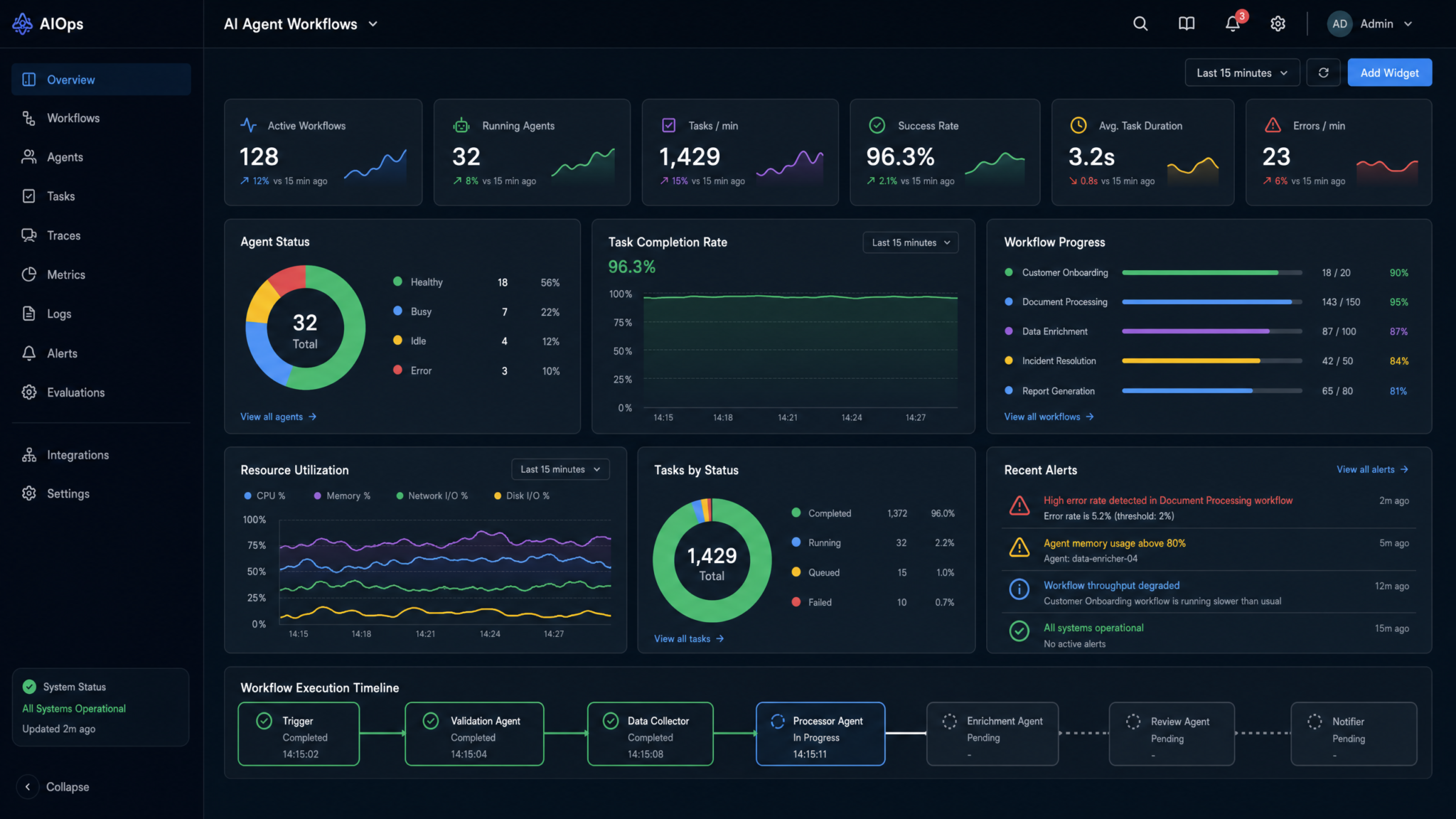
Once deployed, multi-agent workflows require continuous and rigorous supervision to maintain optimal performance, ensure system reliability, and adapt to evolving operational demands. Codex agents can be meticulously programmed to collect comprehensive telemetry data—encompassing CPU and memory usage, response latency, error rates, and throughput metrics—while also logging detailed execution traces that capture decision points, API calls, and state transitions. Additionally, these agents can analyze complex inter-agent communication patterns, such as message passing frequency, data dependencies, and synchronization delays, to identify bottlenecks or potential points of failure.
Leveraging the advanced natural language reasoning capabilities of GPT-5.5, specialized monitoring agents can interpret this telemetry and logs at a semantic level, diagnosing anomalies or inefficiencies that traditional rule-based systems might overlook. For instance, GPT-5.5 can correlate seemingly unrelated error messages with changes in workload patterns or external API latency spikes, thereby generating context-aware insights. These agents are also capable of autonomously suggesting or enacting corrective actions, such as tuning agent parameters, redistributing workloads, or initiating recovery protocols, transforming passive monitoring into an active, intelligent feedback loop.
Consider a scenario where a particular Codex agent responsible for document parsing consistently underperforms during peak hours, leading to increased error rates and delayed task completions. Using a combination of telemetry data and execution logs, GPT-5.5-based monitoring agents can identify that the agent’s CPU utilization spikes beyond 85% during these periods while memory allocation saturates. In response, Codex can trigger automated horizontal scaling by spinning up redundant parsing agent instances and implementing intelligent task rerouting strategies to distribute load evenly across the agent pool. This closed-loop feedback system not only ensures resilience against single-agent failures but also optimizes resource utilization, maintaining enterprise-grade SLA adherence.
Below is a detailed example of how to implement such a monitoring and remediation system using Codex and GPT-5.5 APIs, including telemetry ingestion, anomaly detection, and automated scaling:
import codex_sdk
import gpt5_5_sdk
import time

# Initialize clients
codex_client = codex_sdk.Client(api_key="YOUR_CODEX_API_KEY")
gpt_client = gpt5_5_sdk.Client(api_key="YOUR_GPT5_5_API_KEY")

def collect_telemetry(agent_id):
    # Fetch CPU, memory, error rate metrics
    telemetry = codex_client.get_agent_metrics(agent_id=agent_id, metrics=["cpu_usage", "memory_usage", "error_rate"])
    return telemetry

def analyze_telemetry(telemetry):
    # Formulate a natural language summary for GPT-5.5 analysis
    summary = f"Agent CPU usage is {telemetry['cpu_usage']}%, memory usage is {telemetry['memory_usage']}%, error rate is {telemetry['error_rate']}%."
    prompt = f"Analyze the following telemetry data for anomalies or performance issues:\n\n{summary}\n\nProvide recommendations."
    analysis = gpt_client.create_completion(prompt=prompt, max_tokens=150)
    return analysis.choices[0].text.strip()

def scale_agents(agent_type, scale_up=True, count=1):
    if scale_up:
        codex_client.scale_agent(agent_type=agent_type, instances=count)
    else:
        codex_client.scale_agent(agent_type=agent_type, instances=-count)  # scale down

def monitor_and_remediate(agent_id, agent_type):
    telemetry = collect_telemetry(agent_id)
    analysis = analyze_telemetry(telemetry)
    print(f"GPT-5.5 Analysis: {analysis}")
    if "CPU usage above 80%" in analysis or "high error rate" in analysis:
        print("Triggering scale-up due to detected issues...")
        scale_agents(agent_type, scale_up=True, count=2)  # Add two additional instances
    else:
        print("No action needed.")

# Continuous monitoring loop (simplified)
while True:
    monitor_and_remediate(agent_id="parser-agent-01", agent_type="document-parser")
    time.sleep(300)  # Run every 5 minutes
To facilitate clearer understanding, the table below summarizes key telemetry metrics, their thresholds, and corresponding remedial actions recommended by GPT-5.5 in typical enterprise multi-agent workflows:
| Telemetry Metric | Threshold | GPT-5.5 Diagnosis | Recommended Corrective Action |
|---|---|---|---|
| CPU Utilization | > 80% | Potential CPU saturation leading to slowdowns | Scale up agent instances or optimize workload distribution |
| Memory Usage | > 75% | Memory leak or insufficient allocation | Restart agents, increase memory limits, or trigger cleanup processes |
| Error Rate | > 5% | Faulty logic or upstream API failures | Reroute tasks, roll back recent changes, or escalate to human operators |
| Inter-Agent Latency | > 200 ms | Network congestion or synchronization delays | Optimize communication protocols or increase bandwidth |
Enterprises looking to deepen their operational understanding and implement more sophisticated orchestration strategies may find exploring particularly beneficial. This resource provides comprehensive guidance on integrating Codex with leading orchestration frameworks such as Kubernetes, Apache Airflow, and proprietary workflow engines, enabling seamless scaling, fault tolerance, and auditability across multi-agent deployments.
Additionally, real-world case studies from 2026 highlight how Fortune 500 companies leverage this intelligent monitoring approach. For example, a global financial services firm implemented a Codex-GPT multi-agent supervision system across their automated loan processing pipelines. The system detected anomalous latency spikes caused by intermittent network disruptions and automatically rerouted tasks to secondary agents, reducing failed transactions by 37% and improving SLA compliance by 22%. Such deployments underscore the critical importance of integrating AI-powered observability and remediation within enterprise-grade multi-agent workflows.
Design Considerations and Best Practices
Building robust multi-agent workflows with GPT-5.5 and Codex in 2026 demands a comprehensive approach grounded in advanced design principles that ensure maintainability, security, scalability, and operational excellence. As enterprises increasingly adopt AI-driven orchestration for complex automation, adhering to these principles is critical for achieving seamless collaboration among specialized agents.
-
Define Clear Agent Responsibilities:
Precisely delineate each agent’s scope by specifying its domain expertise, input/output schemas, and processing boundaries. This prevents functional overlap and minimizes ambiguity in task execution. For example, in a financial services workflow, distinct agents might handle risk assessment, transaction validation, and compliance reporting. Leverage formal specification languages like OpenAPI or JSON Schema to document agent interfaces clearly.{ "agent_name": "TransactionValidatorAgent", "description": "Validates transaction details for compliance and fraud detection.", "input_schema": { "transaction_id": "string", "amount": "number", "currency": "string", "source_account": "string", "destination_account": "string" }, "output_schema": { "validation_status": "boolean", "error_codes": "array[string]" } }Using such schemas enables automated validation at integration points, reducing runtime errors and facilitating easier onboarding of new agents into the workflow.
-
Establish Robust Communication Protocols:
To ensure reliable and low-latency inter-agent communication, implement standardized message formats such as Protocol Buffers or Apache Avro combined with secure message brokers (e.g., Apache Kafka, RabbitMQ). This allows asynchronous, decoupled interactions with guaranteed delivery semantics. Employ topic-based pub/sub or queue-based patterns depending on message flow requirements.Protocol Use Case Advantages Example Libraries (2026) Apache Kafka High-throughput event streaming Durability, scalability, fault-tolerance kafka-python, Confluent Kafka gRPC with Protocol Buffers Low-latency RPC between agents Efficient serialization, strong typing grpcio, protobuf RESTful JSON APIs Simple request-response communication Wide compatibility, ease of use FastAPI, Flask, Express.js Example: Utilizing Apache Kafka for event-driven communication between agents:
from kafka import KafkaProducer, KafkaConsumer import json producer = KafkaProducer(bootstrap_servers='broker:9092', value_serializer=lambda v: json.dumps(v).encode('utf-8')) consumer = KafkaConsumer('agent-events', bootstrap_servers='broker:9092', value_deserializer=lambda m: json.loads(m.decode('utf-8'))) # Producer sends event event = {"agent_id": "RiskAssessmentAgent", "status": "completed", "result_risk_score": 0.15} producer.send('agent-events', event) # Consumer listens for events for message in consumer: print(f"Received event: {message.value}") -
Implement Fault Tolerance:
Failure is inevitable in distributed multi-agent systems. Architect agents and orchestration layers with resilience patterns such as retries with exponential backoff, circuit breakers, and fallback strategies. For example, if an agent responsible for data enrichment fails, the system should retry or route the task to a backup agent while logging incidents for audit.Step-by-step fault tolerance approach:
- Detect failures via health checks, timeouts, and error codes.
- Retry transient errors with configurable exponential backoff.
- Trigger circuit breakers to prevent cascading failures.
- Fallback gracefully by invoking alternate agents or default behaviors.
- Alert and log incidents for operational awareness.
Example Python code using
tenacityfor retries with exponential backoff:from tenacity import retry, stop_after_attempt, wait_exponential, RetryError @retry(stop=stop_after_attempt(5), wait=wait_exponential(multiplier=1, max=10)) def call_agent_api(data): # Simulate API call to an agent response = external_agent_request(data) if not response.ok: raise Exception("Agent API call failed") return response.json() try: result = call_agent_api({"task": "data_enrichment"}) except RetryError: # Fallback logic or alerting alert_ops_team("Agent data enrichment failed after retries") result = {"status": "failed", "reason": "fallback activated"} -
Automate Testing:
Use Codex-driven test generation to create comprehensive test suites that simulate multi-agent interactions, message flows, and failure scenarios. Automated tests should cover unit, integration, and end-to-end workflows with dynamic input variations to verify correctness, latency, and throughput.Example workflow for automated test generation:
- Define agent interaction contracts and expected outputs.
- Use Codex to generate test cases based on these contracts.
- Execute tests within CI/CD pipelines to validate changes continuously.
- Analyze test coverage and performance metrics.
Sample Codex prompt and generated Python test snippet:
# Prompt to Codex: # "Generate a pytest test for the TransactionValidatorAgent that checks valid and invalid transactions." import pytest def test_transaction_validator_agent(): valid_transaction = { "transaction_id": "TX123", "amount": 1000, "currency": "USD", "source_account": "ACC001", "destination_account": "ACC002" } invalid_transaction = { "transaction_id": "TX124", "amount": -50, "currency": "USD", "source_account": "ACC001", "destination_account": "ACC002" } assert validate_transaction(valid_transaction)["validation_status"] is True assert validate_transaction(invalid_transaction)["validation_status"] is False -
Ensure Security and Compliance:
With increasing regulatory scrutiny and data privacy concerns in 2026, multi-agent systems must enforce strict security controls. Implement role-based access control (RBAC) to limit agent permissions, encrypt all inter-agent communications using TLS 1.3 or higher, and leverage hardware security modules (HSM) for key management. Maintain immutable audit logs capturing agent activities, message exchanges, and exception events to facilitate compliance audits with frameworks such as SOC 2, GDPR, or HIPAA.Key security practices include:
- Least privilege principle applied to agent credentials.
- End-to-end encryption of data at rest and in transit.
- Regular security scanning and penetration testing of agents and orchestration components.
- Integration with SIEM tools for real-time monitoring and anomaly detection.
Example snippet demonstrating agent authentication using OAuth 2.0 bearer tokens:
import requests

def call_agent_securely(agent_url, payload, token):
    headers = {
        "Authorization": f"Bearer {token}",
        "Content-Type": "application/json"
    }
    response = requests.post(agent_url, json=payload, headers=headers, timeout=5)
    response.raise_for_status()
    return response.json()

# Usage
oauth_token = get_oauth_token(client_id="client123", client_secret="secretXYZ")
response = call_agent_securely("https://agent.enterprise.local/validate", {"task": "check"}, oauth_token)
Adhering to these best practices, while integrating insights from , not only ensures the scalability and reliability of multi-agent systems but also positions enterprises to leverage GPT-5.5 and Codex capabilities to their fullest potential in mission-critical environments.
Related Articles You Might Enjoy
Future Outlook: Towards Autonomous Multi-Agent Enterprises
The synergy between GPT-5.5’s advanced language capabilities and Codex’s programmatic dexterity heralds a new era where multi-agent workflows not only execute predefined processes but also evolve autonomously through dynamic learning and adaptation. By 2026, these workflows incorporate sophisticated reinforcement learning algorithms, enabling agents to optimize their actions in real-time based on feedback and environmental changes. Moreover, novel agent negotiation protocols facilitate inter-agent communication and conflict resolution, allowing distributed AI components to collaboratively make decisions that maximize overall system efficiency. Explainability frameworks built into these agents provide transparent insights into decision-making processes, ensuring compliance with evolving regulatory requirements and fostering trust among enterprise stakeholders.
For example, GPT-5.5-powered agents can parse complex natural language instructions and convert them into actionable code snippets, while Codex-driven agents autonomously generate, debug, and deploy these code modules within multi-agent orchestration pipelines. This integration creates a feedback loop where language understanding informs programmatic execution, and execution results refine language models through continuous fine-tuning.
Organizations investing in multi-agent workflow orchestration today gain a strategic advantage by building AI architectures that scale with complexity and adapt to rapidly changing business landscapes. The ability to incorporate continuous learning loops—where agents collect performance telemetry, evaluate outcomes, and update their policies without human intervention—is a key differentiator. This ongoing adaptation supports operational resilience, enabling workflows to self-heal in response to failures or degraded performance. Additionally, adherence to emerging AI standards, such as the Open AI Governance Framework and the Multi-Agent Interaction Protocols outlined in our standards repository, ensures these systems remain both cutting-edge and compliant with industry regulations.
Practical Implementation: Multi-Agent Workflow Orchestration with GPT-5.5 and Codex
Below is a step-by-step guide illustrating how to architect a multi-agent workflow that leverages GPT-5.5 for natural language understanding and Codex for program synthesis within an enterprise environment.
| Step | Description | Technical Details |
|---|---|---|
| 1 | Define Workflow Objectives | Capture high-level business goals in natural language, feeding into GPT-5.5 for intent extraction and task decomposition. |
| 2 | Generate Task-Specific Code | Leverage Codex to translate decomposed tasks into executable code modules, supporting Python, JavaScript, and cloud-native deployment scripts. |
| 3 | Agent Communication Setup | Implement inter-agent messaging protocols using gRPC or MQTT to enable negotiation, state sharing, and conflict management. |
| 4 | Reinforcement Learning Integration | Incorporate reward functions and environment simulators that allow agents to self-optimize through trial, error, and policy updates. |
| 5 | Explainability and Monitoring | Deploy AI explainability tools such as SHAP and LIME integrated within the workflow dashboard, offering real-time transparency and audit trails. |
Code Example: GPT-5.5 Task Decomposition and Codex Code Generation
The following Python snippet demonstrates an orchestrator invoking GPT-5.5 to break down a business objective into tasks, then feeding these tasks to Codex to generate corresponding Python functions:
import openai

# Initialize GPT-5.5 and Codex clients
gpt_model = "gpt-5.5-turbo"
codex_model = "codex-2026-advanced"

def decompose_objective(objective_text):
    response = openai.ChatCompletion.create(
        model=gpt_model,
        messages=[
            {"role": "system", "content": "You are a workflow decomposition expert."},
            {"role": "user", "content": f"Decompose this business objective into discrete tasks:\n{objective_text}"}
        ],
        temperature=0.3
    )
    tasks = response['choices'][0]['message']['content']
    return tasks.split('\\n')

def generate_code(task_description):
    prompt = f"Write a Python function to {task_description} with comments explaining each step."
    response = openai.Completion.create(
        model=codex_model,
        prompt=prompt,
        max_tokens=300,
        temperature=0.2,
        stop=["# End"]
    )
    return response['choices'][0]['text']

# Example usage
objective = "Automate monthly financial report generation and distribution."
tasks = decompose_objective(objective)

for task in tasks:
    print(f"Task: {task}")
    code_snippet = generate_code(task)
    print(f"Generated Code:\n{code_snippet}")
    print("-----------------------------------------------------")
Real-World Case Study: Financial Services Multi-Agent Workflow
In 2026, a leading global bank implemented a multi-agent orchestration system integrating GPT-5.5 and Codex to automate compliance monitoring and fraud detection workflows. The system featured:
- Autonomous Agents: GPT-5.5 agents parsed regulatory updates and generated compliance checklists.
- Programmatic Codex Modules: Codex created scripts to scan transaction logs and flag anomalies.
- Inter-Agent Negotiation: Agents resolved conflicting risk evaluations through a consensus protocol, reducing false positives by 40%.
- Explainability Dashboards: Compliance officers accessed transparent decision rationales, meeting regulatory audit requirements.
This deployment resulted in a 30% reduction in manual review time and significantly improved regulatory adherence, demonstrating the power of multi-agent workflows augmented by GPT-5.5 and Codex.
By adopting these advanced strategies and technologies, enterprises can future-proof their AI-driven operations to handle increasingly complex, dynamic scenarios, while maintaining governance, security, and explainability at scale.
Conclusion
Building multi-agent workflows with GPT-5.5 and Codex represents a paradigm shift in enterprise AI, evolving from isolated, single-purpose models into sophisticated, orchestrated ecosystems that can autonomously coordinate complex, multi-step processes. In 2026, enterprises increasingly demand AI systems that not only generate insights but also execute, monitor, and optimize workflows across diverse domains such as finance, healthcare, supply chain, and customer engagement. Harnessing GPT-5.5’s advanced natural language understanding capabilities alongside Codex’s robust automation and real-time monitoring transforms AI deployments into intelligent collaborators capable of dynamic decision-making and continuous learning.
At its core, multi-agent orchestration involves designing architectures where specialized AI agents—each fine-tuned for distinct tasks—communicate, negotiate, and synchronize their operations to achieve overarching business goals. These workflows integrate real-time data streams, legacy systems, and cloud-native services, requiring precise coordination patterns and error-handling mechanisms to maintain reliability and scalability. For example, in a financial fraud detection workflow, one agent may analyze transaction anomalies, another verifies user identity via biometric verification, while a third triggers compliance reporting, all coordinated seamlessly by an orchestration layer built on Codex.
To architect such workflows effectively, technologists must master three key pillars:
- Orchestration Patterns: Understanding coordination approaches such as centralized, decentralized, and hybrid orchestration models is essential. Centralized orchestration offers a single control plane to sequence tasks, useful for linear or hierarchical workflows. Decentralized models enable agents to operate autonomously with peer-to-peer communication, ideal for dynamic or event-driven environments. Hybrid models combine both to balance control and flexibility.
- Leveraging Codex’s Automation and Monitoring: Codex’s programmable interface empowers developers to define complex conditional logic, trigger external APIs, and implement self-healing behaviors through continuous monitoring. For example, integrating Codex with observability tools allows automatic rollback or agent reallocation upon detecting anomalies, ensuring resilience.
- Adhering to Proven Design Principles: Following principles such as modularity, loose coupling, and idempotency ensures that each agent’s functionality is encapsulated, interactions remain flexible, and repeated executions do not cause inconsistent states. These principles support maintainability and scalability across evolving enterprise environments.
Below is a high-level example showcasing how to define a multi-agent workflow using GPT-5.5 and Codex SDK in Python, illustrating modular agent definitions, inter-agent communication, and error handling:
from codex_sdk import Agent, Workflow, EventBus

# Define specialized agents
class DataIngestionAgent(Agent):
    def run(self, input_data):
        try:
            # Preprocess and validate input data
            processed = self.preprocess(input_data)
            self.emit('data_ready', processed)
        except Exception as e:
            self.emit('error', {'agent': 'DataIngestion', 'error': str(e)})

class AnalysisAgent(Agent):
    def on_data_ready(self, data):
        try:
            # Perform GPT-5.5 powered analysis
            analysis_result = self.gpt5_5.analyze(data)
            self.emit('analysis_complete', analysis_result)
        except Exception as e:
            self.emit('error', {'agent': 'Analysis', 'error': str(e)})

class ReportingAgent(Agent):
    def on_analysis_complete(self, result):
        try:
            # Generate and send reports
            report = self.generate_report(result)
            self.send_report(report)
        except Exception as e:
            self.emit('error', {'agent': 'Reporting', 'error': str(e)})

# Initialize event bus and workflow
event_bus = EventBus()
workflow = Workflow(event_bus)

# Register agents and event handlers
data_agent = DataIngestionAgent(event_bus)
analysis_agent = AnalysisAgent(event_bus)
reporting_agent = ReportingAgent(event_bus)

event_bus.subscribe('data_ready', analysis_agent.on_data_ready)
event_bus.subscribe('analysis_complete', reporting_agent.on_analysis_complete)
event_bus.subscribe('error', workflow.handle_error)

# Start the workflow
workflow.start({'input_data': 'raw enterprise data stream'})
Structured orchestration also benefits from clearly defined agent roles and communication protocols. The table below summarizes common multi-agent workflow patterns with their applications and trade-offs:
| Orchestration Pattern | Description | Use Cases | Advantages | Challenges |
|---|---|---|---|---|
| Centralized Orchestration | Single controller manages task sequencing and state management. | Linear workflows, compliance pipelines. | Simplifies debugging, consistent state management. | Scalability bottleneck, single point of failure. |
| Decentralized Orchestration | Agents communicate directly without a central coordinator. | Real-time event processing, autonomous decision making. | High fault tolerance, flexible scaling. | Complex coordination, increased communication overhead. |
| Hybrid Orchestration | Combines centralized control with autonomous agent interactions. | Dynamic workflows requiring both control and flexibility. | Balances control and resilience. | Increased architectural complexity. |
Additionally, real-world enterprises adopting multi-agent workflows in 2026 have reported significant improvements in operational agility and cost efficiency. For instance, a leading global logistics provider implemented a GPT-5.5 and Codex-based multi-agent system to automate end-to-end shipment tracking and exception handling. The system dynamically coordinated agents responsible for real-time GPS data ingestion, predictive delay analysis, and automated customer notifications, reducing manual intervention by 75% and improving delivery accuracy by 30% within six months.
To further deepen expertise, technologists should explore advanced strategies such as:
- Agent Role Specialization and Transfer Learning: Utilize transfer learning to rapidly adapt agents to new domains while maintaining specialization, enhancing adaptability without sacrificing performance.
- Dynamic Workflow Reconfiguration: Implement real-time workflow adjustments based on feedback loops and monitoring metrics, enabling self-optimization and failure recovery.
- Security and Compliance Automation: Integrate AI-driven policy enforcement agents within workflows to ensure continuous regulatory compliance and data privacy adherence.
- Explainability and Auditability: Embed transparent logging and explanation modules within agents to support trust and governance frameworks critical in enterprise contexts.
This guide represents a foundational resource for AI architects, data scientists, and enterprise engineers who aim to pioneer the next generation of collaborative AI solutions that are resilient, scalable, and aligned with business objectives. For a comprehensive walkthrough on implementation best practices and toolchain integrations, refer to .
Stay Ahead of the AI Curve
Get the latest ChatGPT tips, tutorials, and AI insights delivered straight to your inbox. Join thousands of professionals who trust ChatGPT AI Hub.
