
OpenAI Financial Services Summit 2026: How AI Agents Are Transforming Banking, Trading, and Compliance
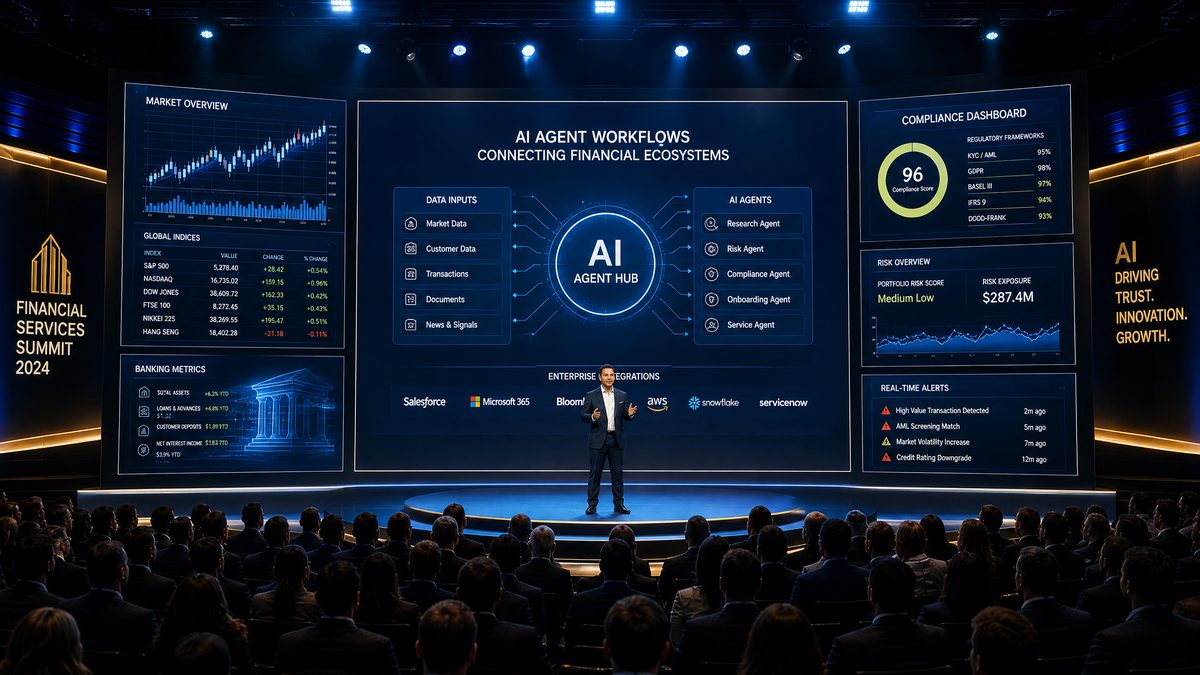
On June 8, 2026, the OpenAI Financial Services Summit convened leading experts, financial institutions, and technology innovators to explore how next-generation AI agents, powered by GPT-5.5, are revolutionizing banking, trading, and compliance. The event was highlighted by an in-depth presentation from Lee Spacagna, Senior Director of AI Strategy at OpenAI, who unveiled practical frameworks for operationalizing AI across complex financial workflows. This comprehensive coverage delves into the summit’s key insights, showcasing how GPT-5.5 agents are seamlessly integrating with enterprise productivity tools such as Outlook, Microsoft Teams, and SharePoint to drive unprecedented automation and risk mitigation in financial services.
Operationalizing AI in Financial Workflows: Insights from Lee Spacagna’s Keynote
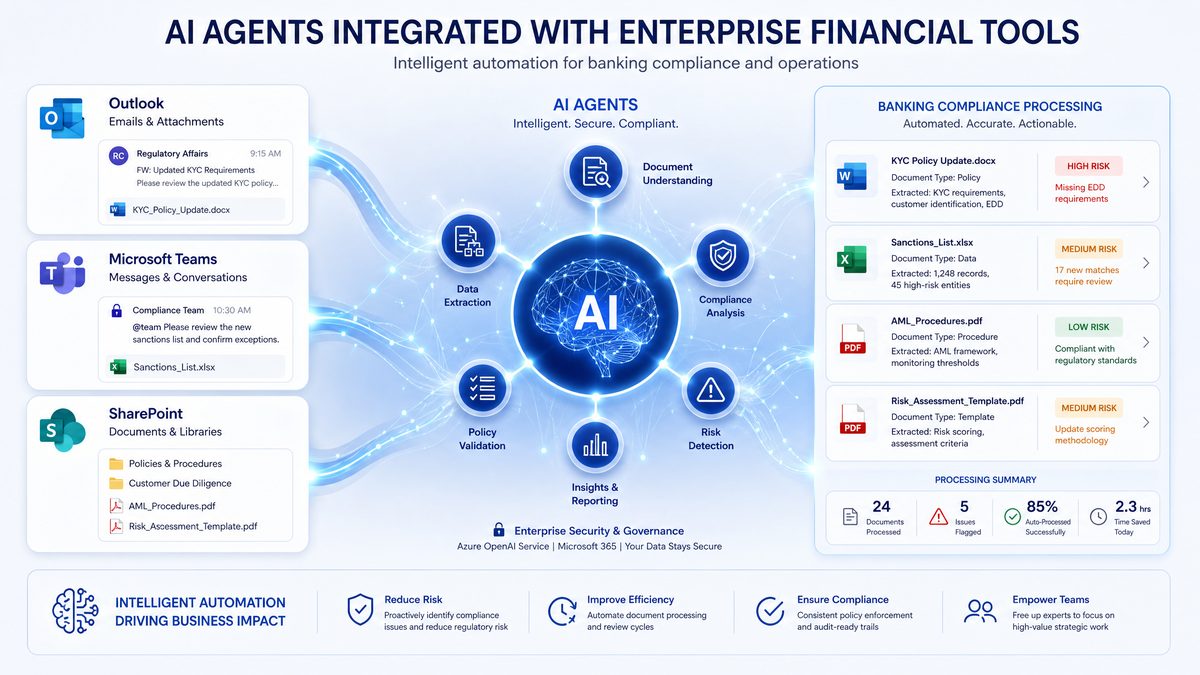
Lee Spacagna’s keynote provided a granular overview of the strategies enterprises must adopt to embed AI agents into daily operations without compromising compliance or security. Drawing from extensive pilot programs across multinational banks, Spacagna emphasized a phased approach:
- Discovery & Mapping: Identify high-value processes with repetitive manual work or complex decision points, such as compliance monitoring or risk assessment.
- Integration Layer Development: Build secure connectors between GPT-5.5 agents and enterprise systems, ensuring data privacy and real-time sync with tools like Outlook and SharePoint.
- Agent Training & Fine-Tuning: Customize GPT-5.5 models on proprietary financial data, regulatory documents, and historical performance metrics to optimize domain expertise.
- Governance & Human-in-the-Loop: Implement compliance checkpoints and escalation paths to maintain auditability and regulatory adherence.
- Continuous Monitoring & Improvement: Use AI-driven analytics dashboards to measure agent performance, identify drift, and iterate models with feedback loops.
Spacagna cited a leading European bank that reduced compliance review cycle times by 45% within three months of deploying GPT-5.5 agents, highlighting the tangible benefits of this approach.
Delving deeper into the Discovery & Mapping phase, organizations often begin by conducting comprehensive process audits to pinpoint bottlenecks and pain points that AI agents can alleviate. For example, many banks identified that manual compliance checks for Anti-Money Laundering (AML) and fraud detection were not only time-consuming but also prone to human error. By cataloging these processes, institutions crafted a prioritized roadmap that balanced quick wins with long-term strategic AI integration.
During the Integration Layer Development step, Spacagna emphasized the importance of robust cybersecurity protocols. Enterprise environments demand strict data governance, so integration frameworks were designed with multi-factor authentication, encrypted data channels, and continuous security audits. Several pilot programs utilized Zero Trust architectures to ensure that AI agents accessed only the minimal necessary data, thereby reducing attack surfaces.
The Agent Training & Fine-Tuning stage is critical given the regulatory complexity of financial services. Banks used transfer learning techniques to adapt GPT-5.5’s vast language understanding to their unique data schemas and compliance lexicons. For instance, one institution fine-tuned the model on thousands of historical SAR (Suspicious Activity Report) filings and enforcement actions, enabling the AI to better flag nuanced regulatory risks. Additionally, synthetic data generation was employed to augment scarce training samples, ensuring models were robust against rare but high-impact scenarios.
Spacagna’s focus on Governance & Human-in-the-Loop is a recognition that AI, while powerful, is not infallible. Institutions established multi-tiered review workflows where AI-generated insights would be initially vetted by junior analysts before escalating to compliance officers for final decisions. This approach maintained regulatory transparency and allowed for continuous model auditing. Some banks also incorporated explainability tools that provided human reviewers with AI rationale, supporting better trust and accountability.
Finally, the Continuous Monitoring & Improvement phase leverages AI to self-assess its performance. Through dashboards that track key performance indicators — such as false positive rates, processing times, and compliance breach detections — financial firms could identify model drift caused by changing regulations or market conditions. Feedback loops from end users and compliance teams fed into dynamic retraining cycles, ensuring GPT-5.5 agents evolved alongside the institution’s needs.
Integrating GPT-5.5 Agents with Enterprise Collaboration Tools
One of the summit’s central themes was how GPT-5.5 agents are deeply woven into the digital fabric of financial institutions by integrating with tools like Microsoft Outlook, Teams, and SharePoint. These integrations enable contextual AI assistance directly within the workflows where financial professionals spend most of their day.
- Outlook: GPT-5.5 agents automatically scan incoming emails for critical compliance flags, generate draft responses for regulatory inquiries, and schedule follow-ups with relevant stakeholders.
- Microsoft Teams: Agents participate in team chats as virtual analysts, providing real-time insights on trading signals, regulatory updates, and risk alerts without users leaving the chat interface.
- SharePoint: AI agents curate, tag, and summarize vast repositories of policy documents and audit trails, making compliance information more accessible and actionable.
For instance, a North American investment bank demonstrated how GPT-5.5 agents integrated with Teams to deliver instant trading signal analysis during market hours, improving trader response times by an average of 30 seconds—a significant edge in high-frequency environments.
These integrations leverage the Microsoft Graph API and custom AI middleware to ensure seamless data flow and contextual awareness, enabling AI agents to act as embedded collaborators rather than standalone tools.
For additional insights on this rapidly evolving landscape, our detailed analysis in How to Build a a Code Review Bot with Claude Sonnet 4.6 in 2026: Step-by-Step provides comprehensive coverage of the latest developments and practical implementation strategies.
Beyond the examples shared at the summit, several institutions have reported innovative applications of these integrations. For example, a multinational asset manager uses GPT-5.5 within Outlook to automatically triage and prioritize emails related to regulatory updates from global authorities. The AI identifies jurisdiction-specific nuances and alerts legal teams accordingly, helping the firm stay ahead of compliance deadlines.
In Microsoft Teams, some firms deploy GPT-5.5 agents as meeting co-facilitators. These agents generate live summaries, action item lists, and flag potential compliance concerns raised during discussions. This capability reduces manual note-taking and ensures critical regulatory points are not overlooked in fast-paced meetings.
SharePoint integration extends beyond document management. Financial institutions use AI agents to perform semantic search across billions of documents, enabling rapid retrieval of precedent cases, regulatory interpretations, and internal audit findings. This reduces the time compliance officers spend sifting through voluminous records and improves decision-making quality.
Experts at the summit noted that successful integration requires strong change management. Embedding AI agents within familiar tools reduces resistance, but ongoing training and user feedback collection are essential to refine agent behaviors and interface design. Furthermore, compliance with regional data privacy laws, such as GDPR and CCPA, necessitates careful handling of user data during these integrations.
Use Cases Driving Financial Services Transformation
The summit showcased several high-impact use cases where GPT-5.5 AI agents are delivering measurable value. Each case highlights the operational challenges, AI-driven solutions, and outcomes backed by data and real-world deployments.
Automated Compliance Monitoring
Compliance monitoring remains a resource-intensive challenge for banks due to the complexity and volume of regulatory requirements. GPT-5.5 agents address this by continuously scanning transactions, communications, and documents to flag anomalies and potential violations in near real-time.
Example: A global bank implemented GPT-5.5 agents to monitor Know Your Customer (KYC) documentation and transaction patterns. The AI system identified suspicious activity with a 92% precision rate, reducing false positives by 40% compared to legacy rule-based systems.
The agents use natural language understanding to interpret regulatory texts and cross-reference them with transaction metadata. Alerts generated by the AI are triaged to compliance officers with suggested remediation steps, accelerating case resolution times by 35%.
To provide further context, one case involved a multinational bank operating across 15 countries where regulatory requirements differed significantly. GPT-5.5 agents were fine-tuned on localized compliance rules, allowing the system to detect country-specific fraud patterns and suspicious behaviors. This localization was crucial in reducing false positives that previously overwhelmed compliance teams.
Moreover, the AI agents employed anomaly detection algorithms that combined linguistic analysis of communications with transaction behavior models. For example, unusual phrasing in emails referencing transactions triggered deeper scrutiny, uncovering attempts to circumvent controls through coded language.
By automating the initial triage of vast data volumes, compliance teams could focus their human expertise on high-risk cases. This hybrid approach led to a 25% increase in regulatory audit pass rates for the bank, demonstrating improved adherence and reporting quality.
Trading Signal Analysis
In trading, the speed and accuracy of signal interpretation can determine profitability. GPT-5.5 agents ingest vast datasets—news feeds, social media sentiment, technical indicators—and distill actionable trading signals.
Case Study: An Asian hedge fund integrated GPT-5.5 agents into their trading platform to analyze unstructured data sources such as earnings call transcripts and geopolitical news. The AI delivered sentiment scores and risk-adjusted signal recommendations, contributing to a 12% increase in quarterly returns.
These agents are also capable of generating natural language summaries and risk assessments for portfolio managers, enhancing decision-making without overwhelming users with raw data.
For additional insights on this rapidly evolving landscape, our detailed analysis in Deep Dive: OpenAI Codex Complete Guide — Every Feature, Benchmark, and Use Case in 2026 provides comprehensive coverage of the latest developments and practical implementation strategies.
Taking this further, the hedge fund implemented multi-modal data ingestion, where GPT-5.5 agents analyzed not only text but also audio from earnings calls and video from press conferences. By applying advanced speech-to-text and sentiment analysis techniques, the agents captured subtle tones and pauses that often signal management confidence or hesitation.
The AI’s ability to contextualize geopolitical events—such as trade disputes or regulatory announcements—allowed traders to adjust positions proactively. For example, during a sudden escalation in regional tensions, the AI flagged potential market volatility and suggested hedging strategies, which the fund executed ahead of competitors.
Importantly, the hedge fund integrated feedback loops where traders rated the usefulness of AI recommendations, enabling continuous refinement of signal parameters. This human-AI collaboration improved the precision of signals while maintaining trader trust.
In addition to direct trading applications, GPT-5.5 agents facilitated compliance by monitoring trade execution against regulatory mandates like MiFID II, automatically flagging non-compliant orders and generating audit-ready logs.
Risk Assessment and Management
Financial institutions face multifaceted risks, from credit and market risk to operational and cyber risk. GPT-5.5 agents assist by synthesizing diverse data streams and generating comprehensive risk profiles.
Using advanced entity recognition and relationship extraction, AI agents identify hidden correlations and emerging risk factors that traditional models might miss.
| Risk Category | Traditional Assessment | GPT-5.5 AI Agent Approach | Impact |
|---|---|---|---|
| Credit Risk | Static credit scores and financial ratios | Dynamic analysis of payment behaviors, news sentiment, and macroeconomic data | Improved default prediction accuracy by 18% |
| Market Risk | Historical price volatility models | Real-time integration of alternative data and scenario simulations | Reduced Value-at-Risk (VaR) estimation errors by 22% |
| Operational Risk | Manual incident reporting | Automated detection of anomalies in process logs and communications | Cut incident response times by 40% |
Diving deeper into Credit Risk, GPT-5.5 agents incorporate real-time news sentiment analysis from financial media to detect early signs of distress in borrowers’ sectors. For example, if a supplier to a major client files for bankruptcy, the AI updates the risk profile dynamically, prompting preemptive credit limit adjustments.
In Market Risk, institutions have leveraged GPT-5.5 to simulate “what-if” scenarios incorporating geopolitical events, commodity price shocks, and currency fluctuations. These simulations provide risk managers with forward-looking insights that static models cannot capture, enhancing capital allocation strategies.
Operational Risk management benefits from AI-driven anomaly detection in IT system logs and communication channels. One bank deployed agents to monitor internal chat and email metadata for signs of insider threats or process deviations, enabling faster incident response and reducing potential losses.
Notably, GPT-5.5’s ability to extract and link entities across disparate datasets allows risk teams to uncover complex fraud schemes or systemic vulnerabilities that were previously opaque. For instance, multi-entity relationship graphs constructed by AI helped identify cascading risks in interconnected loan portfolios.
Customer Onboarding Automation
Onboarding new customers traditionally involves manual document verification, identity checks, and compliance validation, often leading to delays and dissatisfaction. GPT-5.5 agents streamline this process by automating document parsing, validating KYC data against regulatory databases, and intelligently routing exceptions to human agents.
Example: A major retail bank reported a 60% reduction in onboarding times and a 25% increase in customer satisfaction after deploying AI agents that integrated with their CRM and compliance platforms.
Additionally, the agents provide personalized onboarding experiences by proactively answering customer questions in natural language through chatbots integrated with web and mobile interfaces.
Expanding on this, the bank implemented AI-driven identity verification using GPT-5.5 combined with biometric and document authentication technologies. Customers could submit selfies and ID scans via mobile apps, with AI agents performing instant validation against government databases. This reduced manual review from days to minutes.
The agents also monitored customer interactions for potential onboarding fraud, such as synthetic identity creation, by cross-referencing multiple data points and transaction histories. Anomaly detection techniques flagged suspicious applications for enhanced due diligence.
On the customer experience front, AI chatbots powered by GPT-5.5 provided 24/7 support, answering FAQs about required documents, status updates, and compliance policies in multiple languages. This accessibility contributed to higher engagement and lowered call center volumes.
The bank’s success underscores the importance of tightly coupling AI onboarding solutions with existing compliance workflows and CRM systems, ensuring seamless data flow and governance.
Real-World Deployments: Banks Leveraging AI Agents for Fraud Detection and Regulatory Reporting
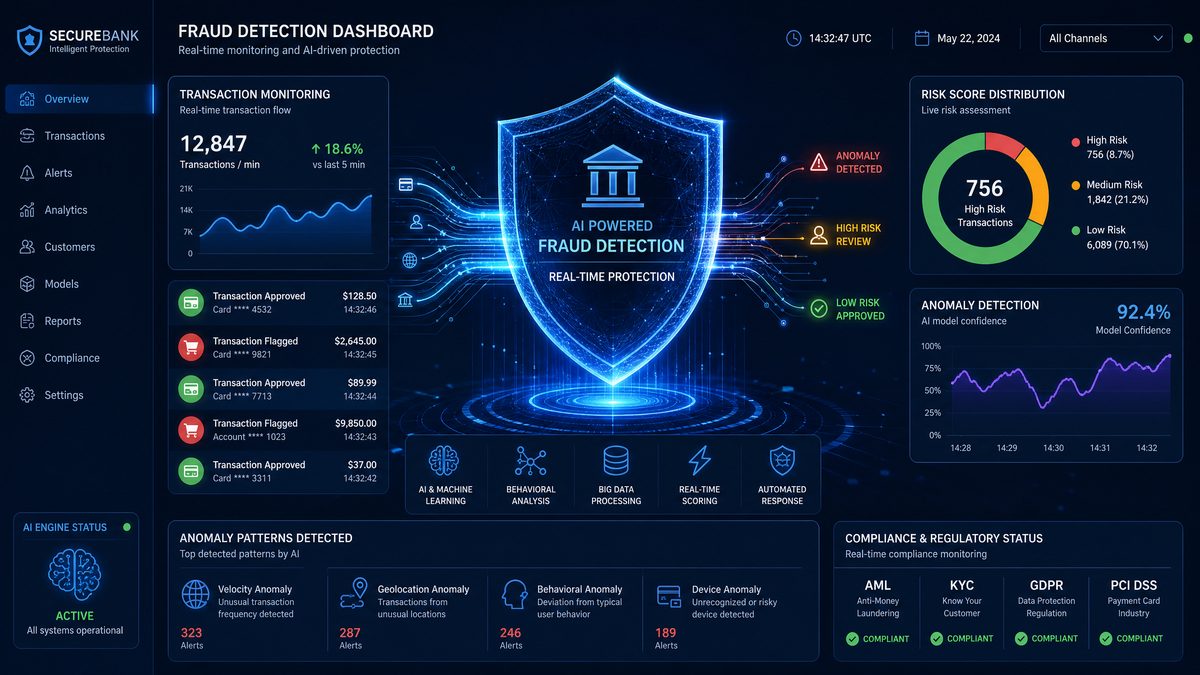
Several banks shared concrete results from AI agent deployments, providing actionable insights on implementation and outcomes.
Fraud Detection at Scale
Fraud detection remains a critical priority due to the evolving tactics of cybercriminals and the sheer volume of digital transactions. GPT-5.5 agents augment existing fraud detection systems by adding contextual analysis and anomaly detection capabilities.
Citadel Bank, a top-tier U.S. financial institution, uses GPT-5.5 agents to analyze transaction metadata, customer behavior patterns, and device fingerprints. The AI flagged previously undetected fraud rings through pattern recognition across accounts, improving fraud detection rates by 27% year-over-year.
The system integrates with the bank’s case management platform, automatically generating investigation reports and risk scores, freeing up fraud analysts to focus on high-priority cases. The bank also reported a 20% reduction in false positives, significantly decreasing operational costs.
Citadel Bank’s approach included deploying GPT-5.5 agents in a layered defense model, where AI complemented rule-based and machine learning models. The agents excelled at analyzing unstructured data such as customer service call transcripts and chat logs, identifying social engineering attempts and subtle fraud indicators missed by traditional systems.
The AI’s pattern recognition capabilities uncovered coordinated fraud schemes involving small-value transactions spread across multiple accounts and regions. By correlating these patterns, the bank proactively blocked transactions before losses occurred.
Furthermore, the bank leveraged explainable AI tools to visualize fraud patterns for investigators, enhancing interpretability and accelerating case closure times.
Automated Regulatory Reporting
Regulatory reporting involves compiling and submitting large volumes of data to various agencies, often under tight deadlines. GPT-5.5 agents automate data extraction, validation, and report drafting, ensuring accuracy and compliance.
Access 40,000+ AI Prompts for ChatGPT, Claude & Codex — Free!
Subscribe to get instant access to our complete Notion Prompt Library — the largest curated collection of prompts for ChatGPT, Claude, OpenAI Codex, and other leading AI models. Optimized for real-world workflows across coding, research, content creation, and business.
EuroBank International implemented AI agents to generate quarterly regulatory submissions across multiple jurisdictions. The agents parse transaction records, reconcile discrepancies, and draft narrative sections explaining risk exposures and capital adequacy.
This automation reduced reporting turnaround from 10 days to 4 days, with error rates dropping by 35%. The AI system also maintains a versioned audit trail that simplifies regulatory audits and inspections.
EuroBank’s solution involved integrating GPT-5.5 agents with their Enterprise Data Warehouse (EDW) to extract required datasets automatically. The AI performed cross-validation checks against prior reports and external market data to detect anomalies before submission.
In narrative generation, GPT-5.5 produced clear, regulatory-compliant explanations, alleviating the workload on compliance writers. The system also adapted language style to specific jurisdictional preferences, such as Basel III or Dodd-Frank standards.
The bank’s audit teams benefited from embedded AI-generated metadata and provenance documentation, speeding inspection processes and reducing regulator queries.
Technical Deep Dive: Sample Code for GPT-5.5 Agent Integration with Outlook
To illustrate how financial institutions can operationalize AI agents, below is a sample Python script using the Microsoft Graph API and OpenAI’s GPT-5.5 API to automate compliance-related email triage in Outlook.
import requests
import json

# Microsoft Graph API endpoint for fetching emails
GRAPH_API_ENDPOINT = "https://graph.microsoft.com/v1.0/me/mailFolders/Inbox/messages"
ACCESS_TOKEN = "YOUR_MICROSOFT_GRAPH_ACCESS_TOKEN"

# OpenAI GPT-5.5 API endpoint
OPENAI_API_ENDPOINT = "https://api.openai.com/v1/engines/gpt-5.5/completions"
OPENAI_API_KEY = "YOUR_OPENAI_API_KEY"

def fetch_emails():
    headers = {"Authorization": f"Bearer {ACCESS_TOKEN}"}
    params = {"$top": 10, "$filter": "receivedDateTime ge 2026-06-01T00:00:00Z"}
    response = requests.get(GRAPH_API_ENDPOINT, headers=headers, params=params)
    response.raise_for_status()
    return response.json()["value"]

def analyze_email_subject(subject):
    prompt = f"Analyze this email subject for compliance risk: '{subject}'. Identify if it contains any regulatory flags or urgent compliance issues."
    data = {
        "prompt": prompt,
        "max_tokens": 100,
        "temperature": 0.2
    }
    headers = {
        "Authorization": f"Bearer {OPENAI_API_KEY}",
        "Content-Type": "application/json"
    }
    response = requests.post(OPENAI_API_ENDPOINT, headers=headers, data=json.dumps(data))
    response.raise_for_status()
    result = response.json()
    return result["choices"][0]["text"].strip()

def main():
    emails = fetch_emails()
    for email in emails:
        subject = email.get("subject", "")
        analysis = analyze_email_subject(subject)
        print(f"Subject: {subject}\nCompliance Analysis: {analysis}\n{'-'*40}")

if __name__ == "__main__":
    main()
This script fetches recent emails, sends their subjects to the GPT-5.5 AI for compliance risk analysis, and prints the results. Financial institutions can extend this to automate flagging, response drafting, and workflow routing.
To enhance this example in production, developers might add features such as:
- Automated email classification into compliance categories (e.g., AML, fraud, data privacy).
- Integration with ticketing systems to create cases directly from flagged emails.
- Natural language generation to draft suggested responses or regulatory disclosures.
- Multi-language support for global operations.
- Logging and audit trail generation for compliance reviews.
Security best practices include securely managing API keys using vault solutions and implementing rate limiting to avoid exceeding API quotas.
Comparing AI Agents in Financial Services: GPT-5.5 vs. Legacy Systems
| Feature | Legacy Rule-Based Systems | GPT-5.5 AI Agents | Business Impact |
|---|---|---|---|
| Flexibility | Rigid rules, manual updates | Adaptive learning, natural language understanding | Faster response to regulatory changes |
| Integration | Limited to core systems | Seamless integration with collaboration and document platforms | Enhanced workflow efficiency |
| Accuracy | High false positives | Context-aware analysis reducing false alarms | Reduced operational costs |
| Scalability | Manual scaling challenges | Cloud-native, scalable AI models | Handles growing data volumes effortlessly |
| User Experience | Complex interfaces | Embedded in familiar tools (Outlook, Teams) | Higher user adoption and productivity |
Legacy systems have historically relied on static rule sets that require frequent manual revisions as regulations evolve. This rigidity often leads to delays in updating compliance protocols, resulting in increased risk exposure. In contrast, GPT-5.5 AI agents utilize continuous learning paradigms that enable them to adapt quickly to new regulatory frameworks by ingesting updated legal texts and guidance automatically.
Integration capabilities of GPT-5.5 agents extend beyond traditional core banking systems into collaborative environments, empowering users with AI assistance in the tools they already use daily. This embedded approach reduces context switching and accelerates decision-making processes.
Accuracy improvements stem from the AI’s sophisticated understanding of context and language nuances, greatly decreasing false positives that burden compliance and fraud teams. This leads to significant operational cost savings and improved employee morale.
Scalability is another differentiator. Cloud-native architectures supporting GPT-5.5 allow financial institutions to scale AI agent deployments seamlessly in response to data growth, user demand, or new regulatory requirements without the bottlenecks inherent in on-premise legacy systems.
The enhanced user experience offered by GPT-5.5, with conversational interfaces and integration into familiar platforms, drives higher adoption rates. Employees are more likely to trust and leverage AI tools that complement rather than disrupt their workflows.
Actionable Strategies for Financial Institutions to Adopt GPT-5.5 AI Agents
Institutions aiming to capitalize on AI agents should consider the following strategic steps:
- Invest in Data Quality: Ensure clean, structured, and ethically sourced financial data to maximize AI performance.
- Develop Cross-Functional AI Teams: Bring together compliance officers, data scientists, and IT professionals for collaborative AI governance.
- Start with Pilot Projects: Target high-impact use cases like compliance monitoring or onboarding automation for initial deployments.
- Leverage Existing Tools: Integrate AI into platforms already used by employees to reduce friction and accelerate adoption.
- Implement Human-in-the-Loop Controls: Maintain oversight with clear escalation and review processes for AI-generated outputs.
- Monitor and Optimize Continuously: Use AI analytics dashboards to track performance metrics and refine models.
Following these guidelines will help financial services firms transform from reactive to proactive and AI-augmented organizations.
For additional insights on this rapidly evolving landscape, our detailed analysis in 99+ ChatGPT Prompts for marketers provides comprehensive coverage of the latest developments and practical implementation strategies.
Additional expert recommendations from the summit emphasized the importance of establishing a strong ethical framework for AI use. Financial institutions should develop policies addressing bias mitigation, transparency, and accountability to foster trust among regulators, customers, and employees.
Furthermore, institutions should invest in employee training programs focused on AI literacy to empower staff to effectively collaborate with AI agents. Building a culture that embraces AI as an augmenting partner rather than a replacement is critical to long-term success.
Strategic partnerships with AI vendors and fintech startups can accelerate innovation and adoption, providing access to cutting-edge technologies and domain expertise. However, institutions must conduct thorough vendor due diligence to ensure compliance with data security and privacy standards.
Conclusion: The Future of Financial Services with GPT-5.5 AI Agents
The OpenAI Financial Services Summit 2026 underscored that AI agents powered by GPT-5.5 are no longer futuristic concepts but operational realities reshaping banking, trading, and compliance. Their ability to integrate seamlessly with enterprise workflows, analyze complex unstructured data, and automate critical decision-making processes is driving efficiency, reducing risk, and enhancing customer experience.
Financial institutions that strategically adopt these AI capabilities will gain competitive advantages in speed, accuracy, and regulatory agility. The examples and frameworks presented at the summit provide a blueprint for this transformation—one where human expertise is amplified by intelligent agents working in concert across the enterprise.
As AI continues to evolve, the collaboration between domain experts and cutting-edge technology promises a future where financial services are safer, smarter, and more responsive to the fast-changing global economy.
Looking ahead, experts anticipate that GPT-5.5 and subsequent AI models will enable even more sophisticated applications such as autonomous portfolio management, predictive regulatory scenario planning, and real-time global risk aggregation. Continuous innovation in AI-human collaboration will unlock new business models, customer experiences, and compliance paradigms, positioning financial institutions to thrive amid complexity and change.
