
The AI Agent Delegation Playbook: 25 Codex Prompts for Delegating Complex Research, Analysis, and Reporting Tasks

The transition from one-shot prompts to true agent delegation marks a pivotal shift in how organizations extract value from AI. Instead of asking for a quick answer, you assign a Codex agent a multi-hour initiative with objectives, milestones, resources, and quality gates—much like you would a senior analyst or an engineering lead. Delegation is not simply a “better prompt.” It is a disciplined operating model that aligns time, tools, and checkpoints with business outcomes. This playbook provides 25 rigorously specified delegation prompts—spanning research, data analysis, reporting, code and architecture, and creative/content—to help you confidently hand off complex, long-running tasks (8+ hour human-equivalent) to Codex agents while maintaining traceability, quality, and predictable delivery.
Table of Contents
- Introduction: The Art of Agent Delegation vs. Simple Prompting
- Section 1: Research Delegation (5 Prompts)
- Section 2: Data Analysis Delegation (5 Prompts)
- Section 3: Report Generation Delegation (5 Prompts)
- Section 4: Code & Architecture Delegation (5 Prompts)
- Section 5: Creative & Content Delegation (5 Prompts)
- Operational Guidance for Long-Running Codex Agents
- Key Takeaways
Introduction: The Art of Agent Delegation vs. Simple Prompting
Simple prompting is transactional: you present a narrow question, the model returns an answer. Delegation is programmatic: you define objectives, scope, constraints, inputs, review cadence, acceptance criteria, and final delivery formats. Delegation expects the agent to navigate ambiguity, manage state over hours, consult external tools or data sources, and self-audit before presenting a polished artifact. In short, you are not asking “what’s the answer?”—you are assigning “a body of work.”
Effective delegation to Codex agents relies on five pillars:
- Clear objectives and constraints: Define success criteria, out-of-scope items, and guardrails (e.g., citations requirements, source whitelists, data privacy rules).
- Milestones and check-ins: Establish interim outputs (e.g., outline, sample calculations, pilot sections) to align early and avoid costly rework.
- Structured outputs: Specify exact deliverable formats—folder structure, filenames, schemas—so integration is deterministic.
- Quality gates: Provide rubrics, validation tests, and acceptance thresholds that the agent must satisfy before marking the task “done.”
- Time-boxing and iteration: Communicate estimated durations, allocate time for research, drafting, and revision, and set conditions for escalation.
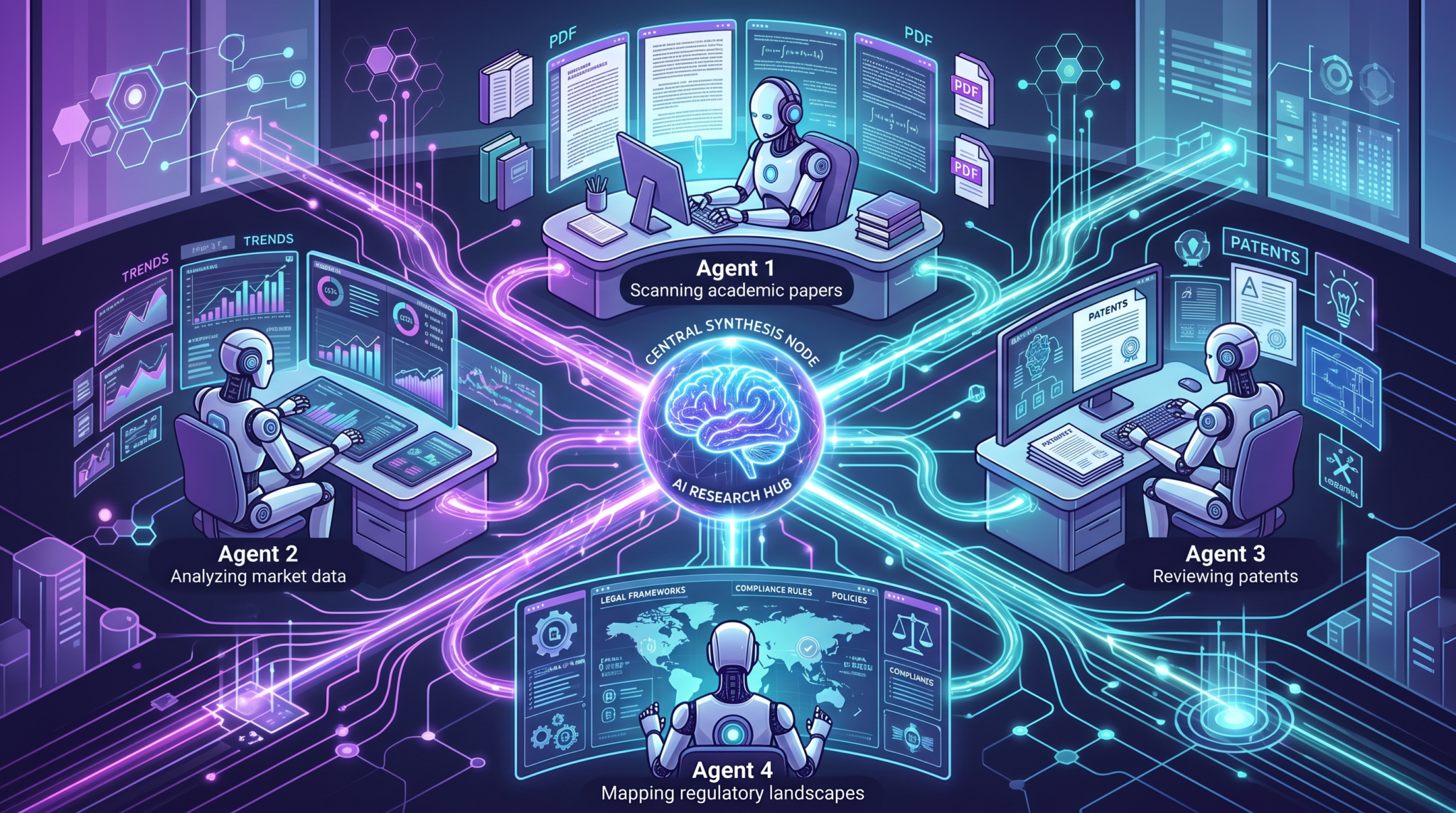
As your Codex initiatives scale from minutes to hours, orchestration patterns become critical. You may need an analysis agent, a research agent, and a reporting agent coordinating via shared artifacts and a supervision loop. For a deeper breakdown of agent roles, handoffs, and escalation criteria, see our guide that details how multi-agent pipelines coordinate tool usage, persist state, and enforce quality contracts throughout a project lifecycle: How to Deploy GPT-5.5 on Amazon Bedrock for Multi-Cloud Enterprise AI: Complete Setup Guide with IAM Policies, Cost Controls, and Production Patterns
Organizations that institutionalize agent delegation also standardize evaluation. A consistent rubric—covering completeness, correctness, reproducibility, and stakeholder readability—reduces variance and accelerates trust. If you want a model-agnostic primer on writing acceptance tests for agent work products (from citations to unit tests and schema validation), we provide a hands-on reference here: OpenAI Acquires Ona: How Codex Will Integrate Survey Data Collection, Field Research, and Structured Data Pipelines for Enterprise Knowledge Management
Section 1: Research Delegation (5 Prompts)
Research tasks often sprawl: sources are heterogeneous, claims need citations, and synthesis requires judgment. Delegating research to Codex agents is about bounding scope, enforcing citation hygiene, and aligning on the outputs that downstream consumers actually use (e.g., competitor matrices, annotated bibliographies, regulatory maps).
Research Prompt 1: Market Research Dossier for a New Product Launch
Delegation Prompt
Role: Senior Market Intelligence Analyst (Codex Agent)

Objective:
Produce a market research dossier for <Product/Service> entering <Region/Segment>. Focus on total addressable market (TAM), serviceable available market (SAM), serviceable obtainable market (SOM), buyer personas, purchase triggers, pricing bands, distribution channels, and regulatory constraints.

Scope & Constraints:
- Include only sources published within the last 24 months.
- Prioritize primary data (surveys, filings) and reputable secondary sources (industry reports, analyst research).
- All claims must have source citations with URLs and publication dates.
- Out of scope: paid ads forecasts, creative assets, and speculative claims without data.

Inputs (if available):
- Internal win/loss notes, customer interviews, and previous research memos (files in /inputs/research/).
- Initial hypothesis doc: /inputs/hypotheses.md

Deliverables:
- /outputs/market_dossier.md (executive summary, methodology, findings, implications, risks)
- /outputs/metrics.csv (TAM/SAM/SOM estimates by subsegment with assumptions)
- /outputs/personas.md (3–5 buyer personas with pain points, budget authority, and ICP tiers)
- /outputs/sources.bib (bibliography in BibTeX with annotations and quality score)
- /outputs/charts/ (PNG or SVG of key charts; include data in /outputs/data/*.csv)

Milestones & Check-ins:
1) Outline + source plan (submit /drafts/outline.md) for approval before analysis.
2) Pilot estimates for two subsegments (submit /drafts/pilot_metrics.csv) for validation.
3) Draft dossier (submit for review), then incorporate feedback.

Quality Gates:
- Triangulate each metric from at least two independent sources.
- Provide sensitivity analysis: optimistic/base/pessimistic scenarios.
- All figures reproducible from /outputs/data/*.csv.
- No broken links; all sources accessible at time of delivery.

Timebox & Runtime:
- Plan (30–60 min), data collection (2–4 hours), synthesis (2–3 hours), revision (1–2 hours).
- Estimated agent runtime: 4–9 hours depending on data availability.

Begin by generating the /drafts/outline.md and a source inventory plan.
Expected Output Format
- market_dossier.md: 1–2 page executive summary, method, charts referenced, and clear implications.
- metrics.csv schema: segment, metric_type, value, currency, year, source_id, scenario, assumption_note.
- personas.md: sections with headings per persona and bullet points for pains, goals, decision criteria.
- sources.bib: BibTeX entries with a custom field “quality_score={1-5}” and a brief annotation.
Quality Checkpoints
- Source diversity (no single source contributes more than 40% of figures).
- Scenario analysis includes scenario-level assumptions explicitly recorded.
- Charts match underlying CSVs (cross-check by sampling three data points).
- All citations resolve and include publication date and publisher.
Estimated Agent Runtime
4–9 hours, variable with number of subsegments and source accessibility.
Research Prompt 2: Competitive Analysis Matrix (Feature and Positioning)
Delegation Prompt
Role: Competitive Intelligence Strategist (Codex Agent)

Objective:
Create a competitor matrix for <Product Category> featuring <Top N Competitors> with dimensions: feature coverage, pricing tiers, integrations, target segments, GTM positioning, differentiation claims, and recent product updates (last 12 months).

Scope:
- Focus on public-facing data (websites, docs, release notes, press).
- Include screenshots or references for claims about UI/UX if possible.
- Avoid speculative roadmap predictions without evidence.

Deliverables:
- /outputs/competitor_matrix.csv (columns: competitor, feature, support_level, last_verified, source)
- /outputs/pricing.md (tiers, limits, add-ons, notes on discounts where public)
- /outputs/positioning.md (taglines, value propositions, ICPs, channel strategy)
- /outputs/updates_timeline.csv (date, competitor, update_summary, source)
- /outputs/summary.md (key insights, gaps, parity risks, opportunities)

Milestones:
- Draft the feature taxonomy for approval (/drafts/features_taxonomy.md).
- Populate 2 sample competitors to validate schema.
- Complete full matrix and summary, then request final review.

Quality Gates:
- Each data point must have a URL and a last_verified date.
- Explicitly mark unknown/unclear instead of inferring without sources.
- Tag features as native, partial (integration), or unavailable.

Timebox:
- Estimated agent runtime: 3–7 hours.
Expected Output Format
- competitor_matrix.csv: normalized long-form table (one row per competitor-feature pairing).
- pricing.md: standardized per-competitor subsections with bullets and screenshots references.
- updates_timeline.csv: chronological list with concise summaries.
Quality Checkpoints
- Check 10% random rows against sources for accuracy.
- Ensure consistency in feature taxonomy across competitors.
- Flag anomalies (e.g., outlier pricing, discontinued features) in summary.
Estimated Agent Runtime
3–7 hours based on the number of competitors and complexity of feature sets.
Research Prompt 3: Literature Review with Annotated Bibliography
Delegation Prompt
Role: Research Synthesis Analyst (Codex Agent)

Objective:
Conduct a literature review on <Topic> summarizing key themes, methodologies, gaps, and controversies. Produce an annotated bibliography of 25–40 high-quality sources with abstracts, methods, findings, and limitations.

Scope:
- Prefer peer-reviewed journals, conference proceedings, standards bodies, and authoritative industry whitepapers.
- Include 3–5 seminal works older than 5 years for context; rest should be within 36 months.
- Use consistent citation style (APA or IEEE per /inputs/citation_style.txt).

Deliverables:
- /outputs/lit_review.md (structure: introduction, themes, methods overview, gaps, future directions)
- /outputs/annotated_bibliography.md (25–40 entries; 150–200 words annotations each)
- /outputs/citations.json (structured: id, title, authors, year, venue, url, type, reliability_score)
- /outputs/figures/ (optional thematic maps or timelines)

Milestones:
- Submit search strategy and inclusion/exclusion criteria (/drafts/protocol.md) for approval.
- Provide an initial sample of 8–10 annotated entries for feedback.
- Deliver full review and bibliography.

Quality Gates:
- Track search queries and databases used for replicability.
- Each annotation must explicitly mention methods and limitations.
- Thematic synthesis must cross-reference citations by ID.

Timebox:
- Estimated agent runtime: 5–10 hours.
Expected Output Format
- lit_review.md: 1,500–2,500 words, logically structured with cross-references to citation IDs.
- annotated_bibliography.md: consistent headings with “Key Findings” and “Limitations.”
- citations.json schema: id, bibtex, url, category, reliability_score (1–5), notes.
Quality Checkpoints
- Replicability: protocol.md enables another analyst to rerun searches.
- Coverage: ensure multiple perspectives on contentious topics.
- No abstract-only summaries—confirm full text where possible and mark coverage status.
Estimated Agent Runtime
5–10 hours depending on topic breadth and source retrieval.
Research Prompt 4: Patent Landscape Scan
Delegation Prompt
Role: IP Landscape Analyst (Codex Agent)

Objective:
Map the patent landscape for <Technology Area> to identify major assignees, CPC classifications, filing trends, and representative patents.

Scope:
- Use public patent databases and official registries.
- Focus on the last 10 years with a trend line.
- Include patent families and jurisdictions where relevant.

Deliverables:
- /outputs/patents.csv (fields: publication_number, title, assignee, cpc, filing_date, jurisdiction, family_id, url)
- /outputs/trends.csv (year, filings_count, top_cpc, top_assignee)
- /outputs/landscape.md (summary, key players, technological clusters, risks)
- /outputs/methodology.md (search queries, filters, date ranges)

Milestones:
- Provide search query strings and CPC seeds for validation.
- Deliver a sample of 20 patents to check relevance.
- Complete data extraction and synthesis.

Quality Gates:
- Deduplicate by family_id when applicable.
- Verify assignee normalization (subsidiaries vs parent).
- Cite registry pages for each representative patent.

Timebox:
- Estimated agent runtime: 4–8 hours.
Expected Output Format
- patents.csv: normalized fields with ISO date formats.
- trends.csv: annual counts with top CPC and assignees by year.
- landscape.md: 800–1,200 words with charts referenced.
Quality Checkpoints
- Randomly verify 10 patents for CPC and assignee accuracy.
- Check deduplication by family_id and consolidation of subsidiaries.
- Ensure reproducibility via methodology.md.
Estimated Agent Runtime
4–8 hours depending on the volume of relevant filings.
Research Prompt 5: Regulatory Landscape Mapping
Delegation Prompt
Role: Regulatory Intelligence Analyst (Codex Agent)

Objective:
Map the regulatory landscape for <Industry/Domain> across <Target Regions>. Identify applicable laws, standards, certifications, enforcement agencies, and compliance deadlines.

Scope:
- Include primary statutes, regulations, and enforcement guidance.
- Identify regional differences and localizations.
- Note upcoming changes (proposed rules) with status.

Deliverables:
- /outputs/regulatory_map.md (framework by region with obligations and applicability)
- /outputs/requirements.csv (requirement_id, region, citation, description, effective_date, status)
- /outputs/gaps_risks.md (gap analysis vs. current practices, if inputs provided)
- /outputs/sources.bib (citations with status and update cadence)

Milestones:
- Provide taxonomic framework (topics, subtopics, regions) for approval.
- Deliver a pilot for one region and two topics.
- Publish full map and gap analysis.

Quality Gates:
- Every obligation mapped to a primary source citation (statute, regulation, or official guidance).
- Distinguish between mandatory requirements and voluntary standards.
- Indicate enforcement body and penalty ranges where specified.

Timebox:
- Estimated agent runtime: 5–9 hours.
Expected Output Format
- requirements.csv schema: requirement_id, legal_basis, summary, scope, effective_date, renewal_cycle, enforcement_agency, penalty_range, notes.
- regulatory_map.md: per-region sections with quick-reference tables.
Quality Checkpoints
- Legal basis links resolve to primary documents.
- Effective dates and statuses current at time of delivery.
- Clear demarcation between mandatory and voluntary items.
Estimated Agent Runtime
5–9 hours with variations by jurisdiction complexity.
Section 2: Data Analysis Delegation (5 Prompts)
Data analysis tasks benefit from reproducibility and auditability. Your delegation prompts should enforce environment specifications, dataset schemas, and explicit evaluation metrics. Specify the final location of notebooks, scripts, model artifacts, and report summaries. Include instructions for caching and random seed control to guarantee reruns produce consistent results.
Analysis Prompt 1: Financial Modeling (3-Statement + DCF)
Delegation Prompt
Role: Financial Modeling Analyst (Codex Agent)

Objective:
Build a 3-statement model (income statement, balance sheet, cash flow) and a discounted cash flow (DCF) valuation for <Company/Business Unit> with scenarios.

Scope:
- Historical data: last 3–5 years (provided in /inputs/financials.csv).
- Forecast horizon: 5 years base, with optimistic and pessimistic scenarios.
- Include revenue drivers, margin assumptions, capex, working capital, and WACC assumptions.

Deliverables:
- /models/3_statement_model.xlsx (or /models/model.ipynb generating the XLSX)
- /models/assumptions.json (drivers, scenario parameters, WACC inputs)
- /outputs/valuation_summary.md (DCF results, sensitivity tables)
- /outputs/charts/ (unit economics, margins, cash flow waterfall)

Milestones:
- Validate historicals and reconcile cash flow from balance sheet changes.
- Present assumptions.json for approval.
- Deliver base model; then add scenarios and sensitivity.

Quality Gates:
- Balance sheet balances at each period; cash flow ties to cash delta.
- Transparent driver assumptions, with references to sources or internal notes.
- Sensitivity analysis on at least two key drivers (e.g., growth, margin).

Runtime:
- Estimated agent runtime: 4–8 hours.
Expected Output Format
- assumptions.json: keys for revenue_drivers, cogs_pct, opex, capex, wc_days, tax_rate, wacc_components.
- valuation_summary.md: tables for enterprise value by scenario, sensitivity grid for WACC and growth.
Quality Checkpoints
- Internal consistency: cash, debt, and equity reconcile across statements.
- Cross-verify a sample of historical figures with source data.
- Unit tests for helper calculations (if using code) and seeded randomness.
Estimated Agent Runtime
4–8 hours depending on data cleaning and model complexity.
Analysis Prompt 2: Trend Analysis and Forecasting
Delegation Prompt
Role: Time Series Analyst (Codex Agent)

Objective:
Analyze trends in <Metric> across <Regions/Segments> and produce 12–24 month forecasts with confidence intervals.

Scope:
- Input data: /inputs/metrics.csv with schema (date, region, segment, metric_value).
- Handle missing data and outliers with transparent methods.
- Compare ARIMA/ETS vs. a gradient-boosting approach; report best by cross-validation.

Deliverables:
- /analysis/trend_report.ipynb (end-to-end)
- /outputs/forecasts.csv (date, region, segment, forecast, lower_ci, upper_ci, model)
- /outputs/model_card.md (assumptions, evaluation metrics, data leakage checks)
- /outputs/plots/ (trend decompositions, forecast plots)

Milestones:
- EDA with stationarity tests and seasonal decomposition for one region.
- Baseline model evaluation and selection criteria.
- Final forecasts with diagnostics.

Quality Gates:
- Train/test split by time; no leakage.
- Report MAPE/MAE/RMSE and cross-validated performance.
- Seed control for reproducibility.

Runtime:
- Estimated agent runtime: 3–7 hours.
Expected Output Format
- forecasts.csv: one row per region/segment/date with confidence bounds.
- model_card.md: model choice rationale, feature list, metrics table, known limitations.
Quality Checkpoints
- Verify evaluation metrics and confirm train/test split strategy.
- Plot residual diagnostics; ensure white noise residuals where applicable.
- Document any imputation strategy and its impact.
Estimated Agent Runtime
3–7 hours with variability based on the number of regions/segments.
Analysis Prompt 3: Customer Segmentation
Delegation Prompt
Role: Data Scientist (Codex Agent)

Objective:
Segment customers based on <Behavioral/Transactional/Demographic> features to inform targeting and lifecycle strategies.

Scope:
- Input data: /inputs/customers.parquet (schema documented in /inputs/schema.json).
- Preprocess: handle missing values, standardize features, and remove leakage features.
- Evaluate clustering (k-means, Gaussian mixtures, hierarchical) and choose optimal segmentation by silhouette/DBI/ch index and business interpretability.

Deliverables:
- /analysis/segmentation.ipynb (reproducible pipeline)
- /outputs/segment_assignments.csv (customer_id, segment_id, distance_to_centroid, notes)
- /outputs/segment_profiles.md (descriptions, top features, size, value metrics)
- /outputs/features_importance.csv (if using supervised profiling)
- /outputs/visuals/ (PCA/UMAP plots, segment overlays)

Milestones:
- EDA and feature engineering plan for review.
- Pilot clustering on a sample subset for interpretability feedback.
- Final segmentation and profiles.

Quality Gates:
- Set random seed; document hyperparameters.
- Evaluate multiple k values and justify selection.
- Ensure privacy handling per data policy (mask PII, use only allowed fields).

Runtime:
- Estimated agent runtime: 4–9 hours.
Expected Output Format
- segment_assignments.csv: includes a confidence score if available.
- segment_profiles.md: narrative summaries with KPIs per segment.
Quality Checkpoints
- Compare at least two clustering families.
- Ensure clusters are stable under small perturbations (bootstrap tests).
- Provide actionable descriptors (e.g., channel preference, value bands).
Estimated Agent Runtime
4–9 hours depending on data volume and iteration on interpretability.
Analysis Prompt 4: Performance Benchmarking
Delegation Prompt
Role: Benchmarking Analyst (Codex Agent)

Objective:
Benchmark <Process/System/Product> performance against internal SLAs or external peers.

Scope:
- Inputs: /inputs/performance_logs/*.csv, /inputs/benchmarks.csv (peer data if available).
- Metrics: throughput, latency percentiles (P50/P90/P99), error rates, cost per unit.
- Normalize across environments where relevant.

Deliverables:
- /analysis/benchmark_report.ipynb
- /outputs/summary.md (findings, gap analysis vs. SLAs)
- /outputs/metrics.csv (normalized metrics, definitions)
- /outputs/charts/ (boxplots, time series, histograms)

Milestones:
- Define metric definitions and normalization rules.
- Pilot analysis for one metric and one timeframe.
- Full benchmarking with comparisons.

Quality Gates:
- Transparent normalization steps with code.
- Statistical tests for significant differences where applicable.
- Clear notes on data limitations and sampling bias.

Runtime:
- Estimated agent runtime: 3–6 hours.
Expected Output Format
- metrics.csv: consistent naming and units; include normalization notes.
- summary.md: interpretive narrative and prioritized remediation suggestions.
Quality Checkpoints
- Validate latency percentile calculations and aggregation windows.
- Check for confounding factors (version, region) and annotate.
- Include error bars or confidence intervals where appropriate.
Estimated Agent Runtime
3–6 hours depending on data volume and number of metrics.
Analysis Prompt 5: Predictive Analytics (Binary Outcome)
Delegation Prompt
Role: Machine Learning Engineer (Codex Agent)

Objective:
Build and evaluate a predictive model for <Binary Outcome> (e.g., churn, conversion) with focus on AUC-ROC, precision-recall, and calibration.

Scope:
- Inputs: /inputs/training_data.parquet, /inputs/schema.json
- Models: logistic regression (baseline), tree-based (XGBoost/LightGBM), and a regularized linear model.
- Address class imbalance and calibration (Platt or isotonic).
- Provide a deployable artifact (serialized model) and inference script.

Deliverables:
- /analysis/modeling.ipynb
- /models/best_model.bin and /models/label_encoder.pkl
- /outputs/metrics.json (AUC, PR-AUC, F1, calibration curve stats)
- /outputs/model_card.md (features, fairness checks, limitations)
- /scripts/infer.py (CLI: input CSV -> predictions CSV)

Milestones:
- Data checks and baseline.
- Hyperparameter tuning with cross-validation.
- Final model selection and calibration.

Quality Gates:
- Train/test split by time or user-level to avoid leakage (justify).
- Feature importance and SHAP for interpretability.
- Fairness check on protected attributes if present.

Runtime:
- Estimated agent runtime: 4–9 hours.
Expected Output Format
- metrics.json: contain per-threshold metrics and calibration statistics.
- model_card.md: deployment considerations and drift monitoring suggestions.
Quality Checkpoints
- Reproducible pipeline with environment.yml/requirements.txt.
- Holdout set performance reported with confidence intervals if possible.
- Document limitations and expected failure modes.
Estimated Agent Runtime
4–9 hours depending on dataset size and tuning scope.
Section 3: Report Generation Delegation (5 Prompts)
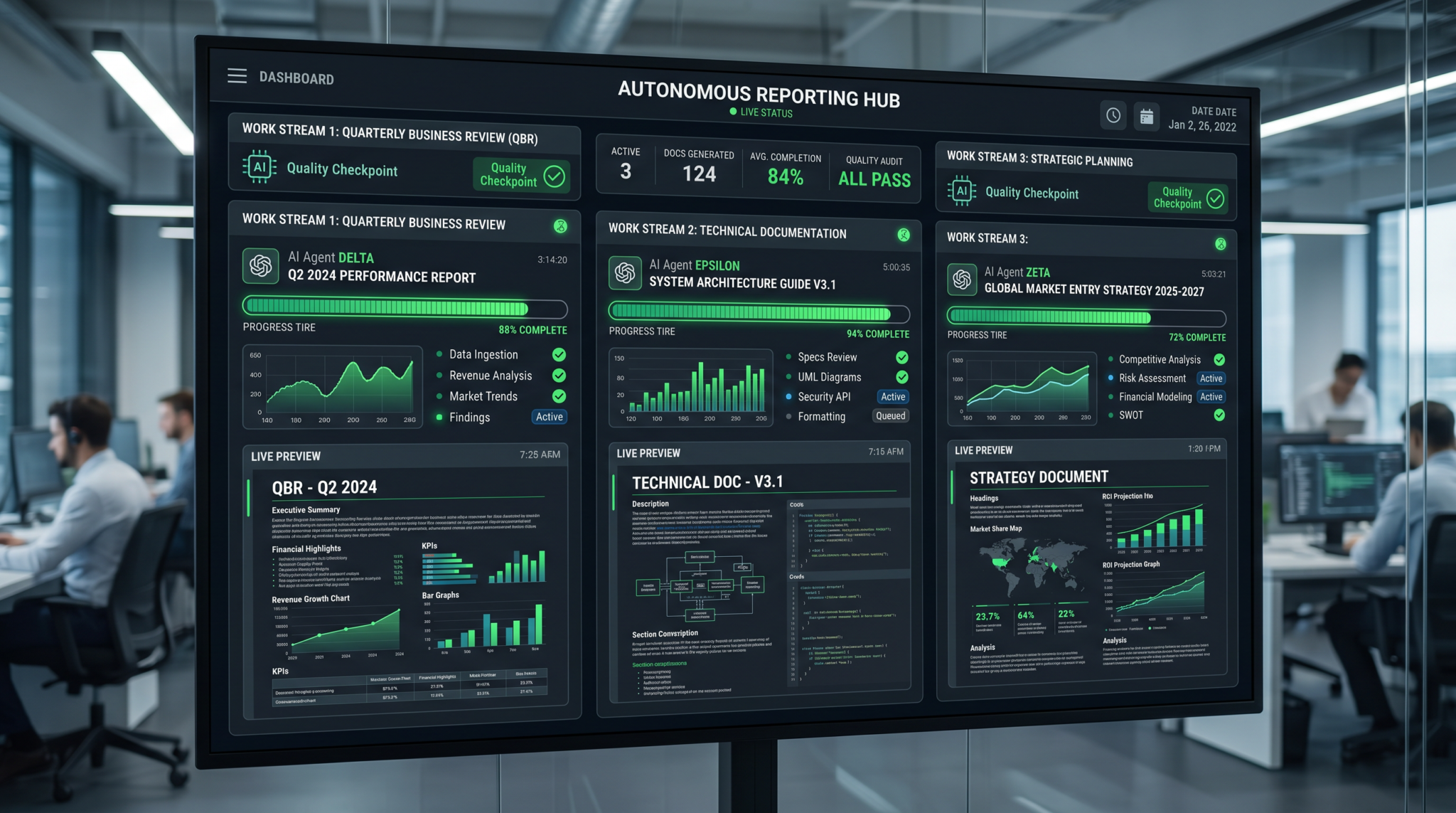
When delegating reports, insist on evidence-backed claims, audience-adjusted readability, and a production-ready format. Specify page counts, asset placements, and file structure. Require self-checks: spell check, link check, and an executive summary that stands on its own.
Report Prompt 1: Quarterly Business Review (QBR)
Delegation Prompt
Role: Business Operations Analyst (Codex Agent)

Objective:
Create a QBR for <Business Unit/Customer> summarizing KPIs, initiatives, risks, and next-quarter priorities.

Scope:
- Inputs: /inputs/kpis.csv, /inputs/initiatives.md, /inputs/risks.csv
- Audience: executive stakeholders; emphasize clarity and visuals.
- Keep to 12–18 slides.

Deliverables:
- /outputs/qbr_deck.json (slide definitions; title, bullets, charts references)
- /outputs/qbr_deck.md (markdown export)
- /outputs/assets/ (charts PNG/SVG)
- /outputs/notes.md (speaker notes)

Milestones:
- Outline with slide titles and proposed visuals.
- Draft slides with placeholders for charts.
- Final deck with data-bound charts and notes.

Quality Gates:
- Each KPI chart references a source table.
- Risks include owner, severity, and mitigation.
- Executive summary slides are self-contained.

Runtime:
- Estimated agent runtime: 3–6 hours.
Expected Output Format
- qbr_deck.json: array of slides with keys (title, bullets, chart_file, notes).
- assets: charts exported at 1600px width minimum for clarity.
Quality Checkpoints
- Data labels and axes are readable; color palette consistent.
- Speaker notes include context and next steps.
- Cross-check three KPIs against source CSV.
Estimated Agent Runtime
3–6 hours depending on content volume and chart complexity.
Report Prompt 2: Technical Documentation (System Overview + Runbook)
Delegation Prompt
Role: Technical Writer (Codex Agent)

Objective:
Produce a system overview and runbook for <System/Service> aimed at engineers and on-call responders.

Scope:
- Inputs: architecture diagrams (/inputs/diagrams/*.puml), service manifests, and monitoring dashboards.
- Include: architecture overview, data flows, dependencies, failure modes, diagnostics, and remediation steps.
- Use consistent terminology from /inputs/glossary.md.

Deliverables:
- /docs/system_overview.md
- /docs/runbook.md
- /docs/diagrams/ (mermaid or PlantUML generated from sources)
- /docs/index.md (table of contents)

Milestones:
- Outline approval.
- Draft runbook with escalation paths and SLOs.
- Final pass with cross-linking and diagram clean-up.

Quality Gates:
- Each failure mode includes detection signals and mitigation steps.
- Diagrams render correctly and match text descriptions.
- Glossary terms used consistently and defined.

Runtime:
- Estimated agent runtime: 4–8 hours.
Expected Output Format
- runbook.md: sections for alert triage, common issues, playbooks, and contacts.
- system_overview.md: component descriptions, data stores, queues, and SLAs.
Quality Checkpoints
- SLOs and escalation paths validated with inputs.
- Diagrams verified by rendering test.
- Terminology indexed in index.md with anchors.
Estimated Agent Runtime
4–8 hours depending on system complexity.
Report Prompt 3: Audit Report (Process or Security)
Delegation Prompt
Role: Audit Report Writer (Codex Agent)

Objective:
Draft an audit report for <Process/Security Control> including scope, methodology, findings, severity ratings, and remediation recommendations.

Scope:
- Inputs: /inputs/evidence/*.pdf, /inputs/checklists.csv, /inputs/controls.md
- Include: control mappings, testing procedures, evidence references, and conclusion.
- Use severity rubric in /inputs/severity_rubric.md.

Deliverables:
- /outputs/audit_report.md
- /outputs/findings.csv (id, control, description, severity, evidence_ref, remediation, owner, due_date)
- /outputs/appendices.md (evidence list and procedures)

Milestones:
- Confirm scope and control mappings.
- Draft findings with evidence references.
- Final report with executive summary.

Quality Gates:
- Every finding includes evidence references and severity per rubric.
- Remediation is actionable with owners and due dates (if provided).
- No unsupported assertions; all claims trace to evidence.

Runtime:
- Estimated agent runtime: 4–7 hours.
Expected Output Format
- audit_report.md: sections for methodology, findings summary, and management response (optional).
- findings.csv: consistent identifiers and traceable evidence references.
Quality Checkpoints
- Severity mapping aligns with rubric definitions.
- Evidence files are accessible and correctly referenced.
- Language is factual and avoids speculation.
Estimated Agent Runtime
4–7 hours based on volume of evidence.
Report Prompt 4: Strategic Planning Document (12–18 Months)
Delegation Prompt
Role: Strategic Planning Analyst (Codex Agent)

Objective:
Create a strategic plan for <Initiative/Business Unit> over 12–18 months covering mission, objectives, initiatives, resourcing, risks, and KPIs.

Scope:
- Inputs: prior OKRs, budget constraints, and market context.
- Include: objective hierarchy, roadmap, resource allocation, risk register.
- Keep to 12–15 pages.

Deliverables:
- /outputs/strategy_doc.md
- /outputs/roadmap.csv (initiative, start, end, owner, dependency)
- /outputs/kpis.csv (kpi, definition, baseline, target, frequency)
- /outputs/risks.csv (risk, impact, likelihood, mitigation, owner)

Milestones:
- Executive summary + objective hierarchy for approval.
- Draft roadmap and KPIs.
- Final integrated document.

Quality Gates:
- Objectives map to measurable KPIs with baselines and targets.
- Resource plan aligns with budget constraints.
- Risks include mitigations and owners.

Runtime:
- Estimated agent runtime: 4–8 hours.
Expected Output Format
- strategy_doc.md: narrative structured with headings and tables.
- roadmap.csv: Gantt-friendly structure with dates in ISO format.
Quality Checkpoints
- Check alignment between objectives and initiatives.
- Confirm KPI measurability and data availability.
- Ensure dependencies are explicitly captured in roadmap.csv.
Estimated Agent Runtime
4–8 hours depending on scope breadth.
Report Prompt 5: Board Presentation (Narrative + Data)
Delegation Prompt
Role: Executive Communications Analyst (Codex Agent)

Objective:
Assemble a board-ready presentation on <Topic> that integrates narrative, metrics, risks, and decisions required.

Scope:
- Inputs: CEO letter draft, latest KPIs, and strategic priorities.
- Audience: board members; prioritize clarity, concision, and decision framing.
- Limit to 10–14 slides with appendices as needed.

Deliverables:
- /outputs/board_deck.md (slide content)
- /outputs/boards_assets/ (charts)
- /outputs/appendix.md (detail tables)
- /outputs/talking_points.md

Milestones:
- Slide outline with key decisions to be made.
- Draft narrative and charts.
- Final pass with refinements and appendices.

Quality Gates:
- Each decision slide has decision owner and options with pros/cons.
- Charts use consistent scales and color palette.
- Talking points include anticipated questions and answers.

Runtime:
- Estimated agent runtime: 3–6 hours.
Expected Output Format
- board_deck.md: slide-by-slide sections with succinct bullets.
- appendix.md: detailed tables referenced from slides.
Quality Checkpoints
- Check numeric consistency across slides and appendix.
- Ensure executive summary aligns with data trends.
- Include explicit asks and timing for decisions.
Estimated Agent Runtime
3–6 hours for a focused topic with existing data.
Section 4: Code & Architecture Delegation (5 Prompts)
Software-oriented delegations demand strict reproducibility, automated tests, and clear diffs. Require the agent to propose a migration or refactor plan, execute in a branch, and produce a testable PR artifact. Set linting, formatting, and coverage targets. Provide environment constraints and require dependency pinning.
Code Prompt 1: Codebase Refactoring for Maintainability
Delegation Prompt
Role: Refactoring Engineer (Codex Agent)

Objective:
Refactor <Repository> to improve maintainability: reduce cyclomatic complexity, improve modularity, and strengthen typing and documentation.

Scope:
- Target modules: <list of critical modules>.
- Constraints: maintain API compatibility (public interfaces), keep performance within ±5%.
- Use style: <PEP8/Prettier/> and type hints where applicable.

Deliverables:
- Branch: feature/refactor-maintainability
- /reports/refactor_plan.md (hotspots, proposed changes, risk assessment)
- /prs/patch.diff (aggregate diff)
- /reports/metrics_before_after.md (complexity, test coverage)
- Updated docs and type hints.

Milestones:
- Propose refactor plan and get approval.
- Refactor module-by-module with tests.
- Finalize docs and metrics comparison.

Quality Gates:
- All tests pass; add tests for modified code paths.
- Lint/format checks pass; typing coverage improved.
- Performance regression within threshold.

Runtime:
- Estimated agent runtime: 5–10 hours.
Expected Output Format
- refactor_plan.md: table of hotspots with proposed changes and risks.
- metrics_before_after.md: summary of complexity scores and coverage %.
Quality Checkpoints
- Run static analysis and record metrics before and after.
- Ensure backward compatibility tests for public APIs.
- Peer-review style notes embedded in PR description.
Estimated Agent Runtime
5–10 hours depending on codebase size and complexity.
Code Prompt 2: API Migration (v1 to v2)
Delegation Prompt
Role: API Migration Engineer (Codex Agent)

Objective:
Migrate code from API v1 to v2, updating endpoints, payloads, auth, and error handling without breaking existing functionality.

Scope:
- Inputs: v1/v2 specs, SDKs, and integration tests.
- Identify breaking changes and plan incremental migration.
- Provide backward compatibility where feasible.

Deliverables:
- Branch: feature/api-v2-migration
- /reports/migration_plan.md (endpoints mapping, risks, rollout plan)
- /code/ (updated clients, adapters, and tests)
- /reports/test_results.md (integration test matrix)
- /docs/migration_guide.md (steps for developers)

Milestones:
- Map v1 to v2 changes and propose plan.
- Update a pilot feature; run tests.
- Complete migration and finalize docs.

Quality Gates:
- All integration tests pass; add new tests for v2 edge cases.
- Clear error handling and retry logic.
- Documented fallback for any unsupported v1 behavior.

Runtime:
- Estimated agent runtime: 4–9 hours.
Expected Output Format
- migration_plan.md: includes rollout phases and rollback steps.
- test_results.md: matrix of endpoints tested with pass/fail and logs.
Quality Checkpoints
- Diff coverage: tests cover updated code paths.
- Monitor deprecation warnings and ensure removal as planned.
- Manual validation steps documented for critical endpoints.
Estimated Agent Runtime
4–9 hours depending on number of endpoints and breaking changes.
Code Prompt 3: Test Suite Generation and Coverage Improvement
Delegation Prompt
Role: Test Automation Engineer (Codex Agent)

Objective:
Create or expand automated tests to achieve >=85% line coverage on <Target Modules> with meaningful assertions and parameterized cases.

Scope:
- Use project’s test framework and CI pipeline.
- Include unit and selected integration tests.
- Avoid flakiness by controlling randomness and external dependencies.

Deliverables:
- Branch: feature/test-coverage
- /tests/ (new and updated tests)
- /reports/coverage_before_after.md
- /reports/flakiness_notes.md (if any)
- /ci/test_config_updates.yml (if needed)

Milestones:
- Identify gaps and propose target coverage per module.
- Implement tests incrementally with CI integration.
- Final coverage report and recommendations.

Quality Gates:
- Coverage >=85% for specified modules.
- Tests deterministic; external calls mocked or stubbed.
- CI passes consistently.

Runtime:
- Estimated agent runtime: 3–7 hours.
Expected Output Format
- coverage_before_after.md: per-module coverage stats and excluded files list.
- flakiness_notes.md: mitigation steps for any non-deterministic tests.
Quality Checkpoints
- Assert on behavior, not just happy-path outputs.
- Negative and edge cases included.
- Time-box slow tests and annotate expected runtimes.
Estimated Agent Runtime
3–7 hours with variance by module complexity.
Code Prompt 4: Documentation Generation (Code + API)
Delegation Prompt
Role: Developer Experience Engineer (Codex Agent)

Objective:
Generate developer documentation for code and APIs: reference docs, guides, and examples.

Scope:
- Inputs: codebase, inline docstrings, OpenAPI/Swagger specs.
- Tools: static site generator per project (e.g., MkDocs, Docusaurus).
- Include quickstart, FAQs, and versioning notes.

Deliverables:
- Branch: feature/docs-refresh
- /docs/ (reference, guides, examples)
- /docs/openapi.md (rendered from spec)
- /examples/ (runnable samples with README)
- /reports/link_check.md (broken links report)

Milestones:
- Documentation IA (information architecture) proposal.
- Stub out sections; populate reference docs.
- Add examples and run link checker.

Quality Gates:
- All code examples run; commands verified.
- No broken links; link_check.md clean.
- Reference docs align with source signatures.

Runtime:
- Estimated agent runtime: 3–6 hours.
Expected Output Format
- docs structure: reference/, guides/, tutorials/, faq.md, changelog.md.
- examples: per-language directories with scripts and instructions.
Quality Checkpoints
- Cross-reference between guides and reference pages.
- Versioned docs with clear notes for breaking changes.
- Examples include setup and teardown steps.
Estimated Agent Runtime
3–6 hours depending on scope and existing doc quality.
Code Prompt 5: Dependency and Security Audit
Delegation Prompt
Role: Security and Build Engineer (Codex Agent)

Objective:
Audit dependencies for vulnerabilities, license risks, and supply chain issues. Propose updates and remediation steps.

Scope:
- Languages: <list>; package managers: <pip/npm/maven/gradle/etc>.
- Generate SBOM and scan via approved tools.
- Evaluate transitive dependencies and pin versions.

Deliverables:
- /reports/sbom.json (CycloneDX or SPDX)
- /reports/vuln_report.md (CVEs, severity, remediation plan)
- /reports/licenses.csv (dependency, version, license, risk)
- Branch: feature/deps-update with updated lockfiles and patches

Milestones:
- Generate SBOM and baseline vulnerability scan.
- Propose update plan and test.
- Final remediation and reports.

Quality Gates:
- No critical/high CVEs remaining without documented mitigation.
- License compliance risks identified with recommendations.
- Build and tests pass with updated dependencies.

Runtime:
- Estimated agent runtime: 4–8 hours.
Expected Output Format
- sbom.json: standards-compliant and validated by tooling.
- vuln_report.md: prioritized list with upgrade paths and testing notes.
Quality Checkpoints
- Verify SBOM completeness and correct versions.
- Document any incompatibilities and workarounds.
- Ensure reproducible builds after updates.
Estimated Agent Runtime
4–8 hours depending on dependency graph complexity.
Section 5: Creative & Content Delegation (5 Prompts)
Creative and content work requires brand alignment, channel-specific best practices, and measurable outcomes. Delegation prompts should codify voice, tone, and compliance constraints, and mandate calendars, briefs, and drafts with clear acceptance criteria.
Creative Prompt 1: 90-Day Content Calendar (Multi-Channel)
Delegation Prompt
Role: Content Strategist (Codex Agent)

Objective:
Build a 90-day content calendar spanning blog, newsletter, and social for <ICP/Vertical> with themes mapped to funnel stages.

Scope:
- Inputs: audience personas, product messaging, and existing top-performing content.
- Channels: blog, LinkedIn, newsletter, and optional webinars.
- Include metrics plan: goals for each asset (views, CTR, leads).

Deliverables:
- /outputs/calendar.csv (date, channel, title, theme, funnel_stage, owner, goal_metric, target)
- /outputs/briefs/ (content briefs per major asset)
- /outputs/ideas_backlog.md
- /outputs/measurement_plan.md

Milestones:
- Theme map and cadence proposal.
- Draft calendar and briefs for top 6 assets.
- Finalized calendar and measurement plan.

Quality Gates:
- Avoid topic duplication; ensure balanced funnel coverage.
- Each asset has a clear goal and target metric.
- Calendar aligns with product milestones.

Runtime:
- Estimated agent runtime: 3–6 hours.
Expected Output Format
- calendar.csv: includes UTM plan if available.
- briefs: structured with audience, angle, key points, and CTA.
Quality Checkpoints
- Consistency with personas and messaging.
- Cadence realistic for team capacity.
- Measurement plan includes baselines and benchmarks.
Estimated Agent Runtime
3–6 hours based on channels and assets depth.
Creative Prompt 2: Brand Voice and Style Guide
Delegation Prompt
Role: Brand Content Architect (Codex Agent)

Objective:
Create a brand voice and style guide that standardizes tone, vocabulary, and style for <Brand> across channels.

Scope:
- Inputs: sample content, messaging pillars, and audience personas.
- Include: voice principles, tone by context, grammar/style conventions, do/don’t examples.

Deliverables:
- /outputs/brand_guide.md
- /outputs/examples.md (transformed examples showing before/after)
- /outputs/checklist.md (editorial checklist)
- /outputs/glossary.md

Milestones:
- Draft voice principles and tone matrix.
- Compile examples and editorial checklist.
- Final guide with glossary.

Quality Gates:
- Each principle has concrete do/don’t examples.
- Checklist covers common errors and clarity rules.
- Glossary aligns with product and industry terms.

Runtime:
- Estimated agent runtime: 3–5 hours.
Expected Output Format
- brand_guide.md: sections for principles, tone matrix, channel adaptations.
- examples.md: at least 5 before/after pairs.
Quality Checkpoints
- Test guide by transforming two internal drafts.
- Review glossary for completeness and accuracy.
- Ensure accessibility guidelines (reading level, jargon control).
Estimated Agent Runtime
3–5 hours.
Creative Prompt 3: Integrated Campaign Strategy
Delegation Prompt
Role: Campaign Strategist (Codex Agent)

Objective:
Design an integrated campaign for <Goal> targeting <ICP>, covering messaging, channels, creative concepts, and measurement.

Scope:
- Inputs: product launch details, budget, past campaign performance.
- Include: audience segmentation, creative themes, channel mix, timeline, budget allocation, and KPIs.

Deliverables:
- /outputs/campaign_strategy.md
- /outputs/channel_plan.csv (channel, objective, budget, KPIs, cadence)
- /outputs/creative_briefs/ (brief per creative concept)
- /outputs/measurement_framework.md

Milestones:
- Messaging and audience segmentation plan.
- Channel plan with budget allocations.
- Creative briefs and measurement framework.

Quality Gates:
- Channel objectives map to funnel stages and KPIs.
- Budget allocation justified by expected ROI or benchmarks.
- Measurement plan includes attribution approach.

Runtime:
- Estimated agent runtime: 4–7 hours.
Expected Output Format
- campaign_strategy.md: narrative with rationale and expected outcomes.
- channel_plan.csv: includes budget, CPA targets, and cadence.
Quality Checkpoints
- Check for channel overlap and audience saturation risks.
- Ensure creative briefs include CTA and value proposition.
- Measurement plan covers leading and lagging indicators.
Estimated Agent Runtime
4–7 hours based on campaign scope.
Creative Prompt 4: SEO Audit and Action Plan
Delegation Prompt
Role: SEO Analyst (Codex Agent)

Objective:
Perform a comprehensive SEO audit and produce an action plan for <Site/Domain>.

Scope:
- On-page: titles, meta descriptions, headers, content depth, duplicates.
- Technical: crawlability, sitemap, robots, core web vitals.
- Off-page: backlinks, anchor distribution, and competitor gaps.

Deliverables:
- /outputs/seo_audit.md
- /outputs/issues.csv (issue, severity, url, evidence, fix)
- /outputs/keywords.csv (keyword, intent, current_rank, difficulty, opportunity)
- /outputs/action_plan.md (prioritized roadmap with effort/impact)

Milestones:
- Crawl sample and validate issue taxonomy.
- Compile issues and keyword opportunities.
- Final action plan with prioritized fixes.

Quality Gates:
- Evidence links (screenshots or tool outputs) for major issues.
- Intent tagging for keywords (informational, transactional, etc.).
- Action plan balances quick wins and strategic fixes.

Runtime:
- Estimated agent runtime: 3–7 hours.
Expected Output Format
- issues.csv: severity scoring and estimated effort.
- action_plan.md: grouped by themes with owners and timelines.
Quality Checkpoints
- Spot-check URLs for on-page issues.
- Confirm sitemap and robots.txt evaluations.
- Link keyword opportunities to relevant pages or new content ideas.
Estimated Agent Runtime
3–7 hours depending on site size.
Creative Prompt 5: Social Media Playbook
Delegation Prompt
Role: Social Media Strategist (Codex Agent)

Objective:
Create a social media playbook for <Brand> across <Platforms> with content pillars, post templates, response guidelines, and measurement.

Scope:
- Inputs: brand voice guide, historical engagement data, competitor scan.
- Include: platform-specific best practices and compliance notes.
- Define crisis communication workflows and moderation rules.

Deliverables:
- /outputs/social_playbook.md
- /outputs/post_templates.md (per-platform examples)
- /outputs/response_matrix.csv (scenario, response, escalation)
- /outputs/measurement.md (KPIs, benchmarks, reporting cadence)

Milestones:
- Content pillars and platform strategy.
- Post templates and response matrix.
- Final playbook and measurement framework.

Quality Gates:
- Templates align with voice guide and platform constraints (length, media).
- Response matrix covers common and crisis scenarios with escalation paths.
- Measurement plan includes UTM and dashboard specs.

Runtime:
- Estimated agent runtime: 3–6 hours.
Expected Output Format
- social_playbook.md: sections for pillars, cadence, governance, and compliance.
- response_matrix.csv: clear escalation triggers and owners.
Quality Checkpoints
- Validate examples against platform limits.
- Ensure moderation and escalation paths are actionable.
- Measurement plan aligns with business goals and reporting cadence.
Estimated Agent Runtime
3–6 hours.
Operational Guidance for Long-Running Codex Agents
Designing Delegations That Hold Up Over Hours
When delegating tasks estimated at eight or more human hours, the main risk is divergence: the agent spends time exploring tangents or reinforcing early assumptions. Mitigate this with structure:
- Progressive disclosure: Require an outline, a pilot sample, and then the full draft, with feedback loops at each step.
- Artifact contracts: Define file paths and schemas ahead of time so downstream automations don’t break.
- Timeboxed phases: Reserve explicit time slices for planning, execution, and revision. Include a pause-and-confirm step after the plan.
- Quality rubrics: Reference a standing rubric (e.g., evidence quality, reproducibility, clarity) and make it part of the acceptance criteria. For a step-by-step rubric design methodology with templates and checklists, see this in-depth resource: OpenAI Acquires Ona: How Codex Will Integrate Survey Data Collection, Field Research, and Structured Data Pipelines for Enterprise Knowledge Management
Tooling and Data Access Patterns
Long-running agents often require tool access: web browsing, code execution, data stores, diagramming, and document assembly. Specify tool availability, rate limits, and permitted domains in your prompt. If the agent must fetch data, define a source whitelist and citation expectations. Require logging of queries and tool invocations for auditability.
Escalation and Human-in-the-Loop
Even well-specified delegations benefit from human oversight at key checkpoints. Specify escalation triggers: e.g., insufficient sources found, contradictory data, model performance under threshold, or blocked access. The agent should pause, summarize the blockage, and request guidance or approval to adjust scope or assumptions.
Security, Compliance, and Privacy
Codify security constraints in the prompt: do not exfiltrate data, mask PII, adhere to data retention policies, and restrict external sharing. In software tasks, insist on standard vulnerability scanning and SBOM generation. In research tasks, require that sources be whitelisted or approved.
Reproducibility and Hand-off Readiness
Agents should deliver artifacts that can be rerun by humans or other automations: notebooks with fixed random seeds, environment files with pinned versions, and data caches with clear provenance. In documentation and reports, provide source lists and link checkers. For multi-agent workflows—e.g., a research agent, an analysis agent, and a report generator—use a shared workspace, consistent file naming conventions, and a supervising orchestration agent to enforce sequencing and checks. Detailed guidance on these coordination patterns is provided in our practitioner’s guide: How to Deploy GPT-5.5 on Amazon Bedrock for Multi-Cloud Enterprise AI: Complete Setup Guide with IAM Policies, Cost Controls, and Production Patterns
Access 40,000+ AI Prompts for ChatGPT, Claude & Codex — Free!
Subscribe to get instant access to our complete Notion Prompt Library — the largest curated collection of prompts for ChatGPT, Claude, OpenAI Codex, and other leading AI models. Optimized for real-world workflows across coding, research, content creation, and business.
Key Takeaways
- Delegation is an operating model, not a longer prompt. Define objectives, scope, milestones, deliverables, and quality gates.
- Specify structured outputs and file paths so downstream automations snap into place without manual adjustments.
- Use pilot samples and outlines to course-correct early, especially for tasks spanning hours.
- Enforce reproducibility: pinned environments, seeds, schemas, and tool logs.
- Adopt evaluation rubrics to standardize acceptance and build trust in agent-produced work.
- Build escalation triggers and human-in-the-loop checkpoints for critical decisions or blockers.
- Align agent tasks with security, privacy, and compliance requirements from the outset.
Closing Thoughts
The 25 prompts in this playbook are designed to be drop-in starting points. Customize them with your datasets, systems, and governance requirements, and make them your organization’s standard operating procedures for Codex delegation. Over time, you will accumulate domain-specific libraries of prompts and rubrics, turning ad-hoc experiments into a reliable, scalable capability to execute multi-hour research, analysis, reporting, engineering, and creative work via agents with confidence and control.
