
OpenAI Acquires Ona: How Codex Will Integrate Survey Data Collection, Field Research, and Structured Data Pipelines for Enterprise Knowledge Management
OpenAI Acquires Ona: How Codex Will Integrate Survey Data Collection, Field Research, and Structured Data Pipelines for Enterprise Knowledge Management
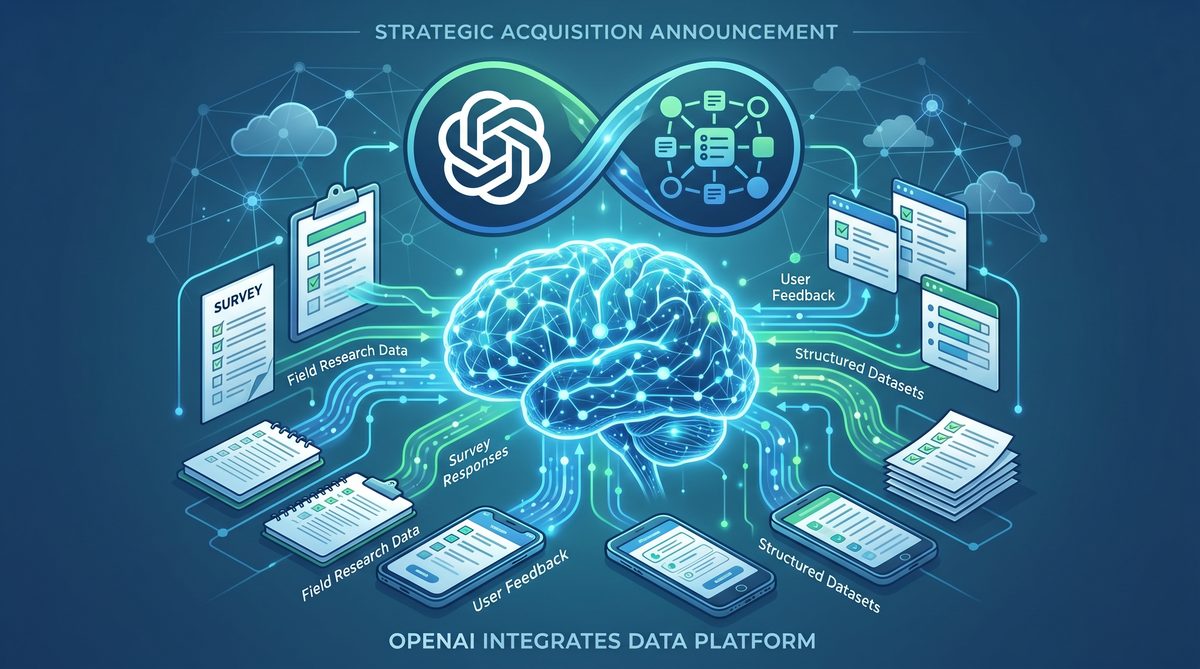
In late June 2026 OpenAI announced the acquisition of Ona, a well-established platform for mobile data collection and field surveys. This strategic move signals a major step toward delivering integrated, low-friction field research capabilities inside advanced AI-powered enterprise workflows. By combining Ona’s offline-first mobile data collection, XForm-compatible schema design, and field operations tooling with Codex’s natural-language-driven automation and enterprise knowledge management features, organizations can finally operationalize structured, trustworthy data collection at scale — and make it directly useful for downstream analytics, knowledge graphs, and Retrieval-Augmented Generation (RAG) applications.
Executive Summary
This article provides a deep technical dive into:
- What Ona is today: platform components, protocols, and design patterns for mobile-first data collection.
- How Codex will integrate Ona to provide non-technical users with natural-language survey design, automated schema binding, and end-to-end data pipelines.
- The technical architecture for the combined system: synchronization, validation, ETL, enrichment, vectorization, knowledge graph mapping, and enterprise connectors.
- Field research and survey workflows for non-technical users, including offline-first sync strategies, enumerator management, and real-time QA.
- Data governance, privacy, compliance, and production operational concerns for enterprises adopting the integrated solution.
Throughout this article you will find concrete examples, code snippets, data schemas, design patterns, and tables that compare approaches and show practical trade-offs. If you are evaluating how an AI-native enterprise might adopt mobile-first data collection linked directly into knowledge work, this article is meant to be both a blueprint and a playbook.
1. What Ona Is: Core Capabilities and Technical Characteristics
Ona originated as a hosted platform designed around Open Data Kit (ODK) standards and the broader ecosystem of offline mobile surveys. Its core audience has historically included humanitarian organizations, public health teams, market researchers, and NGOs conducting field enumeration in low-connectivity environments. Ona’s stack focuses on reliable mobile data capture, flexible form intelligence, and a server-side API for programmatic access.
1.1 Key Components
- Form Designer / Schema Editor: WYSIWYG and form-centric editors that produce XForms or JSON Schema representations with constraints, skip logic, and media attachments.
- Mobile App: Offline-first Android (and in some deployments iOS) clients that support media capture (images, audio, video), GPS, barcode scanning, and sensor data, with secure local stores and sync logic.
- Server / API: RESTful interface for form definitions, submissions, users, and attachments. Support for bulk data export, webhooks, and streaming changefeeds.
- Analytics & Dashboards: Basic data visualizations, export to CSV, and geo-visualization for mapping submissions.
- Access Controls & Projects: Multi-tenant project layers, role-based access control (RBAC), and organization-level policies.
1.2 Technical Protocols and Data Formats
Ona’s implementation is tightly aligned with the de facto standards of the ODK ecosystem:
- XForms and XML for form logic and constraint encoding.
- CSV, JSON and GeoJSON for exports and downstream analytics.
- HTTP(S) API endpoints for submissions, form management, user management.
- Webhooks for real-time export and event integration.
The platform supports attachments using multipart upload semantics and commonly used MIME types. For high-throughput deployments, Ona traditionally offers bulk export features and streaming APIs that allow programmatic ingestion.
1.3 Offline-first and Sync Semantics
A core reason for Ona’s prominence in field contexts is its robust offline model. Key properties include:
- Local datastore with encrypted storage on the device.
- Delta sync that transmits only changed submissions and attachments when connectivity is available.
- Queued uploads with retry/backoff, resumable attachment uploads.
- Conflict resolution typically implemented via server-side last-write-wins plus versioning metadata and submission timestamps to detect duplicates or divergent updates.
1.4 Extensible Integration Points
Ona exposes integration hooks that make it viable for enterprise pipelines:
- Programmatic exports via REST or S3-compatible endpoints.
- Changefeeds and webhooks for real-time streaming to a message bus.
- Role and project APIs for automated enrollment and permissioning of field teams.
- Data validation endpoints to enforce business logic during ingestion.
1.5 Ecosystem Comparison: Ona vs Alternatives
| Feature / Platform | Ona | ODK Central | KoBoToolbox | SurveyCTO |
|---|---|---|---|---|
| Standards (XForms) | Full support | Full support | Partial | Full |
| Offline-first mobile client | Yes (Android) | Yes | Yes | Yes |
| Enterprise connectors | API, webhooks, S3 | API, webhooks | API, export | API, integrations |
| Rich multimedia support | Yes | Yes | Yes | Yes |
| Role-based access control | Yes | Yes | Basic | Advanced |
| Pricing model | Hosted & licensed | Open-source & hosted options | Free/hosted for NGOs | Commercial |
This comparison highlights Ona’s fit for organizations requiring hosted, managed, and extensible mobile survey infrastructure.
2. Strategic Rationale: Why OpenAI Acquired Ona
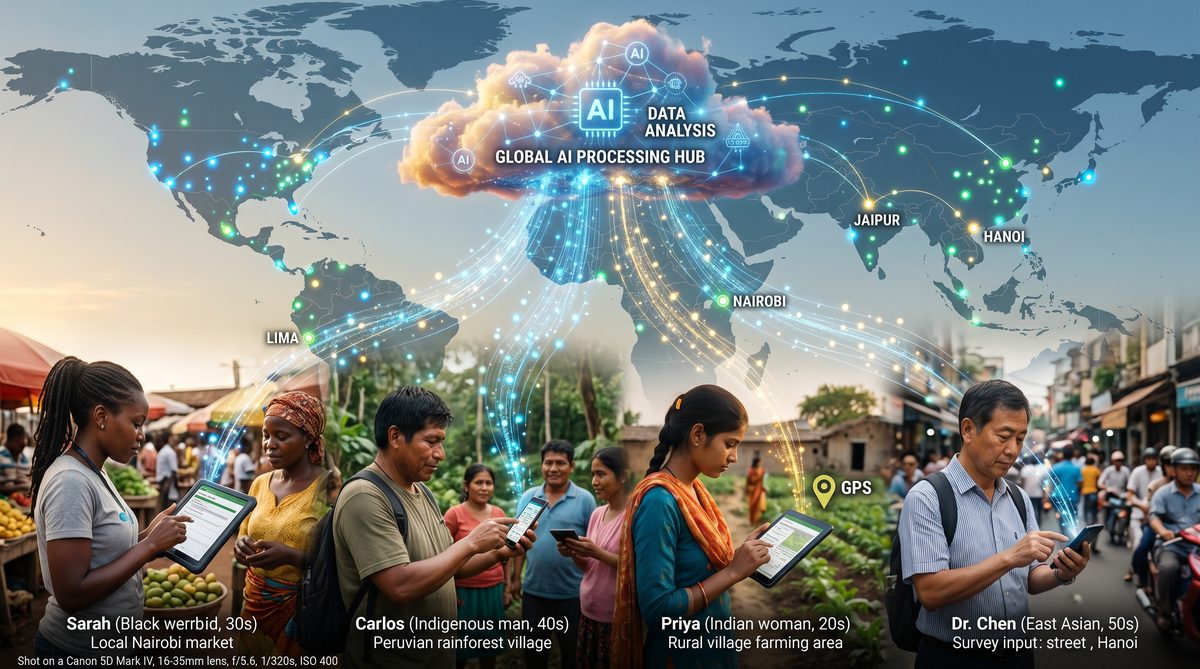
Combining Ona with Codex drives three interlocking strategic capabilities:
- End-to-end data collection to knowledge workflows — enable organizations to design, collect, validate, and operationalize structured data without hiring engineers for pipeline work.
- Natural language enabled form creation — allow domain experts to author surveys and extraction logic through conversation, code generation, or templated prompts rather than XForms XML or JSON Schema editing.
- Enterprise-grade compliance and governance — bring Ona’s field-tested security and offline models into a Codex-managed enterprise product with robust auditability, RBAC, and connectors to data lakes and knowledge graphs.
A few realities make this acquisition coherent. Field data remains one of the most important, yet hard-to-integrate, sources for enterprise knowledge: surveys contain structured, context-rich observations that are often annotated with geospatial, multimedia, and temporal metadata. Turning that into searchable, actionable knowledge requires automated mapping, cleansing, and enrichment — tasks well-suited to Codex automation and Codex-powered GUI/CLI generation of pipeline code and schema registries.
2.1 Product Synergies
- Survey authoring with NL-to-XForm — Codex can convert natural language instructions into full XForms or JSON Schemas with skip logic, range constraints, and localized text.
- Automated ETL generation — from Ona’s streaming exports, Codex can scaffold ingestion jobs that normalize, enrich, and persist data into corporate stores (e.g., Snowflake, BigQuery) or vector stores for RAG.
- Interactive QA and validation — Codex-driven interfaces that flag inconsistent answers, propose corrective logic, and re-run validation pipelines on historical data.
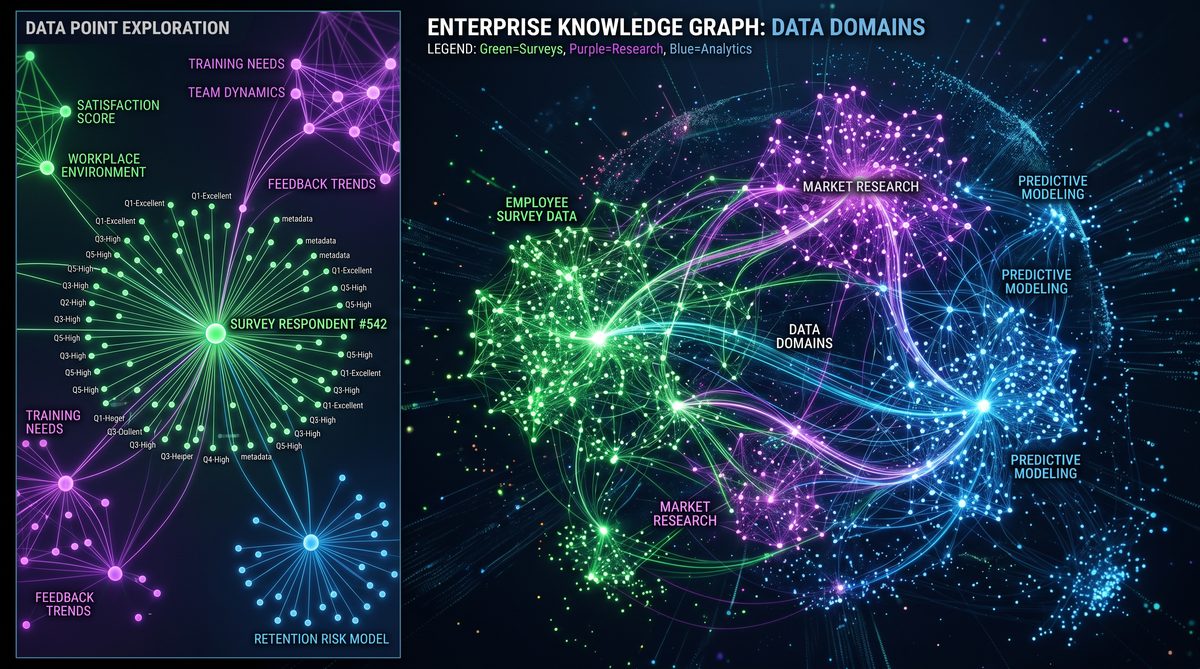
- Knowledge graph construction — automatically map survey entities to canonical ontologies and generate entity resolution pipelines using embeddings and graph algorithms.
Together, these reduce the time from initial question design to actionable insight from weeks (or months) to hours.
2.2 Market Implications
OpenAI can now deliver a product suite that appeals to:
- Large NGOs and public health organizations running large-scale field programs.
- Enterprises that require first-party ground-truth for operations (e.g., supply chain audits, store audits, field-service logs).
- Research institutions that need low-cost, high-trust field data pipelines integrated with analytical tooling.
This integration reduces friction for internal knowledge workers because Codex can directly generate pipelines and UI for non-engineers to iterate on data models and collection instruments.
For a deeper exploration of related strategies and implementation patterns, our comprehensive guide on Codex for Knowledge Work: How OpenAI’s Productivity Platform Is Transforming Non-Technical Roles with AI-Powered Research, Analysis, and Automation provides detailed frameworks, step-by-step workflows, and production-ready templates that complement the approaches discussed in this section.
and
For a deeper exploration of related strategies and implementation patterns, our comprehensive guide on The Complete Guide to Codex Sites: How to Build Hosted Web Applications, Dashboards, and Internal Tools from Plain Language Prompts Without Writing Code provides detailed frameworks, step-by-step workflows, and production-ready templates that complement the approaches discussed in this section.
will be important resources for teams deploying these patterns inside enterprises.
3. Architecture: How Codex and Ona Fit Together
A robust architecture for integrating Ona into Codex-based enterprise workflows must support offline sync, secure media handling, real-time streaming, schema evolution, enrichment, and downstream indexing. Below is a high-level architecture followed by component-level details and design patterns.
3.1 High-Level Architecture
At a high level, the integration includes these layers:
- Field Layer — Ona mobile app running on enumerator devices with secure local storage and incremental syncing capability.
- Ingest Layer — Ona server (or OpenAI-hosted Ona cluster) that exposes streaming exports/webhooks or changefeeds into enterprise message buses (Kafka, Pub/Sub, Kinesis).
- Transformation Layer — Codex-generated ETL jobs that validate, normalize, convert types, geocode, and attach metadata. This is often implemented as stream processors (e.g., Kafka Streams, Flink) or batch jobs (Airflow, DBT).
- Enrichment & Knowledge Layer — entity extraction, linking to canonical ontologies, vectorization, and graph construction (e.g., Neo4j, Amazon Neptune, or custom RDF/Property Graph stores).
- Storage & Analytics Layer — long-term storage in data lakehouse (Parquet on S3, BigQuery, Snowflake), relational data warehouses, and vector stores (Pinecone, Milvus, Weaviate).
- Application Layer — Codex-driven GUIs for non-technical users, dashboards, RAG-enabled assistants, audit views, and data quality consoles.
3.2 Component Details
Below are the most important components with technical considerations.
3.2.1 Mobile Client
- Local encrypted SQLite + attachments store.
- Submission queue for JSON/XForm instances and resumable multipart uploads for attachments.
- Delta sync that computes diffs at submission and attachment level to minimize bandwidth.
- Client-side validation using canonical JSON Schema/XForms constraints.
- Policy enforcement for PII handling and consent metadata capture (timestamped consent forms).
3.2.2 Server / Webhooks / Streaming
- Event-driven webhooks push submission events to enterprise endpoints.
- Streaming endpoints or changefeeds (e.g., Debezium-style) allow at-least-once delivery of new and updated submissions.
- API endpoints for programmatic form creation and enumeration enrollment.
3.2.3 Message Bus and Broker
- Kafka / Pub/Sub for decoupled ingestion.
- Smart partitioning by project, region, or survey id to parallelize processing.
- Schema registry for message payloads (Avro/Protobuf/JSON Schema) to ensure forward/backward compatibility.
3.2.4 Transformation & Validation
- Stream processors that normalize field names, coerce types, and compute derived fields (e.g., age from date of birth).
- Codex-generated code templates for these processors, often in Python (Apache Beam/Flink) or SQL (DBT/Snowpark).
- Validation microservices that run domain constraints and emit quality metrics to observability backends.
3.2.5 Enrichment & Entity Resolution
- Geocoding services to normalize coordinates and add administrative hierarchies.
- NER and entity linking for names, products, or locations using fine-tuned models.
- Deduplication using hashing + fuzzy matching + embedding similarity clustering.
3.2.6 Vectorization & Knowledge Graphs
- Embeddings generated from survey text fields (e.g., open answers) and attached to canonical entity identifiers.
- Vector stores for similarity search and RAG.
- Graph ingestion pipelines to create nodes and edges representing respondents, locations, and related objects.
3.2.7 Storage & Data Warehouse
- Raw landing zone in object storage (Parquet/ORC), plus catalog entries in a metastore.
- Curated data in a warehouse with manifest tables for each survey iteration, including ingestion metadata.
- Time-partitioned tables and retention policies for cost and compliance control.
3.3 Flow Example: Submission to RAG Answer
- Enumerator submits survey via Ona mobile app.
- Ona server emits webhook event to Kafka topic “submissions”.
- Codex-generated Kafka consumer performs validation, transforms to canonical schema, enriches with geocoding, and writes cleaned record to the data lake and warehouse.
- Separate worker vectorizes long text answers and stores embeddings in Pinecone.
- Knowledge graph builder links entities and persists relationships in Neo4j.
- Business analyst queries via Codex-powered conversational UI that performs RAG over the vector store and connected warehouse tables to produce evidence-backed answers.
4. Practical Patterns for Non-Technical Survey Design with Codex
A key value proposition of the combined Ona + Codex offering is enabling domain experts and knowledge workers to create surveys, mapping rules, and downstream pipelines without writing boilerplate code. Below are practical patterns that Codex implements to make this feasible.
4.1 Natural-Language-to-Survey (NL2Survey)
Using a conversational UI, users describe their survey needs in natural language. Codex converts the description into an XForm or a JSON Schema that Ona clients can use. The pipeline includes:
- Intent extraction (what is being measured).
- Schema synthesis (field types and constraints).
- Branching and skip-logic generation.
- Localization of prompts and help text.
- Preview and simulation tooling to test logic.
Example prompt and generated JSON (illustrative):
{
  "prompt": "Create a 10-question household survey to collect household size, ages, main livelihood, water source (with GPS), and two free-text questions for challenges and suggested interventions.",
  "generated_schema": {
    "id": "household_survey_v1",
    "title": "Household Survey",
    "fields": [
      {"name": "household_id", "type": "string", "required": true},
      {"name": "household_size", "type": "integer", "min": 1, "max": 50},
      {"name": "ages", "type": "array", "items": {"type": "integer"}},
      {"name": "main_livelihood", "type": "string", "enum": ["Agriculture","Formal Employment","Day Labor","Trading","Other"]},
      {"name": "water_source", "type": "string", "enum": ["Piped","Well","Surface Water","Bottled","Other"]},
      {"name": "location", "type": "geo_point"},
      {"name": "challenges", "type": "text"},
      {"name": "suggested_interventions", "type": "text"},
      {"name": "consent", "type": "boolean", "required": true}
    ],
    "skip_logic": [
      {"if": {"field": "household_size", "lt": 2}, "hide": ["ages"]}
    ],
    "locales": ["en", "fr"]
  }
}
Codex then provides a preview, and with user approval, generates the XForm and publishes to the Ona management endpoint via the API.
4.2 Automated Constraint and Validation Generation
Beyond type coercion, Codex can infer constraints from prompts; for example, if a user says “only adults should be enumerated for the respondent”, Codex will add constraints for age >= 18 with an explanatory validation error message and a follow-up question for adult consent. These inferred rules propagate to client-side validation so enumerators see immediate feedback.
4.3 Template Libraries and Reusable Modules
Codex creates and maintains a template library for common instrument modules: anthropometry, WASH modules, market price modules, etc. Templates include:
- Standardized field names and unit semantics.
- Mapping rules to canonical ontologies.
- Preferred data types and normalizations for downstream analytics.
Templates are versioned and can be assembled by non-technical users via drag-and-drop editors or conversational prompts like “use the WASH module and add a custom consent flow.”
4.4 Example: Generating XForm via Codex API
POST /api/v1/surveys/generate
Content-Type: application/json

{
  "user_prompt": "Survey to assess vaccination coverage among children under 5: capture child's name, DOB, vaccination status for BCG, Polio, DTP, with dates, and upload immunization card photo. Add enumerator signature.",
  "target_format": "xform"
}
The response would include an XForm bundle ready for deployment:
Vaccination Coverage Survey
5. Building End-to-End Survey Data Pipelines
Designing an operational pipeline turns mobile submissions into enterprise-grade datasets that are consumable by analysts and AI applications. The steps below form a repeatable pattern Codex can generate and maintain.
5.1 Pipeline Stages
- Landing & Raw Storage — Persist original submission payloads and attachments in object storage, with manifest metadata for auditability.
- Schema Registry and Versioning — Track form schema versions and maintain per-submission schema references.
- Normalization — Map raw field names to canonical names, coerce types, and perform unit conversions.
- Validation — Apply domain constraints, logical consistency checks, and mark records with QC flags.
- Enrichment — Geocode, reverse-geocode, translate text fields, extract entities, and attach external reference IDs.
- Deduplication & Identity Resolution — Cluster duplicate respondents across time and surveys and merge entities according to rule sets.
- Persistence & Indexing — Store curated tables in data warehouse and persist embeddings and documents into a vector store for RAG.
- Cataloging & Lineage — Record provenance and make datasets discoverable through a data catalog (e.g., DataHub, Amundsen).
5.2 Sample Pipeline Code Snippets
Below is a condensed Python example using Kafka for ingestion, a schema registry for validation, and writing to a Snowflake-like store. The code is illustrative and omits infra-specific boilerplate.
from confluent_kafka import Consumer
import jsonschema
import requests
import openai
from datetime import datetime
from embeddings import get_embedding  # hypothetical helper

CONSUMER_CONFIG = {...}
consumer = Consumer(CONSUMER_CONFIG)
consumer.subscribe(['ona.submissions'])

SCHEMA_REGISTRY_URL = "https://schema-registry.example.com"
SNOWFLAKE_INSERT_URL = "https://warehouse.example.com/insert"

def validate_against_registry(form_id, payload):
    schema = requests.get(f"{SCHEMA_REGISTRY_URL}/schemas/{form_id}").json()
    jsonschema.validate(instance=payload, schema=schema)

def enrich_payload(payload):
    # geocode if necessary
    if 'location' in payload:
        coords = payload['location']
        payload['admin1'] = geocode_admin1(coords)
    # translate and extract entities
    if 'free_text' in payload:
        payload['entities'] = extract_entities(payload['free_text'])
        payload['embedding'] = get_embedding(payload['free_text'])
    return payload

def write_to_warehouse(record):
    resp = requests.post(SNOWFLAKE_INSERT_URL, json=record)
    resp.raise_for_status()

while True:
    msg = consumer.poll(1.0)
    if msg is None:
        continue
    submission = json.loads(msg.value())
    try:
        validate_against_registry(submission['form_id'], submission['data'])
        enriched = enrich_payload(submission['data'])
        write_to_warehouse({
            "form_id": submission['form_id'],
            "submission_id": submission['id'],
            "data": enriched,
            "ingested_at": datetime.utcnow().isoformat()
        })
    except Exception as e:
        # emit to a DLQ or quality topic
        print("Validation/ingest error:", e)
Codex can auto-generate these scaffolding pieces based on template choices and the enterprise’s target destination. It can also generate schema migration scripts when forms evolve.
5.3 Schema Evolution and Backfilling
When forms change, downstream consumers must either handle new fields (forward compatibility) or be backfilled. Codex-managed pipelines can:
- Keep a schema registry with diffs and apply transformation rules to normalize older submissions into the latest canonical schema.
- Auto-generate backfill jobs for derived fields using heuristics or ML models for imputation.
- Tag datasets with schema version and present automated migration reports to analysts.
5.4 Handling Multimedia and Large Attachments
Attachments (photos, audio) are often the most operationally expensive element of field surveys. Best practices include:
- Upload streaming to object storage with content-addressed URIs to deduplicate.
- Generate thumbnails and compressed derivatives on ingest.
- Run automated ML tasks such as image classification, OCR, or audio transcription asynchronously.
- Store transcripts and annotations as structured text attached to the submission record for RAG searches.
6. Field Research Features for Non-Technical Users
Codex integration transforms Ona into a platform where non-technical teams can do field research end-to-end. Below are common worker flows and how the integrated product enables them.
6.1 Workflow: From Idea to Enumerator in 60 Minutes
- User chat: “Create a market survey for 100 shops to capture weekly sales, top three SKUs, shelf availability, and a photo of the storefront.”
- Codex synthesizes a survey, populates form logic, suggested dropdowns for SKUs, and sample validation rules.
- User reviews, requests localization in two languages, and asks for enumerator training prompts.
- Codex publishes the form to Ona, provisions roles, and generates a training checklist and simulated responses for practice.
- Enumerators download the form and begin data collection. Supervisors get dashboards in real time showing progress and quality warnings.
6.2 Interactive QA and Conversational Troubleshooting
Non-technical supervisors can ask Codex questions like “Show me submissions from district X where weekly sales > 10 but shelf availability is labeled ‘low’.” Codex will automatically generate the SQL query, execute it against the warehouse (subject to RBAC), and return results combined with citations to the raw submissions and images.
6.3 Enumerator Support and On-Device Assistance
Codex can produce lightweight on-device help widgets generated from the survey logic and the help text in the form. Features include:
- Contextual help (explain this question in local language).
- Last-mile data entry assistance (auto-suggest values based on prior surveys or fuzzy matching).
- Image guidance overlays for consistent photos (e.g., bounding boxes or sample images).
6.4 Real-time Quality Control
Quality control (QC) tools perform checks as data arrives:
- Automated anomaly detection for outliers using statistical tests or models.
- Flag submissions for supervisor review, including attached evidence (images, audio).
- Enumerators receive inline feedback to correct obvious issues before final submission.
6.5 Example: On-device Pseudocode for Assisted Entry
// Pseudocode for on-device suggestion using a small local LLM or rules
if (field == "sku_name") {
  suggestions = fetch_recent_skus_nearby(location, radius_km=5)
  show_suggestions(suggestions)
}
if (field == "sales_number") {
  if (input > 100000) {
    show_warning("This value looks unusually large. Please confirm.")
  }
}
7. Structured Data Pipelines for Enterprise Knowledge Management
Transforming survey data into enterprise knowledge requires a mapping from schema to ontologies, identity resolution, and integration into retrieval and reasoning systems. Codex automates much of this mapping and scaffolding.
7.1 Canonical Schema Mapping
Codex assists in mapping survey fields to a canonical enterprise schema. This includes:
- Type conversion and normalization rules (e.g., “yes/no” -> boolean).
- Ontological mapping (e.g., map “water_source” values to an internal Codebook ID).
- Enrichment metadata fields (e.g., data quality score, source system, form version).
Mapping is stored as policies and can be previewed against a sample of submissions. This approach supports both automated ingestion and human-in-the-loop validation.
7.2 Entity Resolution and Graph Construction
Survey respondents, households, and locations often need to be merged into entities that power analytics. Typical techniques include:
- Deterministic matching (IDs, phone numbers).
- Probabilistic matching (fuzzy name matching, phonetic algorithms).
- Embedding-based similarity for long free-text or where multiple attributes are fuzzy.
- Graph-based clustering to merge transitive matches and maintain provenance.
Codex can generate and maintain these pipelines and create visualizations for graph analysts to approve merges before they are persisted.
Access 40,000+ AI Prompts for ChatGPT, Claude & Codex — Free!
Subscribe to get instant access to our complete Notion Prompt Library — the largest curated collection of prompts for ChatGPT, Claude, OpenAI Codex, and other leading AI models. Optimized for real-world workflows across coding, research, content creation, and business.
7.3 Vectorization and RAG Integration
Free text answers, audio transcripts, and OCR output are valuable for retrieval. Typical steps:
- Extract text fields and transcripts.
- Compute embeddings using enterprise models (OpenAI or private fine-tuned models).
- Index embeddings with metadata linking back to raw submission and attachment URIs.
- Enable RAG queries where Codex formulates queries combining vector proximity and structured filters.
Example embedding indexing pseudocode:
def index_submission(submission):
    text = extract_text(submission)
    embedding = openai.Embeddings.create(model="text-embedding-002", input=text)
    vector_store.upsert(id=submission['id'], vector=embedding, metadata={
        "form_id": submission['form_id'],
        "location": submission.get('location'),
        "timestamp": submission['timestamp']
    })
7.4 Query Patterns and Evidence Chains
When a user asks an enterprise assistant to “Show evidence for a change in water source in region Y”, the system performs:
- Structured query to filter submissions by form_id and region.
- Vector search over free-text reasons for change to gather semantically similar responses.
- Entity linking to aggregate by household and compute time-series trends.
- Return of an evidence-backed answer that includes citations to raw submissions and attachments.
7.5 Example SQL and Vector Join for RAG
-- SQL to select candidate submissions
SELECT submission_id, respondent_id, free_text, embedding_id
FROM curated.submissions
WHERE admin1 = 'RegionY' AND form_id = 'water_change_v1' AND timestamp >= '2026-01-01';

-- Pseudocode for vector join
candidates = vector_store.search(query_embedding, top_k=25)
matched_ids = [c.id for c in candidates]
rows = warehouse.query("SELECT * FROM curated.submissions WHERE submission_id IN (?)", matched_ids)
8. Data Governance, Security, and Privacy
Enterprise adoption depends critically on privacy, compliance, and auditability. Integrating Ona’s field-focused security features with OpenAI/Codex enterprise controls must address:
- Encryption in-transit (TLS) and at-rest (AES-256) for attachments and data stores.
- Key management and HSM integration for cryptographic keys.
- PII detection and redaction pipelines with configurable retention and erasure workflows (e.g., GDPR right to be forgotten).
- Consent management: capture timestamped consent forms and make consent a first-class part of schema.
- Audit logs for every data access and transformation, with immutable append-only stores for compliance audits.
- Role-based access control (RBAC) and attribute-based access control (ABAC) for fine-grained permissions.
- Data residency controls to ensure survey data remains within mandated geographic boundaries.
- Differential privacy options for cohort-level statistics where required.
8.1 PII Detection and Redaction Workflow
An example redaction workflow:
- On ingest, run PII detectors (name, national ID, phone number) on textual fields and attachments (OCR + NER).
- If PII is detected, mask or encrypt the fields and create a tokenized reference that authorized services can resolve.
- Record consent and retention policy for the specific submission.
- Expose redaction and resolution APIs for authorized analysts with strict logging.
8.2 Auditing and Lineage
For enterprises, understanding who changed a mapping rule or retrained an extraction model is critical. The integration includes:
- Immutable log of schema changes, form publications, and ETL code generation.
- Provenance metadata embedded into every curated record pointing to original submission id, form version, and transformation jobs applied.
- Policy engines that prevent accidental exports of sensitive fields unless explicit approvals are granted.
9. Operational Considerations: Scaling, Reliability, and Monitoring
Survey systems in the wild encounter heavy peaks (e.g., during a sudden census push) and require robust observability and SRE practices. Below are recommended approaches.
9.1 Scaling the Ingest Path
- Autoscale Kafka topics and consumer groups based on lag metrics.
- Partition by project and region to isolate throughput bursts.
- Employ backpressure management: prioritize small records over large attachment uploads.
9.2 Monitoring & SLOs
- Key metrics: submission latency, webhook delivery success rate, DLQ rate, attachment upload success, schema validation failure rate.
- SLOs for sync time between submission and persistent curated row (e.g., 99% within 3 minutes).
- Health dashboards integrating mobile fleet telemetry, server metrics, and pipeline lag.
9.3 Offline Syncing and Conflict Handling
Handling offline writes from multiple devices assigned to the same respondent requires deliberate conflict resolution:
- Prefer append-only models for forms where new observations are distinct (e.g., visits). For edits, present a merge UI for supervisors.
- Use vector clocks or submission versioning metadata to identify concurrent updates.
- Codex can generate conflict resolution policies (e.g., prefer supervisor edits, prefer latest timestamp, or do manual review for certain fields).
9.4 Cost Trade-offs and Storage Strategies
Large attachments and long retention policies drive costs. Typical strategies:
| Concern | Low-Cost Strategy | High-Trust Strategy |
|---|---|---|
| Attachment retention | Store compressed derivatives; purge originals after 90 days | Retain originals with restricted access and HSM-managed keys |
| Embedding store | Use approximate nearest neighbor indexes with pruning | Full-fidelity indexing with backups and replication |
| Audit logs | Archive to cold storage after 1 year | Keep hot for 3 years for legal compliance |
10. Real-World Use Cases and Example Flows
Below are representative enterprise and NGO scenarios with concrete flows.
10.1 Public Health Vaccination Campaign
- Use Ona forms to collect immunization data; Codex generates forms and QA checks.
- Transcribe immunization card images; link children to household entities and compute vaccination coverage rates.
- Deploy RAG assistant to respond to “Which districts have coverage below 80% for DTP3?” with citations to submission evidence.
10.2 Agricultural Extension and Input Distribution
- Enumerators capture plot-level observations, crop health images, and farmer feedback.
- Codex-driven ETL geocodes plots, clusters crop-disease reports, and surfaces hot spots to agronomists.
- Knowledge graph links farmers to input suppliers and previous interventions for targeted follow-up.
10.3 Retail Audit and Supply Chain Verification
- Field agents report SKU availability and price. Images are OCRed to extract shelf labels.
- Codex maps store identifications to canonical ERP store IDs and updates inventory forecasts.
- Auditable evidence is stored and surfaced during downstream procurement or compliance checks.
11. Implementation Roadmap and Best Practices
For enterprises considering adopting Ona integrated with Codex, a phased approach reduces risk and provides rapid value.
11.1 Phase 1: Pilot & Core Integration
- Choose a single project with a bounded survey scope.
- Use Codex to generate forms and simple ETL that writes to a staging warehouse.
- Validate privacy and consent workflows with compliance teams.
11.2 Phase 2: Scale Pipelines and Enrichment
- Implement streaming ingestion via Kafka and automate transformation templates with Codex.
- Add enrichers: geocoding, OCR, and NER pipelines.
- Integrate vector store and simple RAG queries for analysts.
11.3 Phase 3: Knowledge Graphs and Enterprise Integration
- Deploy entity resolution and graph builders; integrate canonical ontologies and master data (MDM).
- Expose data to enterprise assistants for decision support and workflows.
- Enterprise-grade governance and monitoring; formalize SLOs and incident response.
11.4 Best Practices
- Start small with well-defined forms and canonical fields to get early wins.
- Maintain a schema registry and automate migration tests for every form change.
- Instrument and test offline scenarios, particularly attachment uploads on flaky networks.
- Use human-in-the-loop validation for critical entity merges and automations with high business impact.
- Document retention and consent in each form; codify policy in pipeline enforcement layers.
12. Risks, Ethical Considerations, and Mitigations
The combination of AI and field data collection introduces risks beyond standard pipeline failures. These include potential misuse of sensitive data, biased automation, and overreliance on machine-generated schema interpretations.
12.1 Risks
- Privacy risks: Sensitive personal data might be exposed without appropriate safeguards.
- Algorithmic bias: Automated validation or entity linkage can introduce biases if training data is not representative.
- Operational misuse: Over-automation may lead to incorrect mappings or lost nuance that domain experts would catch.
- Data sovereignty: Cross-border data flows may violate local laws or funder requirements.
12.2 Mitigations
- Implement strong access controls and purpose-limited keys for vector stores and warehouses.
- Adopt human-in-the-loop for sensitive transformations and entity merges.
- Maintain clear provenance and the ability to rollback automated transformations.
- Offer model explainability tooling and validation datasets to detect and correct biased behaviors.
13. Conclusion: What This Acquisition Means for Enterprise Knowledge Work
OpenAI’s acquisition of Ona unites two complementary capabilities: robust, low-connectivity mobile data collection and AI-driven pipeline automation. The result is an enterprise offering capable of taking a domain expert’s verbal survey design and turning it — quickly and reproducibly — into production-grade data, enriched and integrated into knowledge graphs, retrieval indexes, and decision-support systems.
Enterprises that adopt this integrated approach can reduce the friction between ground truth (field observations) and enterprise knowledge consumption. Codex’s natural-language interfaces democratize the design of measurement instruments, while Ona’s field-proven synchronization and media handling ensure that data is reliable even in challenging environments. Together, they provide a new standard for turning field research into action.
For practical implementation, teams should begin with a narrow pilot, validate privacy and compliance with legal teams, and iterate on templates and mappings. The combination of automated generation, human validation, and enterprise governance will be essential for trustworthy outcomes.
As this productization evolves, organizations should look to leverage
For a deeper exploration of related strategies and implementation patterns, our comprehensive guide on The Complete Guide to Codex for Knowledge Workers: Research, Analysis, and Automation provides detailed frameworks, step-by-step workflows, and production-ready templates that complement the approaches discussed in this section.
and
For a deeper exploration of related strategies and implementation patterns, our comprehensive guide on Codex Rate Limit Banking and Flexible Resets: The Complete Guide to Optimizing Your Development Throughput provides detailed frameworks, step-by-step workflows, and production-ready templates that complement the approaches discussed in this section.
for implementation playbooks, template libraries, and governance best practices tailored to integrated field data collection and enterprise knowledge management.
