
30 ChatGPT-5.5 Prompts for HR Professionals — Recruitment, Onboarding, Performance Reviews, and Employee Engagement
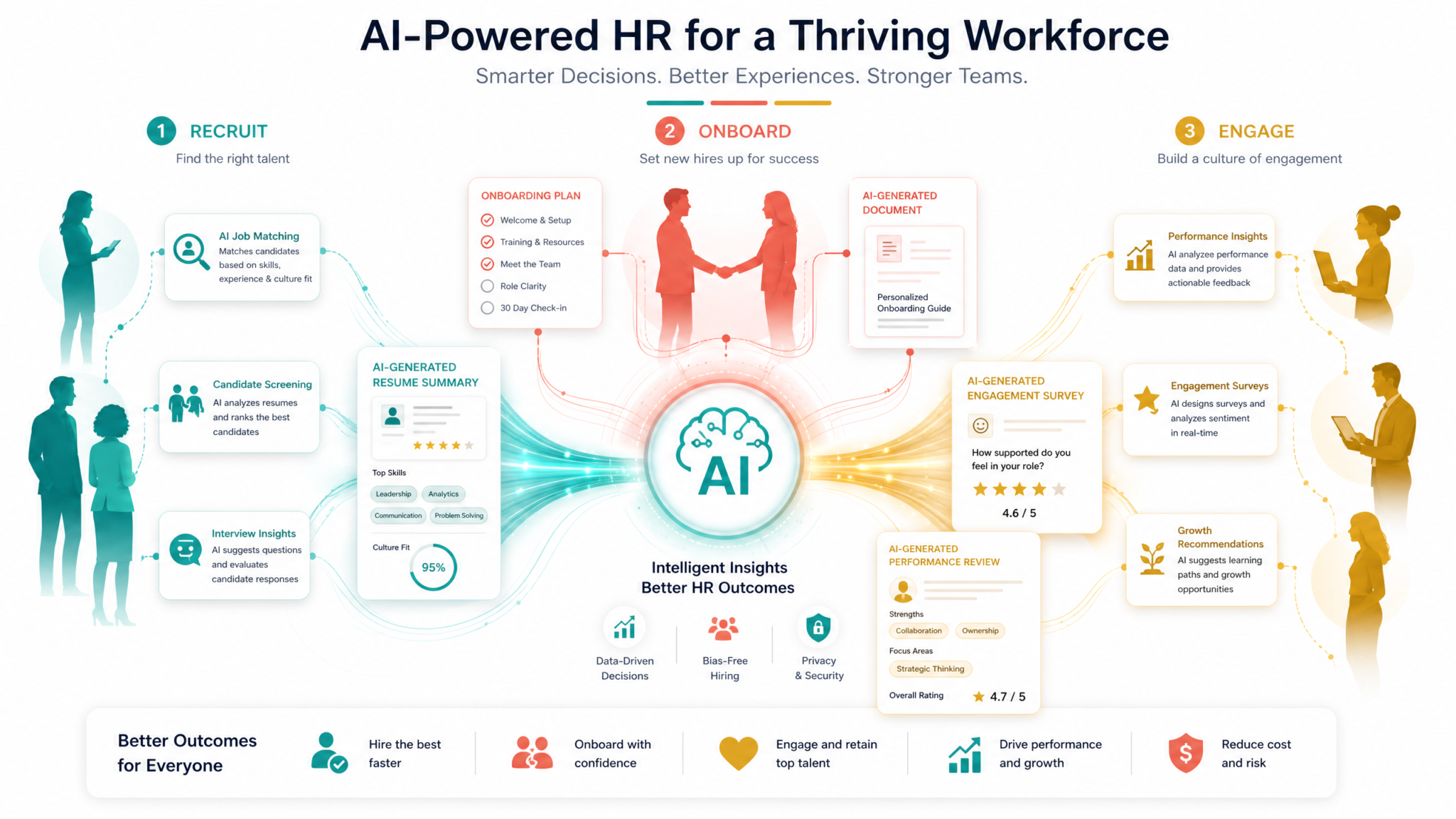
30 ChatGPT-5.5 Prompts for HR Professionals
This article is a practical, ready-to-copy prompt library for HR teams using ChatGPT-5.5. Each prompt is tailored to a specific HR workflow, includes clear variable placeholders, specifies the expected output format, and explains when and why to use it. Save these prompts into your HR playbook, ATS integrations, or automation flows to speed up repeatable work like writing job descriptions, designing onboarding plans, running performance cycles, and improving retention strategies.
Use this collection in combination with your internal tools and processes. For related prompt templates targeting other roles, see
For a deeper exploration of this topic, our comprehensive article on The ChatGPT Work Automation Playbook: 12 Prompts for Document Workflows, Slide Decks, and Website Prototypes provides detailed implementation strategies, real-world benchmarks, and step-by-step workflows that complement the techniques discussed in this section.
. For automating multi-step HR tasks, pair prompts with
For a deeper exploration of this topic, our comprehensive article on Claude Code Automation: How to Automate Tasks Hands-Free with AI provides detailed implementation strategies, real-world benchmarks, and step-by-step workflows that complement the techniques discussed in this section.
. When evaluating vendor integrations for scaled deployments, consult
For a deeper exploration of this topic, our comprehensive article on The Complete AI Tools Stack for 2026: 10 Tools Evaluated provides detailed implementation strategies, real-world benchmarks, and step-by-step workflows that complement the techniques discussed in this section.
.
How to use this guide
Each entry contains:
- Copy-paste-ready prompt text (inside a pre block) with clear placeholders — replace them when you submit to ChatGPT-5.5.
- Expected output format — specify how you want the assistant to return the result (JSON, table, bullet list, templates, etc.).
- When/why to use it — practical guidance for specific HR workflows so you can pick the right prompt for the right situation.
Category 1 — Recruitment & Talent Acquisition (Prompts 1–8)
Use these prompts to standardize job marketing, improve candidate screening and interviewing, ensure inclusive hiring, and maintain a talent pipeline that aligns with your business needs.
Prompt 1 — Create a role-first Job Description
Prompt:
Create a concise, role-focused job description for [JOB_TITLE] at [COMPANY_NAME]. Use the following inputs:
- Department: [DEPARTMENT]
- Team size and level: [TEAM_SIZE_AND_LEVEL] (e.g., "growing 6-person engineering team; mid-senior level")
- Remote policy: [REMOTE_POLICY] (e.g., "remote-first, US-only")
- Key responsibilities: [RESPONSIBILITIES] (comma-separated)
- Required experience and skills: [REQUIRED_SKILLS] (comma-separated, prioritize)
- Preferred skills/certifications: [PREFERRED_SKILLS] (comma-separated)
- Compensation range: [COMPENSATION_RANGE] (optional)
- Application instructions/call-to-action: [APPLICATION_INSTRUCTIONS]

Return:
1) A short job title line (1 sentence).
2) A 2–3 sentence summary (company + team context + mission).
3) A bullet list of 6–10 responsibilities (action-first).
4) A bullet list of "Must have" qualifications (ranked).
5) A bullet list of "Nice to have".
6) A brief "What we offer" section (4 bullets).
7) A 1–2 sentence inclusive hiring statement.

Tone: professional and direct, 220–420 words total.

Expected output format: JSON object with keys: title, summary, responsibilities (array), must_have (array), nice_to_have (array), benefits (array), inclusive_statement (string).

Example keys: "title", "summary", "responsibilities", "must_have", "nice_to_have", "benefits", "inclusive_statement".
Prompt 2 — Build Screening Criteria & Scorecard
Prompt:
Create a candidate screening criteria and scorecard for the role [JOB_TITLE] in [DEPARTMENT] at [COMPANY_NAME]. Inputs:
- Core competencies (3–6): [COMPETENCIES]
- Minimum years of experience: [MIN_YEARS]
- Must-have technical skills: [TECH_SKILLS]
- Cultural fit pillars (3): [CULTURE_PILLARS]
- Role seniority level: [SENIORITY]
- Weighting preferences: [WEIGHTING] (e.g., "technical 40%, experience 25%, culture 20%, communication 15%")

Produce:
1) A one-line rubric describing pass, consider, reject thresholds.
2) A detailed scorecard table with criteria, descriptions, scoring scale (1–5), and weight for each criterion.
3) A calculated example with a hypothetical candidate's scores and final percent score.

Expected output format: JSON with sections "rubric", "scorecard" (array of objects with name, description, weight, scale), and "example_candidate" (object with scores and total_percent).

Tone: objective, evidence-based, ready for interviewers to use.
Prompt 3 — Structured Interview Guide (Behavioral + Technical)
Prompt:
Generate a structured interview guide for [JOB_TITLE] interviewing with [INTERVIEW_PANEL] (list roles: e.g., "Hiring Manager, Senior Engineer, HR Business Partner"). Inputs:
- Top 4 role priorities: [TOP_PRIORITIES]
- Core technical areas to test: [TECH_AREAS]
- Behavioral competencies to assess: [BEHAVIORAL_COMPETENCIES]
- Interview duration: [DURATION_MIN] minutes
- Panel format: [PANEL_FORMAT] (e.g., "one panelist 30m, one 15m technical challenge, 15m Q&A")

Deliver:
1) A timed agenda for the interview slot.
2) For each panelist: 3–5 targeted questions (behavioral + technical where applicable), with a follow-up prompt and the observable signals to look for (what good looks like).
3) A standardized scoring rubric per question (0–3 or 0–5) and sample interviewer notes fields.

Expected output format: Structured Markdown-like sections (but return as plain text) or JSON: {"agenda":[], "panel": [{"role":"", "questions":[{"q":"", "follow_up":"", "signals":[""]}], "scoring":""}]}. Keep answers concise.
Prompt 4 — Candidate Assessment Rubric for High-Volume Roles
Prompt:
Design a simplified, high-volume candidate assessment rubric for [JOB_TITLE] to be used by recruiters during initial screening. Inputs:
- Key success factors (3–5): [SUCCESS_FACTORS]
- Minimum pass requirements: [MIN_PASS]
- Screening channel: [CHANNEL] (e.g., "LinkedIn apply", "referrals")
- Time per review target: [REVIEW_TARGET_MIN] minutes per candidate

Return:
1) A checklist-style rubric with "Pass/Not Pass/Needs More Info" buckets.
2) Exact phrasing for quick recruiter notes (3 short prompts).
3) Example of an automated ATS tag mapping: which tags map to "Proceed to phone screen", "Hold", "Reject".

Expected output format: JSON with "rubric", "short_notes_prompts", and "ats_tag_mapping".
Prompt 5 — Diverse Hiring Strategy & Inclusive Job Language
Prompt:
Develop a practical diverse hiring strategy for the hiring team recruiting for [JOB_TITLE]/[DEPARTMENT] at [COMPANY_NAME]. Inputs:
- Target diversity goals: [DIVERSITY_GOALS] (e.g., "increase BIPOC representation in engineering by 20%")
- Current baseline: [CURRENT_BASELINE]
- Candidate sourcing channels: [SOURCING_CHANNELS]
- Budget constraints: [BUDGET]
- Time horizon: [TIME_HORIZON] (e.g., "12 months")

Produce:
1) A prioritized 6–8 step plan with brief implementation notes (owner, timeframe).
2) Suggested inclusive job-description phrases to replace common bias terms (provide before/after examples).
3) Two short scripts for outreach messaging to underrepresented networks.

Expected output format: Bulleted plan with short outreach templates and a table of "problem phrase" -> "inclusive alternative".
Prompt 6 — Offer Letter Template (Customizable)
Prompt:
Draft a professional offer letter template for [JOB_TITLE] at [COMPANY_NAME] to be customized by hiring managers. Inputs:
- Candidate name: [CANDIDATE_NAME]
- Start date: [START_DATE]
- Employment type: [FULL_TIME/PART_TIME/CONTRACT]
- Base salary: [BASE_SALARY]
- Bonus or equity details: [BONUS_EQUITY]
- Reporting manager: [MANAGER_NAME]
- Location and remote policy: [LOCATION_POLICY]
- Benefits summary: [BENEFITS_SUMMARY]
- Contingencies: [CONTINGENCIES] (e.g., background check, visa)

Return:
1) A formal offer letter draft with placeholders for legal/HR team review.
2) Two shorter versions: "Sales-style" friendly and "Formal/Legal" tone.

Expected output format: Three plain-text templates labeled "Standard", "Friendly", "Formal". Each should be copy-paste ready and about 250–450 words.
Prompt 7 — Rejection Communication Templates (Respectful & Actionable)
Prompt:
Prepare three rejection communication templates for candidates who applied to [JOB_TITLE] at [COMPANY_NAME]. Inputs:
- Stage: [STAGE] (e.g., "after resume screen", "after final interview", "after take-home assessment")
- Feedback policy: [FEEDBACK_POLICY] (e.g., "provide brief feedback", "no detailed feedback")
- Tone preference: [TONE] (e.g., "warm", "concise", "employer brand-forward")

Return:
1) Short rejection email (1–2 sentences) for early-stage rejections.
2) Mid-stage rejection with one specific improvement tip (2–3 sentences).
3) Final rejection after interview with optional feedback and encourage future application (3–4 sentences).
4) A one-line internal note to attach to the candidate record explaining why they were rejected (for compliance).

Expected output format: JSON with keys: "early", "mid", "final", "internal_note". Each value is the message string. Make messages GDPR/EEA/US-compliant in tone (no legal statements needed, but avoid speculative reasons).
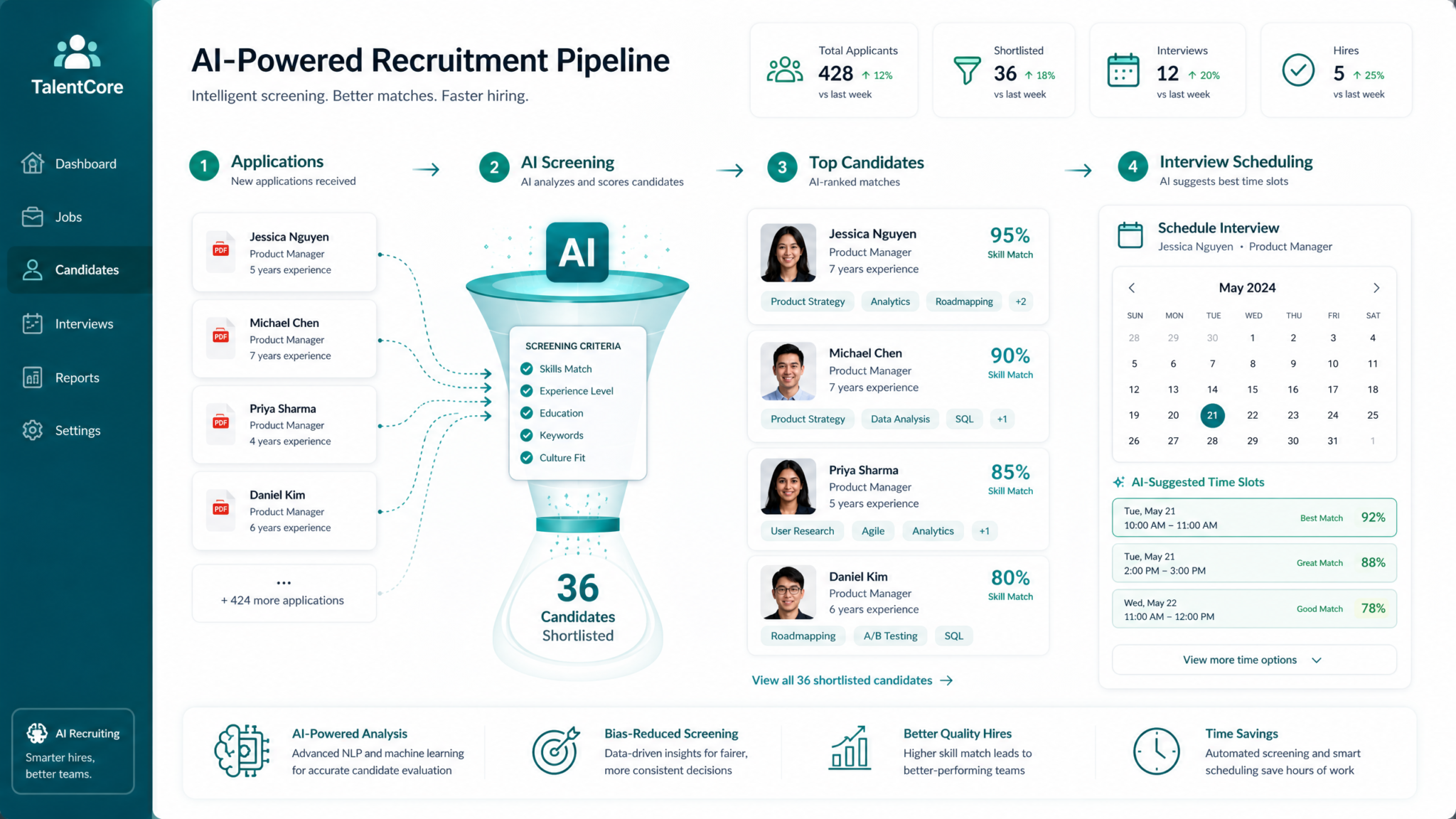
Prompt 8 — Talent Pipeline Health Analysis
Prompt:
Analyze the health of the talent pipeline for [DEPARTMENT] at [COMPANY_NAME]. Inputs:
- Pipeline counts by stage: {"sourced": [SOURCED], "screened": [SCREENED], "interviewed": [INTERVIEWED], "offered": [OFFERED], "hired": [HIRED]}
- Average time-in-stage in days: {"sourced": [DAYS_SOURCED], "screened": [DAYS_SCREENED], "interviewed": [DAYS_INTERVIEWED], "offered": [DAYS_OFFERED]}
- Source breakdown: {"employee_referrals": X, "job_boards": Y, "agency": Z, "direct": W}
- Open roles and priority: [OPEN_ROLES] (list)
- Hiring SLA targets: [SLA_TARGETS] (e.g., "time-to-hire 42 days")

Return:
1) Key health metrics (drop-off rates between stages, source conversion rates, time to hire vs SLA).
2) Top 3 bottlenecks and recommended corrective actions (quick wins and long-term).
3) Two dashboard KPIs to monitor weekly and two to monitor monthly.

Expected output format: JSON with keys "metrics", "bottlenecks", "dashboard_recommendations". Include suggested visualizations (bar, funnel) in short text form.
Category 2 — Onboarding & Training (Prompts 9–14)
These prompts accelerate the creation of tailored onboarding journeys, training curricula, mentor matches, and early feedback loops to improve new hire ramp and retention.
Prompt 9 — 30/60/90 Day Plan Template (Role-Specific)
Prompt:
Create a role-specific 30/60/90 day plan for a new hire in the role [JOB_TITLE] reporting to [MANAGER_NAME] at [COMPANY_NAME]. Inputs:
- Primary objectives for the role: [PRIMARY_OBJECTIVES] (3–5)
- Key stakeholders to meet: [STAKEHOLDERS]
- Tools and systems the hire must learn: [TOOLS]
- Early deliverable expectations: [EARLY_DELIVERABLES]
- Cultural milestones: [CULTURAL_MILESTONES]

Produce:
1) A clear 30/60/90 day timeline with objectives, expected deliverables, checkpoints, and owner for each item.
2) Manager check-in prompts for weeks 1, 3, 6, and 12.
3) Success criteria to determine if the hire is "On track", "Needs support", or "Off track".

Expected output format: JSON object with keys "30_day", "60_day", "90_day", each containing arrays of tasks with fields: objective, deliverable, owner, success_criteria. Also include "manager_checkins" (array) and "success_criteria_summary".
Prompt 10 — Onboarding Checklist (Role & Location Specific)
Prompt:
Generate a new hire onboarding checklist for [JOB_TITLE] in [LOCATION] at [COMPANY_NAME]. Inputs:
- Employment type: [EMPLOYMENT_TYPE]
- Equipment needed: [EQUIPMENT_LIST]
- Compliance activities: [COMPLIANCE_ACTIVITIES] (e.g., I-9, tax forms)
- Team welcome actions: [TEAM_ACTIONS]

Return:
1) Day-1 essentials (IT access, credentials, legal forms).
2) Week-1 priorities (meetings, training modules).
3) Month-1 administrative and performance tasks.
4) Optional "Nice to have" items for culture integration.

Expected output format: Ordered checklist (JSON array of objects with fields: title, due_by, owner, priority). Provide owners such as "HR", "IT", "Hiring Manager".
Prompt 11 — Training Curriculum Design for Role Ramp
Prompt:
Design a 12-week training curriculum for a new [JOB_TITLE] joining [DEPARTMENT] at [COMPANY_NAME] with a target competency profile: [TARGET_COMPETENCIES]. Inputs:
- Starting proficiency level: [STARTING_LEVEL] (e.g., "beginner", "intermediate")
- Available resources: [RESOURCES] (e.g., internal docs, LMS course IDs, external vendors)
- Learning format preferences: [FORMAT] (e.g., "cohort", "asynchronous", "mentored")

Produce:
1) A week-by-week curriculum with learning objectives, activities (read, course, shadow, project), assessment method, and estimated hours.
2) A final capstone assignment description with grading rubric.
3) A mentor/coach involvement plan and expected time per week.

Expected output format: JSON with keys "weeks" (array of week objects), "capstone", and "mentor_plan". Each week object: {"week":1, "objectives":[], "activities":[], "assessment": "", "hours_estimated":N}.
Prompt 12 — Mentor Matching Brief & Criteria
Prompt:
Recommend mentor matches for a new hire [NEW_HIRE_NAME], role [JOB_TITLE], using the following candidate profile:
- Career goals: [CAREER_GOALS]
- Strengths: [STRENGTHS]
- Development areas: [DEVELOPMENT_AREAS]
- Available mentors (list with primary skills and workload): [MENTOR_POOL] (provide as JSON or comma-separated)

Return:
1) Top 3 mentor matches with rationale linking mentor expertise to mentee goals.
2) Suggested mentorship structure: meeting cadence, initial 90-day objectives, confidentiality and feedback norms.
3) A short outreach template to invite each mentor.

Expected output format: JSON with "matches": [{"mentor_name":"", "rationale":"", "cadence":""}], "mentorship_structure", and "outreach_templates".
Prompt 13 — Culture Integration Guide for New Hires
Prompt:
Create a culture integration guide for a new hire in [DEPARTMENT] to assimilate into [COMPANY_NAME] culture. Inputs:
- Core values: [CORE_VALUES]
- Team rituals: [TEAM_RITUALS]
- Typical meeting etiquette: [MEETING_ETIQUETTE]
- Communication norms: [COMM_NORMS]

Produce:
1) A 1-page "Culture Playbook" the hire can read on day one (bulletized).
2) Three recommended activities in the first 30 days to build relationships.
3) A short list of "Do's & Don'ts" specific to the team.

Expected output format: Plain text sections labeled "playbook", "activities", "dos_and_donts". Keep the playbook under 400 words.
Prompt 14 — New Hire Feedback Survey (First 30 Days)
Prompt:
Draft a new hire feedback survey to administer at 30 days for [JOB_TITLE] hires in [COMPANY_NAME]. Inputs:
- Survey length target: [LENGTH_TARGET] (e.g., "8–12 questions")
- Focus areas: [FOCUS_AREAS] (e.g., onboarding experience, role clarity, manager support)
- Response type mix: [RESPONSE_TYPES] (e.g., "Likert, open text")

Return:
1) A 10-question survey mixing Likert (1–5), multiple choice, and 3 open-text prompts optimized for quick completion.
2) Two suggested analytics KPIs to track from responses and a short interpretation guide for HRBPs.

Expected output format: JSON array of question objects: {"id":1,"type":"likert","question":"", "options":[], "notes":""}. Also include "kpis": [] and "interpretation_guidance".
Access 40,000+ AI Prompts for ChatGPT, Claude & Codex — Free!
Subscribe to get instant access to our complete Notion Prompt Library — the largest curated collection of prompts for ChatGPT, Claude, OpenAI Codex, and other leading AI models. Optimized for real-world workflows across coding, research, content creation, and business.
Category 3 — Performance Management (Prompts 15–22)
These prompts help standardize performance cycles, write objective reviews and PIPs, design promotion matrices, and build development plans tied to business outcomes.
Prompt 15 — Performance Review Template (Manager)
Prompt:
Create a manager-facing performance review template for year-end evaluations for [JOB_TITLE] in [DEPARTMENT] at [COMPANY_NAME]. Inputs:
- Review period: [REVIEW_PERIOD]
- Core competencies and weights: [COMPETENCIES_WEIGHTS] (JSON or list, e.g., "delivery 40%, leadership 30%, teamwork 20%, innovation 10%")
- Role level expectations: [ROLE_LEVEL_EXPECTATIONS]
- Calibration notes: [CALIBRATION_NOTES] (any specific guidance)

Produce:
1) Structured review sections: Summary, competency ratings (1–5) with evidence prompts, accomplishments, development areas, career aspirations, and compensation recommendation field.
2) Exact phrasing for manager to deliver balanced feedback in a 10–12 minute conversation.
3) Scoring guidance to align across managers.

Expected output format: JSON with keys: "sections" (array), "conversation_script", "scoring_guidance". Each competency rating should include "what_to_document" prompts for manager evidence.
Prompt 16 — OKR Goal-Setting Framework for Role
Prompt:
Generate 3–5 OKRs (Objectives and Key Results) for [JOB_TITLE] aligned to [COMPANY_GOAL] for the next quarter. Inputs:
- Primary business objective: [BUSINESS_OBJECTIVE]
- Role-level measurable areas: [MEASURABLE_AREAS]
- Baseline metrics: [BASELINES] (numbers)
- Stretch target policy: [STRETCH_POLICY] (e.g., "80% attainment expected, 100% stretch")

Return:
1) 3 high-quality OKRs: each objective (1 sentence), 3–4 measurable KRs with baseline and target values.
2) A short note on how to measure each KR (data owner and frequency).
3) One risk/mitigation line per OKR.

Expected output format: JSON array of OKR objects: {"objective":"", "krs":[{"metric":"", "baseline":"", "target":"", "owner":""}], "risks":""}.
Prompt 17 — Feedback Conversation Script (Delivering Developmental Feedback)
Prompt:
Write a conversation script for a manager to deliver developmental feedback to [EMPLOYEE_NAME] (role [JOB_TITLE]) focused on [FEEDBACK_TOPIC]. Inputs:
- Specific example(s) of observed behavior: [EXAMPLES]
- Impact on team or outcomes: [IMPACT]
- Desired change: [DESIRED_CHANGE]
- Support offered: [SUPPORT_OPTIONS] (training, coaching, resources)

Produce:
1) A 6–8 minute script broken into "opening", "example & impact", "employee response prompts", "development plan", and "closing" sections.
2) Two short suggested follow-up calendar reminders and tracking metrics.

Expected output format: Plain text with labeled sections. Keep script concise and manager-ready (200–350 words).
Prompt 18 — Performance Improvement Plan (PIP) Document
Prompt:
Draft a Performance Improvement Plan for [EMPLOYEE_NAME], role [JOB_TITLE], with start date [PIP_START_DATE] and review checkpoints at [CHECKPOINTS] (e.g., 30/60/90). Inputs:
- Areas requiring improvement: [ISSUES] (bulleted)
- Expected behaviors and metrics: [EXPECTED_BEHAVIORS]
- Support and resources to be provided: [SUPPORT]
- Consequences if not met: [CONSEQUENCES] (e.g., termination, role change)

Deliver:
1) A clear PIP document with sections: purpose, specific performance issues, measurable improvement goals, timeline, tracking method, support offered, success criteria, and signatures.
2) An internal manager checklist for running the PIP.

Expected output format: Two plain-text templates: "Employee PIP document" and "Manager checklist". The PIP should be factual, objective, and include measurable metrics.
Prompt 19 — Promotion Criteria Matrix
Prompt:
Create a promotion criteria matrix for transitions from [CURRENT_LEVEL] to [TARGET_LEVEL] within [FUNCTION] at [COMPANY_NAME]. Inputs:
- Competency domains (4–6): [DOMAINS]
- Behavioral examples for each level: [BEHAVIORAL_LEVELS] (brief)
- Business impact expectations: [BUSINESS_IMPACT]
- Required time-in-role min: [TIME_IN_ROLE]

Return:
1) A table mapping each competency to "IC expectations" at current level vs target level with observable examples.
2) A short process checklist managers must complete to nominate a candidate.

Expected output format: JSON with "matrix" (array of domain objects) and "nomination_checklist" (array). Also include "calibration_tips".
Prompt 20 — Compensation Analysis Brief (Role Banding)
Prompt:
Prepare a concise compensation analysis brief for role [JOB_TITLE] to determine band placement. Inputs:
- Market comp data sources: [MARKET_DATA] (e.g., "Payscale, Radford, internal comp ratio")
- Current comp: base [CURRENT_BASE], equity [CURRENT_EQUITY], bonus [CURRENT_BONUS]
- Target comp percentile: [TARGET_PERCENTILE] (e.g., 50th or 75th)
- Location adjustment: [LOCATION_ADJUSTMENT]

Produce:
1) A short executive summary with recommended band placement and rationale.
2) A band table showing min/median/max for the role at target percentile, suggested starting offer, and recommended negotiation levers (e.g., sign-on, equity).
3) A note on internal equity impacts and suggested approvers.

Expected output format: JSON with keys "summary", "band_table" (array), "negotiation_levers", "internal_equity_note".
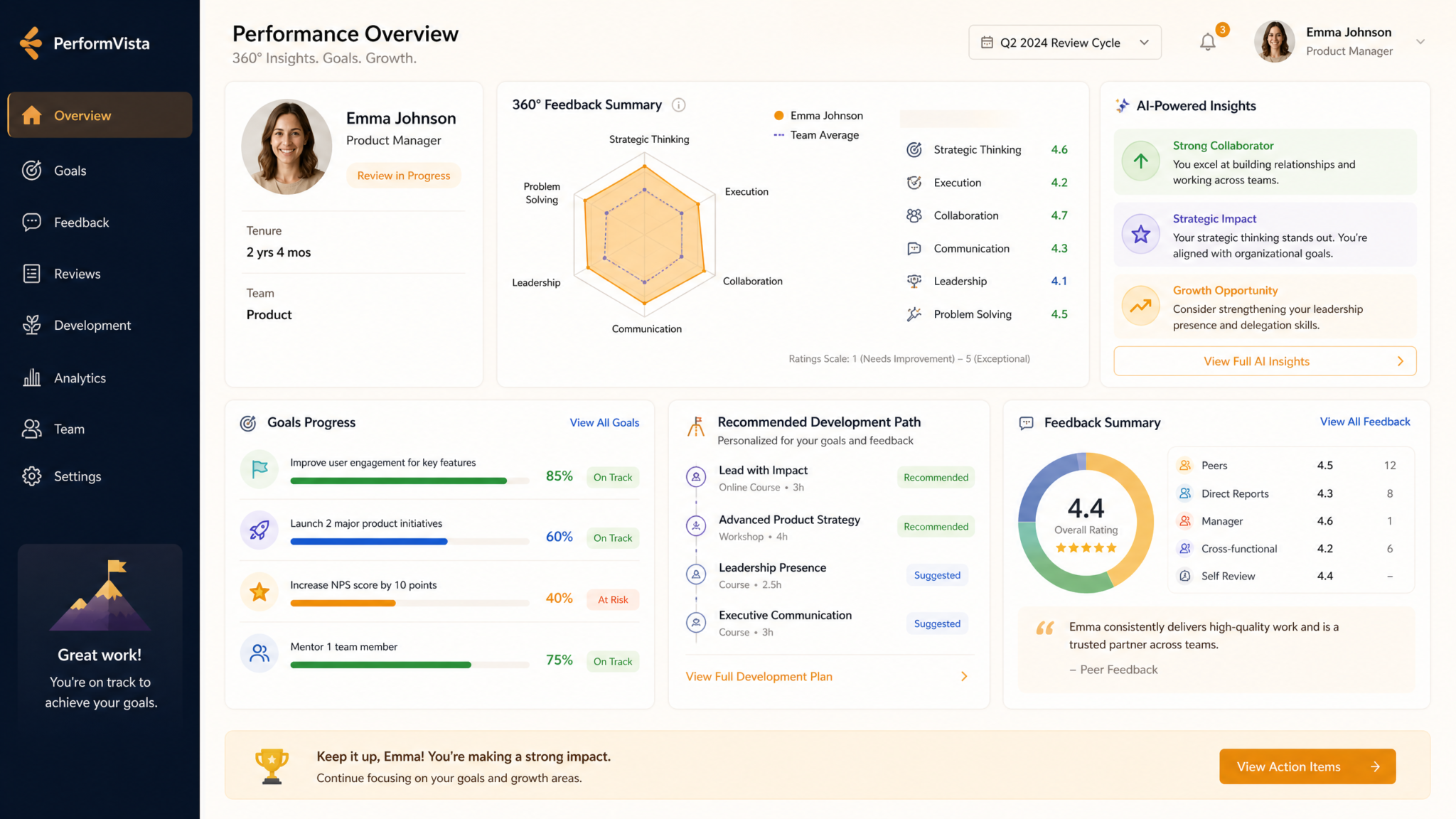
Prompt 21 — 360-Degree Review Design (Questionnaire & Reporting)
Prompt:
Design a 360-degree review process for [JOB_TITLE] with a focus on leadership and collaboration. Inputs:
- Review participants: [PARTICIPANTS] (manager, peers, direct reports, self)
- Competencies to assess: [COMPETENCIES]
- Anonymity policy: [ANON_POLICY]
- Reporting cadence: [CADENCE]

Deliver:
1) A 360 survey with 12–18 questions across competencies (mix of Likert and open text).
2) Report templates: summary dashboard items to include (heatmap, verbatim themes, development actions).
3) Short instructions for participants and HR admin.

Expected output format: JSON containing "survey_questions" (array), "report_template" (keys with descriptions), and "participant_instructions".
Prompt 22 — Career Development Pathways (Individual Contributor)
Prompt:
Map a career development pathway for an individual contributor in [FUNCTION] (e.g., "Data Science", "Marketing") from Junior to Senior levels. Inputs:
- Typical milestones and deliverables per level: [MILESTONES]
- Required skills matrix: [SKILLS_MATRIX] (skills by technical/communication/leadership)
- Typical timeline range: [TIMELINE] (years)

Return:
1) A level-by-level progression map with expected competencies, sample projects, promotion readiness signals, and suggested learning resources.
2) Two coaching conversation prompts managers can use to build a 12-month development plan.

Expected output format: JSON with "levels" (array), each level object containing "competencies", "sample_projects", "promotion_signals", and "learning_resources".
Category 4 — Employee Engagement & Retention (Prompts 23–30)
These prompts are focused on measuring engagement, analyzing exits, designing retention programs, and auditing culture to reduce voluntary turnover and improve organizational health.
Prompt 23 — Employee Engagement Survey Design
Prompt:
Design an employee engagement survey for [COMPANY_NAME] to be run at [CADENCE] (e.g., "quarterly" or "annually"), targeted at [POPULATION] (e.g., "all employees", "engineering only"). Inputs:
- Focus areas: [SURVEY_FOCUS] (e.g., "psychological safety, recognition, manager effectiveness")
- Maximum completion time: [MAX_TIME_MIN]
- Benchmarking required: [BENCHMARKS] (optional)

Produce:
1) A 20-question survey (mix Likert 1–5, multiple choice, and 4 open text questions) optimized for completion within the target time.
2) A scoring model defining how to compute engagement index and sub-index scores.
3) A short rollout plan and suggested follow-up actions based on high, medium, and low engagement thresholds.

Expected output format: JSON with "questions" (array), "scoring_model" (object), and "rollout_plan" (array of steps).
Prompt 24 — Exit Interview Analysis (Aggregate Insights)
Prompt:
Aggregate and analyze exit interview data for employees who left [DEPARTMENT] between [START_DATE] and [END_DATE]. Inputs:
- Individual exit transcripts or survey responses: [EXIT_RESPONSES] (provide as array of short texts)
- Known metadata: {"tenure":[], "role_level":[], "reason_code":[]}

Return:
1) A summary of top themes (strengths and pain points) with counts and representative quotes.
2) A list of 5 prioritized retention actions addressing the top reasons for turnover with estimated impact and effort.
3) Two predictive signals HR should monitor to proactively reduce similar exits.

Expected output format: JSON with keys "themes", "prioritized_actions", and "predictive_signals".
Prompt 25 — Retention Strategy Framework (12-Month)
Prompt:
Create a 12-month retention strategy for [COMPANY_NAME] focusing on [TARGET_POPULATION] (e.g., "early-career engineering", "sales reps"). Inputs:
- Attrition drivers: [ATTRITION_DRIVERS]
- Available budget: [BUDGET]
- Business priorities: [BUSINESS_PRIORITIES]

Deliver:
1) A quarterly roadmap with objectives, initiatives (short description), owners, success metrics, and budget allocation.
2) One pilot program (detail: design, measurement, timeline) for rapid validation.
3) A communications plan to announce the initiatives to employees.

Expected output format: JSON with "roadmap" (array of quarters), "pilot", and "communications_plan". Each initiative should map to a KPI and owner.
Prompt 26 — Team-Building Activity Playbook
Prompt:
Curate a playbook of 8 team-building activities suitable for [TEAM_SIZE] people in [WORK_MODE] (e.g., remote, hybrid, in-person) with a focus on improving [OBJECTIVE] (e.g., "psychological safety", "cross-functional collaboration"). Inputs:
- Time budget per activity: [TIME_BUDGET_MIN]
- Cost constraints: [COST_LIMIT]
- Accessibility considerations: [ACCESSIBILITY_NEEDS]

Return:
1) For each activity: name, objective, duration, materials needed, step-by-step facilitator script, remote adaptations, and an impact measurement idea.
2) A suggested quarterly schedule for selecting activities based on seasonality (e.g., "Q1 onboarding, Q2 strategy").

Expected output format: JSON array "activities" with objects for each activity and a "quarterly_schedule" array.
Prompt 27 — Wellness Program Design (Holistic)
Prompt:
Design a cost-conscious wellness program for employees in [REGION] focusing on mental health, physical wellbeing, and financial wellness. Inputs:
- Participation target: [PARTICIPATION_TARGET] (percentage)
- Program budget: [WELLNESS_BUDGET]
- Vendor constraints: [VENDOR_CONSTRAINTS] (e.g., "no vendor preferred", "must be HIPAA-compliant")

Provide:
1) A 6-month phased program with specific activities, communication tactics, incentives, and measurement.
2) A vendor evaluation checklist with mandatory and preferred criteria.
3) KPIs to evaluate program effectiveness and ROI.

Expected output format: JSON with "phased_program", "vendor_checklist", and "kpis". Each phase should include owner and timeline.
Prompt 28 — Recognition System (Peer-to-Peer & Manager)
Prompt:
Design a recognition system that includes peer-to-peer and manager-led recognition for [COMPANY_NAME]. Inputs:
- Recognition budget (monthly or annual): [RECOG_BUDGET]
- Values to reinforce: [VALUES]
- Reward types allowed: [REWARD_TYPES] (e.g., "swag, micro-bonus, points")

Return:
1) Two recognition workflows (peer-to-peer and manager-initiated) including nomination criteria, approval steps (if any), delivery method, and reporting.
2) Point system design mapped to rewards and monthly budget example.
3) A short launch email and a one-page "how it works" for employees.

Expected output format: JSON with "workflows", "points_system", and "communications".
Prompt 29 — Internal Mobility Program Outline
Prompt:
Create an internal mobility program outline for [COMPANY_NAME] to increase lateral moves and reduce external hiring. Inputs:
- Internal job posting policy: [POST_POLICY]
- Time-in-role minimums: [TIME_MINIMUMS]
- Manager consent rules: [MANAGER_RULES]

Produce:
1) Program workflow from employee interest to internal hire including permission gates, timeline, and stakeholders.
2) Templates for internal job postings, transfer request form, and manager acknowledgement.
3) Success metrics to evaluate program effectiveness over 12 months.

Expected output format: JSON with "workflow", "templates" (each as string), and "metrics".
Prompt 30 — Culture Audit Template (Executive Summary & Action Plan)
Prompt:
Produce a culture audit template and executive summary format to assess cultural health across [COMPANY_NAME]. Inputs:
- Data sources to include: [DATA_SOURCES] (e.g., engagement surveys, exit interviews, manager interviews)
- Focus dimensions: [FOCUS_DIMENSIONS] (e.g., "trust, communication, inclusion, performance orientation")
- Report audience: [AUDIENCE] (e.g., "executive team, People Ops")

Return:
1) A one-page executive summary template with key KPIs, top 5 findings, and top 5 prioritized actions.
2) A detailed audit checklist (questions to ask across sources) and recommended evidence to collect.
3) A recommended governance cadence for culture remediation and owners.

Expected output format: JSON with "executive_summary_template", "audit_checklist", and "governance_recommendations".
