
35 ChatGPT-5.5 Prompts for Supply Chain Managers: Demand Forecasting, Inventory Optimization, Logistics Planning, and Vendor Risk Assessment
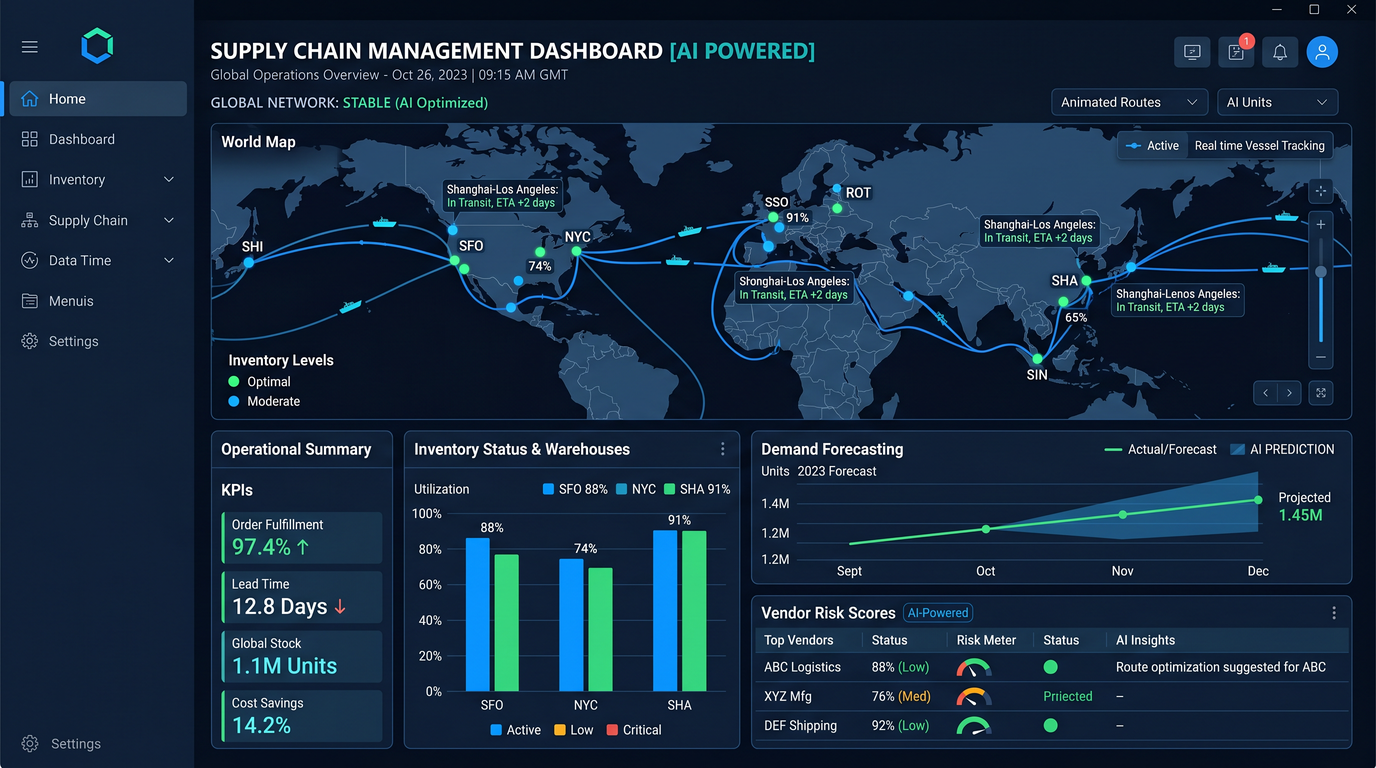
This article contains 35 production-ready ChatGPT-5.5 prompts tailored for supply chain managers. Each prompt is copy-paste ready, includes variables you can customize, and is accompanied by a brief explanation and suggested output format. Use these prompts to accelerate demand forecasting, optimize inventory, plan logistics, assess vendor risk, and develop strategic supply chain initiatives.
Introduction & How to Use These Prompts
These prompts are designed for ChatGPT-5.5 and assume the model has access to relevant data you provide in the prompt (CSV, JSON, or pasted tables). For best results:
- Provide clean historical data when requested—use CSV or JSON as the variable placeholders suggest.
- Customize variables (e.g., {{PRODUCT_SKU}}, {{REGION}}, {{TIME_WINDOW}}) before pasting into ChatGPT-5.5.
- Ask the model to return structured outputs (JSON or CSV) for easy ingestion into downstream tools.
Where applicable, the prompts request confidence intervals, assumptions, and practical actions so outputs are decision-ready. You can chain prompts—for example, feed a cleaned forecast into an inventory optimization prompt.
Related resources:
Supply chain professionals who also manage research-intensive procurement decisions will find complementary prompts in our collection for academic researchers. The 40 ChatGPT-5.5 prompts for literature reviews, hypothesis generation, and data interpretation can be adapted for supplier evaluation research and market analysis. 40 ChatGPT-5.5 Prompts for Academic Researchers.
,
Supply chain teams that collaborate with product design departments can leverage our 40 ChatGPT-5.5 prompts for UX designers. The user journey mapping and usability testing prompts translate directly to customer experience optimization in logistics and fulfillment workflows. 40 ChatGPT-5.5 Prompts for UX Designers.
Section 1 — Demand Forecasting
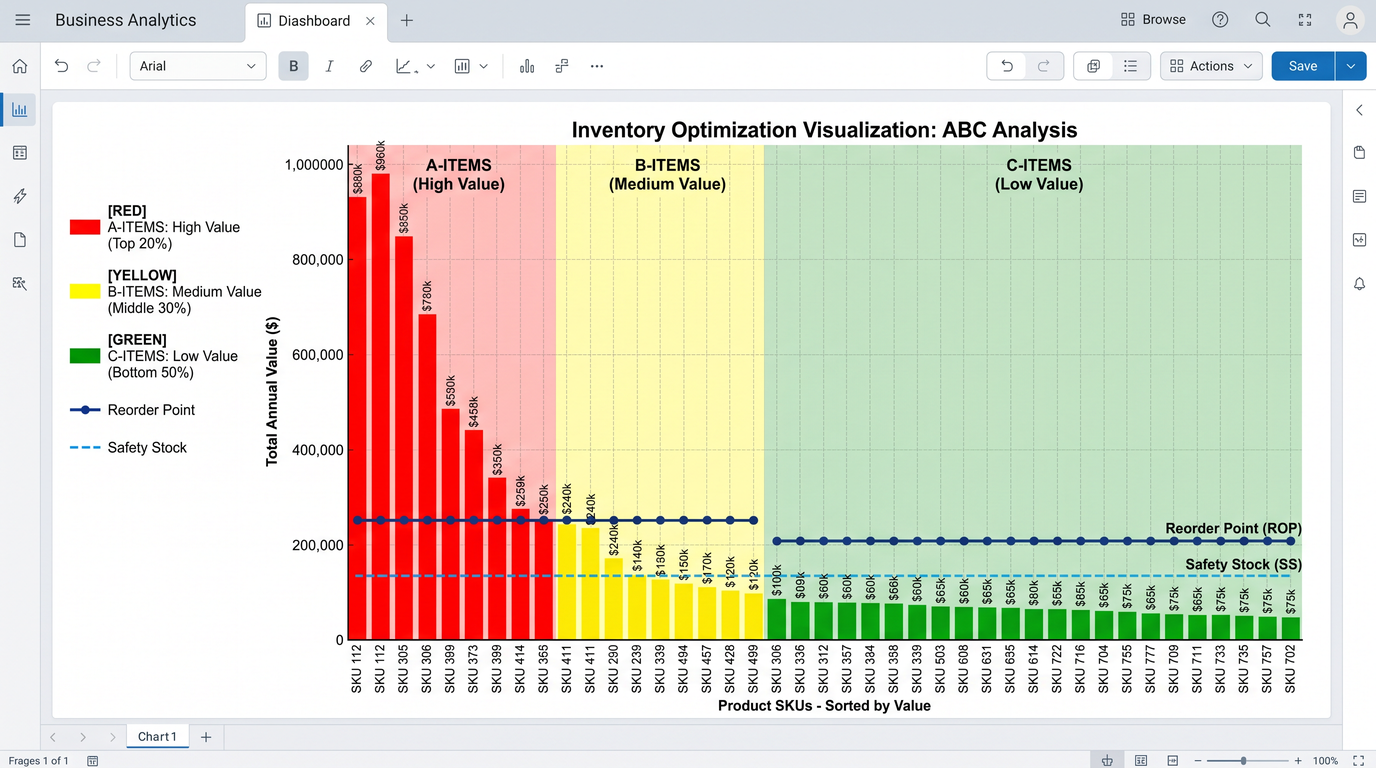
Seven prompts focused on seasonal analysis, trend prediction, and demand sensing. Each prompt asks ChatGPT-5.5 for analytical steps and structured outputs you can use directly.
Prompt 1 — Seasonal Decomposition & Index Calculation
You are ChatGPT-5.5, an advanced supply chain forecasting assistant. Given historical sales data in CSV format, perform a seasonal decomposition and return seasonal indices for the requested seasonality. Input variables:
- {{SALES_HISTORY_CSV}} : CSV with columns [date, product_sku, units, region]
- {{PRODUCT_SKU}} : target SKU (e.g., "SKU-12345")
- {{START_DATE}} : start date for analysis (YYYY-MM-DD)
- {{END_DATE}} : end date for analysis (YYYY-MM-DD)
- {{SEASONAL_PERIOD}} : integer seasonal period in data points (e.g., 12 for monthly seasonality)

Task:
1. Load and filter data for {{PRODUCT_SKU}} and date range.
2. If necessary, aggregate to the time frequency implied by {{SEASONAL_PERIOD}} (e.g., monthly).
3. Perform additive and multiplicative decomposition; choose the best-fit method with justification.
4. Output:
   - "method": "additive" or "multiplicative"
   - "seasonal_indices": list of seasonal indices ordered by period (length = {{SEASONAL_PERIOD}})
   - "trend_series_sample": first 6 trend values sample
   - "residual_stats": {mean, std, autocorrelation_lag1}
   - "recommendation": 2-3 actions to apply seasonal index in planning

Return output as JSON only.
Explanation: Use this prompt to extract seasonal patterns and indices for a specific SKU and period. The prompt requests both additive and multiplicative decomposition and a choice with justification, allowing you to quantify seasonality and feed seasonal indices into forecasting or inventory calculations. Customize {{SEASONAL_PERIOD}} to match your frequency (7 for weekly with weekday effects, 12 for monthly, 52 for weekly-yearly). The JSON output is structured for programmatic ingestion.
Prompt 2 — Trend Projection with Confidence Intervals
You are ChatGPT-5.5. Using the filtered time series provided, produce a 12-month trend projection with 80% and 95% confidence intervals. Inputs:
- {{TIME_SERIES_CSV}} : CSV with [date, value] for aggregated demand (filtered externally)
- {{FORECAST_HORIZON_MONTHS}} : integer (e.g., 12)
- {{MODEL_PREFERENCE}} : "auto", "ARIMA", "ETS", or "Prophet"

Task:
1. Describe which model you'll use and why (if "auto", compare at least two models quickly).
2. Fit the model and produce point forecast and 80/95% CI for each month of the horizon.
3. Provide performance metrics on backtest (MAE, RMSE, MAPE).
4. Output JSON with keys: "model", "params_summary", "backtest_metrics", "forecasts": [{date, point, ci80_low, ci80_high, ci95_low, ci95_high}], and "assumptions".

Return JSON only; include short notes for potential anomalies affecting confidence intervals.
Explanation: This prompt instructs the model to produce a trend forecast for a specified horizon with two confidence levels and backtest performance metrics. It allows you to set a preferred model or let the assistant choose. The output is designed for decision-making—confidence intervals help quantify risk, and backtest metrics indicate expected accuracy. Provide accurate historical cleaning in {{TIME_SERIES_CSV}} to improve results.
Prompt 3 — Demand Sensing with Near-Real-Time Indicators
You are ChatGPT-5.5. Perform demand sensing using near-real-time indicators. Inputs:
- {{RECENT_SALES_CSV}} : last 30-90 days CSV [date, product_sku, units, channel]
- {{NON_SALES_INDICATORS_JSON}} : JSON object with keys like {"search_trends": [date,value], "web_visits": [...], "promotions": [...]} aligned by date
- {{PRODUCT_SKU}} : SKU to analyze
- {{TIME_WINDOW_DAYS}} : integer to define sensing window (e.g., 14)

Task:
1. Align and normalize indicators with recent sales for {{PRODUCT_SKU}}.
2. Use weighted regression or similarity matching to detect demand shifts compared to the previous comparable period.
3. Output:
   - "demand_change_percent": estimated short-term uplift/drop percent (relative to prior period)
   - "signal_strength": {"low","medium","high"} with numeric score 0-1
   - "drivers": ranked list of top 3 indicators contributing to change
   - "recommended_actions": 3 operational actions (e.g., adjust replenishment, review promotions)

Return JSON and include a short explanation (2-3 sentences) of how you weighted signals.
Explanation: Demand sensing augments historical forecasting with real-time signals to detect near-term demand shifts. This prompt asks the model to combine sales with leading indicators (search trends, website visits, promotions) and produce an actionable delta and signal strength. Use this when you suspect rapid changes due to marketing, season, or external events. The model’s explanation of weighting improves governance and reproducibility.
Prompt 4 — Promotional Uplift Estimation
You are ChatGPT-5.5. Estimate promotional uplift and cannibalization for a given promotion period. Inputs:
- {{HISTORICAL_SALES_CSV}} : CSV [date, product_sku, units, price, promo_flag]
- {{PROMO_PERIOD_START}} : YYYY-MM-DD
- {{PROMO_PERIOD_END}} : YYYY-MM-DD
- {{TREATED_SKUS}} : list of SKUs on promotion
- {{CONTROL_SKUS}} : list of comparable SKUs not promoted (optional)

Task:
1. Use difference-in-differences or time-series causal impact to estimate uplift vs. baseline.
2. Estimate cannibalization on related SKUs and any post-promo dips.
3. Output:
   - "uplift_absolute": total incremental units and revenue
   - "uplift_percent": percent lift vs baseline
   - "cannibalization_percent": estimated percent of uplift taken from other SKUs
   - "post_promo_effect": expected drop (if any)
   - "recommendation": 3 suggestions to improve promo ROI

Return JSON with numeric fields and a brief notes section describing methods used.
Explanation: Promotional events can distort demand; this prompt quantifies incremental volume and cannibalization using causal inference techniques. It supports control groups if available and returns revenue-sensitive metrics to evaluate ROI. Use for post-promo analysis and to plan future promotional cadence.
Prompt 5 — New Product Ramp Forecast
You are ChatGPT-5.5. Produce a demand ramp forecast for a newly launched product using analog SKUs and launch assumptions. Inputs:
- {{ANALOG_SKUS_DATA_CSV}} : CSV with historical launches for analogous SKUs [days_since_launch, units, marketing_spend_level, distribution_points]
- {{NEW_PRODUCT_LAUNCH_PARAMS}} : JSON {expected_marketing_spend_level, initial_distribution_points, price, promo_plan}
- {{FORECAST_HORIZON_DAYS}} : integer (e.g., 180)

Task:
1. Identify typical ramp shapes from analog SKUs and cluster templates (fast ramp, slow ramp, plateau).
2. Match the new product's launch params to analog templates and produce three scenarios: conservative, baseline, optimistic.
3. Output:
   - "scenarios": [{name, daily_forecast: [{date, units}], cumulative_units_at_30_60_90}, ...]
   - "assumptions": key drivers and sensitivity analysis (±10% marketing, ±20% distribution)
   - "recommended_milestones": 3 checkpoints for go/no-go

Return JSON. Provide short guidance on what additional data would improve forecast accuracy.
Explanation: New product forecasting relies on analogues. This prompt instructs the model to find ramp templates from past launches, align the new product to templates, and produce three scenario forecasts. The result helps planning for initial production, safety stock, and distribution pacing. Include any actual analog examples in {{ANALOG_SKUS_DATA_CSV}} for best results.
Prompt 6 — Demand Anomaly Detection & Root Cause
You are ChatGPT-5.5. Detect anomalies in demand and propose root causes. Inputs:
- {{DEMAND_SERIES_CSV}} : CSV [date, product_sku, units]
- {{WINDOW_DAYS}} : integer (e.g., 90) to define baseline window
- {{EXTERNAL_EVENTS_JSON}} : JSON with events {date, event_type, description} (optional)
- {{PRODUCT_SKU}} : SKU to analyze

Task:
1. Flag significant positive/negative anomalies vs. baseline.
2. For each anomaly, assess probable causes (promotions, stockouts, season, marketing, external events).
3. Return a JSON array: [{date_or_period, anomaly_type, magnitude_percent, probable_causes_ranked, confidence_score (0-1), recommended_actions}].

Include a short summary (2-4 sentences) describing the top 3 anomalies and next investigative steps.
Explanation: This prompt finds demand anomalies and links them to potential causes using provided external events. It is useful for quickly triaging sudden spikes or drops. The ranked causes and confidence score help prioritize investigations. If you have POS flags like stockouts, include them to avoid false anomaly flags caused by data gaps.
Prompt 7 — Multi-Product Forecasting with Hierarchical Reconciliation
You are ChatGPT-5.5. Provide a hierarchical forecast for multiple SKUs with reconciliation to higher-level aggregates. Inputs:
- {{MULTI_PRODUCT_CSV}} : CSV [date, product_sku, region, units]
- {{HIERARCHY_DEFINITION_JSON}} : JSON describing aggregation levels (e.g., {"level1":"global", "level2":["region"], "level3":["product_category","product_sku"]})
- {{FORECAST_HORIZON_DAYS}} : integer

Task:
1. Produce independent SKU-level forecasts using an appropriate model.
2. Reconcile forecasts so aggregates at each hierarchy level equal sum of children (top-down or bottom-up reconciled; choose best and explain).
3. Output JSON: {"forecasts": [{"product_sku","region","date","point_forecast"}], "reconciliation_method", "summary_metrics_by_level": [{"level", "MAE", "RMSE"}]}

Also provide two quick visualizations suggestions to validate reconciliation.
Explanation: Hierarchical reconciliation ensures consistency between SKU-level forecasts and higher-level plans (category/region/global). The prompt asks for independent modeling and reconciliation choice with justification and metrics at each level for auditability. Use bottom-up or top-down methods depending on data granularity; the assistant should recommend based on the hierarchy supplied.
Section 2 — Inventory Optimization
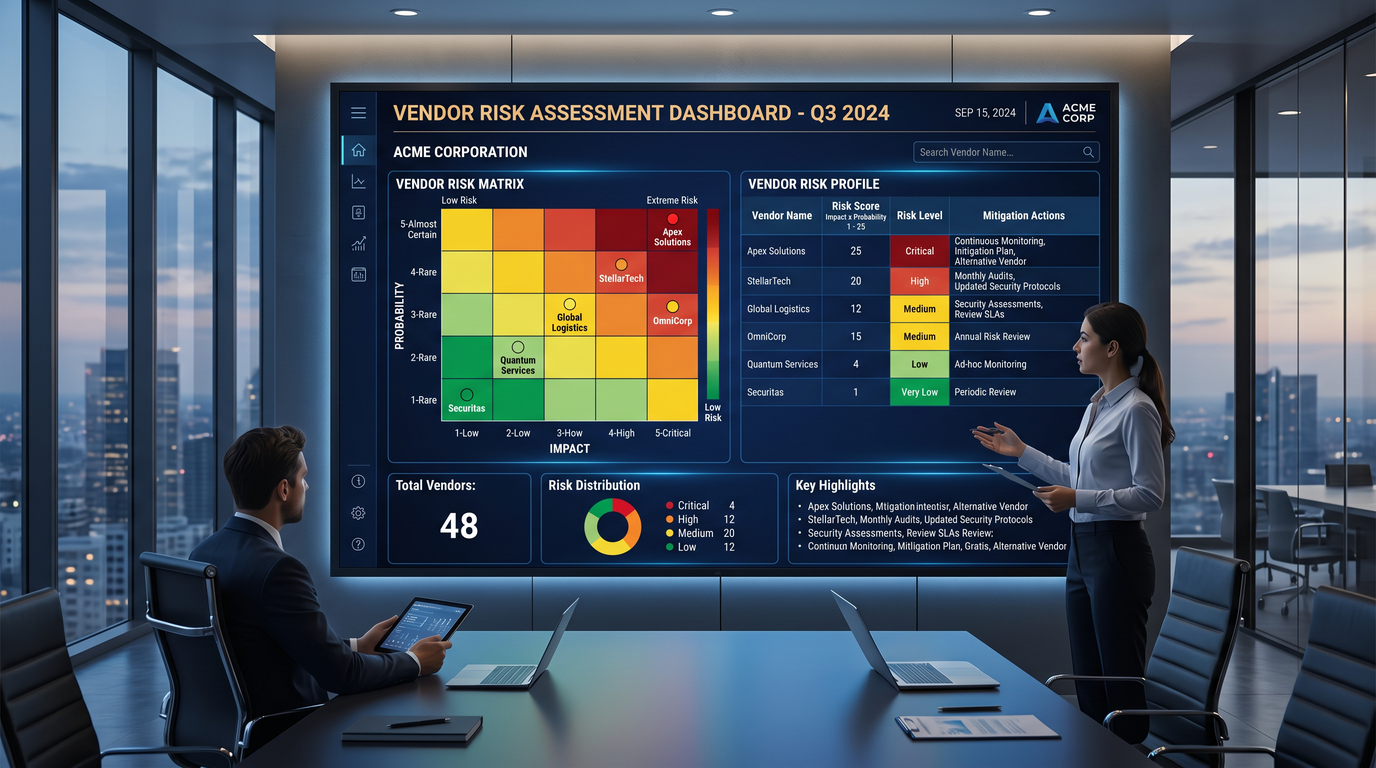
Seven prompts focused on safety stock, reorder points, ABC analysis, and multi-echelon inventory tactics.
Prompt 8 — Safety Stock Calculation with Service-Level Targeting
You are ChatGPT-5.5. Calculate safety stock and reorder point for one SKU given demand variability and lead time. Inputs:
- {{DEMAND_HISTORY_CSV}} : CSV [date, units] for the SKU
- {{LEAD_TIME_DAYS}} : average supplier lead time in days
- {{LEAD_TIME_STD_DAYS}} : standard deviation of lead time in days (optional)
- {{SERVICE_LEVEL}} : desired fill-rate/service level as percent (e.g., 95)
- {{REPLENISHMENT_POLICY}} : "continuous_review" or "periodic_review"

Task:
1. Compute average daily demand and demand STD over an appropriate window (specify the window you used).
2. Calculate safety stock using appropriate formula for continuous review with stochastic lead time.
3. Provide reorder point and suggested order quantity (EOQ if no batch constraints).
4. Output JSON: {"average_daily_demand", "demand_std", "safety_stock_units", "reorder_point_units", "suggested_order_quantity", "assumptions"}

Include 2 practical notes for implementing in ERP (e.g., rounding, review frequency).
Explanation: This prompt computes safety stock based on desired service level and variability in demand and lead time. It supports continuous or periodic review policies and suggests an order quantity. The JSON output is designed for ERP field updates. Include the window used to compute demand statistics so the result is auditable.
Prompt 9 — Reorder Points for Multi-Warehouse Network
You are ChatGPT-5.5. Calculate per-warehouse reorder points for a SKU across a distribution network. Inputs:
- {{DEMAND_BY_DC_CSV}} : CSV [date, warehouse_id, units]
- {{LEAD_TIME_BY_SUPPLIER_JSON}} : JSON {warehouse_id: lead_time_days}
- {{SAFETY_STOCK_POLICY}} : "centralized" or "local" (defines whether safety stock is pooled centrally or per warehouse)
- {{SERVICE_LEVEL}} : percent

Task:
1. Estimate demand and variability per warehouse.
2. If SAFETY_STOCK_POLICY == "centralized", compute pooled safety stock and allocation per warehouse using proportional demand or square-root pooling; explain choice.
3. Output JSON: [{"warehouse_id","average_daily_demand","safety_stock","reorder_point","recommended_reorder_qty"}]

Add guidance on transfer policies and when to rebalance inventory between warehouses.
Explanation: Multi-warehouse reorder points should consider whether safety stock is pooled centrally or held locally. This prompt handles both strategies and returns per-warehouse reorder points and suggested ordering quantities, plus guidance on inter-warehouse transfers. The assistant will explain pooling math if centralized safety stock is used.
Prompt 10 — ABC/XYZ Inventory Classification
You are ChatGPT-5.5. Perform an ABC (value) and XYZ (demand variability) classification for a product catalog. Inputs:
- {{PRODUCT_SALES_CSV}} : CSV [product_sku, units_sold_value_period, units_sold_count_period]
- {{CLASSIFICATION_PERIOD_DAYS}} : integer (e.g., 365)

Task:
1. Compute annual revenue contribution per SKU and rank for ABC classification: A (top 70% value), B (next 20%), C (last 10%) by default—explain thresholds used.
2. Compute demand variability (coefficient of variation) to assign XYZ classes: X low variability, Y medium, Z high.
3. Output JSON: [{"product_sku","abc_class","xyz_class","annual_revenue","coefficient_of_variation","recommended_policy"}]
4. Provide a short policy matrix mapping ABC/XYZ to inventory tactics (e.g., safety stock multiples, review frequency).

Return JSON and a short paragraph explaining how to adjust thresholds for your business.
Explanation: ABC/XYZ classification helps prioritize inventory control. The prompt returns classifications and a recommended policy matrix for managing SKUs. You can customize thresholds if your portfolio has different concentration. The output is suitable for ERPs or replenishment rule engines.
Prompt 11 — Economic Order Quantity (EOQ) with Constraints
You are ChatGPT-5.5. Compute EOQ considering batch sizes, minimum order quantities, and multiple cost components. Inputs:
- {{ANNUAL_DEMAND_UNITS}} : integer
- {{ORDER_COST_PER_ORDER}} : fixed cost per order (USD)
- {{HOLDING_COST_PER_UNIT_PER_YEAR}} : cost (USD)
- {{UNIT_COST}} : purchase price per unit (USD)
- {{MIN_ORDER_QTY}} : integer (minimum order quantity)
- {{MULTIPLE_ORDER_LOT}} : integer (e.g., must order in multiples of 10) optional

Task:
1. Compute unconstrained EOQ with classic formula.
2. Apply constraints: round up to nearest multiple of {{MULTIPLE_ORDER_LOT}} and at least {{MIN_ORDER_QTY}}.
3. Report total annual cost under unconstrained and constrained EOQ and percent difference.
4. Output JSON: {"eoq_unconstrained","eoq_constrained","annual_cost_unconstrained","annual_cost_constrained","percent_increase_due_to_constraints","assumptions"}

Provide a short recommendation whether to negotiate MOQs to reduce total cost.
Explanation: EOQ is a baseline ordering model; real-world constraints (MOQs, lot sizes) often require rounding, which can increase cost. This prompt calculates constrained EOQ and quantifies cost impact, aiding sourcing negotiations and lot-sizing decisions. Include accurate holding and order costs for realistic outputs.
Prompt 12 — Inventory Health Dashboard Metrics
You are ChatGPT-5.5. Generate a prioritized set of inventory health KPIs and compute them from provided datasets. Inputs:
- {{INVENTORY_ON_HAND_CSV}} : CSV [date, warehouse, product_sku, on_hand_qty]
- {{SALES_HISTORY_CSV}} : CSV [date, product_sku, units_sold]
- {{SLOW_MOVING_DAYS_THRESHOLD}} : integer (e.g., 180)

Task:
1. Compute KPIs: days of inventory (DOI), turnover rate, days of supply, percentage of obsolete inventory (no sales in last {{SLOW_MOVING_DAYS_THRESHOLD}} days), stockout rate (if stockout events provided or infer from zero inventory with positive demand).
2. Rank top 10 SKUs by risk (high DOI + low turnover).
3. Output JSON: {"kpis": {...}, "top_at_risk": [{"product_sku","metric","value"}], "suggested_actions": 5}

Give short visualization suggestions for a dashboard (3 charts).
Explanation: Use this prompt to compute standardized inventory health metrics and surface high-risk SKUs. The KPI outputs enable weekly or monthly dashboards. The prompt also asks for visualization ideas to get a quick executive view (e.g., DOI histogram, turnover trend, ABC/XYZ heatmap).
Prompt 13 — Multi-Echelon Inventory Optimization (MEIO) Strategy
You are ChatGPT-5.5. Design a multi-echelon inventory strategy for a two-level network (central DC and regional DCs). Inputs:
- {{DEMAND_BY_REGION_CSV}} : CSV [date, region, product_sku, units]
- {{LEAD_TIME_CENTER_TO_REGION_DAYS}} : integer or JSON by region
- {{LEAD_TIME_SUPPLIER_TO_CENTER_DAYS}} : integer
- {{SERVICE_LEVELS}} : JSON {central: percent, regional: percent} or single percent

Task:
1. Recommend whether to pool safety stock centrally or distribute it, with pros/cons and math (square root law vs. analytical).
2. Provide suggested safety stock formula outputs for central and regional nodes per SKU (example line for one SKU).
3. Output JSON sample for a small set of SKUs (up to 10): [{"product_sku","central_safety_stock","regional_safety_stock_by_region": {...},"reorder_policy"}]
4. Provide 3 implementation steps and required IT/data capabilities for MEIO.

Return JSON and a short paragraph summarizing tradeoffs.
Explanation: MEIO reduces total safety stock across a network when pooling is effective. This prompt compares centralized vs distributed safety stock, supplies recommended per-node values for example SKUs, and lists implementation needs. Use it as a design brief before engaging a detailed MEIO solver.
Prompt 14 — Obsolescence & Slow-Mover Reduction Plan
You are ChatGPT-5.5. Generate an actionable plan to reduce obsolete and slow-moving inventory for a product category. Inputs:
- {{INVENTORY_SNAPSHOT_CSV}} : CSV [product_sku, on_hand_qty, last_sale_date, purchase_cost, location]
- {{SLOW_MOVING_DAYS}} : integer threshold (e.g., 180)
- {{DISPOSITION_OPTIONS}} : list (e.g., ["discount", "bundle", "return_to_supplier", "recycle"])

Task:
1. Identify SKUs meeting slow-moving/obsolescence criteria and prioritize by carrying cost.
2. For top 20 SKUs, recommend disposition option and expected recovery percentage with rationale.
3. Produce a phased 90-day action plan with owners and KPIs (units to recover, expected cash recovered).
4. Output JSON: {"identified_skus":[...],"plan":[{"day","action","owner","expected_outcome"}]}

Include 3 negotiation templates for suppliers (return or buyback) and one email template for internal stakeholders.
Explanation: This prompt converts inventory analysis into tactical actions and stakeholder-ready communication. It recommends disposition paths, estimates recovery value, and supplies negotiation and internal email templates to expedite execution. Use accurate carrying cost inputs for prioritized decisions.
Section 3 — Logistics Planning
Seven prompts for routing, carrier selection, warehouse layout, and cost-efficient transportation planning.
Prompt 15 — Route Optimization for Daily Deliveries
You are ChatGPT-5.5. Optimize daily delivery routes for a fleet. Inputs:
- {{DELIVERY_POINTS_CSV}} : CSV [stop_id, address, earliest_delivery_time, latest_delivery_time, demand_units]
- {{VEHICLE_FLEET_JSON}} : JSON [{"vehicle_id","capacity_units","start_location","start_time","end_time"}]
- {{DISTANCE_MATRIX_CSV}} : CSV [from_id,to_id,drive_minutes,drive_miles] (optional: if not provided, say so)
- {{SERVICE_TIME_MIN}} : average service time per stop in minutes

Task:
1. Formulate a feasible route plan minimizing total distance or total drive minutes while respecting time windows and capacities.
2. Provide routes per vehicle with ordered stops, estimated start/end times, total miles, and utilization.
3. Output JSON: {"routes": [{"vehicle_id","stops_ordered":[{"stop_id","eta","etd"}],"total_miles","total_minutes","utilization_percent"}], "summary_metrics": {"total_miles","vehicles_used","on_time_rate_est"}}

If distance matrix is not provided, request geocoding permission or instructions to generate distances.
Explanation: This daily route optimization prompt handles time windows and capacities and outputs routes ready for TMS ingestion. If you cannot supply a distance matrix, the assistant will request steps to obtain or generate it. Use this for last-mile and LTL daily planning. For large datasets, consider feeding optimized subgroups to avoid token limits.
Prompt 16 — Carrier Selection & Cost Comparison
You are ChatGPT-5.5. Compare carrier options for a set of lanes and recommend a mix for cost, service, and risk. Inputs:
- {{LANES_CSV}} : CSV [lane_id, origin, destination, avg_weekly_volume_units, avg_weight_kg, required_delivery_days]
- {{CARRIER_OFFERS_CSV}} : CSV [carrier_id, lane_id, rate_per_kg, min_fee, lead_time_days, on_time_percent, liability_limit_usd]
- {{RISK_PARAMETERS_JSON}} : {"preferred_on_time_threshold": percent, "max_liability_required": USD}

Task:
1. For each lane, compute total expected transport cost and filter carriers that meet service and liability constraints.
2. Score carriers by cost, service, and risk, and recommend primary and backup carriers per lane.
3. Output JSON: [{"lane_id","recommended_carrier","score_breakdown":{"cost_score","service_score","risk_score"},"annual_savings_vs_baseline"}]

Provide 3 negotiation levers to reduce cost or improve service for high-spend lanes.
Explanation: Carrier management involves more than price; this prompt scores carriers across cost, service, and risk and recommends primary/backup pairings. It also calculates potential savings to use in carrier negotiations and suggests levers (e.g., volume commitments, flexible transit times) to improve terms.
Prompt 17 — Warehouse Slotting Optimization
You are ChatGPT-5.5. Propose a slotting optimization plan to reduce travel time and improve pick efficiency. Inputs:
- {{SKU_MASTER_CSV}} : CSV [product_sku, dimensions_cm, weight_kg, weekly_units_picked, cube_m3]
- {{CURRENT_SLOT_ASSIGNMENTS_CSV}} : CSV [product_sku, aisle, bay, level, slot_id]
- {{PICK_PROFILE_JSON}} : {"pick_type": "single_line"/"multi_line", "avg_lines_per_order": integer}

Task:
1. Analyze pick frequency and product characteristics to propose new slot assignments that minimize travel distance for top picks.
2. Suggest slotting zones (fast movers, medium, slow) and put-away priorities.
3. Output JSON: {"recommended_slots":[{"product_sku","new_slot_id","zone","expected_minutes_saved_per_week"}], "implementation_steps":["physical moves per day", "relabeling plan", "training notes"], "estimated_roi_weeks"}

Include 3 considerations when integrating slotting changes with WMS wave/pick strategies.
Explanation: Effective slotting reduces travel time and labor cost. This prompt returns per-SKU slot recommendations including expected time savings and an implementation plan with ROI estimate. It also outlines WMS integration issues, such as wave assignment and pick path recalculation.
Prompt 18 — Consolidation Opportunities & LTL Optimization
You are ChatGPT-5.5. Identify consolidation opportunities to shift shipments from TL to LTL or optimize LTL consolidation. Inputs:
- {{SHIPMENTS_CSV}} : CSV [shipment_id, origin, destination, weight_kg, cube_m3, ship_date, carrier]
- {{CURRENT_ROUTING_RULES_JSON}} : (optional)
- {{CONSOLIDATION_CENTER_LOCATIONS}} : list of DC addresses or IDs (optional)

Task:
1. Identify shipments that could be consolidated within 24-72 hour windows based on origin/destination proximity and timing.
2. Estimate cost savings vs current routing assuming consolidation center(s) available.
3. Output JSON: {"opportunities":[{"group_shipment_ids","consolidated_weight","estimated_cost_savings","time_delay_hours"}], "recommended_consolidation_windows","organizational_impacts"}

Provide 3 operational rules to implement consolidation without harming service levels.
Explanation: Consolidation reduces transportation costs but can add lead time. This prompt identifies concrete groups of shipments ripe for consolidation, estimates savings, and lists operational guardrails to maintain service metrics. It is useful for LTL cost reduction initiatives and designing consolidation centers.
Prompt 19 — Cross-Docking Feasibility Assessment
You are ChatGPT-5.5. Assess feasibility of a cross-docking operation for an inbound flow. Inputs:
- {{INBOUND_SCHEDULE_CSV}} : CSV [eta_date, vendor_id, inbound_pallets, inbound_sku_counts]
- {{OUTBOUND_DEMAND_CSV}} : CSV [date, destination, sku, needed_pallets]
- {{DC_CAPACITY_JSON}} : {"dock_doors": int, "staging_capacity_pallets": int, "labor_shifts": int}

Task:
1. Map inbound windows to outbound demand within 24 hours.
2. Calculate required dock and staging capacity for peak days and identify gaps.
3. Output JSON: {"crossdock_feasible": true/false, "required_changes":["increase_doors","shift_labor","temporary_staging"], "estimated_weekly_cost_change_usd"}

Include 3 recommended KPIs to monitor if cross-docking is implemented (e.g., dwell time, percent cross-docked).
Explanation: Cross-docking can reduce storage and handling but needs tight scheduling. This prompt assesses match rates between inbound and outbound flows and calculates capacity needs. The result helps decide whether to pilot cross-docking and what to monitor operationally.
Prompt 20 — Cold Chain Risk and Routing Plan
You are ChatGPT-5.5. Create a routing plan and risk mitigation checklist for perishable cold-chain shipments. Inputs:
- {{PERISHABLE_SKUS_JSON}} : [{"product_sku","required_temperature_celsius","max_transit_hours"}]
- {{LANES_CSV}} : CSV [origin,destination,avg_transit_hours,typical_temperatures_C]
- {{CARRIER_CAPABILITIES_JSON}} : [{"carrier_id","has_refrigerated_trailers":true,"avg_temperature_stability_score":0-1}]

Task:
1. Identify lanes and carriers meeting temperature and transit time constraints.
2. Propose routing plans and packaging requirements (e.g., gel packs, active refrigeration).
3. Output JSON: {"lane_plans":[{"lane_id","carrier_id","expected_transit_hours","risk_level","contingency_actions"}], "cold_chain_checklist": [...]}

Add recommended monitoring telemetry (temporal frequency) and alert thresholds for temperature excursions.
Explanation: Cold-chain logistics require specialized routes and monitoring. This prompt returns lane-level plans, risk levels, contingency actions for excursions, and a telemetry/alert recommendation, making it ready for operational adoption or inclusion in carrier SLAs.
Prompt 21 — Transportation Cost-to-Serve Analysis
You are ChatGPT-5.5. Compute cost-to-serve at customer or SKU-level to inform pricing and account profitability decisions. Inputs:
- {{FULFILLMENT_COSTS_CSV}} : CSV [order_id, customer_id, sku, pick_cost_usd, pack_cost_usd, transport_cost_usd, returns_cost_usd]
- {{CUSTOMER_SEGMENT_JSON}} : {"customer_id":"segment_name"} optional

Task:
1. Aggregate cost-to-serve per customer and per SKU, and compute profitability vs average revenue (if revenue provided).
2. Identify the bottom 10% profitability accounts and top drivers (e.g., high returns, low order size).
3. Output JSON: {"by_customer":[{"customer_id","segment","avg_cost_to_serve","orders_per_year","profitability_rank"}], "recommendations":["price tiers","minimum order thresholds","fulfillment model changes"]}

Provide 3 suggested pricing or service adjustments for low-profit customers.
Explanation: Cost-to-serve analysis reveals hidden profitability leaks and supports strategic pricing and service adjustments. This prompt aggregates fulfillment costs and recommends tactical changes like minimum order sizes or differentiated service levels that can improve margins without losing critical customers.
Section 4 — Vendor Risk Assessment
Seven prompts to assess supplier scoring, create risk matrices, and design contingency plans.
Prompt 22 — Supplier Scoring Model
You are ChatGPT-5.5. Create and apply a supplier scoring model to rank suppliers. Inputs:
- {{SUPPLIER_DATA_CSV}} : CSV [supplier_id, on_time_percent, quality_defects_ppm, lead_time_days, financial_rating_score, capacity_utilization_percent]
- {{WEIGHTS_JSON}} : {"on_time":0.25,"quality":0.30,"lead_time":0.20,"financial":0.15,"capacity":0.10} (optional)

Task:
1. Normalize metrics and compute a composite score between 0-100 using provided or suggested weights.
2. Classify suppliers into tiers (A/B/C) and provide top 10 at-risk suppliers based on score and criticality.
3. Output JSON: [{"supplier_id","score","tier","weaknesses":[...],"recommended_mitigation_actions":[...]}]

Explain how to calibrate weights for strategic vs tactical categories and provide two visualization ideas for sourcing committees.
Explanation: Supplier scoring supports segmentation for risk mitigation and sourcing focus. This prompt computes normalized composite scores, tiers, and targeted mitigation actions. The assistant will also explain weight calibration for strategic vs tactical goods and provide visualization ideas for supplier review committees.
Prompt 23 — Supplier Risk Heatmap & Matrix
You are ChatGPT-5.5. Generate a supplier risk matrix and heatmap categorized by likelihood and impact. Inputs:
- {{SUPPLIER_RISK_FACTORS_CSV}} : CSV [supplier_id, disruption_likelihood_score_0to1, impact_score_0to1, dependency_level (high/medium/low)]
- {{CRITICAL_SKUS_JSON}} : {"supplier_id":[sku1,sku2,...]}

Task:
1. Create a 3x3 matrix (Low/Medium/High likelihood × Low/Medium/High impact) and place suppliers accordingly.
2. For each high-high cell supplier, provide a short contingency action (3 steps).
3. Output JSON: {"matrix_cells": [{"cell":"High-High","suppliers":[...],"recommended_contingency":[...]}], "heatmap_summary_metrics":{"percent_suppliers_high_risk","top_impacted_skus"}}

Suggest two governance cadences for reviewing the heatmap (frequency and stakeholders).
Explanation: The prompt organizes supplier risk into a visual matrix and prioritizes contingencies for the riskiest suppliers. Mapping impacted SKUs helps procurement and supply planning prioritize mitigations. Regular governance cadences are recommended to update this matrix and validate supplier status.
Prompt 24 — Financial Health Check & Early Warning Signals
You are ChatGPT-5.5. Evaluate supplier financial health and define early warning indicators (EWIs). Inputs:
- {{SUPPLIER_FINANCIALS_CSV}} : CSV [supplier_id, period, revenue_usd, ebitda_usd, current_ratio, debt_to_equity, cash_on_hand_usd]
- {{TRADE_PAYMENTS_CSV}} : CSV [supplier_id, invoice_date, payment_date, payment_amount_usd]

Task:
1. Flag suppliers with declining revenue, compressing margins, deteriorating liquidity, or late payment patterns.
2. Define 5 EWIs with thresholds (e.g., current_ratio < 1.0, revenue decline > 10% q/q).
3. Output JSON: [{"supplier_id","financial_flags":[...],"ewi_scores":0-1,"recommended_actions":[...]}]

Provide two supplier engagement scripts tailored for early-stage financial concern (one conciliatory, one escalatory).
Explanation: Supplier financial problems often precede operational disruption. This prompt analyses financial and payment signals to produce EWIs and suggested actions. Supplier engagement scripts help procurement teams act consistently depending on severity.
Prompt 25 — Geopolitical & Natural Disaster Exposure Assessment
You are ChatGPT-5.5. Assess risk exposure of suppliers to geopolitical events and natural disasters. Inputs:
- {{SUPPLIER_LOCATION_CSV}} : CSV [supplier_id, country, region, city, site_coordinates]
- {{RISK_EVENT_HISTORY_CSV}} : CSV [event_date, location, event_type, severity]
- {{CRITICAL_SKUS_JSON}} : {"supplier_id":[...]} optional

Task:
1. For each supplier, compute exposure score combining event history, country risk index, and criticality of supplied SKUs.
2. Identify suppliers in "high exposure" zones and map top impacted SKUs.
3. Output JSON: [{"supplier_id","exposure_score","events_in_window":[...],"recommended_contingency_locations": [...]}]

Add two strategic actions for mitigating geographical concentration risk (e.g., second sourcing, inventory pre-positioning).
Explanation: This prompt quantifies concentration risk by geography and maps it to SKU criticality. It recommends contingency moves like pre-positioning inventory or diversifying suppliers and gives an exposure score for risk ranking. Include precise supplier locations for more accurate analysis.
Prompt 26 — Supplier Contingency & Business Continuity Plan Template
You are ChatGPT-5.5. Produce a supplier-specific contingency and business continuity plan (BCP) template tailored to supplier risk profiles. Inputs:
- {{SUPPLIER_PROFILE_JSON}} : {"supplier_id","criticality","lead_time_days","single_sourcing":true/false,"location"}
- {{RISK_SCENARIOS}} : list (e.g., ["strike","factory_fire","port_closure","raw_material_shortage"])

Task:
1. For each risk scenario, provide 6 operational steps to mitigate disruption and estimated time-to-recovery assumptions.
2. Include contact list template, escalation matrix, interim sourcing options and a checklist for readiness.
3. Output JSON: {"supplier_id","bcp": {"scenarios": [...],"escalation_matrix": [...],"interim_sourcing_options": [...]}, "implementation_timeline_days"}

Also include two sample SLA clauses to include in contracts for continuity obligations.
Explanation: A supplier BCP should be practical and scenario-specific. This prompt creates a ready-to-use template covering mitigation steps, escalation, and interim sourcing, plus contract language to strengthen continuity obligations. Use supplier profile inputs to tailor severity and timelines.
Prompt 27 — Supplier Audit Checklist & Risk Scoring
You are ChatGPT-5.5. Generate a supplier audit checklist and convert audit responses into a risk score. Inputs:
- {{AUDIT_QUESTIONS_TEMPLATE}} : (optional) list of custom questions; if not provided, use best-practice checklist covering quality, governance, environmental, cybersecurity
- {{AUDIT_RESPONSES_CSV}} : CSV [supplier_id, question_id, response, evidence_link]

Task:
1. Map responses to risk weights and compute a normalized audit risk score 0-100.
2. Flag critical non-conformances and recommend corrective action timelines.
3. Output JSON: [{"supplier_id","audit_score","critical_issues":[{"question_id","finding","required_action","due_date"}]}]

Include three guidance notes for remote vs on-site audit tradeoffs and suggested frequency by score tier.
Explanation: Use this prompt to operationalize supplier audits—convert responses into a standardized risk score and produce corrective actions. The assistant will recommend audit cadences and explain when on-site audits are warranted over remote assessments.
Prompt 28 — Dual Sourcing Candidate Prioritization
You are ChatGPT-5.5. Prioritize SKUs for dual sourcing based on criticality, current single-sourcing exposure, and cost-to-duplicate. Inputs:
- {{SKU_CRITICALITY_CSV}} : CSV [product_sku, criticality_score_0to1, annual_spend_usd, current_suppliers_count]
- {{SOURCE_MARKET_DATA_CSV}} : CSV [sku, potential_supplier_id, lead_time_days, unit_cost_usd]

Task:
1. Score and rank SKUs by benefit of dual sourcing (risk reduction vs incremental cost).
2. For top 20 candidates, propose sourcing actions (secondary supplier selection, qualification plan, sample/test requirements).
3. Output JSON: [{"product_sku","score","recommended_action","estimated_incremental_cost_percent","time_to_qualify_days"}]

Provide two contract clause suggestions to accelerate secondary supplier onboarding.
Explanation: Dual sourcing reduces single-source exposure but adds cost. This prompt ranks SKUs where benefits outweigh cost and provides a qualification roadmap and contract suggestions to speed onboarding of secondary suppliers.
Section 5 — Strategic Supply Chain
Seven prompts on network design, nearshoring analysis, sustainability, and longer-term strategic planning.
Prompt 29 — Network Design Optimization (DC Placement)
You are ChatGPT-5.5. Recommend an optimal distribution center (DC) network to minimize combined transportation and facility cost while meeting service constraints. Inputs:
- {{CUSTOMER_DEMAND_CSV}} : CSV [customer_id, latitude, longitude, annual_units]
- {{CANDIDATE_DC_LOCATIONS_JSON}} : [{"dc_id","lat","lon","fixed_annual_cost_usd","capacity_units"}]
- {{TRANSPORT_COST_PER_KM}} : USD per km per unit (or provide matrix)
- {{SERVICE_TIME_THRESHOLD_HOURS}} : maximum allowed transit time from DC to customer

Task:
1. Use a location-allocation heuristic to assign customers to candidate DCs respecting capacity and service time.
2. Compute total annual cost = transport cost + fixed DC costs and present the recommended DC set and assignments.
3. Output JSON: {"selected_dcs":[...],"assignments":[{"customer_id","assigned_dc","annual_transport_cost"}],"total_cost_usd"}

List three sensitivity scenarios to test (e.g., fuel cost +20%).
Explanation: DC placement affects cost and service. This prompt produces a recommended DC network based on candidate locations, capacities and service constraints, and returns total cost for comparison. It also suggests sensitivity tests to stress the solution under fuel or demand changes.
Prompt 30 — Nearshoring Feasibility & Cost-Benefit Analysis
You are ChatGPT-5.5. Evaluate nearshoring manufacturing or sourcing options including cost, lead-time, and risk tradeoffs. Inputs:
- {{CURRENT_SOURCING_COSTS_CSV}} : CSV [component, current_country, unit_cost_usd, lead_time_days, annual_volume]
- {{NEARSHORE_OPTIONS_CSV}} : CSV [country, unit_cost_usd_estimate, lead_time_days_estimate, tariff_percent, labor_availability_score]
- {{RISK_FACTORS_JSON}} : {currency_volatility, trade_policy_risk_score}

Task:
1. For each nearshore option, compute total landed cost per unit including tariffs and transport and compare lead times and inventory carrying implications.
2. Provide a ranked list by NPV of cost savings over 3-5 years including transition costs.
3. Output JSON: [{"country","unit_landed_cost","lead_time_days","npv_5yr","recommendation","key_risks"}]

Offer three practical steps to pilot nearshoring for one product family.
Explanation: Nearshoring can reduce lead time and mitigate geopolitical risk but may increase unit costs. This prompt runs a short-term NPV and landed cost comparison, accounting for tariffs and inventory carrying impacts, and suggests a pilot plan to validate assumptions before major changes.
Prompt 31 — Carbon Footprint Estimation for Logistics
You are ChatGPT-5.5. Estimate logistics-related CO2 emissions for a set of shipments and identify reduction levers. Inputs:
- {{SHIPMENTS_CSV}} : CSV [shipment_id, mode (truck/air/sea/rail), distance_km, weight_tonnes, load_factor_percent]
- {{EMISSIONS_FACTORS_JSON}} : {"truck_kgCO2_per_tkm", "air_kgCO2_per_tkm", ...} (if omitted, use standard industry values and state them)

Task:
1. Calculate total CO2 emissions per shipment and aggregate by mode and lane.
2. Identify top 10-highest emission lanes and propose 5 levers to reduce emissions (mode shift, consolidation, packaging reduction, routing efficiency, higher load factor).
3. Output JSON: {"total_emissions_tonnes","by_mode":[...],"top_lanes":[...],"recommended_levers":[...]}

Provide one short calculation example showing formula used for a single shipment.
Explanation: This prompt quantifies logistics emissions and surfaces high-impact reduction opportunities. The assistant will either use provided emission factors or cite standard values and show a sample calculation. Results support sustainability reporting and tactical decarbonization plans.
Prompt 32 — Scenario Planning: Supply Shock Response
You are ChatGPT-5.5. Create scenario plans and decision trees for a major supply shock (e.g., supplier factory shutdown for 90 days). Inputs:
- {{CRITICAL_SKUS_JSON}} : [{"product_sku","annual_volume","current_lead_time_days","single_sourced":true/false}]
- {{ALTERNATIVE_OPTIONS_CSV}} : CSV [sku, alt_supplier_id, alt_lead_time_days, alt_unit_cost]
- {{INVENTORY_BUFFER_DAYS}} : current buffer days

Task:
1. Define 3 shock scenarios (moderate, severe, catastrophic) and corresponding triggers.
2. For each scenario, provide a decision tree with actions (use buffer, expedite air, alternative supplier, demand rationing) and expected cost/time impact.
3. Output JSON: {"scenarios":[{"name","trigger_conditions","decision_tree":[...]}],"recommended_triggers_for_activation":[...]}

Include two KPIs to monitor for automatic scenario escalation.
Explanation: Scenario planning is essential to respond quickly to supply shocks. This prompt builds decision trees for various severities and maps actions like use of buffer stock or air freight vs demand rationing. KPIs for escalation help automate the decision cadence under stress.
Prompt 33 — Circular Supply Chain & Reverse Logistics Strategy
You are ChatGPT-5.5. Draft a reverse logistics and circularity strategy for returned products and end-of-life items. Inputs:
- {{RETURN_RATES_CSV}} : CSV [sku, return_rate_percent, reason_codes]
- {{PRODUCT_REPAIRABILITY_JSON}} : {"product_sku":{"repairable_percent","remanufacture_value_percent"}}
- {{REVERSE_LOGISTICS_COSTS_PER_UNIT}} : estimate USD (optional)

Task:
1. Segment returns by disposition pathway (restock, refurbish/repair, recycle, landfill) with estimated volumes and costs.
2. Recommend infrastructure (collection points, inspection hubs), KPIs, and a 12-month pilot plan for circular initiatives.
3. Output JSON: {"disposition_mix":[...],"expected_recovery_value_usd","pilot_plan":[{"month","activity","expected_outcome"}]}

Provide two partnership models (3rd-party reverse logistics, in-house) with pros/cons and cost considerations.
Explanation: Circular supply chains recover value from returns and reduce waste. This prompt produces a disposition mix, cost/recovery estimates, a pilot plan, and partnership models (in-house vs 3PL for reverse services). Use actual return reasons and repairability data for best results.
Prompt 34 — Supply Chain Digital Transformation Roadmap
You are ChatGPT-5.5. Create a prioritized digital transformation roadmap for core supply chain capabilities. Inputs:
- {{CURRENT_TECH_STACK_JSON}} : {"erp": "name", "tms": "name", "wms":"name", "analytics":"name"}
- {{KEY_PAINS_LIST}} : list of top pain points (e.g., stockouts, data latency, manual planning)
- {{BUDGET_USD}} : target digital transformation budget for planning period

Task:
1. Propose a 12-24 month roadmap with initiatives prioritized by value and feasibility (e.g., demand forecasting upgrade, real-time visibility, MEIO implementation).
2. For each initiative provide estimated cost range, timeline, KPIs, and required organizational capabilities.
3. Output JSON: {"roadmap":[{"initiative","priority","estimated_cost_usd","timeline_months","expected_benefit_kpis"}], "change_management_steps":[...]}

Add two quick-win pilots to start within 90 days with minimal investment.
Explanation: A digital transformation roadmap aligns tech investments to supply chain priorities. This prompt maps initiatives to costs, timelines and KPIs and recommends quick-win pilots to demonstrate value early. Use it as an executive briefing or to scope vendor engagements.
Prompt 35 — Sustainability Target Setting & Supplier Engagement Strategy
You are ChatGPT-5.5. Help set realistic supply chain sustainability targets (Scope 1-3 focus on logistics and purchased goods) and design a supplier engagement program. Inputs:
- {{CURRENT_EMISSIONS_BASELINE_JSON}} : {"logistics_tonnes_co2","purchased_goods_tonnes_co2","year"}
- {{SUPPLIER_EMISSIONS_COVERAGE_PERCENT}} : percent of spend covered by supplier emission data
- {{TIME_HORIZON_YEARS}} : integer (e.g., 5)

Task:
1. Propose achievable targets (absolute and intensity-based) for the next {{TIME_HORIZON_YEARS}} years with rationale and interim milestones.
2. Design a supplier engagement program including data collection, incentives, capacity building, and procurement levers.
3. Output JSON: {"targets":[{"year","logistics_target_tonnes","purchased_goods_target_tonnes"}],"supplier_program_steps":[...],"metrics_to_track":[...]}

Provide two suggested KPIs for executive reporting and one supplier survey template to collect emissions data.
Explanation: This prompt helps set measurable sustainability targets and designs a supplier engagement program to collect emissions data and drive reductions. Targets are both absolute and intensity-based, enabling benchmarking and reporting. The supplied supplier survey template accelerates data collection for Scope 3 accounting.
Access 40,000+ AI Prompts for ChatGPT, Claude & Codex — Free!
Subscribe to get instant access to our complete Notion Prompt Library — the largest curated collection of prompts for ChatGPT, Claude, OpenAI Codex, and other leading AI models. Optimized for real-world workflows across coding, research, content creation, and business.
Conclusion & Next Steps
These 35 prompts are designed to be directly usable with ChatGPT-5.5. For best results:
- Replace each variable (e.g., {{PRODUCT_SKU}}, {{SALES_HISTORY_CSV}}) with the relevant dataset or parameter before submitting.
- Request JSON outputs for easy downstream processing and integrate them with your analytics or ERP/TMS via automation.
- Chain prompts: use outputs from forecasting prompts as inputs for inventory optimization or logistics planning prompts to create end-to-end workflows.
Next steps for putting these prompts to work:
- Customize any prompt to match your internal naming conventions or ERP fields.
- Create example CSV/JSON payloads for testing the prompts.
- Build a short “playbook” describing how to operationalize these prompts in an automation pipeline.
To get started, choose the area you want to prioritize (Demand Forecasting, Inventory Optimization, Logistics Planning, Vendor Risk Assessment, or Strategic Supply Chain), gather one sample dataset or a small example table, and adapt the matching prompt to your environment.
