
50 GPT-5.5 Prompts for Legal Professionals: Contract Analysis, Compliance Review, Case Research, and Legal Document Drafting
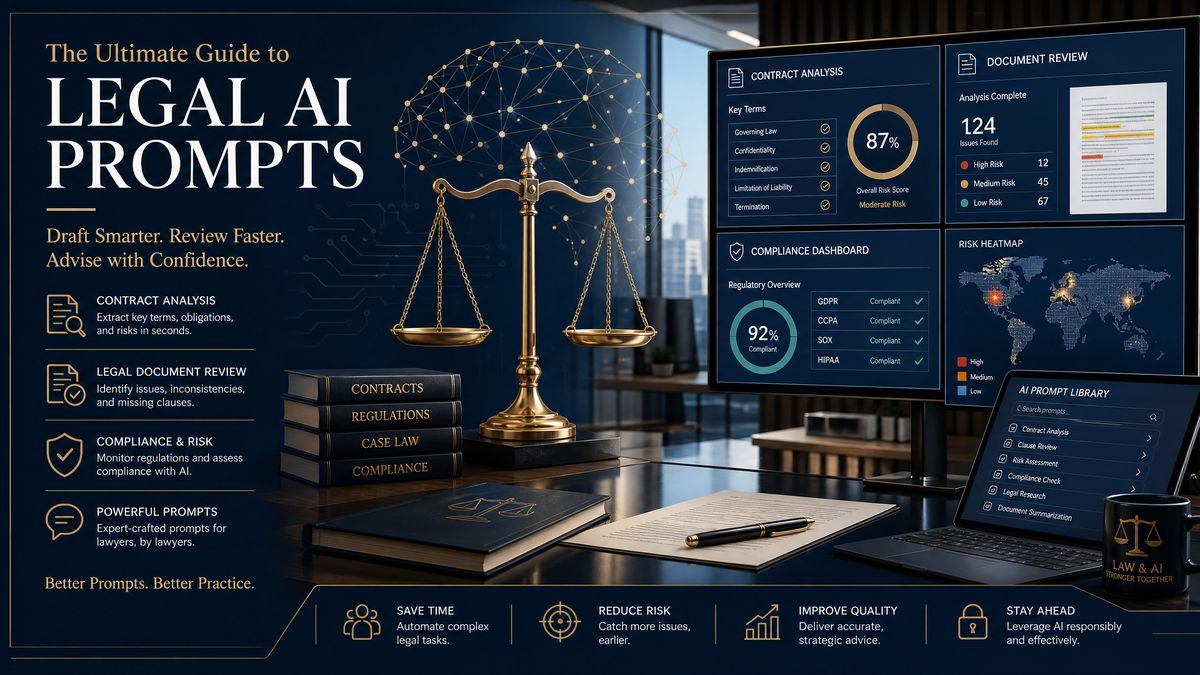
50 GPT-5.5 Prompts for Legal Professionals: Contract Analysis, Compliance Review, Case Research, and Legal Document Drafting
The legal profession is undergoing a fundamental transformation. GPT-5.5, OpenAI’s most capable reasoning model to date, is enabling lawyers, paralegals, and legal operations teams to compress weeks of document review into hours, surface obscure precedents in seconds, and draft complex legal instruments with unprecedented precision. This guide delivers 50 production-ready prompts specifically engineered for legal workflows — each one tested, contextual, and immediately deployable in a law firm, corporate legal department, or compliance function.
Whether you’re a solo practitioner reviewing a commercial lease, a GC at a Fortune 500 navigating cross-border data privacy regulations, or a paralegal building a contract playbook, these prompts are structured to extract maximum utility from GPT-5.5’s expanded context window, improved legal reasoning, and nuanced language comprehension. Every prompt includes the full prompt text, a use-case explanation, and implementation notes so your team can deploy them immediately.
Important Disclaimer: These prompts are designed to augment — not replace — qualified legal counsel. AI-generated legal analysis should always be reviewed by a licensed attorney before reliance. Nothing in this article constitutes legal advice.
Why GPT-5.5 Changes Legal Work
Previous generations of AI tools offered legal professionals keyword search and basic summarization. GPT-5.5 operates at a qualitatively different level. Its extended context window (up to 128K tokens) allows it to ingest entire contracts, regulatory frameworks, or deposition transcripts in a single session. Its improved chain-of-thought reasoning enables it to identify logical inconsistencies in contractual obligations, spot conflicting regulatory requirements, and construct legally coherent arguments from first principles.
Three capabilities make GPT-5.5 particularly powerful for legal work:
- Contextual legal reasoning: GPT-5.5 understands the difference between indemnification carve-outs and limitation of liability caps, and can explain the practical significance of each in a deal context.
- Jurisdiction-aware analysis: The model can distinguish between Delaware corporate law, English common law, and EU regulatory frameworks when explicitly prompted.
- Structured document generation: It can produce exhibit-ready legal drafts with proper cross-referencing, defined terms, and boilerplate architecture that mirrors professional conventions.
For legal ops teams already using tools like Harvey AI or Kira Systems, GPT-5.5 prompts serve as a powerful complement — particularly for novel tasks that purpose-built tools haven’t been trained on.
Legal professionals working on regulatory compliance and financial regulations will find complementary value in our 50 GPT-5.5 prompts for financial analysts, which cover portfolio analysis, risk modeling, and regulatory compliance from the finance perspective. For a comprehensive deep dive, see our guide on 50 GPT-5.5 Prompts for Financial Analysts.
How to Use This Guide
Each prompt is organized into one of five practice areas: Contract Analysis, Regulatory Compliance, Case Law Research, Legal Document Drafting, and Risk Assessment. For best results:
- Paste your document first: For document-specific prompts, always paste the full text of the contract, regulation, or brief before the prompt instruction.
- Specify jurisdiction explicitly: Add your jurisdiction (e.g., “under New York law” or “under GDPR Article 28”) to every prompt for jurisdiction-specific output.
- Use the Role + Task + Format structure: Each prompt follows this architecture. Don’t strip the role framing — it significantly improves output quality.
- Iterate with follow-up prompts: The prompts below are designed as starting points. Follow up with “Now draft the clause you identified as missing” or “Expand Section 3 with specific statutory citations.”
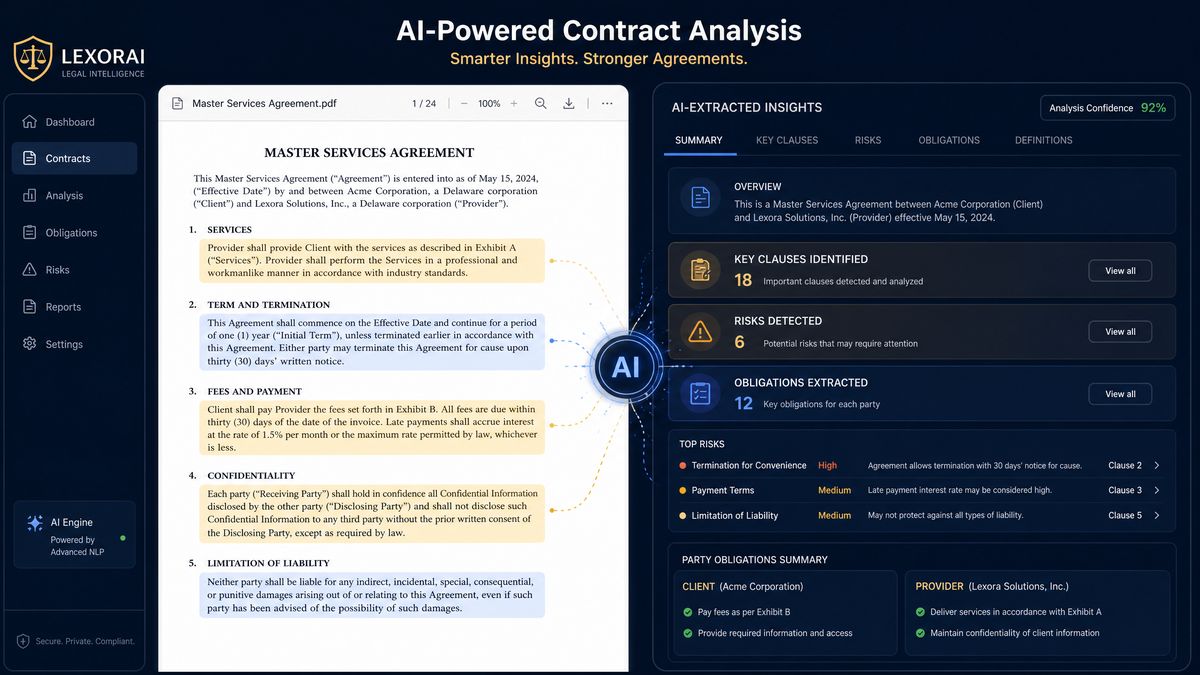
Section 1: Contract Analysis Prompts (Prompts 1–12)
Contract review is the highest-volume task in most legal practices. These prompts are built for speed without sacrificing accuracy — they surface risk, flag missing provisions, and translate legalese into actionable business language.
Prompt 1: Full Contract Risk Summary
You are a senior commercial attorney with 15 years of experience reviewing M&A and vendor contracts. I will paste a contract below. Please perform a full risk analysis structured as follows:

1. EXECUTIVE SUMMARY (3-5 sentences, written for a non-lawyer executive)
2. HIGH-RISK PROVISIONS (list each clause, explain the risk, and suggest a fix)
3. MISSING STANDARD PROVISIONS (list provisions typically expected in this contract type that are absent)
4. FAVORABLE PROVISIONS (list any terms that are unusually beneficial to our side)
5. RECOMMENDED REDLINES (list the 5 most important changes we should request)

Assume we are the [BUYER/SELLER/LICENSEE — specify] and we are subject to [YOUR JURISDICTION] law.

[PASTE CONTRACT HERE]
Use Case: Initial triage on inbound contracts before attorney review. Ideal for paralegals or contract managers performing first-pass analysis. Reduces attorney time on routine reviews by 60-70%.
Prompt 2: Indemnification Clause Deep Dive
You are a contracts specialist focused on risk allocation. Analyze the indemnification provisions in the contract below and provide:

1. Who indemnifies whom, and for what categories of loss
2. Whether indemnification is mutual or one-sided, and the practical implications
3. Whether IP infringement indemnification is included (and any carve-outs)
4. Whether there is a gross negligence / willful misconduct exception
5. How indemnification interacts with the limitation of liability clause
6. The 3 most significant negotiation points for our client, who is the [VENDOR/CUSTOMER]

Flag any indemnification language that is broader than market standard for a [SaaS/Professional Services/Manufacturing — specify] contract.

[PASTE CONTRACT HERE]
Use Case: Deep analysis for technology licensing or professional services agreements where indemnification exposure can run to millions of dollars.
Prompt 3: Limitation of Liability Analysis
Act as a commercial litigation attorney evaluating a contract for enforceability and exposure. Review the limitation of liability provisions and provide:

1. The cap amount or formula, expressed in plain language
2. Whether the cap covers direct damages only, or also consequential/indirect damages
3. Categories of loss explicitly excluded from the cap
4. Whether the exclusions are enforceable under [YOUR STATE/JURISDICTION] law (cite relevant cases or statutes)
5. Scenarios where the cap could be pierced or rendered unenforceable
6. Suggested language to strengthen the cap if we are the [VENDOR/CUSTOMER]

[PASTE CONTRACT HERE]
Use Case: Essential for any contract where technology failures, data breaches, or service disruptions could cause outsized downstream losses.
Prompt 4: Data Privacy and Security Clause Audit
You are a data privacy attorney specializing in GDPR, CCPA, and SOC 2 compliance. Review the data privacy and security provisions of the contract below and assess:

1. Whether a Data Processing Agreement (DPA) is required or already incorporated
2. GDPR Article 28 processor obligations — are they fully addressed?
3. CCPA service provider requirements — are they met?
4. Security standards required (SOC 2, ISO 27001, encryption standards) — are they specified?
5. Breach notification timelines — do they meet 72-hour GDPR requirements?
6. Data retention and deletion obligations
7. Sub-processor restrictions and approval requirements
8. Gaps that expose our organization to regulatory liability

Flag any provisions that conflict with applicable data protection law.

[PASTE CONTRACT HERE]
Use Case: Any SaaS or cloud services agreement involving personal data of EU or California residents. Critical for DPO and privacy team reviews.
Prompt 5: Change of Control Provision Analysis
You are an M&A attorney reviewing a target company's key contracts as part of acquisition due diligence. Analyze the change of control provisions in the contract below:

1. Does the contract contain a change of control provision? Quote the exact language.
2. What events constitute a "change of control" under this contract?
3. Does a change of control trigger automatic termination, a consent requirement, or a right to terminate?
4. What are the notice requirements and cure periods?
5. Is assignment prohibited generally, or only upon change of control?
6. Rate the overall risk to an acquirer on a scale of 1-10 with explanation.
7. Suggest negotiation strategy to protect deal value.

[PASTE CONTRACT HERE]
Use Case: M&A due diligence workflows where key vendor or customer contracts must be flagged for consent requirements before deal close.
Prompt 6: Payment Terms and Financial Risk Review
Review the payment, invoicing, and financial provisions of the following contract as a CFO-aligned contracts attorney would. Identify:

1. Payment terms (Net-X, milestone-based, prepaid) and cash flow implications
2. Late payment penalties or interest provisions
3. Whether there is a right of set-off or withholding
4. Price escalation or CPI adjustment clauses
5. Most Favored Nation (MFN) pricing provisions
6. Revenue recognition implications for [ASC 606 / IFRS 15] compliance
7. Any financial covenants or audit rights
8. Top 3 financial risks and recommended contract language to mitigate them

[PASTE CONTRACT HERE]
Use Case: Enterprise procurement and finance-led contract reviews where working capital and revenue recognition are material concerns.
Prompt 7: Termination Rights Mapping
You are a commercial attorney focused on exit rights and remedies. Map all termination provisions in the contract below:

1. Create a table with columns: Termination Type | Trigger | Notice Period | Cure Period | Financial Consequences
2. Identify whether there is a right to terminate for convenience (by which party)
3. Identify all termination-for-cause triggers and assess whether they are objective or subjective
4. Analyze termination-for-insolvency provisions — do they comply with safe harbor protections in bankruptcy?
5. What survives termination (IP, confidentiality, payment obligations, indemnification)?
6. Is the termination regime balanced, or does it favor one party? Explain.

[PASTE CONTRACT HERE]
Use Case: Long-term service agreements, software licenses, and outsourcing contracts where exit planning is a strategic priority.
Prompt 8: IP Ownership and License Grant Analysis
Act as an intellectual property attorney reviewing a technology contract for IP ownership and licensing risks. Analyze:

1. Who owns deliverables, work product, and IP created under this contract?
2. Is there a work-for-hire provision? Is it properly structured to vest IP in the commissioning party?
3. What licenses are granted — scope, exclusivity, sublicensability, field of use restrictions?
4. Background IP vs. foreground IP — are they clearly defined and distinguished?
5. Open source software obligations — is there an OSS policy or representation?
6. Does the vendor retain any right to use our data or outputs to train AI models?
7. What IP warranties and representations are made, and what's excluded?
8. Rate IP risk: Low / Medium / High with explanation

[PASTE CONTRACT HERE]
Use Case: Technology development agreements, AI vendor contracts, and any arrangement where software, data, or creative output is a core deliverable.
Prompt 9: Force Majeure Clause Evaluation
You are a commercial attorney with experience in force majeure litigation post-COVID. Evaluate the force majeure provision in the contract below:

1. What events are enumerated as force majeure events?
2. Does the clause cover pandemics, government actions, cyberattacks, or supply chain disruptions?
3. What are the notification requirements when invoking force majeure?
4. What obligations are suspended — payment? delivery? all obligations?
5. Is there a maximum duration before either party may terminate?
6. Under [YOUR JURISDICTION] law, how would a court likely interpret this clause?
7. Compare this clause to market-standard force majeure language and identify gaps.

[PASTE CONTRACT HERE]
Use Case: Supply chain contracts, construction agreements, and any long-term commercial arrangement where business continuity risk is significant.
Prompt 10: Dispute Resolution Clause Analysis
Analyze the dispute resolution provisions in the contract below as a litigation and arbitration specialist:

1. Is the primary dispute mechanism litigation, arbitration, or mediation-then-arbitration?
2. If arbitration: identify the rules, seat, number of arbitrators, and governing law
3. Is there a jury trial waiver? Is it enforceable in [YOUR JURISDICTION]?
4. Are there escalation procedures (executive negotiation, mediation) before formal proceedings?
5. Is the dispute resolution clause asymmetric (e.g., does one party have more remedies)?
6. Does the clause include IP injunctive relief carve-outs?
7. Assess enforceability of the arbitration clause under [FAA/UNCITRAL/other applicable law]
8. Recommended changes if we prefer [litigation / arbitration]

[PASTE CONTRACT HERE]
Prompt 11: Confidentiality and NDA Clause Review
You are an attorney reviewing confidentiality obligations in a commercial contract. Provide a structured analysis:

1. Definition of "Confidential Information" — is it broad enough? Are there problematic exclusions?
2. What are the permitted use and disclosure restrictions?
3. Are there carve-outs for disclosure to legal counsel, auditors, or as required by law?
4. Is the confidentiality obligation mutual or one-sided?
5. What is the term of confidentiality — does it survive contract termination and for how long?
6. Are there obligations to return or destroy confidential information?
7. Does the NDA cover trade secrets separately and comply with the Defend Trade Secrets Act (DTSA)?
8. Identify any provisions that could chill legitimate whistleblowing or regulatory cooperation.

[PASTE CONTRACT HERE]
Prompt 12: Governing Law and Jurisdiction Red Flag Check
Review the governing law, jurisdiction, and choice-of-law provisions in the contract. As a cross-border commercial attorney, analyze:

1. What law governs the contract? Is this favorable or unfavorable to our client?
2. Is there an exclusive jurisdiction clause? Where?
3. Are there any conflicts between the governing law and mandatory local law protections?
4. If the contract involves EU parties, does it comply with Brussels I Regulation (recast)?
5. If the contract involves US parties operating in different states, identify any preemption issues.
6. Would an arbitration award made under this contract be enforceable in [TARGET JURISDICTION] under the New York Convention?
7. Recommended governing law for our client given the nature of the transaction.

[PASTE CONTRACT HERE]
Section 2: Regulatory Compliance Prompts (Prompts 13–24)
Regulatory compliance is one of the most time-intensive areas of legal practice, requiring constant monitoring of evolving frameworks across multiple jurisdictions. These prompts help compliance officers and attorneys stay ahead of regulatory obligations.
Prompt 13: GDPR Compliance Gap Analysis
You are a GDPR compliance specialist conducting a gap analysis for a [TYPE OF COMPANY — e.g., SaaS company with EU customers]. Review the following privacy policy / data processing documentation and identify:

1. Gaps against GDPR Articles 13/14 (transparency obligations)
2. Whether all legal bases for processing are properly documented (Article 6)
3. Special category data — is it identified and processed under Article 9 grounds?
4. Data subject rights mechanisms — are all 8 rights (access, erasure, portability, etc.) addressed?
5. Data retention policies — are they specific and justified?
6. Third-party processor inventory — is it adequate for Article 30 records?
7. DPIA requirements — which processing activities require a DPIA?
8. International transfer mechanisms — SCCs, adequacy decisions, BCRs?

Present findings as a gap analysis table: Requirement | Current Status | Gap | Priority (High/Medium/Low) | Recommended Action

[PASTE POLICY/DOCUMENTATION HERE]
Prompt 14: CCPA / CPRA Consumer Rights Policy Audit
Act as a California privacy law specialist. Audit the following privacy policy against CCPA/CPRA requirements:

1. Does the policy include all required disclosures about categories of personal information collected?
2. Are sale and sharing of personal information (including for cross-context behavioral advertising) properly disclosed?
3. Are opt-out rights (including "Do Not Sell or Share") properly implemented and disclosed?
4. Does the policy address sensitive personal information and its limitations?
5. Are consumer rights (access, deletion, correction, portability) properly described?
6. Does the policy comply with the 12-month look-back period for data access requests?
7. Are service providers, contractors, and third parties properly categorized?
8. List all non-compliant provisions with citation to specific CCPA/CPRA sections.

[PASTE PRIVACY POLICY HERE]
Prompt 15: EU AI Act Compliance Assessment
You are an EU AI Act compliance consultant. Assess the following AI system description against the EU AI Act requirements effective August 2026:

1. Classify the AI system: Unacceptable Risk / High Risk / Limited Risk / Minimal Risk
2. If High Risk: identify which Annex III category applies
3. List all applicable compliance obligations under Articles 8-15 (for high-risk systems)
4. Assess conformity assessment requirements
5. Identify documentation requirements (technical documentation, logs, instructions for use)
6. Analyze human oversight requirements
7. Assess transparency obligations to users
8. Identify gaps between current practice (as described) and EU AI Act requirements
9. Create a compliance roadmap with 30/60/90-day milestones

[PASTE AI SYSTEM DESCRIPTION HERE]
Prompt 16: AML/KYC Policy Compliance Review
You are a financial crimes compliance attorney reviewing an AML/KYC program. Assess the following program documentation against FinCEN requirements and the Bank Secrecy Act:

1. Does the program include the five pillars of an AML compliance program?
2. Is Customer Due Diligence (CDD) and Enhanced Due Diligence (EDD) properly defined and implemented?
3. Is Beneficial Ownership collection compliant with the Corporate Transparency Act (effective 2024)?
4. Are Suspicious Activity Report (SAR) filing thresholds and procedures adequate?
5. Does the program address high-risk customer categories (PEPs, money service businesses, etc.)?
6. Is the training program adequate and documented?
7. Are independent testing and audit requirements met?
8. Flag any provisions that fall below FinCEN regulatory expectations.

[PASTE PROGRAM DOCUMENTATION HERE]
Prompt 17: Employment Law Compliance Checklist
Act as an employment law attorney in [YOUR JURISDICTION]. Review the following employee handbook / HR policy and identify compliance gaps against:

1. FLSA classification requirements (exempt vs. non-exempt)
2. State wage and hour laws (overtime, meal breaks, rest periods)
3. FMLA and state leave law obligations
4. ADA reasonable accommodation policy requirements
5. Title VII, ADEA, and state anti-discrimination law
6. NLRA rights (including remote work social media policies that may chill protected concerted activity)
7. Pay transparency laws (if applicable in your jurisdiction)
8. Non-compete enforceability under current state law

Format findings as: Policy Area | Current Language | Compliance Issue | Recommended Fix | Priority

[PASTE HANDBOOK/POLICY HERE]
Prompt 18: HIPAA Business Associate Agreement Audit
You are a healthcare compliance attorney. Audit the following Business Associate Agreement (BAA) against HIPAA requirements:

1. Does the BAA contain all required elements under 45 CFR § 164.504(e)?
2. Are permitted uses and disclosures of PHI adequately limited?
3. Are safeguard obligations (administrative, physical, technical) addressed per the Security Rule?
4. Are subcontractor/downstream BA provisions included?
5. Is the breach notification obligation consistent with the Breach Notification Rule (60-day timeline)?
6. Are return/destruction of PHI obligations at termination included?
7. Does the BAA address the individual right of access to ePHI?
8. Is the agreement consistent with the 2013 Omnibus Rule amendments?
9. Identify any provisions that create compliance exposure for a covered entity.

[PASTE BAA HERE]
Prompt 19: SOX Compliance Controls Mapping
You are a securities law and internal controls specialist. Review the following internal controls documentation against Sarbanes-Oxley Section 302 and 404 requirements:

1. Map existing controls to SOX 404 risk areas: financial reporting, revenue recognition, access controls, segregation of duties
2. Identify control gaps that could result in material weaknesses
3. Assess documentation adequacy for PCAOB Auditing Standard No. 2201
4. Review management assessment procedures under Section 404(a)
5. Identify any IT general controls (ITGCs) deficiencies
6. Assess disclosure controls and procedures under Section 302
7. Recommend remediation priorities ranked by likelihood of material misstatement impact

[PASTE CONTROLS DOCUMENTATION HERE]
Prompt 20: Export Control and Sanctions Compliance Review
Act as an export controls attorney specializing in EAR and ITAR compliance. Review the following product/technology description and transaction details:

1. Determine whether the product/technology is subject to EAR (Commerce Control List classification)
2. Assess ITAR applicability (USML categories)
3. Identify applicable license requirements or license exceptions
4. Screen the transaction parties against OFAC SDN list, BIS Entity List, and Denied Persons List
5. Assess deemed export risks for foreign national employees
6. Identify red flags under the EAR Part 732 Red Flag Guidance
7. Recommend compliance program enhancements for this transaction type

[PASTE PRODUCT DESCRIPTION AND TRANSACTION DETAILS HERE]
Prompt 21: Antitrust and Competition Law Risk Assessment
You are an antitrust attorney reviewing a proposed business arrangement. Assess the following agreement/conduct for antitrust risk under Sherman Act, Clayton Act, and relevant EU competition law:

1. Does the arrangement constitute a horizontal or vertical restraint?
2. Assess market share and market definition implications
3. Identify any per se violations (price-fixing, market allocation, bid rigging, group boycotts)
4. Apply rule of reason analysis to any non-per-se restraints
5. Assess merger control filing thresholds if this is an acquisition (HSR Act, EU Merger Regulation)
6. Identify any information exchange risks
7. For vertical arrangements: assess resale price maintenance, exclusive dealing, and tying risks
8. Recommended safe harbors or modifications to reduce antitrust exposure

[PASTE AGREEMENT/CONDUCT DESCRIPTION HERE]
Prompt 22: Securities Law Compliance Review for Fundraising Documents
Act as a securities attorney reviewing fundraising materials for compliance with federal securities laws. Analyze the following offering documents:

1. Identify the applicable exemption from registration (Reg D 506(b)/506(c), Reg A+, Reg CF, Rule 144A)
2. Assess whether offering materials contain any material misstatements or omissions under Rule 10b-5
3. Review forward-looking statements for adequate safe harbor disclaimers
4. Assess investor qualification representations (accredited investor, QIB)
5. Identify any general solicitation issues
6. Review risk factor disclosures for completeness
7. Flag any state Blue Sky law issues
8. Identify disclosure gaps that increase Securities Act Section 12(a)(2) liability exposure

[PASTE OFFERING DOCUMENTS HERE]
Prompt 23: Environmental Compliance Gap Analysis
You are an environmental attorney. Review the following facility operations description against applicable environmental regulations:

1. Clean Air Act — applicable permit requirements, emission standards
2. Clean Water Act — NPDES permit requirements, stormwater management
3. RCRA — hazardous waste generator classification and compliance obligations
4. CERCLA — site contamination disclosure obligations and potential liability
5. State environmental permits — identify likely state-level requirements
6. Environmental Justice implications under recent EPA guidance
7. Climate disclosure obligations under SEC climate disclosure rules (if publicly traded)
8. Recommended environmental compliance program enhancements

[PASTE FACILITY OPERATIONS DESCRIPTION HERE]
Prompt 24: Regulatory Change Impact Analysis
You are a regulatory affairs specialist. A new regulation has been proposed/enacted [NAME OF REGULATION]. Analyze its impact on our business operations as described below:

1. Summary of the new regulation's key requirements (plain language)
2. Effective dates and phase-in periods
3. Which of our business activities are directly regulated?
4. What changes to contracts, policies, and procedures are required?
5. What new compliance infrastructure is needed (reporting, recordkeeping, training)?
6. Penalties for non-compliance
7. Implementation timeline with 30/60/90/180-day milestones
8. Open questions requiring regulatory guidance or legal interpretation

[PASTE REGULATION SUMMARY AND BUSINESS DESCRIPTION HERE]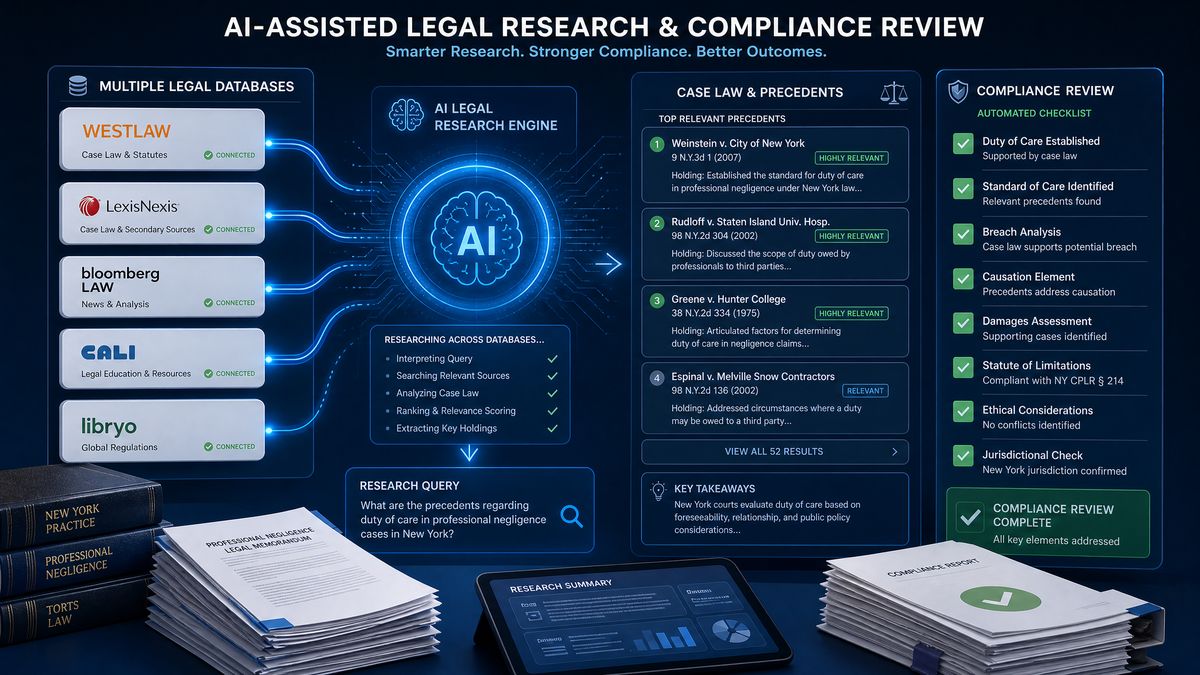
Section 3: Case Law Research Prompts (Prompts 25–34)
Legal research is one of the most labor-intensive tasks in practice. These prompts don’t replace Westlaw or Lexis — they supercharge your research workflow by helping you structure arguments, identify analogous cases, and stress-test your legal theories before you commit to a position.
Legal teams managing complex multi-document reviews can leverage Codex Chronicle’s persistent screen-context memory to maintain awareness across lengthy contract negotiations and case file analysis sessions spanning multiple days. For a comprehensive deep dive, see our guide on Codex Chronicle Prompts Masterclass.
Prompt 25: Legal Issue Spotting and Research Framework
You are a senior associate at a top litigation firm. Based on the following fact pattern, perform a comprehensive legal issue analysis:

1. Identify all potential legal claims (plaintiff's perspective) and defenses (defendant's perspective)
2. For each claim/defense, identify:
   - The legal standard
   - Key elements that must be proven
   - The strongest factual support from the fact pattern
   - The weakest point of the theory
3. Prioritize claims by likelihood of success (High/Medium/Low)
4. Identify any threshold procedural issues (jurisdiction, standing, statute of limitations)
5. List the top 10 research questions this fact pattern requires
6. Suggest analogous case types to research

Jurisdiction: [SPECIFY JURISDICTION AND COURT]

[PASTE FACT PATTERN HERE]
Prompt 26: Case Law Synthesis and Brief Summary
You are a judicial law clerk preparing a bench memo. I will provide you with summaries of several cases. Synthesize them into a coherent legal framework:

1. Identify the legal rule or doctrine that emerges from these cases collectively
2. Map the evolution of the doctrine chronologically
3. Identify circuit splits or conflicting authorities
4. Identify the factual factors courts use to distinguish cases
5. Extract the strongest quotes for brief writing
6. Identify which line of cases supports [PARTY A's / PARTY B's] position
7. Identify gaps in the case law that represent open questions

[PASTE CASE SUMMARIES HERE]
Prompt 27: Opposing Counsel Argument Anticipation
You are a devil's advocate attorney whose job is to identify every weakness in our legal position. Based on our argument summarized below:

1. List the 5 strongest counterarguments opposing counsel will make
2. For each counterargument, identify supporting case law they are likely to cite
3. Identify the weakest facts in our case and how they will be exploited
4. What procedural motions will opposing counsel likely file (12(b)(6), summary judgment, Daubert)?
5. What discovery will they seek to undermine our case?
6. Assess the overall strength of our position: Strong / Moderate / Weak, with explanation
7. Recommended preemptive measures to shore up our position

[PASTE OUR LEGAL ARGUMENT HERE]
Prompt 28: Statutory Interpretation Analysis
You are a statutory interpretation specialist. Analyze the following statutory provision using all recognized canons of interpretation:

1. TEXTUAL ANALYSIS: Plain meaning of the text using ordinary meaning at time of enactment
2. STRUCTURAL ANALYSIS: How does this provision fit within the broader statutory scheme?
3. LEGISLATIVE HISTORY: What does committee reports / floor debates suggest about legislative intent?
4. PURPOSIVIST ANALYSIS: What problem was the statute designed to solve?
5. TEXTUALIST vs. PURPOSIVIST: How would a Scalia-style textualist vs. a purposivist judge approach this?
6. RELEVANT AGENCY INTERPRETATION: What has the relevant agency said (consider Loper Bright post-Chevron landscape)?
7. CIRCUIT SPLIT: Are there conflicting judicial interpretations of this provision?
8. RECOMMENDED INTERPRETATION: Which interpretation best serves the text, structure, and purpose?

Statutory provision: [PASTE PROVISION]
Legal issue: [DESCRIBE THE INTERPRETIVE QUESTION]
Prompt 29: Expert Witness Cross-Examination Preparation
You are a trial attorney preparing cross-examination of an opposing expert witness. Based on the expert report below:

1. Identify the expert's central opinions and the methodology used to reach them
2. List all factual assumptions underlying each opinion
3. Identify which assumptions can be challenged with deposition testimony or documentary evidence
4. Assess the expert's methodology against Daubert/Kumho factors
5. List prior published work or testimony that may contradict current opinions
6. Draft 15 cross-examination questions designed to undermine the expert's credibility or methodology
7. Identify the strongest Daubert motion arguments to exclude or limit the testimony

[PASTE EXPERT REPORT HERE]
Prompt 30: Deposition Outline Preparation
You are a litigation attorney preparing for a key witness deposition. Based on the following case summary and documents:

1. Identify the 5 most critical facts this witness can establish or undermine
2. Draft a deposition outline with question categories in logical sequence
3. Draft 20 specific questions designed to lock the witness into favorable admissions
4. Identify documents to use as exhibits and draft foundation questions for each
5. Draft questions to establish impeachment material for trial
6. List topics to avoid during deposition (to preserve for trial surprise)
7. Identify potential Fifth Amendment assertion risks

Case Summary: [PASTE CASE SUMMARY]
Witness Role: [DESCRIBE WITNESS'S ROLE AND RELEVANCE]
Key Documents: [PASTE OR SUMMARIZE DOCUMENTS]
Prompt 31: Damages Calculation Framework
You are a commercial litigation attorney working with a damages expert. Based on the following fact pattern and contract, develop a damages framework:

1. Identify all available categories of damages (direct, consequential, lost profits, disgorgement, restitution)
2. For each category: identify the legal standard for recovery in [JURISDICTION]
3. Identify the foreseeability and certainty requirements that must be met
4. Assess whether consequential damages are excluded by contract
5. Analyze mitigation of damages obligations and whether plaintiff has satisfied them
6. Identify the key financial documents needed to quantify each damage category
7. Draft a damages demand structure for settlement negotiation purposes

Fact Pattern: [PASTE FACT PATTERN]
Relevant Contract Provisions: [PASTE PROVISIONS]
Prompt 32: Preliminary Injunction Memorandum Outline
You are a litigation partner preparing a preliminary injunction motion. Develop a comprehensive memorandum outline:

1. Analyze each Winter factor under the applicable circuit:
   a. Likelihood of success on the merits (analyze each element of the underlying claim)
   b. Irreparable harm (identify specific harms and why monetary damages are inadequate)
   c. Balance of equities (compare harm to plaintiff vs. burden on defendant)
   d. Public interest
2. Identify the evidentiary record needed (declarations, exhibits, expert testimony)
3. Draft the proposed order language
4. Anticipate defendant's opposition arguments and draft rebuttals
5. Assess likelihood of success: High / Moderate / Low with explanation

Claim Type: [SPECIFY — e.g., trade secret misappropriation, trademark infringement]
Jurisdiction: [SPECIFY CIRCUIT]
Key Facts: [PASTE KEY FACTS]
Prompt 33: Settlement Negotiation Strategy
You are a seasoned litigator developing a settlement strategy. Based on the case posture below:

1. Assess the case value using expected value analysis:
   - Estimate probability of plaintiff prevailing at trial
   - Estimate likely damages range if plaintiff prevails
   - Calculate expected value (probability × damages)
   - Subtract litigation costs to get settlement floor
2. Identify the top 3 risks to our position that favor settlement
3. Identify the top 3 strengths that support a favorable settlement posture
4. Recommend an opening demand (if plaintiff) or opening offer (if defendant) with rationale
5. Identify non-monetary settlement terms that may have value (injunctive relief, license, reference, etc.)
6. Draft a settlement conference position statement (1 page)

Case Summary: [PASTE CASE SUMMARY]
Our Client: [PLAINTIFF / DEFENDANT]
Current Stage: [DESCRIBE LITIGATION STAGE]
Prompt 34: Appellate Brief Issue Statement Drafting
You are an appellate attorney drafting a brief to the [COURT OF APPEALS / SUPREME COURT]. Based on the trial court's ruling and the record below:

1. Identify all reversible error candidates in the trial court's decision
2. For each error, specify:
   - Standard of review (de novo, abuse of discretion, clear error)
   - Preservation of the issue below
   - Strength of the appellate argument (Strong / Moderate / Weak)
3. Draft three alternative Issue Presented statements for the strongest argument using the Booker formulation (question that implies the answer)
4. Identify the 5 strongest cases to cite in the argument
5. Recommend which errors to include in the brief based on winnability
6. Draft the argument structure with section headings

Trial Court Ruling: [PASTE OR SUMMARIZE]
Key Record Excerpts: [PASTE RELEVANT TRANSCRIPT/ORDER EXCERPTS]
Section 4: Legal Document Drafting Prompts (Prompts 35–44)
Document drafting is where AI delivers the most immediate time savings. These prompts generate first-draft quality output for a range of legal instruments — structured to professional standards and ready for attorney review and customization.
Access 40,000+ AI Prompts for ChatGPT, Claude & Codex — Free!
Subscribe to get instant access to our complete Notion Prompt Library — the largest curated collection of prompts for ChatGPT, Claude, OpenAI Codex, and other leading AI models. Optimized for real-world workflows across coding, research, content creation, and business.
Prompt 35: Master Services Agreement (MSA) Draft
You are a senior commercial attorney drafting a Master Services Agreement for a technology company providing software development services to enterprise clients. Draft a comprehensive MSA that includes:

1. Services and SOW framework (how individual projects are scoped)
2. Fees and payment terms (Net-30, invoicing, expense reimbursement)
3. IP ownership — work-for-hire with background IP license back
4. Confidentiality and data security obligations
5. Representations and warranties (performance standard, non-infringement)
6. Indemnification (mutual for third-party claims, vendor indemnity for IP infringement)
7. Limitation of liability (12-month fee cap, mutual exclusion of consequential damages)
8. Term, termination for cause and convenience
9. Governing law: [YOUR JURISDICTION]
10. Dispute resolution: commercial arbitration under AAA rules

Draft from the perspective of the vendor (service provider). Flag any provisions that a customer's counsel would likely push back on.
Prompt 36: Non-Disclosure Agreement (NDA) — Mutual
Draft a mutual non-disclosure agreement for a strategic partnership discussion between two technology companies. The NDA should:

1. Define Confidential Information broadly (including oral disclosures with written confirmation within 5 days)
2. Exclude publicly available information, independently developed information, and information received from third parties without restriction
3. Include a 2-year term with a 3-year survival of confidentiality obligations post-termination
4. Permit disclosure to employees, contractors, and advisors on need-to-know basis with equivalent obligations
5. Include standard permitted disclosure exceptions (court order, law, regulatory requirement) with prior notice obligation
6. Include a non-solicitation provision covering employees (12 months post-disclosure)
7. Include an IP ownership clarification (no license grant)
8. Include injunctive relief provision
9. Governing law: [YOUR JURISDICTION]

Make the agreement balanced and market-standard. Flag any provisions that tend to be negotiated.
Prompt 37: Employment Offer Letter and At-Will Agreement
Draft a professional employment offer letter and at-will employment agreement for a senior software engineer (individual contributor, exempt status) with the following terms:

Position: Senior Software Engineer
Compensation: $185,000 base salary, 15% target annual bonus
Equity: 50,000 RSUs vesting over 4 years (1-year cliff, quarterly thereafter)
Benefits: Standard tech company benefits package
Non-compete: None (assume California)
Proprietary Information Agreement: Required as condition of employment
Start Date: [TO BE INSERTED]
Jurisdiction: California

Include:
1. Clear at-will employment language compliant with California law
2. PIIA incorporation by reference
3. Bonus plan disclaimer (discretionary)
4. RSU subject to plan documents
5. Arbitration agreement opt-out disclosure (per AB 51 considerations)
6. Required California new hire disclosures
Prompt 38: Software License Agreement
Draft a commercial software license agreement for an enterprise SaaS product. The agreement should cover:

1. License grant: limited, non-exclusive, non-transferable, subscription-based
2. Permitted users and deployment scope (named users / enterprise-wide)
3. Restrictions: no reverse engineering, no competitive use, no sublicensing
4. Subscription term: annual auto-renew with 60-day notice to cancel
5. SLA: 99.9% uptime commitment with service credits as sole remedy
6. Data provisions: customer owns data, vendor may use anonymized aggregate data
7. AI/ML training restriction: vendor may not use customer data to train AI models
8. Security: SOC 2 Type II compliance obligation
9. Support: tiered support with response time SLAs
10. Fees and payment: annual prepay, PO required for orders over $50,000

Draft from the vendor perspective. Include defined terms section.
Prompt 39: Commercial Lease Letter of Intent (LOI)
Draft a commercial real estate letter of intent for office space lease with the following parameters:

Tenant: [COMPANY NAME], a technology startup
Space: Approximately 8,500 RSF on [FLOOR], [BUILDING]
Lease Term: 5 years with one 5-year renewal option
Base Rent: $[X] per RSF per year, 3% annual escalation
Free Rent: 4 months during build-out period
Tenant Improvement Allowance: $85 per RSF
Permitted Use: General office use and technology operations
Commencement Date: Target [DATE]
Security Deposit: 2 months' rent
Personal Guarantee: Limited personal guarantee from CEO for 12 months

Include standard LOI provisions: non-binding nature (except exclusivity and confidentiality), exclusivity period (30 days), and timeline for lease execution. Note any issues that will require further negotiation in the full lease.
Prompt 40: Board Resolution and Written Consent
Draft a Board of Directors Written Consent in Lieu of Meeting for a Delaware corporation approving the following corporate actions:

1. Authorization of a Series A Preferred Stock financing round at $15M pre-money valuation
2. Approval of Term Sheet with [LEAD INVESTOR] and authorization for CEO to execute
3. Authorization to issue up to [X] shares of Series A Preferred Stock
4. Appointment of [INVESTOR NAME] as a director
5. Approval of SAFE conversion into Series A Preferred Stock
6. Authorization for counsel to prepare and negotiate financing documents
7. Ratification of all prior actions taken by officers in connection with the financing

Include all required Delaware corporate formality: recitals, whereas clauses, resolved clauses, and signature blocks for all directors. Follow Delaware General Corporation Law Section 141(f) requirements.
Prompt 41: Cease and Desist Letter — IP Infringement
Draft a cease and desist letter on behalf of [COMPANY NAME] asserting trademark infringement and unfair competition claims.

Facts: Our client owns federally registered trademark [MARK] (Registration No. XXXXXXX) in Class [X] for [GOODS/SERVICES]. Recipient is using a confusingly similar mark [RECIPIENT'S MARK] in the same market and has been doing so since approximately [DATE].

The letter should:
1. Assert trademark rights with specificity (registration details, date of first use)
2. Describe the infringing conduct with specificity
3. Assert likelihood of confusion under the Polaroid/Sleekcraft factors
4. Demand: (a) immediate cessation of use, (b) destruction of infringing materials, (c) written confirmation of compliance within 14 days, (d) accounting of profits
5. Include consequences of non-compliance (litigation, injunctive relief, damages under 15 U.S.C. § 1117)
6. Maintain a firm but professional tone that preserves settlement options
7. Not make any threats that could be characterized as extortionate
Prompt 42: Settlement Agreement and Release
Draft a comprehensive settlement agreement and mutual general release for resolution of a commercial dispute. Parameters:

Parties: [COMPANY A] (Plaintiff) and [COMPANY B] (Defendant)
Underlying Dispute: Breach of contract claim arising from [BRIEF DESCRIPTION]
Settlement Amount: $[X] payable in [LUMP SUM / INSTALLMENTS]
Additional Terms: [ANY NON-MONETARY TERMS]

The agreement should include:
1. Recitals (dispute background, no admission of liability)
2. Settlement payment terms and mechanics
3. Mutual general release language (broad, covering known and unknown claims — include California Civil Code § 1542 waiver if applicable)
4. Dismissal with prejudice mechanics
5. Confidentiality of settlement terms
6. Non-disparagement (mutual)
7. Representations and warranties (authority to settle, no assignment of claims)
8. Integration clause, governing law, dispute resolution for breach of settlement
Prompt 43: Privacy Policy — GDPR and CCPA Compliant
Draft a comprehensive privacy policy for a B2C mobile app company that:
- Collects personal data from users in the EU and California
- Uses third-party analytics and advertising platforms
- Processes payment information through Stripe
- Uses AWS for cloud infrastructure
- Is subject to both GDPR and CCPA/CPRA

The policy must:
1. Comply with GDPR Articles 13/14 transparency requirements
2. Include all CCPA/CPRA required disclosures
3. Address all categories of personal information collected (including sensitive personal information)
4. Describe all legal bases for processing (consent, legitimate interest, contract)
5. Describe all data subject rights with exercise mechanisms
6. Include cookie policy integrated into the privacy policy
7. Describe international data transfer mechanisms (EU SCCs)
8. Include contact information for DPO / privacy inquiries
9. Use plain language accessible to a general consumer audience (Flesch-Kincaid Grade 8 target)
Prompt 44: Term Sheet — Venture Capital Series A
Draft a Series A Preferred Stock Term Sheet from the investor perspective for the following transaction:

Company: [COMPANY NAME], a Delaware corporation
Round Size: $8 million
Pre-Money Valuation: $22 million
Lead Investor: [FUND NAME]
Participation: [OTHER INVESTORS]

Key economic terms to include:
1. Non-participating preferred stock, 1x liquidation preference
2. Automatic conversion to common at IPO ($50M+ at $5/share minimum)
3. Optional conversion at any time
4. Anti-dilution: broad-based weighted average
5. Pro-rata rights for future rounds (for major investors >$500K)
6. 20% option pool pre-closing (required)

Key governance terms:
1. Board: 2 common, 2 preferred, 1 independent (mutual approval)
2. Protective provisions (standard NVCA set)
3. Information rights (monthly financials, annual audited, inspection)
4. ROFR and co-sale on founder share transfers
5. Drag-along at majority preferred + majority common + board approval

Include NVCA-standard representations, no-shop (45 days), and expense reimbursement provisions.
Section 5: Risk Assessment Prompts (Prompts 45–50)
These prompts help legal teams move from analysis to action — translating legal risk into business-ready assessments, board-level briefings, and actionable risk management frameworks.
Prompt 45: Legal Risk Register Development
You are a General Counsel building a legal risk register for a Series B technology company. Based on the business description below, develop a comprehensive legal risk register:

Format as a table with columns:
Risk ID | Risk Category | Risk Description | Likelihood (1-5) | Impact (1-5) | Risk Score | Current Controls | Residual Risk | Recommended Mitigation | Owner | Timeline

Categories to cover:
1. Intellectual property (patent, trademark, copyright, trade secret)
2. Data privacy and cybersecurity
3. Employment and labor
4. Commercial contracts
5. Regulatory compliance
6. Corporate governance
7. Litigation
8. M&A and financing
9. International operations

Provide at least 3 risks per category. Prioritize the top 10 risks for immediate attention.

Business Description: [PASTE BUSINESS DESCRIPTION]
Prompt 46: Contract Portfolio Risk Assessment
You are a legal operations director. I will provide you with a list of our 20 most significant contracts. Perform a portfolio-level risk assessment:

1. Identify systemic risks present across multiple contracts (e.g., unlimited liability exposure, evergreen auto-renewal, single-source dependency)
2. Identify contracts approaching renewal/termination (within 90 days)
3. Rank contracts by total liability exposure
4. Flag any contracts with non-market or anomalous terms
5. Identify contracts that require renegotiation based on regulatory changes
6. Recommend a contract remediation priority matrix
7. Suggest a contract lifecycle management (CLM) workflow to prevent these issues prospectively

[PASTE CONTRACT SUMMARY LIST — including parties, type, term, key financial terms, and flagged provisions]
Prompt 47: M&A Due Diligence Legal Risk Summary
You are the lead M&A attorney preparing a legal due diligence report for an acquisition. Based on the due diligence materials provided:

1. Executive Summary: Overall legal risk rating (Green/Yellow/Red) with rationale
2. Material Issues: List each material legal issue with:
   - Description of the issue
   - Estimated financial exposure or deal impact
   - Proposed deal protection (rep & warranty, indemnity, escrow, price adjustment, walk right)
3. Regulatory approvals required (HSR, CFIUS, foreign competition)
4. Key contract consents required (change of control provisions)
5. Litigation exposure assessment
6. IP ownership chain analysis
7. Employment liabilities (equity, bonus, severance obligations)
8. Environmental and regulatory compliance gaps
9. Recommended pre-closing covenants

[PASTE DUE DILIGENCE SUMMARY MATERIALS]
Prompt 48: Board Legal Briefing on Litigation Risk
You are General Counsel preparing a board presentation on significant litigation matters. For each active litigation matter described below, provide a board-level briefing:

Format for each matter:
1. Matter Name and Adverse Party
2. Nature of Claims (2-3 sentences)
3. Stage of Proceedings
4. Litigation Risk Assessment: Low / Medium / High / Critical
5. Financial Exposure Range (best case / expected / worst case)
6. Reserve Recommendation (with accounting disclosure implications under ASC 450)
7. Management Response / Legal Strategy (2-3 sentences)
8. Key Upcoming Milestones (next 90 days)
9. Disclosure obligations (public company / lender notification requirements)

Summary slide: Total litigation exposure range and aggregate reserve recommendation.

[PASTE LITIGATION MATTER DESCRIPTIONS]
Prompt 49: Vendor Risk Assessment — Legal Dimension
You are a legal risk officer assessing a new enterprise vendor. Evaluate the following vendor materials from a legal risk perspective:

1. CONTRACTUAL RISK: Analyze the vendor's standard contract terms for one-sided provisions
2. DATA RISK: Assess data handling, privacy, and security posture against our requirements
3. REGULATORY RISK: Identify any regulatory compliance gaps relevant to our industry
4. FINANCIAL RISK: Identify contract provisions that create financial exposure (unlimited liability, auto-renewal, price escalation)
5. OPERATIONAL RISK: Assess SLA adequacy, business continuity provisions, and exit rights
6. REPUTATIONAL RISK: Identify any provisions (subcontracting, geographic limitations, etc.) that could create compliance or reputational exposure
7. OVERALL VENDOR RISK RATING: Red / Yellow / Green with summary
8. REQUIRED CONTRACT MODIFICATIONS before approval

Vendor Materials: [PASTE VENDOR CONTRACT AND SECURITY DOCUMENTATION]
Our Industry: [SPECIFY — e.g., financial services, healthcare, government contracting]
Prompt 50: Annual Legal Department Strategic Review
You are a Chief Legal Officer preparing an annual strategic review of the legal function for the board and executive team. Based on the following legal department metrics and business context:

1. LEGAL RISK LANDSCAPE: Top 5 legal risks facing the company in the next 12 months
2. REGULATORY HORIZON: Upcoming regulatory changes requiring compliance investment
3. LITIGATION PORTFOLIO: Summary of active matters, total exposure, and trend analysis
4. CONTRACT HEALTH: Key metrics (cycle time, fallout rate, renewal coverage, non-standard clause frequency)
5. TEAM AND BUDGET: Capacity assessment, outside counsel spend optimization opportunities
6. TECHNOLOGY: AI and legal tech initiatives — current state and recommended investments
7. STRATEGIC PRIORITIES: Top 5 legal department initiatives for the coming year with business justification
8. BOARD ASKS: Specific board decisions or approvals required (budget, headcount, policies)

Format as an executive presentation outline with slide-by-slide structure. Include suggested metrics/KPIs for each section.

Business Context: [PASTE COMPANY SIZE, STAGE, INDUSTRY, KEY LEGAL CHALLENGES]
Department Metrics: [PASTE AVAILABLE METRICS]
Implementation Guide: Building a Legal AI Workflow
Having 50 powerful prompts is only valuable if your team deploys them consistently and correctly. Here’s a practical framework for rolling out AI-assisted legal work in your organization.
Step 1: Establish Your AI Usage Policy
Before deploying GPT-5.5 for legal work, your legal ops team should draft a clear AI usage policy addressing: data privacy (never input client-confidential information into public AI tools without proper DPA and security review), output review requirements (all AI-generated legal content requires attorney review before client delivery), citation verification (AI models can hallucinate case citations — all case law must be verified on Westlaw or Lexis before use), and privilege considerations (AI-assisted work product may need specific handling to preserve privilege).
Step 2: Build a Prompt Library
The 50 prompts in this guide should serve as the foundation of your team’s prompt library. Use a tool like Notion, SharePoint, or a purpose-built prompt management platform to organize prompts by practice area, maintain version control as you refine them, and track which prompts are most effective for your specific client base.
Step 3: Establish Quality Control Checkpoints
| Task Type | AI Role | Attorney Review Level | Turnaround Impact |
|---|---|---|---|
| Initial contract triage | First-pass risk identification | High — full review required | 60-70% time reduction |
| Standard document drafting | First draft generation | Medium — review and customize | 50-60% time reduction |
| Legal research framing | Issue identification, outline | High — verify all citations | 40-50% time reduction |
| Compliance gap analysis | Gap identification | High — regulatory expertise required | 50-65% time reduction |
| Client-facing documents | Draft generation only | Mandatory full review and sign-off | 40-55% time reduction |
Step 4: Jurisdiction and Specialization Customization
Each prompt in this guide includes placeholders for jurisdiction. Don’t skip this step. A contract analysis under California law will produce materially different output than the same analysis under New York law or English law. Maintain a set of “jurisdiction overlays” — standard additions to each prompt that specify your practice’s primary jurisdictions, governing regulatory frameworks, and applicable local law considerations.
Step 5: Client Matter Integration
For law firms, the most effective deployment integrates AI prompts directly into matter management workflows. When a new contract arrives for review, the intake process should automatically route it through the appropriate triage prompt (Prompt 1 or Prompt 8, for example) before it reaches the reviewing attorney, who receives both the original document and the AI risk summary simultaneously. This “pre-read” approach typically reduces review time by 40-60% while improving the consistency of issue spotting.
Ethical Considerations and Professional Responsibility
The legal profession’s ethical obligations don’t pause for technological innovation. Using GPT-5.5 in legal practice raises specific professional responsibility considerations under the Model Rules of Professional Conduct:
- Rule 1.1 (Competence): The duty of competence now includes understanding the capabilities and limitations of AI tools used in practice. Attorneys who use AI without understanding how to critically evaluate its output risk competence violations.
- Rule 1.6 (Confidentiality): Inputting client confidential information into AI tools requires careful analysis of the tool’s data handling practices. Enterprise deployments of GPT-5.5 through the OpenAI API with appropriate data processing agreements may satisfy confidentiality requirements in ways that consumer-facing products do not.
- Rule 3.3 (Candor to the Tribunal): AI-generated case citations must be independently verified before filing. Courts in multiple jurisdictions have now sanctioned attorneys for filing briefs with AI-hallucinated citations.
- Rule 5.3 (Supervision): Partners and supervising attorneys are responsible for ensuring that associates and paralegals who use AI tools understand their limitations and apply appropriate review protocols.
Prompt Engineering Best Practices for Legal Work
The prompts in this guide are designed using specific architectural principles that maximize GPT-5.5’s performance on legal tasks. Understanding these principles allows your team to customize and extend the prompts effectively.
The Role-Task-Format-Constraint Architecture
Every effective legal prompt includes four elements: a Role (you are a senior commercial attorney), a Task (analyze the indemnification provisions), a Format (structured as a table with these columns), and Constraints (under California law, from the vendor’s perspective). Removing any one of these elements consistently degrades output quality.
Calibrating Output Specificity
Legal AI outputs fail in two directions: too general (generic advice that doesn’t address the specific document) and too confident (hallucinated details presented as fact). You can tune specificity by adding phrases like “cite specific provisions from the contract I’ve provided” and hedge hallucination risk with “where you are uncertain about specific legal standards, indicate this clearly and flag for attorney verification.”
Chaining Prompts for Complex Analysis
For complex matters, single prompts are rarely sufficient. Chain prompts sequentially: start with Prompt 1 (overall risk summary), then run Prompt 3 (limitation of liability deep dive) on the specific section flagged in the first output, then run Prompt 31 (damages framework) based on the risk identified. This layered approach mirrors how skilled attorneys actually approach complex documents and produces far more actionable output than any single prompt can.
Conclusion: The AI-Augmented Legal Practice
GPT-5.5 represents a genuine inflection point for legal professionals. The 50 prompts in this guide are not theoretical — they’re the result of careful prompt engineering designed specifically for the precision, structure, and risk-consciousness that legal work demands. Deployed correctly, with proper attorney review and ethical safeguards in place, they can transform the economics of legal practice: allowing small firms to punch above their weight, enabling corporate legal departments to do more with flat budgets, and freeing skilled attorneys to focus on the high-judgment work that genuinely requires their expertise.
The firms and departments that will lead the next decade are those building systematic AI workflows today — not waiting for perfect tools, but learning to deploy imperfect tools with appropriate supervision and continuous refinement. Start with the five prompts most relevant to your practice area, integrate them into one workflow, measure the results, and expand from there. The compound effect of consistent AI augmentation across a legal team is transformative.
As AI capabilities continue to advance, the prompt library you build today becomes a strategic asset — a collection of institutional knowledge about how to extract maximum value from AI for your specific practice, clients, and risk tolerance. Begin building it now.
