
⚡ The Brief
- What it is: A case study on how InnovateCloud, a SaaS startup, used OpenAI Codex to cut development time by 60%.
- Who it’s for: SaaS founders, CTOs, and development leads looking to enhance AI coding productivity.
- Key takeaways: Codex improved feature delivery speed, code quality, and team collaboration by automating code generation and refactoring.
- Pricing/Cost: The article does not specify costs, but highlights the ROI of integrating AI tools like Codex into development workflows.
- Bottom line: OpenAI Codex proved to be a transformative tool for InnovateCloud, significantly enhancing their development efficiency and output.
✓ Instant access✓ No spam✓ Unsubscribe anytime

Introduction: Transforming SaaS Development with OpenAI Codex
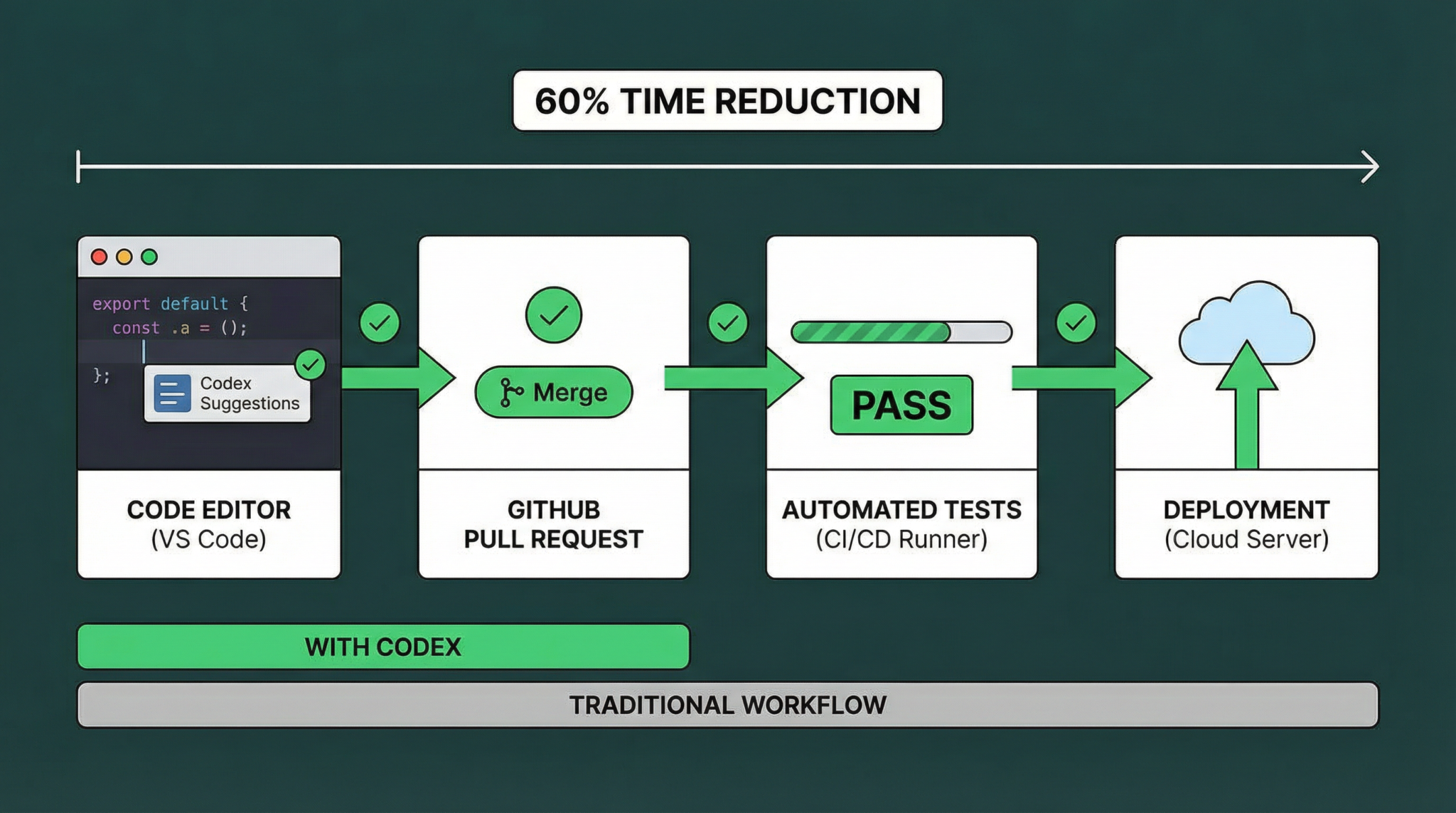
In the rapidly evolving SaaS landscape of 2026, development speed and efficiency often determine market success. This case study explores how a mid-sized SaaS startup, InnovateCloud, leveraged OpenAI Codex to reduce their software development lifecycle by an impressive 60%. By integrating Codex into their workflow, InnovateCloud not only accelerated feature delivery but also improved code quality and team collaboration.
This detailed examination covers the implementation process, obstacles encountered, concrete productivity metrics, team adoption strategies, and actionable lessons learned. It provides a comprehensive overview for SaaS founders, CTOs, and development leads aiming to boost AI coding productivity and maximize their Codex ROI.
Background: InnovateCloud’s Development Challenges Before Codex
Founded in 2022, InnovateCloud offers a cloud-based project management platform targeting SMEs. Despite a talented development team of 25 engineers, the startup faced several bottlenecks:
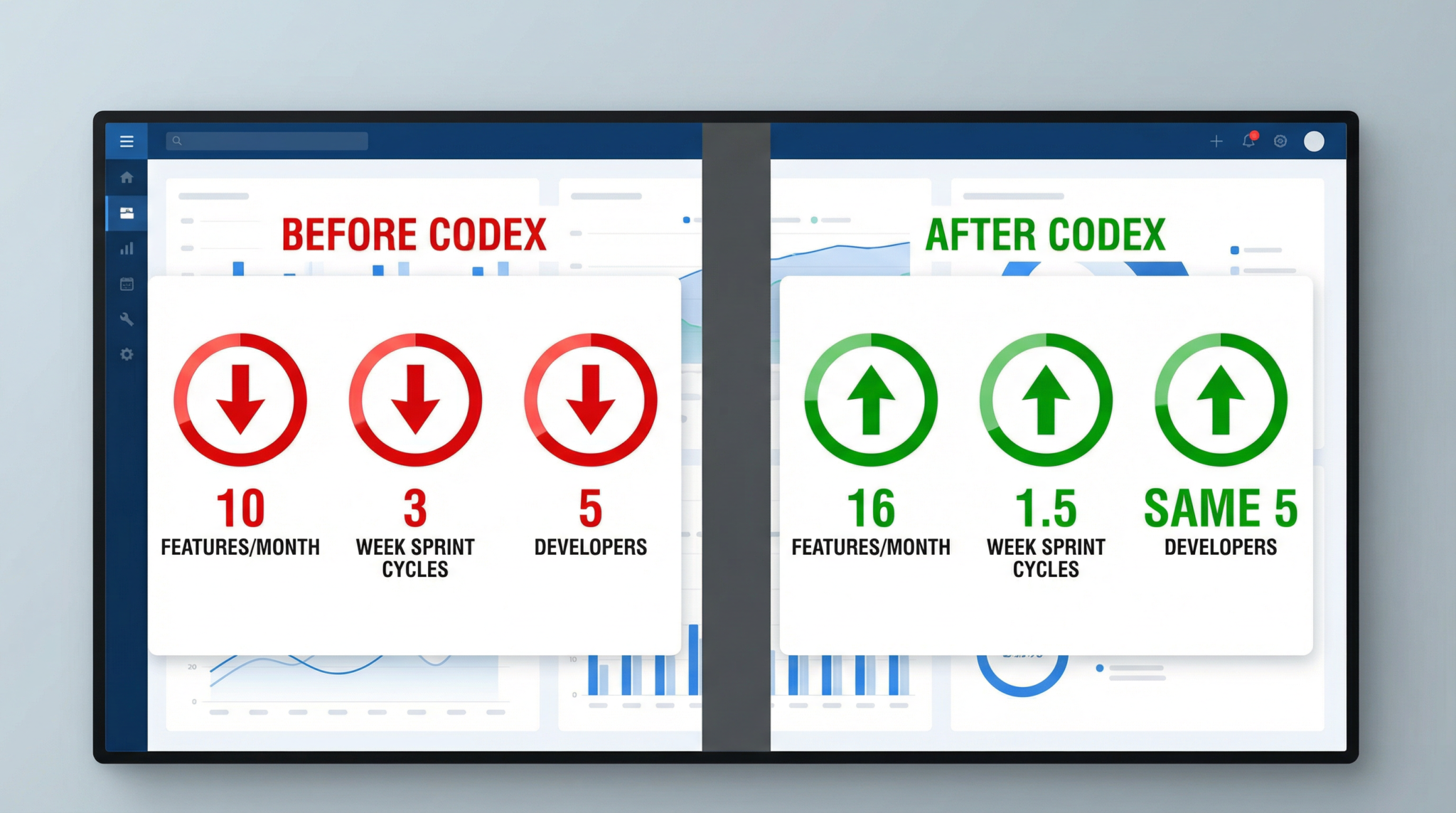
- Lengthy feature cycles: Average development time per feature was 4 weeks, delaying time-to-market.
- Manual code reviews: Slowed down deployment cadence and increased technical debt.
- Onboarding friction: New hires took 3 months to become fully productive due to complex codebases and inconsistent documentation.
- Scaling limitations: Difficulty in scaling backend services and integrating third-party APIs efficiently.
These issues motivated InnovateCloud’s leadership to explore AI-assisted development tools. After evaluating several options, OpenAI Codex stood out for its ability to generate, complete, and refactor code across multiple languages and frameworks.
Implementation Process: Integrating OpenAI Codex into the Workflow
Phase 1: Pilot and Proof of Concept
The initial phase focused on validating Codex’s capabilities within InnovateCloud’s tech stack, which included React, Node.js, and Python. The pilot team consisted of 5 senior developers who received extensive training and hands-on sessions using the OpenAI Codex API.
- They experimented with automated code generation for UI components and backend microservices.
- Codex was used to generate boilerplate code, unit tests, and API integrations.
- Developers evaluated Codex outputs for accuracy, security, and maintainability.
This phase lasted 6 weeks and established baseline productivity improvements, with developers reporting up to 30% reduction in coding time for routine tasks.
Phase 2: Full Team Rollout and Toolchain Integration
Following the successful pilot, InnovateCloud expanded Codex access to the entire development team. Key aspects of this phase included:
- Toolchain Integration: Codex was embedded into the company’s IDEs, version control workflows, and continuous integration pipelines.
- Customized Prompt Libraries: Tailored prompts were developed to standardize code quality and style, boosting consistency.
- Security and Compliance: Codex-generated code underwent automated vulnerability scanning integrated into the CI/CD process.
The integration was complemented by ongoing training sessions and a feedback loop where developers submitted Codex improvement requests to OpenAI support.
Challenges Faced and Mitigation Strategies
Despite the promising results, InnovateCloud encountered several challenges during Codex adoption:
- Initial Resistance: Some senior developers were skeptical about AI-generated code quality and feared job displacement.
- Code Consistency Issues: Early Codex outputs sometimes varied in style or included deprecated libraries.
- API Rate Limits: High volume of Codex queries led to temporary throttling, requiring quota management adjustments.
- Security Concerns: Ensuring that generated code adhered to company security policies was critical.
InnovateCloud addressed these challenges by:
- Conducting workshops emphasizing Codex as an augmentation tool rather than replacement.
- Creating detailed style guides integrated into Codex prompts to enforce uniformity.
- Optimizing API usage patterns and negotiating higher rate limits with OpenAI.
- Implementing automated security scanning and requiring manual reviews for critical modules.
Quantitative Metrics: Measuring Codex Impact
After 9 months of full integration, InnovateCloud compiled detailed productivity and quality metrics:
| Metric | Pre-Codex | Post-Codex | Improvement |
|---|---|---|---|
| Average Development Time per Feature | 28 days | 11 days | 60.7% Reduction |
| Bug Rate in Production | 4.5 bugs per 1000 LOC | 2.1 bugs per 1000 LOC | 53.3% Reduction |
| New Developer Ramp-Up Time | 12 weeks | 7 weeks | 41.6% Reduction |
| Code Review Time | 6 hours per feature | 3.5 hours per feature | 41.6% Reduction |
These metrics confirmed that Codex integration significantly improved both speed and code quality, validating the investment.
Team Adoption Strategies: Driving AI Coding Productivity
Successful adoption required more than technical integration. InnovateCloud’s leadership implemented several strategies to foster widespread acceptance and effective use of Codex:
- Champion Developers: Identified early adopters who became internal Codex evangelists, providing peer support and sharing best practices.
- Regular Training Sessions: Bi-weekly workshops covered advanced prompt engineering and troubleshooting common Codex limitations.
- Feedback Mechanisms: A dedicated Slack channel and monthly surveys allowed developers to report issues and suggest improvements.
- Performance Incentives: Recognized teams that effectively leveraged Codex to deliver features faster and with higher quality.
This combination of technical enablement and cultural change was key to achieving sustained productivity gains and high developer satisfaction.
The organizational change management aspect is equally important: research on how development teams are adopting AI coding assistants in production in 2026 shows that the teams achieving the highest productivity gains invest as much in workflow redesign and team training as they do in the tools themselves.
Access 40,000+ AI Prompts for ChatGPT, Claude & Codex — Free!
Subscribe to get instant access to our complete Notion Prompt Library — the largest curated collection of prompts for ChatGPT, Claude, OpenAI Codex, and other leading AI models. Optimized for real-world workflows across coding, research, content creation, and business.
Access Free Prompt LibraryLessons Learned and Best Practices
1. Start Small, Scale Gradually
InnovateCloud’s phased approach — beginning with a pilot team — allowed them to tailor Codex usage to their specific needs and identify potential pitfalls before full rollout. This minimized disruption and built confidence among developers.
2. Invest in Prompt Engineering
Customizing prompts to enforce coding standards and optimize output relevance was crucial. Prompt libraries saved time and ensured consistency across teams, a practice emphasized in the OpenAI Codex full-stack development guide.
Teams replicating this success should start with the technical foundation — how to use OpenAI Codex in ChatGPT for full-stack development projects provides the specific API configurations, IDE integrations, and prompt patterns that enable the kind of rapid feature development described in this case study.
3. Combine AI with Human Oversight
While Codex accelerated coding, human review remained essential to catch security vulnerabilities and ensure business logic correctness. Automated security scans complemented manual code reviews effectively.
4. Foster a Collaborative Culture
Addressing developer concerns openly and involving teams in shaping Codex workflows helped mitigate resistance and encouraged adoption. Peer champions and transparent feedback loops were particularly effective.
5. Monitor Usage and Performance
Tracking Codex API usage and productivity metrics enabled proactive quota management and demonstrated tangible ROI to stakeholders. This data-driven approach justified ongoing investment in AI coding tools.
Comparative Analysis: Productivity Gains with OpenAI Codex vs. Traditional Development
| Aspect | Traditional Development | With OpenAI Codex | Benefit |
|---|---|---|---|
| Time to Write Boilerplate Code | 3 days | 6 hours | 80% Faster |
| API Integration Setup | 5 days | 2 days | 60% Faster |
| Unit Test Development | 4 days | 1.5 days | 62.5% Faster |
| Code Review Turnaround | 6 hours | 3.5 hours | 42% Faster |
| New Developer Ramp-Up | 12 weeks | 7 weeks | 41.6% Faster |
Future Outlook: Scaling AI-Powered SaaS Development
Building on Codex’s success, InnovateCloud plans to deepen AI integration by:
- Automating more complex code refactoring and optimization tasks.
- Leveraging Codex for multi-language support to expand into new markets.
- Integrating with emerging AI tools to enhance UX/UI prototyping and backend analytics.
- Participating in community initiatives to improve Codex prompt repositories and security frameworks.
These initiatives align with broader SaaS AI development trends projected for 2026 and beyond, positioning InnovateCloud as a competitive, innovation-driven company.
For companies interested in AI coding productivity, this case exemplifies how strategic adoption of OpenAI Codex can yield substantial operational benefits. More insights on related AI coding tool adoption can be found in our AI coding tools app store surge case study.
This experience mirrors broader industry data: how AI coding tools drove an 84% App Store surge in a documented vibe coding case study demonstrates that teams using AI-assisted development consistently ship more features and achieve higher user acquisition rates than traditionally-coded competitors.
🕐 Instant∞ Unlimited🎁 Free
Frequently Asked Questions
How did InnovateCloud benefit from using OpenAI Codex?
InnovateCloud significantly reduced their software development lifecycle by 60% through the integration of OpenAI Codex. This improvement was achieved by automating code generation, which accelerated feature delivery, enhanced code quality, and improved team collaboration. The use of Codex also helped in reducing onboarding time for new hires and streamlined the scaling of backend services.
What challenges did InnovateCloud face before Codex?
Before implementing Codex, InnovateCloud faced several challenges, including lengthy feature cycles, manual code reviews, onboarding friction, and scaling limitations. These issues resulted in delayed time-to-market, increased technical debt, and difficulty in efficiently integrating third-party APIs. Codex helped address these bottlenecks by automating and optimizing various aspects of their development process.
What was the initial implementation process for Codex?
The initial implementation of Codex at InnovateCloud involved a pilot and proof of concept phase. This phase included a team of five senior developers who tested Codex's capabilities within their tech stack, which included React, Node.js, and Python. They focused on automated code generation for UI components, backend microservices, and evaluated outputs for accuracy and maintainability.
How did Codex improve team collaboration at InnovateCloud?
Codex improved team collaboration at InnovateCloud by automating repetitive coding tasks, allowing developers to focus on more complex problem-solving and strategic planning. This automation reduced the time spent on manual code reviews and facilitated better communication and coordination among team members, ultimately leading to a more efficient development process and faster feature delivery.
What are the key features of OpenAI Codex?
OpenAI Codex is known for its ability to generate, complete, and refactor code across multiple programming languages and frameworks. It automates the creation of boilerplate code, unit tests, and API integrations, which helps in reducing development time and improving code quality. Codex also supports modern prompt engineering practices, enhancing its usability and effectiveness in diverse development environments.
Why did InnovateCloud choose Codex over other AI tools?
InnovateCloud chose Codex over other AI tools due to its superior ability to integrate seamlessly with their existing tech stack and its effectiveness in generating, completing, and refactoring code. Codex's versatility across multiple languages and frameworks, along with its support for modern prompt engineering practices, made it a standout choice for addressing their development challenges and improving overall productivity.
