
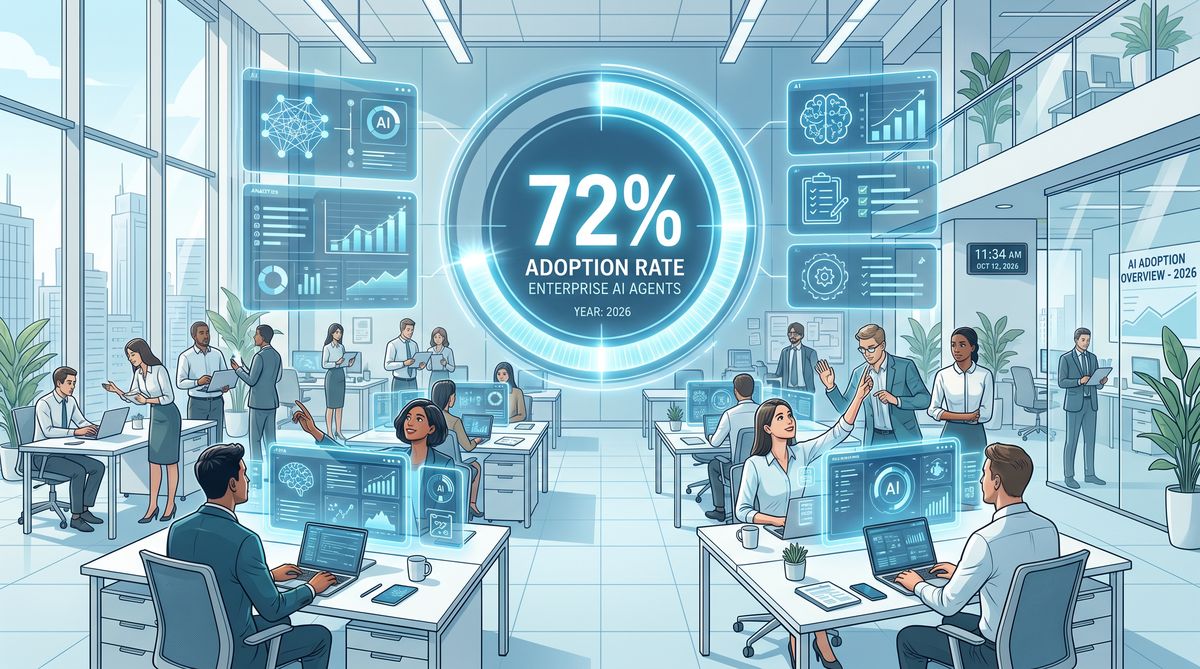
In 2026, the landscape of enterprise technology witnessed a transformative milestone: the adoption rate of agentic AI solutions surged to an unprecedented 72%. This rapid integration of advanced AI agents, including leading platforms such as OpenAI’s Codex and Anthropic’s Claude Code, marks a paradigm shift in how organizations leverage artificial intelligence to drive productivity, innovation, and competitive advantage. Unlike traditional AI models that primarily offer predictive analytics or automation, agentic AI systems operate with autonomous decision-making capabilities, enabling them to perform complex tasks, adapt to dynamic environments, and collaborate seamlessly with human teams. This evolution has ushered in a new era of AI utility within enterprises, profoundly impacting software development, customer engagement, operational efficiency, and strategic planning.
The adoption surge is underpinned by compelling returns on investment (ROI) demonstrated across multiple sectors. Enterprises deploying generative AI agents report accelerated development cycles, reduced error rates, and enhanced creativity in product design and content generation. For example, Codex’s ability to interpret natural language prompts and generate high-quality code snippets has revolutionized software engineering workflows, substantially lowering time-to-market and resource expenditure. Similarly, Claude Code’s nuanced understanding of contextual and ethical considerations allows organizations to maintain compliance and uphold governance standards while scaling AI-driven initiatives. These capabilities not only improve operational efficiency but also foster an environment where innovation can thrive without compromising on quality or security.
However, despite the clear benefits and widespread adoption, a critical governance gap remains a pressing challenge for many organizations. As AI agents become more autonomous and embedded in mission-critical processes, the necessity for robust frameworks governing their deployment, monitoring, and ethical use has never been greater. Many enterprises struggle to establish comprehensive policies that address issues such as algorithmic bias, decision transparency, data privacy, and accountability. Without these safeguards, organizations risk operational disruptions, reputational damage, and regulatory penalties. Addressing this governance gap requires a concerted effort involving cross-disciplinary collaboration among AI developers, legal experts, compliance officers, and business leaders. Increasingly, companies are investing in specialized governance platforms and internal AI ethics committees to navigate these complexities effectively.
The rapid adoption of agentic AI also raises important questions about workforce transformation and skills development. As AI agents assume more autonomous roles, the human workforce is transitioning towards oversight, strategic decision-making, and AI-human collaboration. Organizations that proactively invest in training and reskilling initiatives are better positioned to harness the full potential of these technologies. The interplay between human expertise and AI agency is a defining factor in realizing sustainable and scalable AI integration.
In this article, we will take a deep dive into the factors driving this accelerated adoption, analyze the tangible ROI benefits enterprises are experiencing, and explore the governance challenges that must be addressed to ensure responsible, ethical, and effective deployment of agentic AI technologies. Understanding these dynamics is essential for developers, technology leaders, and decision-makers aiming to navigate the evolving AI landscape and capitalize on its transformative potential. For a closer look at the foundational principles of generative AI and its impact on enterprise innovation, refer to AgentMail + Himalaya: Wiring an AI Agent’s Inbox in 30 Minutes.
The Evolution from Copilots to Autonomous Agents
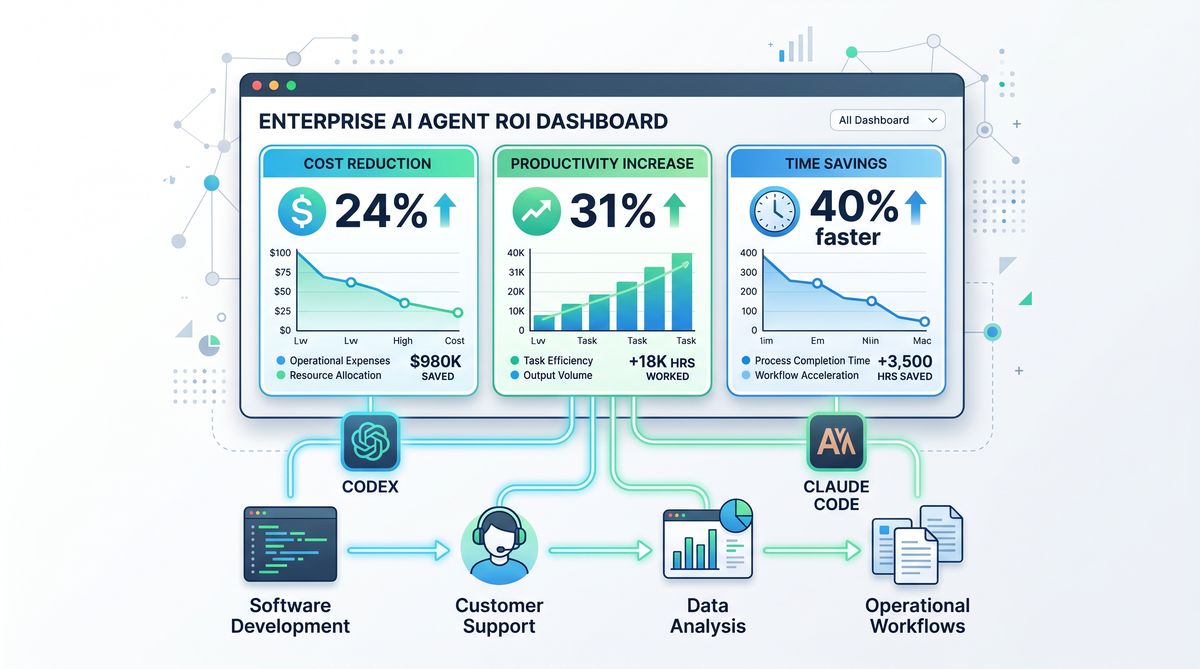
The landscape of enterprise artificial intelligence has undergone a profound transformation over the past decade, culminating in the widespread adoption of agentic AI technologies by 2026. Central to this evolution is the transition from AI copilots—assistive tools designed to augment human capabilities—to fully autonomous agents capable of independently executing complex tasks. This paradigm shift has been largely propelled by breakthroughs in natural language processing and code generation models, exemplified by innovations such as OpenAI’s Codex and Anthropic’s Claude Code.
Initially, AI copilots were conceived as intelligent assistants that complemented human expertise. These systems, integrated directly within development environments and business workflows, provided real-time code suggestions, automated routine procedures, and enabled faster decision-making. Codex, launched in the early 2020s, epitomized this generation by leveraging vast codebases and natural language understanding to generate code snippets from human prompts. Similarly, Claude Code introduced a refined approach, emphasizing explainability and safety in code generation to ensure enterprise-grade reliability.
Understanding Copilots: Augmentation with Human Oversight
Copilot systems primarily function as collaborative partners rather than independent operators. Their core characteristics include:
- Interactive Assistance: Copilots work alongside developers, analysts, or operators, offering suggestions, error detection, and code completions in real-time.
- Human-in-the-Loop: While they automate repetitive and time-consuming tasks, human oversight remains essential for validation and refinement.
- Contextual Awareness: These systems rely heavily on the immediate context provided by the user’s input and environment, limiting autonomous decision-making capabilities.
- Task Specificity: Copilots excel in narrow, well-defined domains such as software development, data analysis, and content creation but lack broader operational autonomy.
Despite their utility, copilots encountered inherent limitations as enterprises sought to scale AI-driven automation beyond individual tasks to entire workflows and business processes. Reliance on continuous human intervention restricted efficiency gains and introduced bottlenecks, particularly in complex environments demanding rapid, autonomous responses.
Autonomous Agents: From Assistance to Independent Execution
The next leap in AI evolution was the emergence of autonomous agents—AI entities equipped with the ability to plan, execute, monitor, and adjust their actions with minimal or no human input. This shift was enabled by advances in large language models (LLMs), reinforcement learning, and multi-modal understanding. Autonomous agents can ingest high-level objectives, decompose them into actionable subtasks, and interact with digital ecosystems to fulfill goals.
Claude Code and subsequent platforms integrated these capabilities by combining code generation with planning mechanisms and safety protocols. This enabled agents to autonomously manage complex software development cycles, data pipelines, and operational workflows. Enterprises rapidly recognized the potential to reduce time-to-market, improve scalability, and mitigate human error through autonomous agents.
Key Differentiators Between Copilots and Autonomous Agents
To better illustrate the fundamental distinctions between these two AI paradigms, the following table provides a comprehensive comparison:
| Aspect | Copilots | Autonomous Agents |
|---|---|---|
| Primary Function | Assist humans with tasks by providing suggestions and augmenting capabilities. | Independently plan, execute, and manage tasks or workflows. |
| Level of Autonomy | Low to moderate; requires continuous human oversight and intervention. | High; capable of operating with minimal or no human input. |
| Scope of Operation | Focused on specific, well-defined tasks (e.g., code completion). | Broad, spanning multiple tasks and complex workflows. |
| Interaction Model | Human-in-the-loop for validation and control. | Human-on-the-loop, where humans oversee but do not directly control actions. |
| Adaptability | Limited to prompt modifications and user corrections. | Dynamic, with capability to adjust strategies based on outcomes and feedback. |
| Typical Use Cases | Code generation, content creation assistance, data augmentation. | Automated software development cycles, autonomous data pipeline management, operational decision-making. |
| Risk Profile | Lower risk due to human oversight; errors can be caught early. | Higher risk necessitating robust safety, explainability, and compliance mechanisms. |
The progression from copilots to autonomous agents reflects not only technological advancements but also shifting enterprise requirements. As businesses embraced digital transformation, the imperative to automate end-to-end processes and reduce reliance on human intervention became paramount. Autonomous agents, powered by models like Codex and Claude Code, emerged as the cornerstone technology enabling this shift.
Moreover, the maturation of autonomous agent platforms incorporated sophisticated safety layers, continuous learning frameworks, and integration with enterprise systems, addressing earlier concerns related to reliability and governance. These developments fostered confidence in deploying agentic AI at scale across diverse industries.
For a detailed exploration of how autonomous agents integrate with existing enterprise architectures and the impact on operational workflows, refer to Memory Architectures for Long-Running AI Agents.
Measuring the ROI of Generative AI and Agentic Workflows in the Enterprise
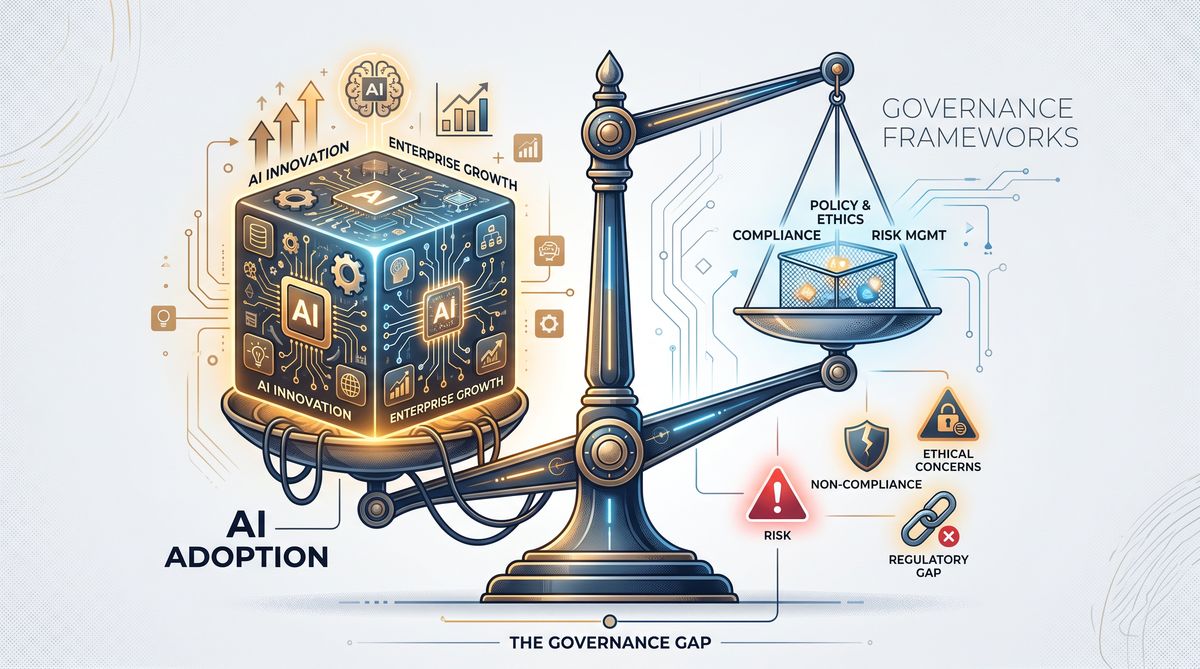
As enterprises increasingly invest in generative AI and agentic workflows, quantifying their return on investment (ROI) has become paramount. Understanding the financial and operational impact of these advanced technologies enables decision-makers to justify expenditures, optimize deployment strategies, and drive continuous innovation. Unlike traditional software implementations, agentic AI systems introduce autonomous decision-making capabilities that transform workflows, necessitating a nuanced and multi-dimensional approach to ROI measurement.
At its core, ROI measurement for generative AI and agentic workflows involves assessing cost savings, productivity gains, revenue growth, and risk mitigation across various business units. However, the inherent complexity and evolving nature of AI models require enterprises to adopt both quantitative and qualitative metrics. These metrics must capture immediate financial benefits as well as longer-term strategic advantages such as enhanced customer experience, improved compliance, and accelerated innovation cycles.
Key Dimensions for ROI Assessment
Enterprises typically evaluate ROI across several interrelated dimensions when adopting generative AI and agentic workflows:
- Cost Reduction: Automation of repetitive tasks reduces labor costs and minimizes human error.
- Productivity Enhancement: AI agents augment human capabilities, enabling faster decision-making and increased throughput.
- Revenue Impact: New products, services, and personalized customer experiences driven by AI can open additional revenue streams.
- Risk Management: AI-powered compliance monitoring and fraud detection mitigate operational and regulatory risks.
- Innovation Acceleration: Generative AI facilitates rapid ideation and prototyping, shortening time-to-market.
Quantitative Metrics for Evaluating ROI
To holistically measure ROI, enterprises track a variety of quantitative metrics tailored to specific departments and their AI applications. Common metrics include:
- Time Savings: Reduction in hours spent on manual processes or decision-making cycles.
- Cost Avoidance: Avoided expenses due to error reduction, fraud prevention, and decreased compliance violations.
- Revenue Uplift: Incremental revenue attributable to AI-enabled upselling, cross-selling, or new customer acquisition.
- Employee Efficiency: Increase in output per employee facilitated by AI augmentation.
- Customer Satisfaction Scores: Improvements in Net Promoter Score (NPS) or Customer Satisfaction Index (CSI) driven by AI-enhanced service.
ROI Metrics Across Enterprise Departments
The following table illustrates typical ROI metrics observed in various departments following the adoption of generative AI and agentic workflows. The data reflects aggregated results from leading enterprises that have reported measurable outcomes by 2026.
| Department | Primary AI Use Case | Key ROI Metric | Average Measured Impact | Time to ROI Realization |
|---|---|---|---|---|
| Customer Service | AI Chatbots & Agentic Ticket Routing | Reduction in Average Handling Time (AHT) | 35% decrease | 4 months |
| Marketing | Generative Content Creation & Personalization | Increase in Conversion Rate | 20% uplift | 6 months |
| Finance | Automated Invoice Processing & Fraud Detection | Cost Savings from Error Reduction | 25% decrease in processing costs | 5 months |
| HR | AI-driven Talent Acquisition & Onboarding | Time to Hire Reduction | 30% faster hiring process | 3 months |
| Product Development | Generative AI for Rapid Prototyping | Decrease in Development Cycle Time | 40% shorter cycle | 7 months |
Challenges in Measuring ROI
Despite the availability of these metrics, enterprises face several challenges when measuring ROI for agentic AI deployments. Attribution is complex due to the integrated nature of AI within broader digital transformation initiatives. Additionally, the intangible benefits of AI, such as improved employee morale or enhanced brand reputation, are difficult to quantify but crucial for long-term value.
Moreover, the iterative improvement cycles of generative AI models mean that ROI is not static; it evolves as models are fine-tuned and workflows optimized. Organizations must therefore implement continuous monitoring frameworks rather than relying on one-time assessments. This approach ensures that ROI measurement remains aligned with changing business objectives and technological capabilities.
Strategic Recommendations for Effective ROI Measurement
- Define Clear Objectives: Establish specific, measurable goals aligned with business priorities before AI deployment.
- Implement Baseline Benchmarks: Capture pre-adoption performance data to enable accurate comparative analysis.
- Leverage Cross-Functional Teams: Engage stakeholders across departments to identify relevant metrics and interpret results.
- Utilize Advanced Analytics: Deploy AI-powered analytics platforms that can correlate AI activity with business outcomes.
- Adopt a Phased Measurement Approach: Evaluate short-term wins and longer-term strategic impacts separately for comprehensive insight.
For enterprises seeking to deepen their understanding of AI impact and best practices for ROI quantification, exploring detailed case studies and benchmarking reports is invaluable. Our comprehensive guides and expert analyses provide actionable frameworks to maximize the benefits of agentic AI workflows. To explore these resources, visit our Agent Frameworks 2026: LangGraph vs AutoGen vs CrewAI Comparison.
The Critical Governance Gap and Security Challenges in Agentic AI
As enterprise adoption of agentic AI surged to an unprecedented 72% by 2026, a parallel and pressing concern has emerged within the corporate and regulatory landscapes: the critical governance gap and the multifaceted security challenges inherent to these advanced systems. Agentic AI, characterized by autonomous decision-making capabilities and adaptive learning, operates with a level of independence that significantly complicates traditional frameworks for oversight, accountability, and risk management. This section delves into the complexities of governance deficiencies and the security vulnerabilities that organizations must confront to safely harness the transformative potential of agentic AI.
Understanding the Governance Gap in Agentic AI
Governance in the context of agentic AI refers to the structures, policies, and mechanisms that ensure AI systems operate ethically, legally, and transparently. Despite rapid technological advancements, governance frameworks have lagged, creating a critical gap that exposes enterprises to regulatory, operational, and reputational risks.
- Inadequate Regulatory Frameworks: Current regulations often fail to address the unique characteristics of agentic AI, such as autonomous decision-making and continuous learning. Many jurisdictions are still adapting legacy laws originally designed for deterministic software, leaving a void in effective oversight.
- Lack of Standardized Ethical Guidelines: While ethical AI principles have been proposed globally, their implementation remains inconsistent. Enterprises struggle to translate broad ethical mandates into actionable policies that align with their specific operational contexts and risk appetites.
- Accountability and Transparency Deficits: Agentic AI systems can make decisions without direct human intervention, raising complex questions about responsibility. The opacity of some AI models further complicates efforts to audit decisions or explain outcomes to stakeholders and regulators.
- Fragmented Governance Models: Many organizations deploy agentic AI without a unified governance framework, resulting in siloed policies that hinder comprehensive risk management and compliance efforts.
The governance gap is not merely theoretical; it translates into tangible risks that can disrupt business continuity and erode stakeholder trust. Enterprises must therefore prioritize the development of robust governance structures tailored to the nuanced challenges of agentic AI.
Security Challenges Unique to Agentic AI Systems
Beyond governance, agentic AI introduces a broad spectrum of security challenges that extend beyond traditional IT security paradigms. The autonomous and adaptive nature of these systems creates new attack surfaces and threat vectors, necessitating a reevaluation of security strategies.
- Adversarial Attacks and Manipulation: Agentic AI systems are vulnerable to sophisticated adversarial techniques designed to deceive or manipulate their decision-making processes. For example, subtle input perturbations can cause AI to misclassify data or make erroneous choices, with potentially severe consequences.
- Data Poisoning and Integrity Risks: Since agentic AI continuously learns from new data, attackers may attempt to inject malicious or corrupted data into training pipelines, skewing model behavior and undermining system reliability.
- Autonomy Exploitation: The autonomous capabilities of agentic AI can be exploited to perform unintended actions if security controls are insufficient. This includes unauthorized access to critical systems, data exfiltration, or the propagation of harmful automated decisions.
- Insider Threats and Misuse: The complexity and opacity of agentic AI can mask intentional misuse or sabotage by insiders, who might leverage AI capabilities for unauthorized purposes without immediate detection.
- Supply Chain Vulnerabilities: Agentic AI systems often rely on third-party components, data sources, and cloud infrastructure, introducing additional risks related to vendor security practices and software integrity.
Addressing these security challenges requires an integrated approach that combines advanced technical safeguards, continuous monitoring, and proactive threat intelligence. Traditional perimeter defenses are insufficient; instead, enterprises must embrace dynamic security models that anticipate and mitigate evolving threats throughout the AI lifecycle.
Bridging the Governance Gap and Mitigating Security Risks
Closing the governance gap and strengthening security posture in agentic AI contexts demands concerted efforts from multiple stakeholders including enterprise leadership, AI developers, security professionals, and regulators. Key strategies include:
- Developing Comprehensive Governance Frameworks: Enterprises should establish clear policies that encompass ethical standards, regulatory compliance, risk management, and accountability mechanisms tailored specifically to agentic AI.
- Implementing Explainability and Auditability: Enhancing the transparency of AI decision-making processes through explainable AI (XAI) techniques facilitates compliance verification and builds stakeholder confidence.
- Adopting Adaptive Security Architectures: Security frameworks must evolve to integrate AI-specific protections such as adversarial robustness testing, continuous data validation, and anomaly detection systems designed for autonomous agents.
- Fostering Cross-Functional Collaboration: Bridging gaps between AI development teams, cybersecurity experts, legal advisors, and business units is essential to create holistic governance and security solutions.
- Engaging with Regulatory Bodies: Proactive dialogue with regulators and participation in standards development initiatives help enterprises influence and adapt to emerging compliance requirements.
- Investing in Workforce Training: Equipping employees with knowledge and skills related to AI governance and security enhances organizational resilience and reduces human-induced vulnerabilities.
Ultimately, the sustainability and success of agentic AI adoption hinge on the ability of enterprises to anticipate and manage the inherent governance and security complexities. By acknowledging and addressing these challenges head-on, organizations can unlock the full potential of agentic AI while safeguarding their operations, reputation, and stakeholders in an increasingly autonomous digital landscape.
Future Outlook
As we look beyond 2026, the trajectory of enterprise agentic AI adoption suggests an increasingly transformative role for these systems within corporate ecosystems. The current adoption rate of 72% marks not merely a milestone but a foundation upon which future advancements and integrations will build. Enterprises are poised to deepen their reliance on agentic AI capabilities, leveraging these technologies not only for automation and efficiency improvements but also for strategic decision-making and innovation acceleration.
One of the pivotal factors shaping the future outlook is the maturation of AI models and their integration with enterprise workflows. Advances in natural language understanding, contextual reasoning, and autonomous problem-solving are enabling agentic AI to operate with greater independence and reliability. This evolution will empower organizations to delegate complex tasks that previously required human intervention, such as cross-departmental coordination, dynamic resource allocation, and real-time risk assessment. Consequently, enterprises will experience enhanced operational agility and a reduction in time-to-market for products and services.
Moreover, the expansion of agentic AI capabilities will catalyze a shift in workforce dynamics. Organizations will increasingly embrace a hybrid human-AI collaboration model, wherein AI agents augment human expertise by handling routine or data-intensive activities, thereby freeing employees to focus on higher-order creative and strategic functions. This paradigm shift necessitates comprehensive workforce upskilling and change management to ensure seamless integration and to mitigate potential resistance or ethical concerns.
In parallel, regulatory frameworks and governance standards around AI deployment are expected to evolve substantially. Enterprises will need to navigate a complex landscape of compliance requirements focused on transparency, accountability, and data privacy. Proactive investment in explainable AI models and robust audit mechanisms will become indispensable to maintain stakeholder trust and to avoid legal pitfalls.
Looking further ahead, the convergence of agentic AI with emerging technologies such as edge computing, quantum computing, and advanced cybersecurity will unlock unprecedented capabilities. For example, edge-deployed agentic AI systems will enable real-time decision-making in geographically dispersed or latency-sensitive environments, such as manufacturing plants or supply chain nodes. Quantum-enhanced algorithms could exponentially accelerate AI reasoning processes, opening new frontiers in predictive analytics and optimization.
In summary, the future of enterprise agentic AI adoption is characterized by deeper integration, expanded functional scope, and increasing strategic significance. Organizations that proactively embrace these trends, invest in ethical and regulatory preparedness, and foster a culture of continuous learning will be best positioned to harness the full potential of agentic AI as a catalyst for sustainable competitive advantage.
Conclusion
The remarkable adoption rate of 72% for enterprise agentic AI by 2026 underscores a paradigm shift in how organizations approach automation, intelligence augmentation, and operational excellence. This widespread acceptance is the result of sustained technological innovation, demonstrated business value, and evolving organizational readiness. Enterprises have recognized that agentic AI is not just a tool for incremental gains but a transformative force capable of redefining workflows, decision-making processes, and customer engagement strategies.
However, the journey toward comprehensive deployment is ongoing. Challenges such as ensuring ethical AI use, maintaining data security, and managing human-AI collaboration dynamics remain at the forefront. Success will hinge on an integrated approach that combines technological investments with governance frameworks and workforce empowerment. As the ecosystem matures, enterprises that adopt a forward-looking mindset—anticipating future capabilities and regulatory changes—will unlock new avenues for growth and innovation.
In essence, the 72% adoption metric is both a milestone and a mandate: a clear signal that agentic AI is becoming an indispensable asset in the enterprise toolkit, and a call to action for organizations to deepen their commitment to AI-driven transformation. Embracing this evolution with strategic intent and operational rigor will define the leading enterprises of the next decade.
Useful Links
- McKinsey & Company: The Potential for AI in Enterprises
- Gartner: Artificial Intelligence Research and Insights
- Forbes: The Rise of Agentic AI in Business
- Harvard Business Review: How Enterprises Are Scaling AI
- MIT Technology Review: Agentic AI and Its Future Enterprise Impact
Access 40,000+ AI Prompts for ChatGPT, Claude & Codex — Free!
Subscribe to get instant access to our complete Notion Prompt Library — the largest curated collection of prompts for ChatGPT, Claude, OpenAI Codex, and other leading AI models. Optimized for real-world workflows across coding, research, content creation, and business.
