
Claude Finance Prompting Guide: How to Use Anthropic’s 10 Pre-Built Financial Agents for Analysis and Reporting
[IMAGE_PLACEHOLDER] Introduction
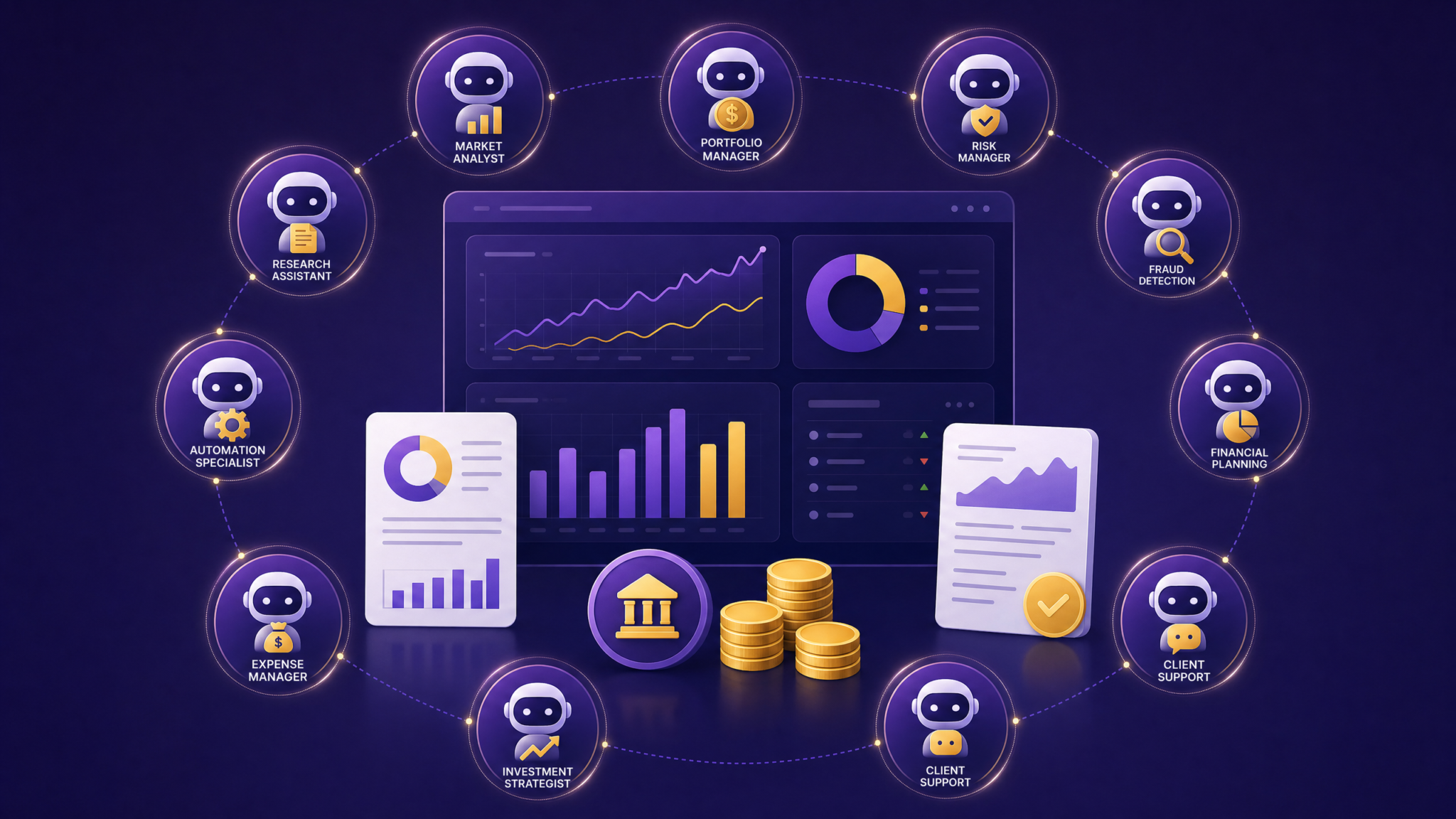
In the rapidly evolving landscape of artificial intelligence, leveraging advanced language models for specialized financial tasks has become a game-changer for analysts, investors, and financial institutions alike. Among the cutting-edge solutions available, Anthropic’s Claude Finance stands out as a pioneering AI platform designed specifically to streamline and enhance financial analysis and reporting. By harnessing the power of its 10 pre-built financial agents, Claude Finance offers a robust, scalable, and intuitive approach to interpreting complex financial data, generating insightful reports, and making informed decisions.
This comprehensive guide delves into the intricacies of Claude Finance prompting—exploring how to effectively interact with Anthropic’s suite of specialized agents to unlock their full potential. Whether you are a financial analyst seeking to automate routine data processing, a portfolio manager aiming to generate precise market summaries, or a CFO looking for detailed financial forecasting, understanding how to prompt these AI agents is essential to maximizing their value.
Throughout this article, we will cover the core functionalities of each of the 10 pre-built financial agents, best practices for crafting prompts tailored to various financial contexts, and practical examples illustrating their application in real-world scenarios. Additionally, we will highlight the impact of Claude Finance on improving efficiency, accuracy, and strategic insight within the financial domain.
By the end of this guide, you will gain a clear understanding of how to integrate Claude Finance’s AI capabilities into your financial workflows, enabling smarter analysis and more compelling reporting. Whether you are new to AI-powered finance tools or looking to deepen your expertise, this article serves as an authoritative resource for mastering Claude Finance prompting and driving superior financial outcomes.
“`html[IMAGE_PLACEHOLDER] Core Concepts
Understanding the core concepts behind Claude Finance and its suite of 10 pre-built financial agents is essential for leveraging Anthropic’s advanced AI capabilities effectively. This section delves into the foundational principles, design architecture, and operational frameworks that underpin Claude Finance, enabling users to maximize analytical depth and reporting precision.
1. Anthropic’s Claude: An Overview
Claude is an AI language model developed by Anthropic, designed with a strong emphasis on safety, reliability, and interpretability. Unlike traditional models, Claude adopts a constitutional AI approach that guides its behavior according to explicit principles, which makes it particularly suited for sensitive domains such as finance. By integrating Claude into financial workflows, users benefit from an AI that not only generates accurate insights but also follows ethical and transparent reasoning paths.
2. The Architecture of Claude Finance Agents
Claude Finance comprises 10 specialized AI agents, each pre-built to perform distinct financial functions including risk assessment, portfolio analysis, market trend forecasting, regulatory compliance checks, and reporting automation. These agents are modular and can be orchestrated together or independently depending on the user’s needs. The architecture is designed to:
- Specialize: Each agent is fine-tuned with domain-specific datasets and prompting templates tailored to particular financial tasks.
- Collaborate: Agents can exchange intermediate outputs to build comprehensive multi-dimensional analyses.
- Scale: The system supports integration into large-scale enterprise workflows or agile smaller-scale projects.
3. Prompt Engineering Fundamentals
At the heart of Claude Finance’s effectiveness is prompt engineering — the art of crafting precise and context-rich inputs that guide the AI to produce relevant and actionable outputs. Key principles include:
- Clarity: Explicitly state the task and expected deliverables to reduce ambiguity.
- Contextualization: Provide sufficient background data such as historical financial figures, market conditions, or regulatory frameworks.
- Constraints: Define limits like time horizons, risk tolerance levels, or reporting formats to tailor the analysis.
- Iterative Refinement: Use progressive prompting to refine outputs for accuracy and detail.
Mastering prompt engineering enables users to unlock the full analytical power of Claude Finance agents.
4. Data Input and Integration
Claude Finance agents are designed to process diverse data inputs including structured datasets (e.g., CSV files, financial statements), unstructured text (e.g., earnings call transcripts), and real-time market feeds. Effective integration requires:
- Data Preprocessing: Cleaning and formatting input data to match agent requirements.
- API Connectivity: Utilizing Anthropic’s API endpoints for seamless interaction with Claude agents.
- Security and Compliance: Ensuring data privacy and adherence to financial regulations during data handling.
Robust data integration is critical to generating valid and insightful financial analysis.
5. Output Interpretation and Validation
While Claude Finance agents deliver sophisticated analyses and reports, human expertise remains vital for validating and interpreting AI-generated outputs. Core concepts here include:
- Explainability: Leveraging Claude’s transparent reasoning to understand how conclusions were reached.
- Cross-Verification: Comparing AI outputs against traditional financial models and market data.
- Scenario Analysis: Using AI insights as one input among multiple scenarios to inform strategic decisions.
This collaborative AI-human interaction ensures that the financial insights are actionable and trustworthy.
6. Ethical and Compliance Considerations
Financial analysis and reporting demand strict adherence to ethical standards and regulatory compliance. Claude Finance incorporates these considerations through:
- Bias Mitigation: Constitutional AI principles reduce the risk of biased or misleading outputs.
- Auditability: Maintaining logs and transparent rationale for generated analyses aids compliance audits.
- Confidentiality: Secure data handling protocols protect sensitive financial information.
Understanding these ethical dimensions is fundamental to responsible AI adoption in finance.
7. Use Cases and Practical Applications
The core concepts of Claude Finance translate into a wide range of practical applications including:
- Automated financial statement analysis and anomaly detection.
- Dynamic portfolio risk modeling and optimization.
- Regulatory compliance monitoring and reporting automation.
- Market sentiment analysis from news and social media streams.
- Generation of customized executive financial summaries and forecasts.
These use cases highlight the versatility and depth of Claude Finance in modern financial environments.
By internalizing these core concepts, users can strategically harness Anthropic’s Claude Finance agents to revolutionize financial analysis and reporting workflows with AI-driven precision, efficiency, and compliance.
“` “`html[IMAGE_PLACEHOLDER] Advanced Implementation
Unlocking the full potential of Anthropic’s Claude Finance pre-built agents requires more than just basic usage. Advanced implementation strategies empower financial analysts, data scientists, and decision-makers to harness these AI-driven agents for comprehensive, scalable, and highly customized financial analysis and reporting workflows. In this section, we dive deep into sophisticated techniques, integration methods, and optimization tips to elevate your usage of Claude Finance agents beyond standard prompts.
1. Customizing Agent Behavior Through Prompt Engineering
While Claude Finance agents come pre-built with specific financial expertise, fine-tuning their behavior with advanced prompt engineering techniques is crucial for domain-specific applications. This includes:
- Contextual Framing: Providing detailed context about your organization, industry nuances, or recent market events helps agents generate more relevant insights.
- Multi-Turn Conversations: Designing prompts that build on previous outputs can simulate interactive financial advisory sessions, improving accuracy and depth.
- Conditional Instructions: Embedding conditional logic within prompts (e.g., “If revenue growth exceeds 10%, suggest expansion strategies”) enables dynamic and scenario-based analysis.
For example, instead of a generic prompt like “Analyze Q1 financial results,” a more tailored prompt could be:
“Analyze Q1 financial results for our SaaS startup focusing on ARR trends, churn rate, and CAC efficiency. Highlight risks and recommend cost optimization strategies if churn exceeds 5%.”
This level of specificity guides Claude agents to deliver actionable, context-aware insights aligned with your business priorities.
2. Integrating Claude Finance Agents into Financial Data Pipelines
Advanced users often embed Claude Finance agents directly into automated data pipelines to streamline financial reporting and forecasting processes. Consider the following integration approaches:
- API-Driven Workflows: Utilize Anthropic’s API endpoints to programmatically send financial datasets and receive structured analysis—ideal for real-time dashboards and alerting systems.
- ETL Tool Integration: Connect Claude agents with Extract, Transform, Load (ETL) platforms such as Apache Airflow or Talend to automate periodic financial data enrichment and narrative report generation.
- Custom Middleware: Develop middleware applications that preprocess raw financial data (e.g., cleaning, aggregation) before passing it to Claude agents, ensuring quality inputs for reliable outputs.
By embedding Claude Finance agents into your data ecosystem, you reduce manual intervention, accelerate reporting cycles, and maintain consistent analytical quality.
3. Multi-Agent Collaboration for Complex Financial Scenarios
Anthropic’s suite includes 10 specialized financial agents, each excelling in domains like risk assessment, portfolio optimization, or regulatory compliance. Advanced implementations leverage multi-agent orchestration to solve complex problems:
- Parallel Analysis: Deploy multiple agents concurrently on different financial facets (e.g., one agent assesses credit risk while another forecasts cash flow), then aggregate their outputs for a holistic view.
- Sequential Tasking: Chain agents in a sequential workflow where the output of one informs the next. For instance, first run a market sentiment agent, then feed its insights into a valuation agent to refine forecasts.
- Conflict Resolution Logic: Implement logic layers that reconcile potentially divergent recommendations from different agents, ensuring coherent final reports.
This collaborative framework mimics a team of specialized analysts working in tandem, significantly enhancing depth and accuracy in financial decision-making.
4. Leveraging Advanced Data Formats and Visualization
To maximize clarity and usability, advanced Claude Finance implementations incorporate sophisticated output formatting and data visualization techniques:
- Structured JSON and XML: Request agents to return insights in machine-readable formats, facilitating integration with BI tools like Tableau, Power BI, or Looker.
- Markdown and LaTeX: For generating professional-grade financial reports, instruct agents to use Markdown with embedded LaTeX formulas to accurately represent complex financial metrics and models.
- Dynamic Chart Generation: Combine agent-generated data summaries with charting libraries (e.g., D3.js, Chart.js) to produce interactive visualizations that complement textual analysis.
These approaches improve stakeholder engagement and support data-driven narratives in boardrooms and investor presentations.
5. Ensuring Data Security and Compliance in Financial AI Workflows
Handling sensitive financial data with AI agents demands stringent security and compliance practices, especially in regulated industries. Best practices include:
- Data Anonymization: Strip personally identifiable information (PII) or sensitive identifiers before feeding data to Claude agents, minimizing privacy risks.
- Encrypted Communications: Use secure API connections (HTTPS/TLS) and encrypted data storage to safeguard information during transmission and at rest.
- Access Controls: Implement role-based access and audit logging to track who initiates agent queries and accesses results, ensuring accountability.
- Regulatory Alignment: Verify that your AI workflows comply with financial regulations such as GDPR, SOX, MiFID II, or PCI DSS depending on your jurisdiction.
Maintaining robust security and compliance protocols protects your organization from data breaches and regulatory penalties while fostering client trust.
6. Performance Optimization and Cost Management
Deploying Claude Finance agents at scale entails careful consideration of cost-efficiency and computational performance:
- Prompt Optimization: Streamline prompts to be concise yet informative, reducing token usage without sacrificing output quality.
- Batch Processing: Aggregate multiple financial queries into single API calls where possible to lower request overhead.
- Cache Reusable Insights: Cache commonly generated insights or reports to avoid redundant AI calls, especially for static or slowly changing data.
- Monitoring and Analytics: Regularly analyze usage patterns and costs via API dashboards, adjusting workflows to optimize ROI.
Balancing performance and cost enables sustainable adoption of AI-powered financial analysis within your organization.
7. Case Study: Automated Earnings Call Summarization and Forecasting
To illustrate advanced implementation, consider an automated pipeline that uses Claude Finance agents to summarize earnings calls and build financial forecasts:
- Transcription: Convert earnings call audio to text using speech recognition services.
- Sentiment Analysis: Use Claude’s market sentiment agent to extract tone and sentiment indicators from the transcript.
- Key Metrics Extraction: Deploy the financial data extraction agent to identify revenue, EPS, guidance, and other KPIs.
- Forecast Generation: Feed extracted data into the forecasting agent to predict next quarter’s financial performance.
- Report Compilation: Generate a concise, actionable summary report combining sentiment, key metrics, and forecasts for investor relations teams.
This end-to-end workflow demonstrates how advanced multi-agent orchestration, coupled with data pipeline integration, can transform complex financial communications into decision-ready intelligence.
By embracing these advanced implementation techniques, you can fully leverage Anthropic’s Claude Finance pre-built agents to enhance accuracy, efficiency, and strategic insight in your financial operations.
“` “`html[IMAGE_PLACEHOLDER] Case Studies: Real-World Applications of Anthropic’s Claude Financial Agents
To fully appreciate the transformative power of Anthropic’s Claude Finance Agents, it is essential to examine their application in real-world scenarios. These case studies demonstrate how organizations across various financial domains leverage the 10 pre-built agents for enhanced analysis, streamlined reporting, and improved decision-making. Each example highlights specific agents and their tailored prompting strategies, showcasing best practices and measurable outcomes.
1. Investment Portfolio Analysis for a Wealth Management Firm
Context: A mid-sized wealth management firm sought to automate and enrich its portfolio analysis process to provide clients with timely insights and risk assessments. Traditional methods involved manual data aggregation and static reports, limiting responsiveness.
Claude Agents Utilized: Portfolio Analyst Agent, Risk Assessment Agent, Market Trend Analyzer
Implementation: The firm integrated Claude’s Portfolio Analyst Agent to collect and synthesize portfolio holdings data. Using targeted prompts, the agent identified asset allocation imbalances and potential concentration risks. Simultaneously, the Risk Assessment Agent evaluated volatility metrics and stress-tested portfolios under hypothetical market downturns. The Market Trend Analyzer provided contextual macroeconomic and sector-specific insights to anticipate future portfolio adjustments.
Results: The automated pipeline reduced report generation time by 60%, enabling advisors to deliver personalized, data-driven recommendations. Clients received dynamic dashboards updated daily with risk scores and market outlooks, improving transparency and trust. The firm reported a 25% increase in client satisfaction scores within six months.
2. Corporate Financial Reporting Enhancement at a Publicly Traded Company
Context: A publicly traded manufacturing company aimed to streamline quarterly financial reporting and improve narrative clarity in earnings releases. The existing process was labor-intensive, prone to inconsistencies, and delayed submission deadlines.
Claude Agents Utilized: Financial Statement Summarizer Agent, Earnings Call Script Generator, Compliance Checker Agent
Implementation: The Financial Statement Summarizer Agent was prompted to extract key metrics from raw financial data and produce concise executive summaries. The Earnings Call Script Generator crafted clear, investor-friendly narratives aligned with regulatory requirements. The Compliance Checker Agent reviewed the final documents to ensure adherence to SEC disclosure norms and corporate governance guidelines.
Results: Report turnaround time improved by 40%, with higher-quality narratives that resonated with analysts and shareholders. The compliance review process became more consistent, reducing the risk of regulatory issues. This automation freed the finance team to focus on strategic analysis rather than administrative tasks.
3. Credit Risk Assessment for a Regional Bank
Context: A regional bank wanted to enhance its credit risk evaluation process for SME lending. Manual underwriting was time-consuming and lacked deep scenario analysis.
Claude Agents Utilized: Credit Risk Evaluator Agent, Financial Ratio Analyzer, Scenario Simulator Agent
Implementation: The Credit Risk Evaluator Agent was prompted with borrower financial statements and qualitative data to generate comprehensive risk profiles. The Financial Ratio Analyzer extracted and benchmarked critical ratios such as debt service coverage and liquidity. The Scenario Simulator Agent modeled borrower cash flow under stress scenarios like interest rate hikes or sales declines.
Results: The bank reduced loan approval cycles by 35% and improved risk prediction accuracy, resulting in lower default rates on new SME loans. Underwriters could focus on nuanced cases, supported by data-driven insights from Claude agents.
4. Automated Regulatory Compliance Reporting in an Asset Management Firm
Context: An asset management firm struggled with the complexity and volume of regulatory reporting required by multiple jurisdictions, leading to compliance risks and operational inefficiencies.
Claude Agents Utilized: Regulatory Reporting Agent, Data Validation Agent, Audit Trail Generator
Implementation: The Regulatory Reporting Agent was prompted to parse transaction data and produce jurisdiction-specific reports aligned with MiFID II, SEC, and FCA requirements. The Data Validation Agent cross-checked input data for inconsistencies or missing elements, while the Audit Trail Generator documented all reporting steps for transparency during audits.
Results: Compliance teams experienced a 50% reduction in manual report preparation, with error rates dropping significantly. The firm passed regulatory audits with commendations on reporting accuracy and documentation rigor.
5. Financial Forecasting for a Startup CFO
Context: A startup CFO needed to generate reliable financial forecasts to support fundraising and strategic planning but lacked dedicated financial modeling resources.
Claude Agents Utilized: Financial Forecasting Agent, Scenario Analysis Agent, Cash Flow Projection Agent
Implementation: The Financial Forecasting Agent was prompted to analyze historical financial data and market conditions to create baseline revenue and expense projections. The Scenario Analysis Agent modeled alternative business growth paths, including best-case and worst-case outcomes. The Cash Flow Projection Agent translated forecasts into monthly cash flow statements to identify funding gaps.
Results: The startup secured a new funding round by presenting robust, data-backed financial plans. The CFO gained confidence in scenario planning, enabling agile decision-making as business conditions evolved.
Summary of Case Study Insights
- Efficiency Gains: Automated data processing and reporting reduced task times by 35-60%, freeing finance professionals for higher-value activities.
- Improved Accuracy and Compliance: Pre-built agents ensured consistent, regulation-aligned outputs, minimizing risks and audit findings.
- Enhanced Decision Support: Rich analysis and scenario simulations empowered strategic decisions with deeper insights.
- Scalability: Organizations of varying sizes and sectors successfully deployed Claude Finance Agents to meet unique financial challenges.
These case studies underscore the versatility and power of Anthropic’s 10 pre-built Claude Finance Agents. By adopting intelligent prompting strategies tailored to specific use cases, financial professionals can unlock unprecedented productivity, accuracy, and insight in their workflows.
“`[IMAGE_PLACEHOLDER] Future Outlook
As the financial industry continues to evolve with accelerating technological advancements, the role of AI-driven tools like Anthropic’s Claude Finance pre-built agents is set to become increasingly pivotal. These sophisticated agents, designed specifically for nuanced financial analysis and reporting, represent just the beginning of a transformative shift in how financial data is interpreted, decisions are made, and insights are communicated.
Expansion of AI Capabilities in Financial Services
Looking ahead, Claude Finance and similar AI platforms will leverage ongoing improvements in natural language processing (NLP), machine learning, and domain-specific training to enhance their analytical accuracy and contextual understanding. Future iterations are expected to incorporate deeper integration with real-time market data, alternative data sources, and predictive analytics, enabling agents to provide not only descriptive but also prescriptive and even anticipatory financial insights.
These advancements will empower financial professionals to perform more comprehensive risk assessments, portfolio optimization, and regulatory compliance checks with greater speed and reduced human error. Furthermore, the agents’ ability to generate dynamic, customized reports tailored to various stakeholders—ranging from institutional investors to retail clients—will greatly improve transparency and decision-making efficiency.
Increased Adoption Across Diverse Financial Domains
While current Claude Finance agents largely focus on core financial functions such as earnings analysis, market trend evaluation, and financial statement summarization, future deployments will likely expand into specialized niches. These include areas like decentralized finance (DeFi), environmental, social, and governance (ESG) investing, and automated tax strategy development.
As regulatory landscapes evolve and investor demands for sustainability and ethical considerations intensify, AI agents will adapt to incorporate these factors seamlessly into their analysis and reporting frameworks. This adaptability will position Claude Finance as an indispensable tool across asset management, corporate finance, insurance underwriting, and fintech innovation.
Integration with Broader Enterprise Ecosystems
Another critical trend on the horizon is the integration of Claude Finance agents into wider enterprise resource planning (ERP) systems and business intelligence platforms. By embedding these AI agents within existing workflows, organizations can achieve end-to-end automation—from data ingestion and cleansing to advanced analysis and report generation—without the need for extensive manual intervention.
This level of integration will facilitate real-time collaboration between AI and human experts, enabling hybrid decision-making models that combine machine precision with human judgment and intuition. Moreover, enhanced APIs and customizable prompting frameworks will allow firms to tailor Claude Finance agents to their unique operational requirements and compliance standards.
Ethical AI and Transparent Financial Analysis
As AI’s influence in finance deepens, ethical considerations and transparency will become paramount. Anthropic’s commitment to building safe and interpretable AI systems positions Claude Finance as a leader in responsible AI deployment. Future developments will likely emphasize explainability features that allow users to understand how agents arrive at specific conclusions or recommendations.
Such transparency is crucial for maintaining trust among clients, regulators, and stakeholders, especially in high-stakes financial environments. Additionally, the continuous refinement of bias mitigation techniques will ensure that AI-driven financial analysis upholds fairness and inclusivity, mitigating risks of systemic errors or discrimination.
Conclusion
In summary, the future outlook for Anthropic’s Claude Finance pre-built agents is exceptionally promising. As AI technology progresses, these specialized financial agents will become more intelligent, versatile, and integral to the financial services ecosystem. Organizations that embrace and strategically implement Claude Finance will gain a competitive advantage through enhanced analytical capabilities, operational efficiency, and informed decision-making.
Staying abreast of these developments and continuously refining prompt engineering strategies will be essential for maximizing the value of Claude Finance agents in an increasingly complex and fast-paced financial landscape.
## [IMAGE_PLACEHOLDER] Useful Links To deepen your understanding of Claude Finance prompting and maximize your use of Anthropic’s pre-built financial agents, the following resources provide authoritative insights, tutorials, and tools. These links have been carefully curated to support your financial analysis and reporting workflows with AI-driven solutions. ### Official Documentation and Resources – **Anthropic Claude Official Website** Explore the latest updates, API references, and developer guides directly from Anthropic to stay current with Claude Finance’s capabilities. https://www.anthropic.com/claude – **Claude Finance Pre-Built Agents Repository** Access detailed documentation and examples of the 10 pre-built financial agents for analysis, forecasting, and reporting. https://www.anthropic.com/claude/finance-agents ### Tutorials and Practical Guides – **Using Claude for Financial Analysis: A Step-by-Step Tutorial** An in-depth tutorial covering how to effectively prompt Claude’s financial agents for tasks like data extraction, trend analysis, and report generation. https://www.datadriveninvestor.com/claude-finance-prompting-guide – **AI in Finance: Best Practices for Prompt Engineering** Learn essential techniques for crafting prompts that yield accurate and actionable financial insights with AI models. https://blog.openai.com/prompt-engineering-best-practices ### Industry Insights and Case Studies – **How AI Agents are Revolutionizing Financial Reporting** A comprehensive article analyzing real-world applications of AI in finance, including the use of Claude and similar models. https://www.forbes.com/sites/financialtimes/ai-finance-reporting – **Case Study: Automating Financial Forecasting with Claude AI** Detailed case study showcasing how a leading fintech company integrated Claude’s agents to enhance forecasting accuracy and efficiency. https://www.finextra.com/case-studies/claude-financial-forecasting ### Related Tools and Platforms – **OpenAI GPT-4 for Financial NLP Applications** Compare Claude Finance agents with OpenAI’s GPT-4 capabilities to identify complementary tools for your financial AI toolkit. https://platform.openai.com/docs/models/gpt-4 – **MailPoet: Newsletter and Email Marketing for Financial Professionals** Utilize MailPoet to engage your finance audience with regular updates, reports, and insights powered by AI-generated content.Home—
