
⚡ The Brief
- What: Key lessons from Code with Claude 2026 on moving from standalone LLM calls to full agentic workflows.
- Who it’s for: Engineers, founders, and platform teams experimenting with Claude agents and orchestrated workflows.
- Key takeaways: What worked in real demos: planning, memory, tool use, error handling, and human-in-the-loop patterns.
- Pricing / cost angle: Highlights the engineering and infra tradeoffs between simple chatbots and always-on agent systems.
- Bottom line: Start with one well-scoped agentic workflow that ships value end-to-end before scaling to multi-agent meshes.
Introduction to the OpenAI Codex Chrome Extension for Web Development
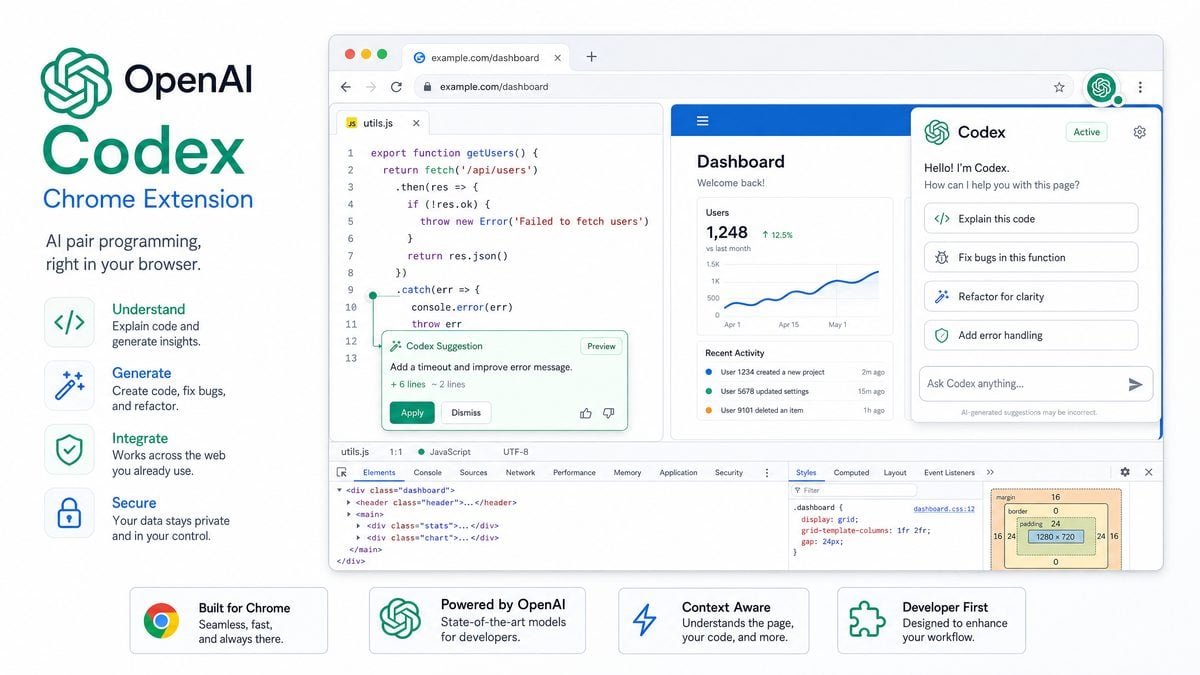
OpenAI Codex has materially changed how developers interact with code by leveraging advanced AI capabilities to generate, complete, and optimize programming tasks. Recently, OpenAI released a new Chrome Extension that integrates Codex directly into the browser, streamlining the web development workflow. This tutorial provides an extensive guide on using the OpenAI Codex Chrome Extension specifically for web development, covering its background, technical underpinnings, practical applications, comparisons with previous tools, and future prospects.
Whether you are a seasoned developer, a technical lead, or a business technology strategist, understanding how to harness this extension will elevate your productivity and innovation potential.
Background and Context: The Evolution of OpenAI Codex in Web Development
The OpenAI Codex is a descendant of GPT-3, fine-tuned to understand and generate programming code across multiple languages including JavaScript, Python, HTML, CSS, and more. It was first introduced to the public through the API and products like GitHub Copilot, enabling developers to write code faster and more accurately.
The new OpenAI Codex Chrome Extension marks a significant milestone by embedding Codex’s coding assistance directly into the browser environment. This allows developers to interact with AI-powered code suggestions on virtually any web-based IDE, text editor, or even content management systems without switching contexts.
This evolution is rooted in addressing pain points such as context switching, repetitive coding tasks, and the need for instant code explanations or snippets while browsing documentation or debugging live code.
Key milestones leading to this release include:
- GPT-3 and Codex API launch: Demonstrated AI’s capability to generate human-like code across languages.
- GitHub Copilot: Popularized AI pair programming inside Visual Studio Code.
- Browser extensions and integrations: Early tools that allowed limited AI assistance on web editors but lacked deep contextual understanding.
- OpenAI Codex Chrome Extension: The latest tool that integrates tightly with browser DOM and user activity, offering real-time, contextual code assistance on any web-based platform.
This background sets the stage for understanding the extension’s mechanics and its transformative impact on web development workflows.
The Paradigm Shift: From Desktop IDEs to Browser-Native Development
For decades, professional web development was primarily anchored to powerful desktop Integrated Development Environments (IDEs) like Visual Studio Code, IntelliJ IDEA, or Sublime Text. These tools offered robust features such as intelligent code completion, debugging tools, version control integration, and project management capabilities. However, the rise of cloud computing, remote work, and the increasing complexity of web applications has gradually shifted parts of the development workflow towards the browser.
Online IDEs like CodeSandbox, StackBlitz, and even cloud-based versions of traditional IDEs (e.g., GitHub Codespaces) have gained traction. These platforms offer instant setup, collaborative features, and the ability to develop from any machine. The OpenAI Codex Chrome Extension capitalizes on this trend by bringing advanced AI capabilities directly into these browser-based environments. Instead of being tied to a specific desktop application, developers can now leverage AI assistance wherever their code lives in the browser.
This shift is not just about convenience; it’s about breaking down barriers. It democratizes access to sophisticated development tools, enabling developers to contribute from less powerful machines, collaborate more seamlessly, and reduce the overhead of local environment setup. The extension acts as a universal AI layer, enhancing any web-based coding interface it encounters, thereby bridging the gap between local and cloud-based development experiences.
Understanding the “Context Switching” Problem in Web Development
One of the most significant productivity drains for developers is context switching. This occurs when a developer has to frequently shift their attention and mental model between different tasks, applications, or information sources. In traditional web development, this might involve:
- IDE to Browser: Writing code in an IDE, then switching to a browser to test, debug, or view documentation.
- Code to Documentation: Encountering an unfamiliar API or function, then opening a new tab to search for its documentation.
- Development to Communication: Interrupting a coding session to answer a message on Slack or respond to an email.
- Code to Version Control: Switching to a terminal or a separate GUI tool to manage Git operations.
Each switch carries a cognitive cost. It takes time and mental effort to re-establish the context of the new task before returning to the original one. Studies suggest that even brief interruptions can significantly impact productivity and introduce errors. The OpenAI Codex Chrome Extension directly addresses this by bringing AI-powered assistance directly into the browser where the developer is already working. Instead of opening a new tab to ask a question, generate a snippet, or look up documentation, the AI can provide these insights inline, within the existing coding environment. This minimizes the need to break flow, keeping the developer focused on the task at hand and reducing the overall cognitive load.
By minimizing context switching, the extension not only saves time but also fosters a more immersive and efficient coding experience, allowing developers to maintain a deeper concentration on problem-solving rather than tool navigation.
Technical Deep Dive: How the OpenAI Codex Chrome Extension Works
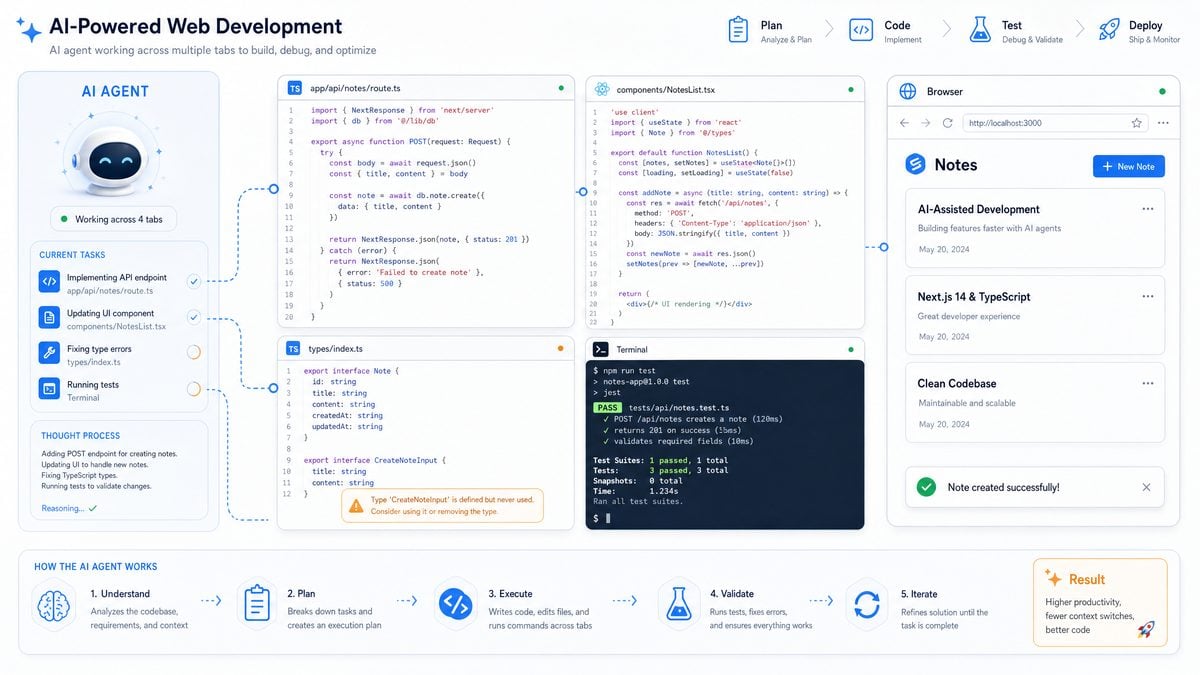
The OpenAI Codex Chrome Extension is a sophisticated integration of AI model inference, browser APIs, and developer tooling. Its architecture and core mechanics can be broken down as follows:
1. Extension Architecture and Browser Integration
- Content Scripts: These are injected into web pages and enable the extension to interact directly with code editors embedded in websites (e.g., CodePen, JSFiddle, online IDEs).
- Background Scripts: Manage API communication with OpenAI’s servers, handle authentication, and maintain session state.
- Popup and UI Components: Provide controls for users to configure Codex prompts, toggle suggestions, and view generated code snippets.
2. Contextual Understanding and Code Generation
One of the extension’s standout features is its ability to understand the context of the code environment on the current page:
- DOM Parsing: The extension analyzes the structure of the webpage to locate code blocks, editors, or text areas.
- Code Context Extraction: It extracts the code surrounding the cursor or selection, enabling Codex to generate relevant completions or suggestions.
- Prompt Engineering: The extension dynamically constructs Codex prompts by combining user input, extracted code, and preset instructions to optimize output quality.
3. Multi-Language Support and Syntax Awareness
Codex supports a variety of programming languages, with the extension automatically detecting the language context based on file types or editor hints. This enables:
- Accurate syntax-aware completions for HTML, CSS, JavaScript, TypeScript, Python, and more.
- Language-specific code snippets and best practices.
- Error detection and suggestions inline with the language semantics.
4. Real-Time Suggestions and Inline Assistance
The extension offers two primary interaction modes:
- Inline Autocomplete: As the developer types, Codex suggests code completions or fixes, similar to traditional IntelliSense but powered by AI.
- On-Demand Queries: Users can highlight code or write natural language prompts to receive tailored code snippets or explanations delivered inline or in a side panel.
5. Security, Privacy, and Data Handling
Given that code can be sensitive, the extension incorporates several safeguards:
- End-to-end encryption of API requests.
- User consent dialogs before sending code snippets to OpenAI servers.
- Options to disable automatic context sharing or restrict certain websites.
6. Customization and Extensibility
The extension supports configuration options, including:
- Adjusting AI creativity or temperature settings to control the variability of code suggestions.
- Creating custom prompt templates for repetitive tasks like generating React components or CSS animations.
- Integration hooks to export generated code directly to version control platforms or issue trackers.
Sample Workflow
Here is a typical interaction flow demonstrating the extension’s mechanics:
- Developer opens an online code editor in Chrome.
- The extension detects the coding environment and activates.
- As the developer types a JavaScript function, Codex suggests auto-completions based on context.
- The developer highlights a block of CSS code and asks for optimization tips via a prompt.
- Codex returns improved CSS rules inline.
- The developer copies the generated code or applies it directly.
Advanced Prompt Engineering for Optimal Results
While the extension automatically constructs basic prompts, its true power for advanced users lies in custom prompt engineering. This involves crafting specific instructions and context for the AI to guide its output. Developers can create predefined prompt templates for common tasks, which can be triggered with a shortcut or a simple command.
For instance, a developer might create a template named “React Component” that, when invoked, automatically adds boilerplate code for a functional React component, including imports, state hooks, and a basic render structure. The prompt might look something like this:
// Generate a React functional component named {ComponentName}
// It should accept props {PropNames} and use useState for {StateVariables}.
// Return only the JSX and JavaScript for the component.
The extension can then dynamically fill in `{ComponentName}`, `{PropNames}`, and `{StateVariables}` based on user input or inferred context. This level of customization allows developers to automate highly specific and repetitive coding patterns, ensuring consistency and adherence to project standards. Furthermore, by experimenting with parameters like `temperature` (which controls randomness) and `max_tokens` (which controls output length), developers can fine-tune the AI’s behavior to be more deterministic for boilerplate code or more creative for exploratory coding tasks.
Effective prompt engineering is a skill in itself, requiring an understanding of how large language models interpret instructions. It transforms the extension from a simple autocomplete tool into a highly configurable, domain-specific code generator.
Leveraging Browser APIs for Seamless Interaction
The seamless integration of the Codex extension within the browser environment is heavily reliant on a sophisticated use of various Chrome Extension APIs. These APIs allow the extension to perform actions that go beyond simple page interaction:
- `chrome.tabs` API: Used by background scripts to query information about open tabs, navigate to specific URLs, or execute scripts within a tab. This is crucial for determining the active coding environment.
- `chrome.scripting` API: Enables the injection of content scripts into specific tabs or frames. This is how the extension gets its “eyes and hands” on the web-based code editors.
- `chrome.storage` API: Provides a way for the extension to store user settings, API keys, and custom prompt templates persistently across browser sessions.
- `chrome.contextMenus` API: Allows the extension to add options to the browser’s right-click context menu, enabling users to trigger Codex actions (like “Explain this code” or “Refactor selection”) directly from highlighted text.
- `chrome.runtime` API: Facilitates communication between different parts of the extension (content scripts, background scripts, popup UI) and also handles message passing to OpenAI’s external API.
- `chrome.declarativeNetRequest` (or `webRequest`): While not directly used for code generation, these APIs could be employed for advanced features like monitoring network requests from the editor to infer backend API structures or to block certain requests for security purposes, though this would require careful permission management.
The intelligent orchestration of these APIs allows the extension to detect a code editor, extract its content, send it to the AI model, receive suggestions, and then inject those suggestions back into the editor in a non-disruptive manner. This intricate dance between browser functionality and AI processing is what makes the “browser-wide support” a reality, distinguishing it from IDE-specific AI tools.
To further enhance your browser-based AI development experience, the comprehensive guide on setting up the OpenAI Codex Chrome Extension offers step-by-step instructions on configuring and utilizing this powerful tool directly within your browser, seamlessly integrating with the ongoing discussion of browser-wide AI support.
Real-World Implications and Use Cases of the OpenAI Codex Chrome Extension
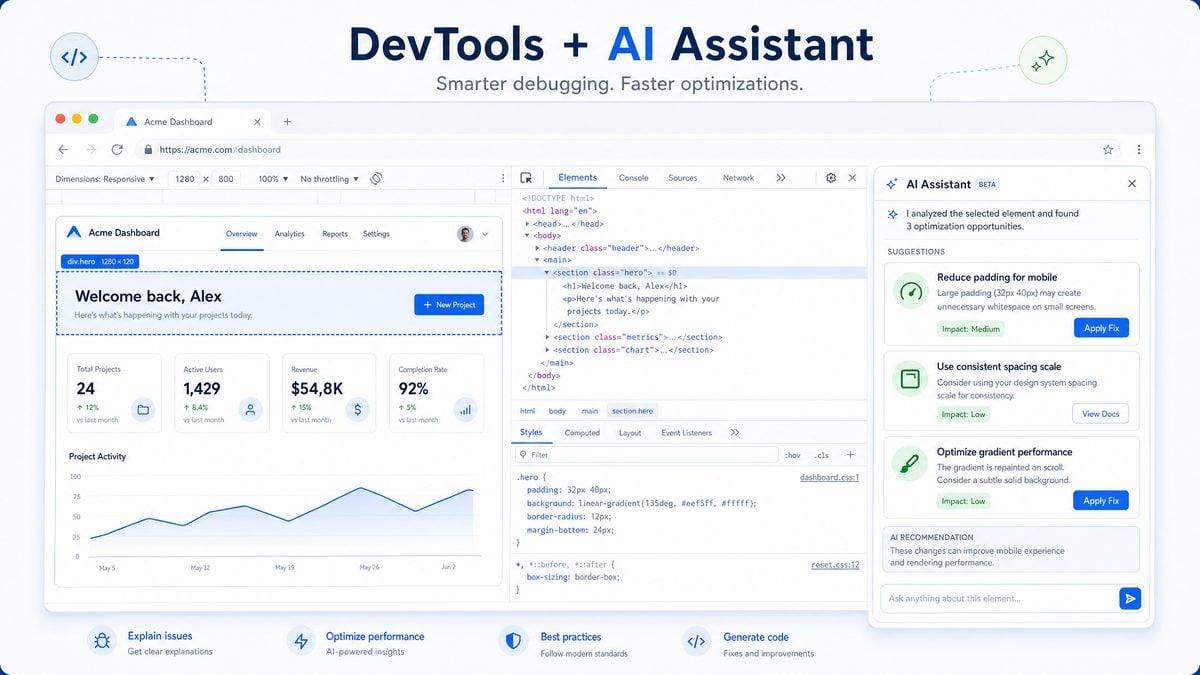
The introduction of the OpenAI Codex Chrome Extension brings tangible benefits and new workflows for developers and organizations. Below are key use cases and their implications:
1. Accelerated Prototyping and MVP Development
Developers can rapidly prototype web interfaces and backend logic by leveraging Codex’s ability to generate boilerplate code, UI components, or API interaction snippets without leaving the browser. This reduces setup time significantly and shortens the development cycle.
2. Enhanced Learning and Debugging Support
Junior developers and learners can use the extension to get instant explanations of complex code snippets or suggestions for fixing bugs. This interactive learning reduces dependence on external documentation and mentors.
3. Code Quality and Consistency Improvement
Codex helps enforce coding standards by generating code that follows best practices and style guides. Teams can configure prompt templates to align with their internal guidelines, improving maintainability.
4. Cross-Platform Development Assistance
Because the extension works on any web-based editor, developers can seamlessly switch between different projects and platforms (e.g., front-end, back-end, mobile web) without adapting to different AI tools or environments.
5. Accessibility and Inclusivity
Developers with disabilities or limited typing speed benefit from AI-generated code suggestions that reduce manual input requirements, enabling a more inclusive coding experience.
Case Study: Streamlining a React Feature Implementation
A mid-sized software company integrated the Codex Chrome Extension into their development workflow to speed up frontend feature rollouts. Developers used the extension to:
- Generate React component skeletons directly in their browser-based editors.
- Receive inline suggestions for managing state and props.
- Quickly refactor legacy code with AI-guided improvements.
The result was a 30% reduction in development time for new features and fewer bugs reported during QA.
Impact on Development Teams and Business Leaders
For team leads and CTOs, the Codex extension offers:
- Improved developer efficiency and onboarding speed.
- Reduced dependence on specialized skills for routine coding tasks.
- Potential cost savings by accelerating delivery cycles.
- Opportunities to innovate by freeing developers to focus on higher-level problem solving.
Advanced Code Refactoring and Optimization
Beyond generating new code, the Codex Chrome Extension excels at refactoring and optimizing existing code, particularly in web development contexts. Developers can highlight a section of JavaScript, CSS, or HTML and prompt Codex to “refactor this function for better readability,” “optimize this CSS for performance,” or “convert this jQuery code to vanilla JavaScript.”
For example, a developer might encounter a deeply nested JavaScript function that is hard to read and maintain. By highlighting it and providing a prompt, Codex can suggest breaking it down into smaller, more manageable functions, introducing clearer variable names, or applying design patterns like the Strategy pattern. In CSS, it can identify redundant rules, suggest shorthand properties, or even propose reorganizing styles for better cascade management. For legacy web applications, it can be an invaluable tool for modernizing old codebases by translating outdated syntax or patterns into contemporary equivalents, significantly reducing the manual effort required for such migrations.
This capability not only improves the quality of the codebase but also serves as a powerful learning tool, showing developers alternative, often more efficient or idiomatic, ways to write code. It helps in maintaining a high standard of code quality across teams without extensive manual code reviews for every minor refactor.
Automating Routine Web Development Tasks
Many web development tasks are repetitive and time-consuming. The Codex Chrome Extension can automate a significant portion of these. Consider tasks like:
- Form Validation: Generating client-side validation logic for various input types (email, password, numbers, etc.) with appropriate error messages.
- API Client Generation: Given an API endpoint and expected data structure, Codex can generate boilerplate code for making fetch requests, handling responses, and parsing JSON.
- Component Scaffolding: Quickly creating file structures and initial code for new components in frameworks like React, Vue, or Angular, including component files, associated CSS/SCSS, and test files.
- CSS Animations: Generating complex CSS keyframe animations or transitions based on natural language descriptions (e.g., “create a fade-in animation that lasts 2 seconds”).
- Accessibility Enhancements: Suggesting ARIA attributes for HTML elements, providing alternative text for images, or ensuring proper keyboard navigation.
- Internationalization (i18n) Placeholders: Inserting boilerplate for translation keys and functions into code.
By automating these routine tasks, developers are freed from the drudgery of repetitive coding, allowing them to focus on the more creative and complex aspects of application logic and user experience design. This not only boosts individual productivity but also ensures that best practices and consistent patterns are applied across the project, reducing the likelihood of errors that often arise from manual, repetitive work.
To further enhance your efficiency, exploring how to automate workflows using tools like the Codex Chrome Extension can be highly beneficial. This comprehensive guide covers the steps to set up automated processes that streamline repetitive tasks and improve overall productivity, building on the principles of best practices discussed earlier. Learn more about how to automate workflows with the Codex Chrome Extension.
Comparisons: OpenAI Codex Chrome Extension vs. Previous Versions and Competitors
Understanding how this new extension stacks up against previous tools and market alternatives helps clarify its unique value.
| Feature | OpenAI Codex Chrome Extension | GitHub Copilot (VS Code) | Tabnine | Kite |
|---|---|---|---|---|
| Platform Integration | Browser-wide support for any web-based editor | Integrated into VS Code only | Multiple IDEs including VS Code, IntelliJ | Multiple IDEs but limited browser support |
| Context Awareness | Dynamic DOM parsing and context extraction | Context based on open files in editor | File-based context | File-based context |
| Multi-language Support | Broad support including web languages and scripting | Strong support focused on popular languages | Wide language support | Focused on Python and JavaScript |
| Customization | Prompt templates and temperature control | Limited customization | Some configuration options | Basic configuration |
| Use Cases | Web development, prototyping, inline assistance | Code completion and pair programming | Code completion and snippet suggestions | Code completion and documentation lookup |
| Privacy Controls | Explicit consent and encryption | API-based with GitHub privacy policies | Local caching options | Local and cloud-based modes |
| Pricing Model | Free with API usage limits, subscription for premium | Subscription-based | Subscription and free tiers | Free and pro tiers |
This comparison highlights that the OpenAI Codex Chrome Extension’s primary differentiation is its browser-wide applicability and deep contextual understanding through DOM parsing, making it uniquely versatile for web developers working in diverse online environments.
Detailed Comparison of AI Models and Underlying Technologies
While all listed tools leverage AI for code assistance, their underlying models and technological approaches differ significantly, impacting their capabilities and performance:
- OpenAI Codex Chrome Extension: At its core is the OpenAI Codex model, a GPT-3 derivative specifically fine-tuned on a massive dataset of publicly available code and natural language. This gives it a deep understanding of programming logic, syntax, and common coding patterns across a wide array of languages. Its strength lies in its ability to generate large, coherent blocks of code from natural language prompts, refactor complex functions, and provide explanations. The browser extension layer then adds the crucial DOM parsing and context extraction logic, allowing it to adapt to any web-based editor. This combination of a powerful general-purpose code AI and flexible browser integration is unique.
- GitHub Copilot: Also powered by OpenAI Codex, Copilot benefits from the same underlying model capabilities. Its primary distinction is its tight integration within Visual Studio Code. This integration allows it to deeply understand the project structure, open files, and even comments within the IDE, providing highly contextual suggestions. However, its scope is limited to the VS Code environment, making it less versatile for developers who frequently work in online IDEs or different local editors. The core AI capabilities are similar to the Chrome Extension, but the delivery mechanism and integration depth differ.
- Tabnine: Tabnine utilizes its own proprietary AI models, often trained on open-source codebases. Historically, Tabnine focused more on “deep learning” for code completion, predicting the next token or line of code based on local context and learned patterns. While it offers multi-language support and integrates with many IDEs, its suggestions are typically shorter and more completion-focused compared to the generative capabilities of Codex. Tabnine often provides highly accurate, shorter completions, making it a powerful tool for speeding up typing, but it generally doesn’t generate entire functions or classes from natural language as effectively as Codex.
- Kite (now deprecated, but important for historical context): Kite, before its deprecation, combined local code analysis with cloud-based AI to provide intelligent completions and documentation lookup. It was particularly strong for Python and JavaScript, offering function signatures, parameter suggestions, and links to relevant documentation. Kite’s approach involved a local engine that indexed the user’s code and a cloud component for more advanced AI. While innovative for its time, its AI capabilities were less generative than Codex and its browser support was minimal. Its focus was more on enhancing existing coding patterns rather than generating entirely new code from scratch.
In essence, the OpenAI Codex Chrome Extension and GitHub Copilot represent the bleeding edge of generative AI for code, while Tabnine and the historical Kite focused more on intelligent code completion and contextual assistance. The Chrome Extension’s unique selling proposition is its ability to bring the power of Codex to *any* web-based coding environment, democratizing access to this advanced generative AI.
The Nuances of Context Awareness and Data Privacy
The extent and nature of “context awareness” and “data privacy” are critical differentiators among these tools:
- OpenAI Codex Chrome Extension: Its context awareness is truly dynamic. By performing DOM parsing, it can identify and extract code from arbitrary text areas or custom-built editors on any webpage. This means it’s not limited to predefined file types or IDE structures. However, this broad access necessitates robust privacy controls. The explicit user consent dialogs before sending code snippets to OpenAI servers are paramount. Users can choose to disable automatic context sharing for sensitive projects or restrict the extension to specific domains, giving them fine-grained control over what data leaves their browser.
- GitHub Copilot: Its context is primarily derived from the files open in the VS Code editor, the project structure, and local comments. While powerful within the IDE, it doesn’t “see” arbitrary web pages. GitHub’s privacy policy for Copilot specifies how code snippets are used for model improvement, often with options for users/organizations to opt-out of data collection for training. The data flow is typically from the local IDE to GitHub/OpenAI servers.
- Tabnine: Tabnine offers various modes, including a local-only model that processes code entirely on the user’s machine, enhancing privacy. Its cloud models would send snippets for processing, but often with strong assurances about data anonymization and non-use for training on private code. Its context is primarily file-based and less about the dynamic environment of a webpage.
- Kite: Kite’s hybrid approach meant some data was processed locally, while other, more complex requests went to the cloud. Its privacy model was similar to Tabnine, focusing on anonymization and user control over data sharing.
The key takeaway is that the Chrome Extension’s broad contextual reach, while powerful, also places a greater emphasis on transparent user consent and strong privacy controls, given the diverse and potentially sensitive environments it operates within. Developers must be diligent in understanding and configuring these privacy settings for any AI coding assistant they use.
Future Outlook: What Lies Ahead for OpenAI Codex and Browser-Based AI Development Tools
The launch of the OpenAI Codex Chrome Extension is just the beginning of a broader trend toward AI-enhanced browser tooling. Several developments are anticipated:
1. Deeper Browser-Native AI Integration
Future browser versions may embed AI capabilities natively, reducing latency and improving offline support. This would enable instant code assistance even without continuous internet access.
2. Expanded Language and Framework Support
Codex models will continue to evolve, supporting increasingly complex languages, frameworks, and domain-specific languages, broadening their applicability across all layers of web development.
3. Enhanced Collaboration Features
Integration with team collaboration platforms could allow Codex to suggest code that aligns with team style guides, track changes, and even automate code reviews within the browser environment.
4. Personalized AI Coding Assistants
Machine learning models may adapt to individual developer styles and preferences, offering hyper-personalized suggestions and learning from project-specific contexts and previous commits.
5. Ethical and Security Enhancements
With increased AI usage, there will be stronger emphasis on preventing code plagiarism, bias in code generation, and safeguarding proprietary or sensitive code from unauthorized sharing.
6. Integration with Low-Code and No-Code Platforms
The extension’s AI capabilities could bridge the gap between traditional coding and low-code platforms, empowering citizen developers to build more robust web applications with AI assistance.
The Rise of AI-Powered Code Auditing and Security Scanning
As AI models become more sophisticated in understanding code semantics and potential vulnerabilities, future iterations of browser-based AI tools could offer real-time code auditing and security scanning. Imagine an extension that not only suggests code but also flags potential security flaws (e.g., SQL injection vulnerabilities, cross-site scripting risks, insecure API key handling) as you type, or suggests best practices for secure coding directly within your web editor.
This would involve the AI analyzing the generated or written code against a vast database of known vulnerabilities and secure coding patterns. It could suggest fixes, point to relevant security documentation, or even automatically refactor insecure code blocks. For web developers, this means an immediate feedback loop on security, making it easier to write secure code from the outset rather than relying solely on post-development security audits. Such a feature would be particularly invaluable in fast-paced development environments where security can sometimes be an afterthought, providing an always-on security expert right in the browser.
Towards Multi-Modal AI in Web Development
The current OpenAI Codex primarily operates on text (code and natural language). However, the future of AI in web development is likely to be multi-modal. This means the AI could understand and generate not just code, but also visual elements, user interface designs, and even voice commands.
- Visual-to-Code Generation: Imagine sketching a UI element or providing an image of a desired component, and the AI generates the corresponding HTML and CSS directly in your browser editor.
- Voice-Controlled Coding: Developers could verbally describe the functionality they need, and the AI would generate the code, reducing the reliance on typing.
- Interactive Debugging with Visual Feedback: AI could analyze runtime errors, suggest fixes, and even visually highlight the problematic areas in the browser’s rendered output, bridging the gap between code and its visual manifestation.
This multi-modal approach would transform the development process into a more intuitive and natural interaction, allowing developers to express their intentions in the most convenient way, whether through text, voice, or visual input, and receive intelligent, context-aware assistance in return. The browser, with its inherent ability to render visual content and interact with user inputs, is the ideal platform for such advancements.
Developers and business leaders should prepare to embrace these changes by fostering AI literacy, adapting workflows, and continuously evaluating emerging tools to maintain competitive advantage.
Useful Links
- Official OpenAI Codex Announcement
- GitHub Copilot Overview
- Chrome Extension Development Guide
- Understanding the Document Object Model (DOM)
- TypeScript Official Documentation
- JavaScript MDN Web Docs
- The Future of AI in Web Development
- AI-Assisted Software Development: Trends and Challenges
- In-Depth OpenAI Codex Tutorials
Frequently Asked Questions
What is an agentic workflow?
A workflow where an AI agent plans, executes, and adjusts a sequence of actions to achieve a goal, not just answer a single prompt.
How is an agent different from a chatbot?
A chatbot responds turn by turn, while an agent keeps state, calls tools, and can continue working without constant human prompts.
Do I need a multi-agent setup from day one?
No. Most teams start with a single well-scoped agent and later add more agents as the use case matures.
What tooling do I need for agentic systems?
You need orchestration (planner), memory, logging/observability, and reliable tool/API integrations.
How do I keep agents safe and aligned?
Use clear system policies, strict tool permissions, logging, and human-in-the-loop checkpoints for high-impact actions.
Where should I pilot agentic workflows?
Start with internal workflows that have clear success criteria and low external risk, such as dev tooling or internal support.
Access 40,000+ AI Prompts for ChatGPT, Claude & Codex — Free!
Subscribe to get instant access to our complete Notion Prompt Library — the largest curated collection of prompts for ChatGPT, Claude, OpenAI Codex, and other leading AI models. Optimized for real-world workflows across coding, research, content creation, and business.
Access Free Prompt Library