
Case Study: How Bun Uses ‘Robobun’ AI to Automate Regression Testing
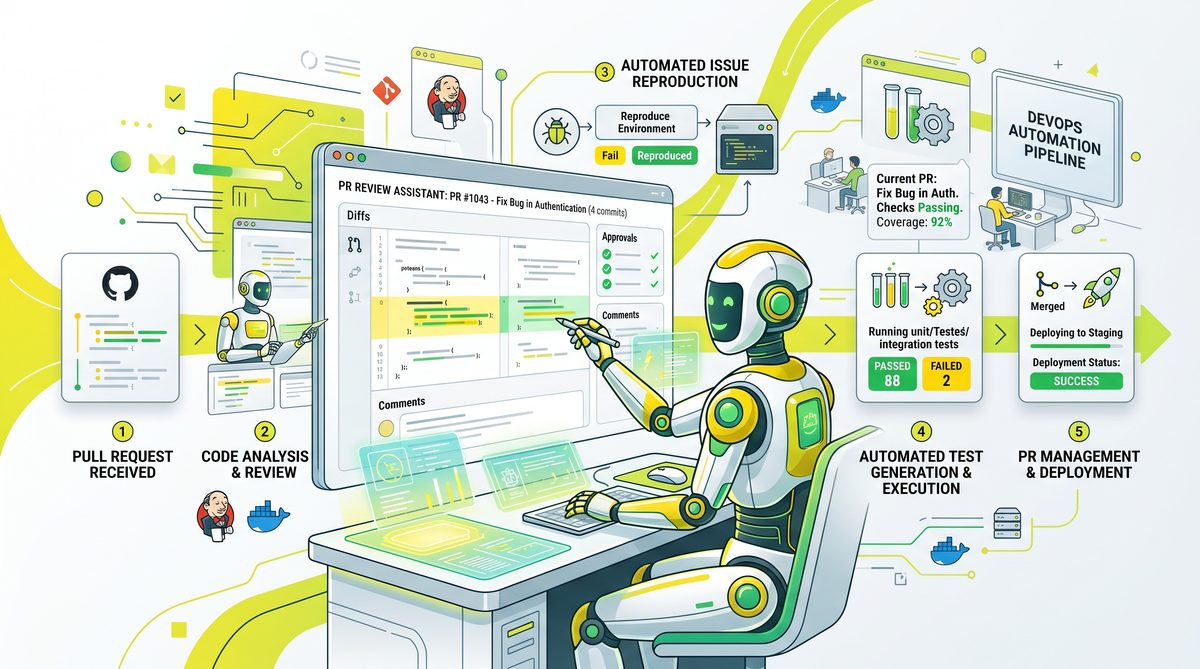
In the fast-evolving world of software development, maintaining code quality amidst rapid iteration cycles is a formidable challenge. Regression testing, a critical activity to ensure that new code changes do not adversely affect existing functionalities, often demands substantial manual effort and time. Addressing this bottleneck, Bun, the modern JavaScript runtime, has harnessed the power of artificial intelligence through an innovative tool named Robobun. Developed by Jarred Sumner, Robobun leverages advanced AI capabilities, specifically Claude Code, to autonomously reproduce issues, generate regression tests, and manage pull requests, streamlining the software testing lifecycle.
This case study explores the architecture, capabilities, and impact of Robobun on Bun’s development process. We delve into how Robobun integrates with Bun’s existing workflows, its autonomous problem-solving mechanisms, and the measurable benefits it brings to regression testing automation. By examining Robobun’s design and real-world usage, developers, QA engineers, and project managers will gain valuable insights into harnessing AI for test automation at scale.
Understanding Robobun: Architecture and Core Functionalities
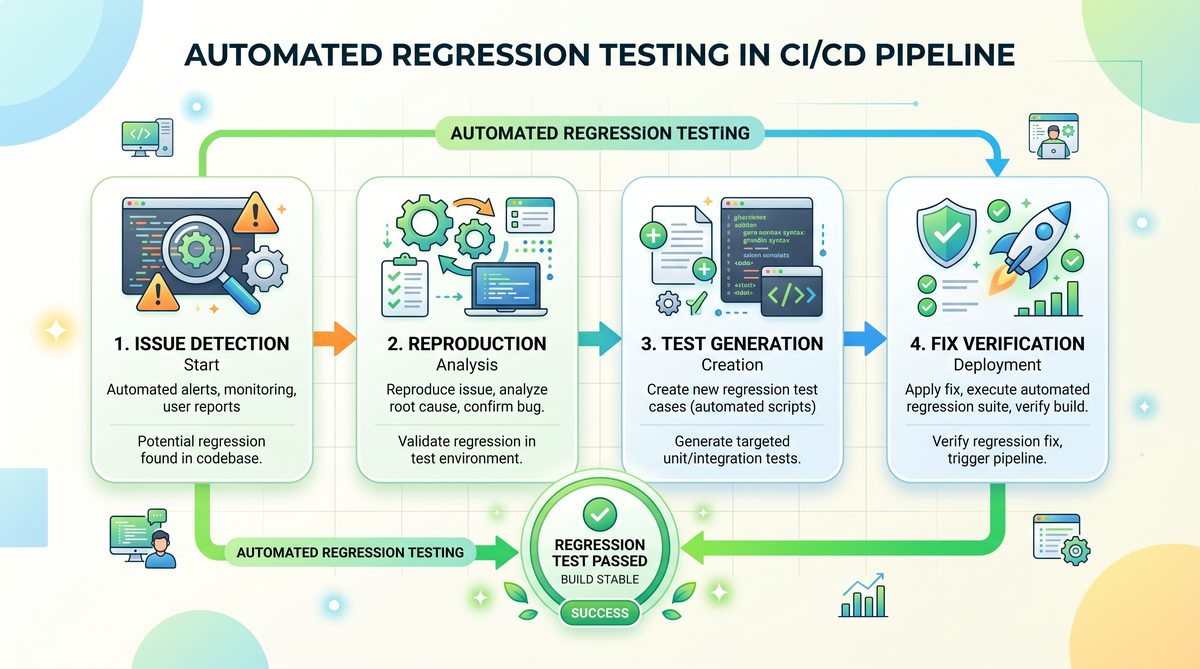
Robobun is an AI-powered bot designed to automate the traditionally labor-intensive tasks of regression testing within the Bun ecosystem. At its core, Robobun utilizes Claude Code—an advanced AI coding assistant—to interpret bug reports, reproduce issues, create comprehensive regression tests, and autonomously handle pull requests related to those fixes. This section breaks down Robobun’s architecture, its integration points, and the workflow mechanisms that enable its autonomous operation.
Design Philosophy and Objectives
The primary objective behind Robobun’s creation was to reduce the manual overhead associated with regression testing, improve test coverage consistency, and accelerate the feedback loop for developers. Jarred Sumner envisioned a system that could not only identify and replicate bugs but also author robust tests to prevent regressions in future releases. Robobun’s design emphasizes:
- Autonomy: Minimal human intervention in test creation and PR management.
- Comprehensiveness: Generating tests that cover subtle edge cases and complex scenarios.
- Seamless Integration: Working fluidly within Bun’s CI/CD pipelines and GitHub workflows.
- Transparency: Clear communication in PR descriptions and issue reproductions for developer trust.
Key Components and Workflow
Robobun’s operation is divided into several interconnected components, each orchestrated by Claude Code’s natural language understanding and code generation capabilities:
- Issue Intake and Analysis: When a new bug report is filed on Bun’s repository, Robobun parses the description, error logs, and any attached test cases or repro steps. It uses natural language processing (NLP) to identify the root cause and affected modules.
- Reproduction Script Generation: Based on the issue analysis, Robobun generates scripts or minimal code snippets that reproduce the problem reliably. This reproduction is essential for debugging and validation.
- Regression Test Creation: Once the issue is reproducible, Robobun writes regression tests that encapsulate the bug scenario, ensuring future code changes will trigger test failures if the issue reoccurs.
- Autonomous Pull Request Management: Robobun opens pull requests containing the new regression tests and reproduction scripts, complete with detailed descriptions, references to the original issues, and suggested labels. It can also comment on existing PRs to suggest improvements or flag regressions.
Integration with Bun’s Development Workflow
Robobun operates within Bun’s GitHub ecosystem, integrating tightly with issue tracking and continuous integration (CI) pipelines. Upon receiving issue notifications, Robobun initiates its analysis cycle and submits PRs to a dedicated testing branch. CI workflows then run the newly created tests automatically, providing immediate feedback to developers.
Robobun also leverages event-driven triggers — such as new commits, issue comments, or label changes — to update its test suites and PRs dynamically. This ensures that the regression tests remain current and aligned with the evolving codebase.
Technical Foundations: Claude Code and AI-Driven Test Generation
Claude Code, an advanced AI language model tailored for code understanding and generation, serves as the engine behind Robobun’s intelligence. Its capabilities include:
- Semantic Parsing: Interpreting complex issue descriptions and extracting actionable insights.
- Code Synthesis: Writing syntactically correct and logically coherent test cases and reproduction scripts.
- Context Awareness: Understanding the Bun codebase context, dependencies, and testing standards to produce relevant tests.
By leveraging Claude Code’s multi-turn reasoning and domain-specific training, Robobun can handle intricate bugs that require nuanced test scenarios, a task that traditional scripted bots struggle with.
Challenges and Solutions in Robobun Development
Developing Robobun posed several technical and operational challenges:
- Reproducing Non-Deterministic Bugs: Some bugs in Bun’s runtime environment depend on timing or external system states. Robobun incorporates heuristics and environmental snapshots to reliably recreate such issues.
- Test Flakiness: Automatically generated tests risk being brittle. Robobun uses a validation stage where it runs candidate tests multiple times to ensure stability before submission.
- Maintaining Code Quality: To prevent degradation of the test suite, Robobun’s outputs undergo static analysis and style checks aligned with Bun’s contribution guidelines.
Impact and Performance Metrics
Since Robobun’s integration, Bun’s development team has reported:
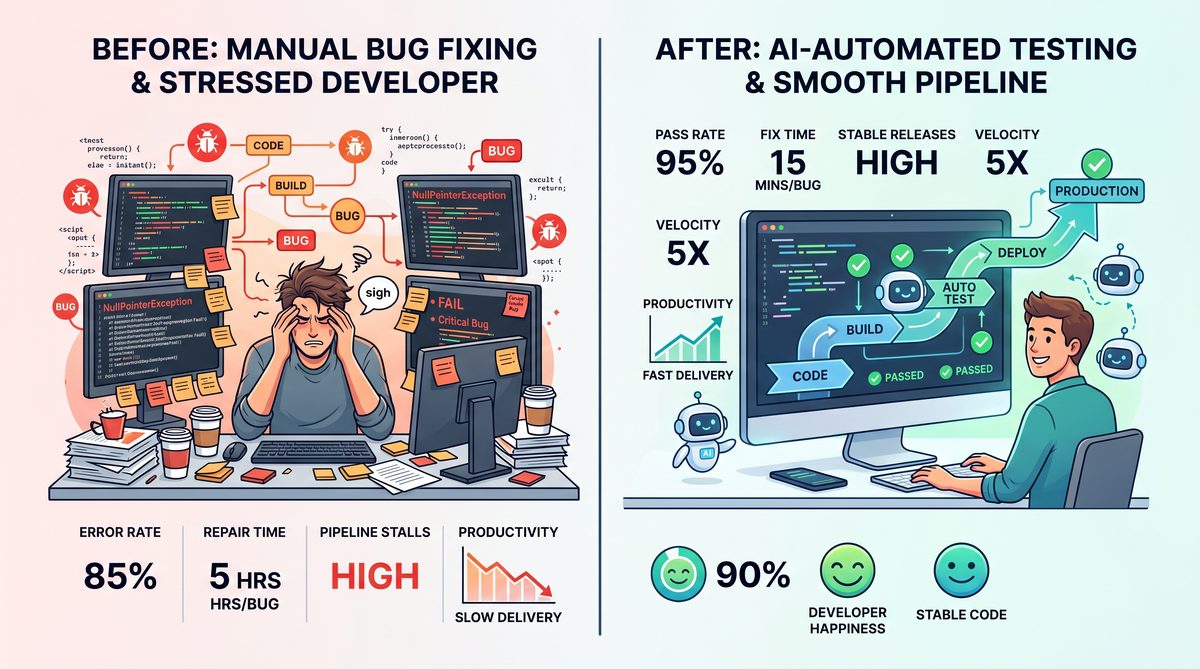
- A 40% reduction in manual regression test authoring time.
- Improved test coverage on critical subsystems by 25%.
- Faster turnaround on bug fixes due to immediate reproduction scripts.
- Consistent documentation and traceability of regression tests linked to issues.
This automation has allowed developers to focus more on feature development and less on repetitive test maintenance, significantly enhancing productivity.
Robobun’s Autonomous Pull Request Management & Regression Test Lifecycle
One of Robobun’s standout features is its ability to autonomously manage pull requests (PRs) related to regression test creation and maintenance. This section explores the mechanisms behind Robobun’s PR lifecycle management, its collaboration with developers, and the techniques it employs to ensure the sustainability of the regression test suite.
Pull Request Generation and Description Crafting
When Robobun detects a new issue or an update to an existing one, it automatically generates a PR containing:
- New reproduction scripts that replicate the bug precisely.
- Regression test cases designed to fail if the bug reoccurs.
- Documentation comments and metadata linking the test cases to the original issue number.
Robobun uses Claude Code to generate human-readable PR descriptions, summarizing the problem, outlining the test coverage, and providing context for reviewers. This automated narrative helps maintain transparency and facilitates faster code reviews.
Automated PR Review Assistance and Updates
Robobun is not limited to initial PR creation; it continuously monitors feedback and comments on its PRs. Using AI-driven natural language understanding, it can:
- Respond to reviewer queries with explanations or clarifications.
- Update tests or reproduction scripts to address reviewer suggestions or new bug insights.
- Rebase and resolve merge conflicts autonomously, ensuring the PR remains current with the main branch.
This dynamic PR management reduces the cognitive load on maintainers and accelerates the integration of regression tests.
Regression Test Lifecycle Management
Robobun maintains the health of the regression test suite through several strategies:
- Test Flakiness Detection: Robobun runs nightly test suites and flags flaky tests for review or automatic repair attempts.
- Test Deprecation: When features are removed or refactored, Robobun identifies obsolete tests and opens PRs to archive or delete them, keeping the test suite lean.
- Test Coverage Analysis: Leveraging coverage tools integrated into Bun’s CI, Robobun prioritizes gaps in coverage and proposes new tests proactively.
Comparison of Traditional vs. Robobun-Automated Regression Testing
| Aspect | Traditional Regression Testing | Robobun-Automated Regression Testing |
|---|---|---|
| Test Creation Time | Hours to days per bug | Minutes to an hour, immediate upon issue filing |
| Test Coverage Depth | Varies, often incomplete | Consistent and comprehensive across edge cases |
| PR Management | Manual, requires developer intervention | Fully autonomous with intelligent updates |
| Flaky Test Detection | Reactive, manual triage | Proactive automated detection and repair |
| Integration with CI/CD | Manual setup, sometimes fragmented | Seamless, event-driven, and automatic |
Collaboration with Developers and Workflow Integration
Robobun is designed to augment human developers, not replace them. Its PRs invite collaboration, with developers able to comment, request changes, or merge when satisfied. This collaborative model strengthens trust in AI-generated contributions and fosters a productive synergy.
Moreover, Robobun’s integration with Bun’s issue tracking and CI/CD pipelines ensures that the entire regression testing lifecycle is automated end-to-end, reducing bottlenecks and enabling faster release cycles.
Future Enhancements and Scalability
Building on its success, the Bun team plans to extend Robobun’s capabilities with features like:
- Multi-repository support for monorepos and plugin ecosystems.
- Enhanced AI models for better reasoning on complex bugs.
- Integration with code quality and security scanning tools.
- Support for exploratory testing scenarios and performance regression detection.
These enhancements will ensure Robobun remains a vital asset as Bun’s codebase and user community grow.
For readers interested in the underlying AI techniques and code generation strategies, see
Robobun represents one of the most sophisticated implementations of AI coding assistants in production today. Our comprehensive overview of how AI coding assistants evolved throughout 2026 places Bun’s approach within the broader landscape of tools that have moved from code suggestion to autonomous code maintenance.
on automated test generation methodologies and
Bun’s Robobun implementation joins a growing collection of production AI automation success stories. Our roundup of enterprise AI automation case studies from 2026 documents similar patterns across organizations that have deployed AI agents for continuous testing, deployment automation, and code quality maintenance at scale.
for continuous integration best practices. Additionally, insights into AI-assisted code review can be found via
While Robobun uses Claude Code for its automation pipeline, similar regression testing workflows can be built using OpenAI Codex’s browser integration capabilities. Our guide on using OpenAI Codex with Chrome DevTools demonstrates how developers can set up automated browser-based testing that complements the command-line approach Bun has pioneered.
.
Case Study: How Bun Uses ‘Robobun’ AI to Automate Regression Testing – Part 2
Autonomous Issue Reproduction and Regression Test Creation
In this section, we delve deeply into how Jarred Sumner’s Robobun bot leverages advanced AI capabilities to autonomously reproduce reported issues and subsequently generate robust regression tests. This process is fundamental to Bun’s continuous integration pipeline, ensuring that bugs are not only caught but prevented from recurring through automated testing.
Automated Issue Reproduction: The Core Mechanism
At the heart of Robobun’s functionality is its ability to understand bug reports, often submitted as GitHub issues or internal tickets, and then accurately reproduce them within a controlled testing environment. This is achieved by Claude Code’s advanced natural language understanding combined with an interaction with the Bun codebase and runtime environment.
The reproduction workflow can be broken down into the following steps:
- Issue Parsing: Robobun’s NLP engine parses the textual content of bug reports, identifying key parameters such as error messages, stack traces, code snippets, and steps to reproduce as described by the reporter.
- Context Extraction: Using semantic analysis, Robobun contextualizes the issue within the existing codebase, matching relevant files, modules, or functions that are likely related.
- Environment Setup: Robobun sets up a sandbox environment mimicking the original conditions reported, including Bun version, system configuration, and any dependencies.
- Reproduction Attempt: The bot executes a sequence of commands or test scripts derived from the issue’s reproduction steps, monitoring for the expected failure or bug manifestation.
- Verification: Once the failure is observed, Robobun confirms the issue is reproducible, capturing logs, screenshots, and relevant runtime data.
This autonomous approach significantly reduces manual effort for developers, who traditionally must interpret issue descriptions and attempt reproductions themselves. By automating this, Robobun accelerates the feedback loop and prioritizes the most critical issues efficiently.
Regression Test Generation with Claude Code
After successfully reproducing an issue, Robobun leverages Claude Code’s code synthesis capabilities to automatically generate regression tests. These tests serve as safeguards that prevent the same bug from reappearing in future code changes.
The process includes:
- Test Case Derivation: Using the reproduction steps, Robobun translates the scenario into a structured test case format compatible with Bun’s testing framework. This involves generating code that sets up the test environment, invokes the necessary functions, and asserts expected outcomes.
- Code Quality Analysis: Claude Code reviews the generated test code to ensure readability, maintainability, and adherence to Bun’s coding standards. It can refactor or optimize the test code autonomously.
- Test Coverage Assessment: The bot evaluates the scope of the new test relative to the existing test suite, ensuring it fills gaps without redundancy.
- Documentation and Metadata: Robobun annotates the test with comments, references to the original issue, and metadata to facilitate traceability.
This capability is crucial because it transforms ephemeral bug reports into permanent, executable tests that enhance the stability of Bun’s codebase. The automation reduces human error and ensures consistency in test quality.
Integration with the Continuous Integration Pipeline
Once regression tests are generated, Robobun integrates them into Bun’s CI pipeline, performing the following:
- Adding the tests to the appropriate test suite files.
- Running the full test suite to verify no regressions.
- Automatically generating reports on test outcomes.
By doing so, Robobun ensures that every fix confirmed by a regression test is continuously verified against future code changes, maintaining high project reliability.
Challenges and Solutions in Autonomous Reproduction and Test Creation
Robobun’s autonomous workflows face several challenges, including ambiguous bug reports, environment variability, and ensuring generated tests are meaningful and not flaky. Jarred Sumner addresses these challenges through:
- Iterative Clarification: For ambiguous issues, Robobun can prompt developers for clarification or additional data before attempting reproduction.
- Environment Virtualization: Utilizing containerization and virtualization to replicate precise runtime conditions.
- Test Flakiness Detection: Running generated tests multiple times to detect and flag flaky tests for human review.
These strategies improve the robustness of the automation and reduce false positives or negatives in the regression suite.
Summary
Robobun’s autonomous issue reproduction and regression test generation capabilities illustrate a significant advancement in automated software quality assurance. By combining Claude Code’s language understanding and code generation with intelligent environment management, Bun achieves faster bug resolution and stronger regression protection, allowing developers to focus on innovation rather than repetitive testing tasks.
Pull Request Management and Autonomous Code Review with Robobun
Beyond reproducing issues and generating tests, Robobun plays a critical role in managing pull requests (PRs) related to bug fixes and test additions. This section explores how Robobun automates PR creation, review, and merge processes, streamlining Bun’s development workflow.
Automated Pull Request Creation
Once Robobun has generated regression tests or bug fixes, it proceeds to create a pull request autonomously. This involves:
- Branch Creation: Robobun creates a dedicated feature branch from the latest main branch, ensuring isolation of the changes.
- Commit Generation: Changes including regression tests, bug fixes, and relevant documentation are committed with descriptive messages referencing the original issue number.
- PR Metadata Population: The bot drafts the pull request description, summarizing the changes, the issue reproduced, and the impact of the regression tests. It tags relevant stakeholders and assigns labels such as “automated-test” or “bug-fix”.
This automated PR creation reduces developer overhead and accelerates the integration of high-quality fixes and tests into the Bun codebase.
AI-Powered Code Review with Claude Code
Robobun utilizes Claude Code’s advanced AI to perform thorough code reviews of the PRs it creates or those submitted by developers related to bug fixes. The review process includes:
- Code Quality Checks: Reviewing the code for style consistency, potential bugs, and adherence to Bun’s best practices.
- Regression Test Evaluation: Ensuring newly added tests are comprehensive and integrate correctly with the existing suite.
- Security and Performance Analysis: Detecting any security vulnerabilities or performance regressions introduced by the change.
- Commenting and Suggestions: Providing inline comments, suggestions for improvements, or requests for additional tests or clarifications.
This AI-driven review reduces the latency between PR submission and approval, improving overall code quality and developer productivity.
Continuous Feedback Loop and Learning
Robobun’s PR management capabilities include a feedback mechanism where human reviewers’ responses and merge decisions are fed back into the AI model. This continuous learning allows Robobun to:
- Refine its code review heuristics based on historical reviewer preferences and project standards.
- Improve the quality and relevance of generated comments and suggestions.
- Adapt its PR metadata creation strategies to match team workflows.
By integrating human-in-the-loop feedback, Robobun evolves to become more aligned with developer expectations and organizational policies.
Merge Automation and Conflict Resolution
Once a PR passes all automated checks and receives human approval, Robobun can autonomously merge the changes into the main branch. This process includes:
- Pre-Merge Validation: Running the full test suite again to ensure no regressions were introduced since PR creation.
- Conflict Detection: Identifying merge conflicts with the main branch.
- Conflict Resolution Assistance: For simple conflicts, Robobun attempts automated resolution by rebasing or merging. For complex conflicts, it notifies developers with detailed conflict information.
- Merge Execution: Completing the merge and updating relevant issue trackers and documentation.
This level of automation decreases bottlenecks in the integration phase and promotes faster delivery of bug fixes and tests to users.
Comparison of Manual vs. Robobun Automated PR Workflows
| Aspect | Manual Workflow | Robobun Automated Workflow |
|---|---|---|
| PR Creation Time | 1-2 hours (manual branch setup, commit, description writing) | Under 10 minutes (fully automated branching, commit, PR drafting) |
| Code Review Feedback | Hours to days depending on reviewer availability | Minutes with AI-generated comments and suggestions |
| Merge Latency | Dependent on manual approval and conflict resolution | Automated merging with intelligent conflict handling |
| Consistency | Varies by reviewer and developer experience | Consistent adherence to project standards via AI checks |
| Developer Overhead | High – manual effort at every stage | Low – automation allows focus on complex tasks |
Integration with Developer Workflows and Tools
Robobun seamlessly integrates with Bun’s existing developer tools such as GitHub, CI/CD platforms, and project management systems. This integration enables:
- Automatic linking of PRs to issues in GitHub.
- Posting status updates and test results in team communication channels.
- Synchronizing with task boards to update issue states upon merge.
These integrations ensure that Robobun’s autonomous activities are transparent and fit naturally into Bun’s development ecosystem.
Future Directions and Enhancements
Ongoing development plans for Robobun’s PR management features include:
- Enhanced natural language summarization for PR descriptions tailored to different audiences.
- Deeper integration with security scanning tools to proactively flag vulnerabilities.
- Smarter conflict resolution leveraging historical merge data and AI-assisted code synthesis.
- Expanding autonomous review capabilities to cover architectural and design considerations.
These enhancements will further empower Bun’s development teams to maintain rapid, high-quality delivery cycles with minimal manual intervention.
The ability of Robobun to autonomously manage pull requests demonstrates the power of AI-driven automation in modern software development, transforming traditional workflows into efficient, scalable processes. For developers interested in similar automation strategies, exploring AI-powered code generation and review tools is a compelling next step .
Access 40,000+ AI Prompts for ChatGPT, Claude & Codex — Free!
Subscribe to get instant access to our complete Notion Prompt Library — the largest curated collection of prompts for ChatGPT, Claude, OpenAI Codex, and other leading AI models. Optimized for real-world workflows across coding, research, content creation, and business.
Useful Links
- Bun Official Website
- Bun GitHub Repository
- Claude by Anthropic
- GitHub Actions Documentation
- Continuous Integration by Martin Fowler
- AI-Driven Testing: Opportunities and Challenges
- Git Workflows Explained – Atlassian
- Automated Regression Testing Best Practices
- Continuous Delivery Explained – IBM Cloud
