
Role-Based Prompting for AI Agents: How to Structure ‘Respond as a…’ Commands for Maximum Accuracy
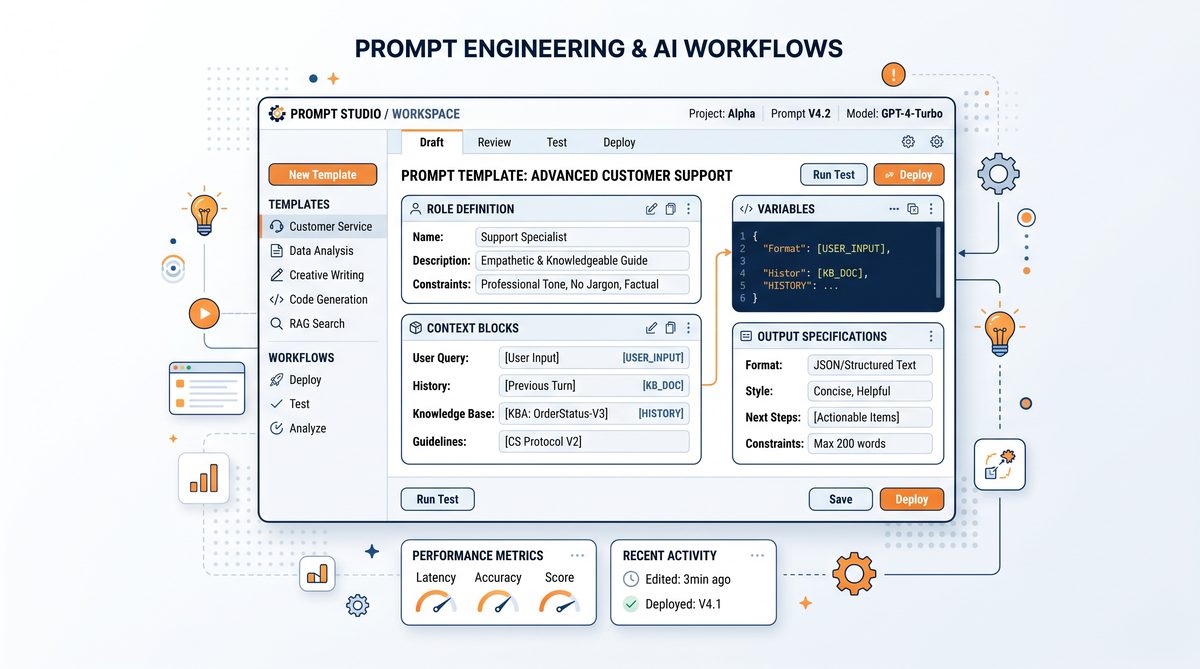
Role-Based Prompting for AI Agents: How to Structure ‘Respond as a…’ Commands
The rapid evolution of AI language models has transformed how developers and organizations integrate intelligent agents into their workflows. Among these innovations, role-based prompting stands out as a powerful technique to guide AI agents like OpenAI’s Codex and Anthropic’s Claude Code towards generating more accurate, context-aware, and relevant responses. By explicitly defining the role an AI should “respond as,” prompt engineers can significantly improve the quality of outputs, minimize hallucinations, and tailor interactions for specific use cases.
In this comprehensive guide, we delve into the principles and best practices of role-based prompting, focusing on how to effectively structure “Respond as a…” commands for autonomous AI agents. We will explore the underlying theory, practical methodologies, and nuanced considerations for optimizing prompts to enhance AI performance, particularly when working with code generation and reasoning tasks.
Understanding Role-Based Prompting: Foundations and Importance
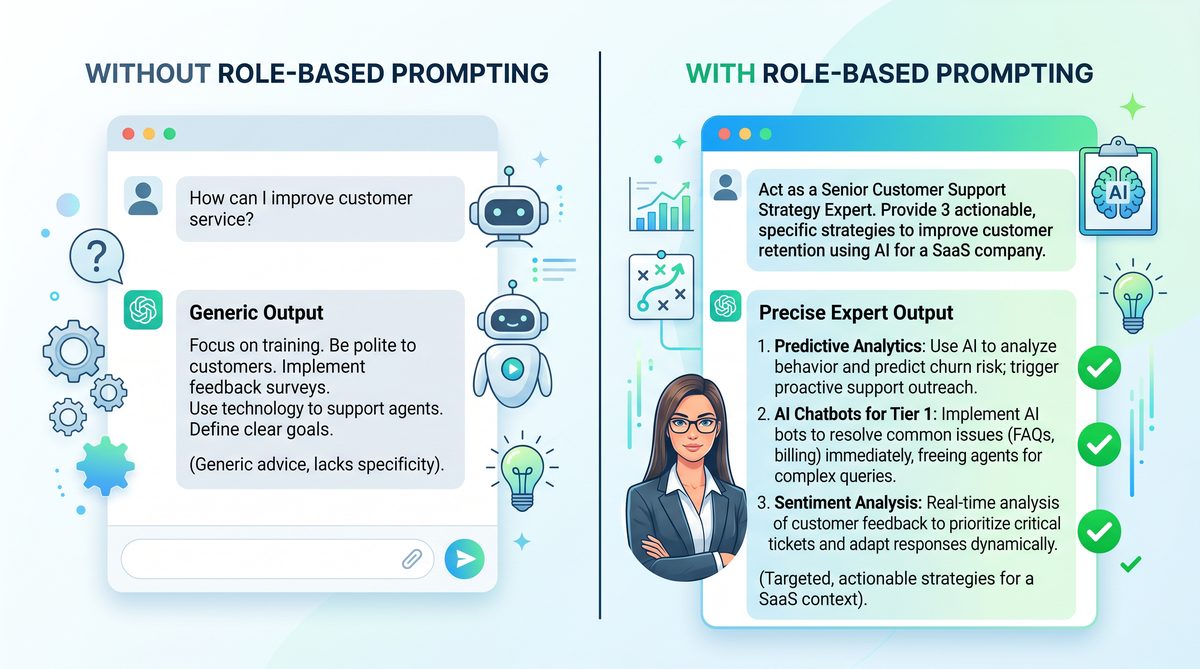
Role-based prompting is a specialized prompting technique where the AI model is instructed to assume a particular role or persona before generating a response. This approach is essential in scenarios where the AI must demonstrate domain expertise, adhere to specific communication styles, or maintain contextually relevant knowledge boundaries. By guiding the AI to “respond as a software engineer,” “respond as a legal advisor,” or “respond as a data scientist,” prompt engineers can channel the model’s vast training data and pattern recognition capabilities into more precise and coherent outputs.
Why Role-Based Prompting Matters
Large language models (LLMs) like Codex and Claude Code are trained on diverse datasets spanning numerous domains and styles. While this vast training enables flexible and versatile responses, it also introduces ambiguity. Without a clearly defined role, the AI might generate outputs that are off-topic, overly generic, or even factually incorrect—commonly referred to as hallucinations. Role-based prompting mitigates these issues by constraining the model’s generative space, essentially narrowing down its focus.
Moreover, role-based prompts help in:
- Establishing Context: Setting a role provides a frame of reference, which is crucial for complex tasks that require domain-specific knowledge.
- Improving Relevance: It reduces irrelevant or tangential information by aligning responses with expected expertise.
- Enhancing Consistency: Role instructions encourage the AI to maintain a consistent voice and approach throughout multi-turn interactions.
- Reducing Hallucinations: By focusing responses through a role’s lens, models are less prone to fabricate unsupported facts.
Role-Based Prompting in Autonomous AI Agents
Autonomous agents, which act independently to perform complex tasks such as coding, data analysis, or customer support, benefit immensely from role-based prompting. These agents often need to:
- Interpret ambiguous queries
- Maintain multi-step reasoning
- Execute domain-specific logic
Specifying a role primes the agent’s internal reasoning process, enabling better decision-making in task execution. For example, instructing an agent to “respond as a senior back-end engineer” primes it to prioritize scalable, secure coding practices and leverage industry-standard design patterns.
Core Components of Effective Role-Based Prompts
Crafting a successful “Respond as a…” command requires attention to several key components:
- Role Definition: Clearly state the role the AI should adopt. The more specific, the better (e.g., “respond as a Python cybersecurity expert”).
- Contextual Boundaries: Define the scope within which the AI should operate, including domain, task type, and style preferences.
- Behavioral Guidelines: Provide instructions on tone, detail level, and constraints (e.g., “use concise technical explanations without jargon”).
- Example Scenarios or Prompts: Include illustrative examples to clarify expectations.
Challenges in Role-Based Prompting
While role-based prompting improves accuracy, it is not without challenges:
- Over-Specification: Excessively narrow roles may limit creativity or adaptability in responses.
- Ambiguity in Roles: Vague or poorly defined roles can confuse the model, leading to inconsistent outputs.
- Context Drift: In multi-turn conversations, maintaining role adherence requires additional prompt engineering techniques such as system messages or memory management.
Understanding these challenges helps prompt engineers design more effective prompts and implement complementary strategies such as
Role-based prompting becomes even more powerful when combined with GPT-5.5’s memory capabilities. Our guide on advanced prompting techniques for GPT-5.5 that leverage memory and multimodal reasoning demonstrates how persistent role assignments can compound in effectiveness across multi-turn conversations and complex reasoning chains.
context windows and prompt chaining to sustain role fidelity.
Best Practices for Initial Role Prompts
To maximize the benefit of role-based prompting when interacting with Codex or Claude Code, consider the following best practices:
- Explicit Role Introduction: Begin prompts with a clear statement like “You are an experienced front-end developer specializing in React.”
- Task Orientation: Combine role instruction with a specific task, e.g., “Respond as a financial analyst and generate a Python script to analyze stock data.”
- Clarify Output Format: Indicate expected response format such as code snippets, bullet points, or formal reports.
- Maintain Consistency: Repeat or reference the role in follow-up prompts to prevent drift.
By embedding these components into the prompt design, developers can achieve a significant reduction in hallucinations and irrelevant output, especially for complex coding or reasoning tasks.
Techniques for Structuring ‘Respond as a…’ Commands to Optimize AI Accuracy
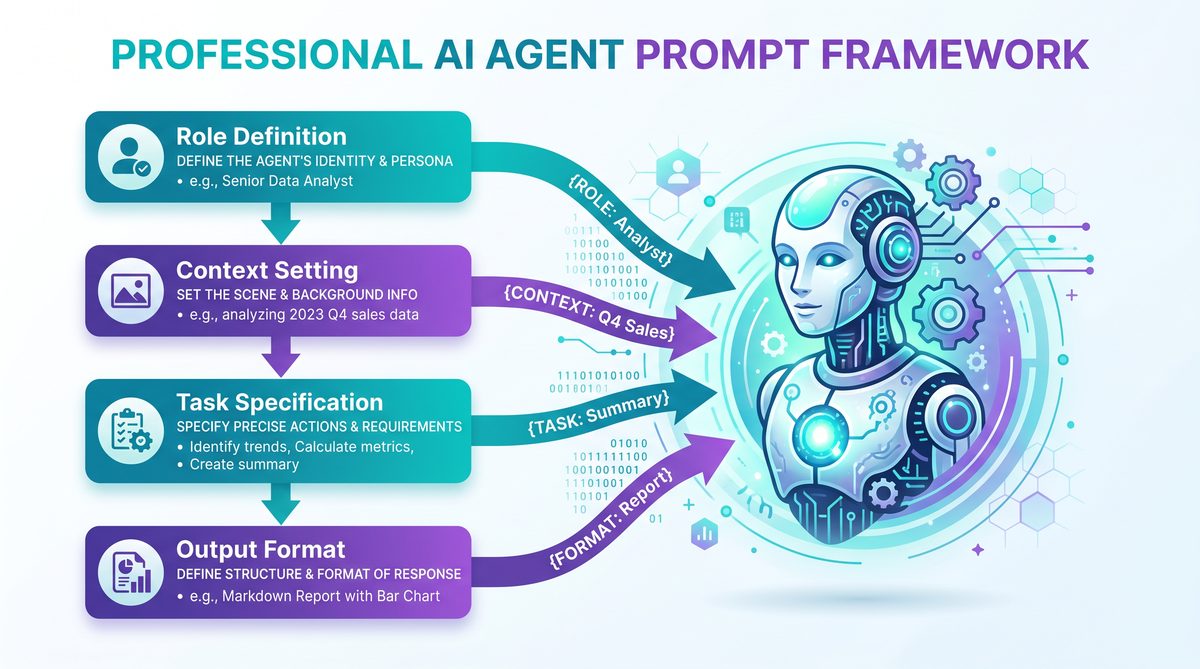
Crafting effective “Respond as a…” commands is both an art and a science. This section explores advanced techniques and strategies to structure role-based prompts that enhance the reliability and precision of AI agent outputs, particularly when using models like Codex and Claude Code.
1. Defining Clear and Specific Roles
The clarity and specificity of the role definition directly impact the model’s ability to generate relevant responses. Vague roles such as “respond as a developer” can yield broad and inconsistent outputs. Instead, specify the role with domain, expertise level, and sub-specialization. For example:
- Less effective: “Respond as a developer.”
- More effective: “Respond as a senior JavaScript developer with expertise in asynchronous programming and performance optimization.”
This precision helps the model restrict its knowledge scope and apply relevant heuristics, reducing the risk of hallucination or confusion between similar technologies or concepts. Role specificity also aids in generating responses aligned with contemporary best practices and standards.
2. Contextual Framing with Task and Environment Details
Embedding contextual information about the task and environment within the prompt strengthens role adherence and output relevance. This includes:
- Project constraints (e.g., “You are working on a legacy codebase with limited documentation.”)
- Target audience (e.g., “Explain your recommendations for junior developers.”)
- Programming environment (e.g., “Use Python 3.10 and standard libraries only.”)
Such framing steers the AI agent to generate responses tailored to the specific operational context, which is critical for autonomous agents tasked with real-world applications.
3. Incorporating Behavioral and Output Style Guidelines
Explicitly stating how the AI should communicate helps maintain consistency and improves usability. For example:
- Specify tone: “Use a professional and concise tone.”
- Define level of detail: “Provide step-by-step explanations.” or “Keep answers brief and to the point.”
- Format instructions: “Return code in markdown format with syntax highlighting.”
These guidelines reduce ambiguity and ensure the generated content meets end-user expectations, especially for documentation, tutorials, or code reviews.
4. Using Layered Prompting and Role Reinforcement
For multi-turn interactions or complex task workflows, reinforce roles across prompts to maintain context and prevent drift. Techniques include:
- Role Anchoring: Repeat role definitions in system messages or at the start of each user prompt.
- Progressive Detailing: Start with a broad role and incrementally add task-specific details as the conversation progresses.
- Embedded Role Reminders: Use inline reminders such as “As a cybersecurity analyst, explain…” to keep the AI aligned.
This layered approach supports sustained role fidelity over long interactions.
5. Prompt Templates and Parameterization
Standardizing role-based prompts through templates facilitates consistency and scalability. A typical prompt template might include variable slots for:
- Role description
- Task or question
- Contextual parameters
- Output format
For example:
You are a {role_description}. Your task is to {task_description}. Please {behavior_guidelines}. Here is the context: {context}.
Parameterizing prompts enables rapid adaptation across different roles and tasks with minimal manual editing.
Comparing Prompt Structures for Codex and Claude Code
| Aspect | Codex | Claude Code |
|---|---|---|
| Role Sensitivity | Highly sensitive to precise role instructions; benefits from explicit, detailed role descriptions. | More conversational; responds well to role definitions embedded in narrative style. |
| Context Window | Up to 8k tokens (varies by model); role and context should fit within prompt length. | Typically supports longer context (up to 100k tokens in some versions), allowing sustained role adherence. |
| Behavioral Instruction Handling | Requires clear and direct behavioral cues to avoid ambiguity. | Handles implicit behavioral guidance better due to conversational nature. |
| Output Format Control | Strong support for markdown, code blocks, and inline formatting. | Supports detailed formatting but may require explicit instructions for complex layouts. |
| Hallucination Mitigation | Reduced by precise role and task framing; benefits from example-driven prompts. | Effective with role reinforcement and multi-turn context management. |
Understanding these differences is crucial when designing role-based prompts tailored to the specific capabilities and tendencies of each model. For instance, Codex’s affinity for explicit role and format instructions makes it ideal for code-heavy tasks, while Claude Code’s conversational strengths suit complex reasoning and multi-turn dialogues.
Practical Example of a Role-Based Prompt for Autonomous Coding Agent
Below is an example prompt illustrating how to structure a “Respond as a…” command for a coding task:
You are a senior Python developer specializing in data analysis using Pandas. Your task is to write a Python function that efficiently processes large CSV files and summarizes key statistics. Use Python 3.9 syntax and only standard libraries. Provide code with inline comments and explain your approach briefly after the code snippet.
This prompt clearly defines the role, task, environment, and output style, setting the stage for accurate and comprehensive AI-generated code with minimal hallucination risk.
For further insights into prompt engineering techniques that complement role-based prompting, consider exploring
For practical applications of role-based prompting in enterprise contexts, our collection of 25 advanced Codex prompts for enterprise workflows beyond coding provides ready-to-use templates that apply the role definition principles discussed in this guide to real business scenarios including data analysis, documentation, and process automation.
and advanced context management strategies discussed in related resources.
Role-Based Prompting for AI Agents: How to Structure ‘Respond as a…’ Commands – Part 2
Advanced Techniques for Role-Based Prompting in Autonomous Agents
Building on the foundational concepts covered in Part 1, this section delves deeper into advanced techniques for structuring “Respond as a…” commands, particularly aimed at autonomous AI agents such as Codex and Claude Code. These techniques are designed to create more precise contextual framing, significantly improving response accuracy and mitigating hallucinations—an ongoing challenge in AI language models.
1. Layered Role Definitions
Instead of assigning a single, broad role (e.g., “Respond as a software engineer”), use layered role definitions to create a hierarchy of responsibilities or expertise. This helps AI agents understand the nuances of the task and produce more targeted responses.
- Primary Role: The main expert persona (e.g., “Senior Backend Developer”).
- Secondary Role: Additional context or domain expertise (e.g., “with expertise in scalable microservices”).
- Task-Specific Role: Tailored role focusing on the immediate objective (e.g., “respond as a performance optimization expert”).
Example Prompt:
Respond as a Senior Backend Developer with expertise in scalable microservices, specifically acting as a performance optimization expert. Provide best practices for reducing database query latency in Node.js applications.
This layered approach narrows the interpretative scope for the AI, reducing ambiguity and encouraging responses aligned with the intended expertise.
2. Role Anchoring with Contextual Memory
Many modern AI agents support some form of memory or persistent context. Role anchoring involves establishing the role at the beginning of an interaction and then referencing it throughout the session to keep responses consistent and role-appropriate.
- Initial Role Setup: Begin the conversation with a clear, detailed role prompt.
- Intermittent Role Reminders: Periodically remind or reinforce the role context to prevent drift.
- Contextual Queries: Tailor follow-up questions assuming the agent retains role knowledge.
For example, in a longer dialogue with Codex, you might first say:
You are an expert front-end developer specializing in React and accessibility. Keep this role throughout our conversation.
Then, in subsequent prompts, simply ask questions without redefining the role, trusting the agent’s memory to maintain context. This technique minimizes redundant role descriptions and can reduce hallucinations caused by conflicting or missing context.
3. Incorporating Constraints within Role Prompts
Constraining the AI’s responses within specific boundaries improves precision and relevance. These constraints should be explicitly embedded within the role prompt.
- Technical Constraints: Define allowed technologies, languages, or methods.
- Format Constraints: Specify response format, such as JSON, code snippets, or bullet points.
- Scope Constraints: Limit the scope to certain subdomains or exclude irrelevant topics.
Example Prompt:
Respond as a data scientist specializing in Python and Pandas. Provide a concise explanation of how to handle missing data, using bullet points only. Avoid discussing other languages or libraries.
By explicitly stating constraints, the AI is less likely to wander into unrelated content or hallucinate details outside the defined scope.
4. Role-Based Prompt Templates
Creating reusable prompt templates helps maintain consistency and saves time when repeatedly instructing AI agents in specific roles. Templates can be parameterized for dynamic input to meet various use cases.
| Template Component | Purpose | Example |
|---|---|---|
| Role Definition | Establishes the persona and expertise level. | Respond as a cybersecurity analyst with 10 years of experience. |
| Task Description | Specifies the exact task or question. | Analyze the security risks in the following code snippet. |
| Constraints | Limits the response format and scope. | Provide the analysis as a list of vulnerabilities only, no remediation steps. |
| Dynamic Input | Allows insertion of user-specific content like code or data. | Insert code snippet here. |
Template Example:
Respond as a [Role Definition]. [Task Description]. [Constraints]

[Dynamic Input]
By standardizing prompt structure, developers can experiment with variations systematically and identify the most effective phrasing to reduce hallucinations and increase the fidelity of responses.
5. Leveraging Role Personas to Reduce Hallucinations
Hallucinations occur when AI generates plausible but incorrect information. Assigning explicit, well-defined roles can help the model self-limit by adopting a persona that “knows what it knows” and avoids fabricating facts.
- Expertise Awareness: Prompts can instruct the AI to admit when it lacks sufficient information.
- Fact-Checking Role: Roles can be framed as meticulous fact-checkers who verify details before answering.
- Encourage Caution: Direct the AI to provide conservative answers or disclaimers when uncertain.
Example Prompt:
Respond as a medical researcher who only provides information backed by peer-reviewed studies. If unsure, clearly state the uncertainty rather than guessing.
This role-based caution helps reduce misleading or fabricated outputs, particularly important in critical domains such as healthcare, law, or finance.
Summary
Advanced role-based prompting techniques—layered roles, role anchoring, explicit constraints, reusable templates, and hallucination reduction roles—equip developers and AI engineers with powerful tools to maximize the accuracy, reliability, and relevance of autonomous agents like Codex and Claude Code. These strategies form the foundation for the next section, which focuses on practical implementation and evaluation methods.
Implementing and Evaluating Role-Based Prompting Strategies
Transitioning from theory to practice, this section presents a comprehensive guide on implementing role-based prompting for autonomous AI agents, with a focus on Codex and Claude Code. It also details effective evaluation methodologies to continuously improve prompt design and agent performance.
1. Integrating Role-Based Prompts into Development Workflows
Successful deployment of role-based prompting requires seamless integration into existing AI development and operational workflows. Consider the following steps:
- Prompt Version Control: Use version control systems (e.g., Git) for prompt templates to track changes, enable collaboration, and rollback if needed.
- Parameterization Tools: Develop or adopt tooling that allows dynamic injection of role and task parameters into prompt templates, enhancing flexibility and scalability.
- API Automation: Automate prompt dispatching with role context via APIs, ensuring consistent role definition across calls.
- Role Profiles Repository: Maintain a centralized repository of predefined role profiles, including layered roles and constraints, to re-use across projects.
Embedding role-based prompting early in the development lifecycle prevents costly downstream issues related to hallucinations or irrelevant outputs.
2. Testing and Validation of Role-Based Prompts
Robust testing is vital to ensure prompts elicit desired behaviors reliably. Consider these approaches:
- Unit Testing Prompts: Isolate prompt-response pairs to verify that the AI agent consistently responds within the defined role constraints.
- A/B Testing Prompts: Compare different prompt phrasings or role layers to identify which yields fewer hallucinations or more accurate responses.
- Edge Case Simulations: Test prompts with ambiguous or adversarial inputs to evaluate the AI’s ability to maintain role fidelity.
For example, when working with Claude Code, run scripted tests where prompts ask for code reviews in a “Senior Code Auditor” role, then measure the correctness and relevance of the feedback.
3. Metrics for Evaluating Role-Based Prompt Effectiveness
Quantitative and qualitative metrics help identify how well role-based prompting improves autonomous agent outputs:
| Metric | Description | Measurement Method | Importance |
|---|---|---|---|
| Accuracy | Degree of correctness of responses relative to ground truth. | Manual evaluation or automated verification against datasets. | Critical for validating expertise adherence. |
| Relevance | Extent to which responses align with the role-defined scope and constraints. | Reviewer scoring or semantic similarity analysis. | Ensures responses are on-topic and useful. |
| Hallucination Rate | Frequency of fabricated or erroneous information. | Manual audits or flagging suspicious outputs. | Key indicator of prompt quality and role clarity. |
| Consistency | Degree of stable role adherence across multiple queries. | Longitudinal testing over sessions. | Important for multi-turn conversational agents. |
| Response Time | Latency between prompt submission and response generation. | Automated logging. | Operational metric impacting UX. |
Regularly tracking these metrics guides prompt refinement and highlights areas where additional role constraints or clarifications are needed.
4. Case Study: Role-Based Prompting with Codex for Code Generation
Consider a software development team using OpenAI’s Codex to automate code generation tasks. Initial prompts such as:
Write a Python function to sort a list.
produced functional but sometimes inconsistent and inefficient code snippets. After adopting role-based prompting:
Respond as a Senior Python Developer with expertise in algorithm optimization. Write a Python function to sort a list using an efficient algorithm suitable for large datasets. Include inline comments.
the team observed:
- Higher code quality: Generated functions used efficient algorithms like Timsort or mergesort.
- Improved documentation: Inline comments were consistently included.
- Reduced hallucinations: The AI avoided inventing unsupported API calls or syntax.
This improvement was quantifiable through manual reviews and automated code quality analysis tools integrated into CI/CD pipelines. The role prompt anchored the AI’s behavior, aligning outputs with the team’s expectations and reducing post-generation debugging effort.
5. Leveraging Feedback Loops for Continuous Improvement
Role-based prompting is not a “set and forget” solution. Continuous feedback loops incorporating user and developer input ensure iterative enhancement. Key feedback mechanisms include:
- User Feedback: Collect end-user ratings on response helpfulness and accuracy.
- Developer Annotations: Expert annotations or corrections on AI outputs to highlight hallucinations or misaligned responses.
- Automated Monitoring: Use analytics to detect spikes in hallucination rates or declining relevance.
Integrating these feedback streams into prompt version control systems and testing frameworks allows prompt engineers to fine-tune role definitions, constraints, and templates dynamically.
6. Cross-Model Role Prompting Considerations
While the principles of role-based prompting apply broadly, nuances exist between models like Codex and Claude Code due to their distinct architectures and training data.
| Feature | Codex | Claude Code |
|---|---|---|
| Best suited for | Code generation and completion with high specificity on programming languages. | Conversational coding assistant with multi-turn dialogue strength. |
| Role memory | Limited session memory; requires frequent role anchoring. | Stronger multi-turn memory, supports role continuity better. |
| Response style | Concise, code-focused outputs. | More verbose, explanatory, and conversational. |
| Hallucination tendencies | May hallucinate code syntax or API usage if role is ambiguous. | May hallucinate contextual information but better at disclaimers. |
Prompt engineers should tailor role-based prompts accordingly, using more explicit constraints with Codex and leveraging multi-turn role anchoring with Claude Code. For deeper insights into prompt design patterns for different models, see
When applying role-based prompting to autonomous AI agents like Codex and Claude Code, additional considerations around tool use and safety constraints come into play. Our dedicated guide on writing effective instructions for autonomous AI coding agents extends these role-based principles into the agentic domain where agents must make independent decisions.
.
7. Practical Tips for Developers
- Always start with a clear, detailed role definition and include task-specific context.
- Use constraints liberally to limit scope and format ambiguities.
- Test prompts extensively with real-world inputs to identify hallucination triggers.
- Maintain prompt templates and role libraries for reuse and consistency.
- Incorporate user and expert feedback into prompt refinement cycles.
- Monitor key metrics regularly and adjust role definitions to optimize accuracy.
By following these best practices, teams can harness the full potential of autonomous agents for complex coding, research, or analytical tasks.
Access 40,000+ AI Prompts for ChatGPT, Claude & Codex — Free!
Subscribe to get instant access to our complete Notion Prompt Library — the largest curated collection of prompts for ChatGPT, Claude, OpenAI Codex, and other leading AI models. Optimized for real-world workflows across coding, research, content creation, and business.
Useful Links
- OpenAI Codex Official Blog
- Anthropic Claude AI Homepage
- OpenAI Prompt Design Guide
- Research Paper: Reducing Hallucinations in Large Language Models
- TensorFlow Text Generation Tutorials
- OpenAI Cookbook GitHub Repository
- Language Model Evaluation Benchmarks
- Prompting Guide for AI Models
- DeepLearning.AI ChatGPT Prompt Engineering Course
