
How Ramp Engineers Accelerate Code Review and Deploy On-Call Agents Using Codex with GPT-5.5
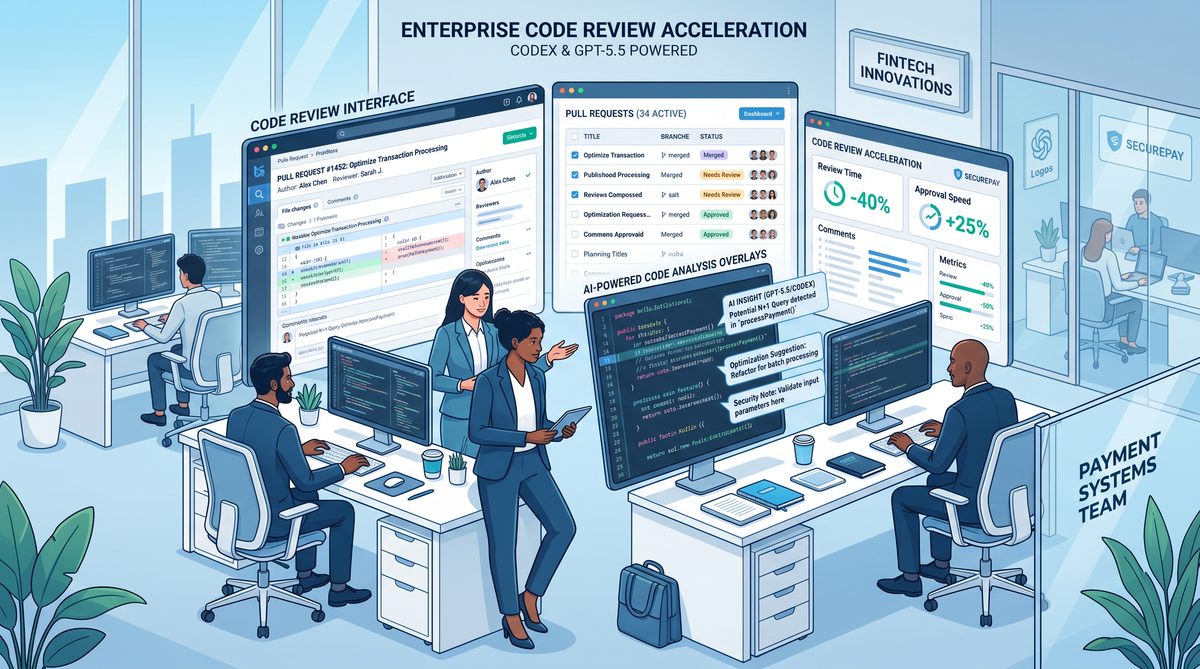
Case Study: How Ramp’s AI Developer Experience Team Transformed Code Reviews with Codex and GPT-5.5 Integration
Author: Markos Symeonides
In the relentlessly evolving landscape of software development, the quest for accelerating code reviews without compromising the integrity and quality of the codebase has emerged as a paramount challenge. Companies striving for rapid innovation must balance speed with thoroughness, ensuring that new features and fixes reach production swiftly, yet safely. Ramp, a fintech pioneer recognized for its innovative corporate finance solutions, recently undertook a transformative initiative to redefine its developer workflows through the strategic integration of advanced artificial intelligence technologies. Central to this endeavor was Ramp’s AI Developer Experience (AI DevEx) team, a specialized group tasked with leveraging cutting-edge AI models to enhance the efficiency and efficacy of critical engineering processes.
This case study provides a comprehensive examination of how Ramp’s AI DevEx team engineered the ‘On-Call Assistant,’ an agentic AI tool that harnesses the combined power of OpenAI’s Codex and the newly released GPT-5.5 model. This integrated solution revolutionized Ramp’s code review and incident investigation workflows by reducing code review durations from several hours to mere minutes while simultaneously improving detection of complex bugs, particularly those arising from concurrency issues. We explore the technical challenges addressed, the architectural and algorithmic innovations developed, and the organizational dynamics that facilitated this success. Additionally, this analysis incorporates leadership insights from Austin Ray, Ramp’s Head of AI Developer Experience, whose vision and approach provide a human-centered perspective on the AI integration journey.
1. Background and Context: The Challenge of Scaling Code Reviews
Software engineering organizations today operate under intense pressures to deliver high-quality, secure, and scalable applications at an accelerating pace. This pressure derives from market demands, competitive landscapes, and the growing complexity of software systems themselves. Ramp’s engineering team confronted these realities directly. As their product suite expanded and diversified, so too did the complexity of their codebase. The team’s existing manual code review workflows—historically effective for smaller scopes—began to strain under the increasing volume and intricacy of code changes.
Code reviews, a fundamental component of modern software quality assurance, serve multiple critical functions: they detect defects early, ensure adherence to coding standards, facilitate knowledge sharing, and foster collective code ownership. However, as the scale of changes grew, the review process became a bottleneck. Multiple engineers were required to dissect code diffs, often spanning numerous files and modules, under tight deadlines. The iterative nature of reviews, involving back-and-forth commentary, clarifications, and revisions, further elongated cycle times. This slowdown threatened Ramp’s ability to deliver timely feature updates and maintain high customer satisfaction.
Recognizing that simply increasing human reviewer headcount or extending working hours was neither sustainable nor efficient, Ramp’s leadership sought innovative technological solutions. Advances in artificial intelligence, particularly in the realms of natural language processing (NLP) and code comprehension, offered promising avenues to augment engineer capabilities. The AI Developer Experience team was chartered with the mission to research, prototype, and implement AI-powered tools that could alleviate cognitive burdens on developers, accelerate review workflows, and enhance the overall reliability of software delivery.
OpenAI’s Codex, a language model fine-tuned specifically for understanding and generating code, had already demonstrated remarkable proficiency in automating programming tasks. It excelled in parsing code syntax, generating snippets, and even suggesting bug fixes. Meanwhile, the advent of GPT-5.5, with its enhanced contextual reasoning, multi-modal capabilities, and superior understanding of nuanced textual and technical information, presented new opportunities to tackle more complex challenges such as concurrency bug detection and root cause analysis.
Before embarking on development, the AI DevEx team conducted a thorough analysis of Ramp’s engineering environment to identify pain points and areas ripe for AI intervention. Ramp’s engineering culture emphasized collaborative development practices, continuous integration and deployment (CI/CD), and rapid iteration cycles. The codebase was housed in a sophisticated monolithic repository (monorepo) that contained numerous microservices communicating asynchronously via message queues and event-driven architectures. This design, while modular and scalable, introduced intricate concurrency patterns and synchronization challenges that complicated both code reviews and incident diagnoses.
Concurrency bugs, such as race conditions and deadlocks, are notoriously difficult to detect and reproduce. Their manifestation often depends on subtle timing variations and environmental factors not easily captured by static analysis or traditional testing. Consequently, incident investigations triggered by such bugs were labor-intensive and error-prone. Engineers needed to painstakingly analyze logs, execution traces, version histories, and communication channels under pressure during on-call rotations—situations demanding rapid, accurate assessments.
This multifaceted context underscored the necessity for an AI-powered assistant capable not only of syntactic code analysis but also of deep semantic understanding and causal reasoning across diverse data sources. The AI DevEx team envisioned a solution that could transcend conventional tooling limitations, providing developers with intelligent, actionable insights in real-time.
The release of GPT-5.5 represents a fundamental shift in how AI models handle personalization and contextual understanding. Our in-depth analysis of GPT-5.5 Instant and its personalized interaction capabilities explores how this model’s architecture enables more nuanced, context-aware responses that adapt to individual user patterns and preferences.
2. Engineering the ‘On-Call Assistant’: Design and Development
The development of the ‘On-Call Assistant’ began as a synthesis of ambitious vision and pragmatic engineering. The AI DevEx team conceptualized this tool as an agentic AI entity—one that could autonomously interact with Ramp’s development ecosystem, assimilate heterogeneous data inputs, and engage in multi-turn dialogues with engineers. This design philosophy marked a departure from static code linters or rule-based bots, aiming instead for a dynamic, context-aware collaborator capable of adapting to evolving developer needs and project contexts.
At the core of the On-Call Assistant’s architecture were two complementary AI models: OpenAI’s Codex, specialized in programming language comprehension and generation, and GPT-5.5, renowned for its advanced reasoning, contextual synthesis, and natural language understanding. The team orchestrated these models in a layered manner, assigning responsibilities aligned with their respective strengths.
Codex was entrusted with the granular analysis of code diffs submitted for review. Leveraging its training on vast corpora of open-source code and programming documentation, Codex parsed syntactic structures, identified semantic anomalies, and proposed code improvements. It could detect common pitfalls such as off-by-one errors, improper resource handling, and violations of best practices. Additionally, Codex was fine-tuned on Ramp’s proprietary codebase and idiomatic patterns, enabling it to align suggestions with internal coding standards and architectural conventions.
GPT-5.5, on the other hand, operated at a higher abstraction level. Its enhanced reasoning capabilities enabled it to interpret complex incident narratives, correlate multi-source log data, and generate human-readable explanations. By synthesizing contextual information such as recent commits, team discussions from communication platforms, and historical incident reports, GPT-5.5 prioritized issues that warranted immediate attention and crafted comprehensive summaries tailored to the audience’s expertise.
The initial phase of development involved an extensive data collection and curation effort. The team aggregated a rich dataset encompassing thousands of historical code reviews annotated with reviewer comments, detailed concurrency bug reports with root cause analyses, incident investigation transcripts, and code snippets demonstrating concurrency constructs—ranging from mutex locks and semaphores to asynchronous callbacks and futures. This dataset formed the foundation for fine-tuning both Codex and GPT-5.5 to Ramp’s domain-specific context and engineering vernacular, enhancing model relevance and accuracy.
A critical technical hurdle was enabling the AI to reason effectively about concurrency bugs, which often elude purely static analyses due to their dependence on runtime behavior and non-deterministic scheduling. To surmount this, the team integrated dynamic program analysis tools capable of capturing execution traces during unit and integration test runs. These traces, representing sequences of executed instructions, thread interactions, and lock acquisitions, were transformed into structured representations digestible by the AI models.
This integration empowered the On-Call Assistant to correlate anomalies detected in execution flows with specific code fragments, facilitating precise diagnosis of concurrency issues. For instance, if a test run exposed a thread starvation condition, the assistant could pinpoint the exact code paths and synchronization primitives involved, rather than issuing generic warnings.
To realize the agentic capabilities envisioned, the team developed a sophisticated orchestration layer that managed interactions between the AI models and the engineering environment. This layer facilitated multi-turn conversations, enabling the assistant to ask clarifying questions, provide incremental analyses, and adapt its outputs based on developer feedback. For example, during a code review session, the On-Call Assistant would first invoke Codex to analyze the submitted diffs, highlighting syntactic errors and potential semantic issues. Subsequently, GPT-5.5 would contextualize these findings by referencing related commits, recent incidents, and ongoing discussions in team chat channels, thus prioritizing critical issues over minor stylistic concerns.
The assistant could then generate concise, prioritized summaries for reviewers, recommend targeted code fixes, or even propose additional unit tests designed to cover rare concurrency edge cases. This proactive suggestion of tests was particularly valuable, as it helped engineers validate fixes against scenarios that were historically difficult to reproduce, thereby increasing confidence in code changes before deployment.
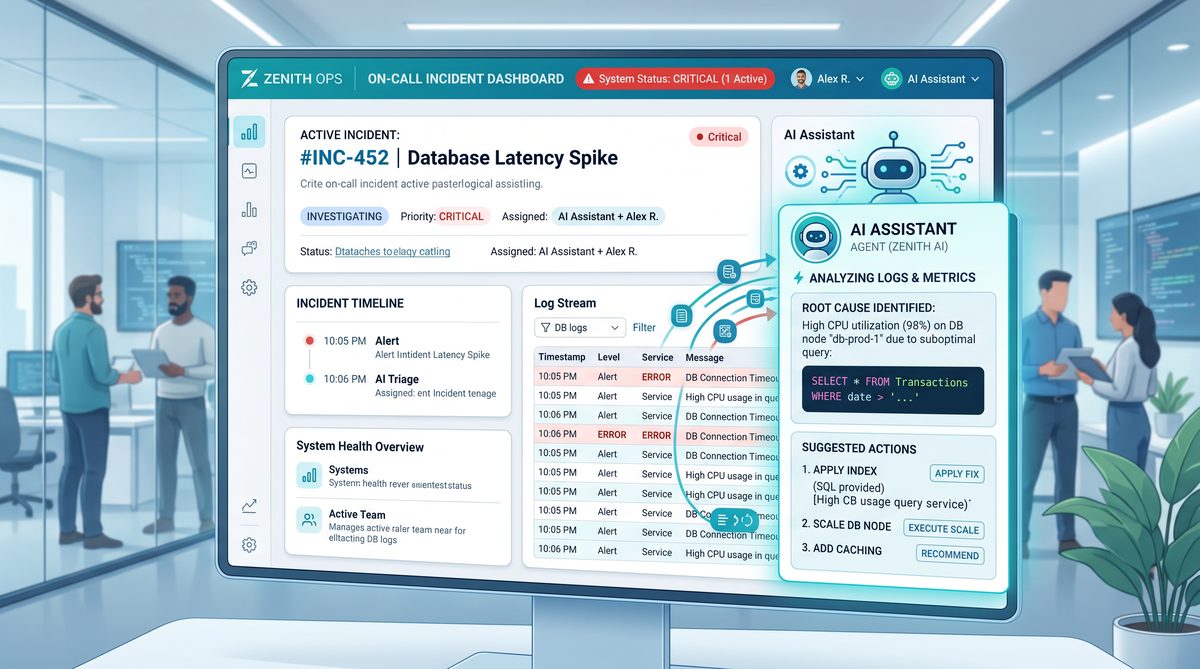
Beyond code review augmentation, the On-Call Assistant’s capabilities extended to incident investigation workflows. By ingesting voluminous log files, error traces, monitoring metrics, and previous incident documentation, GPT-5.5 could hypothesize plausible root causes, identify suspicious code regions, and recommend remediation steps. This functionality dramatically shortened the mean time to resolution (MTTR) for production issues, directly impacting system reliability and customer experience.
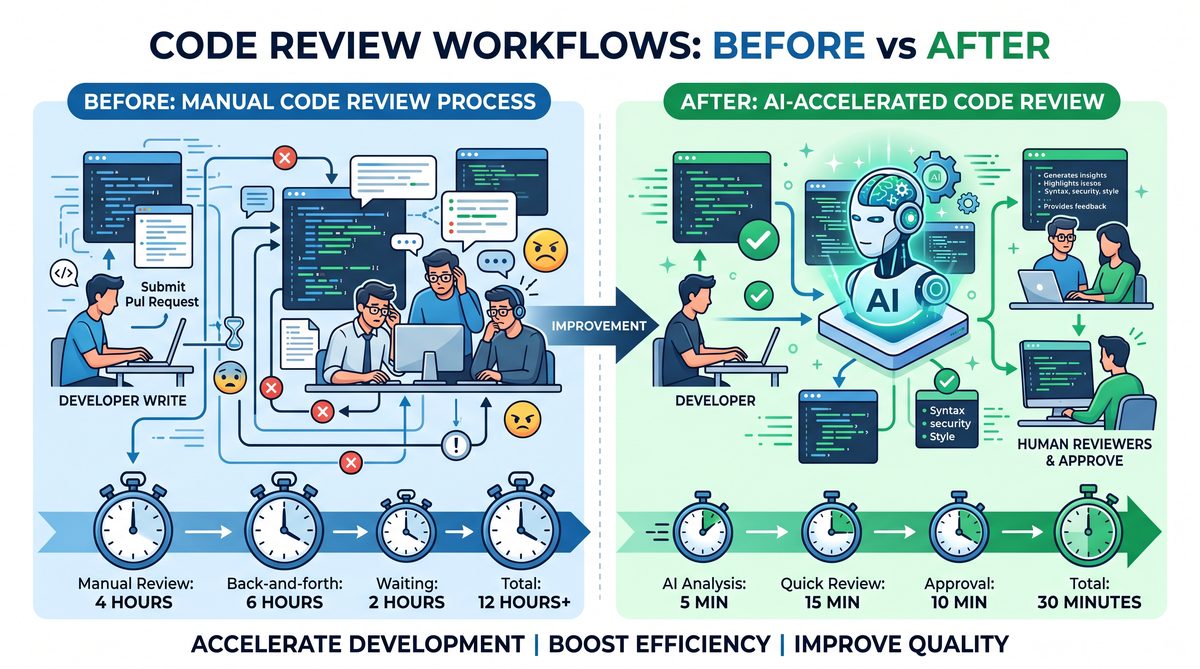
Throughout the development lifecycle, the AI DevEx team adopted rigorous evaluation methodologies to validate the assistant’s performance and usability. A/B testing protocols compared traditional manual code reviews against AI-augmented reviews, assessing key performance indicators such as review duration, defect detection rates, false positive and negative rates, and developer satisfaction. The quantitative results were compelling: average review times plummeted from approximately four hours to under ten minutes per code submission, while defect detection accuracy improved marginally. Qualitative feedback revealed increased developer confidence and reduced cognitive fatigue, underscoring the assistant’s value as a trusted collaborator rather than a mere automation tool.
Complementing these evaluations, the team conducted longitudinal studies monitoring the assistant’s impact on overall engineering velocity and product quality metrics. Over successive quarters, Ramp observed measurable improvements in deployment frequency, reduction in post-release defects, and enhanced cross-team collaboration catalyzed by the assistant’s integrative insights.
3. Handling Complex Concurrency Bugs and Incident Investigations
Concurrency bugs rank among the most elusive and pernicious software defects, challenging even the most experienced engineers. These bugs arise from the interactions of concurrently executing threads or processes and often manifest in non-deterministic and timing-dependent ways. Ramp’s engineering environment, characterized by a microservices architecture with asynchronous communication patterns and shared resource access, was particularly susceptible to such issues. The traditional reliance on static code review and manual debugging proved insufficient to reliably detect and resolve these defects.
The integration of OpenAI’s Codex and GPT-5.5 models within the On-Call Assistant marked a paradigm shift in how Ramp approached concurrency bug diagnosis and mitigation. Codex’s proficiency in parsing and understanding code syntax enabled it to identify unsafe access patterns. For example, it could detect missing locks around shared variables, improper usage of synchronization primitives such as condition variables, or violations of established concurrency design patterns. Codex’s capability extended to recognizing subtle anti-patterns like lock convoys, priority inversion, and inconsistent use of atomic operations.
Nevertheless, the true innovation lay in GPT-5.5’s advanced temporal reasoning and causal inference capabilities. By ingesting rich execution trace data, including thread scheduling sequences, lock acquisition timelines, and event logs annotated with precise timestamps, GPT-5.5 could reconstruct probable sequences of events leading to concurrency failures. This reconstruction enabled the assistant to generate actionable hypotheses about root causes that would otherwise require extensive manual effort to uncover.
To illustrate, in a recently encountered deadlock scenario impacting a critical payment processing microservice, the On-Call Assistant analyzed stack traces captured simultaneously from multiple threads. It identified a circular wait condition involving two mutexes acquired in conflicting orders by separate threads. GPT-5.5 synthesized this information into a clear, natural language explanation that delineated the sequence of lock acquisitions, the threads involved, and the resulting resource contention. Furthermore, it proposed a refactoring strategy to enforce a strict global lock acquisition order, thereby eliminating the deadlock condition.
This level of detailed insight, previously achievable only through time-consuming manual debugging, was now delivered within minutes, enabling rapid remediation and deployment of fixes.
Incident investigations, often triggered in the wake of concurrency-related failures, benefited tremendously. The On-Call Assistant autonomously aggregated incident-related data from diverse sources including application performance monitoring dashboards, centralized error reporting systems, distributed tracing tools, and the code repository history. Leveraging GPT-5.5’s natural language understanding, it synthesized these disparate inputs into coherent incident summaries that distilled complex technical details into digestible narratives for engineers of varying expertise levels.
This synthesis extended to actionable recommendations, such as targeted code changes, configuration modifications, or rollout strategies to mitigate incident impact. By automating these labor-intensive tasks, the assistant significantly reduced the cognitive load on on-call engineers, enabling faster, more confident decision-making under pressure.
Beyond reactive incident management, the assistant facilitated proactive concurrency anomaly detection. By continuously monitoring code changes during pull requests and analyzing runtime behavior during integration and system testing phases, the On-Call Assistant could flag potential concurrency hazards before code merged into mainline branches. This ‘shift-left’ approach aligned with DevOps best practices, catching defects early in the development cycle and preventing costly downstream failures.
Crucially, the assistant’s interface was designed for seamless integration into Ramp’s existing developer tooling ecosystem. It operated within popular platforms such as GitHub for code reviews, Slack for team communications, and PagerDuty for incident alerts. Engineers could invoke the assistant conversationally via chat interfaces or command palettes within integrated development environments (IDEs), receiving interactive explanations, drill-down reports, and real-time feedback. This unobtrusive design minimized workflow disruption, encouraging widespread adoption and continuous engagement.
Overall, the On-Call Assistant represented a holistic solution that bridged the gap between human expertise and machine intelligence, transforming concurrency bug management from a reactive, manual ordeal into a proactive, AI-augmented discipline.
Effective prompting remains the critical skill for extracting maximum value from AI coding tools. Our comprehensive guide on advanced prompting techniques for steering Codex and Claude Code provides tested frameworks for structuring instructions that produce reliable, production-quality code output from autonomous coding agents.
4. Leadership Insights from Austin Ray: Navigating AI Integration in Engineering
Austin Ray, Ramp’s Head of AI Developer Experience, was instrumental in guiding the complex, multifaceted process of integrating AI into the core engineering workflows. His leadership approach blended visionary technology advocacy with a deeply empathetic understanding of developer culture and organizational dynamics, ensuring that the AI transformation was both effective and sustainable.
One of Ray’s foundational principles was the concept of “augmenting, not replacing” human expertise. He consistently emphasized that AI should serve as a collaborator that amplifies human judgment rather than an automation tool that displaces human roles. This mindset shaped every aspect of the On-Call Assistant’s design, from its conversational interaction model to its transparent, explainable recommendations. Ray believed that fostering trust between engineers and AI tools was paramount; this trust could only be earned through systems that respected developer autonomy and provided justifications for their suggestions.
Ray also championed an iterative, agile approach to AI integration. Recognizing the inherent uncertainties in deploying novel AI technologies, his team embraced rapid prototyping, frequent user feedback sessions, and continuous refinement cycles. This approach enabled the team to respond swiftly to developer concerns, adapt to evolving requirements, and gradually build confidence in the assistant’s utility. The collaborative feedback loops also fostered a sense of ownership among engineers, transforming them from passive recipients of AI outputs into active partners in the AI development journey.
Ethical considerations were another cornerstone of Ray’s leadership philosophy. He was acutely aware of potential pitfalls such as over-reliance on AI recommendations, bias in model outputs, and issues of accountability. To address these, the team designed the assistant’s recommendation engine to be transparent and auditable. Developers were empowered with the ability to flag incorrect or misleading suggestions, which fed directly into continuous model retraining and improvement processes. This human-in-the-loop mechanism ensured that AI outputs remained aligned with organizational values and technical correctness.
Strategically, Ray advocated for embedding AI capabilities as a foundational pillar within Ramp’s engineering roadmap, rather than as isolated experiments. He envisioned a future in which AI permeates all facets of software development—from initial design and architecture, through coding and testing, to deployment and operations—creating a virtuous cycle of productivity and quality enhancement. This holistic vision informed the allocation of resources, cross-team collaboration initiatives, and investment in AI infrastructure.
Under Ray’s stewardship, the AI Developer Experience team not only delivered a transformative technical solution but also cultivated a culture of innovation, openness, and responsible AI use. His leadership underscored the importance of balancing technological ambition with human factors, a lesson of critical relevance for organizations embarking on similar AI-driven transformations.
The convergence of multiple AI models into coordinated agent systems is transforming how enterprises approach automation. Our analysis of how multi-model AI agents are reshaping enterprise operations examines the architectural patterns and real-world deployments driving this shift toward autonomous, multi-step business workflows.
Useful Links
- OpenAI Codex – Official Blog
- Ramp’s AI Developer Experience Initiatives
- Martin Fowler on Concurrency Patterns
- The Role of AI in Modern Software Development
- Harvard Business Review: Leading AI Transformations
Conclusion
The successful integration of OpenAI’s Codex and GPT-5.5 models into Ramp’s AI Developer Experience workflows stands as a landmark case in the application of artificial intelligence to the domain of software engineering. By architecting and deploying the On-Call Assistant, the AI DevEx team fundamentally transformed Ramp’s code review process from a traditionally time-intensive and cognitively demanding task into an efficient, AI-augmented collaboration. The dramatic reduction of code review times—from several hours to under ten minutes—was accompanied by improved defect detection rates and enhanced developer satisfaction, reflecting the assistant’s ability to elevate both productivity and code quality.
Moreover, the assistant’s advanced capabilities in diagnosing and mitigating complex concurrency bugs, as well as conducting incisive and contextualized incident investigations, significantly bolstered Ramp’s operational resilience. The proactive detection of concurrency hazards prior to code integration fostered a culture of preventive quality assurance, reducing the incidence of production failures and associated customer impact.
Equally important was the human-centered leadership exemplified by Austin Ray, which ensured that this technological transformation was embraced constructively and responsibly. By emphasizing augmentation over replacement, iterative learning, transparency, and ethical AI governance, Ray and his team cultivated an environment where AI empowered developers rather than supplanting them. This approach not only facilitated adoption but also nurtured trust and collaboration between humans and machines.
As AI models continue their rapid evolution, the fusion of agentic AI tools with human expertise is poised to redefine the future of software engineering. Ramp’s experience offers a compelling blueprint for organizations seeking to harness AI’s transformative potential, illuminating pathways toward enhanced innovation, efficiency, and software reliability in an increasingly complex technological landscape.
Access 40,000+ AI Prompts for ChatGPT, Claude & Codex — Free!
Subscribe to get instant access to our complete Notion Prompt Library — the largest curated collection of prompts for ChatGPT, Claude, OpenAI Codex, and other leading AI models. Optimized for real-world workflows across coding, research, content creation, and business.
