
GPT-5.5 Prompts for Academic Research: Literature Reviews, Citation Analysis, and Thesis Writing

GPT-5.5 Prompts for Academic Research: Literature Reviews, Citation Analysis, and Thesis Writing
Academic research is an exacting discipline that demands rigor, precision, and clarity throughout every phase—from gathering and synthesizing relevant literature to conducting in-depth citation analyses and ultimately crafting a cogent, logically structured thesis. The arrival of GPT-5.5, OpenAI’s latest generative pre-trained transformer, marks a transformative step forward in artificial intelligence-assisted academic workflows. This model’s enhanced natural language understanding, contextual reasoning, and iterative refinement capabilities empower researchers to elevate the quality, depth, and efficiency of their scholarly outputs.
Unpacking GPT-5.5’s Role in Academic Research
GPT-5.5’s architecture builds upon its predecessors by incorporating a deeper contextual awareness and more sophisticated reasoning techniques, enabling it to operate not just as a text generator but as an intelligent research assistant. Its core strengths include:
- Contextual Synthesis: Ability to integrate information from multiple sources to generate coherent, comprehensive summaries and critical literature reviews.
- Citation Network Analysis: Facilitates identification of influential papers, citation clusters, and emerging trends within a research field by interpreting citation metadata and textual cues.
- Thesis Structuring: Supports hierarchical organization of complex arguments, chapter outlines, and sub-section development tailored to academic standards.
- Iterative Refinement & Reasoning Modes: Employs chain-of-thought prompting and multi-turn dialogues to progressively improve output accuracy, nuance, and scholarly tone.
These capabilities collectively address common pain points in academic writing, such as information overload, maintaining thematic coherence, and ensuring citation integrity.
Leveraging GPT-5.5 for Exhaustive Literature Reviews
Literature reviews form the backbone of any academic research project, requiring exhaustive coverage, critical evaluation, and synthesis of existing knowledge. GPT-5.5 can be prompted to:
- Aggregate Key Findings: Extract and summarize relevant findings from multiple abstracts or full-text documents, highlighting consensus and divergences.
- Identify Research Gaps: Analyze the thematic distribution of studies to spotlight underexplored areas or conflicting evidence.
- Generate Thematic Categorization: Organize literature into coherent categories or frameworks, facilitating a structured narrative flow.
Example Prompt for Literature Review Synthesis:
“Given the following abstracts on renewable energy storage technologies, summarize the main approaches, highlight key advantages and limitations, and identify any critical gaps in current research.”
By feeding GPT-5.5 carefully curated datasets or bibliographic information, researchers can obtain synthesized overviews that serve as foundations for their own critical analyses.
Advanced Citation Analysis with GPT-5.5
Citation analysis is essential for understanding the impact, influence, and evolution of scientific ideas. GPT-5.5’s nuanced comprehension allows it to:
- Map Citation Networks: Interpret citation lists to reveal clusters of interrelated papers, seminal works, and hubs of innovation.
- Detect Citation Patterns: Identify trends such as increasing citations over time, co-citation relationships, or citation biases.
- Evaluate Citation Contexts: Analyze the textual context in which a citation appears to assess whether it supports, refutes, or builds upon prior work.
Illustrative Prompt for Citation Context Analysis:
“Analyze the following paragraph containing multiple citations. For each citation, determine whether it is used to support the claim, present counterarguments, or provide background information.”
Such granular citation insights facilitate a more nuanced understanding of how knowledge propagates and evolves within a discipline.
Structuring and Refining Thesis Writing Using GPT-5.5
Constructing a well-organized thesis that balances depth, clarity, and scholarly rigor is challenging. GPT-5.5 assists by:
- Generating Detailed Chapter Outlines: Proposes logical sequences of chapters and sub-sections aligned with the research objectives and academic conventions.
- Expanding Section Drafts: Elaborates bullet points or terse notes into comprehensive prose with clear argumentation.
- Facilitating Iterative Refinement: Responds to multi-turn prompts to revise drafts for coherence, style, and adherence to disciplinary standards.
- Enhancing Academic Tone and Clarity: Suggests improvements to language precision, jargon usage, and readability suitable for peer-reviewed publication.
Step-by-Step Guide to Thesis Chapter Development with GPT-5.5:
| Step | Action | Example Prompt |
|---|---|---|
| 1 | Define chapter objectives and key themes | “Outline the main objectives and key themes for a literature review chapter on machine learning applications in healthcare.” |
| 2 | Generate detailed sub-section headings | “Provide detailed sub-section headings under the chapter outline focusing on supervised, unsupervised, and reinforcement learning methods.” |
| 3 | Draft initial content for each sub-section | “Expand on the sub-section about supervised learning methods, discussing common algorithms and recent breakthroughs.” |
| 4 | Iteratively refine content for clarity, coherence, and academic rigor | “Revise the draft to improve clarity and include relevant citations to landmark studies.” |
Harnessing Reasoning Modes: Chain-of-Thought and Iterative Refinement
GPT-5.5 introduces advanced reasoning modes that are particularly beneficial in academic contexts:
- Chain-of-Thought Prompting: Encourages the model to articulate intermediate reasoning steps, thereby producing more transparent and logically coherent outputs. For example, when synthesizing competing theories, GPT-5.5 can break down the argumentation process step-by-step.
- Iterative Refinement: Supports multi-turn interactions where the user provides feedback or additional information, enabling the model to progressively enhance the accuracy and depth of its responses.
Employing these reasoning modes transforms GPT-5.5 from a mere text generator into an interactive collaborator capable of nuanced academic discourse.
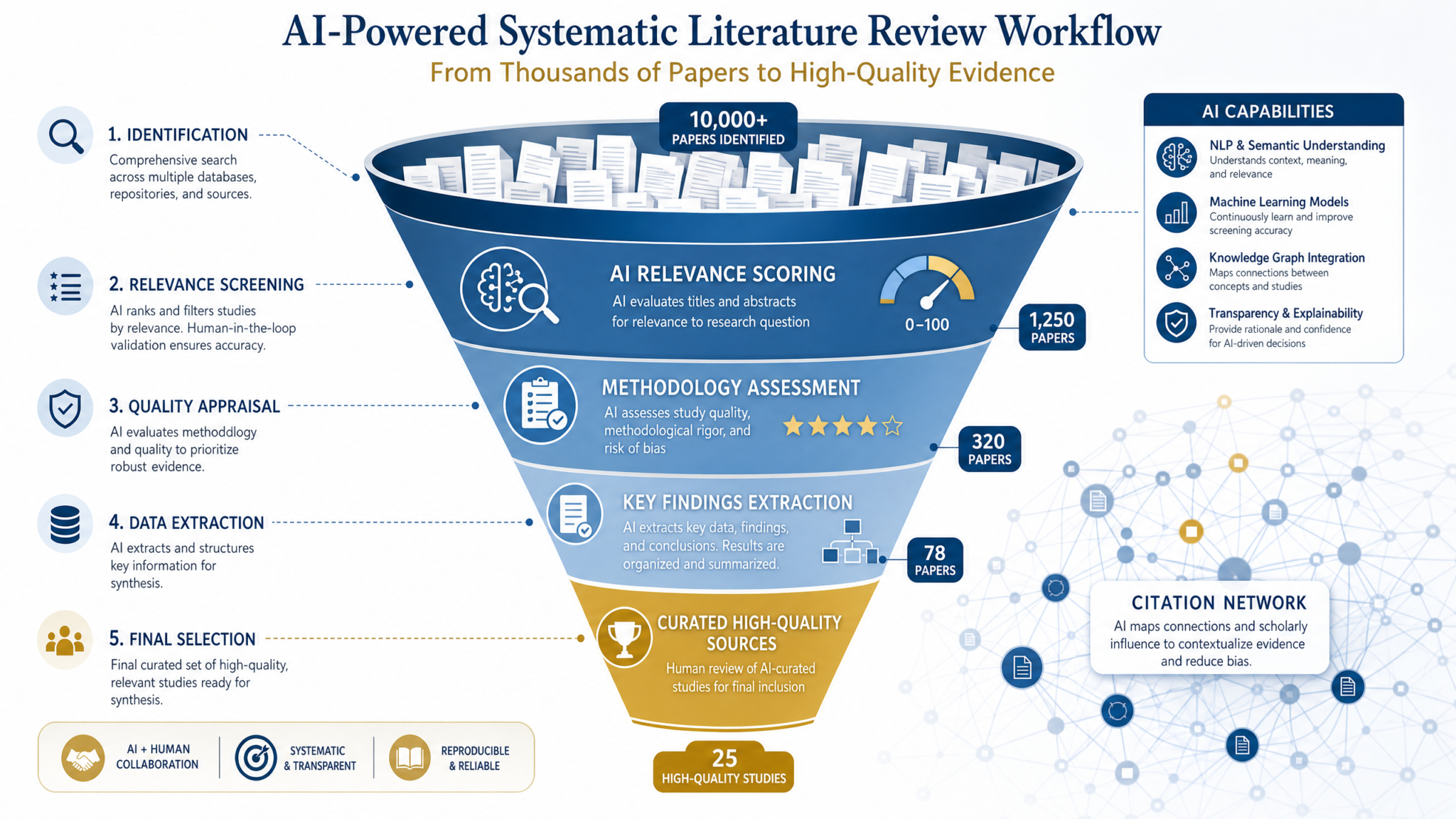
1. Understanding GPT-5.5’s Capabilities for Academic Research
1.1 Enhanced Reasoning and Contextual Depth
GPT-5.5 represents a significant evolution in natural language processing models, particularly tailored to meet the intricate demands of academic research. This advancement stems from two primary innovations: the integration of cutting-edge transformer architectures and the extensive training on diverse, high-quality academic corpora across multiple disciplines.
Advanced Transformer Architectures
The model utilizes a multi-layered transformer design optimized for both depth and breadth in contextual understanding. This architecture enables GPT-5.5 to maintain attention over extended text spans, supporting context windows that can process tens of thousands of tokens without degradation in performance. Such capacity is critical for academic tasks, where researchers often need to synthesize information from multiple lengthy sources.
Key benefits of this architectural advancement include:
- Long-Range Dependency Modeling: The model can capture relationships between concepts mentioned at distant points within or across documents, enabling coherent integration of ideas.
- Hierarchical Reasoning: GPT-5.5 can organize information into nested structures, reflecting the layered nature of academic arguments and evidence.
- Context Preservation: Maintaining nuance and specificity over extended discourse enhances the accuracy of generated summaries, critiques, and syntheses.
Training on Extensive Academic Corpora
Training datasets for GPT-5.5 include peer-reviewed journals, conference proceedings, preprint repositories, theses, dissertations, and bibliometric datasets covering a wide range of disciplines such as humanities, social sciences, natural sciences, and engineering. This exposure equips the model with:
- Domain-Specific Vocabulary Mastery: Recognizing and correctly using technical terminology, methodological jargon, and discipline-specific conventions.
- Familiarity with Scholarly Conventions: Understanding citation styles, argument structures, and the typical organization of academic documents.
- Cross-Disciplinary Insights: Ability to draw parallels and contrasts between findings in different fields, facilitating interdisciplinary research synthesis.
Practical Applications Enabled by Enhanced Capabilities
These technological enhancements empower GPT-5.5 to perform complex academic research tasks with higher precision and reliability. Some prominent applications include:
| Capability | Description | Academic Use Case |
|---|---|---|
| Multi-Document Integration | Processes and synthesizes information from numerous academic papers simultaneously. | Conducting comprehensive literature reviews that summarize trends, gaps, and consensus across studies. |
| Citation Pattern Recognition | Identifies citation networks and patterns within bibliometric data for meta-analyses. | Mapping influential works and detecting research clusters or emerging themes in a field. |
| Structured Thesis Development | Facilitates logical scaffolding of arguments, chapter organization, and coherent narrative flow. | Assisting graduate students in outlining proposals, drafting chapters, and maintaining argumentative consistency. |
| Iterative Editing and Style Optimization | Engages in multi-round refinements focused on clarity, conciseness, and adherence to academic style guides. | Polishing manuscripts for journal submission or thesis defense, ensuring professional presentation. |
1.2 Reasoning Modes: Chain-of-Thought and Iterative Refinement
To harness GPT-5.5’s full potential, researchers must understand and leverage its specialized reasoning modes. These modes are designed to mimic human cognitive processes, fostering transparency, accuracy, and depth in academic outputs.
Chain-of-Thought (CoT) Reasoning
Chain-of-Thought prompting is a method that encourages the model to explicitly articulate intermediate reasoning steps rather than directly providing a final answer. This approach has several critical benefits in academic research:
- Transparency: Each step in the reasoning process is visible, enabling researchers to verify the logic and identify potential errors or assumptions.
- Enhanced Critical Analysis: By breaking down complex arguments, the model can explore alternative interpretations and evidence, enriching the depth of analysis.
- Improved Justification: Academic writing demands strong support for claims; CoT prompts help generate well-justified, logically coherent arguments.
For example, when analyzing the impact of climate change on biodiversity, a CoT prompt might guide GPT-5.5 to first outline ecological factors affected by temperature changes, then discuss species-specific vulnerabilities, followed by synthesizing empirical studies, before concluding on broader environmental implications.
Iterative Refinement
Iterative refinement is a multi-turn prompting strategy that treats academic writing as an evolving process rather than a one-shot generation. In this mode, outputs are progressively improved through cycles of feedback and revision, closely mimicking human editorial workflows.
This mode is particularly useful for:
- Addressing Hallucinations: By reviewing and correcting outputs in subsequent iterations, inaccuracies or fabricated information are minimized.
- Style and Tone Adjustments: Researchers can direct the model to align writing with specific academic style guides (e.g., APA, MLA, Chicago) or tailor the tone to target audiences.
- Depth Enhancement: Later iterations can expand on initial drafts, incorporate additional evidence, or sharpen arguments.
An example workflow for iterative refinement in thesis writing might include:
- Initial Draft Generation: Prompt GPT-5.5 to produce a rough outline or section draft based on research questions.
- Content Expansion: Request elaboration on specific points, adding citations or examples.
- Clarity and Conciseness Edits: Refine language for readability and academic tone.
- Final Proofreading: Check for consistency, grammar, and formatting adherence.
Integrating Reasoning Modes for Optimal Results
Combining Chain-of-Thought and Iterative Refinement strategies yields the most robust academic outputs. For instance, starting with CoT prompts to establish a logical foundation and following with iterative refinement helps produce comprehensive, well-substantiated, and polished documents.
Researchers are encouraged to experiment with prompt engineering techniques such as:
- Explicitly requesting stepwise explanations before conclusions.
- Using targeted feedback prompts to correct or expand specific sections.
- Incorporating domain-specific terminology in prompt instructions to guide accuracy.
Summary of Reasoning Mode Features
| Reasoning Mode | Primary Function | Academic Benefit | Example Use Case |
|---|---|---|---|
| Chain-of-Thought (CoT) | Explicit intermediate reasoning steps. | Enhances transparency and logical rigor. | Justifying methodological choices in a research proposal. |
| Iterative Refinement | Multi-turn output improvement cycles. | Reduces errors and improves style adherence. | Polishing a literature review draft before journal submission. |
In conclusion, mastering GPT-5.5’s enhanced reasoning capabilities and explicit reasoning modes is fundamental for researchers aiming to leverage AI for high-quality academic work. These tools not only facilitate comprehensive synthesis and critical analysis but also support the rigorous standards of scholarly communication.
2. Crafting Effective Literature Review Prompts
2.1 Objectives of Literature Review Prompting
Conducting a rigorous literature review is a foundational step in academic research, requiring a synthesis of existing knowledge that is both comprehensive and critically evaluative. The primary objectives when crafting prompts for GPT-5.5 to generate literature reviews include:
- Comprehensive Coverage: Ensuring the inclusion of diverse and relevant studies, encompassing seminal works and the latest research developments over a defined timeframe.
- Unbiased Summarization: Presenting research findings in an impartial manner that reflects consensus, controversies, and divergent perspectives within the field.
- Thematic Organization: Structuring the literature according to key themes, methodologies, theoretical frameworks, or disciplinary approaches to facilitate clarity and coherence.
- Identification of Gaps: Detecting areas where knowledge is limited or conflicting, thereby highlighting opportunities for novel research contributions.
- Critical Evaluation: Assessing the strengths and limitations of existing studies, including methodological rigor, sample sizes, and validity of conclusions.
GPT-5.5, when guided with carefully constructed prompts, excels in performing thematic syntheses, comparative analyses, and critical appraisals. This enables researchers to obtain a nuanced understanding that transcends mere literature aggregation, fostering scholarly insight and strategic research planning.
2.2 Multi-turn Prompt Template for Literature Reviews
Employing a multi-turn prompting strategy leverages GPT-5.5’s advanced chain-of-thought capabilities, allowing each query to build upon the previous response. This method ensures that output is not only detailed but also logically coherent and progressively refined. Below is an expanded and annotated prompt template designed to elicit high-quality literature review content.
| Turn | Prompt Input | Variables | Expected Output | Purpose & Notes |
|---|---|---|---|---|
| 1 | Provide a concise yet comprehensive summary of recent (last 5 years) research on the topic “{Research_Topic}“. Focus on identifying key themes, dominant theoretical frameworks, and prevalent research methodologies. Highlight major findings and note any significant controversies or consensus areas. | {Research_Topic} (string) |
A detailed summary paragraph covering major themes, influential studies, methodologies, and overarching trends. | Establishes foundational knowledge and thematic scope; sets the stage for gap analysis. |
| 2 | Based on the summary above, identify and elaborate on three major research gaps or unresolved questions in “{Research_Topic}“. Provide contextual explanations for why these gaps are significant and how they impede progress. | {Research_Topic} |
A list of 3 research gaps articulated with brief but insightful explanations. | Pinpoints areas needing further inquiry; guides subsequent hypothesis formulation. |
| 3 | Propose potential future research directions or testable hypotheses that address the identified gaps. Incorporate suggestions for methodological approaches, potential theoretical contributions, and expected impacts on the field. | None (leverages prior outputs) | Comprehensive, actionable research proposals or hypotheses with methodological and theoretical context. | Facilitates strategic research planning and thesis development. |
Example Use Case:
- Turn 1: Summarize recent developments in “machine learning applications in healthcare.”
- Turn 2: Identify gaps, such as limited interpretability of models and lack of longitudinal studies.
- Turn 3: Suggest future research to develop explainable AI frameworks and design longitudinal clinical trials.
This iterative approach harnesses GPT-5.5’s capacity to maintain context over multiple exchanges, producing literature reviews that are both comprehensive and critically insightful, far surpassing simple one-shot summarizations.
2.3 Technical Tips for Literature Review Prompting
To maximize the quality, relevance, and academic rigor of GPT-5.5-generated literature reviews, consider the following technical best practices when crafting prompts:
- Specify Temporal Scope: Use explicit temporal parameters such as “last 5 years” or “since 2019” to ensure the literature review reflects the most current research trends and advances.
- Request Thematic Categorization: Ask GPT-5.5 to organize findings by themes, research paradigms, or methodology types to enhance clarity and analytical depth.
- Integrate Citation Anchoring: Where possible, instruct GPT-5.5 to include citation details, such as author names, publication years, or DOIs, to lend credibility and facilitate source verification.
- Encourage Critical Assessment: Prompt for evaluation of study limitations, biases, and methodological robustness rather than mere descriptive summaries.
- Use Explicit Formatting Instructions: Guide the model to present outputs in structured formats—such as bullet points, tables, or numbered lists—to improve readability and usability.
- Leverage Domain-Specific Vocabulary: Incorporate technical jargon or terminology relevant to the research domain to elicit more precise and contextually appropriate responses.
- Iterative Refinement: Utilize follow-up prompts to clarify, expand, or deepen specific aspects of the literature review based on initial outputs.
Advanced Prompt Examples
| Prompt Objective | Example Prompt | Expected Enhancement |
|---|---|---|
| Explicit Thematic Breakdown | “Summarize recent research on {Research_Topic} by categorizing findings into theoretical frameworks, experimental methods, and application areas.” | Improved organization and clarity, enabling targeted review sections. |
| Inclusion of Citation Details | “Provide a literature summary on {Research_Topic} including key study names, publication years, and DOI references.” | Enhances traceability and academic rigor of generated content. |
| Critical Evaluation Focus | “Critically evaluate recent studies on {Research_Topic}, highlighting methodological strengths and weaknesses.” | Produces deeper insight beyond descriptive synthesis. |
By integrating these tailored prompting techniques, researchers can harness GPT-5.5 as a powerful assistant in constructing literature reviews that meet the highest academic standards, save time, and stimulate innovative research ideas.
For advanced literature management and integration tools, see .

3. Harnessing GPT-5.5 for Citation Analysis
3. Harnessing GPT-5.5 for Citation Analysis
3.1 Automating Citation Network Exploration
Citation analysis is a pivotal component of academic research, offering a quantitative and qualitative lens through which the influence, interconnectedness, and evolution of scholarly works can be discerned. At its core, citation analysis involves systematically examining citation patterns to identify:
- Influential Works: Seminal papers or authors whose research has significantly shaped a discipline.
- Citation Clusters: Groups of publications that frequently cite each other, indicating thematic or methodological cohesion.
- Emerging Trends: Shifts in citation frequency or new clusters that signal evolving research interests or paradigms.
GPT-5.5, with its advanced natural language understanding and reasoning capabilities, can be leveraged to automate and enrich this process. By feeding structured bibliometric data—such as citation counts, co-citation relationships, and metadata—GPT-5.5 can generate nuanced narrative insights that go beyond raw numbers. These insights can help researchers rapidly map the intellectual landscape of a field, identify research gaps, and inform strategic literature review development.
Capabilities of GPT-5.5 in Citation Network Interpretation
- Semantic Understanding: GPT-5.5 can interpret paper titles, abstracts, and keywords to contextualize citation clusters within research subfields.
- Trend Detection: By analyzing time-stamped citation data, GPT-5.5 can identify rising topics and shifts in scholarly focus over specific periods.
- Impact Summarization: It can synthesize citation data into concise summaries that articulate the significance and contribution of highly cited works.
- Visualization Support: While GPT-5.5 does not generate visual graphs directly, it can produce detailed textual descriptions of network structures suitable for input into visualization tools.
3.2 Citation Analysis Prompt Template
To maximize the effectiveness of GPT-5.5 for citation analysis, well-structured prompts are essential. Below is an expanded, multi-turn prompt template designed to guide GPT-5.5 through a comprehensive citation analysis workflow:
| Turn | Prompt Input | Variables | Expected Output |
|---|---|---|---|
| 1 |
Given the following citation data for papers on “{Research_Topic}“: {Citation_Data}, please:
|
{Research_Topic} (string){Citation_Data} (JSON or structured list including paper titles, authors, publication years, citation counts, and abstracts)
|
Ranked list of top papers with citation metrics and impact summaries. |
| 2 |
Analyze the citation data to identify distinct citation clusters or thematic groups. For each cluster:
|
None (uses prior output) | Detailed descriptive analysis of thematic citation clusters and their significance. |
| 3 |
Examine citation trends over the past 3 years. Identify:
|
None | Insightful narrative on recent and emerging trends in the research domain. |
| 4 | Based on the citation network, suggest key seminal papers and recent influential works that a graduate student should prioritize in their literature review on “{Research_Topic}“. | None | Curated list of essential readings with rationale for inclusion. |
Example of Citation Data Input Format
Providing well-structured input data is crucial for GPT-5.5 to perform accurate citation analysis. Below is an example of how citation data might be formatted in JSON for input:
{
  "papers": [
    {
      "title": "Deep Learning for Natural Language Processing",
      "authors": ["Smith J.", "Doe A."],
      "year": 2019,
      "citation_count": 250,
      "abstract": "This paper introduces advanced neural network architectures for NLP tasks...",
      "keywords": ["deep learning", "NLP", "neural networks"]
    },
    {
      "title": "Transformer Models in AI Research",
      "authors": ["Lee K.", "Patel R."],
      "year": 2021,
      "citation_count": 180,
      "abstract": "Transformer-based models have revolutionized sequence modeling by...",
      "keywords": ["transformers", "sequence modeling", "attention mechanisms"]
    }
    // Additional paper entries...
  ]
}
3.3 Data Formatting Considerations
Accurate and insightful citation analysis depends heavily on the quality and structure of input data. When preparing data for GPT-5.5, consider the following best practices:
Essential Data Fields
- Paper Titles: Full, precise titles enable semantic understanding and thematic grouping.
- Authors: Author names help identify prolific researchers and collaboration networks.
- Publication Years: Critical for tracking citation trends and temporal evolution.
- Citation Counts: Quantitative measure of paper impact; ensure counts are up-to-date.
- Abstracts or Keywords: Provide context for thematic analysis and cluster identification.
- Citation Links: Where possible, include references between papers to facilitate network mapping.
Recommended Data Formats
GPT-5.5 processes structured data most effectively when provided in:
- JSON Objects: Hierarchical and descriptive, suitable for nested data such as authorship lists and citation links.
- CSV Extracts: Tabular form is acceptable if columns are well-defined and consistently formatted.
Data Quality and Preprocessing Tips
- Consistency: Standardize author names, abbreviations, and date formats to avoid misinterpretation.
- Completeness: Fill missing metadata fields where possible to enhance analysis accuracy.
- Normalization: Normalize citation counts when merging datasets from multiple sources to avoid duplication.
- Noise Reduction: Remove irrelevant or outlier data points that do not pertain to the research topic.
By adhering to these guidelines, researchers can ensure GPT-5.5’s citation analysis outputs are both reliable and actionable.
Advanced Integration: Linking Bibliometric Databases with GPT-5.5
For researchers seeking to streamline the process of bibliometric data acquisition and analysis, integrating GPT-5.5 with established bibliometric databases (e.g., Web of Science, Scopus, Google Scholar) can be transformative. Automated pipelines can extract citation data, preprocess it into GPT-5.5-compatible formats, and initiate prompt-based analyses.
For comprehensive methodologies, tool recommendations, and code samples, consult Bibliometric Data Processing with AI.
4. Thesis Writing and Structuring Assistance
4. Thesis Writing and Structuring Assistance
4.1 Defining Thesis Architecture via GPT-5.5
The process of thesis writing often poses significant challenges, particularly in logically organizing complex research content into a coherent structure. GPT-5.5 offers transformative capabilities to assist researchers in crafting a meticulously designed thesis architecture tailored to their discipline, research questions, and academic conventions.
By leveraging GPT-5.5’s advanced natural language understanding and contextual generation, users can:
- Generate comprehensive thesis outlines: GPT-5.5 can produce hierarchical frameworks that include chapters, sections, and sub-sections, ensuring balanced coverage of all critical components.
- Customize structures based on discipline: Different academic fields have unique thesis conventions. For example, a humanities thesis might emphasize theoretical frameworks and critical analysis, while an engineering thesis focuses on methodology and experimental results. GPT-5.5 adapts to these nuances.
- Align content with research objectives: The AI can incorporate the specific aims and scope of the research to prioritize relevant content, avoiding generic or irrelevant sections.
- Facilitate iterative refinement: Researchers can interact multi-turn with GPT-5.5 to progressively deepen their thesis structure, enabling a dynamic and responsive writing process.
Beyond initial structuring, GPT-5.5’s contextual awareness supports the integration of literature reviews, theoretical discussions, methodology descriptions, data analysis, and conclusion synthesis, ensuring consistency and depth throughout the thesis architecture.
4.2 Multi-turn Prompt Template for Thesis Structuring
To maximize GPT-5.5’s utility in thesis development, a multi-turn prompt approach allows for incremental building and refinement of the thesis framework. This method breaks down the complex task into focused, manageable interactions, each producing targeted outputs that collectively form a detailed thesis plan.
| Turn | Prompt Input | Variables | Expected Output |
|---|---|---|---|
| 1 | Outline a comprehensive thesis structure for a study on “{Research_Topic}” in the field of {Field_of_Study}. Include chapter titles and brief descriptions. |
{Research_Topic} (string){Field_of_Study} (string)
|
A hierarchical thesis outline with chapters and subheadings, each accompanied by concise descriptions that clarify the focus and scope of each chapter. |
| 2 | For the chapter titled “{Chapter_Title}“, generate a detailed section breakdown and key points to cover. |
{Chapter_Title} (string)
|
A structured list of sections and sub-sections within the chapter, complemented by bullet points highlighting essential content, concepts, and potential arguments. |
| 3 | Provide a sample introduction paragraph based on the outlined thesis focus and objectives. | None | A polished, clear, and academically appropriate introductory paragraph that sets the research context, significance, and outlines primary objectives and questions. |
Step-by-Step Interaction Workflow Example
- Initial Outline Generation: The researcher inputs the research topic and field to receive a full thesis outline, including high-level chapter titles and summaries.
- Chapter Expansion: Selecting a particular chapter from the outline, the researcher prompts GPT-5.5 to elaborate the sub-sections and critical points, effectively creating a detailed chapter blueprint.
- Content Drafting: Using the structure developed, the researcher requests sample paragraphs or introductions, which serve as foundational drafts to build upon.
- Iterative Refinement: The researcher can revisit any step, requesting adjustments, additional details, or alternative structures based on evolving ideas or supervisor feedback.
4.3 Deep Dive: Example Thesis Outline for a Computer Science Topic
To illustrate the practical application of GPT-5.5 in thesis structuring, consider the following example where the research topic is Explainable AI in healthcare diagnostics within the field of Computer Science.
Turn 1 Prompt:
"Outline a comprehensive thesis structure for a study on 'Explainable AI in healthcare diagnostics' in the field of Computer Science. Include chapter titles and brief descriptions."

Expected Output Excerpt:
1. Introduction – Overview of explainable AI, its relevance to healthcare diagnostics, and research motivations.
2. Literature Review – Critical survey of existing explainability methods, healthcare diagnostic applications, and gaps in current research.
3. Methodology – Detailed description of data acquisition, AI model architectures, and evaluation metrics tailored for interpretability.
4. Experimental Results – Presentation and analysis of experiments assessing model accuracy and explainability.
5. Discussion – Interpretation of findings, implications for clinical practice, limitations of the study, and avenues for future research.
6. Conclusion – Recapitulation of key contributions, significance of results, and final remarks.
Following this, the researcher may issue further prompts such as:
- “For the chapter titled ‘Methodology,’ generate a detailed section breakdown and key points to cover.”
- “Provide a sample introduction paragraph based on the outlined thesis focus and objectives.”
Expanded Section Breakdown Example: Methodology Chapter
- Data Sources and Preprocessing: Description of healthcare datasets used, data cleaning procedures, and feature extraction techniques.
- Model Development: Explanation of AI algorithms employed (e.g., neural networks, decision trees), with emphasis on explainability modules.
- Evaluation Metrics: Criteria for assessing both predictive performance and interpretability, including accuracy, precision, recall, and explanation fidelity.
- Experimental Setup: Hardware/software environment, parameter tuning, and validation strategies.
Sample Introduction Paragraph Generated by GPT-5.5
“The advent of artificial intelligence (AI) has revolutionized healthcare diagnostics, offering unprecedented capabilities in disease detection and patient management. However, the opaque nature of many AI models poses significant challenges to clinical adoption due to trust and transparency concerns. This thesis explores the integration of explainable AI techniques into healthcare diagnostic systems, aiming to enhance interpretability without compromising accuracy. By systematically evaluating various explainability methods within clinical contexts, this research seeks to bridge the gap between AI innovation and real-world healthcare application.”
4.4 Best Practices for Utilizing GPT-5.5 in Thesis Structuring
To fully harness GPT-5.5’s capabilities in thesis writing, consider the following best practices:
- Be Specific and Contextual: Detailed prompts with clear research goals and context result in more precise and relevant outputs.
- Iterate and Refine: Use multi-turn interactions to progressively elaborate and polish the thesis structure and content.
- Integrate Domain Knowledge: Supplement GPT-5.5 outputs with expert knowledge and existing literature to ensure academic rigor.
- Validate and Cross-Check: Confirm that generated outlines and content align with institutional guidelines and disciplinary standards.
- Use Output as a Starting Point: Treat GPT-5.5’s suggestions as scaffolding for deeper research and critical writing rather than final text.
4.5 Advanced Techniques: Customizing Thesis Prompts by Research Stage
GPT-5.5’s flexibility allows tailoring prompts according to different stages of thesis development, enhancing relevance and efficiency:
| Research Stage | Prompt Focus | Example Prompt | Expected GPT-5.5 Output |
|---|---|---|---|
| Proposal Development | Conceptualizing research questions and objectives | “Generate research questions related to ‘{Research_Topic}‘ with emphasis on gaps in {Field_of_Study}.” | List of focused, novel research questions and related hypotheses. |
| Literature Survey | Structuring literature review chapters | “Provide an annotated outline for a literature review on ‘{Research_Topic}‘ emphasizing key theories and recent studies.” | Detailed literature review framework with thematic clusters and seminal works. |
| Data Analysis | Organizing results and discussion | “Outline the results chapter highlighting statistical findings and their interpretations for ‘{Research_Topic}‘.” | Section breakdown emphasizing data presentation, analysis, and critical insights. |
| Writing and Revision | Generating draft paragraphs and improving clarity | “Rewrite the following paragraph for clarity and academic tone: [Insert Draft Text].” | Polished, grammatically correct, and academically styled paragraph. |
Such strategic prompt customization ensures GPT-5.5 remains an invaluable assistant throughout the entire thesis lifecycle.
5. Editing and Refinement with GPT-5.5
5. Editing and Refinement with GPT-5.5
5.1 The Importance of Iterative Editing in Academic Manuscripts
Editing academic manuscripts is a multifaceted process that extends far beyond simple proofreading. It demands a rigorous, iterative approach aimed at enhancing clarity, logical flow, conceptual coherence, grammatical accuracy, and stylistic consistency. Each refinement cycle addresses distinct layers of the manuscript’s construction—ranging from sentence-level syntax adjustments to high-level argument restructuring—ensuring that the final document meets the stringent standards of scholarly communication.
GPT-5.5’s advanced natural language understanding and generation capabilities provide an unprecedented opportunity to simulate and accelerate this complex editing workflow. By engaging in multi-turn, iterative prompt exchanges, GPT-5.5 can mimic human editorial reasoning, progressively refining text through targeted interventions. This iterative editing not only improves the readability and academic tone but also helps in uncovering subtle ambiguities, redundancies, and logical gaps that may compromise the manuscript’s effectiveness.
5.2 Detailed Iterative Editing Workflow with GPT-5.5
The iterative editing workflow with GPT-5.5 can be conceptualized as a three-stage, cyclical process that moves from initial refinement to ambiguity detection and finally to comprehensive polishing. Each stage is designed to build upon the previous one, ensuring a continuous elevation in text quality.
| Stage | Objective | Prompt Example | Expected Output |
|---|---|---|---|
| 1. Initial Editing | Enhance clarity, academic tone, and conciseness without altering the original meaning. |
Edit the following paragraph for academic tone, clarity, and conciseness:
|
A revised paragraph with improved academic style, clearer sentence structure, and reduced verbosity. |
| 2. Ambiguity Detection and Suggestion | Identify ambiguous terms or sentences and propose precise, context-appropriate alternatives. |
Highlight any ambiguous terms or sentences in the revised paragraph and suggest clearer alternatives.
|
A list of ambiguous phrases or sentences alongside recommended wording improvements to enhance precision. |
| 3. Final Polishing | Incorporate suggested revisions to produce a polished, publication-ready paragraph. |
Incorporate the suggested changes and provide a final polished version.
|
A refined, coherent paragraph optimized for inclusion in an academic manuscript. |
5.3 Practical Examples of Iterative Editing Using GPT-5.5
Consider the following example illustrating the three-stage iterative editing process:
| Stage | Example Input | Example Output |
|---|---|---|
| 1. Initial Editing |
The study was done to find out the effects of social media on students’ mental health, and it shows some interesting results.
|
Revised Paragraph: This study investigates the impact of social media on students’ mental health, revealing significant findings. |
| 2. Ambiguity Detection and Suggestion |
Highlight any ambiguous terms or sentences in the revised paragraph and suggest clearer alternatives.
|
|
| 3. Final Polishing |
Incorporate the suggested changes and provide a final polished version.
|
This study investigates the impact of social media on students’ mental health, revealing statistically significant correlations between social media usage and increased anxiety levels. |
5.4 Leveraging GPT-5.5’s Chain-of-Thought Reasoning for Enhanced Editing
One of the most powerful features of GPT-5.5 is its ability to engage in chain-of-thought reasoning during multi-turn interactions. This capability enables the model to not only identify surface-level errors but also to analyze deeper semantic and contextual inconsistencies.
By explicitly prompting GPT-5.5 to detect ambiguities and provide alternative phrasings, users effectively direct the model’s cognitive process toward critical reflection. This targeted approach results in:
- Improved Precision: Ambiguous terms or vague expressions are systematically replaced with precise, discipline-specific language.
- Enhanced Reader Comprehension: Clarified sentences facilitate smoother reading and better understanding, particularly for complex theoretical or methodological content.
- Greater Consistency: The iterative process helps maintain terminological and stylistic uniformity throughout the manuscript.
5.5 Best Practices for Integrating GPT-5.5 into Your Editing Workflow
To maximize the effectiveness of GPT-5.5 in manuscript refinement, consider the following best practices:
- Prepare Clear, Specific Prompts: Clearly define the editing objectives (tone, conciseness, ambiguity resolution) in each prompt to focus GPT-5.5’s output on desired outcomes.
- Segment Large Texts: Break down extensive paragraphs or sections into manageable chunks to ensure detailed, high-quality edits without information overload.
- Iterate Multiple Times: Don’t hesitate to run multiple iterations of the editing cycle, especially for critical sections like literature reviews or methodology descriptions.
- Cross-Verify Suggestions: Validate GPT-5.5’s ambiguity detections and suggestions with your domain expertise or peer feedback to avoid unintended semantic shifts.
- Leverage Annotation Features: Use GPT-5.5’s ability to highlight and comment on ambiguous or complex statements to create an audit trail for collaborative editing teams.
5.6 Advanced Editing Prompt Templates for Specialized Academic Content
Different academic disciplines and manuscript sections require tailored editing approaches. Below are examples of advanced prompt templates designed to address specific challenges:
| Use Case | Prompt Template | Purpose |
|---|---|---|
| Technical Writing (STEM Fields) |
Edit the following paragraph to enhance technical accuracy, clarity, and formal tone, while preserving scientific terminology:
|
Ensures precise use of domain-specific language and clear explanation of complex concepts. |
| Humanities and Social Sciences |
Refine this paragraph for coherence, nuanced argumentation, and appropriate academic style:
|
Focuses on improving argumentative flow and subtlety in interpretation. |
| Methodology Sections |
Polish the following methods description for clarity, procedural detail, and reproducibility:
|
Ensures that experimental or analytical procedures are described unambiguously and completely. |
| Literature Review |
Enhance the following literature review paragraph for synthesis, critical analysis, and citation integration:
|
Improves synthesis of sources and integration of citations with critical insight. |
5.7 Integrating GPT-5.5 with Other Editorial Tools
While GPT-5.5 excels in iterative text refinement, combining it with other editorial technologies can further elevate manuscript quality:
- Reference Managers: Use GPT-5.5 to verify citation style consistency and generate citation annotations, then export to tools like Zotero or EndNote.
- Plagiarism Checkers: Post-editing, run the manuscript through plagiarism detection software to ensure originality and proper paraphrasing.
- Grammar and Style Checkers: Complement GPT-5.5’s edits with tools such as Grammarly or ProWritingAid for a layered approach to grammar and stylistic accuracy.
- Collaborative Platforms: Integrate GPT-5.5 outputs into collaborative writing environments (e.g., Overleaf, Google Docs) for seamless team editing and feedback incorporation.
By harnessing GPT-5.5’s iterative editing capabilities alongside specialized tools, researchers can significantly reduce revision cycles, enhance manuscript quality, and expedite publication readiness.
Conclusion: Maximizing GPT-5.5 for Academic Excellence
GPT-5.5 stands at the forefront of AI-driven academic tools, revolutionizing the way researchers approach complex scholarly tasks. Its advanced natural language processing capabilities, including nuanced contextual understanding and multi-layered reasoning, allow for unprecedented support across the entire research lifecycle—from initial literature exploration to final manuscript polishing. This section delves deeply into how scholars can maximize GPT-5.5’s potential to elevate their academic work, offering detailed strategies, practical examples, and critical considerations to ensure rigor and excellence.
Harnessing Advanced Reasoning for Comprehensive Literature Reviews
One of GPT-5.5’s standout features is its capacity for chain-of-thought reasoning, which enables the model to generate stepwise, logical syntheses of complex academic texts. Rather than producing isolated summaries, GPT-5.5 can articulate nuanced connections between studies, identify thematic trends, and critically appraise methodologies.
Example: When prompted with a multi-turn dialogue such as:
User: “Summarize recent advances in renewable energy storage technologies.”
GPT-5.5: “Recent advances focus on improving battery efficiency, with lithium-sulfur and solid-state batteries showing promise. Additionally, flow batteries provide scalability, while research into hydrogen storage addresses long-term energy retention.”
User: “Compare the advantages and limitations of lithium-sulfur versus solid-state batteries.”
GPT-5.5: “Lithium-sulfur batteries offer higher theoretical energy density but face challenges with cycle stability. Solid-state batteries improve safety and lifespan but require advancements in electrolyte materials to enhance conductivity.”
This iterative exchange demonstrates how GPT-5.5’s reasoning process can be guided to produce layered, critical literature syntheses rather than superficial overviews.
Best Practices for Literature Review Prompts
- Specify the review scope: Clearly define the topic boundaries, date ranges, or sub-disciplines to focus GPT-5.5’s responses.
- Use multi-turn prompts: Break down complex queries into sequential questions, allowing the model to refine and deepen its analysis.
- Request comparative assessments: Encourage evaluation of strengths, weaknesses, and gaps in the literature.
- Incorporate source citations: Prompt the model to include references or DOI numbers where appropriate to facilitate verification.
Leveraging Citation Analysis for Research Impact Assessment
Beyond content synthesis, GPT-5.5 excels in citation analysis, transforming raw bibliometric data into insightful narratives that elucidate a research field’s evolution and impact.
By feeding GPT-5.5 structured citation datasets or bibliographic entries, researchers can prompt the model to:
- Identify highly influential works and seminal papers.
- Map citation networks to reveal collaboration hubs or emerging research clusters.
- Analyze citation trends over time to forecast future research directions.
- Detect citation biases or gaps, such as underrepresented geographic regions or methodologies.
Example prompt for citation analysis:
“Given this dataset of 500 citations in the field of cognitive neuroscience, generate a report highlighting the top 10 most cited authors, key research themes, and temporal citation patterns.”
GPT-5.5’s iterative refinement can then be used to drill down into specific subfields or to cross-examine citation influence against publication quality metrics.
Constructing Structured Thesis Frameworks with GPT-5.5
Thesis writing is an inherently complex process, requiring clarity, organization, and coherent argumentation. GPT-5.5’s ability to generate hierarchical outlines and draft detailed sections can dramatically streamline this process.
Step-by-step approach for thesis framework generation:
| Step | Prompt Type | Purpose | Example |
|---|---|---|---|
| 1 | Topic definition | Establish precise thesis focus and research questions | “Outline the key research questions for a thesis on machine learning applications in healthcare.” |
| 2 | High-level outline | Create a chapter-by-chapter structure with section headings | “Generate a detailed thesis outline covering background, methodology, results, and discussion.” |
| 3 | Section expansion | Draft content for individual sections, including literature review or data analysis | “Write a literature review section summarizing recent trends in predictive analytics.” |
| 4 | Iterative refinement | Improve clarity, academic tone, and logical flow through multi-turn feedback | “Enhance the previous draft to include critical evaluation and transition sentences.” |
By systematically guiding GPT-5.5 through this scaffolded approach, researchers ensure their thesis development remains coherent and academically rigorous.
Achieving Polished Manuscript Edits and Enhancements
Manuscript preparation demands precision in language, adherence to style guidelines, and clarity of expression. GPT-5.5’s iterative refinement capabilities allow it to function as a high-level academic editor:
- Grammar and style correction: Transform draft text into polished prose aligned with specific journal or institutional style guides.
- Consistency checks: Ensure terminology, citation formats, and formatting are uniform throughout the document.
- Enhancing argumentation: Suggest improvements in logical flow and evidence presentation.
- Metadata generation: Create abstracts, keywords, and titles optimized for discoverability.
Example iterative prompt sequence:
User: “Edit this paragraph to improve clarity and academic tone.”
GPT-5.5: [Revised paragraph]
User: “Now, ensure citations follow APA 7th edition formatting.”
GPT-5.5: [Formatted citations]
Engineering Effective Prompts: The Cornerstone of Academic Rigor
The transformative power of GPT-5.5 hinges upon the quality of prompts crafted by the researcher. Prompt engineering is a critical skill that involves:
- Clarity: Use precise, unambiguous language to minimize misinterpretation.
- Contextual framing: Provide sufficient background information and specify desired output formats.
- Variable definition: Explicitly state parameters such as citation style, target audience, or section length.
- Iterative interaction: Engage in multi-turn exchanges to progressively refine outputs.
Effective prompts unlock GPT-5.5’s sophisticated reasoning modes, such as chain-of-thought and iterative refinement, allowing for transparent generation processes that can be scrutinized and improved upon.
Integrating GPT-5.5 into the Academic Workflow
As AI tools become increasingly embedded in research practices, scholars must strategically integrate GPT-5.5 into existing workflows to maximize efficiency and integrity. Key considerations include:
- Data privacy and ethical use: Ensure sensitive data is anonymized and AI outputs are appropriately verified.
- Complementarity with human expertise: Use GPT-5.5 as an assistant rather than a replacement for critical thinking and domain knowledge.
- Version control and documentation: Maintain clear records of AI-generated content and subsequent human edits for transparency.
- Continuous learning: Stay updated on emerging prompting techniques and model capabilities by engaging with resources such as the Advanced GPT-5.5 prompting guide.
Summary: Unlocking Academic Excellence with GPT-5.5
To summarize, GPT-5.5 is not merely a text generator but a dynamic partner in academic research that, when leveraged correctly, can:
- Produce comprehensive and insightful literature reviews through advanced reasoning.
- Conduct nuanced citation analyses to inform research impact and trends.
- Assist in the structured development of thesis frameworks and detailed content drafting.
- Deliver polished manuscript edits, ensuring stylistic consistency and scholarly rigor.
- Enhance productivity without compromising academic standards through deliberate prompt engineering and iterative refinement.
By mastering GPT-5.5 prompting techniques and integrating the model thoughtfully into research workflows, academics can accelerate discovery, improve publication quality, and maintain the highest levels of scholarly excellence.
📚 Related Articles
🚀 Stay Ahead with AI
Get the latest ChatGPT tips, prompts, and tutorials delivered to your inbox weekly.
