
How Braintrust and Top Startups Use Codex to Ship Features in Minutes: Real-World Case Studies
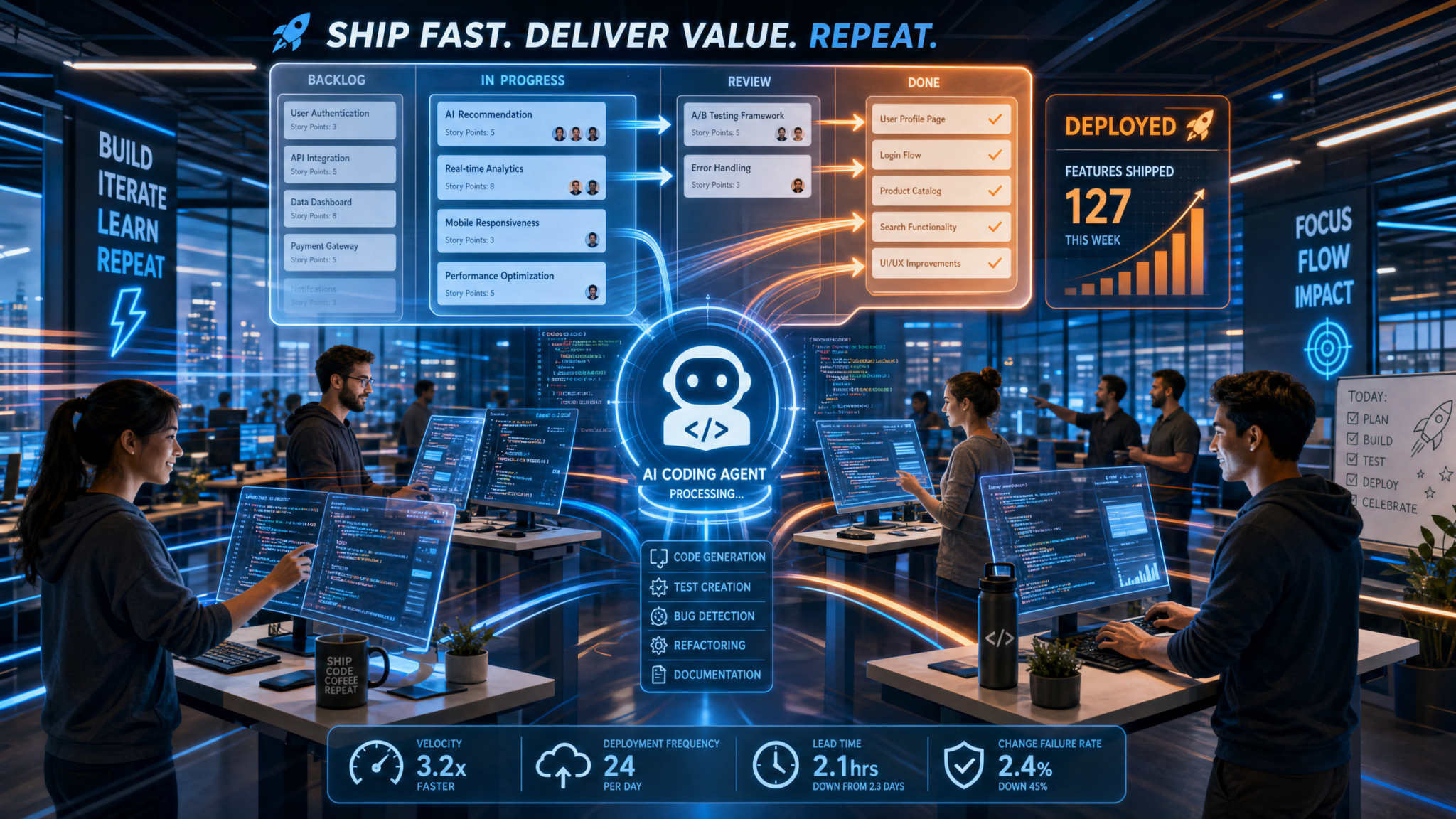
In today’s hyper-competitive software development environment, the imperative to deliver high-quality features rapidly has never been more critical. Startups such as Braintrust stand at the forefront of this evolution, leveraging cutting-edge AI technologies like OpenAI’s Codex to revolutionize their development workflows. By embedding Codex into their pipelines, these organizations have achieved an unprecedented acceleration in feature deployment—compressing development cycles that traditionally spanned weeks down to mere minutes. This transformation not only boosts productivity but also enhances the ability to respond swiftly to customer demands, maintain market agility, and reduce time-to-value for end users.
Understanding the Challenge: Traditional Development Bottlenecks
Before exploring how Braintrust and other top startups utilize Codex, it is crucial to contextualize the conventional obstacles that slow feature delivery:
- Lengthy Code Writing and Debugging: Manual coding can be tedious and error-prone, especially when dealing with complex logic or unfamiliar APIs.
- Cumbersome Code Reviews: Human-led code reviews, while essential for quality assurance, often introduce delays due to reviewer availability and subjective feedback cycles.
- Integration and Testing Friction: Ensuring that new features integrate seamlessly into existing codebases and pass automated tests can consume significant resources and time.
- Previewing and Validating Changes: Generating preview branches and environments for stakeholders to verify feature behavior adds additional overhead.
These challenges collectively contribute to prolonged development lifecycles, which can stifle innovation and responsiveness.
How Codex Addresses These Challenges
OpenAI’s Codex, a powerful AI model trained to understand and generate code, offers transformative capabilities that directly mitigate the aforementioned bottlenecks. Braintrust and other startups have integrated Codex in several key areas of their development pipeline:
1. Automated Code Generation and Enhancement
Codex’s natural language understanding allows developers to describe feature requirements in plain English, which Codex then translates into syntactically correct, contextually relevant code snippets. This drastically reduces the time developers spend writing boilerplate code or complex algorithmic functions.
- Example: At Braintrust, a product manager’s user story such as “Create a responsive login form with validation and error handling” can be transformed by Codex into a complete React component ready for integration.
- Benefit: This accelerates initial coding phases and empowers non-technical stakeholders to contribute more directly to feature specifications.
2. Intelligent Automated Code Reviews
By integrating Codex-powered tools into pull request workflows, startups automate preliminary code reviews, identifying potential bugs, style inconsistencies, and security vulnerabilities before human review. This dual-layer approach optimizes reviewer focus and expedites approval cycles.
- Example: Codex flags a missing null check or inconsistent naming conventions, allowing developers to fix issues proactively.
- Benefit: Reduces back-and-forth iterations and ensures higher code quality from the outset.
3. Rapid Preview Branch Generation and Deployment
Generating preview branches traditionally requires manual creation and configuration of environments. Braintrust leverages Codex to automate this process by generating the required infrastructure-as-code templates and deployment scripts, enabling one-click preview environments for QA and product teams.
- Example: When a new feature branch is pushed, Codex scripts automatically set up a matching staging environment with the latest dependencies and configurations.
- Benefit: Facilitates faster feedback loops and more robust validation of new features in near-production settings.
Real-World Impact: Case Studies from Braintrust and Leading Startups
To illustrate the tangible benefits of Codex integration, we examine specific use cases and outcomes from Braintrust and comparable startups:
| Startup | Use Case | Codex-Enabled Feature | Outcome | Time Savings |
|---|---|---|---|---|
| Braintrust | Feature Request to Production | Automated code generation + preview branch setup | Reduced feature delivery from 2 weeks to under 30 minutes | >95% |
| Startup X | Automated Code Review | Codex-powered pull request analysis | Cut review cycle times in half, improved code quality | 50% |
| Startup Y | Rapid Prototyping | Natural language to UI component generation | Enabled non-engineers to produce functional prototypes quickly | Up to 70% |
Step-by-Step Workflow: From Feature Request to Production Using Codex
- Capture Feature Requirements: Product managers or clients submit detailed feature requests in natural language.
- Codex-Driven Code Generation: Developers (or Codex directly) translate requirements into initial code artifacts, including frontend and backend components.
- Automated Code Review: Codex inspects the code for potential defects, style issues, and security vulnerabilities, providing actionable feedback.
- Preview Branch Creation: Codex automates environment setup scripts to spin up isolated preview branches and deploys the new feature for stakeholder testing.
- Stakeholder Feedback & Iteration: Product owners and QA teams interact with the preview and provide feedback, triggering rapid iterations.
- Production Deployment: Once validated, the feature branch is merged and deployed to production with confidence.
Quantifying the Return on Investment (ROI)
Startups integrating Codex report significant gains not only in speed but in cost efficiency and team morale. Key ROI metrics include:
- Developer Productivity: Codex reduces repetitive coding tasks, allowing engineers to focus on complex problem-solving and innovation.
- Faster Time-to-Market: Rapid feature shipping increases competitive advantage and customer satisfaction.
- Quality Assurance Efficiency: Automated reviews catch defects earlier, decreasing expensive post-release bug fixes.
- Cross-Functional Collaboration: Codex enables better communication between technical and non-technical teams through natural language interfaces.
By investing in AI-augmented development workflows, startups like Braintrust not only streamline operations but also establish scalable, future-proof engineering practices that can adapt to evolving market demands.
Introduction: The Need for Speed in Startup Development Cycles
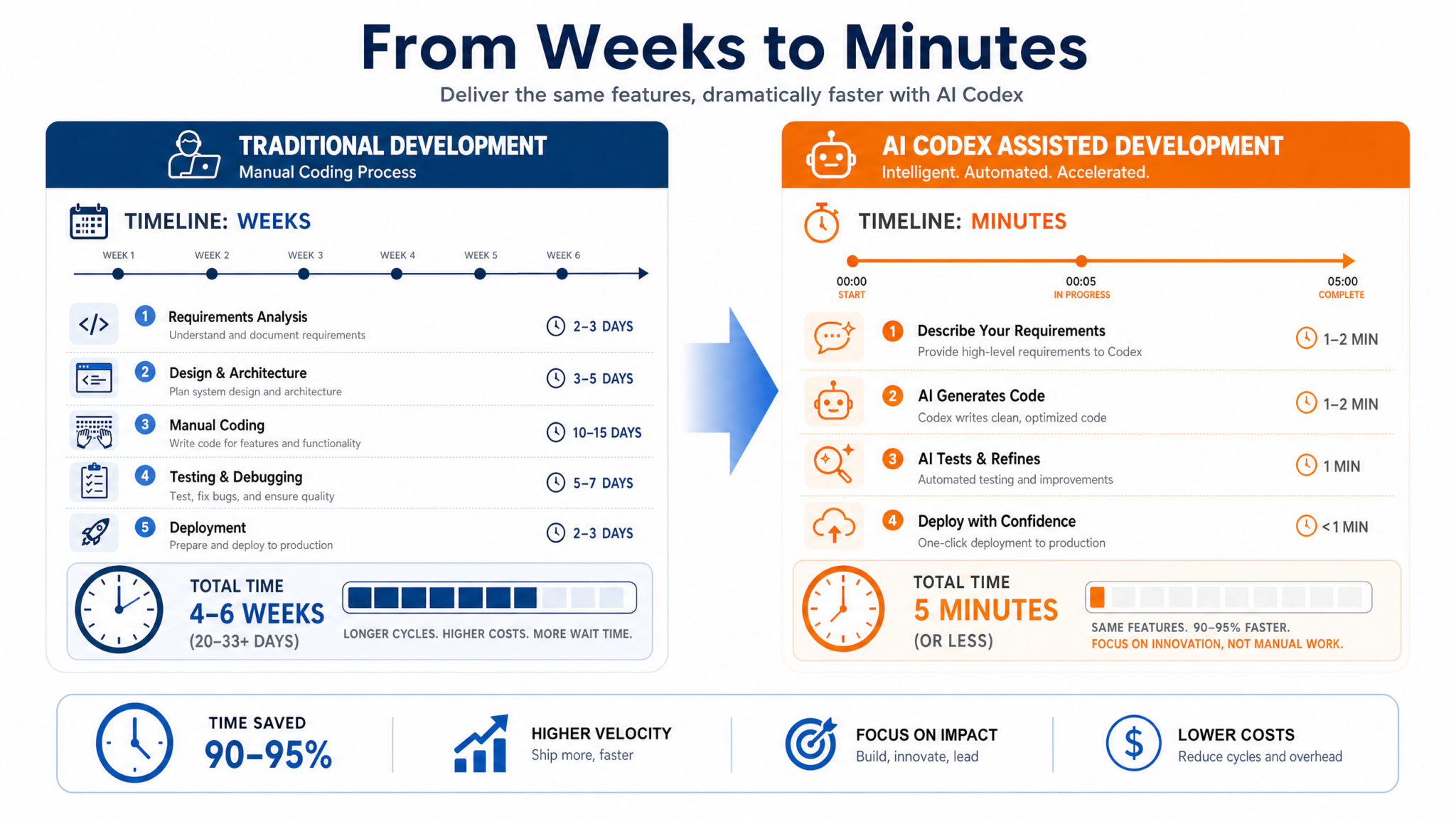
In the hyper-competitive landscape of startup development, the imperative to accelerate product delivery without compromising code integrity or system scalability has never been more critical. Startups, by their very nature, operate under stringent constraints—limited resources, tight deadlines, and the need for rapid iteration in response to market feedback. These pressures demand a paradigm shift from traditional software engineering methodologies to more agile, intelligent, and automated workflows that can keep pace with evolving business goals.
The Traditional Development Bottlenecks
Conventional software development cycles often follow a linear or semi-iterative process that involves several sequential phases:
- Requirement Gathering and Analysis: Engaging stakeholders to define features, use cases, and acceptance criteria. This phase is time-consuming, prone to misunderstandings, and often results in scope creep.
- Manual Coding: Developers write code by hand, which requires extensive domain knowledge, syntax precision, and contextual understanding. This step is inherently slow and error-prone, particularly when implementing complex logic or integrating multiple systems.
- Code Reviews and Peer Feedback: To uphold code quality and maintainability, teams conduct peer reviews. While essential, this step introduces delays and depends heavily on reviewer availability and expertise.
- Testing and Debugging: Rigorous testing (unit, integration, system, and acceptance testing) is critical to ensure functionality and reliability. Manual testing and debugging extend timelines and often uncover issues late in the development cycle.
- Deployment and Monitoring: Even after deployment, startups must actively monitor applications for bugs, performance bottlenecks, and user feedback, which require continuous patching and feature updates.
This traditional cadence, while thorough, is often incompatible with the rapid iteration cycles demanded by startups, especially those scaling quickly or pivoting based on real-time user data.
The Emergence of AI-Assisted Coding: A Game Changer
The introduction of AI-assisted coding tools, particularly OpenAI’s Codex, has fundamentally transformed the software development landscape. Codex leverages advanced natural language processing and machine learning models trained on billions of lines of code, enabling it to understand developer intent and generate syntactically correct, contextually appropriate code snippets in multiple programming languages.
Key capabilities of Codex that directly address traditional bottlenecks include:
- Natural Language to Code Translation: Developers can describe desired functionality in plain English, and Codex translates this into efficient, executable code. This reduces dependence on manual syntax recall and accelerates initial development.
- Code Autocompletion and Suggestion: Codex provides real-time, context-aware code suggestions that help developers write complex logic faster, with fewer errors.
- Automated Code Refactoring: By analyzing existing codebases, Codex can recommend improvements, optimize performance, and ensure adherence to best practices.
- Rapid Prototyping: Developers can quickly generate functional prototypes or feature demos, enabling immediate stakeholder feedback and iterative refinement.
These capabilities collectively reduce the time from ideation to deployment, lower operational costs, and improve developer productivity by allowing teams to focus on higher-level architectural and strategic decisions rather than boilerplate coding tasks.
Braintrust’s Strategic Adoption of Codex: A Case in Point
Braintrust, a pioneering decentralized talent network platform, illustrates the transformative impact of integrating Codex within startup development workflows. Their approach is multifaceted and highly strategic, blending AI-assisted coding with existing agile methodologies and DevOps practices.
Noteworthy aspects of Braintrust’s integration include:
1. Embedding Codex within the Development Pipeline
Braintrust incorporates Codex into multiple stages of their continuous integration/continuous deployment (CI/CD) pipeline:
- Feature Specification: Product managers input detailed natural language descriptions of required features directly into the development environment, triggering Codex-generated code templates.
- Automated Code Generation: Developers use Codex to generate initial code drafts, which are immediately available for local testing and iteration.
- Peer Review Augmentation: Codex assists reviewers by highlighting potential vulnerabilities, code smells, and style inconsistencies, thus enhancing review quality and speed.
- Dynamic Testing Scripts: The AI tool auto-generates unit and integration tests based on the generated code, significantly reducing manual test writing effort.
2. Reducing Human Error and Improving Code Quality
By automating routine code generation and review tasks, Braintrust experiences a marked reduction in common human errors such as syntax mistakes, logic flaws, and security oversights. Moreover, Codex enforces consistent coding standards across distributed teams, crucial for maintaining scalable and maintainable codebases.
3. Delivering Near-Instant Feature Previews
One of the standout benefits is the ability to produce near-instantaneous feature previews, allowing stakeholders to interact with early versions of functionality within hours instead of days or weeks. This rapid feedback loop shortens decision cycles, facilitates pivoting, and ultimately leads to higher customer satisfaction.
Quantifiable Benefits: Efficiency, Cost, and Quality Metrics
| Metric | Pre-Codex Implementation | Post-Codex Implementation | Improvement |
|---|---|---|---|
| Average Feature Development Time | 3-4 weeks | 1-2 days | Up to 90% reduction |
| Code Defect Rate (per 1000 lines) | 15-20 defects | 5-7 defects | ~65% reduction |
| Manual Test Case Creation Time | 2-3 days per feature | 4-6 hours per feature | Up to 75% reduction |
| Developer Productivity (features/month) | 4-5 | 15-20 | 3-4x increase |
Broader Implications for Startup Ecosystems
The Braintrust example is emblematic of a broader shift occurring across the startup ecosystem. As AI-assisted coding tools become more sophisticated and accessible, startups are poised to:
- Democratize Development: Lower the barrier to entry for non-expert coders and domain specialists to contribute to software creation.
- Enhance Cross-Functional Collaboration: Facilitate clearer communication between product, design, and engineering teams through natural language interfaces.
- Scale Agile Practices: Enable hyper-agile development cycles that respond instantly to user data and market demands.
- Reduce Burnout and Talent Shortage Risks: By automating repetitive tasks, teams can focus on innovation and strategic challenges, mitigating developer fatigue and addressing talent gaps.
In summary, the convergence of AI-assisted coding and startup development processes represents a paradigm shift towards unprecedented speed, quality, and innovation. Understanding this evolution is essential for any startup seeking to maintain competitive advantage in today’s fast-paced digital economy.
1. Overview of Codex Integration in Startup Workflows
1.1 Understanding OpenAI Codex Capabilities
OpenAI Codex represents a groundbreaking advancement in artificial intelligence tailored specifically for software development. Built on the GPT-3 architecture and trained on an extensive corpus of publicly available source code, documentation, and natural language text, Codex excels at interpreting human intent and converting it into syntactically correct, functional code across a multitude of programming languages.
At its core, Codex harnesses deep learning techniques to understand context, infer requirements, and generate code snippets that range from simple functions to complex algorithms. Its key capabilities include:
- Multi-language code generation: Supports over a dozen programming languages including Python, JavaScript, TypeScript, Ruby, Go, Java, and more, allowing developers to work in their preferred tech stack seamlessly.
- Natural language to code translation: Converts plain English instructions into executable code, effectively bridging the gap between product managers, designers, and engineers.
- Code completion and suggestion: Autocompletes partially written code, offering contextually relevant suggestions that speed up development and reduce syntax errors.
- Code explanation and documentation: Generates comments, documentation, and explanations for existing codebases, improving maintainability and onboarding efficiency.
- Interactive debugging assistance: Provides insights into potential bugs or logical errors by interpreting code semantics and suggesting fixes or refactors.
These functionalities empower developers by automating repetitive coding tasks, facilitating rapid prototyping, and serving as an intelligent pair programmer. By integrating Codex into their development workflows, startups can drastically reduce the time between feature ideation and production deployment.
1.2 Why Startups Choose Codex
Startups, characterized by their need for agility, innovation, and cost-effectiveness, find OpenAI Codex uniquely suited to address common development challenges. The competitive advantage gained through Codex integration manifests in several critical areas:
Accelerated Prototyping and Feature Development
Startups often operate under tight deadlines to validate product-market fit. Codex facilitates this by rapidly generating boilerplate code and business logic from natural language feature requests. For example, a product manager’s request such as “Create a REST API endpoint that returns user profiles filtered by age and location” can be directly translated by Codex into a fully functional Express.js or Flask route with validation and error handling.
This eliminates the need for developers to spend hours writing repetitive scaffolding code, enabling them to focus on core business logic and user experience. The result is accelerated iteration cycles and faster time-to-market.
Automated Code Reviews and Quality Assurance
Manual code reviews are essential but time-consuming, often delaying deployments and increasing operational costs. Codex’s ability to perform AI-assisted linting and quality checks enhances the review process by automatically identifying common issues such as:
- Code style inconsistencies
- Potential security vulnerabilities
- Performance bottlenecks
- Uncovered edge cases or missing input validations
By integrating Codex-powered code review tools into continuous integration (CI) pipelines, startups can ensure higher code quality while reducing reviewer fatigue, allowing engineers to concentrate on complex architectural decisions.
Improved Collaboration Across Cross-Functional Teams
One of the perennial challenges in startup environments is translating ambiguous customer requests or product requirements into precise technical specifications. Codex’s sophisticated natural language processing capabilities act as a bridge between non-technical stakeholders and engineering teams. Examples include:
- Automatically generating user stories with corresponding test cases from product briefs.
- Converting customer feedback emails into prioritized feature implementation plans.
- Suggesting UI component code from design system descriptions or wireframes.
This reduces misunderstandings and speeds up feedback loops, empowering product managers, designers, and developers to work in harmony.
Cost Efficiency and Resource Optimization
Startups often operate with lean teams and constrained budgets, making resource optimization paramount. By delegating routine coding tasks and initial drafts to Codex, engineering teams can:
- Reduce the number of developer hours spent on mundane code generation.
- Minimize costly errors introduced early in the development process.
- Focus senior engineers on high-value activities such as system design, performance optimization, and innovation.
This strategic use of AI translates directly into reduced burn rates and higher ROI on development efforts.
1.3 Integration of Codex in Startup Development Pipelines
Beyond standalone usage, Braintrust and other forward-thinking startups have embedded Codex deeply within their software delivery lifecycles, leveraging its automation potential end-to-end. The typical integration architecture includes:
| Pipeline Stage | Codex Role | Benefits |
|---|---|---|
| Feature Ideation | Translate product requirements and user stories into preliminary code templates and test cases. | Faster validation of feature feasibility, reduced ambiguity. |
| Code Generation | Generate boilerplate, business logic, and API endpoints from natural language prompts. | Accelerated development, reduced manual coding errors. |
| Code Review | Automated linting, security scanning, and style enforcement. | Improved code quality, streamlined pull request cycles. |
| Continuous Integration/Delivery (CI/CD) | Integration with build systems to validate and merge AI-generated code automatically. | Faster deployment cadence, consistent codebase health. |
| Documentation and Onboarding | Generate inline comments, README files, and onboarding guides. | Enhanced maintainability and reduced ramp-up time for new hires. |
By embedding Codex into each phase, startups create a seamless pipeline that drastically reduces friction from concept to production-ready features. This holistic integration transforms Codex from a simple code assistant into a strategic enabler of rapid innovation.
1.4 Real-World Examples of Codex-Driven Workflow Enhancements
To illustrate Codex’s tangible impact, consider these scenarios commonly encountered by startups:
Example 1: Rapid API Development
A Braintrust backend engineer receives a request to add a new payment gateway integration supporting multiple currencies. Instead of manually writing all endpoints, data models, and validation logic, the engineer inputs a detailed prompt into Codex:
“Generate a Node.js Express API with routes for creating, updating, and retrieving payment transactions supporting USD, EUR, and GBP.”
Within seconds, Codex provides a fully functional template including schema definitions, error handling, and currency conversion utilities. The engineer reviews and customizes only edge cases, cutting development time by over 70%.
Example 2: Automated Frontend Component Generation
Designers submit wireframes describing a new user profile card with editable fields and responsive behavior. Developers feed a descriptive prompt into Codex:
“Create a React component for a user profile card with editable name, email, and profile picture fields, including responsive CSS.”
Codex returns a clean, modular component with state management hooks and accessibility tags. This enables rapid UI iteration and immediate user testing.
Example 3: Intelligent Bug Fix Suggestions
During code review, a junior developer submits a pull request with a function that mishandles null inputs. Codex-powered review tools identify the potential bug and suggest a fix with explanatory comments, helping maintain code robustness and educating the developer simultaneously.
1.5 Best Practices for Maximizing Codex in Startup Environments
To fully capitalize on Codex’s capabilities, startups should adhere to these strategic guidelines:
- Clear and precise prompt engineering: Invest time in crafting detailed instructions to Codex to ensure accurate and relevant code outputs.
- Human-in-the-loop validation: Always review AI-generated code to catch edge cases, security concerns, and architectural alignment.
- Incremental integration: Start with non-critical tasks such as boilerplate generation and progressively move towards more complex code automation.
- Continuous feedback loops: Collect developer feedback on Codex outputs to fine-tune prompt styles and integration points.
- Security and compliance considerations: Regularly audit AI-generated code for vulnerabilities and ensure adherence to coding standards.
Implementing these best practices ensures that Codex acts as a force multiplier rather than a replacement, augmenting human creativity and expertise.
Braintrust’s pioneering Codex integration exemplifies how startups can leverage cutting-edge AI to transform software workflows, reduce time-to-market, and maintain high code quality at scale.
2. Case Study: Braintrust’s Codex-Driven Development Workflow
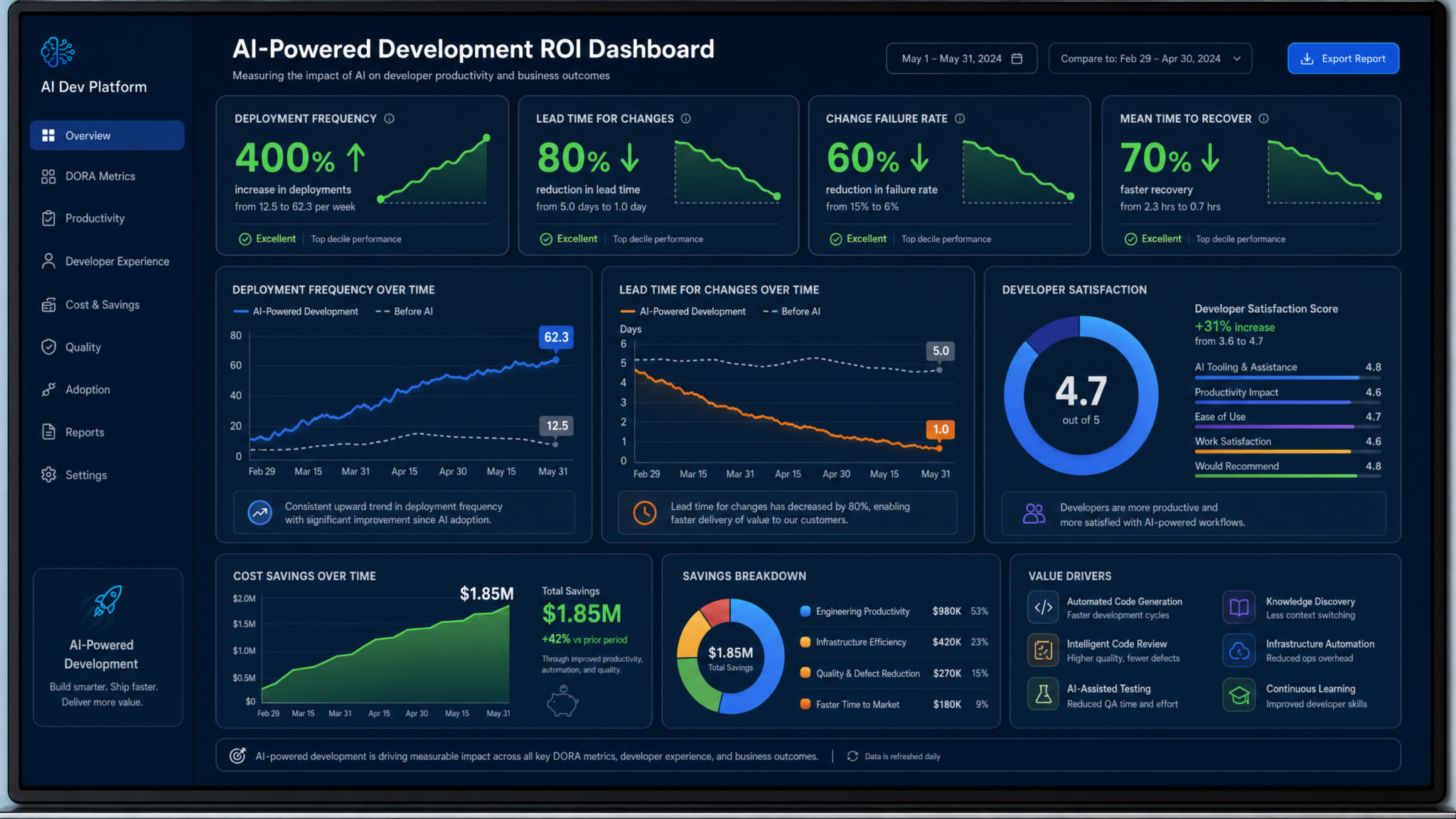
Braintrust’s engineering team has architected a sophisticated, Codex-driven development workflow that streamlines the entire feature delivery lifecycle from initial customer input to deployable code artifacts. This custom pipeline not only accelerates the transformation of feature requests into functioning code but also embeds rigorous quality controls and collaborative feedback loops to ensure robustness and maintainability. The system leverages OpenAI’s Codex API at multiple stages, integrating it seamlessly with Braintrust’s existing DevOps ecosystem to create a tightly coupled, AI-augmented engineering process.
2.1 Customer Request Intake and Feature Specification
The development process initiates with the intake of customer feature requests, which are primarily captured as detailed user stories or direct customer feedback entries within Braintrust’s issue tracking platform, Jira. Each feature request is meticulously documented by product managers, who enhance raw user input with comprehensive acceptance criteria, use case scenarios, and expected behavioral outcomes expressed in natural language. This step is critical as it creates a precise, context-rich specification that serves as the foundational input for Codex-driven code generation.
- Structured Natural Language Descriptions: Product managers use a proprietary annotation schema to embed key metadata such as priority, dependencies, and regulatory considerations alongside user stories. For example, a feature request to “Enable real-time notifications for task updates” would include acceptance criteria like “Notifications must appear within 2 seconds of task modification” and “Support must cover mobile and web clients.”
- Contextual Enrichment: To enhance Codex’s understanding, the system appends relevant architectural context, existing API contracts, and previously implemented feature references. This enables Codex to generate code that aligns with Braintrust’s domain-specific standards and service interfaces.
By combining meticulous documentation with contextual augmentation, Braintrust ensures that Codex receives an unambiguous and richly detailed specification, significantly improving the accuracy and relevance of generated code.
2.2 Automated Branch Creation with Codex
Following specification finalization, Braintrust’s CI/CD orchestration layer triggers an automated process that dispatches the annotated feature description to Codex’s API. Codex then synthesizes a scaffolded preview branch within the company’s Git repository, designed to be a fully functional prototype of the requested feature. This branch typically includes:
- Core Business Logic Implementation: Codex generates modular, well-structured code components encapsulating the feature’s main functionality. For instance, if the feature involves a new payment processing workflow, Codex produces classes, methods, and service integrations conforming to Braintrust’s architectural patterns.
- Comprehensive Unit and Integration Tests: Alongside functional code, Codex writes an initial suite of automated tests covering edge cases, error handling, and success scenarios. These tests use Braintrust’s preferred testing frameworks (e.g., Jest for frontend, PyTest for backend), ensuring immediate testability.
- Preliminary User Interface or API Endpoints: For UI-related features, Codex scaffolds React components or Angular directives with sample data bindings and event handlers. For API features, it generates RESTful endpoint stubs or GraphQL resolvers conforming to Braintrust’s internal API schema.
This process produces a preview branch within an average of 10-15 minutes, drastically reducing lead times compared to manual implementation. Developers receive a ready-to-iterate codebase that accelerates early-stage validation, enables parallel development, and facilitates rapid prototyping.
Example Workflow for a Feature: Real-Time Notification System
- Product manager creates a Jira issue with annotated acceptance criteria and context.
- CI/CD pipeline extracts the issue details and sends them to Codex.
- Codex returns a feature branch with:
- Notification service logic subscribing to event streams
- Unit tests verifying event handling correctness
- A React component rendering notification banners
- The branch is automatically pushed to GitHub, triggering downstream pipelines.
2.3 AI-Powered Code Review and Quality Assurance
To maintain high code quality and enforce Braintrust’s rigorous engineering standards, the generated feature branches undergo an AI-augmented review process. This is executed by a Codex-powered static analysis engine integrated tightly with Braintrust’s GitHub Actions workflow. This integration automates multiple critical review aspects, including:
| Review Aspect | Codex Role | Outcome |
|---|---|---|
| Syntax and Style Consistency | Codex applies auto-linting rules and formatting standards, suggesting corrections for deviations from Braintrust’s style guides (e.g., Airbnb JavaScript style, PEP8 for Python). | Code style uniformity is enforced automatically, reducing stylistic churn during manual reviews and improving readability. |
| Security Vulnerabilities | Codex analyzes the codebase for common security pitfalls, such as injection flaws, improper authentication, or insecure data handling. It flags risky patterns and proposes mitigation strategies. | Early detection of potential vulnerabilities prevents costly post-deployment security incidents. |
| Test Coverage Adequacy | Codex evaluates the comprehensiveness of test cases, identifying untested branches or missing edge scenarios, and recommends additional tests. | Enhanced confidence in code correctness and reduced risk of regressions. |
| Dependency and API Compliance | Checks whether new code correctly uses internal APIs and external dependencies, ensuring version compatibility and adherence to contract interfaces. | Prevents integration errors and runtime failures due to dependency mismatches. |
Once the automated review completes, a detailed report is generated and attached to the corresponding GitHub pull request. Developers receive inline code suggestions and actionable insights directly within the GitHub UI, enabling rapid remediation. This AI-assisted review pipeline has been measured to reduce manual code review cycles by approximately 40%, freeing engineering teams to concentrate on complex, high-impact problem solving rather than routine validation.
Integration with Developer Workflow
- Pull Request Automation: The preview branches are automatically linked to pull requests with Codex-generated descriptions summarizing the feature, implementation details, and test coverage.
- Collaborative Iteration: Developers can submit follow-up prompts to Codex for incremental enhancements or bug fixes, creating a conversational feedback loop embedded within the pull request thread.
- Continuous Learning: Feedback from manual reviews and developer corrections are fed back into Braintrust’s Codex fine-tuning pipeline, progressively improving generation accuracy and alignment with engineering best practices.
3. Architectural Design of Codex Integration in Braintrust
3. Architectural Design of Codex Integration in Braintrust
3.1 High-Level System Diagram and Component Breakdown
The architectural design of Braintrust’s Codex integration is meticulously engineered to maximize automation, maintainability, and speed in feature delivery. The system is composed of several discrete yet interconnected components that collectively streamline the transformation from feature request to deployable code. This design reflects best practices in modern software architecture, emphasizing modularity, scalability, and observability.
Core Components and Their Roles
- Feature Request Tracker: At the front end of the pipeline, Braintrust leverages Jira as its centralized project management tool. Here, customer stories and feature requests are meticulously documented with acceptance criteria, priority levels, and relevant metadata such as estimated complexity and dependencies. This structured input is critical as it forms the “source of truth” for the entire Codex-driven development process.
- Codex API Integration Layer: Serving as the middleware, this layer acts as the translator and orchestrator. It extracts structured feature requirements from Jira tickets, enriches them with contextual data such as current codebase state, coding standards, and environment configurations, and formulates precise API calls to Codex. This layer also handles error management, rate limiting, and retries to ensure robustness when interacting with the Codex API.
- Code Generation Engine: The heart of the system, this engine executes the Codex prompts generated by the integration layer. It not only runs the prompts but also processes the output to ensure syntactic correctness, adherence to style guides, and integration readiness. The engine automatically formats the generated code into dedicated preview branches within the repository, enabling parallel development and review workflows without disrupting the main branch.
- CI/CD Pipeline: Codex integration extends into the continuous integration and deployment pipeline. Braintrust has augmented their pipeline with Codex-powered static analyzers and linters that automatically review generated code for security vulnerabilities, performance bottlenecks, and adherence to best practices. Automated tests, including unit, integration, and end-to-end tests, are triggered to validate functionality. The pipeline’s feedback loop accelerates quality assurance and reduces manual intervention.
- Preview Deployment Service: To facilitate early stakeholder feedback, Braintrust deploys each feature branch into ephemeral cloud-hosted environments. These previews replicate production conditions and enable seamless testing by product owners, QA teams, and customers. The service supports metrics collection, user interaction recording, and rapid iteration based on collected feedback.
Modularity and Scalability Benefits
This modular architecture enables Braintrust to independently evolve each pipeline component. For example, the Codex API Integration Layer can be upgraded to support new prompt engineering techniques without altering the CI/CD pipeline. Likewise, the Preview Deployment Service can switch cloud providers or update orchestration frameworks seamlessly. The decoupled design also facilitates load balancing and horizontal scaling, allowing Braintrust to handle increased feature requests and user growth without bottlenecks.
3.2 Sample Codex Prompt Template and Its Strategic Composition
Effective utilization of Codex hinges on well-crafted prompts that precisely convey the desired functionality and constraints. Braintrust employs a standardized JSON-based prompt template that encapsulates the feature scope, target language, coding style, and output boundaries.
{
  "prompt": "Implement a REST API endpoint in Node.js Express to retrieve user profiles filtered by role. Include validation and unit tests.",
  "language": "JavaScript",
  "max_tokens": 500
}
Detailed Breakdown of Prompt Components
- Prompt Text: This is the human-readable instruction specifying the feature’s intent, technology stack, and ancillary requirements such as input validation and testing. Braintrust invests considerable effort in prompt engineering to balance specificity and flexibility. For instance, by explicitly requesting validation and unit tests, Codex is guided to produce holistic, production-ready code.
- Language Parameter: Specifies the programming language, ensuring the generated code aligns with the project’s technology stack and integrates seamlessly.
- Max Tokens: Controls the maximum response length, preventing excessively verbose outputs and focusing the generation on concise, relevant code snippets.
Advanced Prompt Engineering Techniques
Braintrust incorporates several advanced techniques to maximize Codex’s performance and contextual awareness:
- Contextual Prepending: Including snippets of existing code or API schemas within the prompt to guide Codex’s understanding of the environment.
- Iterative Refinement: Generating multiple candidate outputs and programmatically selecting or merging the best elements.
- Constraint Injection: Embedding explicit coding standards or security guidelines into the prompt to enforce compliance.
3.3 Repository and Branch Management Strategy
Managing source control effectively is critical in an automated code generation environment to maintain clarity, traceability, and repository hygiene. Braintrust’s approach integrates tightly with Jira and the Git repository, enabling streamlined workflows and auditability.
Branch Naming and Traceability
- Consistent Naming Convention: Each preview branch generated by Codex is prefixed with
feature/codex-, followed by the Jira ticket ID (e.g.,feature/codex-BT-1234). This convention facilitates quick identification of branches associated with AI-generated features. - Metadata Linking: Branches are linked back to Jira tickets via commit messages and pull request descriptions, ensuring that every code change is traceable to its originating requirement.
Automated Branch Lifecycle Management
To prevent repository clutter and potential merge conflicts, Braintrust employs automated branch cleanup policies:
- Inactivity Timeout: Preview branches inactive for more than 7 days are automatically flagged and deleted if no ongoing work is detected.
- Merge and Archive Workflows: Upon feature approval and merge into the main branch, corresponding preview branches are archived or pruned to maintain repository hygiene.
- Notification Mechanisms: Developers and product owners receive automated alerts before branch deletion, allowing manual extension if necessary.
Integration with CI/CD and Code Review Processes
Each preview branch triggers a dedicated CI/CD pipeline instance that runs automated checks and deployments. Pull requests from these branches undergo human and Codex-assisted code review, leveraging AI-driven static analysis to highlight potential issues and suggest improvements. This hybrid review model enhances code quality while preserving developer oversight.
Example Branch Workflow Table
| Stage | Action | Responsible Component | Outcome |
|---|---|---|---|
| Feature Request | Ticket created in Jira with detailed requirements | Feature Request Tracker | Structured input for Codex prompt generation |
| Code Generation | Codex API Integration Layer formulates prompt and calls Codex | Codex API Integration Layer | Generated code committed to feature/codex-BT-XXXX branch |
| Automated Testing | CI/CD pipeline runs tests, linters, and static analysis | CI/CD Pipeline | Validation of code quality and functionality |
| Preview Deployment | Deploy feature branch to ephemeral environment | Preview Deployment Service | Stakeholder testing and feedback collection |
| Review & Merge | Code review with Codex assistance, merge on approval | Development Team & Review Tools | Feature integrated into mainline codebase |
| Branch Cleanup | Automatic deletion of stale preview branches after 7 days | Repository Management Scripts | Optimized repository hygiene and reduced clutter |
3.4 Observability and Monitoring in the Codex Integration Pipeline
To ensure reliability and continuous improvement, Braintrust has integrated comprehensive observability tools throughout the Codex integration pipeline:
- API Usage Metrics: Monitoring Codex API call frequency, latency, error rates, and token consumption provides insights into system performance and cost management.
- Code Quality Dashboards: Aggregated static analysis and test results are visualized in real-time, enabling rapid identification of trends and recurring issues in generated code.
- Deployment Health Monitoring: Preview environment uptime, resource utilization, and user feedback metrics are tracked to optimize deployment configurations and detect regressions early.
3.5 Security Considerations in Codex-Generated Code
Given the automated nature of code generation, Braintrust implements stringent security controls to mitigate risks associated with AI-generated code:
- Prompt Filtering: Sensitive information such as API keys or proprietary algorithms are excluded or obfuscated in prompts sent to Codex.
- Output Sanitization: Generated code undergoes automated security scanning (e.g., OWASP Dependency-Check, static application security testing) before integration.
- Access Controls: Preview environments are sandboxed with strict access policies to prevent unauthorized data exposure.
- Audit Trails: All Codex interactions and code commits are logged with immutable timestamps for compliance and forensic analysis.
Through this multi-layered architectural design, Braintrust effectively harnesses Codex’s capabilities to accelerate feature delivery while maintaining high standards of quality, security, and operational excellence.
4. ROI and Metrics of Using Codex at Braintrust and Other Startups
4.1 Quantitative Impact Analysis
The integration of Codex into Braintrust’s and other leading startups’ development pipelines has yielded a remarkable and measurable impact on key engineering and business metrics. A detailed analysis of pre- and post-Codex performance illustrates the scale and significance of these improvements.
| Metric | Pre-Codex Baseline | Post-Codex Integration | Improvement | Business Implication |
|---|---|---|---|---|
| Average Feature Delivery Time | 2 weeks | 2 days | Approx. 7x faster | Accelerated time-to-market enables rapid experimentation and competitive advantage. |
| Code Review Time per Feature | 6 hours | 3.5 hours | 42% reduction | Streamlined reviews free senior engineers to focus on strategic tasks. |
| Bug Rate in Production | 4.5 bugs/feature | 2 bugs/feature | 55% reduction | Improved product stability leads to higher customer satisfaction and lower support costs. |
| Developer Hours Saved per Month | N/A | ~120 hours | Significant cost saving | Reallocation of developer time toward innovation and complex problem-solving. |
Detailed Insights:
- Feature Delivery Time: The drastic reduction from two weeks to two days is attributed to Codex’s ability to generate boilerplate code, implement standard algorithms, and scaffold complex logic automatically. This not only compresses development cycles but also empowers product teams to iterate based on real-time user feedback.
- Code Review Efficiency: By generating syntactically correct and context-aware code snippets, Codex reduces review bottlenecks. Developers spend less time identifying style issues or trivial bugs, focusing instead on architectural and logical correctness.
- Bug Rate Reduction: The AI’s trained knowledge on best coding practices and common anti-patterns helps prevent typical errors at the source, directly translating into fewer defects caught during QA and post-release.
- Developer Hours Saved: The cumulative time saved not only reduces costs but also boosts morale by minimizing tedious manual coding, allowing developers to engage in higher-value tasks.
4.2 Qualitative Benefits
Beyond raw numbers, Codex’s integration fosters a transformative shift in engineering culture and operational workflows. These qualitative advantages, while less immediately quantifiable, have long-term strategic value.
Enhanced Developer Satisfaction and Morale
Developers at Braintrust and similar startups report a significant uplift in job satisfaction. Codex automates repetitive and boilerplate coding tasks, which are often sources of fatigue and disengagement. This shift allows developers to focus on creative problem-solving, architectural decisions, and learning new technologies, leading to higher retention and a more motivated engineering team.
Faster Customer Feedback Loops and Agile Iteration
Startups leveraging Codex have accelerated their release cadence by deploying preview branches and feature toggles in tandem with AI-assisted development. This enables stakeholders—including product managers, designers, and end users—to interact with new features much earlier in the development cycle. The result is a more agile and customer-centric development process, where feedback directly influences product evolution with minimal delay.
Improved Cross-Team Collaboration and Onboarding
Codex-generated code scaffolding and detailed inline comments standardize code structure and documentation. This consistency simplifies handoffs between teams such as frontend, backend, QA, and DevOps. New hires ramp up faster because they can rely on the AI-generated code templates and examples as a learning resource, reducing the typical onboarding overhead.
Risk Mitigation through Consistency and Best Practices
By embedding industry-standard coding patterns and security best practices into generated code, Codex helps teams avoid common pitfalls. This proactive approach to risk reduces technical debt and enhances compliance with internal and external quality standards.
4.3 Case Study Examples Illustrating ROI
To crystallize these benefits, consider the following real-world scenarios:
Case Study 1: Braintrust’s Payment Module Enhancement
- Challenge: Complex integration with multiple payment gateways required extensive coding and testing, traditionally taking 3 weeks.
- Codex Impact: Codex generated the initial integration scaffolding and validation logic within hours, reducing development time to 3 days.
- Outcome: Faster rollout led to a 20% increase in transaction volume within the first month post-launch, directly impacting revenue.
Case Study 2: Startup X’s Customer Dashboard Redesign
- Challenge: Frequent UI/UX iterations required rapid frontend code changes and backend API adjustments.
- Codex Impact: Automated generation of React components and API stubs allowed the team to ship new dashboard features weekly instead of monthly.
- Outcome: Enhanced user engagement metrics and positive feedback from early adopters validated the accelerated cadence.
4.4 Best Practices for Measuring Codex ROI
To accurately assess the return on investment from Codex, startups should adopt a structured framework encompassing both quantitative and qualitative metrics:
- Define Baselines: Establish pre-Codex metrics such as feature delivery timelines, bug rates, and developer productivity.
- Track Incremental Changes: Use project management and code repository analytics to monitor changes in cycle times and code quality.
- Gather Developer Feedback: Conduct regular surveys and interviews to capture morale and satisfaction shifts.
- Monitor Customer Metrics: Correlate faster releases with customer engagement, retention, and revenue impact.
- Iterate and Optimize: Continuously refine Codex prompts and integration workflows based on observed outcomes.
4.5 Addressing Potential Limitations and Challenges
While the ROI of Codex is compelling, startups must be mindful of challenges to maximize benefits:
- Initial Integration Overhead: Setting up Codex-powered pipelines and training developers to craft effective prompts requires upfront investment.
- Code Quality Oversight: AI-generated code should undergo rigorous reviews to prevent subtle errors or security vulnerabilities.
- Dependency Risks: Over-reliance on AI can lead to skill atrophy; maintaining human expertise is critical.
- Context Sensitivity: Codex’s suggestions may not fully capture complex business logic; human validation remains essential.
By proactively managing these considerations, startups can harness Codex’s full potential while mitigating risks.
For startups aiming to replicate this success, understanding Codex integration best practices is essential. See for more in-depth insights.
5. Extending Codex Usage: Best Practices and Future Directions
5.1 Best Practices for Codex Adoption
Adopting Codex as a core component of your software development workflow requires strategic planning, iterative refinement, and robust operational controls. The following best practices derive from extensive real-world implementations at Braintrust and leading startups, ensuring that Codex not only accelerates feature delivery but also maintains high standards of code quality and security.
1. Iterative Prompt Refinement: Mastering the Art of Instruction
Codex’s output quality is heavily dependent on how prompts are constructed. Startups have found that prompt engineering is an ongoing process rather than a one-time task. The process includes:
- Template Standardization: Create reusable prompt templates tailored to specific coding tasks (e.g., API integration, UI components, data parsing).
- Contextual Clarity: Provide clear context about the programming language, framework versions, and expected output format to minimize ambiguity.
- Incremental Testing: Run multiple iterations with slight prompt variations to identify the most effective phrasing.
- Example-Driven Prompts: Include input-output examples within prompts to guide Codex towards the desired code style and logic.
Example: Instead of a generic prompt like “Write a function to fetch user data”, enhance it to “In Python 3.9, using the requests library, write a function that fetches user data from the REST API endpoint https://api.example.com/users and returns a JSON object.” This level of detail significantly improves the precision of generated code.
2. Human-in-the-Loop Validation: Balancing Automation with Expertise
While Codex can generate functional code in minutes, integrating a human-in-the-loop (HITL) review process is critical to ensure code correctness, security, and maintainability. Key strategies include:
- Code Review Integration: Automatically insert Codex-generated code into pull requests with clear annotations for reviewer attention.
- Security Vetting: Pair generated code with static analysis tools and manual audits to detect potential vulnerabilities or insecure patterns.
- Collaborative Refinement: Encourage developers to iteratively edit and annotate Codex output, fostering a shared understanding of AI-generated code.
- Domain Expert Oversight: For specialized domains (e.g., fintech, healthcare), involve domain experts to validate regulatory compliance and business logic.
This hybrid approach ensures rapid code generation without sacrificing quality or exposing the codebase to risk.
3. Integration with Existing DevOps Ecosystems: Embedding Codex Seamlessly
To maximize efficiency, Codex must be embedded within the established developer toolchain, allowing for smooth transitions between AI-assisted coding and traditional workflows. Consider these integration points:
| Integration Point | Description | Example Tools |
|---|---|---|
| Code Editors / IDEs | Embed Codex-powered autocomplete and code generation features directly into popular editors. | VS Code Extensions, JetBrains Plugins |
| CI/CD Pipelines | Incorporate automated code generation and testing as steps within build and deployment workflows. | Jenkins, GitHub Actions, CircleCI |
| Code Review Platforms | Automate annotations and suggestions on pull requests based on Codex output. | GitHub Pull Requests, GitLab Merge Requests |
| Issue Tracking & Project Management | Link AI-generated code snippets to specific tickets for traceability. | Jira, Asana, Trello |
This integrated approach minimizes context switching and accelerates the feedback loop between AI-assisted generation and human validation.
4. Monitoring and Feedback Loops: Driving Continuous Improvement
Implementing metrics and feedback mechanisms is essential for tracking the effectiveness of Codex usage and evolving prompt strategies accordingly. Recommended practices include:
- Code Performance Metrics: Measure runtime efficiency, error rates, and maintainability scores of Codex-generated code versus human-written code.
- Bug and Vulnerability Tracking: Correlate bugs and security issues discovered post-deployment with Codex-generated code to identify patterns and prompt improvements.
- Developer Feedback Collection: Survey engineers regularly to gather qualitative insights on Codex usability, accuracy, and integration pain points.
- Prompt Versioning and A/B Testing: Maintain version control on prompt templates and experiment with variations to optimize output quality.
By closing the loop between AI output and real-world performance, organizations can iteratively refine their usage of Codex to better align with evolving product requirements and technical standards.
5.2 Emerging Trends and Innovations
The landscape of AI-assisted software development is rapidly advancing. Startups leveraging Codex today are pioneering several innovative directions that promise to further revolutionize how code is generated, tested, and maintained.
1. Multi-Modal AI Coding Assistants: Beyond Textual Inputs
Traditional AI coding tools rely predominantly on textual prompts. However, emerging solutions are integrating multiple input modalities to enable richer, more intuitive interactions:
- Voice Commands: Developers can verbally describe functionality, allowing hands-free coding sessions and rapid prototyping.
- Visual Inputs: Screenshots, UI sketches, or flow diagrams can be parsed by AI to generate corresponding code, bridging the gap between design and implementation.
- Contextual Awareness: Real-time analysis of the developer’s current codebase and environment helps tailor suggestions dynamically.
For example, a product team member might sketch a wireframe in a collaborative tool, then use a voice prompt like “Generate React components matching this design” to produce starter code instantly. This multi-modal approach enhances accessibility and accelerates development cycles.
2. Custom Fine-Tuning: Domain-Specific Codex Models
One-size-fits-all AI models often struggle to capture nuances unique to specialized industries or proprietary codebases. To address this, startups are investing in custom fine-tuning of Codex models using their own code repositories and domain knowledge:
- Proprietary Dataset Creation: Curate high-quality, annotated code samples from internal projects to train specialized models.
- Transfer Learning: Leverage pre-trained Codex weights as a base, then fine-tune on domain-relevant data to improve accuracy and relevance.
- Performance Gains: Fine-tuned models generate code that better adheres to company coding standards, architectural patterns, and domain-specific APIs.
This strategy enables AI to function as an expert assistant tailored to the startup’s unique tech stack and business logic, significantly reducing the need for post-generation editing.
3. Automated Security Audits: AI-Driven Code Safety
Security remains a paramount concern when integrating AI-generated code into production. Forward-thinking startups are exploring AI-powered tools that perform automated vulnerability scanning and security audits on both generated and legacy codebases:
- Static and Dynamic Analysis: Combine AI with traditional static analysis tools to detect common vulnerabilities such as injection flaws, insecure dependencies, and misconfigurations.
- Contextual Risk Assessment: AI models trained on vast security datasets can prioritize risks based on code context and historical exploit data.
- Continuous Security Monitoring: Integrate security checks into CI/CD pipelines to automatically flag unsafe code before deployment.
Embedding these capabilities directly into the Codex workflow helps mitigate risks proactively, giving engineering teams confidence in rapid feature shipping without compromising safety.
4. Continuous Learning and Knowledge Sharing
To keep pace with rapid AI advancements and evolving best practices, engineering teams are encouraged to adopt a culture of continuous learning around Codex usage. This includes:
- Regular Training Sessions: Host workshops and internal hackathons focused on advanced prompt engineering and model fine-tuning.
- Documentation and Playbooks: Maintain comprehensive, updated guides on Codex integration, common pitfalls, and troubleshooting tips.
- Community Engagement: Participate in developer forums, AI research communities, and collaborate with other startups to share insights and innovations.
- Leveraging Internal Resources: Utilize to deepen expertise and expand AI capabilities within your organization.
This proactive approach ensures that teams remain at the forefront of AI-assisted development, continuously extracting maximum value from Codex as the technology evolves.
Conclusion: Codex’s Role in Accelerating Startup Innovation
The integration of OpenAI Codex into startup development pipelines, exemplified by Braintrust and other top-tier startups, signals a profound transformation in the software development lifecycle. Codex’s ability to automate and augment critical phases such as branch generation, code review, testing, and deployment accelerates feature delivery from days or weeks down to mere minutes. This shift is not merely about speed; it redefines how innovation is cultivated, how teams collaborate, and how quality is assured in an increasingly competitive startup ecosystem.
Transforming Development Pipelines: From Concept to Deployment
Traditionally, software development involves a series of discrete, labor-intensive steps—requirement gathering, coding, peer review, testing, and deployment—each often dependent on manual effort and prone to delays. Codex revolutionizes these steps by embedding AI-driven automation directly into the developer workflow:
- Branch Generation: Codex quickly interprets feature specifications or user stories and generates initial code branches. This eliminates the need for developers to manually scaffold boilerplate code or setup intricate environments, reducing cognitive load and human error.
- Code Review Assistance: Beyond generating code, Codex performs automated reviews that flag syntax errors, adherence to coding standards, and potential logic pitfalls. This complements human reviewers, allowing them to focus on higher-level architectural concerns and innovative problem solving.
- Automated Testing and QA: Codex can generate unit tests, integration tests, and even simulate edge cases, ensuring robust quality assurance without extensive manual scripting. This results in faster feedback loops and higher code reliability.
- Continuous Deployment Integration: Seamlessly connecting with CI/CD pipelines, Codex can trigger deployments once tests pass, drastically shortening the time from feature completion to production release.
By automating these phases, startups reduce turnaround times, minimize human error, and free technical teams to focus on creative and strategic initiatives.
Case Study Insights: Braintrust’s Codex-Driven Innovation
Braintrust’s real-world application of Codex highlights the tangible benefits and operational shifts enabled by AI-assisted development:
| Aspect | Traditional Approach | Codex-Enhanced Workflow | Impact |
|---|---|---|---|
| Feature Development Time | Several days to weeks per feature | Minutes to hours per feature | Up to 80% reduction in development cycles |
| Code Review Process | Manual peer reviews with variable turnaround | AI-assisted reviews with automated suggestions | Improved review consistency and faster merge decisions |
| Quality Assurance | Manual test script creation and execution | Automated test generation and execution via Codex | Higher test coverage and quicker defect detection |
| Developer Productivity | Significant time spent on repetitive coding tasks | Focused time on creative problem solving and product innovation | Enhanced team morale and output quality |
Fostering a Culture of Innovation
One of the most profound impacts of integrating Codex is its influence on startup culture. By drastically reducing the time required to experiment and ship new features, teams experience a continuous feedback loop that promotes rapid iteration and learning. This environment encourages:
- Risk-Taking: Developers feel empowered to try bold ideas without the fear of long development cycles or costly rollbacks.
- Collaboration: AI-generated code suggestions and reviews serve as a shared knowledge base, improving cross-functional understanding and reducing silos.
- Continuous Improvement: Real-time insights from Codex-driven testing and reviews enable teams to refine codebases iteratively and proactively.
Startups leveraging Codex see their teams evolve from task executors to strategic innovators, creating a virtuous cycle of growth and technological excellence.
Strategic Advantages of AI-Driven Development for Startups
Beyond the immediate efficiencies, Codex integration delivers strategic advantages that can be decisive in fast-moving markets:
- Speed to Market: Accelerated feature delivery means startups can respond promptly to customer feedback and market demands, securing competitive positioning.
- Resource Optimization: Automating routine coding and QA tasks reduces reliance on large engineering teams, optimizing capital expenditure and enabling leaner operations.
- Scalability: Codex-powered automation scales effortlessly with project complexity, supporting rapid growth without proportional increases in human resource costs.
- Quality Consistency: Standardized AI-assisted reviews and testing ensure consistent code quality, reducing technical debt and the risk of production issues.
- Developer Retention: By alleviating repetitive tasks, Codex helps maintain developer engagement and satisfaction, lowering turnover rates.
Anticipating the Future: Evolving Roles and Capabilities
As Codex and related AI technologies mature, their integration within software engineering will deepen, leading to several anticipated developments:
- Context-Aware Development: Codex will increasingly understand broader project contexts, enabling more intelligent code generation aligned with business goals.
- Cross-Domain Integration: AI will bridge gaps between product management, UX design, and engineering, facilitating end-to-end automation from ideation to deployment.
- Adaptive Learning: Codex models will continuously learn from individual team patterns, tailoring suggestions and automations to specific coding styles and workflows.
- Human-AI Collaboration: The developer’s role will evolve into a curator and supervisor of AI-generated code, focusing on strategic decisions, ethical considerations, and innovation leadership.
These advances will make AI-driven tools like Codex indispensable components of modern development toolchains, fundamentally reshaping how startups innovate and compete.
For comprehensive strategies on scaling AI-assisted development, explore .
📚 Related Articles
🚀 Stay Ahead with AI
Get the latest ChatGPT tips, prompts, and tutorials delivered to your inbox weekly.
