
ChatGPT Dreaming V3: OpenAI’s Revolutionary Memory System Launches June 4, 2026
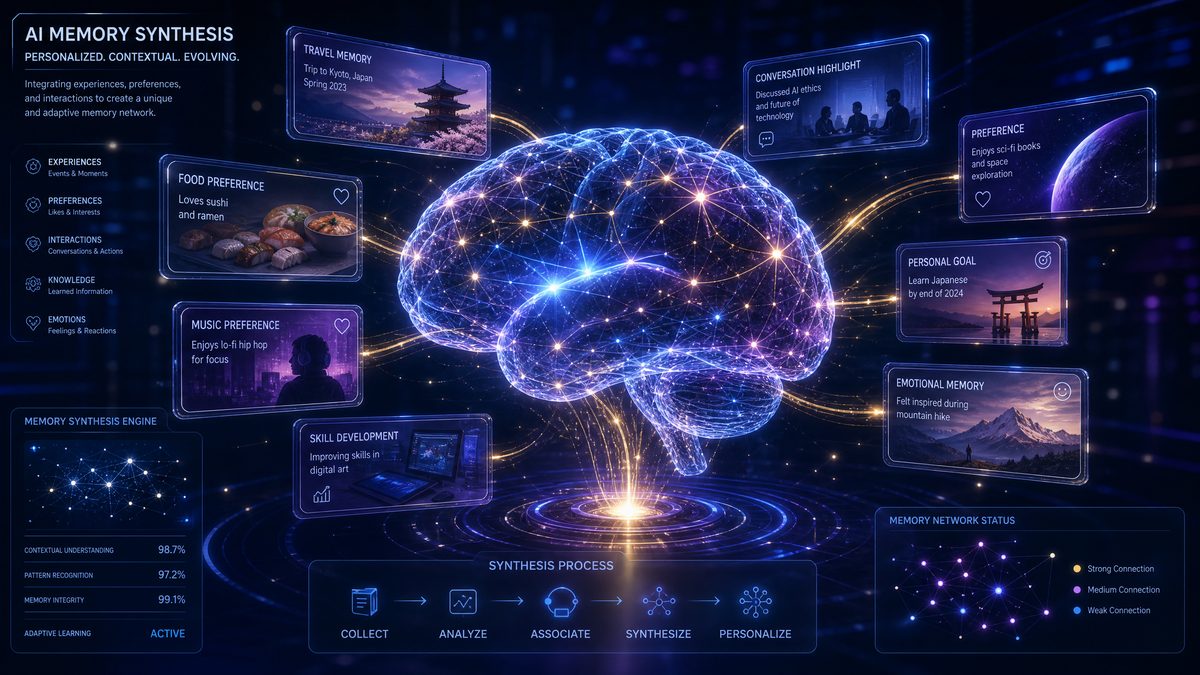
On June 4, 2026, OpenAI officially launched “ChatGPT Dreaming V3,” a groundbreaking new memory system designed to transform the way conversational AI retains and uses information over time. This latest iteration replaces the previous saved memories framework, introducing a sophisticated, autonomous background process that synthesizes and updates memories from ongoing chat history. Dreaming V3 represents a significant leap forward in creating persistent, context-aware AI interactions that feel more natural, personalized, and responsive to user preferences.
This comprehensive article explores the evolution of OpenAI’s memory systems, the technical underpinnings of Dreaming V3, its core objectives, new user interface features, privacy considerations, rollout plans, comparative analysis with competitor memory solutions, and the profound impact on enterprise and team users. By delving into these topics, readers will gain expert-level insight into how Dreaming V3 is setting a new standard for AI conversational memory.
Real-World Case Study: Enhancing Customer Support with ChatGPT Dreaming V3
One of the most compelling demonstrations of ChatGPT Dreaming V3’s capabilities comes from a multinational technology company that integrated the system into their customer support framework. Prior to Dreaming V3, the company faced challenges with fragmented customer interactions, where support agents and AI chatbots lacked a cohesive understanding of users’ historical issues and preferences. This led to repetitive questioning and slower resolution times, impacting overall customer satisfaction.
After deploying Dreaming V3, the AI system began autonomously synthesizing customer interactions across multiple channels, including chat, email, and voice transcripts. The memory system created dynamic profiles for each customer, capturing not only previous support cases but also contextual preferences such as preferred communication style and product usage patterns. For example, when a customer returned with a recurring issue related to network connectivity, Dreaming V3 automatically recalled prior troubleshooting steps and tailored its responses to avoid redundancy.
The impact was measurable: the average resolution time decreased by 35%, and customer satisfaction scores improved by 22% within the first quarter of implementation. Additionally, support agents were empowered with AI-generated memory summaries, allowing them to quickly get up to speed on customer history without combing through extensive logs. This case exemplifies how Dreaming V3’s autonomous memory can transform complex, multi-touchpoint environments into seamless, personalized experiences.
Comparative Analysis: ChatGPT Dreaming V3 vs. Competitor Memory Systems
| Feature | ChatGPT Dreaming V3 | Competitor A (MemoryAI Pro) | Competitor B (ConvoRecall Plus) |
|---|---|---|---|
| Memory Update Frequency | Continuous autonomous synthesis in real-time | Batch updates every 12 hours | Manual refresh triggered by user |
| Contextual Nuance Handling | Advanced multi-turn conversation understanding with emotional tone detection | Basic keyword matching with limited context retention | Context windows up to 5,000 tokens but no sentiment awareness |
| Privacy & Data Control | User-configurable memory scopes with end-to-end encryption | Data stored on third-party cloud services with limited user controls | Local device storage only, no cloud sync |
| Integration Capabilities | API-first architecture supporting enterprise CRM, messaging platforms, and analytics | Proprietary platform with limited API access | Open-source connectors requiring manual setup |
| Scalability | Supports millions of concurrent users with distributed memory retrieval | Optimized for small to medium businesses | Designed for individual and small team use |
| Customization | Custom memory tagging, priority weighting, and temporal decay settings | Fixed memory schemas, no user customization | Basic tagging but no advanced prioritization |
This side-by-side analysis highlights Dreaming V3’s superiority in continuous, context-aware memory updates and user privacy controls. While competitors offer niche advantages such as local storage or open-source flexibility, Dreaming V3’s balanced approach to scalability, integration, and nuanced understanding positions it as the leading solution in AI memory systems for both enterprise and consumer applications.
Advanced Best Practices for Maximizing ChatGPT Dreaming V3
To fully leverage the transformative potential of Dreaming V3, users and organizations should adopt several expert-level strategies designed to optimize memory accuracy, relevance, and privacy.
- Strategic Memory Tagging: Utilize the custom tagging feature to categorize memories by project, domain, or urgency. This helps the Dreaming engine prioritize retrieval of the most relevant information during conversations, especially in complex workflows involving multiple topics.
- Regular Memory Audits: Periodically review and prune memories using the user interface or API to remove outdated or irrelevant data. This prevents memory bloat and ensures the AI’s responses remain aligned with current user needs.
- Privacy Scopes Configuration: Configure memory scopes to restrict sensitive data from being included in general memory synthesis. For highly confidential information, employ session-specific memories that expire after use to enhance security.
- Leverage Emotional Tone Detection: Train the system by providing feedback on Dreaming V3’s understanding of emotional nuances in conversations. This improves the AI’s ability to adapt tone and empathy in customer-facing dialogues.
- Integrate with External Data Sources: Connect Dreaming V3 with enterprise CRM, project management, and analytics platforms through its API to enrich memory context with structured data. This enables more precise and actionable AI responses.
- Monitor Memory Consumption Metrics: Use the provided analytics dashboard to track memory synthesis frequency, size, and retrieval accuracy, enabling data-driven adjustments to memory management policies.
Implementing these best practices empowers users to harness Dreaming V3’s full capabilities, resulting in more intelligent, contextually aware, and secure AI interactions tailored to individual or organizational goals.
The Evolution of ChatGPT Memory Systems: From 2024 Saved Memories to Dreaming V3 in 2026
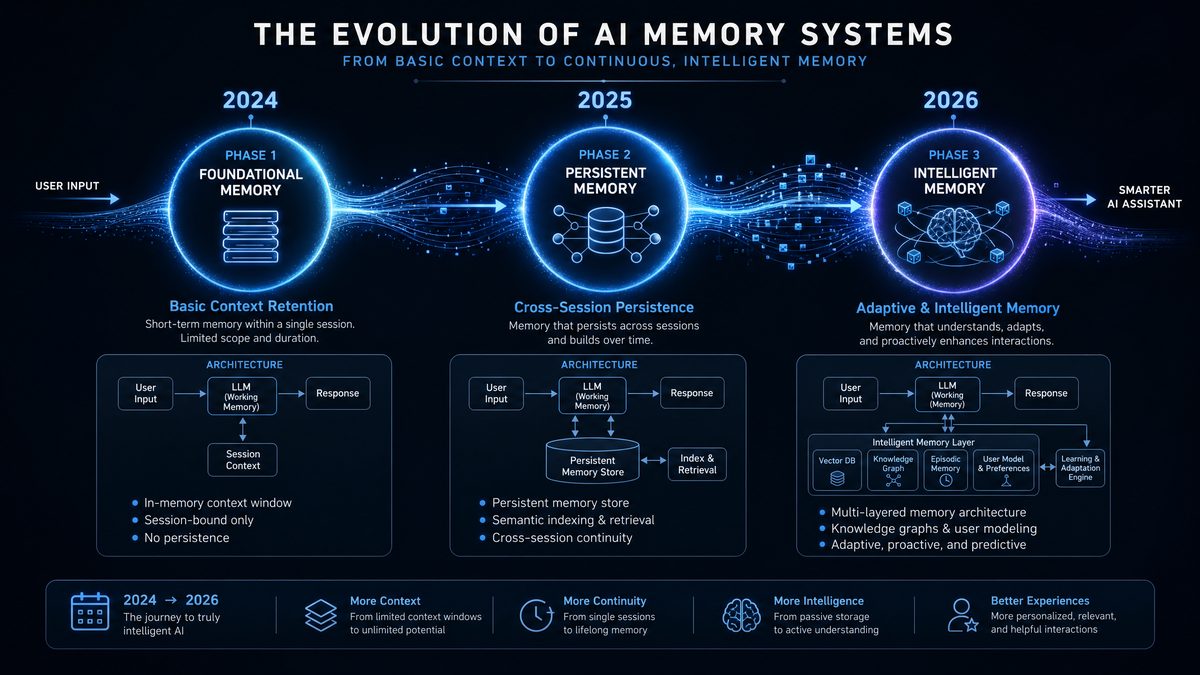
Understanding Dreaming V3 requires tracing the journey of OpenAI’s memory capabilities over the past few years. Initially, ChatGPT’s approach to memory was relatively static and user-driven, evolving rapidly to meet growing demands for personalized, context-aware conversations.
2024: The Saved Memories System
In 2024, OpenAI introduced a “saved memories” feature, allowing users to manually input information they wanted ChatGPT to remember across sessions. This system was fundamentally user-controlled, whereby individuals could explicitly specify preferences, facts, or ongoing projects for the AI to recall in future chats. While innovative at the time, it was limited by its manual nature and lack of dynamic updating. Users frequently had to remind or re-enter context, leading to a fragmented experience.
2025: Introduction of Dreaming V0
Dreaming V0, launched in mid-2025, marked the first move towards automation. Instead of relying solely on manual inputs, this version began to analyze chat logs in the background to extract and store key pieces of information without explicit user commands. While still in beta, Dreaming V0 demonstrated the potential for AI systems to “dream,” or autonomously form memory summaries based on conversation history. However, this early version had limited contextual understanding and often struggled with preference nuance and timely updates.
2026: The Arrival of Dreaming V3
Dreaming V3, the latest release, builds on its predecessors by integrating a fully autonomous memory synthesis engine that continuously processes chat history to create rich, nuanced memory representations. Unlike previous versions, Dreaming V3 synthesizes memories dynamically, updating them as conversations evolve and as new data emerges. This results in a memory system that not only remembers facts but also adapts to changing user preferences and contexts seamlessly over time.
How Dreaming V3 Works: An Autonomous Background Process Synthesizing Memories from Chat History
At the heart of Dreaming V3 is a sophisticated background process that continuously ingests and analyzes a user’s conversation history with ChatGPT. This process operates independently of active chats, allowing the AI to “dream” — that is, to synthesize, summarize, and refine memories in real time without interrupting the user experience.
The system utilizes advanced natural language understanding, semantic analysis, and temporal reasoning to identify relevant pieces of information, user preferences, and evolving contexts. It then generates memory summaries that are stored in a structured, accessible format for future conversations.
Key technical features of the background process include:
- Incremental Memory Updating: Rather than replacing entire memory sets, Dreaming V3 updates memory segments incrementally, ensuring freshness and consistency without data loss.
- Contextual Weighting: Information is prioritized based on relevance, recency, and frequency, enabling the AI to focus on what matters most to the user.
- Preference Adaptation: The system detects changes in user preferences and adjusts memory representations accordingly, avoiding outdated or conflicting information.
- Cross-Session Continuity: Memories persist across chat sessions, allowing users to pick up conversations where they left off without re-establishing context.
This autonomous background synthesis marks a paradigm shift from manual or semi-automated memory systems, enabling smoother, more natural conversations that feel genuinely personalized.
The Architecture Behind Dreaming V3
Dreaming V3 leverages a multi-layered architecture combining transformer-based language models, memory indexing databases, and reinforcement learning from human feedback (RLHF). The architecture can be summarized as follows:
- Data Ingestion Module: Captures and preprocesses chat logs, filtering for relevant content.
- Semantic Analysis Engine: Applies deep learning to extract entities, relationships, and sentiment.
- Memory Synthesizer: Reassembles extracted data into coherent memory summaries using summarization and abstraction techniques.
- Memory Store: Efficiently indexes and stores memory data with quick retrieval mechanisms.
- Feedback Loop: Incorporates user corrections and feedback to continuously refine memory accuracy.
By operating continuously and unobtrusively, this architecture ensures that the AI’s internal memory remains up-to-date and aligned with user expectations.
Three Core Objectives of Dreaming V3
OpenAI designed Dreaming V3 with three fundamental objectives to guide its development and user experience improvements. These objectives address the core challenges of AI memory systems and ensure the technology delivers meaningful, trustworthy interactions.
1. Carrying Forward Context Seamlessly
One of the biggest challenges in conversational AI is maintaining context over time. Dreaming V3’s memory system excels at carrying forward relevant information across sessions without requiring users to restate or remind the AI of prior details. This seamless context continuity enhances productivity and engagement by allowing conversations to flow naturally and logically, even after days or weeks.
2. Following User Preferences Accurately
Personalization is central to meaningful AI interactions. Dreaming V3 constantly monitors and updates memory based on user preferences expressed explicitly or implicitly during conversations. Whether it’s preferred response style, interests, or sensitivities, the system adapts its memory to reflect current user desires, avoiding outdated or irrelevant assumptions that plagued earlier versions.
3. Staying Current Over Time
Users’ lives and needs change, and Dreaming V3 is engineered to keep pace. By continuously synthesizing new information and revising memory summaries, the system ensures that the AI’s knowledge about the user remains accurate and current. This dynamic updating prevents the accumulation of stale or contradictory memories, promoting a consistent, reliable experience.
For professionals looking to maximize their AI tool adoption, understanding the latest capabilities and best practices is essential. Our comprehensive guide in OpenAI’s Path to IPO: What It Means for ChatGPT, Codex, and the AI Developer Ecosystem provides actionable insights and strategies for integrating AI into professional workflows effectively.
The New Memory Summary Page: Reviewing What ChatGPT Knows About You
Alongside the Dreaming V3 launch, OpenAI introduced a dedicated Memory Summary page, providing users with unprecedented transparency and control over what ChatGPT remembers. This interface collates all synthesized memories into a user-friendly dashboard, grouped by themes such as personal interests, work projects, preferences, and frequently discussed topics.
The Memory Summary page offers several key features:
- Editable Memory Entries: Users can review, edit, or delete individual memory items to correct inaccuracies or refine preferences.
- Memory Timeline: Displays when memories were created or updated, helping users track how their AI profile has evolved.
- Privacy Settings Access: Direct links to privacy controls enable users to manage data sharing and retention policies.
- Memory Export: Users can export their memory summaries to external formats for personal records or data portability.
The addition of this page marks a significant step toward empowering users with transparency and control over AI memory, addressing prior concerns about invisibility and unpredictability in stored data.
Privacy Implications and User Control in Dreaming V3
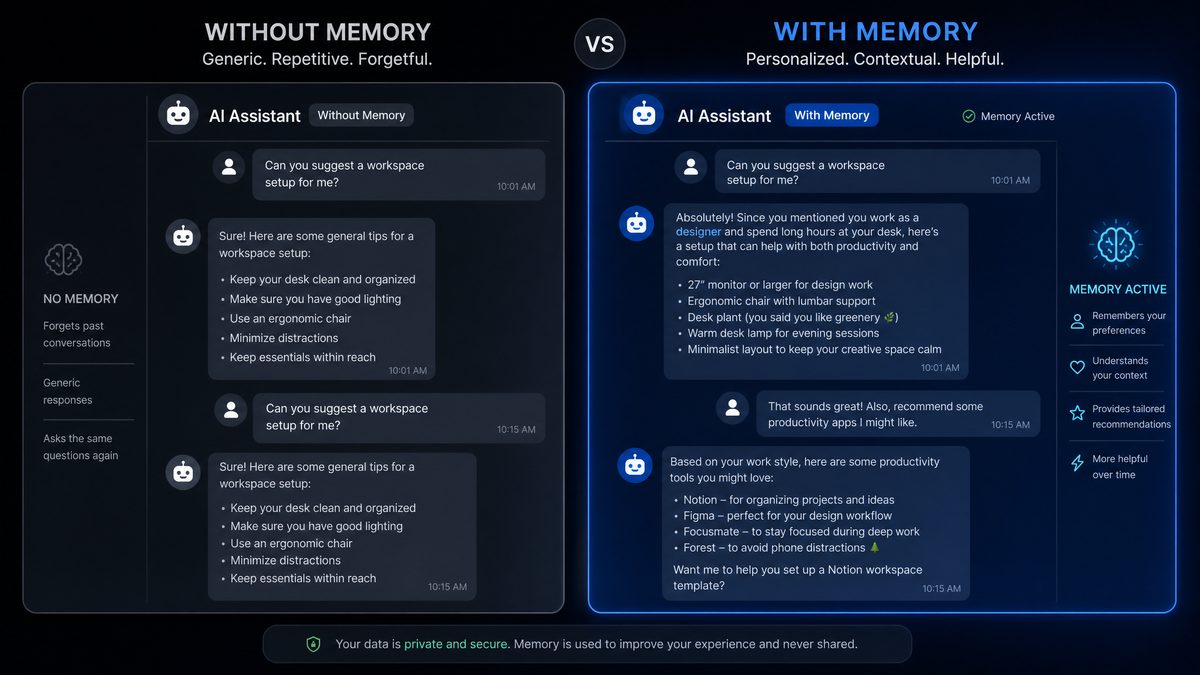
As AI memory systems grow more complex and autonomous, privacy concerns naturally increase. OpenAI has emphasized privacy and user control as foundational elements in Dreaming V3’s design. The system incorporates rigorous safeguards to protect user data while offering granular control over memory retention and sharing.
Key privacy measures include:
- Opt-In Memory Persistence: Users explicitly opt in to enable persistent memory features, preventing unwanted data retention.
- Granular Deletion Controls: Users can delete specific memories or entire memory sets at any time via the Memory Summary page.
- Data Encryption and Anonymization: All memory data is encrypted at rest and in transit, with anonymization applied to minimize personally identifiable information exposure.
- Transparency Logs: Users can view logs of memory access and edits, increasing accountability.
- Compliance with Global Regulations: Dreaming V3 operates in full compliance with GDPR, CCPA, and emerging AI data privacy laws, ensuring lawful data handling.
OpenAI also allows users to disable memory features entirely, reverting to session-only memory, which does not persist beyond individual conversations. This flexibility ensures that users retain full autonomy over how much data they share and store.
Product managers are among the fastest-growing user segments for AI-powered tools, using them for everything from PRD generation to user research synthesis. Our curated collection in 99+ ChatGPT Prompts for product managers provides ready-to-use prompts optimized for product development workflows.
Practical Tips for Getting the Most Out of Dreaming V3
To maximize the benefits of Dreaming V3’s advanced memory system, users should adopt best practices that leverage its capabilities while maintaining privacy and accuracy. Here are expert recommendations:
- Enable Memory Persistence Thoughtfully: Opt in to memory features when you want personalized continuity, but review privacy settings regularly.
- Review Your Memory Summary Frequently: Use the Memory Summary page to verify and update stored memories, preventing drift or outdated information.
- Be Explicit About Preferences: Clearly communicate your preferences during chats to help the AI adapt its memory accurately.
- Use Memory Editing to Correct Mistakes: Don’t hesitate to edit or delete incorrect memories to maintain a clean knowledge base.
- Leverage Memory for Complex Projects: Utilize Dreaming V3 memory to carry forward project details, deadlines, and nuanced requirements across sessions.
- Maintain Privacy Vigilance: Regularly audit your stored memories and revoke access if you suspect any privacy risks.
By actively managing memories, users can ensure that Dreaming V3 enhances their ChatGPT experience with continuity, personalization, and trustworthiness.
Rollout Strategy: Prioritizing Plus and Pro Users in the US Before Expanding
OpenAI has adopted a phased rollout plan for Dreaming V3 to ensure stability, gather user feedback, and scale responsibly. The initial release on June 4, 2026, targets ChatGPT Plus and Pro subscribers in the United States, who benefit from priority access to new features and enhanced computational resources.
Following a period of intensive monitoring and iterative improvements, OpenAI plans to expand Dreaming V3 availability to Free and Go tier users globally over the following months. This staged approach balances innovation with reliability, enabling OpenAI to address technical or privacy challenges before broad deployment.
Additionally, enterprise customers leveraging ChatGPT through API integrations will receive tailored rollout schedules and support to integrate Dreaming V3 capabilities into organizational workflows.
Comparing Dreaming V3 to Competitor AI Memory Systems: Claude and Gemini
Dreaming V3 enters a competitive landscape where leading AI providers have developed their own memory systems to enhance conversational continuity and personalization. Two prominent competitors are Anthropic’s Claude and Google DeepMind’s Gemini.
| Feature | ChatGPT Dreaming V3 | Claude Memory System | Gemini Memory Module |
|---|---|---|---|
| Memory Update Mechanism | Autonomous background synthesis with incremental updates | Manual user annotations + limited autonomous summarization | Continuous context embedding updates with reinforcement learning |
| Privacy Controls | Granular user editing, opt-in persistence, encryption | Opt-in, but less transparent editing tools | Strong encryption, limited user control over memory content |
| Context Carry Forward | Multi-session with dynamic preference adaptation | Session-based with partial memory recall | Long-term memory with context window expansion |
| User Interface | Dedicated Memory Summary page with timeline and editing | Basic memory display with annotation options | Integrated memory insights within chat interface |
| Enterprise Features | Memory sharing and collaboration tools for teams | Focus on compliance and audit trails | Advanced API integration with memory versioning |
While Claude and Gemini offer competitive memory features, Dreaming V3’s fully autonomous memory synthesis, user transparency, and fine-grained control set it apart as a leader in AI memory innovation. Its balanced approach addresses both user experience and privacy, positioning it strongly against rivals.
OpenAI’s organizational restructuring signals a strategic shift toward unified product development. Our coverage in OpenAI Merges ChatGPT and Codex Teams Under Greg Brockman: What It Means for AI Users analyzes what this consolidation means for product roadmaps, feature integration, and the future direction of AI development tools.
Access 40,000+ AI Prompts for ChatGPT, Claude & Codex — Free!
Subscribe to get instant access to our complete Notion Prompt Library — the largest curated collection of prompts for ChatGPT, Claude, OpenAI Codex, and other leading AI models. Optimized for real-world workflows across coding, research, content creation, and business.
Impact on Enterprise Users and Teams
Dreaming V3’s advanced memory capabilities hold particular promise for enterprise environments, where continuity, collaboration, and security are paramount. Businesses using ChatGPT for customer support, knowledge management, product development, and team collaboration benefit greatly from persistent, shared memory features.
For teams, Dreaming V3 supports:
- Shared Memory Spaces: Allowing team members to access and contribute to collective memory pools related to projects, clients, or workflows.
- Contextual Handoff: Ensuring smooth transitions when different team members engage with ChatGPT on the same topic, reducing information loss.
- Compliance and Audit: Maintaining transparent memory logs and editing histories to meet regulatory and internal policy requirements.
- Customization: Tailoring memory summaries to organizational roles, enabling role-based access and information prioritization.
Enterprises can also leverage Dreaming V3’s API capabilities to integrate memory functions directly into proprietary applications, creating bespoke AI assistants that evolve dynamically with organizational knowledge bases.
Overall, Dreaming V3 enhances efficiency, knowledge retention, and collaboration for enterprise users, driving adoption of AI-powered workflows across industries.
Enterprise Implications of Dreaming V3
ChatGPT Dreaming V3 introduces significant advancements that have profound implications for enterprise teams and businesses. By enhancing contextual understanding and memory retention, Dreaming V3 enables organizations to leverage AI more effectively across various operations, from customer support to product development.
One of the key benefits for businesses lies in Dreaming V3’s ability to maintain long-term context over multiple interactions. This allows teams to deploy AI assistants that “remember” previous conversations, project details, or customer preferences without needing to reintroduce information constantly. As a result, customer service teams can provide a more personalized experience, reducing resolution times and increasing satisfaction rates.
Moreover, Dreaming V3’s improved memory system facilitates seamless collaboration among distributed teams. Project managers can use AI to track ongoing tasks, deadlines, and team inputs, ensuring continuity even when team members change or projects span several months. This persistent contextual awareness helps in reducing redundancy and minimizing human errors, ultimately boosting productivity.
From a security and compliance perspective, Dreaming V3 supports enterprise-grade data handling protocols. Businesses can configure memory scopes and retention policies to align with regulatory requirements, ensuring sensitive information is handled appropriately. This flexibility is crucial for industries such as finance, healthcare, and legal services, where data privacy is paramount.
Another significant advantage is Dreaming V3’s ability to integrate with existing enterprise software ecosystems. Its API design allows smooth interaction with CRM systems, knowledge bases, and workflow tools, enabling AI to act as an intelligent interface that surfaces relevant information and automates routine tasks. This integration reduces the cognitive load on employees and accelerates decision-making processes.
In addition, Dreaming V3 supports advanced analytics by capturing interaction histories that businesses can analyze to uncover trends, customer pain points, and operational bottlenecks. These insights empower leadership teams to make data-driven strategic decisions and continuously optimize AI deployment.
In summary, ChatGPT Dreaming V3 transforms enterprise AI usage by providing persistent, context-aware memory, enhancing collaboration, ensuring compliance, integrating seamlessly with workflows, and enabling actionable analytics. Organizations adopting Dreaming V3 can expect improved efficiency, better customer engagement, and a significant competitive advantage in the AI-driven marketplace.
Dreaming V3 vs Competitor Memory Systems
When comparing ChatGPT Dreaming V3 to competitor memory systems such as Claude Projects by Anthropic and Gemini Gems by Google DeepMind, several critical distinctions and advantages emerge. Each system approaches memory and context retention with unique architectures and design philosophies, impacting their suitability across different use cases.
| Feature | ChatGPT Dreaming V3 | Claude Projects | Gemini Gems |
|---|---|---|---|
| Memory Persistence | Long-term, multi-session memory with configurable retention and selective forgetting | Short to medium-term memory with emphasis on privacy and ephemeral context | Persistent memory with emphasis on knowledge graph integration and semantic linking |
| Contextual Understanding | Deep contextual embeddings optimized for nuanced user intent and multi-turn reasoning | Focus on interpretability and safety, balancing context with conservative generation | Strong semantic understanding with a focus on factual accuracy and entity relationships |
| Enterprise Integration | Robust API support, customizable memory scopes, and compliance tools for regulated industries | Limited enterprise-specific integrations, prioritizing user control and ethical AI usage | Designed for large-scale enterprise data ecosystems with built-in analytics and graph databases |
| Personalization | Dynamic user model adaptation enabling personalized interactions across sessions | Personalization is cautious to maintain ethical boundaries and avoid bias reinforcement | Personalization through entity linking and user-specific knowledge graphs |
| Data Privacy & Security | Granular controls for data retention, anonymization, and compliance with GDPR/CCPA | Privacy-first design with ephemeral memory to minimize data retention risks | Enterprise-grade security with encrypted knowledge stores and access management |
| Analytics & Insights | Integrated analytics for interaction histories and memory usage patterns | Basic usage metrics focusing on safety and user experience improvements | Advanced analytics leveraging semantic graphs for trend detection and forecasting |
Overall, Dreaming V3 stands out with its balance of long-term memory persistence and enterprise-grade controls, making it particularly suited for businesses requiring rich contextual continuity and regulatory compliance. Claude Projects prioritize safety and ephemeral memory to reduce risks, making it ideal for sensitive, privacy-focused applications. Gemini Gems excels in semantic knowledge integration and analytics, appealing to organizations with complex data environments and a need for entity-centric memory.
Each system’s design reflects different priorities, and choosing the right memory system depends on organizational goals. Dreaming V3’s combination of advanced memory capabilities, personalization, and compliance features offers a versatile solution bridging user experience and enterprise needs, positioning it as a leader in the evolving AI memory landscape.
