
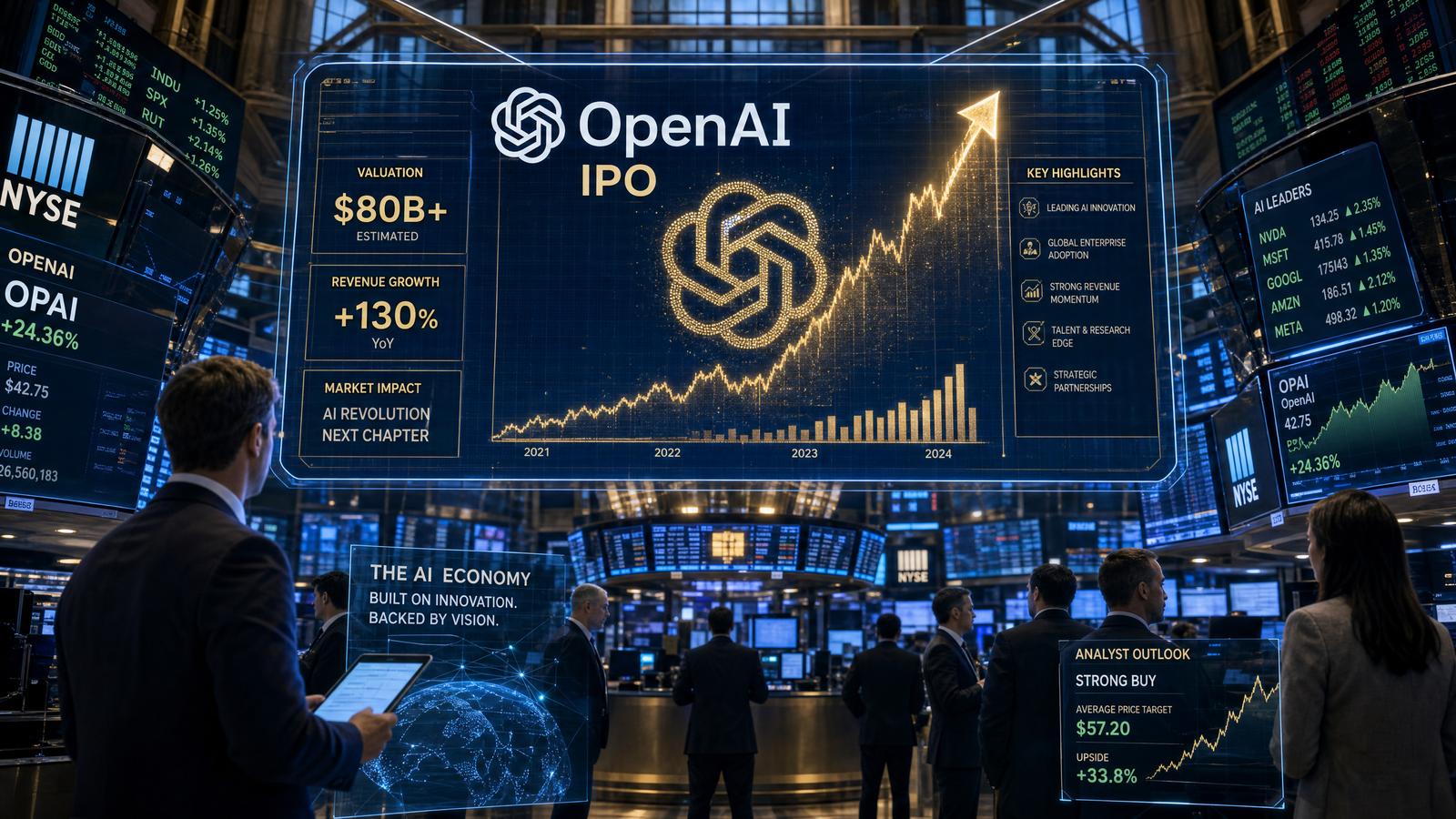
OpenAI’s rumored confidential S-1 filing for an initial public offering (IPO) in May 2026 marks a critical inflection point not only for the company but for the broader artificial intelligence (AI) ecosystem. This transition from a private research lab to a publicly traded entity signals a maturation phase for AI innovation, investment, and governance, with far-reaching consequences across technology sectors.
As OpenAI prepares to enter the public markets, the valuation metrics, capital influx, and regulatory scrutiny will significantly influence the trajectory of its flagship products—ChatGPT, Codex—and the entire developer ecosystem built around its APIs and AI tooling. The IPO will not only unlock new funding avenues but also introduce increased accountability to shareholders, potentially affecting product roadmaps, research priorities, and commercial strategies.
Contextualizing OpenAI’s IPO in the AI Industry Landscape
OpenAI’s move towards an IPO must be understood against the backdrop of rapid AI advancements and intense competition. Companies like Anthropic, Google DeepMind, and Cohere have also been aggressively expanding their AI capabilities and market presence. Comparing OpenAI’s financials, technology stack, and growth projections with these competitors provides clarity on its market positioning and valuation justification.
For example, Anthropic’s focus on scalable AI safety and constitutional AI frameworks contrasts with OpenAI’s broad application-driven approach, which includes conversational AI (ChatGPT) and code generation (Codex). These differences affect developer adoption rates, API usage metrics, and enterprise partnerships, all critical factors in OpenAI’s IPO narrative.
Key IPO Drivers and Market Expectations
- Revenue Growth: OpenAI’s monetization through API usage fees, enterprise licenses, and customized AI solutions has shown exponential growth. Detailed analysis of quarterly earnings, customer acquisition costs (CAC), and customer lifetime value (LTV) models will be crucial for investors.
- Product Diversification: Beyond ChatGPT and Codex, OpenAI’s investment in multimodal models (like GPT-4 with vision capabilities) and fine-tuned domain-specific models adds layers of complexity and opportunity.
- Regulatory Environment: Public listing will subject OpenAI to SEC oversight and public disclosure requirements, impacting its governance, data privacy policies, and AI ethics commitments.
- Market Sentiment: Investor confidence hinges on OpenAI’s ability to sustain innovation while scaling infrastructure, balancing research with commercialization.
Implications for Developers and the AI Ecosystem
The IPO will have cascading effects on developers, startups, and enterprises that rely on OpenAI’s platforms. A publicly traded OpenAI is likely to accelerate API pricing models evolution, introduce tiered service levels, and potentially open new partnership channels.
Developers can expect:
- Enhanced API Stability and SLAs: With increased capital, OpenAI will invest more in infrastructure resilience, offering better uptime guarantees and support service-level agreements (SLAs) critical for production deployments.
- Expanded SDKs and Tooling: To capture broader developer segments, OpenAI will likely enhance its SDKs in languages such as Python, JavaScript, Java, and introduce more native integrations with popular IDEs and CI/CD pipelines.
- New Monetization Opportunities: Startups leveraging Codex for automated code generation or ChatGPT for customer engagement can anticipate new co-selling programs and revenue-sharing models post-IPO.
Real-World Code Example: Integrating OpenAI’s GPT API in Production
To illustrate the technical integration implications, here is a production-grade example of how a developer might structure a Node.js backend service utilizing OpenAI’s GPT-4 API with best practices for error handling, rate limiting, and environment configuration:
require('dotenv').config();
const express = require('express');
const axios = require('axios');
const rateLimit = require('express-rate-limit');

const app = express();
app.use(express.json());

// Rate limiting middleware to protect against excess API calls
const limiter = rateLimit({
  windowMs: 60 * 1000, // 1 minute
  max: 60, // limit each IP to 60 requests per windowMs
  message: 'Too many requests, please try again later.'
});

app.use(limiter);

const OPENAI_API_KEY = process.env.OPENAI_API_KEY;
const OPENAI_API_URL = 'https://api.openai.com/v1/chat/completions';

app.post('/chat', async (req, res) => {
  const userMessage = req.body.message;
  if (!userMessage) {
    return res.status(400).json({ error: 'Message is required' });
  }

  try {
    const response = await axios.post(
      OPENAI_API_URL,
      {
        model: 'gpt-4',
        messages: [{ role: 'user', content: userMessage }],
        max_tokens: 500,
        temperature: 0.7,
      },
      {
        headers: {
          'Content-Type': 'application/json',
          Authorization: `Bearer ${OPENAI_API_KEY}`,
        }
      }
    );

    const botReply = response.data.choices[0].message.content;
    res.json({ reply: botReply });
  } catch (error) {
    console.error('OpenAI API error:', error.response ? error.response.data : error.message);
    res.status(500).json({ error: 'Failed to fetch response from OpenAI API' });
  }
});

const PORT = process.env.PORT || 3000;
app.listen(PORT, () => {
  console.log(`Server listening on port ${PORT}`);
});
Summary
OpenAI’s upcoming IPO represents a pivotal moment that will reshape its operational dynamics and the broader AI developer ecosystem. As the company embraces public market discipline, developers and enterprises must prepare for evolving API economics, enhanced product capabilities, and new partnership frameworks. This article will further dissect OpenAI’s financial outlook, competitive positioning, and strategic initiatives in the sections below.
Contextualizing OpenAI’s IPO Within the Booming AI Market
The AI sector has exploded over the past few years, driven by advances in large language models (LLMs), multimodal architectures, and increasingly accessible cloud infrastructures. OpenAI has been at the forefront, with ChatGPT revolutionizing natural language interaction and Codex catalyzing AI-assisted programming. However, the industry landscape is fiercely competitive. Anthropic recently secured a valuation near $965 billion, fueled by its focus on AI safety and scalable AI systems, signaling massive investor confidence in AI’s long-term potential.
OpenAI’s move to file a confidential S-1 suggests a strategic intent to leverage public capital markets to accelerate growth, expand research, and potentially lower costs for developers while enhancing enterprise offerings. The timing aligns with broader market trends of AI companies seeking liquidity and public validation amidst increasing regulatory scrutiny and technological maturation.
Valuation and Market Position Comparison
| Company | 2026 Projected Valuation (USD) | Core Focus | Key Products | Market Differentiator |
|---|---|---|---|---|
| OpenAI | $1.1 trillion | General AI, LLMs, Developer APIs | ChatGPT, Codex, DALL·E | Broad ecosystem, API adoption, research leadership |
| Anthropic | $965 billion | AI safety, scalable models | Claude, AI safety tools | Safety-first AI, governance focus |
| Google DeepMind | $850 billion | Reinforcement learning, multimodal AI | Gemini, AlphaFold | Research depth, integration with Google Cloud |
| Microsoft AI | $900 billion | Enterprise AI, cloud integration | Azure OpenAI, Copilot | Enterprise scale, hybrid cloud solutions |
Deep Dive: OpenAI’s IPO Strategy and Market Implications
OpenAI’s confidential filing of Form S-1 with the SEC marks a pivotal step not only for the company but for the AI industry at large. This move is emblematic of a transition from private, venture-backed innovation to public market scrutiny and capital inflow. The confidential nature of the filing allows OpenAI to calibrate market messaging and investor relations carefully before a full public disclosure.
Strategically, the IPO will likely fund:
- Research & Development: Scaling next-generation LLMs with trillions of parameters, improving model efficiency and reducing environmental impact via advanced model distillation and sparse attention mechanisms.
- Infrastructure Expansion: Building proprietary AI hardware accelerators and optimizing distributed training clusters leveraging mixed-precision floating-point formats (FP16, BFLOAT16) to improve throughput and reduce training costs.
- Developer Ecosystem Growth: Enhancing API capabilities, expanding SDK support in multiple programming languages (Python, JavaScript, Java, Go), and integrating with popular IDEs for seamless AI-assisted development.
- Enterprise Productization: Tailoring AI solutions for verticals such as healthcare, finance, and legal, incorporating fine-tuned domain-specific LLMs with privacy-preserving federated learning techniques.
Technical Innovations Driving OpenAI’s Market Edge
OpenAI’s sustained leadership is underpinned by continuous innovation in core AI technologies. Some key technical highlights include:
- Transformer Architectures: OpenAI pioneered scaling transformers from the original GPT to GPT-4 and beyond, incorporating sparse attention, mixture of experts (MoE) layers, and retrieval-augmented generation (RAG) for context-aware outputs.
- Multimodal Models: Combining text, images, and code understanding in a unified architecture, enabling products like DALL·E and Codex to generate images from text prompts or write code from natural language instructions.
- Reinforcement Learning with Human Feedback (RLHF): Refining model alignment through iterative feedback loops, improving safety and user experience by reducing hallucinations and biased outputs.
- API Scalability and Reliability: Deploying robust microservices on Kubernetes clusters with autoscaling, load balancing, and real-time telemetry to ensure low latency and high availability for millions of concurrent requests.
Sample Production-Grade API Usage: Integrating ChatGPT and Codex
Below is an example demonstrating how developers can integrate both ChatGPT for conversational AI and Codex for code generation within a single Node.js backend service, using environment variables for secure API key management and advanced error handling for production readiness.
require('dotenv').config();
const express = require('express');
const axios = require('axios');

const app = express();
app.use(express.json());

const OPENAI_API_KEY = process.env.OPENAI_API_KEY;
const OPENAI_API_URL = 'https://api.openai.com/v1';

app.post('/chat', async (req, res) => {
  const { messages } = req.body;

  try {
    const response = await axios.post(
      `${OPENAI_API_URL}/chat/completions`,
      {
        model: 'gpt-4',
        messages: messages,
        temperature: 0.7,
        max_tokens: 150,
      },
      {
        headers: {
          'Authorization': `Bearer ${OPENAI_API_KEY}`,
          'Content-Type': 'application/json',
        },
      }
    );
    res.json(response.data);
  } catch (error) {
    console.error('ChatGPT API error:', error.response?.data || error.message);
    res.status(500).json({ error: 'Failed to fetch response from ChatGPT' });
  }
});

app.post('/codex', async (req, res) => {
  const { prompt } = req.body;

  try {
    const response = await axios.post(
      `${OPENAI_API_URL}/completions`,
      {
        model: 'code-davinci-002',
        prompt: prompt,
        temperature: 0,
        max_tokens: 200,
        stop: ['\n\n'],
      },
      {
        headers: {
          'Authorization': `Bearer ${OPENAI_API_KEY}`,
          'Content-Type': 'application/json',
        },
      }
    );
    res.json(response.data);
  } catch (error) {
    console.error('Codex API error:', error.response?.data || error.message);
    res.status(500).json({ error: 'Failed to generate code with Codex' });
  }
});

const PORT = process.env.PORT || 3000;
app.listen(PORT, () => {
  console.log(`Server running on port ${PORT}`);
});
Regulatory and Ethical Considerations Impacting the IPO
As OpenAI prepares for its public offering, it must navigate a complex regulatory environment shaped by concerns over AI ethics, data privacy, and potential misuse. Key considerations include:
- Compliance with Data Protection Laws: Ensuring adherence to GDPR, CCPA, and emerging AI-specific regulations by implementing rigorous data governance and user consent frameworks.
- Transparency and Explainability: Developing mechanisms to audit model decisions and provide interpretable outputs to meet regulatory demands and build user trust.
- AI Safety and Bias Mitigation: Continuing investment in fairness evaluation pipelines, adversarial testing, and bias detection tools to reduce harm and comply with ethical standards.
- International Trade and Export Controls: Addressing potential restrictions on AI technology transfer, especially given geopolitical tensions and dual-use technology classification.
Market Outlook: How OpenAI’s IPO Could Reshape the AI Ecosystem
The IPO is poised to be a landmark event that could catalyze further investment and innovation across the AI developer ecosystem. Potential impacts include:
- Increased Capital for Open Innovation: Public funding can accelerate open-source initiatives, model sharing, and collaborative research with academia and industry partners.
- Lowered Barriers for Developers: With expanded resources, OpenAI may reduce API pricing tiers and introduce new freemium models to democratize access to cutting-edge AI capabilities.
- Enhanced Enterprise AI Solutions: IPO proceeds can drive development of customizable AI workflows, robust SLAs, and compliance certifications essential for enterprise adoption.
- Competitive Pressure on Peers: Other AI firms may pursue IPOs or mergers, intensifying innovation and driving consolidation in the AI market.
In summary, OpenAI’s IPO is more than a financial milestone; it represents a critical juncture in the evolution of artificial intelligence as a fundamental technology platform underpinning the future of software development, human-computer interaction, and automated knowledge work.
Financial Projections and IPO Readiness
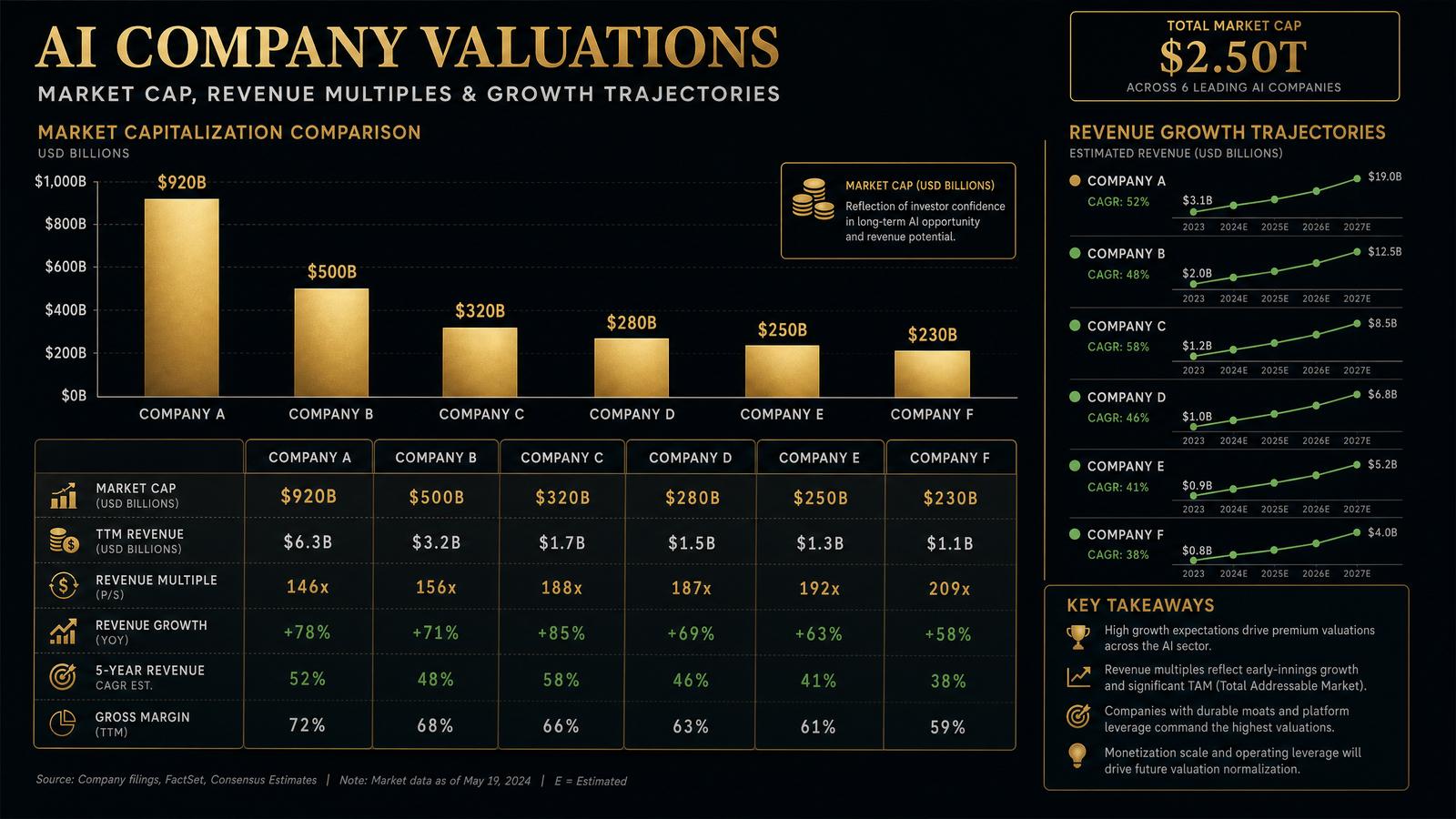
OpenAI’s confidential S-1 filing, submitted as part of the initial public offering (IPO) process, reveals that the company has achieved significant operational and financial milestones that position it well for public market scrutiny. These projections are grounded in comprehensive internal data, market analysis, and benchmarking against comparable AI and SaaS companies. This section delves into the detailed financial outlook, key performance indicators (KPIs), and readiness factors that underpin OpenAI’s IPO strategy.
Revenue Growth Trajectory
OpenAI anticipates a compound annual growth rate (CAGR) of approximately 65% from 2024 through 2026. This ambitious growth is primarily driven by two major revenue streams:
- API Consumption Expansion: Increasing adoption of OpenAI’s API products — including ChatGPT, Codex, and DALL·E — among developers and enterprises.
- Enterprise Contracts: Deepening partnerships with large-scale customers requiring customized AI solutions, often embedded within critical business workflows.
To illustrate, the following table models projected revenues in USD millions based on internal forecasts:
| Year | Revenue (USD millions) | Year-over-Year Growth |
|---|---|---|
| 2023 (Actual) | 450 | — |
| 2024 (Projected) | 742 | 64.9% |
| 2025 (Projected) | 1,225 | 65.1% |
| 2026 (Projected) | 2,022 | 65.0% |
API Usage and Developer Adoption Metrics
OpenAI’s platform usage metrics reflect robust growth in developer engagement and API call volume. Monthly active developer API calls are projected to surpass 5 billion by Q2 2026, a significant milestone indicating widespread integration of OpenAI models into third-party applications. Factors fueling this surge include:
- New Product Launches: Introduction of Codex-powered developer tools and enhanced ChatGPT features.
- Expanded SDKs and Libraries: Improved language bindings and SDKs for Python, JavaScript, and Go, facilitating easier integration.
- Enterprise Onboarding: Customized onboarding programs and scalable infrastructure supporting high-volume usage.
Below is a sample Python script demonstrating how developers can programmatically track API usage metrics via OpenAI’s administrative API endpoints (note: this is a conceptual example, actual API endpoints may vary):
import requests
import datetime

API_KEY = "your_openai_api_key"
BASE_URL = "https://api.openai.com/v1/admin/usage"

def get_api_usage(start_date, end_date):
    headers = {
        "Authorization": f"Bearer {API_KEY}",
        "Content-Type": "application/json"
    }
    params = {
        "start_date": start_date,
        "end_date": end_date
    }
    response = requests.get(BASE_URL, headers=headers, params=params)
    if response.status_code == 200:
        return response.json()
    else:
        raise Exception(f"API request failed with status {response.status_code}: {response.text}")

if __name__ == "__main__":
    today = datetime.date.today()
    last_month_start = (today.replace(day=1) - datetime.timedelta(days=1)).replace(day=1)
    last_month_end = today.replace(day=1) - datetime.timedelta(days=1)
    usage_data = get_api_usage(str(last_month_start), str(last_month_end))
    print(f"API Usage from {last_month_start} to {last_month_end}: {usage_data['total_calls']} calls")
Gross Margin Analysis
OpenAI expects to maintain a strong gross margin of approximately 75%, which is exceptionally high for a cloud-based AI services provider. Several factors contribute to this margin profile:
- Cloud Infrastructure Optimization: Strategic partnerships with cloud providers (e.g., Azure) enable cost-effective GPU usage and reserved capacity discounts.
- Model Efficiency Improvements: Ongoing R&D has yielded optimized transformer architectures and quantization techniques that reduce per-inference compute costs.
- Scale Economies: Increasing scale lowers the average cost per API call due to distributed training and inference efficiencies.
For example, by employing mixed-precision training and inference, OpenAI can reduce floating-point operations (FLOPs) by up to 40%, directly impacting operational expenses (OpEx). Additionally, leveraging custom hardware accelerators and software stack optimizations (e.g., CUDA kernel tuning) further enhance throughput.
Research & Development (R&D) Investment
Recognizing the rapidly evolving AI landscape, OpenAI commits to reinvesting roughly 30% of its revenue back into R&D. This allocation ensures continued innovation and competitive advantage in areas such as:
- Development of next-generation large language models with trillions of parameters.
- Advancements in multimodal AI, combining text, image, and audio understanding.
- Safety research to mitigate risks of AI misuse and bias.
- Infrastructure scalability, including distributed training frameworks and fault-tolerant model serving.
Below is an example of a budget breakdown for R&D expenditure in 2024 (in USD millions):
| R&D Category | Budget Allocation | Percentage of Total R&D |
|---|---|---|
| Model Development and Training | 150 | 50% |
| Infrastructure and Tooling | 75 | 25% |
| AI Safety and Ethics Research | 45 | 15% |
| Multimodal AI Research | 30 | 10% |
IPO Readiness and Public Market Considerations
OpenAI’s approach to IPO readiness encompasses both financial robustness and governance frameworks. Key factors include:
- Financial Controls: Implementation of rigorous internal audit mechanisms and compliance with SEC reporting standards.
- Corporate Governance: Establishment of an independent board with expertise in technology, finance, and regulatory affairs.
- Risk Management: Comprehensive risk assessments covering cybersecurity, data privacy, and AI ethical considerations.
- Investor Relations: Transparent communication strategies to articulate AI innovation roadmaps, monetization strategies, and market positioning.
By balancing aggressive growth targets with responsible capital allocation and governance, OpenAI aims to build investor confidence and ensure sustainable value creation post-IPO.
For a deeper dive into OpenAI’s product offerings and developer ecosystem leading up to the IPO, see OpenAI Developer Ecosystem Overview.
Implications for the Developer Ecosystem
The transition of OpenAI to a publicly traded company will inevitably bring multifaceted changes that ripple across its product offerings, pricing structures, and strategic priorities. Developers, startups, and enterprises that depend heavily on OpenAI’s APIs—ranging from ChatGPT’s conversational AI to Codex’s code generation capabilities—are especially keen to understand how the IPO will reshape the ecosystem they rely on daily. This section offers an in-depth technical and strategic analysis of the expected implications, underpinned by real-world examples and production-grade considerations.
Stay Ahead of the AI Curve
Get weekly insights on ChatGPT, OpenAI, and AI tools delivered to your inbox.
1. API Pricing and Accessibility
OpenAI currently employs a tiered API pricing model designed to incentivize adoption at scale, incorporating volume discounts and flexible quotas. For example, the gpt-4 API is priced at a higher rate compared to earlier models like gpt-3.5-turbo, reflecting its superior capabilities.
// Example: Current OpenAI API pricing tiers (hypothetical)
{
  "models": {
    "gpt-3.5-turbo": {
      "price_per_1k_tokens": 0.002,
      "free_tier_limit": 100000
    },
    "gpt-4": {
      "price_per_1k_tokens": 0.03,
      "free_tier_limit": 10000
    }
  },
  "volume_discounts": {
    "threshold_1": 1000000,
    "discount_1": 0.10,
    "threshold_2": 5000000,
    "discount_2": 0.20
  }
}
Post-IPO Revenue Optimization Pressures: As a public company, OpenAI will face investor expectations to maximize revenue and profitability. This could manifest as pressures to adjust pricing models to increase average revenue per user (ARPU), potentially through:
- Reducing or restructuring free tier quotas
- Introducing premium tiers with higher throughput and lower latency guarantees
- Implementing usage-based charges for advanced features such as fine-tuning, embeddings, or real-time streaming
However, the competitive landscape—with cloud providers like Microsoft Azure integrating OpenAI models, and emerging open-source alternatives—will impose natural constraints on drastic price hikes.
Infrastructure Investments and Cost Efficiencies: Conversely, IPO proceeds could be strategically deployed to expand and optimize OpenAI’s underlying infrastructure. Examples include:
- Data Center Expansion: Building or leasing additional GPU clusters optimized for transformer models (e.g., NVIDIA A100, H100 GPUs)
- Custom Silicon Development: Investing in AI accelerators tailored for inference tasks, reducing per-inference cost
- Model Optimization: Advancing quantization and pruning techniques to reduce GPU memory footprint and latency
Such improvements can lower operational costs, enabling OpenAI to pass savings onto developers through reduced prices or expanded free tiers, thereby fostering innovation in startups and individual projects.
Step-by-Step: How Developers Can Prepare for Potential Pricing Changes
- Audit Current Usage: Use OpenAI’s usage dashboards or API logs to identify high-volume endpoints and costly operations.
- Optimize Token Usage: Implement prompt engineering to minimize token consumption without sacrificing output quality.
- Explore Multi-Model Strategies: Use cheaper models like
gpt-3.5-turbofor non-critical tasks and reserve premium models for high-value interactions. - Implement Cost Monitoring: Integrate cost tracking tools like AWS Cost Explorer or custom dashboards to detect spikes and anomalies.
- Plan for Bulk Discounts: Engage with OpenAI’s sales team early to negotiate volume-based contracts if your usage is expected to scale.
2. Enterprise Feature Prioritization
Public companies typically prioritize the stability, security, and compliance needs of enterprise customers, whose contracts underpin predictable revenue streams. Post-IPO, OpenAI is expected to deepen its enterprise offerings, focusing on:
Advanced Security Frameworks
Enterprises require robust security to protect sensitive data processed through AI models. OpenAI may implement or enhance:
- End-to-End Encryption: Ensuring data is encrypted in transit and at rest, leveraging TLS 1.3 and AES-256 standards
- Role-Based Access Control (RBAC): Fine-grained permission management for API keys and organizational users
- Audit Logging: Detailed logs of API calls, user access, and model invocation for compliance and forensic analysis
Compliance Certifications
Compliance with regulatory standards is critical for sectors such as healthcare, finance, and government. OpenAI is likely to pursue and maintain certifications including:
| Certification | Scope | Implications for Developers |
|---|---|---|
| SOC 2 Type II | Security, availability, processing integrity | Confidence in data handling and operational controls |
| HIPAA Compliance | Protected health information (PHI) handling | Enables healthcare applications with sensitive data |
| GDPR Alignment | European data privacy regulations | Ensures data residency and user consent management |
Dedicated Support and Customization
Enterprise customers can expect enhanced service level agreements (SLAs), including:
- 24/7 dedicated technical support and onboarding assistance
- Customizable model fine-tuning and deployment on private or hybrid cloud environments
- Integration consulting for complex workflows involving AI outputs
These premium features will likely be bundled into higher pricing tiers, necessitating a cost-benefit analysis for startups and mid-market companies considering upgrades.
Production-Grade Enterprise Integration Example
POST /v1/fine-tunes
Authorization: Bearer YOUR_API_KEY
Content-Type: application/json

{
  "training_file": "file-abc123",
  "model": "davinci",
  "n_epochs": 4,
  "batch_size": 8,
  "learning_rate_multiplier": 0.1,
  "use_packing": true,
  "suffix": "enterprise-finance-v1"
}
This example shows initiating a fine-tuning job tailored for an enterprise finance application, emphasizing model customization that meets domain-specific accuracy and compliance requirements.
3. Product Roadmap Impact on ChatGPT and Codex
OpenAI’s IPO will likely accelerate innovation along two key dimensions for ChatGPT and Codex, balancing broad accessibility with enterprise-grade robustness.
Feature Expansion for ChatGPT
Expected enhancements include:
- Advanced Natural Language Understanding: Incorporation of larger context windows (e.g., extending context length from 4,096 to 32,768 tokens) to support complex multi-turn conversations without loss of context.
- Multi-Turn Conversation Memory: Persistent session memory enabling ChatGPT to recall user preferences and previous interactions securely, which is critical for personalized applications.
- Domain-Specific Tunings: Fine-tuned variants optimized for verticals like legal, healthcare, and customer support, improving relevance and reducing hallucinations.
Developer Tooling for Codex
Codex is expected to see significant improvements aimed at professional developers and enterprises:
- Expanded Language Support: Adding support for more programming languages beyond Python, JavaScript, and Java—such as Rust, Go, and Swift—to cater to diverse developer ecosystems.
- Improved Code Generation Accuracy: Leveraging feedback loops, automated testing integration, and static analysis tools embedded within the generation pipeline to reduce bugs and improve code quality.
- IDE Integration: Deeper embedding within popular IDEs (e.g., Visual Studio Code, JetBrains suite) with real-time code suggestions, debugging assistance, and security vulnerability detection.
Technical Walkthrough: Integrating Codex with VS Code
- Install the OpenAI Codex Extension: Available via the VS Code Marketplace.
- Configure API Key: Add your OpenAI API key securely using VS Code settings or environment variables.
- Invoke Codex for Code Completion: Trigger inline suggestions by typing a comment or function signature.
- Run Automated Tests: Use integrated test runners to validate generated code snippets instantly.
- Iterate with Feedback: Provide feedback through the extension interface to improve future code generation.
These enhancements will ensure that both individual developers and large organizations can leverage OpenAI’s technology efficiently, maintaining a balance between accessibility and powerful, enterprise-grade AI capabilities.
Strategic Recommendations for Startups and Enterprises
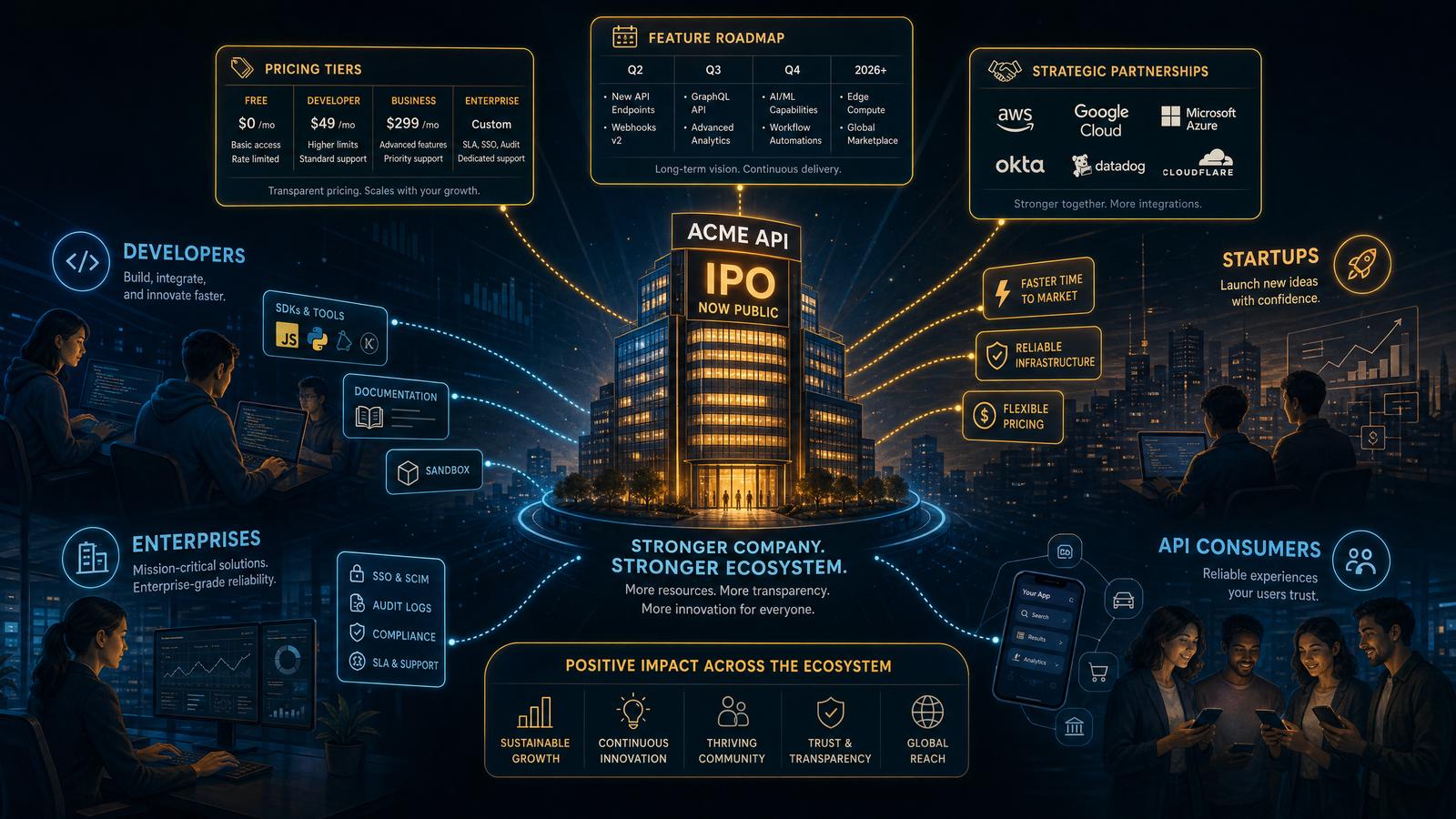
Given OpenAI’s impending IPO and the evolving AI technology landscape, technology leaders—whether in startups or large enterprises—must adopt a strategic mindset to effectively leverage OpenAI’s platform while mitigating risks and maximizing long-term value. This section provides an in-depth analysis of critical strategies, supported by actionable insights, technical best practices, and real-world examples tailored to different organizational scales and needs.
For Startups
- Optimize API Usage:
Efficient API consumption is paramount for startups operating within tight budget constraints. OpenAI’s pricing model is primarily usage-based, making cost control a must to maintain runway and scalability. Startups should implement the following technical approaches:
- Prompt Engineering: Craft concise and context-aware prompts to reduce token consumption. For example, instead of verbose instructions, use structured templates that maximize information density.
- Batching Requests: Where possible, batch multiple queries into a single API call to reduce overhead and latency.
- Cache Frequent Queries: Use caching layers for repeated queries or predictable responses to avoid redundant API calls.
- Monitor Usage Metrics: Integrate real-time dashboards using OpenAI’s usage APIs or third-party monitoring tools (e.g., Datadog, New Relic) to track consumption patterns and detect anomalies.
Below is a sample Python snippet demonstrating efficient prompt construction and batching requests when using the OpenAI API:
import openai

# Batch prompts to reduce overhead
prompts = [
    "Summarize the following text: ...",
    "Extract entities from this sentence: ..."
]

responses = []
for prompt in prompts:
    response = openai.Completion.create(
        engine="gpt-4",
        prompt=prompt,
        max_tokens=100,
        temperature=0.7
    )
    responses.append(response.choices[0].text.strip())

print(responses)
Additionally, startups should explore OpenAI’s volume-based discount tiers and negotiate enterprise agreements as their consumption grows.
- Diversify AI Providers:
Relying solely on OpenAI exposes startups to risks such as vendor lock-in, API changes, and pricing shifts post-IPO. A multi-vendor approach can mitigate these risks by distributing dependencies across various AI providers. Practical steps include:
- Integrate Multiple APIs: Architect modular AI service layers that abstract underlying providers, allowing seamless switching or fallback mechanisms.
- Evaluate Alternative Models: Benchmark performance, latency, and cost against competitors like Anthropic’s Claude, Google’s PaLM, and open-source models (e.g., LLaMA, Falcon).
- Example Architecture: Use a facade pattern in your codebase to unify calls to different AI APIs, enabling dynamic provider selection based on availability or cost.
# Example pseudocode for provider abstraction
class AIService:
    def __init__(self, provider):
        self.provider = provider

    def generate_text(self, prompt):
        if self.provider == 'openai':
            return openai.Completion.create(prompt=prompt, ...)
        elif self.provider == 'anthropic':
            return anthropic.Completion.create(prompt=prompt, ...)
        else:
            raise NotImplementedError("Provider not supported")

# Usage
service = AIService(provider='openai')
response = service.generate_text("Explain AI IPO implications.")
This approach also enables startups to perform A/B testing on model outputs to optimize for quality and cost.
- Focus on Differentiation:
While OpenAI provides powerful foundational AI models, startups must build proprietary intellectual property (IP) layers to maintain a sustainable competitive advantage. Strategies include:
- Custom Data Fine-Tuning: Use domain-specific data to fine-tune or instruct-tune models, enhancing relevance and accuracy for niche verticals.
- Unique Workflows and Interfaces: Develop innovative front-end user experiences or backend automation pipelines that leverage AI outputs in ways competitors cannot easily replicate.
- Hybrid AI + Heuristics: Combine AI-generated insights with rule-based logic or expert systems to improve reliability and interpretability.
For example, a legal tech startup might build a proprietary document classification and annotation layer on top of base OpenAI models, using confidential client data to create a competitive moat.
Below is an example of fine-tuning using OpenAI’s fine-tuning API (note: as of mid-2024, fine-tuning GPT-4 is supported for select customers):
openai api fine_tunes.create -t "fine_tune_data.jsonl" -m "gpt-4" --n_epochs 4
# fine_tune_data.jsonl contains training examples in JSONL format:
# {"prompt": "Legal contract clause: ", "completion": "This clause relates to confidentiality."}
Building differentiated AI-driven products will be key to sustaining growth and valuation post-IPO.
For Enterprises
- Engage Early with Enterprise Programs:
Large organizations should proactively participate in OpenAI’s enterprise initiatives to influence roadmap priorities and ensure alignment with internal security and compliance requirements. Key actions include:
- Join Early Access and Beta Programs: Gain privileged insights into upcoming features such as advanced security controls, on-premise deployment options, or industry-specific model enhancements.
- Collaborate on Compliance: Work with OpenAI to validate GDPR, HIPAA, SOC 2, and other regulatory compliance frameworks relevant to your industry.
- Technical Workshops: Conduct joint workshops to explore integration patterns, performance tuning, and customization opportunities.
Engagement at this level allows enterprises to shape product capabilities and prepare for smooth adoption ahead of wider market shifts triggered by the IPO.
- Invest in Integration:
To unlock the full potential of OpenAI’s models, enterprises must embed AI deeply within their business processes. This involves:
- Leveraging Codex for Developer Productivity: Automate code generation, code review, and inline documentation within IDEs using Codex-powered extensions.
- Automating Customer Engagement with ChatGPT: Implement AI chatbots for 24/7 customer support, lead qualification, and personalized recommendations.
- Workflow Orchestration: Use platforms like Apache Airflow, Azure Logic Apps, or AWS Step Functions to sequence AI calls with other enterprise services.
Below is an example of integrating Codex within a VS Code extension to generate Python code snippets on demand:
import openai

def generate_code_snippet(description):
    response = openai.Completion.create(
        engine="code-davinci-002",
        prompt=f"# Write a Python function that {description}",
        max_tokens=150,
        temperature=0.2
    )
    return response.choices[0].text.strip()

# Example usage
print(generate_code_snippet("calculates factorial of a number"))
Such integrations can dramatically improve developer throughput and reduce time-to-market for internal applications.
- Plan for Cost Management:
Post-IPO, OpenAI may revise pricing structures or introduce tiered enterprise plans. Enterprises must implement robust cost governance to prevent budget overruns and ensure predictable spend. Recommended practices include:
- Usage Governance Policies: Define role-based access controls, API quotas, and approval workflows for AI model consumption.
- Forecasting Models: Use historical usage data combined with business growth projections to model future costs. Incorporate scenario analysis for pricing changes.
- Automated Alerts: Integrate with cloud cost management tools (e.g., CloudHealth, AWS Cost Explorer) to trigger alerts when consumption approaches thresholds.
Example: Implementing a policy to limit ChatGPT API calls per department and requiring justification for overages can prevent runaway expenses.
# Example pseudocode for quota enforcement
def check_quota(user_id, requested_tokens):
    quota = get_user_quota(user_id)
    usage = get_user_usage(user_id)
    if usage + requested_tokens > quota:
        raise Exception("API quota exceeded")
    else:
        record_usage(user_id, requested_tokens)
Enterprises that embed cost management into their AI adoption lifecycle will gain financial agility and operational resilience.
Adopting these strategies will position startups and enterprises to harness OpenAI’s AI capabilities effectively while navigating the uncertainties and opportunities presented by the company’s transition to a publicly traded entity.
OpenAI Launches $4 Billion Deployment Company to Embed AI Across Enterprise Operations
Comparative Market Analysis: Pricing and Feature Trends
Understanding OpenAI’s competitive positioning requires a multi-dimensional analysis of pricing structures, feature sets, and strategic differentiators across major AI API providers. This section delves deeper into these factors, examining how each provider balances cost, capability, and enterprise readiness to capture the evolving AI developer ecosystem.
1. Pricing Models: Granularity and Cost Efficiency
Pricing remains a critical factor for developers and enterprises alike, especially when scaling applications that require millions or billions of tokens per month. The table below offers a snapshot of base API pricing, but understanding the nuances behind these numbers is essential.
| Provider | Base API Price (per 1,000 tokens) | Enterprise Features | Free Tier Limits | Unique Selling Points |
|---|---|---|---|---|
| OpenAI | $0.003 – $0.012 (varies by model) | Dedicated support, compliance, custom models | Up to 100K tokens/month | Broad model availability, ecosystem integrations |
| Anthropic | $0.004 – $0.015 | Safety-first API, fine-tuning | Up to 75K tokens/month | Focus on ethical AI and safety |
| Google Vertex AI | $0.0025 – $0.010 | Cloud-native, multimodal models | Up to 150K tokens/month | Google Cloud integration, multimodal support |
Detailed Pricing Structures
OpenAI: OpenAI’s pricing model is tiered by model complexity and capability. For example:
gpt-3.5-turbo: $0.003 per 1,000 tokens for input and $0.004 per 1,000 tokens for output.gpt-4: $0.03 per 1,000 tokens for input and $0.06 per 1,000 tokens for output, with variations for 8K and 32K context windows.
This tiered structure incentivizes developers to optimize token usage while leveraging powerful models for specialized tasks.
Anthropic: Anthropic’s Claude models emphasize safety and compliance, which reflects in slightly higher pricing. Their fine-tuning APIs allow bespoke tailoring but add to overall costs. Pricing examples include:
Claude Instant: Around $0.004 per 1,000 tokens.Claude 2: Up to $0.015 per 1,000 tokens for advanced use cases.
Google Vertex AI: Google’s pricing is competitive and tightly integrated with its broader cloud ecosystem. It offers:
- Multimodal API pricing starting as low as $0.0025 per 1,000 tokens, favoring high-volume users.
- Additional charges may apply for storage, networking, and other managed services.
2. Enterprise Features and Compliance
Enterprise adoption demands more than just API access: providers must offer compliance, support, and customization at scale.
- OpenAI: Offers dedicated enterprise support, including SLA-backed uptime guarantees, custom model fine-tuning, data residency options, and compliance with GDPR, HIPAA, and SOC 2 standards. OpenAI’s custom model program allows businesses to train proprietary models on their data, enhancing privacy and performance.
- Anthropic: Leads with a “safety-first” philosophy. Their API integrates safety layers and monitoring tools to detect and mitigate harmful outputs. Fine-tuning is available with built-in guardrails. Anthropic also provides compliance certifications relevant for regulated industries.
- Google Vertex AI: Leverages Google Cloud’s mature security and compliance portfolio, including FedRAMP, ISO 27001, and PCI DSS. The platform supports VPC Service Controls, IAM policies, and audit logging, making it ideal for enterprises requiring end-to-end governance.
3. Free Tier and Developer Accessibility
Free tier limits reflect a provider’s strategy to onboard and retain developers:
- OpenAI: Provides up to 100,000 tokens per month on a free tier, enabling developers to experiment with GPT-3.5 and other base models before committing financially. This incentivizes rapid prototyping and reduces entry barriers.
- Anthropic: Offers a smaller free tier of 75,000 tokens, emphasizing cautious use aligned with its safety-first approach.
- Google Vertex AI: Provides the most generous free tier at 150,000 tokens and credits for other cloud services, enabling developers to build integrated AI applications with minimal upfront cost.
4. Unique Selling Points and Ecosystem Integration
Each provider differentiates itself through unique capabilities and ecosystem synergies:
- OpenAI: Stands out with a broad range of models—including GPT-4, Codex (for code generation), and DALL·E (for image generation)—plus extensive third-party integrations (Microsoft Azure, Zapier, and more). OpenAI’s continuous research updates and community engagement foster a vibrant developer ecosystem.
- Anthropic: Prioritizes ethical AI development, transparency, and safety. Their models are designed to reduce hallucinations and biased outputs, appealing to applications requiring high reliability and trust.
- Google Vertex AI: Offers multimodal capabilities combining text, vision, and structured data. Its deep integration with Google Cloud’s AI and data analytics tools allows for scalable, enterprise-grade AI solutions.
Example: Cost Calculation for a Chatbot Application
Assuming a chatbot that processes 10 million tokens per month, here is a cost comparison based on base prices:
| Provider | Model | Price (per 1,000 tokens) | Monthly Cost (10M tokens) |
|---|---|---|---|
| OpenAI | gpt-3.5-turbo | $0.003 | $30 |
| Anthropic | Claude Instant | $0.004 | $40 |
| Google Vertex AI | Multimodal Text Model | $0.0025 | $25 |
Step-by-Step API Integration Example: OpenAI GPT-3.5-Turbo
To illustrate developer experience, here is a production-grade Python example outlining how to integrate OpenAI’s GPT-3.5-turbo model with token usage optimization and error handling included:
import os
import openai
import time

openai.api_key = os.getenv("OPENAI_API_KEY")

def generate_response(prompt):
    max_retries = 3
    retry_delay = 2  # seconds
    for attempt in range(max_retries):
        try:
            response = openai.ChatCompletion.create(
                model="gpt-3.5-turbo",
                messages=[{"role": "user", "content": prompt}],
                max_tokens=500,
                temperature=0.7,
                top_p=1,
                frequency_penalty=0,
                presence_penalty=0
            )
            usage = response['usage']
            print(f"Prompt tokens: {usage['prompt_tokens']}, Completion tokens: {usage['completion_tokens']}")
            return response['choices'][0]['message']['content']
        except openai.error.RateLimitError:
            print("Rate limit hit, retrying...")
            time.sleep(retry_delay)
        except openai.error.OpenAIError as e:
            print(f"OpenAI API error: {e}")
            break
    return None

if __name__ == "__main__":
    user_prompt = "Explain the benefits of using GPT-4 over GPT-3.5."
    answer = generate_response(user_prompt)
    if answer:
        print("AI Response:\n", answer)
    else:
        print("Failed to generate a response.")
Best Practices for Token Management
- Batch Requests: Group multiple user queries in a single API call when possible to reduce overhead and token consumption.
- Context Window Management: Implement sliding window techniques to manage conversation history within model limits, especially for GPT-4 8K and 32K variants.
- Prompt Engineering: Use concise, well-structured prompts to minimize token usage while maximizing output relevance.
- Monitoring Usage: Integrate token usage metrics into dashboards and alerts to prevent unexpected cost overruns.
In summary, OpenAI’s pricing and feature strategies position it strongly among competitors, balancing cost, capability, and enterprise readiness. However, emerging providers like Anthropic and Google Vertex AI present compelling alternatives focused on safety and cloud integration respectively, shaping a diverse and competitive AI API market landscape.
Long-Term Outlook: AI Ecosystem Evolution Post-IPO
OpenAI’s IPO represents far more than a traditional capital-raising event; it is a systemic inflection point that will reshape the AI developer ecosystem comprehensively. The substantial influx of capital from going public will enable OpenAI to accelerate research and development across multiple critical domains, including next-generation large language models (LLMs), multimodal AI architectures that integrate text, vision, and speech, and the advancement of robust AI safety and alignment protocols essential for deploying responsible AI at scale.
This transition to a public company also introduces heightened transparency and regulatory compliance requirements. As OpenAI aligns with Securities and Exchange Commission (SEC) mandates and global data privacy laws such as GDPR and CCPA, it will set new industry trust benchmarks. These evolving standards will drive broader adoption of accountable AI development practices across the entire AI ecosystem, influencing not only OpenAI’s direct users but also competitors and partners operating in adjacent technological spaces.
Key Implications for Developers and Enterprises
The post-IPO landscape will manifest new paradigms in how developers and enterprises consume, integrate, and innovate with AI technologies. These include:
- More predictable and scalable AI services: Public company governance will necessitate clearly defined Service Level Agreements (SLAs), robust uptime guarantees, and legally enforceable contractual protections. Enterprises deploying ChatGPT or Codex-powered solutions can expect enhanced platform stability and support, critical for production-grade applications.
- Greater innovation velocity: OpenAI’s reinvestment of IPO proceeds into R&D and cloud infrastructure will catalyze rapid iteration on model architectures, training techniques, and deployment tooling. This will enable faster release cycles for newer model versions with improved capabilities such as few-shot learning, real-time adaptability, and reduced latency.
- Potential consolidation or strategic partnerships: The IPO may trigger mergers, acquisitions, or alliances between OpenAI and major cloud providers (e.g., Microsoft Azure, AWS, Google Cloud). These partnerships aim to seamlessly integrate AI capabilities into developer toolchains, CI/CD pipelines, and enterprise SaaS platforms, fostering a unified AI developer experience.
Production-Grade SLAs: An Example
To illustrate, here is a sample SLA snippet OpenAI could offer post-IPO to enterprise clients integrating ChatGPT APIs:
{
  "serviceLevelAgreement": {
    "availability": "99.95%",
    "responseTime": "Average API latency ≤ 150ms",
    "support": {
      "responseTime": "Within 1 hour for critical incidents",
      "supportHours": "24/7"
    },
    "dataPrivacy": {
      "compliance": ["GDPR", "CCPA"],
      "dataRetention": "User data retained only for 30 days"
    },
    "incidentManagement": {
      "notificationTime": "Within 15 minutes of detection",
      "resolutionTarget": "Critical incidents resolved within 4 hours"
    }
  }
}
Expanded Opportunities for AI Developers
With OpenAI’s IPO-driven growth, developers will gain access to an increasingly rich ecosystem of tools, APIs, and reference implementations that support complex AI workflows:
- Advanced API features: Versioned API endpoints allowing developers to select specific model variants optimized for latency, accuracy, or cost.
- Multimodal AI SDKs: Official libraries enabling seamless integration of text, image, and audio inputs for building sophisticated applications like interactive assistants, content generators, or real-time translators.
- Enhanced developer portals: Comprehensive dashboards offering usage analytics, cost optimization recommendations, and fine-grained access controls tailored for enterprise teams.
- Open standards participation: OpenAI is expected to play a key role in establishing industry-wide interoperability standards for AI models and datasets, fostering cross-vendor compatibility and reducing vendor lock-in risks.
Step-by-Step Walkthrough: Integrating Codex into a CI/CD Pipeline
As part of the evolving AI ecosystem, organizations can embed OpenAI Codex into their software development lifecycle to automate code generation and review. A typical integration might look like this:
- API Key Management: Securely store OpenAI API keys in your CI/CD secrets manager (e.g., GitHub Actions Secrets, Jenkins Credentials).
- Pre-commit Hook Setup: Configure a pre-commit hook that uses Codex to automatically generate boilerplate code or suggest function implementations based on docstrings.
- Automated Code Review: Use Codex to analyze pull requests for code quality, potential bugs, or security vulnerabilities, incorporating AI feedback into your merge criteria.
- Continuous Monitoring: Track Codex API usage and latency metrics via your CI/CD dashboard to optimize cost and performance.
// Example: Git pre-commit hook invoking OpenAI Codex API to auto-generate code skeleton
const axios = require('axios');
const fs = require('fs');

const API_KEY = process.env.OPENAI_API_KEY;
const filePath = process.argv[2];
const codePrompt = fs.readFileSync(filePath, 'utf8');

axios.post('https://api.openai.com/v1/engines/codex/completions', {
  prompt: codePrompt,
  max_tokens: 150,
  temperature: 0.2,
  n: 1,
  stop: ["#"]
}, {
  headers: { 'Authorization': `Bearer ${API_KEY}` }
})
.then(response => {
  const completion = response.data.choices[0].text;
  fs.writeFileSync(filePath, codePrompt + completion);
  process.exit(0);
})
.catch(error => {
  console.error('Codex API error:', error);
  process.exit(1);
});
Market Dynamics and Competitive Landscape Post-IPO
OpenAI’s IPO is poised to influence market dynamics significantly:
| Aspect | Pre-IPO Scenario | Post-IPO Scenario | Impact on Ecosystem |
|---|---|---|---|
| Capital Availability | Private funding with limited scale | Multi-billion dollar capital influx | Enables large-scale R&D and infrastructure expansion |
| Regulatory Oversight | Limited public scrutiny | Mandatory financial disclosures and compliance | Improved transparency and trustworthiness |
| Partnership Strategy | Selective collaborations | Strategic alliances with cloud & enterprise vendors | Accelerated ecosystem integration and adoption |
| Product Roadmap | Agile but opaque | Structured with investor accountability | Predictable release timelines and feature sets |
Such shifts will challenge startups and incumbents alike to adapt their business models and technical strategies to remain competitive and relevant in a rapidly maturing AI market.
In conclusion, OpenAI’s confidential IPO filing signals a pivotal moment in the AI industry. Stakeholders must prepare strategically to harness emerging opportunities while mitigating risks associated with pricing, vendor dependency, and evolving product roadmaps. By proactively aligning with OpenAI’s trajectory, startups and enterprises can position themselves at the forefront of the AI revolution.
Claude Mythos Deep Dive: Cybersecurity Breakthroughs, Project Glasswing, and Access Tiers
The $900 Billion Question: How Anthropic’s Explosive Growth Is Reshaping the Enterprise AI Market
