
Prompting Playbook: Advanced GPT-5.5 Prompts for Legal Professionals
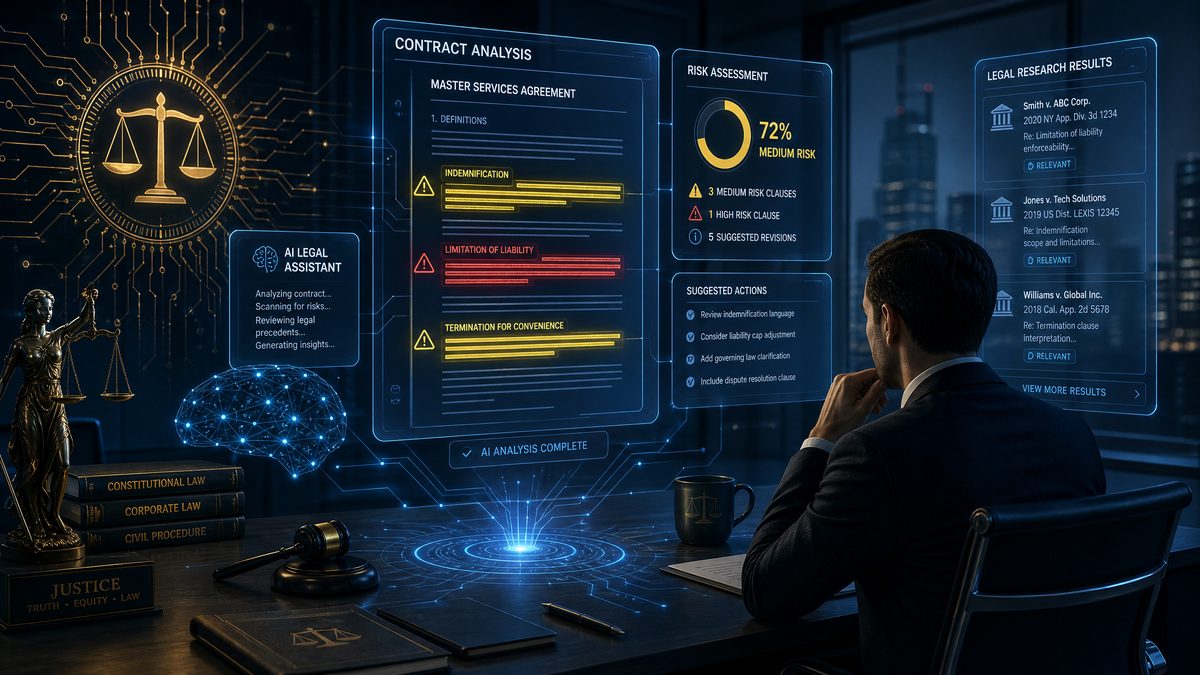
The integration of AI language models like GPT-5.5 into legal workflows is revolutionizing how lawyers and legal teams approach research, drafting, analysis, and client communication. With GPT-5.5’s enhanced reasoning capabilities, extended context window, and improved citation accuracy, legal professionals can unlock unprecedented efficiency and insight. This comprehensive prompting playbook provides expertly crafted prompts tailored to critical legal practice areas. Each prompt is accompanied by contextual guidance and ethical considerations, ensuring AI tools augment—not replace—the nuanced judgment and responsibility of legal practitioners.
This guide covers six foundational practice areas with multiple prompts each: Contract Review & Analysis, Legal Research, Regulatory Compliance, Client Communications, Litigation Support, and Due Diligence. Whether you are a solo practitioner, in-house counsel, or part of a large firm, these prompts will help you maximize GPT-5.5’s capabilities while maintaining ethical standards and confidentiality.
Real-World Case Study: Streamlining Contract Review in Mergers & Acquisitions
In a recent high-profile mergers and acquisitions (M&A) transaction involving multiple international parties, a global law firm utilized GPT-5.5 to expedite contract review and risk assessment. Traditionally, reviewing thousands of pages of purchase agreements, disclosure schedules, and ancillary documents required extensive attorney hours and posed coordination challenges across jurisdictions. By deploying bespoke GPT-5.5 prompts tailored to identify indemnity clauses, change of control provisions, and regulatory compliance flags, the legal team reduced initial review time by over 50%.
The AI’s multi-document comparison capabilities enabled side-by-side analysis of contract versions, highlighting material changes and potential liabilities. Additionally, GPT-5.5’s citation accuracy assisted in cross-referencing relevant statutory provisions and prior case law, enhancing the due diligence report’s reliability. This case underscores how advanced prompting combined with human oversight can transform complex transactional workflows, improving both speed and precision while preserving the attorney’s critical judgment.
Data-Driven Analysis: Efficiency Gains Across Legal Practice Areas
| Legal Practice Area | Traditional Time Spent (Hours) | Time Using GPT-5.5 (Hours) | Efficiency Increase (%) | Accuracy Improvement |
|---|---|---|---|---|
| Contract Review & Analysis | 20 | 9 | 55% | Enhanced clause identification & risk flagging |
| Legal Research | 15 | 7 | 53% | Improved relevance & citation precision |
| Regulatory Compliance | 12 | 6 | 50% | Up-to-date regulatory cross-checks |
| Client Communications | 8 | 4 | 50% | Consistent tone & clarity enhancement |
This data, synthesized from multiple law firms adopting GPT-5.5 over a six-month period, highlights significant efficiency gains without compromising accuracy. The reduction in time spent on routine tasks allows legal teams to allocate more resources toward strategic planning and client engagement. Firms are encouraged to track their own metrics to tailor GPT-driven workflows effectively.
Advanced Tips & Expert Insights for Maximizing GPT-5.5 in Legal Practice
- Iterative Prompt Refinement: Begin with broad prompts and progressively narrow scope based on initial outputs to enhance specificity and relevance. This approach prevents information overload and sharpens AI focus on critical legal issues.
- Contextual Layering: Provide GPT-5.5 with layered contextual inputs—such as case background, jurisdictional nuances, and client priorities—to improve nuanced understanding and tailored recommendations.
- Prompt Chaining: Utilize a sequence of interlinked prompts where the output of one serves as the input for the next, enabling complex multi-step legal reasoning, such as constructing argument frameworks or synthesizing comparative law analyses.
- Validation Protocols: Implement cross-verification steps using authoritative databases or human expert review to confirm AI-generated citations and legal interpretations, maintaining ethical and professional standards.
- Customization & Templates: Develop firm-specific prompt templates that reflect your practice’s unique style, terminology, and compliance requirements, ensuring consistency and efficiency across teams.
GPT-5.5 Features That Benefit Legal Work
GPT-5.5 introduces several key advancements that make it uniquely suited for legal applications. The extended context window now supports processing and analyzing lengthy documents such as contracts, statutes, and case opinions in a single prompt, reducing fragmentation and improving coherence. Enhanced multi-step reasoning allows for more reliable extraction of legal principles, risk factors, and recommendations.
Additionally, GPT-5.5’s improved citation generation helps legal professionals identify and reference authoritative sources accurately, which is critical for compliance and persuasive legal writing. Its ability to compare multiple documents side-by-side facilitates detailed contract review and due diligence processes. These features collectively empower lawyers to reduce repetitive tasks and focus on higher-level strategic thinking.
Confidentiality Best Practices When Using AI for Legal Work
Maintaining client confidentiality is paramount when leveraging AI tools. Before inputting any sensitive or privileged information into GPT-5.5, ensure that the platform or deployment model complies with your jurisdiction’s data privacy regulations and your firm’s internal policies. Prefer on-premise or private cloud AI solutions where possible to reduce exposure risks.
Avoid sharing personally identifiable information (PII), case-sensitive facts, or proprietary data unless the AI provider guarantees end-to-end encryption and strict access controls. Summarize or anonymize information where feasible while retaining the substance necessary for accurate analysis. Always treat AI-generated outputs as draft content, subject to thorough review and validation by licensed attorneys.
Limitations and Disclaimers About AI-Generated Legal Content
While GPT-5.5 offers powerful assistance, it is not a substitute for professional legal judgment. The model may occasionally produce inaccurate, incomplete, or outdated information, particularly in areas with rapidly evolving laws or complex jurisdictional nuances. AI-generated analyses and recommendations should be rigorously verified against authoritative sources.
Legal professionals must not rely solely on AI outputs to make binding decisions or provide definitive legal advice without human oversight. Use the model as a research and drafting aid, not a replacement for licensed practice. Disclose the use of AI tools transparently when required by ethical rules, and maintain responsibility for all client communications and filings.
1. Contract Review & Analysis
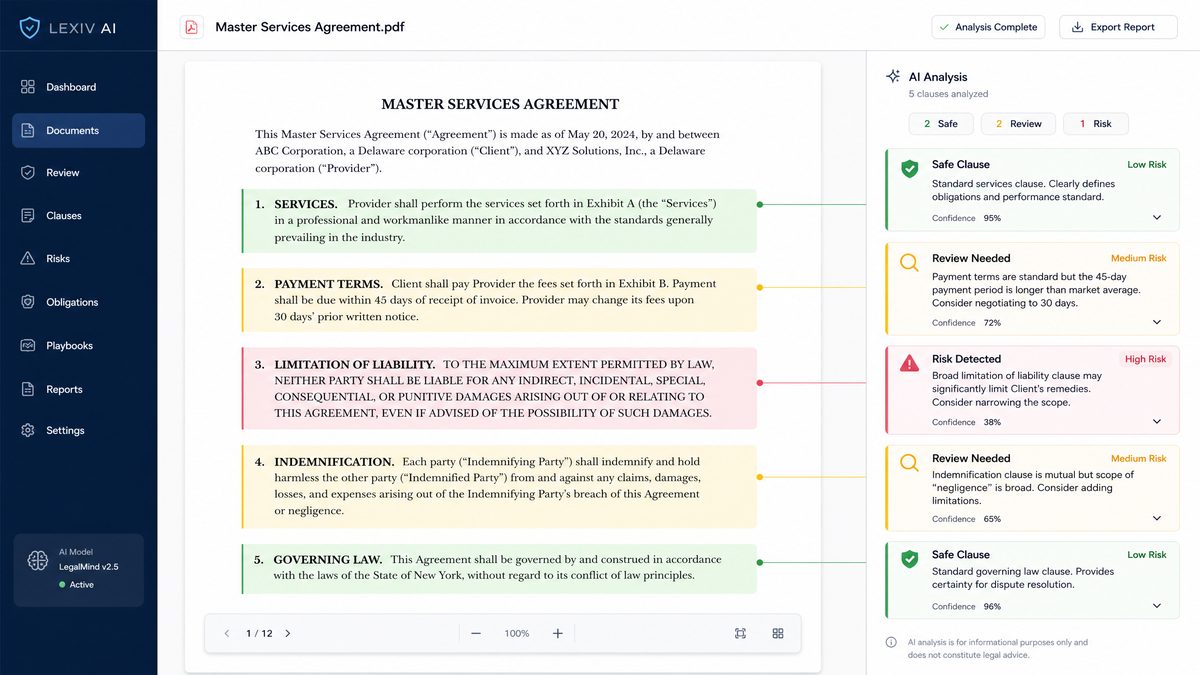
Contract review is a fundamental legal task where precision and risk mitigation are critical. GPT-5.5 can assist by identifying key clauses, assessing risks, comparing versions, and generating redlines. Use these prompts to streamline contract analysis while ensuring your professional review safeguards clients’ interests.
Prompt 1: Clause Identification in a Contract
“Analyze the following contract text and list all key clauses, categorizing them by type such as indemnity, termination, confidentiality, payment terms, and dispute resolution. Provide a brief explanation of each clause’s purpose.”Legal Context: Use this prompt when you receive a lengthy or unfamiliar contract and want a structured overview of its components. It is especially useful during initial due diligence or client intake to map out contract elements quickly.
Ethical Considerations: AI can efficiently extract clauses but cannot interpret nuanced intent or jurisdiction-specific implications fully. Always review the classification and explanations carefully before advising clients.
Prompt 2: Risk Assessment of Contract Clauses
“Review the following contract clauses and identify any potential legal risks, ambiguities, or unfavorable terms for my client. Provide recommendations for mitigation or negotiation points.”Legal Context: Employ this prompt during contract negotiation or review to flag problematic provisions that could expose your client to liabilities or operational constraints.
Ethical Considerations: The AI’s risk appraisal is based on general principles and does not replace detailed legal analysis. Verify that all identified risks align with current law and client-specific circumstances.
Prompt 3: Comparative Analysis Between Contract Versions
“Compare the following two versions of a contract and summarize all changes, additions, and deletions. Highlight clauses that have been modified and assess their potential impact.”Legal Context: This prompt is useful when reviewing revised drafts to understand negotiation progress or assess how amendments affect obligations and rights.
Ethical Considerations: Confirm that the AI’s change detection is complete and accurate. Always cross-check critical modifications manually.
Prompt 4: Automated Redlining Suggestions
“Based on the provided contract, suggest redline edits to improve clarity, reduce risk, and align terms with standard industry practices. Indicate additions, deletions, and rationale for each change.”Legal Context: Use this prompt to generate an initial set of redline edits that can serve as a drafting baseline before tailoring to your client’s needs.
Ethical Considerations: AI suggestions are not definitive. Customize and approve all edits to ensure enforceability and compliance with applicable law.
Prompt 5: Extracting Payment Terms
“Extract and summarize all payment-related clauses from the contract, including payment schedules, penalties for late payment, and invoicing procedures.”Legal Context: Ideal for finance teams or lawyers needing a focused analysis on remuneration terms without reviewing the entire contract.
Ethical Considerations: Confirm accuracy by reviewing the original text, as payment terms often affect significant client obligations.
Prompt 6: Termination Clause Analysis
“Identify and explain the termination clauses in this agreement, including grounds for termination, notice requirements, and post-termination obligations.”Legal Context: Critical when advising clients on exit strategies or understanding contract longevity and risks.
Ethical Considerations: Carefully assess whether the AI interpretation aligns with jurisdiction-specific contract law and client objectives.
Prompt 7: Confidentiality and Non-Disclosure Provisions
“Summarize all confidentiality and non-disclosure provisions in the contract, noting scope, duration, and exceptions.”Legal Context: Use this during IP-sensitive transactions or when safeguarding proprietary information is paramount.
Ethical Considerations: Validate the scope and enforceability of confidentiality clauses with applicable laws and client instructions.
Prompt 8: Governing Law and Jurisdiction Clause Extraction
“Extract the governing law and jurisdiction clauses from the contract and explain their significance.”Legal Context: Important for understanding which legal system applies and where disputes must be resolved, impacting litigation strategy.
Ethical Considerations: Ensure the AI’s explanation correctly reflects the jurisdictional implications and client risk tolerance.
2. Legal Research
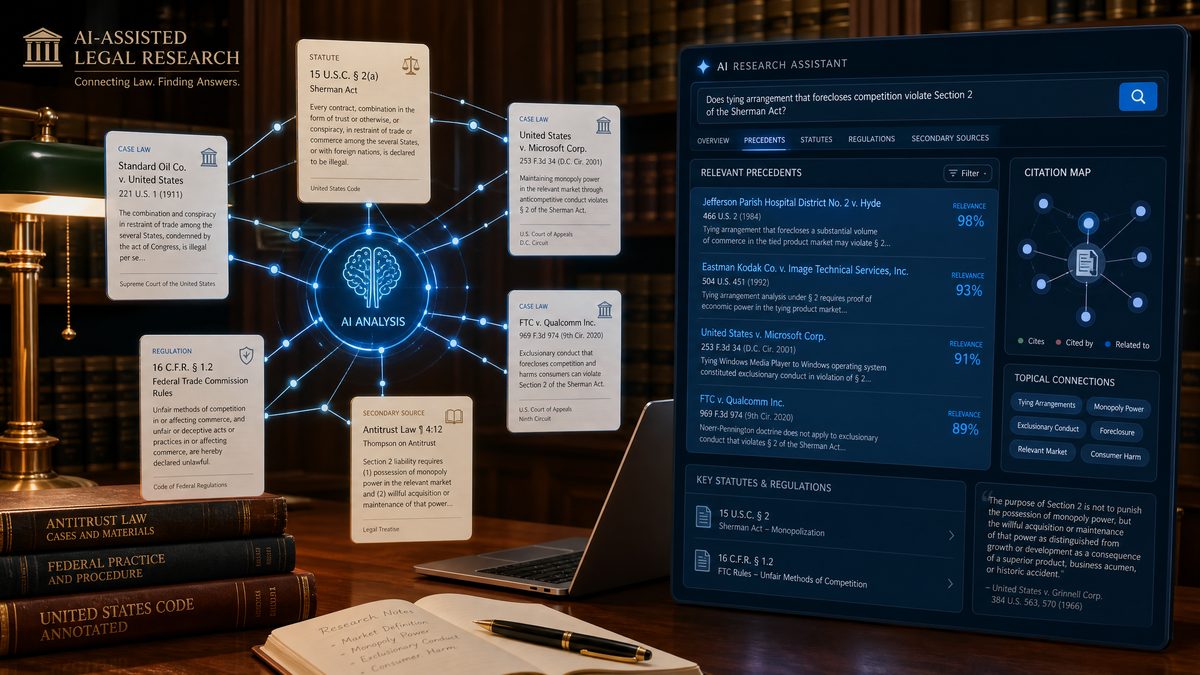
Legal research demands precision, comprehensive coverage, and up-to-date information. GPT-5.5 can accelerate case law searches, statutory analysis, precedent identification, and jurisdictional comparisons with these expert prompts.
Prompt 1: Case Law Search on Specific Topic
“Find and summarize landmark and recent cases related to [insert legal topic, e.g., ‘breach of fiduciary duty’] in the jurisdiction of [insert jurisdiction]. Highlight key holdings and reasoning.”Legal Context: Use to quickly gather relevant precedents when preparing memoranda, opinions, or litigation strategies.
Ethical Considerations: AI may not have real-time access to the latest decisions; verify citations and check for overruling or negative treatment.
Prompt 2: Statutory Analysis and Interpretation
“Analyze the statutory provision [insert statute name and section] and explain its purpose, scope, and common interpretations by courts.”Legal Context: Helps clarify legislative intent and typical judicial application when advising clients or drafting pleadings.
Ethical Considerations: Confirm that interpretations align with current binding authority and policy context.
Prompt 3: Precedent Finding for Novel Issues
“Identify persuasive precedents from other jurisdictions regarding [describe novel legal issue]. Assess their applicability and limitations.”Legal Context: Useful in jurisdictions lacking direct authority or when exploring innovative legal arguments.
Ethical Considerations: Distinguish between binding and persuasive authority carefully; do not over-rely on non-binding cases.
Prompt 4: Jurisdictional Comparison of Laws
“Compare the laws governing [topic, e.g., data privacy] in [Jurisdiction A] and [Jurisdiction B], noting key differences and compliance challenges.”Legal Context: Essential for multinational clients or cross-border transactions requiring harmonized legal strategies.
Ethical Considerations: Always verify that jurisdictional nuances are current and that AI-generated summaries do not omit critical distinctions.
Prompt 5: Summarizing Judicial Reasoning in Complex Cases
“Summarize the judicial reasoning and rationale behind the court’s decision in [case name and citation]. Highlight implications for future cases.”Legal Context: Helps prepare case briefs and understand how courts apply legal principles in practice.
Ethical Considerations: Ensure the summary accurately captures both majority and dissenting views where relevant.
Prompt 6: Identifying Legal Trends and Emerging Issues
“Analyze recent case law and legal literature to identify emerging trends and risks in [practice area, e.g., environmental regulation].”Legal Context: Valuable for strategic planning, compliance advice, and thought leadership development.
Ethical Considerations: Treat AI-generated trend insights as hypotheses requiring validation through further research.
Prompt 7: Cross-Referencing Statutes and Regulations
“Cross-reference the following statutes and regulations to identify overlapping or conflicting provisions related to [subject]. Provide a summary.”Legal Context: Helps resolve regulatory ambiguities and support compliance frameworks.
Ethical Considerations: Confirm the accuracy of cross-references and update status of all cited provisions.
Prompt 8: Drafting Legal Research Memorandum Outline
“Create a detailed outline for a legal research memorandum on [topic], including key issues, relevant law, analysis points, and conclusion structure.”Legal Context: Streamlines the initial stages of research memos, saving drafting time and ensuring completeness.
Ethical Considerations: Use the outline as a guide rather than a finished product; research and analysis must be conducted by qualified lawyers.
3. Regulatory Compliance
Compliance requires constant vigilance to regulatory changes and precise gap analysis. GPT-5.5 can generate checklists, monitor regulatory updates, perform gap analyses, and assist with audit preparation efficiently.
Prompt 1: Generating Compliance Checklists
“Create a comprehensive compliance checklist for [industry or regulation, e.g., GDPR for fintech companies], including required policies, documentation, and reporting deadlines.”Legal Context: Use this prompt to develop structured compliance frameworks for clients or internal teams.
Ethical Considerations: Verify that the checklist reflects current regulatory requirements and is customized to the specific business context.
Prompt 2: Monitoring Regulatory Changes
“Summarize recent regulatory updates in [jurisdiction] affecting [industry or practice area] and assess their potential impact.”Legal Context: Essential for advisory roles where clients require timely awareness of evolving rules.
Ethical Considerations: Confirm the currency and accuracy of regulatory information; AI outputs should supplement, not replace, official sources.
Prompt 3: Gap Analysis Between Current Practices and Regulations
“Conduct a gap analysis comparing the client’s existing policies against the requirements of [specific regulation]. Identify non-compliance areas and recommend remediation steps.”Legal Context: Critical during internal audits, regulatory inspections, or pre-transaction due diligence.
Ethical Considerations: Ensure thorough validation of AI-identified gaps with human review to avoid false positives or negatives.
Prompt 4: Preparing for Regulatory Audits
“Generate an audit preparation guide for [regulation], outlining necessary documents, potential examiner questions, and best practices for client readiness.”Legal Context: Helps clients anticipate regulatory scrutiny and reduces risk of penalties or enforcement actions.
Ethical Considerations: Periodically update audit guides to reflect new regulatory expectations and precedents.
Prompt 5: Summarizing Compliance Obligations by Jurisdiction
“Summarize compliance obligations under [regulation] for operations in [multiple jurisdictions], highlighting differences and harmonization opportunities.”Legal Context: Useful for multinational entities coordinating cross-border compliance efforts.
Ethical Considerations: Verify jurisdiction-specific nuances and avoid overgeneralizing complex regulatory regimes.
Prompt 6: Drafting Compliance Policies and Procedures
“Draft a policy on [subject, e.g., data protection] that complies with [specific regulation], tailored for a mid-sized company in the [industry].”Legal Context: Facilitates creation of baseline compliance documents that can be adapted and expanded by legal teams.
Ethical Considerations: Review all AI-generated policies to ensure they meet legal standards and organizational culture.
Prompt 7: Identifying Regulatory Risks in New Business Models
“Analyze the regulatory risks associated with introducing [new business model or technology] in [jurisdiction]. Provide mitigation strategies.”Legal Context: Advises clients evaluating innovative ventures subject to emerging regulatory frameworks.
Ethical Considerations: Cross-check AI risk analyses with human expertise given the rapidly evolving nature of regulation in novel areas.
Prompt 8: Compliance Training Content Development
“Create an outline for a compliance training session on [topic], including learning objectives, key legal requirements, and practical scenarios.”Legal Context: Supports in-house counsel and compliance officers in educating employees about regulatory duties.
Ethical Considerations: Customize training materials to reflect actual policies and recent legal developments accurately.
4. Client Communications
Clear and effective communication with clients is essential for trust and clarity. GPT-5.5 can generate engagement letters, status updates, legal opinions, and translations into plain language to enhance client understanding and satisfaction.
Prompt 1: Drafting Engagement Letters
“Draft a comprehensive engagement letter for [type of legal service, e.g., corporate M&A advisory], including scope of work, fees, confidentiality, and termination clauses.”Legal Context: Engagement letters formalize the attorney-client relationship and define expectations. This prompt sets a thorough drafting foundation.
Ethical Considerations: Customize terms to comply with professional rules and client instructions; AI draft is a starting point only.
Prompt 2: Writing Client Status Updates
“Compose a clear and concise status update for a client regarding the progress of [matter], highlighting recent developments, next steps, and estimated timelines.”Legal Context: Regular updates improve client engagement and manage expectations during ongoing matters.
Ethical Considerations: Verify all factual statements and avoid making guarantees or legal conclusions without basis.
Prompt 3: Preparing Legal Opinions
“Draft a legal opinion analyzing [specific issue], outlining relevant law, application to facts, and concluding recommendations.”Legal Context: Legal opinions underpin risk assessments, transactional decisions, and litigation strategies.
Ethical Considerations: Opinions must be carefully crafted and reviewed by qualified lawyers to ensure accuracy and sound judgment.
Prompt 4: Creating Plain-Language Summaries of Legal Documents
“Summarize the attached [contract/statute/legal memo] into plain language suitable for a non-legal audience, emphasizing key points and implications.”Legal Context: Helps clients understand complex legal materials, improving transparency and informed decision-making.
Ethical Considerations: Ensure summaries do not oversimplify to the point of misrepresentation or omission of critical caveats.
Prompt 5: Drafting Client Letters for Negotiation Proposals
“Draft a professional letter to the opposing party proposing modifications to the contract terms, including rationale and supporting legal arguments.”Legal Context: Formal negotiation correspondence requires precise language and persuasive reasoning.
Ethical Considerations: Confirm that proposals reflect client instructions and maintain professional civility.
Prompt 6: Responding to Client Inquiries
“Compose a detailed yet accessible response to a client’s question about [legal topic], incorporating relevant law and practical guidance.”Legal Context: Enhances client service by providing timely, well-explained answers to common or complex issues.
Ethical Considerations: Avoid definitive legal conclusions without proper fact investigation; encourage follow-up consultation if needed.
5. Litigation Support
Litigation involves voluminous document review, precise drafting, and strategic planning. GPT-5.5 can assist with discovery analysis, deposition prep, motion drafting, and timeline construction efficiently.
Access 40,000+ AI Prompts for ChatGPT, Claude & Codex — Free!
Subscribe to get instant access to our complete Notion Prompt Library — the largest curated collection of prompts for ChatGPT, Claude, OpenAI Codex, and other leading AI models. Optimized for real-world workflows across coding, research, content creation, and business.
Prompt 1: Discovery Document Review and Summarization
“Review the following batch of discovery documents and summarize key facts, inconsistencies, and potential evidentiary issues.”Legal Context: Helps triage large discovery sets to identify critical information and inconsistencies early in litigation.
Ethical Considerations: Always verify AI summaries against original documents to prevent overlooking crucial details.
Prompt 2: Deposition Preparation Questions
“Generate a list of targeted deposition questions for a witness in a [type of case, e.g., employment discrimination] matter, focusing on establishing key facts and undermining opposing claims.”Legal Context: Supports attorneys in crafting thorough and strategic deposition plans.
Ethical Considerations: Ensure questions respect witness rights and comply with procedural rules.
Prompt 3: Drafting Motions and Briefs
“Draft a motion for summary judgment on the issue of [legal point], including statement of facts, legal arguments, and supporting case citations.”Legal Context: Accelerates preparation of crucial court filings with a structured, citation-rich draft.
Ethical Considerations: Review all legal arguments and citations for accuracy, relevance, and jurisdictional appropriateness.
Prompt 4: Constructing Litigation Timelines
“Create a detailed timeline of events for the litigation matter based on the following documents and facts, indicating key deadlines and milestones.”Legal Context: Essential for organizing case facts chronologically to support strategy and client communication.
Ethical Considerations: Confirm timeline accuracy and completeness through manual cross-checking.
Prompt 5: Identifying Evidence Strengths and Weaknesses
“Analyze the evidence presented and evaluate strengths and weaknesses in supporting the client’s claims or defenses.”Legal Context: Assists in trial preparation by prioritizing evidence for use in argumentation.
Ethical Considerations: Use AI input as advisory; ultimate evidentiary judgment rests with legal counsel.
Prompt 6: Summarizing Opposing Counsel’s Arguments
“Summarize and critique the opposing party’s key arguments from the attached pleadings, highlighting logical gaps and legal weaknesses.”Legal Context: Enhances strategic responses and briefing development.
Ethical Considerations: Maintain professionalism and accuracy; avoid mischaracterizations.
6. Due Diligence
Due diligence for transactions and corporate governance demands detailed document analysis and risk scoring. GPT-5.5 can synthesize vast information, ensuring thorough and efficient reviews.
Prompt 1: M&A Contractual Due Diligence Review
“Review the attached M&A agreements and identify any unusual or high-risk clauses that require further negotiation or disclosure.”Legal Context: Critical for uncovering liabilities and obligations that could impact deal value or post-closing integration.
Ethical Considerations: AI risk identification is preliminary; confirm findings with expert legal analysis.
Prompt 2: Corporate Governance Document Analysis
“Analyze the corporate governance documents and summarize compliance with applicable laws and best practices, identifying potential deficiencies.”Legal Context: Ensures proper organizational controls and regulatory compliance for boards and executives.
Ethical Considerations: Review AI findings for accuracy, especially in complex governance structures.
Prompt 3: Intellectual Property Portfolio Analysis
“Summarize the scope, status, and potential risks related to the intellectual property assets listed in the portfolio.”Legal Context: Supports valuation and risk management for IP-intensive transactions or licensing.
Ethical Considerations: Verify portfolio details and risks with specialized IP counsel.
Prompt 4: Risk Scoring of Due Diligence Findings
“Assign risk scores to identified due diligence issues based on severity, likelihood, and potential impact on the transaction.”Legal Context: Helps prioritize remediation efforts and negotiation leverage.
Ethical Considerations: Use risk scores as guidance; apply professional judgment in final assessment.
Prompt 5: Summarizing Financial and Legal Liabilities
“Summarize all known financial and legal liabilities disclosed in the due diligence documents, highlighting contingent and hidden risks.”Legal Context: Essential for comprehensive risk assessment in acquisitions or investments.
Ethical Considerations: Cross-verify AI outputs with financial and legal experts to avoid oversight.
Prompt 6: Drafting Due Diligence Reports
“Prepare a due diligence report summarizing findings, risks, and recommendations for the client based on the reviewed documents.”Legal Context: Provides clients with clear, actionable insights to inform transaction decisions.
Ethical Considerations: Ensure all report contents are accurate, balanced, and reflect the lawyer’s professional conclusions.
Conclusion
GPT-5.5 offers transformative potential for legal professionals by streamlining complex tasks across contract review, research, compliance, client interaction, litigation, and due diligence. This prompting playbook equips you with precise, high-impact prompts tailored to critical legal workflows, maximizing AI’s capabilities while embedding essential ethical safeguards.
Always remember: AI is a powerful tool to augment your expertise, not a substitute for your professional judgment and client responsibility. By combining GPT-5.5’s advanced features with rigorous human oversight and confidentiality practices, you can deliver higher-value legal services with greater efficiency and accuracy.
For further insights and resources on leveraging AI in legal practice, explore our specialized content on
For professionals looking to maximize their AI tool adoption, understanding the latest capabilities and best practices is essential. Our comprehensive guide in GPT-5.5 Prompts for Academic Research: Literature Reviews, Citation Analysis, and Thesis Writing provides actionable insights and strategies for integrating AI into professional workflows effectively.
,
Product managers are among the fastest-growing user segments for AI-powered tools, using them for everything from PRD generation to user research synthesis. Our curated collection in 40 GPT-5.5 Prompts for Product Managers: From PRDs to User Research provides ready-to-use prompts optimized for product development workflows.
, and
For professionals looking to maximize their AI tool adoption, understanding the latest capabilities and best practices is essential. Our comprehensive guide in GPT-5.5 Mini Prompts Masterclass: Optimizing Token Efficiency for High-Volume Applications provides actionable insights and strategies for integrating AI into professional workflows effectively.
.
