
Why China’s Open-Source AI Models Are Forcing OpenAI to Rethink Its Pricing Strategy — And What It Means for the Developer Ecosystem
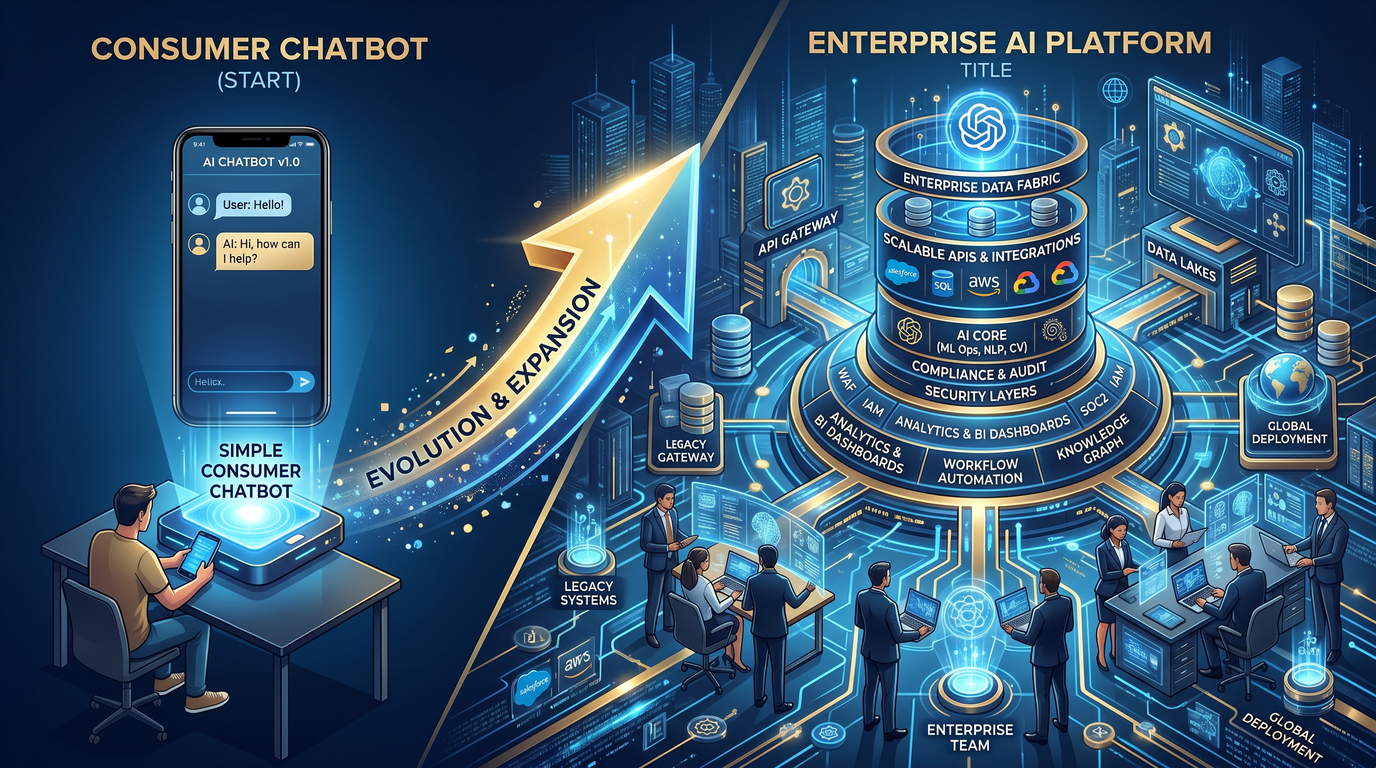
Something profound has shifted in the global AI market over the last 18 months. A wave of Chinese open-source model families—led by DeepSeek and Qwen, with strong showings from InternLM, Yi, Baichuan, MiniCPM, GLM, and others—has broken through the ceiling that once separated “research curiosities” from “production-grade workhorses.” The result is a new competitive landscape: developers can now deploy highly capable, permissively licensed models at a fraction of the cost of traditional closed APIs, often with performance that’s within striking distance of the top-tier frontier systems.
That shift has significant consequences for platform economics, developer strategy, and enterprise governance. As these open alternatives harden—and as cloud providers and model hosts race to commoditize inference at scale—OpenAI and other closed-model leaders are being pushed to revisit the assumptions behind their pricing. Monthly subscriptions that once seemed like bargains now invite hard questions, and API pricing that served as a profitable default suddenly faces cutthroat competition from open-weight deployments riding on optimized runtimes.
This featured analysis explores how and why Chinese open-source models are bending the price-performance curve, how they stack up against the latest closed systems (including GPT-5.5-class and Claude-class models), and what the next 12 months are likely to bring. Most importantly, it lays out what developers and engineering leaders should do today to hedge effectively: from multi-model routing and cost-aware inference to compliance-savvy deployment topologies that reconcile innovation with governance.
Key takeaways at a glance
- Open-weight Chinese models have matured rapidly, with strong showings on reasoning, coding, multilingual, and long-context tasks—squeezing the “clear blue water” that once separated them from the top closed systems.
- The cost gap is widening: developers can self-host or use low-margin hosts to access capable models at dramatically lower per-token costs. This exerts direct pressure on premium subscriptions (including $200/month pro plans) and encourages API price reductions.
- Closed providers are responding with tiered pricing, free-tier expansions, faster/cheaper distilled variants, caching, and generous credits to recapture developer mindshare while preserving premium tiers for frontier capabilities and enterprise-grade assurances.
- Enterprises are accelerating “open where possible, closed where necessary.” Expect hybrid estates with policy-driven routers that consider price, capability, compliance locality, and vendor risk in real time.
- The next year will likely see: more test-time compute/reasoning gains, better small/efficient models, longer contexts with smarter retrieval, more transparent evals, and a hardening of cost-aware orchestration patterns.
The Rise of DeepSeek, Qwen, and China’s Open-Source Wave
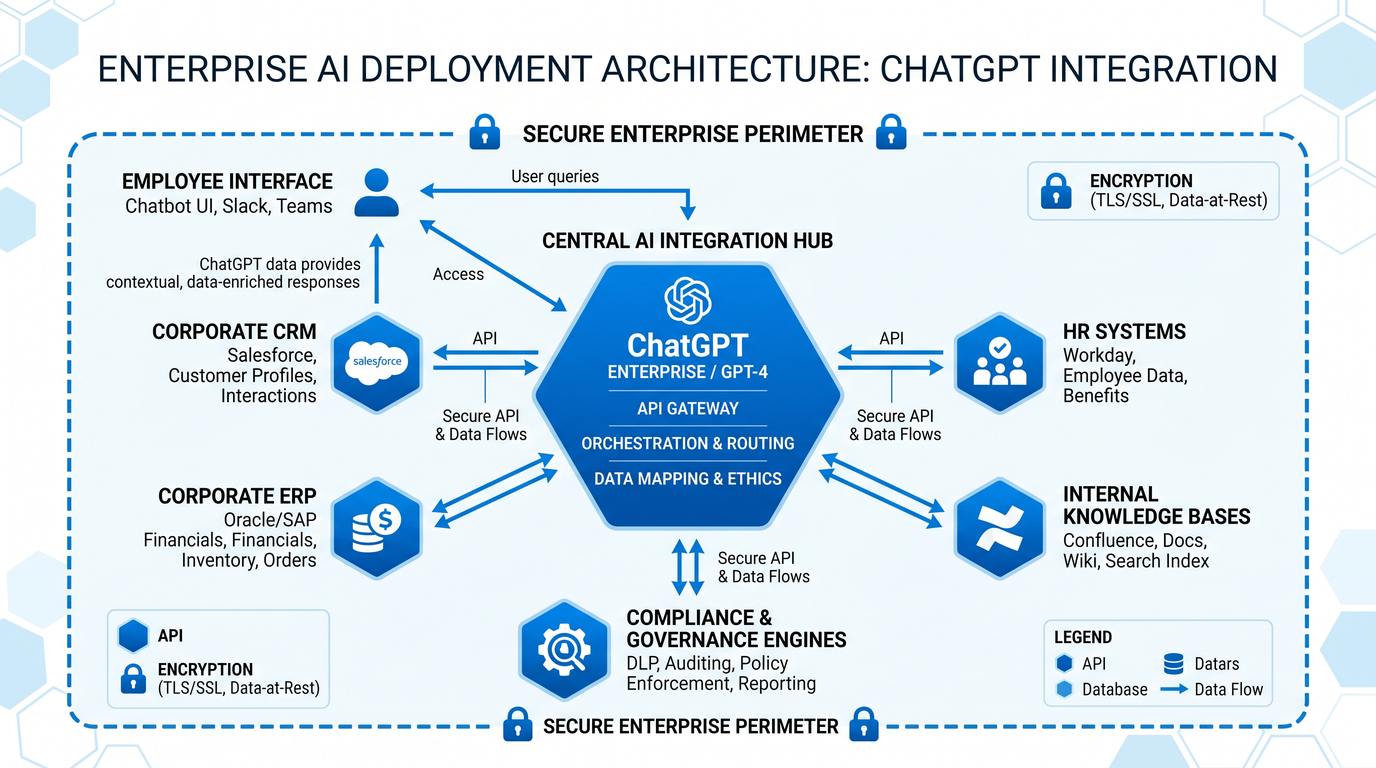
China’s open-source AI ascent isn’t a single story; it’s a convergence of incentives and execution across research labs, tech giants, and startup ecosystems that recognized an opportunity in the global market’s appetite for cost-effective, deploy-anywhere AI.
Why this wave is different
- Capability parity pressure: Early open models lagged meaningfully behind closed systems on complex tasks. More recent Chinese open-weight models demonstrate parity or near-parity on many day-to-day workloads (summarization, chat, translation, code generation, structured extraction), erasing the “must-use-closed” reflex for a broad swath of applications.
- Licensing pragmatism: Many Chinese model families embrace permissive or business-friendly licenses, or provide clear commercial licensing paths, enabling startups and enterprises to deploy without legal ambiguity.
- Engineering for deployment, not just demos: Optimized inference stacks, quantization recipes, long-context variants, and coding-specialized checkpoints acknowledge the reality of production constraints and developer ergonomics.
- Community and ecosystem flywheel: Strong documentation, checkpoints across sizes, and integration with mainstream tooling (from Python SDKs to popular inference servers) lower friction to adoption and build credibility fast.
The flagship families
- DeepSeek: Known for pushing efficient reasoning and cost-performance optimizations. Variants oriented around instruction following, coding, and longer context windows have gained traction among pragmatic builders who want dependable capability without premium pricing. Distilled and lighter-weight versions reduce memory footprints while preserving strong reasoning characteristics.
- Qwen (Alibaba): A broad family with multilingual strength, long-context options, code-specialized models, and consistent updates. Qwen’s cadence and integration breadth (cloud, third-party hosts, open runtimes) helped it become a default “serious open model” in many stacks.
- InternLM (Shanghai AI Lab): Research-driven but deployment-aware, with focus areas including instruction tuning quality, coding competence, and architectures that scale across GPU classes. InternLM variants are frequently used in academic and industrial benchmarks.
- Yi (01.AI) and Baichuan: Early leaders in the Chinese open-source space whose subsequent iterations and licensing paths influenced expectations around release quality and commercial readiness.
- MiniCPM, GLM, Skywork, and others: A proliferating long tail that targets niches (e.g., small-footprint edge inference, coding, RAG-friendly long context) and keeps the innovation pipeline thick.
What “open” means in 2026
In 2026, “open source” in AI remains a spectrum rather than a binary. For developers and procurement teams, the details matter:
- Weights availability: Many Chinese projects release model weights, not just APIs, enabling self-hosting on-prem or in preferred clouds. This is distinct from “open API” access with closed weights.
- Licensing nuance: Licenses vary—from permissive “use freely with attribution” to commercial-use allowances with restrictions (e.g., prohibiting training competitors). Always review license terms for redistribution, fine-tuning, and use-case constraints.
- Data transparency: Training data disclosures remain limited across the industry. Some projects provide higher-level descriptions or curated corpus summaries; few provide exhaustive provenance. Enterprises must account for this in IP risk assessments.
- Safety and governance posture: “Open” doesn’t necessarily mean “unfiltered.” Many open models ship with alignment and guardrails; others require integrators to layer safety filters and content policies.
How They Stack Up: Benchmarks and Capabilities vs GPT-5.5-Class and Claude-Class Models
The natural question for CTOs and staff engineers: “How close are these open models to the latest closed systems?” The honest answer is nuanced. On the hardest multi-hop reasoning, tool-augmented planning, and edge-case safety stewardship, the top closed systems typically retain an advantage. But on mainstream developer and enterprise workloads—spanning summarization, extraction, multilingual chat, and code-generation for common stacks—well-tuned Chinese open models often land in the same practical band of performance, especially when paired with retrieval and function-calling.
To make this concrete, consider the following qualitative comparison across common dimensions. These reflect aggregate public comparisons and widespread developer experience as of 2025–2026, rather than any single leaderboard run. Exact results vary by checkpoint, prompt, and tooling.
| Dimension | Chinese Open Models (DeepSeek/Qwen et al.) | GPT-5.5-Class | Claude-Class | Notes |
|---|---|---|---|---|
| General reasoning (without tools) | Strong; often near parity on typical tasks; occasional brittleness on edge cases | Frontier-level; more consistent under adversarial prompts | Frontier-level; excels at long-chain coherence | Closed models win consistency; open models competitive for everyday workflows |
| Tool use / function calling | Robust; good schema adherence; easy to integrate in OSS stacks | Excellent; strong schema control and recovery | Excellent; reliable tool orchestration | With good schemas and retries, gaps narrow further |
| Coding (generation + repair) | Very good; strong in Python/JS; improving in Java/C++ | Top-tier; better at complex refactors | Top-tier; strong test-aware reasoning | Open code-specialized variants narrow the gap |
| Multilingual | Strong, particularly across major Asian and European languages | Very strong; broad coverage | Very strong; nuanced fluency | Open models excel in Chinese/English bilingual contexts |
| Long context retrieval | Good to very good; requires careful chunking and RAG hygiene | Very good; resilient to distraction | Very good; stable summarization of long spans | RAG engineering often dominates model differences |
| Latency under load | Excellent when self-hosted/optimized; predictable tail latencies | Very good; global infra helps | Very good; enterprise SLAs | Open models benefit from custom hardware placement |
| Safety/guardrails | Varies; integrator responsibility to layer policies | Mature; strong policy conformance | Mature; strong policy conformance | Enterprises often add filters regardless |
| Cost to run | Low; aggressive quantization + commodity hosting | Premium | Premium | Open models win TCO for high-volume, predictable workloads |
In short: for many practical tasks, Chinese open models now deliver “good enough” to “excellent,” especially in systems that already rely on retrieval, tool use, or post-processing validators—techniques that compress quality differences between models by design.
For a deeper exploration of related concepts, our comprehensive guide on Why ChatGPT’s Futures Class of 2026 Signals OpenAI’s Pivot to Develo provides detailed strategies and practical implementation steps that complement the techniques discussed in this article.
Where open models still trail
- Adversarial robustness: Frontier closed models tend to fail less catastrophically on unusual chains of thought or prompt attacks, an advantage that matters in consumer-facing applications at scale.
- Long-horizon planning: Closed systems often maintain better global coherence across extended, multi-step tasks without explicit scaffolding.
- Safety stewardship and red-teaming depth: Closed providers invest heavily in layered mitigations and enforcement, which is valuable in regulated contexts.
Where open models shine
- Cost elasticity: You can right-size the model to the workload and turn dials (quantization, KV cache, batching) to hit specific latency and cost targets.
- Customizability: Fine-tune, distill, or augment with domain data and guardrails. For enterprise internal-use cases, this often beats a generic closed model.
- Deployment flexibility: On-prem, air-gapped, sovereign clouds, or edge accelerators—the same weights can travel to where compliance requires them to be.
The Pricing Squeeze: Free and Open vs. $200/Month Pro Subscriptions
Pricing is where the pressure is most visible. Developers can now:
- Use high-quality open models via hosted services priced aggressively (thanks to commodity margins and fierce competition).
- Self-host on cloud GPUs or CPUs with quantization, achieving surprisingly low cost per token for steady workloads.
- Mix and match: route the bulk of low/medium difficulty tasks to cheap open models, escalate only the hardest queries to a frontier closed model.
In this context, premium subscriptions—some priced around $200/month for pro-grade access, higher rate limits, and advanced features—face tough questions from individual developers and small teams. The more that open models deliver comparable results for routine tasks, the harder it is to justify a high monthly seat fee purely for access. The value must come from frontier-only capabilities, superior reliability, collaboration features, or enterprise-grade assurances (security reviews, compliance, SLAs, integrations).
| Option | Typical Cost Profile | Strengths | Trade-offs | When to choose |
|---|---|---|---|---|
| Premium closed subscription (e.g., $200/month) | Fixed seat cost; generous quota; premium features | Frontier capability, uptime, integrations, support | Expensive if most tasks are simple; vendor lock-in risk | Heavy frontier usage; need guaranteed quality and features |
| Closed API pay-as-you-go | Per-token charges; volume discounts | Elastic consumption; simple to start | Costs can spike; still pricier per token | Spiky workloads; low ops overhead desired |
| Hosted open-weight APIs | Low per-token; competitive tiers | Good price-performance; minimal ops | Model churn; variable guardrails | Cost-sensitive apps needing speed to market |
| Self-host open models | Lowest marginal cost at scale; infra + ops overhead | Control, compliance, custom tuning | Requires MLOps maturity; capacity planning | Steady workloads; sovereignty; custom SLAs |
“We were spending more on a couple of pro seats than our monthly GPU bill for inference. Once we set up a router, 85% of calls went to an open model with no user-noticeable drop in quality.” — Engineering lead, B2B SaaS
OpenAI’s Response: Price Tuning, Free Tiers, and API Cost Reductions
OpenAI’s pricing strategy has never been static. Historically, it has moved in waves: introducing new capabilities at premium prices, then iterating to cheaper/faster variants, reducing token rates, and offering free or low-cost on-ramps to ensure a wide funnel of developers.
As open-weight Chinese models expand, expect the following countermeasures to be salient:
- Tiered value framing: Maintain premium pricing for frontier models with unique capabilities, while introducing aggressively priced mid-tier models that meet most developer needs at open-weight-adjacent prices.
- Free tier expansions: More generous free usage caps for non-commercial or light commercial use, intended to keep newcomers within the ecosystem.
- API price reductions and bundles: Lower per-token rates, volume discounts, and bundling (e.g., storage, vector indexing, or fine-tuning credits) to deepen platform lock-in while softening the sticker shock.
- Faster, cheaper distilled variants: Official “lite” or “small” models optimized for speed and cost, tuned for tool use and structured tasks where open models are strongest.
- Server-side caching and retrieval credits: Cached responses or retrieval-integrated endpoints that reduce effective cost per outcome, not just per token.
- Developer tool perks: IDE plugins, dataset curation tools, eval frameworks, and collaborative features that transcend raw model outputs, reframing the value prop beyond tokens.
The objective is clear: neutralize the open model advantage on total cost of ownership while leaning into strengths (reliability, safety, frontier capability, ecosystem convenience) that open projects don’t always match at enterprise scale. The path forward likely includes nimble pricing around the edges—trimming token costs, boosting free allowances for builders—while keeping premium tiers viable by tying them to closed capabilities, compliance guarantees, and performance under stress.
For a deeper exploration of related concepts, our comprehensive guide on How to Build Multi-Agent Teams with OpenAI’s Agent-Team Feature: Preventin provides detailed strategies and practical implementation steps that complement the techniques discussed in this article.
Developer Ecosystem Impact: The New Startup Economics
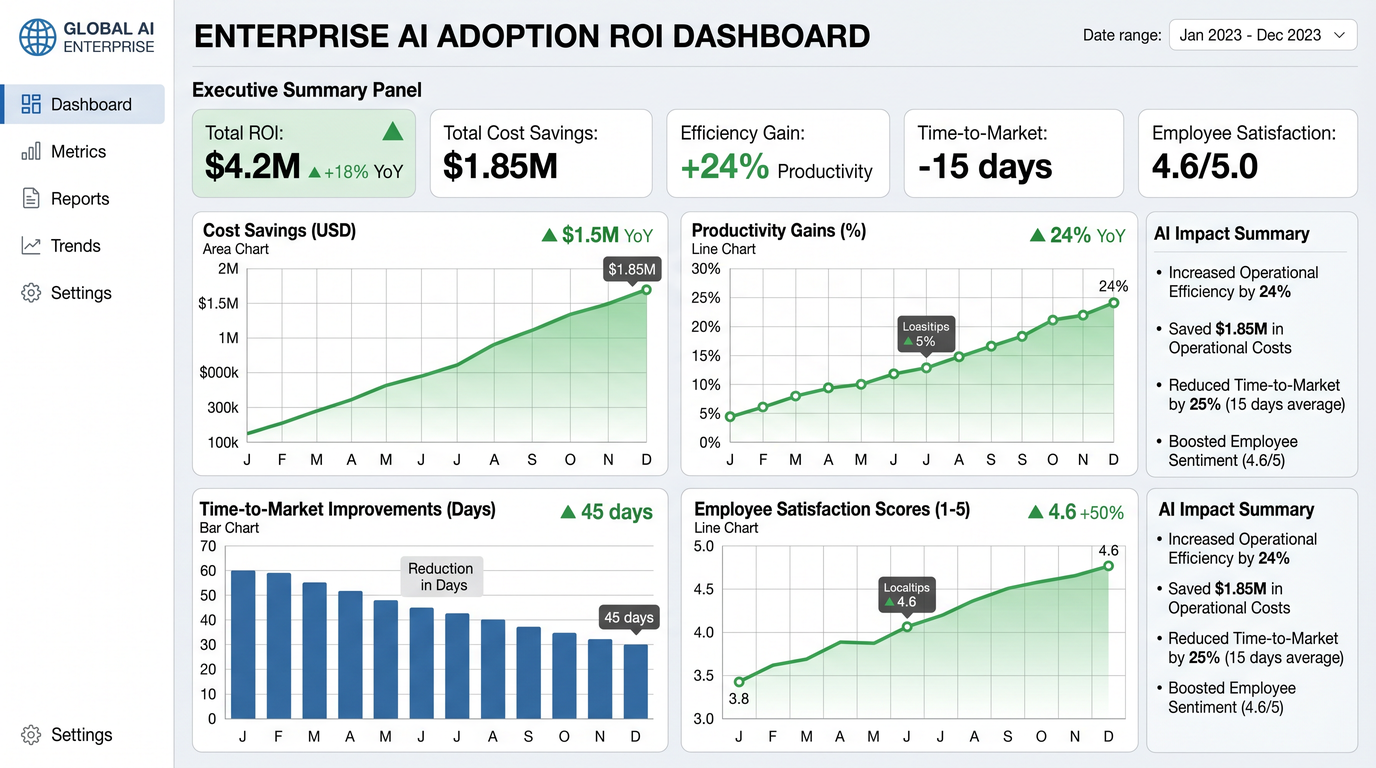
The open-model surge is changing how startups design products, how they raise money, and how they plan unit economics. The short version: it’s getting cheaper to build something good and harder to keep it differentiated.
New baselines
- Cheaper prototypes, faster MVPs: With high-quality open baselines a pip install away, founders can validate markets quickly and pivot without sunk API costs.
- Capex for independence: Teams are weighing a small baseline spend on GPUs/hosts to ensure unit economics don’t deteriorate at scale, even if they begin on hosted APIs.
- Model-agnostic design: Apps are increasingly built around a pluggable abstraction layer so they can swap models as prices and capabilities shift.
Where the moat moves
- Data and workflows: Proprietary corpora, RAG pipelines, evaluators, and custom validators differentiate outcomes even on similar base models.
- Latency SLAs and UX polish: Consistent, low tail latencies and thoughtful interaction design matter as much as raw model IQ.
- Vertical compliance: Fintech, health, and legal vendors build moats around domain-specific controls and auditability rather than model access alone.
Risks and pitfalls
- Model churn tax: The open ecosystem moves fast; teams must invest in eval harnesses and regression tests to avoid silent quality regressions when updating checkpoints.
- Hidden ops cost: Self-hosting saves tokens but introduces observability, autoscaling, A/B infra, and GPU scheduling complexity.
- License drift: Model and dataset licenses can change across versions. Pin versions and keep SBOM-style records for audits.
Enterprise Considerations: Security, Compliance, and Data Sovereignty
For enterprises, the rise of capable open models is an opportunity to square innovation with governance—but only if the architecture is intentional. Key considerations:
Security
- Isolation: Air-gapped or VPC-isolated deployments for sensitive workloads. Open weights make this feasible.
- Supply chain: Hash and verify model artifacts; maintain an internal registry with provenance tracking and attestation.
- Runtime hardening: Enforce prompt firewalls, content filters, and output validations. Treat models as untrusted components.
Compliance
- Data residency: Ensure inference occurs in allowed jurisdictions. Route queries based on user location and policy.
- Auditability: Keep structured logs of prompts, responses, tool calls, and policy decisions with retention aligned to regulatory requirements.
- Usage control: Enforce purpose limitation and minimization. Redact PII before sending to non-approved endpoints.
Data sovereignty and geopolitics
- Sovereign clouds: Run open weights in-country to satisfy local regulations (e.g., GDPR, industry-specific regs, or national sovereignty rules).
- Jurisdictional exposure: Review licensing entities, contributor geographies, and export-control implications when standardizing on a model family.
- Dual-vendor stance: Maintain closed-model access for cross-border scenarios where governance demands vetted providers with mature attestations.
| Enterprise Need | Open-Weight Model Path | Closed-Model Path | Blended Strategy |
|---|---|---|---|
| Highly sensitive data processing | On-prem, air-gapped inference with strict logging and masking | Use vetted private endpoints with contractual controls | Default open on-prem; escalate to closed only for frontier tasks |
| Cross-border operations | Per-region deployments; policy-based routing | Sovereign regions offered by provider | Hybrid: route by policy, retain fallback |
| Regulator-facing audits | Internal SBOM for models; reproducible evals; provenance tracking | Rely on vendor attestations and SOC2/ISO/GDPR documentation | Combine attestations with internal artifacts |
| Cost containment at scale | Right-size open models; quantize; batch; cache | Negotiate volume discounts; use caching features | Route bulk to open; spike to closed |
For a deeper exploration of related concepts, our comprehensive guide on The 2026 AI Coding Agent Comparison: Cursor vs Claude Code vs GitHub Copilot vs provides detailed strategies and practical implementation steps that complement the techniques discussed in this article.
The Open-Source vs. Closed-Source Debate in 2026
In 2026, the industry has moved past absolutism. Most mature teams acknowledge the reality: closed and open models both have a place. The strategic question is how to partition workloads and value extraction across them.
Arguments for closed
- Frontier capabilities: Best-in-class reasoning, multi-step planning, and robustness under adversarial conditions.
- Integrated compliance and safety: Vendor-run safety teams, red-teaming, content policy enforcement, and incident response.
- Reliability at scale: Enterprise-grade SLAs, global edge presence, and operational excellence that’s hard to replicate in-house.
Arguments for open
- Cost and control: Self-hosting, fine-tuning, and model choice allow aggressive cost optimization and tight governance.
- Portability and sovereignty: Deploy anywhere, meet data localization requirements, and avoid vendor lock-in dynamics.
- Innovation velocity: Community-driven features, rapid iteration, and the ability to adapt models to niche domains.
The synthesis
The real debate is less “which philosophy wins” and more “what architecture wins.” The emerging answer is a policy-driven, multi-model estate: open by default for cost-effective, routine tasks; closed for frontier tasks, adversarial robustness, and compliance scenarios where a vendor’s governance stack is part of the value proposition.
Why China’s Open Models Create Unique Pricing Pressure
Open weights have existed for years; what’s new is the combination of maturity, breadth, and competitive hosting ecosystems aligned to monetize them at razor-thin margins. Chinese open-model projects contributed heavily to this shift by:
- Delivering strong capabilities with multiple sizes and specializations (chat, code, long context) so that developers can match workload to model granularity.
- Embracing performance-aware engineering (e.g., quantization strategies, efficient attention mechanisms, KV caching) that translate directly into lower inference costs.
- Fostering a global network of hosts, clouds, and MLOps vendors eager to compete on throughput pricing, not just model access.
This diversity and readiness short-circuits the usual excuses to pay premium rates for everyday tasks. When good-enough open models are one API call away, closed providers must either justify price with unique value or move pricing closer to the commodity floor.
Benchmarks, Without the Hype
Developers crave numbers—and they should. But benchmark tunnel vision can mislead. Here’s a practical reading of public evals and widespread 2025–2026 developer experience:
Access 40,000+ AI Prompts for ChatGPT, Claude & Codex — Free!
Subscribe to get instant access to our complete Notion Prompt Library — the largest curated collection of prompts for ChatGPT, Claude, OpenAI Codex, and other leading AI models. Optimized for real-world workflows across coding, research, content creation, and business.
- Arena-style head-to-heads: On subjective preference ratings in blind chat comparisons, top open-weight Chinese models frequently land within a few percentage points of closed leaders for general chat and summarization.
- Code and tests: For common web stacks, open code-specialized variants deliver correct, maintainable snippets at rates developers deem acceptable—especially with test-based reinforcement (run tests, repair, retry).
- Reasoning: Closed systems maintain a lead on hard reasoning and tricky edge-cases without scaffolding, but open models perform strongly with structured tools (scratchpads, multi-step planners).
- Long context: As context windows extend, retrieval and chunking quality dominate outcomes. With good RAG, capability gaps shrink.
The upshot: if your product already employs retrieval, tools, and validators, you’ll often find that a well-chosen open model performs on par for most interactions. Save the expensive calls for where they pay off.
Cost Modeling: From Tokens to Outcomes
Cost decisions should be made at the level of outcomes, not just tokens. Consider a document extraction pipeline:
- Open model path: Lower per-token cost, slightly lower single-shot accuracy, combined with validator rules and selective retries.
- Closed model path: Higher per-token, higher single-shot accuracy, potentially fewer retries.
When you include retries, validators, caching, and user-tolerated latency envelopes, the open path may deliver similar or better economics—especially at scale. Many teams find that hybrid routing (open first, escalate selectively) yields the best unit economics without sacrificing UX.
OpenAI’s Likely Pricing and Product Moves
Given the competitive context, expect several patterns to define the next phase:
- Maintaining a frontier premium: The latest GPT-5.5-class capabilities remain pricier, but the delta narrows as mid-tier models undercut open weights on convenience and total platform value.
- Developer-friendly baselines: More inclusive free plans, generous credit promotions, and “good enough” default models that blunt the need to explore elsewhere for many use cases.
- Specialization SKUs: Official small/efficient SKUs tightly integrated with tool use, JSON mode, and low-latency streaming to compete head-on with open options in production APIs.
- Platform bundling: Tooling such as vector stores, eval frameworks, and workflow orchestrators made either free or heavily discounted with model usage commitments.
- Enterprise sweeteners: Extended retention controls, sovereign region guarantees, and auditable logs included in standard tiers to remove friction in regulated industries.
Case Study Patterns: How Teams Are Shifting
- Content platforms: Migrated 70–90% of generation and summarization to open models; retained closed models for premium editorial flows and safety-critical checks.
- Developer tools: Adopted open code models for suggestions; used closed models for complex refactors, multi-file reasoning, and language-agnostic transformations.
- Customer support: Used open models for first-pass triage, retrieval-augmented answers; escalated to closed models for ambiguous or high-risk queries.
Operationalizing Multi-Model: A Reference Architecture
At the heart of most modern AI apps is a policy engine that decides where to send each request. Inputs include:
- Task type and difficulty (estimated via classifiers or heuristics).
- Compliance and data locality constraints.
- Latency SLOs and current load.
- Cost budgets and remaining quotas per provider.
- Real-time quality signals (e.g., confidence from validators, retrieval scores).
# Pseudocode: cost- and policy-aware multi-model router

class PolicyRouter:
    def __init__(self, budgets, providers, policies):
        self.budgets = budgets            # e.g., per-team/month caps
        self.providers = providers        # dict of model clients
        self.policies = policies          # compliance + routing rules
        self.telemetry = Telemetry()

    def route(self, task):
        # 1) Compliance gate
        allowed = self.policies.allowed_endpoints(task)
        candidates = [p for p in self.providers if p.name in allowed]

        # 2) Difficulty estimate
        diff = estimate_difficulty(task)  # e.g., prompt length, RAG scores, user segment

        # 3) Cost-aware shortlist
        if diff == "low":
            ordered = rank_by_cost(candidates)
        elif diff == "medium":
            ordered = rank_by_quality_cost(candidates)
        else:
            ordered = rank_by_quality(candidates)

        # 4) Attempt with fallbacks
        for provider in ordered:
            if self.budgets.can_spend(provider, task):
                try:
                    resp = provider.invoke(task)
                    if validate(resp, task):
                        self.telemetry.record_success(provider, task, resp)
                        return resp
                except TransientError:
                    self.telemetry.record_retry(provider, task)
                    continue

        # 5) Last resort: frontier model
        resp = self.providers["frontier"].invoke(task)
        self.telemetry.record_success(self.providers["frontier"], task, resp)
        return resp
This pattern keeps costs low without sacrificing quality. Many teams now standardize on a library that abstracts providers (e.g., open-weight hosts, self-hosted runtimes, and closed APIs) behind a common interface so engineers can add or swap models without invasive refactors.
Governance and Observability: Making it Auditable
With routers making dynamic decisions, governance demands auditable trails:
- Decision logs: For each request, record task metadata, chosen provider, validation results, and fallbacks.
- Quality dashboards: Track acceptance rates, escalations, error classes, and user impact segmented by model.
- Cost dashboards: Attribute spend to teams, features, and model families; alert on budget breaches.
- Security: Redact sensitive data at the edge; maintain per-provider allowlists; rotate keys; verify model artifacts.
Licensing and Legal: Don’t Sleep on the Fine Print
Open-weight does not mean license-free. Legal teams should:
- Review model licenses for commercial use allowances and restrictions (e.g., disallowing training competitors).
- Track versions and hashes; capture SBOM-like artifacts so you can prove what ran in production.
- Document data handling and moderation layers, especially when mixing providers across jurisdictions.
Predictions: The Next 12 Months
- Price compression continues: Expect further API price cuts and more generous free tiers across closed providers to match the open-weight baseline.
- Small model renaissance: Highly efficient 1–8B parameter models, trained or distilled for specific domains (code, classification, extraction), become first-line production tools.
- Reasoning with test-time compute: More models expose knobs for “think time,” letting apps trade latency/cost for better problem-solving on demand.
- Long-context maturity: Smarter chunking, learned retrievers, and memory mechanisms reduce the need for extreme context windows.
- Safety scaffolds go mainstream: Standardized prompt firewalls, content filters, and response validators become default, open-source components.
- Transparent evals: Organizations publish reproducible, domain-specific evals; procurement starts to treat eval packs like RFP attachments.
- On-device and edge: Optimized open weights run on consumer hardware for privacy-preserving features; enterprise pilots expand at the edge.
- Vendor hedging becomes standard: Even small teams adopt multi-model routers; procurement demands exit plans and portability proofs.
- Compliance automation: Policy-as-code frameworks enforce data residency and provider selection automatically at runtime.
- Convergence of quality: For many practical enterprise tasks, the perceived gap between top open-weight Chinese models and closed leaders narrows further, magnifying price pressure.
What Developers Should Do Now
Don’t wait for the market to settle. Prepare your stack to benefit from competition today.
1) Adopt a multi-model abstraction layer
- Standardize request/response schemas across providers.
- Encapsulate provider quirks (rate limits, tokenization) and retries.
- Enable feature flags to turn models on/off without redeployments.
2) Implement policy-based routing
- Define routing rules that consider cost, latency, compliance, and estimated difficulty.
- Use validators to promote/demote responses and trigger fallbacks.
- Collect telemetry to refine routing over time.
3) Build an internal eval harness
- Curate task-specific test sets (inputs, expected outputs, acceptance criteria).
- Automate regression checks when swapping models or prompts.
- Track cost and latency alongside quality to assess holistic ROI.
4) Cache relentlessly
- Semantic and exact-match caches for frequently repeated prompts.
- Versioned caches tied to prompt and model versions to avoid stale results.
5) Right-size models and quantize where possible
- Use small, efficient open weights for classification, extraction, and boilerplate generation.
- Reserve larger models for complex reasoning or multi-step planning.
6) Plan for compliance from day one
- Route by data residency policies; keep PII on approved endpoints only.
- Maintain per-request logs with minimal sensitive data, respecting retention policies.
7) Budget and forecast with realism
- Model costs at the level of workflows, not just tokens. Include retries and validator passes.
- Expect volumes to grow with product traction; negotiate early but keep the hedge in place.
Frequently Observed Architectures
- Open-first with closed fallback: Default to DeepSeek/Qwen for routine tasks; escalate to GPT-5.5-class or Claude-class for high-risk or high-difficulty prompts.
- Split by domain: Use a code-specialized open model for IDE features; a general-purpose closed model for chat and planning.
- Sovereign partitioning: Open weights self-hosted in-region for residents; closed provider in another region for cross-border users.
Developer FAQ: Common Questions About the Shift
How do I know if an open model is “good enough” for my use case?
Run an A/B with your production prompts on a representative sample. Measure acceptance rate, escalation rate, latency, and cost. If a policy router can achieve your target acceptance rate within your latency and cost envelope, it’s good enough.
Will switching to open models lock me out of frontier innovation?
No—design for portability. Keep access to closed frontier models for cases where they materially outperform. Your router should make that choice automatically.
What about safety and moderation with open models?
Layer it in your app: prompt firewalls, content filters, tool whitelists, and response validators. Many open-source safety toolkits now integrate cleanly with model servers.
Should I self-host or use a hosted open API?
Hosted APIs are great for speed to market and spiky workloads. Self-host if you have steady volume, strict compliance needs, or specific performance goals. Many teams do both, swapping based on utilization.
Caveats and Realities: It’s Not All Free Lunch
- Operational sophistication required: Self-hosting demands reliable autoscaling, observability, and incident response. Factor this into TCO.
- Benchmark sensitivity: Gains on paper may not translate without prompt and pipeline engineering. Invest in RAG quality, tool schemas, and post-processing.
- Continuity planning: Open models evolve quickly; pin versions and invest in validation to avoid regressions when updating.
Strategic Outlook: Where the Frontier Still Matters
Even as open models push pricing down, closed frontier systems will retain distinct edges:
- Advanced multi-agent planning and robust tool orchestration out of the box.
- Defense-in-depth safety with strong oversight and rapid mitigations.
- Multimodal integrations tied to proprietary data and partner ecosystems.
Closed providers will increasingly justify premium tiers not just with model IQ, but with guarantees and integrations that make enterprises comfortable at scale. Open providers and hosts will counter with turn-key governance toolkits and managed open-weight services that blur the line.
Signals to Watch
- API price updates: Watch for stepped reductions and “lite” endpoints advertised for production automation workloads.
- Hosted open-weight SLAs: When hosts begin offering enterprise SLAs for open models, adoption in regulated sectors will accelerate.
- Standardized eval packs: As RFPs demand reproducible scores on domain tasks, expect a more apples-to-apples comparison culture.
- License evolutions: Track changes in popular open-weight licenses and governance terms.
- Hardware availability: GPU and specialized accelerator supply will influence hosting costs and queue times materially.
A Practical Playbook for the Next Quarter
- Inventory your prompts and workflows; label by difficulty, compliance sensitivity, and latency budget.
- Stand up at least two open-weight providers (hosted or self-hosted) and one closed provider behind a common interface.
- Implement a first-pass router with basic rules (open for low/medium difficulty; escalate on validator fail).
- Add observability: per-model acceptance, latency, and unit-cost dashboards. Set budget alerts.
- Tune prompts and validators to compress model differences; add caching and selective retries.
- Run a two-week bake-off; decide default routes by workload; lock in savings.
- Document governance: who can change models, how to roll back, and how to report incidents.
Conclusion: Competition Is Working—Developers Should Capitalize
Chinese open-source AI models have undeniably changed the economics of building with AI. By offering high capability at low cost—alongside deployment flexibility and customization—they have forced every closed provider, including OpenAI, to think harder about pricing, product tiers, and developer value. That competition is healthy. It’s compressing costs, accelerating innovation, and pushing the industry to adopt more robust engineering practices like multi-model routing, evaluators, and policy-as-code compliance.
For developers and engineering leaders, the winners will be those who design for portability, measure outcomes instead of tokens, and operationalize governance without sacrificing speed. Open where possible, closed where it pays, and always with an escape hatch—that’s the architecture that will thrive in the year ahead.
Access 40,000+ AI Prompts for ChatGPT, Claude & Codex — Free!
Subscribe to get instant access to our complete Notion Prompt Library — the largest curated collection of prompts for ChatGPT, Claude, OpenAI Codex, and other leading AI models. Optimized for real-world workflows across coding, research, content creation, and business.
