
Featured Analysis: U.S. Commerce Department Approves OpenAI’s GPT-5.6 for Broad Rollout

Executive summary: Commerce approves GPT-5.6 for broad rollout
On July 7–8, 2026, Axios and Reuters reported that the U.S. Department of Commerce approved OpenAI’s GPT-5.6 model family for broad rollout in the United States, removing the partner-only limitations that had been in place since the model was previewed on June 26, 2026. The preview introduced three tiers—Sol (flagship), Terra (balanced), and Luna (fast/cheap)—but access was initially constrained to roughly 20 trusted partners at the request of the U.S. government. The Trump administration has now lifted those restrictions, authorizing wider distribution subject to ongoing safety and compliance measures.
OpenAI positions GPT-5.6 as a step-function upgrade over GPT-5.5, with salient improvements in coding reliability, biology-aware reasoning safeguards, and multimodal understanding spanning text, images, and structured data. The company has also flagged a forthcoming Sol Ultra variant designed for tighter Codex integration, signaling a deeper push into professional-grade software engineering use cases.
The approval lands amid a tightly packed competitive window. Google is advancing Gemini 3.5 Pro across multimodal and agentic workflows, Anthropic continues to iterate on the Claude line for constitutional, safety-forward deployments, and xAI is scaling Grok’s availability. The Commerce decision does not endorse one vendor over another, but it effectively greenlights OpenAI to compete on even footing in U.S. enterprise and developer markets with its latest frontier model family.
Key takeaways:
- Regulatory shift: Commerce has moved GPT-5.6 from a partner-gated to a broadly available status in the U.S., reflecting a managed-risk posture rather than scarcity-by-policy.
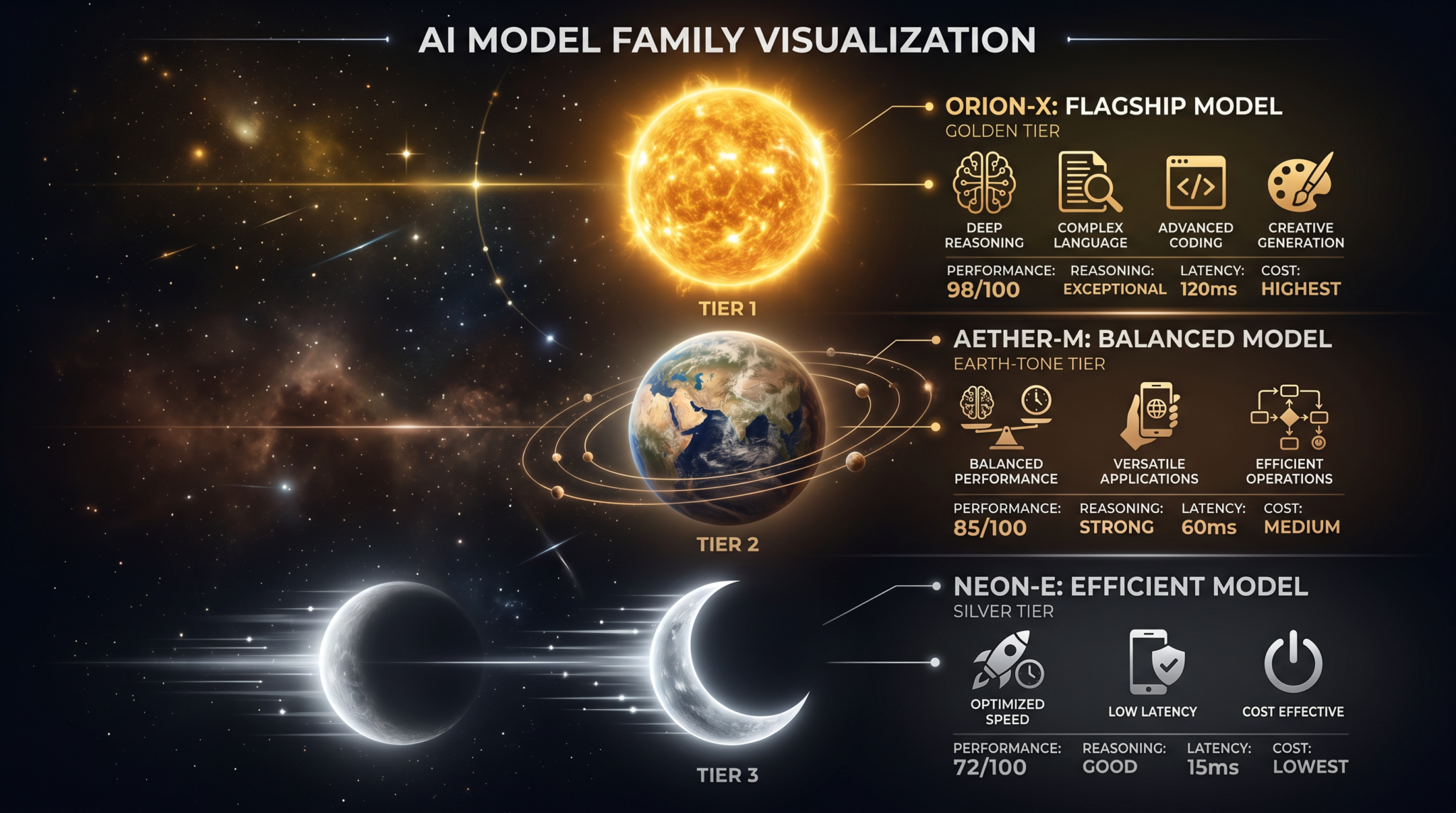
- Tiered family: Sol (flagship), Terra (balanced), and Luna (fast/cheap) create distinct price-performance slots, with Sol Ultra planned for advanced coding workflows via Codex integration.
- Safety posture: The initial restrictions were rooted in dual-use and national security concerns; the approval indicates confidence in layered mitigations and deployment guardrails.
- Competitive timing: The move coincides with high-velocity updates from Google, Anthropic, and xAI, intensifying platform selection dynamics for enterprises and developers.
The GPT-5.6 model family explained: Sol, Terra, Luna
OpenAI previewed GPT-5.6 on June 26, 2026, highlighting a three-tier family that aligns compute intensity, capability, and price. The tiers map to clear deployment archetypes and provide a structured way to trade-off latency, throughput, and reasoning quality.
Sol: The flagship tier
Sol is the high-capability tier intended for the most demanding workloads. It is optimized for complex, multi-step reasoning across text and images, long-context synthesis, and tasks requiring elevated reliability such as code generation and refactoring, enterprise knowledge synthesis, and advanced data extraction. Sol targets scenarios where accuracy, depth of reasoning, and safety controls are more important than per-request cost or absolute speed. OpenAI has also indicated a forthcoming Sol Ultra variant that will integrate more tightly with Codex, aiming to serve IDE-grade assistance, repository-scale navigation, and test generation workflows for professional software teams.
- Capabilities: High-precision reasoning, structured outputs, robust tool-calling, improved resistance to prompt injection and jailbreak attempts.
- Use cases: Enterprise copilots, complex coding and code review, multimodal analytics, decision support with chain-of-thought governed by policy-controlled reasoning modes.
- Trade-offs: Higher cost and latency relative to lower tiers, offset by superior reliability and safety instrumentation.
Terra: The balanced tier
Terra balances performance and price for general-purpose applications. It supports broad enterprise deployments—intelligent search, content generation with factuality checks, customer ops augmentation, and middle-complexity analytics—where scale and cost-efficiency matter. Terra is the “default” for many production scenarios where Luna’s limits are binding and Sol’s marginal gains aren’t necessary.
- Capabilities: Solid reasoning and summarization, strong tool-orchestration for typical agent workflows, reliable multilingual support.
- Use cases: Knowledge assistants, CRM and support automation, policy-aware drafting, content transformation, and batch inference pipelines.
- Trade-offs: Not as capable as Sol on edge-case reasoning or deeply nested tool plans, but significantly more cost-effective at scale.
Luna: The fast/cheap tier
Luna prioritizes latency and cost. It is designed for real-time interactive experiences, lightweight classification and extraction, high-volume content operations, and latency-sensitive UI features. Luna is best when the application can tolerate modest reasoning limits and when model calls are frequent or need to run on-device-adjacent infrastructure patterns.
- Capabilities: Low-latency responses, efficient token throughput, competent short-form generation and extraction.
- Use cases: Chat widgets, intent detection, content tagging, templated drafting, and interactive assistants where response time trumps deep analysis.
- Trade-offs: Reduced depth of reasoning and multimodal elasticity compared to Terra and Sol.
How to think about pricing tiers
As of the Commerce approval, OpenAI has not published definitive public list prices for GPT-5.6. Historically, OpenAI’s pricing has scaled with capability: flagship tiers cost more per input/output token and often carry higher concurrency premiums, while balanced and fast tiers are priced to support broad distribution. Developers should expect Sol to command a premium over Terra, with Luna priced for high-volume workloads. The company may also differentiate on throughput, priority queuing, and feature availability (for example, early access to new tool APIs or longer contexts in Sol first).
For buyers navigating tier choice:
- Use Sol for critical reasoning and coding tasks where errors are expensive and multi-step tool use is common.
- Use Terra for mainstream enterprise applications balancing quality and scale.
- Use Luna for edge, interactive, or bulk tasks where sub-second responsiveness and unit economics dominate.
Feature snapshot across tiers
| Tier | Primary role | Multimodal IO | Tool/agent support | Reliability profile | Typical latency profile | Representative use cases |
|---|---|---|---|---|---|---|
| Sol | Flagship reasoning and safety | Text + images; structured data robust | Advanced planning; multi-tool orchestration | Highest; optimized for mission-critical paths | Higher than Terra/Luna; optimized for quality | Code copilots, RAG+analytics, regulated drafting |
| Terra | Balanced capability/price | Text + images; common formats | Strong; standard agent workflows | High; suitable for broad enterprise | Moderate; good for scale-out | Knowledge assistants, support, content ops |
| Luna | Low-latency/high-throughput | Text; light image processing | Basic; single-tool or short plans | Medium; tuned for responsiveness | Lowest; optimized for interactivity | Chat UIs, tagging, templated generation |
Related reading: Deep Dive: GPT-5 Pro Complete Guide“>OpenAI model comparison
Why access was initially restricted to ~20 partners
The government’s request to limit GPT-5.6 access to approximately 20 trusted partners was driven by national security and dual-use concerns typical of frontier AI systems. When models cross capability thresholds—stronger code generation, improved scientific reasoning, persistent tool-use—they can amplify beneficial use cases and elevate certain risks. Early, controlled deployment allows regulators and developers to observe real-world behavior, validate mitigation layers, and refine guidance before broad distribution.
Core drivers of the initial restraint
- Dual-use risk: Advanced coding assistance can accelerate defensive security but also lower barriers for offensive misuse. Similarly, biology-aware reasoning can support benign literature synthesis, yet needs careful design to avoid enabling harmful, actionable outputs. Restricting early access concentrated usage among vetted organizations with mature compliance programs.
- Safety and monitoring readiness: A partner-only phase enables tighter telemetry, faster incident response, and targeted red-teaming. This is particularly important for multimodal features and tool orchestration, where risk often emerges from emergent behavior rather than single-turn text responses.
- Alignment and guardrail validation: Developers can iterate on system prompts, policy enforcement layers, and refusal behavior with a smaller, engaged cohort. The goal is to achieve a safer default model spec and deployment playbook before scale.
- Export control adjacency: While Commerce’s Bureau of Industry and Security (BIS) primarily governs hardware and certain software exports, agencies consider cross-border availability of frontier models when assessing potential proliferation risks. A limited initial U.S. cohort simplifies jurisdictional oversight.
Mitigation levers assessed during the partner-only phase
- Capability gating: Phased activation for high-risk features (e.g., advanced tool chaining, certain code-execution workflows).
- Content and safety filters: Model- and middleware-level safeguards to deflect requests for harmful or sensitive outputs, coupled with improved refusal explanations.
- Traceability: Logging, watermarking for generated media where applicable, and audit hooks for enterprise governance teams.
- Evals and stress tests: Partner-run and vendor-run evaluations covering jailbreak resistance, prompt-injection handling, long-context reliability, and multimodal robustness.
The partner-only phase provided regulators and OpenAI with an empirical basis to calibrate risk tolerances and deployment conditions. The July approval indicates that Commerce concluded the mitigations and operating practices are sufficient for broader U.S. access, subject to continuing compliance obligations.
What changed: The Commerce Department’s decision and its implications
The Trump administration lifted the partner-only limitation for GPT-5.6 following a Commerce Department review. While the specific adjudicative process is not public, the approval effectively transitions GPT-5.6 from a restricted trial to a generally available product family in the U.S. market. Practically, this unlocks OpenAI’s ability to onboard new customers across developer, SMB, and enterprise segments without case-by-case government gating, while maintaining standard safety and policy controls.
Immediate implications for OpenAI and customers
- Market availability: OpenAI can scale onboarding, offer standard contracts for GPT-5.6 tiers, and promote Sol, Terra, and Luna as production-ready options for U.S. buyers.
- Compliance carryover: The approval does not relax developer responsibilities. Customers should expect persistent requirements around auditability, incident reporting, and adherence to use policies, particularly in sensitive domains.
- Roadmap signal: With Sol Ultra planned for Codex integration, the approval clears the path for OpenAI to pilot deeper IDE integrations and repository-scale coding features with a larger cohort.
- Competitive parity: The decision allows OpenAI to contest enterprise RFPs alongside Gemini 3.5 Pro, Claude, and Grok without the handicap of restricted availability.
Regulatory interpretation
The approval suggests Commerce sees value in moving from scarcity to stewardship: enabling access while enforcing safety baselines. It also reflects confidence in the model’s refusal behavior and in surrounding control layers—API-level policy enforcement, tool permissioning, and enterprise governance hooks. Export control considerations remain relevant for international access, and sectoral regulators (for example, in healthcare or finance) can still impose domain-specific requirements on deployments.
Technical capabilities: What GPT-5.6 brings over GPT-5.5
OpenAI frames GPT-5.6 as a capability and reliability upgrade over GPT-5.5, with material advances in coding, biology-aware reasoning safeguards, and multimodal comprehension. While the company has not disclosed model size or training corpus specifics, qualitative improvements are apparent from partner demos and the model family’s design goals.
Coding: Toward repository-aware, test-first assistants
- Structured code plans: GPT-5.6 is better at decomposing tasks into deterministic steps—diff proposals, function-by-function scaffolding, and unit test generation—reducing the “one-shot” monologue pattern that often produced brittle code in earlier models.
- Refactoring discipline: The model more reliably adheres to constraints such as language version, dependency boundaries, and style guides, improving its suitability for large codebases with strict CI/CD rules.
- Static analysis fluency: GPT-5.6 can identify control-flow risks, potential null dereferences, and mis-specified interfaces when provided with representative files and build metadata, enabling code review workflows that surface specific, actionable diffs.
- Context handling: Long-context prompts spanning multiple files yield more consistent cross-file edits and fewer regressions, thanks to enhanced retrieval and summarization routines that keep the model “anchored” to the provided code.
- Tool integration: Improved function-calling fidelity allows an agent to alternate between natural-language planning and tool-backed steps (e.g., running tests, invoking linters) with fewer hallucinated tool parameters.
Sol Ultra’s planned Codex integration is aimed at professional environments—connecting the model to IDE telemetry, repository history, and test outcomes. In practical terms, this means tighter loops: propose a change, run tests in a sandbox, interpret failures, and synthesize a corrected diff—while adhering to policy-gated operations.
Biology-aware reasoning and safeguards
GPT-5.6 demonstrates better discernment between educational, non-actionable biology content and requests that could veer into harmful, experimental, or procedural territory. Improvements include:
- Contextual refusal alignment: More consistent refusal of step-by-step experimental guidance or optimization advice that could create biological risk, paired with safe alternatives like high-level conceptual overviews or references to public, non-actionable resources.
- Terminology sensitivity: Enhanced ability to detect when ostensibly benign terms are used in contexts suggesting misuse and to de-escalate the response accordingly.
- Retrieval discipline: When connected to retrieval systems, the model shows improved summarization of peer-reviewed literature without drifting into speculative or procedural synthesis that exceeds the safe-information boundary.
These behaviors are critical to balancing the legitimate needs of education, literature review, and bioinformatics summaries with guardrails that prevent the model from assisting harmful applications. They complement policy and monitoring layers rather than eliminating the need for them.
Multimodal and structured reasoning
- Document and chart understanding: GPT-5.6 more reliably extracts tables and relationships from PDFs and images of forms, and it better distinguishes between labels and data values. This supports financial reporting, regulatory filings analysis, and compliance checks.
- Diagram grounding: The model handles diagrams and UI screenshots with improved alignment between visual elements and textual descriptions, enabling QA scripts and test-case documentation.
- Image-text alignment for analytics: For retail and manufacturing, GPT-5.6 can pair short product imagery with catalog data to assist in categorization, exception detection, and description standardization.
- Structured outputs: JSON mode and schema adherence are notably steadier, reducing the need for post-processing and exception handling in downstream systems.
Reliability and safety hardening
- Prompt injection resilience: The model is less likely to discard system or developer instructions when confronted with adversarial content in retrieved documents or user inputs.
- Tool permissioning fidelity: When tools are available, GPT-5.6 respects scope and capability boundaries more consistently, reducing unauthorized or speculative tool calls.
- Self-consistency checks: For numerically bounded tasks, the model more often cross-verifies intermediate steps, reducing arithmetic and logic slips that plagued earlier generations.
- Factual grounding: With retrieval, GPT-5.6 better differentiates between cited and inferred facts and can annotate responses with source attributions when the application requests it.
Related reading: Deep Dive: GPT-5 Pro Complete Guide“>GPT-5.5 features
Impact on developers: API access, pricing, migration path
Commerce’s approval unlocks standard onboarding for developers, with GPT-5.6 joining prior families in the model catalog. Although endpoint names and pricing were not published alongside the approval reporting, developers can anticipate a familiar pattern: distinct model IDs per tier, progressive rollout of rate limits, and clear migration guides from 5.5.
API access and feature surface
- Model availability: Expect Sol, Terra, and Luna variants to appear as discrete model IDs with consistent APIs for chat, function calling, and multimodal inputs where supported.
- Tool orchestration: Function calling and tool-use interfaces should remain compatible with existing 5.x integrations, with improved argument validation and error messaging in 5.6.
- Streaming and batching: Streaming tokens and batch inference are likely supported across tiers to accommodate interactive and offline pipelines, respectively.
- Version pinning: For production stability, pin to specific 5.6 snapshots where offered and explicitly test behavior changes before updating.
Pricing and cost control
While exact list prices are not yet public, developers can manage costs and performance using well-established levers:
- Tier selection: Route high-stakes or complex tasks to Sol; reserve Terra for mainstream workloads; use Luna for chat UX and bulk transformations.
- Prompt design and caching: Minimize redundant instructions via system prompts and enable caching or template reuse to avoid token bloat.
- Retrieval over recall: Instead of asking the model to “remember,” attach compact context via retrieval to shrink input tokens and improve grounding.
- Batch and async: Consolidate homogeneous tasks into batch jobs where latency is not critical; rely on async callbacks or webhooks to reduce concurrency costs.
- Evaluation-based routing: Use lightweight classifiers or confidence heuristics to send only hard cases to Sol and keep the rest on Terra or Luna.
Migration from GPT-5.5
Teams moving from 5.5 to 5.6 should create a targeted evaluation plan rather than a wholesale swap. Focus on areas where 5.6 claims improvements—coding reliability, biology-aware guardrails, and multimodal extraction—and verify application-specific behavior.
- Freeze baselines: Capture representative prompts, contexts, and outputs from 5.5 in a test harness.
- Design evals: Write task-oriented metrics—diff accuracy for code edits, schema conformance for JSON outputs, extraction F1 for document parsing.
- Run parallel: Execute A/B tests with 5.5 and 5.6 under identical conditions to isolate model-driven changes.
- Guardrail tuning: Revisit policy prompts and tool permissions; GPT-5.6 may respond to clearer or stricter instructions without regressing output quality.
- Roll out gradually: Start with read-only or advisory modes before promoting 5.6 to write or execution paths.
Operational considerations
- Observability: Instrument latency, token usage, refusal rates, and tool-call error codes. Set alerts for shifts following model updates.
- Fallbacks: Define tiered fallbacks—Sol to Terra, Terra to Luna—based on SLA and budget. Handle mismatch in feature support gracefully.
- Data protection: Enforce least-privilege keys, use ephemeral credentials where available, and ensure PII handling aligns with your compliance posture.
- Change management: Monitor vendor changelogs and deprecation notices; schedule requalification windows for pinned versions.
Impact on enterprise customers: New capabilities unlocked
With Commerce’s approval, enterprises can plan production deployments of GPT-5.6 across a broader set of functions. The model family’s reliability, tool orchestration, and multimodal performance make it suitable for domains where quality and traceability matter.
Software and product engineering
- IDE copilots and code review: Sol’s planned Ultra/Codex path targets professional developer environments, enabling repository-scale navigation, test-first diffs, and safer refactoring suggestions under policy controls.
- QA automation: GPT-5.6 can synthesize test cases from requirements docs and UI screenshots, grounding proposals in artifacts and reducing manual handoff overhead.
- Legacy modernization: With improved cross-file reasoning, the model can assist in gradually migrating services or frameworks by generating adapters and compatibility shims with better adherence to constraints.
Biopharma, life sciences, and healthcare
- Non-actionable literature synthesis: Summarize peer-reviewed studies, annotate key findings, and flag consensus vs. controversy without straying into procedural or experimental recommendations.
- Clinical operations support: Extract standardized data elements from unstructured notes or forms, improving throughput for coding and documentation workflows.
- Compliance-friendly assistants: Safer refusal behavior reduces risk in regulated settings, while audit logs support internal review and policy enforcement.
Financial services and insurance
- Document parsing: Extract entities and relationships from filings, contracts, and disclosures with higher schema conformity, reducing exception handling.
- Analyst augmentation: Generate rationale-linked summaries that separate cited facts from model inferences, aligning with internal research standards.
- Customer operations: Support chat agents with grounded responses and better detection of edge-case queries that should escalate to human review.
Public sector and regulated industries
- Records processing: Improve throughput in FOIA responses, records redaction aid, and form normalization with consistent structured outputs.
- Policy drafting assistance: Provide first drafts grounded in specified statutes, with clear attributions and traceability for legal review.
- Risk management: Leverage enhanced refusal behavior and tool permissioning to enforce organizational policy in sensitive workflows.
Governance, risk, and compliance (GRC) alignment
- Audit hooks: Better structured outputs and metadata simplify logging and downstream validation.
- Access controls: Tiered tool permissions and environment separation (development vs. production) help meet least-privilege standards.
- Policy enforcement: Predictable refusals in sensitive categories support compliance obligations and reduce manual triage.
Related reading: Why China’s Open-Source AI Models Are Forcing OpenAI to Rethink Its Pricing Strategy“>AI industry analysis

Competitive analysis: OpenAI vs Google, Anthropic, xAI
The Commerce approval removes a distribution handicap for OpenAI and resets the competitive field around capability, reliability, deployment flexibility, and ecosystem. Vendors are converging on similar primitives—multimodal IO, tool/agent orchestration, structured outputs—making execution and integration depth decisive.
Google: Gemini 3.5 Pro
Google’s Gemini 3.5 Pro targets advanced multimodal reasoning, with strong emphasis on natively handling images, video frames, and code. Integration with Google Cloud and Vertex AI offers enterprise-grade MLOps, data governance, and model monitoring. Gemini’s advantage often lies in end-to-end solutions: data pipelines, model deployment, and post-deployment analytics integrated into a single platform. Expect strong competition in knowledge-heavy and analytics-rich workflows where native GCP assets and document processing pipelines are already entrenched.
Anthropic: Claude line
Anthropic continues to differentiate on constitutional AI and refusal quality. Claude models have been popular for enterprises prioritizing safety explainability and conservative behavior in ambiguous queries. Claude’s long-context strengths and careful instruction adherence remain competitive, particularly for knowledge assistants and policy-aware drafting. OpenAI’s 5.6 family will need to match that reliability while offering broader tool orchestration and coding strength to sway buyers.
xAI: Grok
xAI’s Grok emphasizes real-time data access and rapid iteration. Its appeal often includes conversational breadth and responsiveness. For organizations leaning into dynamic content and social data, Grok can be compelling. OpenAI’s Luna tier will compete on responsiveness, while Sol and Terra aim to surpass Grok on structured reasoning and safety granularity in enterprise contexts.
OpenAI’s relative position with GPT-5.6
- Strengths: Coding reliability (especially with Sol and the planned Sol Ultra/Codex path), improved structured outputs, and robust tool orchestration paired with clearer permission controls.
- Challenges: Demonstrating top-tier multimodal performance at enterprise scale against deeply integrated cloud-native offerings; maintaining refusal quality and safety explainability at parity with Claude.
- Wildcards: Pricing and rate limits across tiers, and the pace at which Sol Ultra features land for general availability.
Decision factors for buyers
- Stack alignment: If your data and MLOps live in GCP, Gemini 3.5 Pro’s native integrations may reduce friction. If your engineering org already depends on OpenAI tooling, GPT-5.6 is a direct upgrade path.
- Safety posture: Claude’s conservative defaults appeal for sensitive domains; OpenAI’s 5.6 safety hardening narrows that gap while offering more aggressive tool plans for complex workflows.
- Latency and scale economics: Luna is positioned for low-latency, high-volume tasks; compare unit economics and throughput caps across providers.
- Coding depth: Sol’s reliability and the planned Codex integration make GPT-5.6 a strong contender for engineering orgs seeking repository-aware assistance.
Qualitative differentiators at a glance
| Dimension | OpenAI GPT-5.6 | Google Gemini 3.5 Pro | Anthropic Claude line | xAI Grok |
|---|---|---|---|---|
| Coding | Strong; Sol + planned Sol Ultra/Codex for repo-scale workflows | Strong; integrated with Google dev ecosystem and code services | Good; conservative by default; strong long-context comprehension | Good; responsive; less emphasis on deep repository tooling |
| Multimodal | Improved image+text; robust structured extraction | Native multimodal strengths; deep doc/video features | Solid; excels at long-context text; conservative media handling | Conversational with real-time data emphasis |
| Safety posture | Hardened refusals; tool permissioning; policy-driven orchestration | Enterprise controls via Vertex; policy integrations | Constitutional AI focus; strong refusal consistency | Evolving; speed and breadth prioritized |
| Ecosystem | Wide third-party tooling; strong dev mindshare | Tight GCP integration and services | Fast-growing ecosystem with safety-first adopters | Emerging; social/data partners |
| Latency/economics | Luna targets low-latency/high-volume | Competitive; benefits from GCP infra | Competitive; tuned for reliability | Competitive for interactive use |
The broader AI governance story: Oversight of frontier models
Commerce’s approval of GPT-5.6 is part of a larger trajectory in U.S. AI governance: shift from blanket caution to structured oversight geared toward safe scaling. Several policy and institutional threads inform this posture.
Key governance components relevant to frontier model rollouts
- Risk reporting and transparency: Frontier model developers are expected to share safety testing results, incident reports, and capability characterizations with relevant agencies. This creates a feedback loop between deployment practices and policy refinement.
- Standards and evaluations: The National Institute of Standards and Technology (NIST) AI Risk Management Framework (RMF) and related evaluations inform best practices for testing alignment, robustness, and misuse resistance. Vendors increasingly align internal evals with public frameworks.
- Export control context: Commerce’s BIS continues to monitor hardware and software export regimes. While GPT-5.6’s approval concerns domestic rollout, international access may still be conditioned by export, sanctions, and cross-border data transfer rules.
- Sectoral regulation: Healthcare, finance, education, and critical infrastructure have domain-specific constraints; federal approval for general availability does not bypass these obligations.
- Post-deployment monitoring: Agencies are emphasizing continuous monitoring rather than one-time certification, reflecting the dynamic nature of model updates and emergent behavior.
What the approval signals for future frontier models
- Managed access over indefinite gating: Regulators appear willing to authorize broad access when vendors demonstrate layered mitigations and operational maturity.
- Model families as policy units: Approvals that consider tiered families (Sol, Terra, Luna) suggest a nuanced approach—capabilities and safeguards can be tuned per tier.
- Emphasis on dual-use guardrails: Biology-aware and code-misuse mitigations are treated as first-class deployment criteria, not afterthoughts.
- Collaboration with early adopters: Partner-only phases will likely remain a feature of frontier launches, providing empirical evidence before scale.
Access 40,000+ AI Prompts for ChatGPT, Claude & Codex — Free!
Subscribe to get instant access to our complete Notion Prompt Library — the largest curated collection of prompts for ChatGPT, Claude, OpenAI Codex, and other leading AI models. Optimized for real-world workflows across coding, research, content creation, and business.
What comes next: Broad rollout timeline and expectations
With Commerce’s approval, OpenAI can commence standard onboarding flows for GPT-5.6 across Sol, Terra, and Luna in the U.S. The practical rollout typically proceeds in stages, even when policy restrictions are lifted, to preserve reliability and customer experience.
Expected rollout dynamics
- Staggered capacity opens: Rate limits and concurrency caps often expand over days or weeks to smooth demand spikes and validate reliability under real load.
- Feature gating: Some features—such as advanced tool-chaining policies or extended contexts—may unlock first for Sol, then flow to Terra and Luna based on stability and demand.
- Documentation and eval packs: Production-grade samples, migration guides from 5.5, and evaluation notebooks typically publish alongside or shortly after GA to accelerate adoption.
- Enterprise onboarding: Security reviews, BAAs (where applicable), and data-processing addenda proceed in parallel with technical rollout for regulated customers.
How to prepare as a stakeholder
- Developers: Build or refine an evaluation harness that mirrors production prompts, contexts, and tool flows. Benchmark 5.6 tiers for cost, latency, and accuracy on your workloads before committing.
- Enterprises: Align GRC stakeholders early. Define approved use cases, data classification guidance, and escalation procedures for refusal overrides or policy exceptions.
- Security teams: Reassess prompt-injection defenses, retrieval-source trust models, and tool permission boundaries under 5.6. Validate that logs capture the metadata needed for audits.
- Procurement: Plan for tiered purchasing. Structure contracts to allow routing flexibility across Sol, Terra, and Luna as your usage patterns evolve.
Signals to watch
- Model changelogs: Note updates that affect refusal behavior, tool-call schemas, or structured output guarantees.
- Capacity notices: Track announcements on rate-limit expansions or regional availability.
- Safety updates: Monitor policy clarifications regarding prohibited applications, especially in dual-use domains.
- Sol Ultra milestones: Follow timelines for Codex-integrated features and associated IDE or repository connectors.
Bottom line
The Commerce Department’s approval moves GPT-5.6 from a cautious, partner-only pilot to a broadly accessible model family. OpenAI now competes head-to-head in the 2026 frontier-model cohort with a tiered offering designed to cover coding-heavy, multimodal, and cost-sensitive workloads. Adoption will hinge on demonstrated reliability gains over GPT-5.5, practical safety controls in dual-use areas, and the speed at which Sol Ultra delivers on repository-scale engineering assistance. For buyers, the decision expands choice—but it also heightens the importance of rigorous evaluation, policy-aware deployment, and continuous monitoring.
