
The Valyu Deep Research Playbook — Connecting Codex to Real-World Data
Tags:
Valyu MCP
deep research AI
RAG
Verification
Governance
Observability

This playbook is a practitioner’s guide to building reliable, verifiable, and scalable deep research AI systems that connect large language models (LLMs) and agents to real-world data through the Valyu MCP. It is designed for platform engineers, data scientists, ML engineers, product leaders, and information professionals who need to operationalize a research stack that balances velocity, accuracy, and governance.
Executive Summary
The goal of deep research AI is to augment analysts and domain experts with machine assistance that can discover, retrieve, evaluate, and synthesize knowledge from heterogeneous sources while preserving provenance and enabling verification. This playbook details how the Valyu Codex—your organization’s curated corpus, knowledge graph, and research primitives—integrates with real-world data through Valyu MCP, a modular connectivity and tool interface that standardizes access to data systems, SaaS tools, and computational utilities.
We define a complete blueprint that combines robust data connectors, disciplined ingestion pipelines, hybrid retrieval, agentic orchestration, verification loops, and governance-by-design. The result is a research platform that lets analysts ask better questions, examine broader evidence, and produce reports with citations, confidence scores, and audit trails.
- Audience: Platform teams, ML/AI engineers, data engineers, research leads, compliance partners.
- Outcomes: Integrated connectors, reproducible pipelines, measurable accuracy, explainable outputs, predictable costs.
- Key assets: Codex (corpus + graph), Valyu MCP (connectivity), orchestration layer, retrieval stack, verification services, observability.
- Success metrics: Time-to-insight, verified citation coverage, precision @ top-k, user trust score, system reliability, query cost.
When implementing these advanced strategies, it is often helpful to reference our deeper analysis on Valyu MCP, which explores the technical nuances of How to Migrate Your Workflow from Claude Cowork to ChatGPT Work: A Step-by-Step Developer Guide in the context of modern AI workflows.
Valyu Codex and Valyu MCP: A Shared Substrate for Deep Research
What is the Valyu Codex?
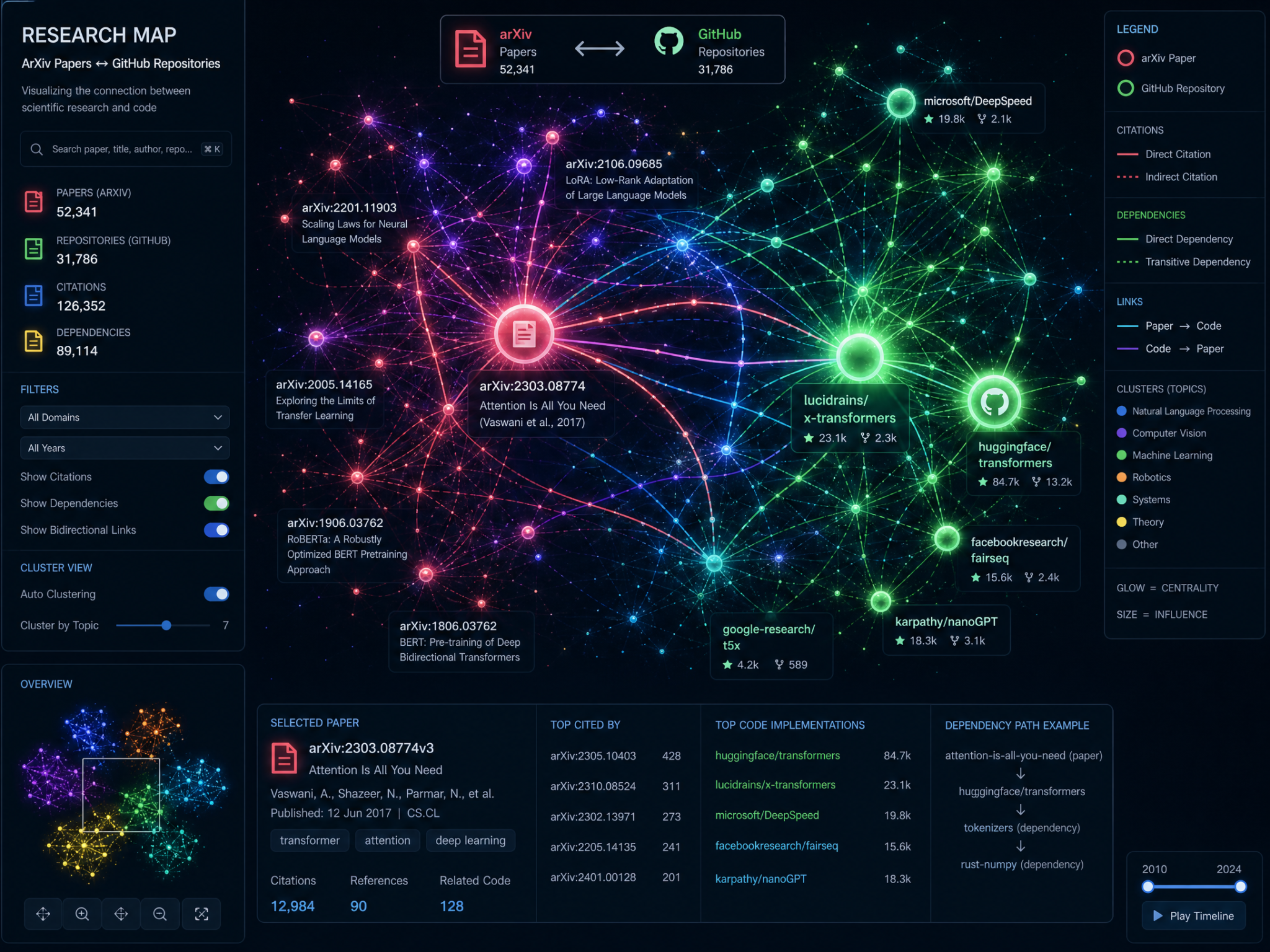
The Valyu Codex is the research substrate that stores your high-value corpora, structured facts, entity relationships, and research primitives. Think of it as the living memory of your organization’s inquiries, with schemas that support both narrative and analytical needs. Unlike a flat document repository, the Codex unifies three perspectives:
- Document-centric: Source files, pages, paragraphs, tables, figures, extracted fields.
- Entity-centric: Organizations, people, products, places, events, and the relationships among them.
- Claim-centric: Verifiable statements with provenance, evidence, and counterevidence.
The Codex is model-agnostic: it supports different LLMs, embeddings, and graph engines. It also retains lineage so you can reproduce findings or backtest methods later. Where necessary, it can store sensitive or regulated data under strict controls.
What is Valyu MCP?
Valyu MCP is the modular connectivity protocol and runtime that standardizes how AI systems access, transform, and act on external data and tools. It abstracts differences among APIs, databases, filesystems, and SaaS platforms by presenting:
- Connectors: Typed adapters for data systems (e.g., HTTP sources, SQL/NoSQL, S3, SharePoint, Google Drive, internal APIs, document stores).
- Tools: Side-effecting capabilities for actions (e.g., schedule queries, fetch PDFs, transcode media, run web scrapers, launch compute jobs).
- Schemas: Shared contracts for inputs/outputs, pagination, rate limits, error surfaces.
- Policies: Access enforcement, logging, and redaction at the interface boundary.
The Valyu MCP allows LLMs and agents to request data or perform tasks via a safe, auditable junction. It can expose read-only or read-write tools depending on your governance model and permission tiers. It is the bridge between the Codex and the world: harvesting evidence in, exporting insights out.
Why combine Codex + MCP?
Deep research AI thrives when evidence can be discovered, interpreted, and retained across cycles. The Codex holds what you’ve learned in a structured, queryable form; the Valyu MCP ensures that your research remains connected to live, authoritative sources. Together they:
- Accelerate discovery by letting agents pull from multiple systems in one query plan.
- Improve reliability by enforcing policies and normalizing inputs across connectors.
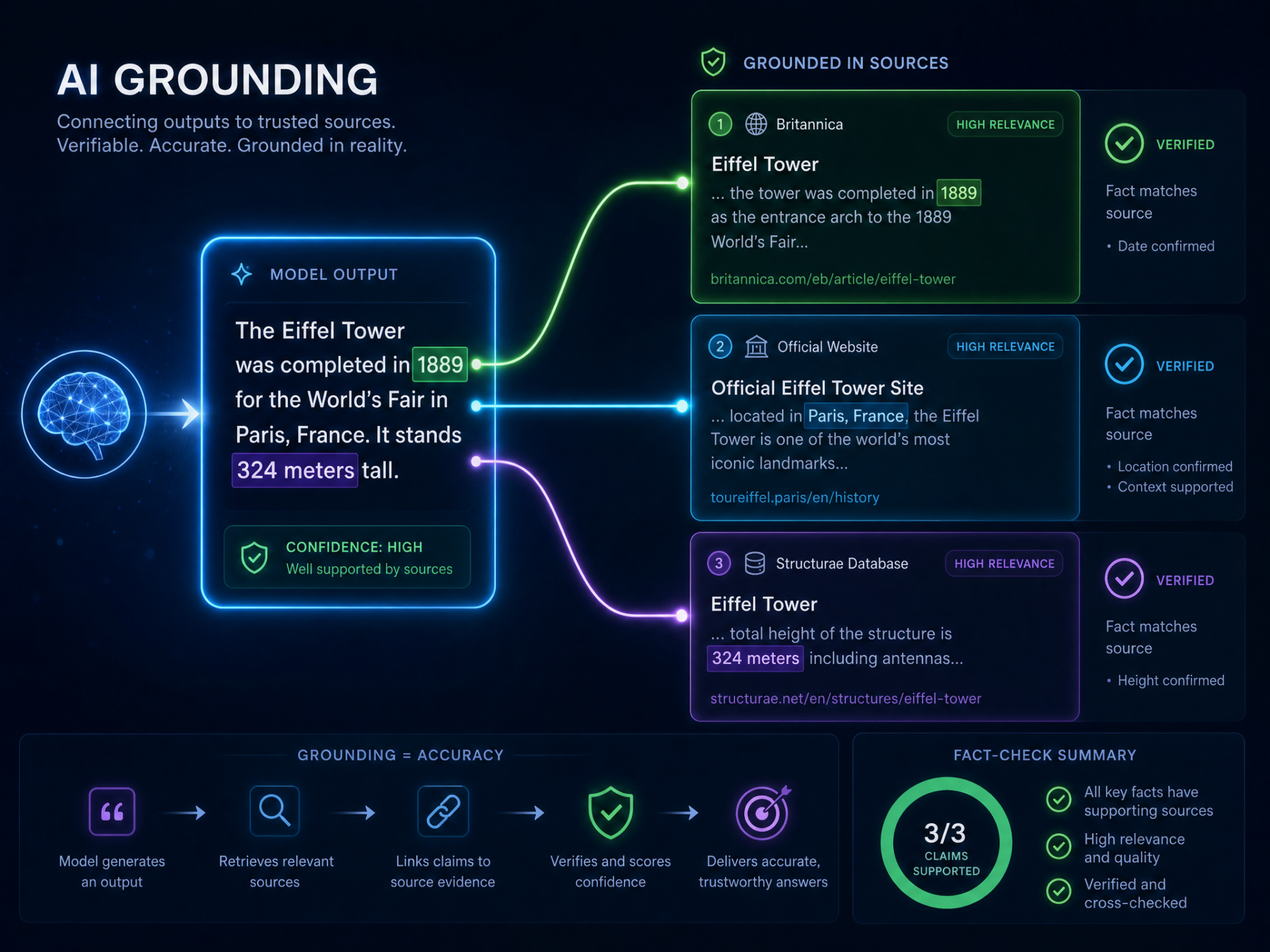
- Enable verification by aligning claims with citations and traceable provenance.
- Scale cost-effectively by caching stable results and streaming deltas when sources update.
When implementing these advanced strategies, it is often helpful to reference our deeper analysis on deep research AI, which explores the technical nuances of How to Migrate Your Workflow from Claude Cowork to ChatGPT Work: A Step-by-Step Developer Guide in the context of modern AI workflows.
Guiding Principles for Deep Research AI
Building trustworthy research systems is not just about accuracy; it is also about reliability, transparency, and usability. The following principles encode what has proven to work in production:
- Evidence first: Prefer source-grounded outputs with citations over speculative synthesis.
- Provenance everywhere: Track origin, transformation, and assumptions at every step.
- Plan before act: Use planners to map multi-step research tasks, then execute deterministically.
- Retrieval humility: Always show what you found and what you did not find; avoid overstating certainty.
- Verify twice: Use automated checks and human review for high-stakes claims.
- Policy by default: Enforce access, redaction, and retention at the MCP boundary.
- Measure continuously: Evaluate retrieval quality, synthesis quality, and runtime SLOs.
- Optimize end-to-end: Latency, throughput, and cost must be balanced with quality.
- Human-centered: Analysts should guide, override, annotate, and teach the system.
- Composability: Favor modular connectors, tools, and templates to evolve safely.
Reference Architecture
The reference architecture organizes the system into layers that can evolve independently:
- Experience: Analyst UI, notebooks, API endpoints for programmatic use, report templates.
- Orchestration: Task planner, agent runtime, state machine, guardrails.
- Retrieval & Reasoning: Query planners, hybrid RAG, re-rankers, multi-hop retrievers.
- Knowledge Substrate: Codex documents, entity graph, claims database, embeddings store.
- Connectivity: Valyu MCP connectors, tools, policies, logging, rate-limiters.
- Data Plane: External APIs, internal data warehouses, file stores, web sources.
- Ops: Observability, cost accounting, governance, secrets, CI/CD for connectors, evaluation harness.
Data flows inward from real-world systems via Valyu MCP; gets cleaned, normalized, and enriched into the Codex; becomes queryable by retrieval components; and is synthesized into human-readable outputs with citations and confidence. Feedback loops and evaluation close the quality gap over time.
Core services
- Planner: Produces a stepwise research plan with tool calls and success criteria.
- Retriever: Executes hybrid search (BM25 + dense + graph traversals) and re-ranking.
- Synthesizer: Produces drafts with structured sections, inline citations, and tables.
- Verifier: Runs fact checks, contradiction detection, and citation coverage scoring.
- Governor: Enforces access and redaction; sandboxing for side-effecting tools.
- Observer: Telemetry, tracing, cost metrics, data quality dashboards.
Valyu MCP Connectors: Reaching Real-World Data
Connectors transform varied systems into a uniform interface. Each connector adheres to:
- Schema contract: Inputs, outputs, pagination, filter semantics, rate policy.
- Authentication: OAuth, API keys, service accounts, signed URLs.
- Security posture: Least privilege, scoped tokens, network segmentation, audit logs.
- Resilience: Retries, backoff, partial results, idempotency keys.
- Observability: Request/response sampling, redacted logging, circuit breakers.
Connector categories
- Web/HTTP: News APIs, regulatory filings, standards bodies, open data portals, vendor docs.
- Structured: Data warehouses (e.g., SQL), NoSQL stores, knowledge bases.
- Unstructured: S3 buckets, document repositories, email archives, collaboration suites.
- Realtime: Pub/Sub topics, event streams, webhook ingress.
- Specialized: Geospatial services, scientific databases, patent search, code hosts.
Designing a robust HTTP source connector
{
  "name": "http_source",
  "version": "1.2.0",
  "auth": { "type": "oauth2", "scopes": ["read:content"] },
  "operations": {
    "fetch": {
      "method": "GET",
      "path": "/search",
      "params": {
        "q": "string",
        "from": "datetime",
        "to": "datetime",
        "page": "int",
        "page_size": "int"
      },
      "rate_limits": { "rps": 5, "burst": 10 },
      "errors": ["429", "5xx"],
      "observability": { "trace": true, "sample": 0.1 }
    }
  },
  "policy": {
    "redactions": ["api_key", "Authorization"],
    "pii_detection": true,
    "allowed_domains": ["api.example.com"]
  }
}
Connector lifecycle
- Specification: Define the schema, auth, and limits; align with Codex ingestion formats.
- Implementation: Build and test under Valyu MCP SDKs; simulate adverse conditions.
- Validation: Contract tests, replay tests, compliance sign-off.
- Deployment: Versioned release with rollback; register in the MCP catalog.
- Maintenance: Monitor health, update when upstream changes; sunset policy.
When implementing these advanced strategies, it is often helpful to reference our deeper analysis on Connector Health Dashboard, which explores the technical nuances of How to Migrate Your Workflow from Claude Cowork to ChatGPT Work: A Step-by-Step Developer Guide in the context of modern AI workflows.
Ingestion and Normalization
Ingestion transforms raw data into Codex-ready artifacts. Key phases:
- Acquisition: Pull via Valyu MCP, respecting rate and access policies.
- Parsing: Extract text, tables, metadata from PDFs, HTML, Office docs, images/audio (OCR/ASR).
- Normalization: Standardize fields (dates, IDs, currencies), deduplicate, detect language.
- Enrichment: NER, entity linking, sectioning, topic tags, quality scoring.
- Partitioning: Chunk documents with structure-aware strategies; build embeddings.
- Storage: Commit to Codex doc store and entity graph with provenance.
Structure-aware chunking
Avoid naive fixed-size chunks. Use sections, headings, figure captions, list boundaries, and table extents. Preserve source page numbers and anchors for precise citations.
Sample ingestion pipeline (Python-like pseudo)
def ingest_document(blob):
    meta = extract_metadata(blob)
    text, tables = parse_document(blob)  # pdf, html, docx
    sections = sectionize(text)          # detect headings, TOC
    chunks = structure_aware_chunk(sections, max_tokens=700)
    entities = link_entities(chunks)     # NER + entity linking
    embeds = embed(chunks)               # multiple models
    doc_id = store_doc(meta, sections, tables, provenance=blob.source)
    for i, chunk in enumerate(chunks):
        store_chunk(doc_id, i, chunk, embeds[i], entities[i], provenance=chunk.provenance)
    update_entity_graph(entities, doc_id)
    return doc_id
Data quality gates
- Minimum text density per page, junk filtering, language whitelist.
- OCR confidence threshold; route low confidence to reprocessing.
- Duplicate detection via shingling/LSH and canonical URL checks.
- PII/secret scanning; redact or quarantine according to policy.
When implementing these advanced strategies, it is often helpful to reference our deeper analysis on Codex Ingestion Spec, which explores the technical nuances of How to Migrate Your Workflow from Claude Cowork to ChatGPT Work: A Step-by-Step Developer Guide in the context of modern AI workflows.
Knowledge Representation in the Codex
Your representation choices shape retrieval and synthesis quality. The Codex supports a composite approach:
- Document store: Versioned documents, sections, paragraphs, tables, figures.
- Embeddings index: Multi-model embeddings per chunk, cross-encoder re-rankers.
- Entity graph: Nodes for entities and claims; edges for relationships and provenance.
- Claims registry: Atomic statements with evidence links and verification status.
- Notebook memory: Research notes, tasks, and rationales (non-sensitive) tied to artifacts.
Entity and claim schema (conceptual)
Entity {
  id: string,
  type: enum { Organization, Person, Product, Place, Event, Concept },
  names: [string],
  identifiers: { isin?, cusip?, lei?, orcid?, grid?, custom? },
  attrs: map<string, any>,
  provenance: [SourceRef],
  last_updated: timestamp
}

Claim {
  id: string,
  subject_entity: EntityRef,
  predicate: string,         // e.g., "acquired", "revenue", "launched"
  object: any,               // entity ref or literal
  qualifiers: map<string, any>,
  evidence: [EvidenceRef],   // links to doc chunks/tables/images
  confidence: float,
  status: enum { proposed, verified, disputed, retracted },
  verifier: { automated: bool, human: UserRef? },
  timestamps: { asserted, verified? }
}
This structure supports both question answering and report generation with traceability. You can render claims as sentences with inline citations that resolve to document anchors.
Embedding strategy
- Use multiple embedding models for robustness; store per-chunk vectors with model tags.
- Calibrate cosine thresholds per domain; add cross-encoder re-ranking for top-100 candidates.
- Index tables and figures separately with layout-aware features; don’t ignore numerics.
When implementing these advanced strategies, it is often helpful to reference our deeper analysis on deep research AI, which explores the technical nuances of How to Migrate Your Workflow from Claude Cowork to ChatGPT Work: A Step-by-Step Developer Guide in the context of modern AI workflows.
Retrieval Patterns for Deep Research
Retrieval is the heartbeat of deep research AI. Reliable synthesis depends on robust, multi-faceted retrieval. Recommended patterns:
Hybrid retrieval
- Keyword/BM25: High-precision lexical matches; strong for exact terms and citations.
- Dense embeddings: Semantic similarity; catch paraphrases and broader context.
- Graph traversals: Follow entity relations to discover proximate evidence.
- Structured queries: SQL/analytics for numeric evidence; filter by time and entity.
Multi-hop research
Many questions demand bridging steps (A → B → C). Use a query planner to sequence hops:
- Disambiguate entities (resolve “ACME” to the correct organization).
- Gather primary sources (filings, standards, official statements).
- Collect secondary sources (analyst notes, reputable media, reviews).
- Extract claims, compare across sources, reconcile inconsistencies.
Fusion and re-ranking
Combine disparate retrieval signals using reciprocal rank fusion or learned fusion. Then re-rank with a cross-encoder trained on your domain. Add coverage diversification to avoid near-duplicates.
Retrieval contract (pseudocode)
Retrieve(query, k, constraints) -> {
  intent: { entities, time_window, modalities },
  candidates: [ {source, chunk_id, score, modality, route} ],
  fused: [top_k],
  diagnostics: { hops, filters, missed_entities }
}
Provide diagnostics for transparency and debuggability. A failed retrieval with a clear reason is better than a confident but unfounded answer.
When to avoid retrieval
- When the question is purely computational (e.g., “sum of…”) and data already resides in the Codex.
- When stable, curated facts are cached and versioned (e.g., standardized identifiers).
When implementing these advanced strategies, it is often helpful to reference our deeper analysis on Valyu MCP, which explores the technical nuances of How to Migrate Your Workflow from Claude Cowork to ChatGPT Work: A Step-by-Step Developer Guide in the context of modern AI workflows.
Orchestration and Agent Patterns
Orchestration is how you break complex research into deterministic steps rather than hoping a single LLM call will do everything. Options:
- Finite-state machines: Predetermined steps with guarded transitions. Great for compliance-heavy workflows.
- Plan-and-execute: LLM proposes a plan, then executes steps, revising based on tool feedback.
- Multi-agent: Specialists for retrieval, analytics, and red-teaming collaborate via a controller.
State machine example
states:
  - IdentifyEntities
  - RetrievePrimary
  - RetrieveSecondary
  - ExtractClaims
  - SynthesizeDraft
  - Verify
  - HumanReview
transitions:
  IdentifyEntities -> RetrievePrimary [if entities_resolved]
  RetrievePrimary -> RetrieveSecondary [if coverage < threshold]
  RetrievePrimary -> ExtractClaims    [if coverage ≥ threshold]
  ExtractClaims -> SynthesizeDraft
  SynthesizeDraft -> Verify
  Verify -> HumanReview [if high_risk or low_confidence]
Tool use via Valyu MCP
- Read-only tools for search, fetch, and list operations.
- Side-effecting tools behind policy gates (e.g., data writes, job launches).
- Streaming tools for long-running analytics with progress events.
Keep agent memory minimal and externalize long-lived state into the Codex or a research notebook. This reduces prompt bloat and improves reproducibility.
Synthesis and Reporting
Synthesis is where retrieval transforms into insight. The output should be structured, sourced, and inspectable. Target formats:
- Research briefs: 1–2 pages with key findings, citations, and a summary table.
- Deep reports: Multi-section documents, figures, and appendices with methods.
- Executive memos: One-page narrative with bullets and a risk/assumption box.
- Datasheets: Claim tables with provenance and verification status.
Report skeleton template
{
  "title": "Topic — Scope — Date",
  "summary": "3-5 sentence overview with 2-3 citations.",
  "key_findings": [ { "statement": "...", "citations": ["doc:123#p4", "doc:456#t2"] } ],
  "body": [
    { "section": "Background", "content": "...", "citations": [] },
    { "section": "Findings", "subsections": [...] },
    { "section": "Risks & Assumptions", "content": "..." }
  ],
  "claim_table": [
    { "claim_id": "C-001", "status": "verified", "confidence": 0.86, "evidence": ["doc:..."] }
  ],
  "appendix": { "methods": "...", "retrieval_diagnostics": "..." }
}
Citation discipline
- Inline citations per paragraph or per claim; resolve to stable anchors.
- Preferred sources: primary over secondary; authoritative bodies first.
- Capture page, section, figure, or table IDs for precise verification.
From chunks to claims
While synthesis can quote or paraphrase, the Codex should also extract atomic claims. This lets you build a durable knowledge base and avoid recomputing facts every time.
When implementing these advanced strategies, it is often helpful to reference our deeper analysis on deep research AI, which explores the technical nuances of How to Migrate Your Workflow from Claude Cowork to ChatGPT Work: A Step-by-Step Developer Guide in the context of modern AI workflows.
Verification and the Anti-Hallucination Loop
Verification is non-negotiable. Your research system must prefer “I don’t know” to unsupported assertions. Build a layered verification stack:
Automated checks
- Evidence coverage: Every claim in high-stakes sections must have citations.
- Citation resolution: Do links resolve to the right anchors? Are they contextually relevant?
- Contradiction scan: Do sources conflict? Flag for human review with side-by-side excerpts.
- Numerical validation: Recompute sums/ratios from tables; detect unit mismatches.
- Date/entity sanity: Are timeframes plausible? Are entities correctly disambiguated?
Human-in-the-loop
For policy-critical outputs, a human verifier should approve claims, annotate caveats, and optionally provide reviewer notes stored in the Codex. Build a UI that supports:
- Inline evidence preview (highlighted excerpts).
- Side-by-side source comparison.
- Confidence override with rationale.
- Dispute/resolution workflow.
Verification contract
Verify(report) -> {
  results: [
    { claim_id, status, confidence, issues: [ {type, severity, details} ] }
  ],
  coverage: { cited_claims: n, total_claims: m, pct: n/m },
  contradictions: [ { claim_id, sources: [A,B], notes } ],
  recommended_actions: [...]
}
Finally, route unresolved contradictions to analysts with SLAs. Document decisions; this becomes future training data for the system and for onboarding new team members.
Evaluation: Quality You Can Measure
Evaluate three layers: retrieval, reasoning, and reporting.
Retrieval metrics
- Precision@k, Recall@k, nDCG: Based on labeled relevance judgements.
- Coverage: Percent of key facts retrievable from your corpus.
- Latency and cost per query: Percentiles and outliers.
Reasoning metrics
- Claim correctness: Human or automated checks vs. ground truth.
- Numerical consistency: Recomputed figures match stated claims.
- Chain completeness: Multi-hop tasks complete all required steps.
Reporting metrics
- Citation density and coverage: Per section and overall.
- Readability: Length, structure adherence, section completeness.
- User trust score: Post-review ratings and acceptance rate.
Evaluation harness
Benchmark {
  id: "market-landscape-v1",
  tasks: [
    { query: "Summarize top 5 vendors in X", gold_docs: [...], gold_claims: [...] },
    ...
  ],
  metrics: [ "P@10", "nDCG@20", "ClaimCorrectness", "CitationCoverage" ],
  protocols: { blind_review: true, inter_annotator: 0.7+ }
}
Regularly run benchmarks with fresh data, track regressions, and set “quality budgets” similar to cost budgets. Tie deployment gates to evaluation thresholds.
When implementing these advanced strategies, it is often helpful to reference our deeper analysis on Evaluation Harness, which explores the technical nuances of How to Migrate Your Workflow from Claude Cowork to ChatGPT Work: A Step-by-Step Developer Guide in the context of modern AI workflows.
Security, Privacy, and Governance
Governance must be built-in, not bolted on. The Valyu MCP is the enforcement point.
Data access tiers
- Public: Open web and licensed content with permissive reuse.
- Internal-confidential: Org documents with restricted sharing.
- Restricted/regulated: PII, financials, health data—extra safeguards.
Policy enforcement
- Attribute-based access control (ABAC) at MCP call time.
- PII detection with redaction/masking; differential logging.
- Data residency and retention policies; encryption at rest and in transit.
- Side-effect guards for write tools; pre-commit hooks and approvals.
Provenance & audit
Log each connector call with redacted parameters, timestamps, and result hashes. Record data lineage from source to Codex artifact to report claim. Provide auditors with a read-only timeline view.
Model safety
- Input sanitization and output filtering, especially for tool use.
- Prompt hardening and policy reminders in system messages.
- Rate and budget caps per user and per session to limit blast radius.
When implementing these advanced strategies, it is often helpful to reference our deeper analysis on Valyu MCP, which explores the technical nuances of How to Migrate Your Workflow from Claude Cowork to ChatGPT Work: A Step-by-Step Developer Guide in the context of modern AI workflows.
Observability and Cost Management
Observability provides the eyes and ears of your platform. Track:
- Trace spans across planner, retriever, synthesizer, verifier, and connectors.
- Token counts per step; time per connector call; error rates and retries.
- Cache hits/misses and cold-start latencies.
- Per-user and per-project cost budgets; alert on anomalies.
Trace schema excerpt
Span {
  id, parent_id, name,
  tags: { query_id, user_id, connector_name, doc_id?, claim_id? },
  timings: { start, end },
  cost: { tokens_in, tokens_out, dollars },
  status: enum { ok, error, timeout }
}
Cost levers
- Retriever config: Reduce top-k or add smarter filters.
- Compression: Summarize context windows without losing citations.
- Caching: Memoize stable computations and canonical facts.
- Adaptive routing: Use smaller models for preliminary steps; escalate when needed.
Dashboards should show quality vs. cost so teams can make informed tradeoffs.
Caching, Memory, and Research Notebooks
Effective caching can reduce cost and latency by orders of magnitude:
- Source cache: HTTP responses hashed by URL + params + auth scope.
- Embedding cache: Deterministic function of text + model signature.
- Retrieval cache: Query fingerprint + constraints → top-k IDs with TTLs.
- Claim cache: Stable atomic facts stored in the Codex claims registry.
Research notebook memory
Store analyst notes and decision logs externally from prompts. This ensures reproducibility and supports team collaboration. Notes should be linked to entities, claims, and document anchors.
Cache invalidation strategies
- Time-based TTL for volatile sources; event-based invalidation for known updates.
- Semantic diff for scraped pages; recrawl on content hash change.
- Versioned embeddings on model updates; backfill gradually to control spend.
Prompting Patterns for Deep Research
Prompts should be precise about roles, constraints, and citation requirements. Use system prompts to enforce must-dos, and keep user prompts focused on tasks. Provide tool descriptions with examples, and encode policy reminders.
Minimal planner system prompt (excerpt)
You are a research planner for deep research AI.
- Produce a stepwise plan that uses Valyu MCP tools for retrieval.
- Prefer primary sources; record assumptions; avoid unsupported claims.
- Every step must define success criteria and a stop condition.
- Return JSON with fields: steps[], risks[], policy_flags[].
Synthesizer directive (excerpt)
You are a research synthesizer.
- Use only the provided context and retrieved evidence.
- Cite all non-background claims with anchors (doc_id#anchor).
- Flag contradictions and unresolved gaps in a Risks & Assumptions section.
- If evidence is insufficient, say "insufficient evidence" and request more retrieval.
Verifier directive (excerpt)
You are a verifier.
- For each claim, check evidence anchors for relevance and sufficiency.
- Recompute numeric claims when possible.
- Assign a confidence score in [0,1] and a status: verified, disputed, or insufficient.
- Produce a structured JSON verification report.
Keep prompts modular and versioned. Treat them like code with tests and reviews.
End-to-End Example: Market Landscape Brief
Scenario: An analyst needs a current market landscape brief for “Edge AI accelerators for robotics.” The brief should list top vendors, capabilities, benchmarks, and notable deployments, with citations from the last 12 months.
Plan
- Entity resolution: Identify vendors and products (Codex graph + web sources via Valyu MCP).
- Primary sources: Vendor datasheets, press releases, standards/specs, benchmark results.
- Secondary sources: Analyst reports, reputable tech media, conference proceedings.
- Extraction: Features, performance metrics, form factors, power envelopes.
- Synthesis: Summary with vendor comparison table and citations.
- Verification: Recompute metrics, check date windows, deduplicate marketing claims.
Execution (pseudo)
# 1) Entities
entities = resolve_entities("edge ai accelerator robotics", sources=["codex", "web"])

# 2) Primary retrieval
docs1 = mcp.http_source.fetch(q="vendor datasheet accelerator robotics", from=t-12m)
docs2 = mcp.files.search(bucket="briefs", prefix="benchmarks/2025")

# 3) Secondary retrieval
docs3 = mcp.news.search(q="edge ai robotics accelerator", from=t-12m, credibility="high")

# 4) Ingest + chunk + embed
for d in [docs1, docs2, docs3]: ingest_document(d)

# 5) Query retrieval (hybrid)
hits = retrieve("edge accelerator robotics power TOPS benchmarks", k=50, constraints={time:12m})

# 6) Re-rank & diversify
top = rerank_diversify(hits, target=20)

# 7) Extract candidate claims
claims = extract_claims(top)

# 8) Build comparison table
table = synthesize_table(claims, columns=["Vendor","Product","TOPS","W","TOPS/W","Notes","Citations"])

# 9) Draft report
report = synthesize_report(topic, table, claims, citations=top.anchors)

# 10) Verify
v = verify(report)
if v.coverage < 0.9 or any_disputed(v): escalate_to_human(report, v)
Output snapshot
The resulting brief includes a 300-word summary, a vendor comparison table with per-row citations, and a Risks & Assumptions section. The verification log shows 94% citation coverage, 2 disputed claims flagged for human follow-up, and a total token spend within budget.
When implementing these advanced strategies, it is often helpful to reference our deeper analysis on Valyu MCP, which explores the technical nuances of How to Migrate Your Workflow from Claude Cowork to ChatGPT Work: A Step-by-Step Developer Guide in the context of modern AI workflows.
Scaling and Performance Engineering
Deep research workloads are bursty and heterogeneous. Engineer for elasticity and fairness:
- Shard embeddings and indexes across projects; co-locate with compute to reduce latency.
- Use asynchronous pipelines and backpressure when crawling or parsing.
- Batch embedding jobs and schedule off-peak; prioritize interactive retrieval latency.
- Adopt circuit breakers around flaky sources; auto-degrade gracefully.
Model routing
- Use smaller models for expansion, classification, and candidate generation.
- Reserve stronger models for synthesis and contradiction resolution.
- Exploit distillation: train re-rankers and verifiers on your domain data.
Index maintenance
- Version embeddings; update incrementally to avoid full rebuilds.
- Run periodic quality audits; deprecate noisy sources.
- Precompute entity neighborhoods for graph-based multi-hop retrieval.
Team Workflow and Human Collaboration
Technology succeeds when people can use it effectively. Establish clear roles:
- Connector engineers: Build and maintain Valyu MCP connectors with SLOs.
- Data curators: Manage source whitelists, taxonomies, and cleaning rules.
- ML engineers: Tune retrieval, re-rankers, and verifiers; own evaluation harness.
- Analysts/researchers: Drive questions, supervise synthesis, and approve high-stakes outputs.
- Compliance/security: Approve policies, review audits, and handle escalations.
Rituals
- Weekly quality review: Sample reports, check verification logs, discuss regressions.
- Connector health check: Track failures, latencies, source changes.
- Source council: Approve new sources; retire misleading or low-signal feeds.
- Postmortems: For major hallucinations or policy breaches; improve prompts and checks.
Documentation
Maintain living docs for connectors, prompts, report templates, and evaluation results. Link them in the Codex so analysts see context in-line.
When implementing these advanced strategies, it is often helpful to reference our deeper analysis on deep research AI, which explores the technical nuances of How to Migrate Your Workflow from Claude Cowork to ChatGPT Work: A Step-by-Step Developer Guide in the context of modern AI workflows.
Roadmap and Future Directions
As the field matures, expect more real-time, multimodal, and automated research. Areas to invest:
- Streaming MCP: Incremental updates from live sources; push-based deltas into the Codex.
- Multimodal retrieval: Images, charts, audio transcripts with cross-modal linking.
- Domain-specific verifiers: Finite checkers for finance, legal, scientific claims.
- Active learning loops: Use verification outcomes to improve retrievers and prompts.
- Collaborative notebooks: Multi-user, branch/merge semantics with review flows.
Embed this roadmap in quarterly planning with dedicated OKRs and owner assignments.
When implementing these advanced strategies, it is often helpful to reference our deeper analysis on Valyu MCP, which explores the technical nuances of How to Migrate Your Workflow from Claude Cowork to ChatGPT Work: A Step-by-Step Developer Guide in the context of modern AI workflows.
Glossary
- Valyu MCP: Connectivity protocol/runtime for tools and data access with policies and observability.
- Codex: The organizational research substrate—documents, graph, claims, and research memory.
- deep research AI: Systems that plan, retrieve, verify, and synthesize with provenance and governance.
- RAG: Retrieval-Augmented Generation; enhancing LLM outputs with retrieved context.
- Cross-encoder: A model that re-ranks candidates by scoring pairs (query, candidate) jointly.
- Claims registry: Structured store of verifiable statements with evidence and status.
- Provenance: Information about origin and transformation of data and outputs.
Implementation Checklist
- Valyu MCP deployed with at least five priority connectors; policies and SLOs defined.
- Ingestion pipeline with structure-aware chunking, NER/linking, and embedding cache.
- Codex stores: documents, embeddings, entity graph, claims registry operational.
- Hybrid retrieval path with re-ranking and diversification; diagnostics exposed.
- Planner + synthesizer + verifier orchestrated; human review UI wired in.
- Evaluation harness with baseline metrics and alerting on regressions.
- Observability dashboards: traces, errors, costs, cache stats, connector health.
- Governance artifacts: ABAC, redaction, audit logs; incident runbook.
- Templates: prompts, report skeletons, verification contracts versioned in repo.
- Pilot project: one end-to-end report with verified claims and stakeholder sign-off.
FAQs
How does Valyu MCP differ from a typical API gateway?
Traditional gateways focus on routing and auth. Valyu MCP adds typed tool semantics, research-focused policies, observability tailored to AI workloads, and contracts designed for retrieval and synthesis, making it ideal for deep research AI.
Do we need a knowledge graph to start?
No. Begin with document and embedding stores. Introduce entity linking and claims gradually. However, a lightweight graph accelerates multi-hop retrieval and verification.
How do we prevent hallucinations?
Enforce citation requirements, use verification layers, prefer primary sources, and allow “I don’t know.” Track citation coverage as a core metric. Limit free-form synthesis without retrieved context.
What if sources disagree?
Flag contradictions, present evidence side-by-side, and annotate resolution. Prefer authoritative, more recent, and more direct sources. Document rationale in the Codex.
How do we control costs?
Cache aggressively, route models adaptively, reduce top-k with better filters, and compress context windows. Set per-project budgets with alerts. Measure cost per verified claim to guide optimization.
Can we integrate our BI warehouse?
Yes. Use a Valyu MCP SQL connector. Expose parameterized queries and warehouse views with read-only credentials. Synthesize narratives from query results with citation anchors linking to query IDs and timestamps.
When implementing these advanced strategies, it is often helpful to reference our deeper analysis on deep research AI, which explores the technical nuances of How to Migrate Your Workflow from Claude Cowork to ChatGPT Work: A Step-by-Step Developer Guide in the context of modern AI workflows.
Conclusion
Deep research AI is the practical convergence of retrieval, reasoning, and governance. By pairing the Valyu Codex with Valyu MCP, you can connect your institutional memory to the world safely and effectively. The architecture and practices in this playbook will help your team deliver research that is faster, broader, and more trustworthy—complete with citations, verification, and reproducibility.
Start with one use case, instrument thoroughly, and iterate. Your analysts will thank you, your stakeholders will trust the results, and your organization will compound knowledge, not just accumulate documents.
Next steps: Stand up the core connectors, build the ingestion pipeline, and ship your first verified brief within 30 days. Use the checklist above to stay on track.
