
35 ChatGPT-5.6 Work Prompts for Enterprise Automation Connectors
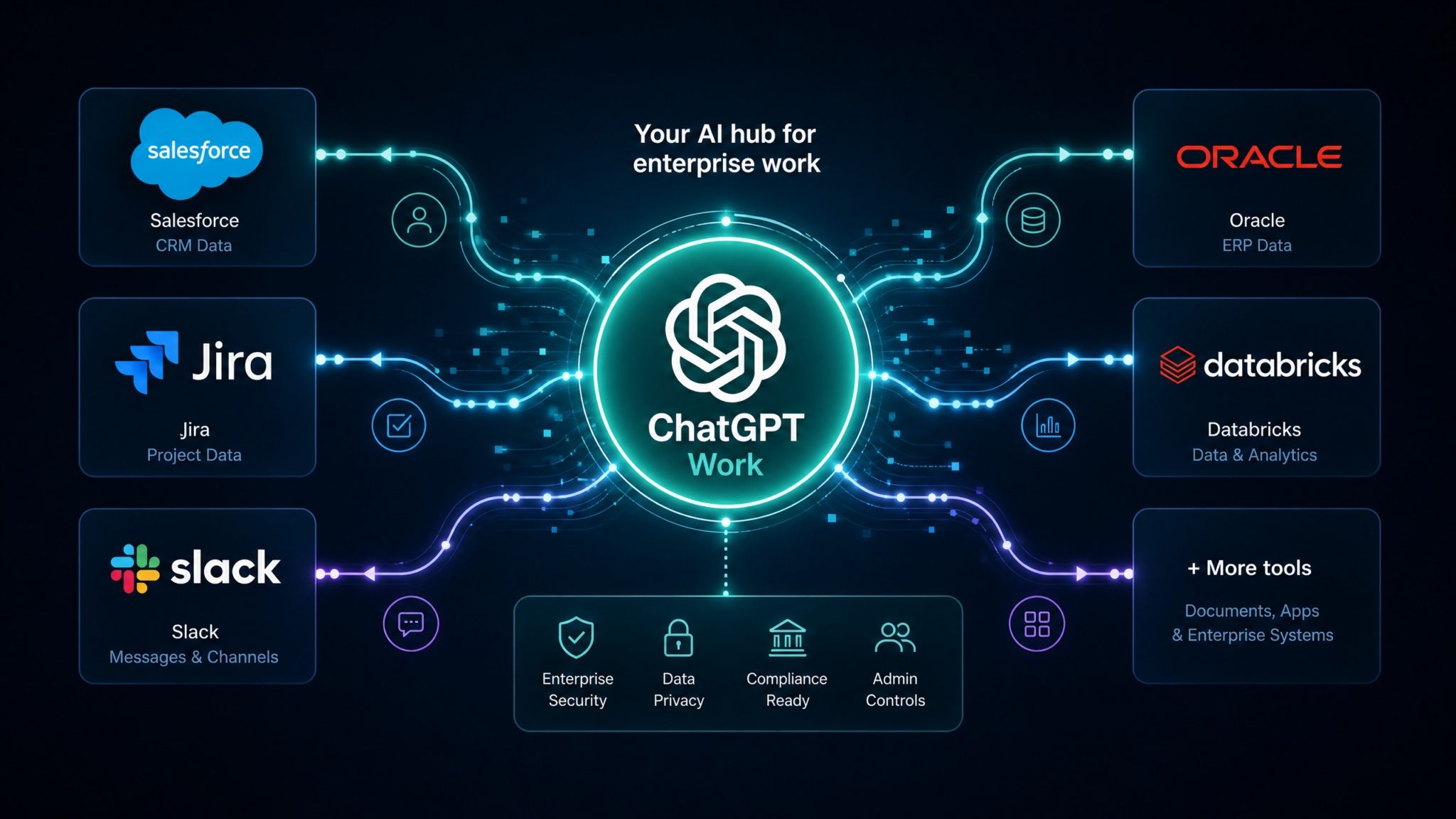
This article delivers 35 copy-ready ChatGPT Work prompts engineered for enterprise automation connectors. Use them to accelerate discovery, design, security, testing, deployment, and operations across systems like Salesforce, SAP, ServiceNow, Workday, Jira, Snowflake, Databricks, Okta, Slack/Teams, GitHub/Azure DevOps, Kafka, Mulesoft, Boomi, and more. Each prompt is structured for safe and deterministic use in large organizations and optimized for the needs of enterprise AI connectors at scale.
TL;DR
-
– 35 field-tested ChatGPT-5.6 Work prompts purpose-built for enterprise AI connectors, structured with roles, constraints, variables, and acceptance criteria.
– Covers the end-to-end lifecycle: discovery, scoping, mapping, build, testing, operations, security, compliance, and governance.
– Includes patterns for event-driven, batch, and real-time connectors with strong guardrails for secrets, PII, rate limiting, SLAs, and auditability.
– Plug in your stack and vendor constraints using the {{ variables }} in each prompt; the outputs are ready-to-review artifacts for teams.
– Use Prompt Engineering Foundations, Security and Compliance, and Connector Observability to integrate the prompts into your internal standards.
Why ChatGPT Work Prompts for Enterprise Automation Connectors
Modern enterprises run on a web of SaaS, PaaS, and on-prem systems. Connecting them reliably, securely, and observably is both a technical and an organizational challenge. AI can lower the coordination cost—codifying standards, generating consistent artifacts, and validating compliance—if we use carefully engineered prompts that produce predictable, reviewable outcomes. That’s exactly what this guide offers: ChatGPT Work prompts that are composable, auditable, and aligned with enterprise controls.
Whether you’re building low-latency real-time APIs, resilient event-driven pipelines, or nightly batch syncs, the prompts below help you accelerate analysis, design, code-generation stubs, test coverage, runbooks, and governance records. They integrate neatly with existing iPaaS tooling (MuleSoft, Boomi), workflow engines (Airflow, Argo), automation (Power Automate), and DevOps pipelines (GitHub Actions, Jenkins), all while respecting security posture and operational maturity.
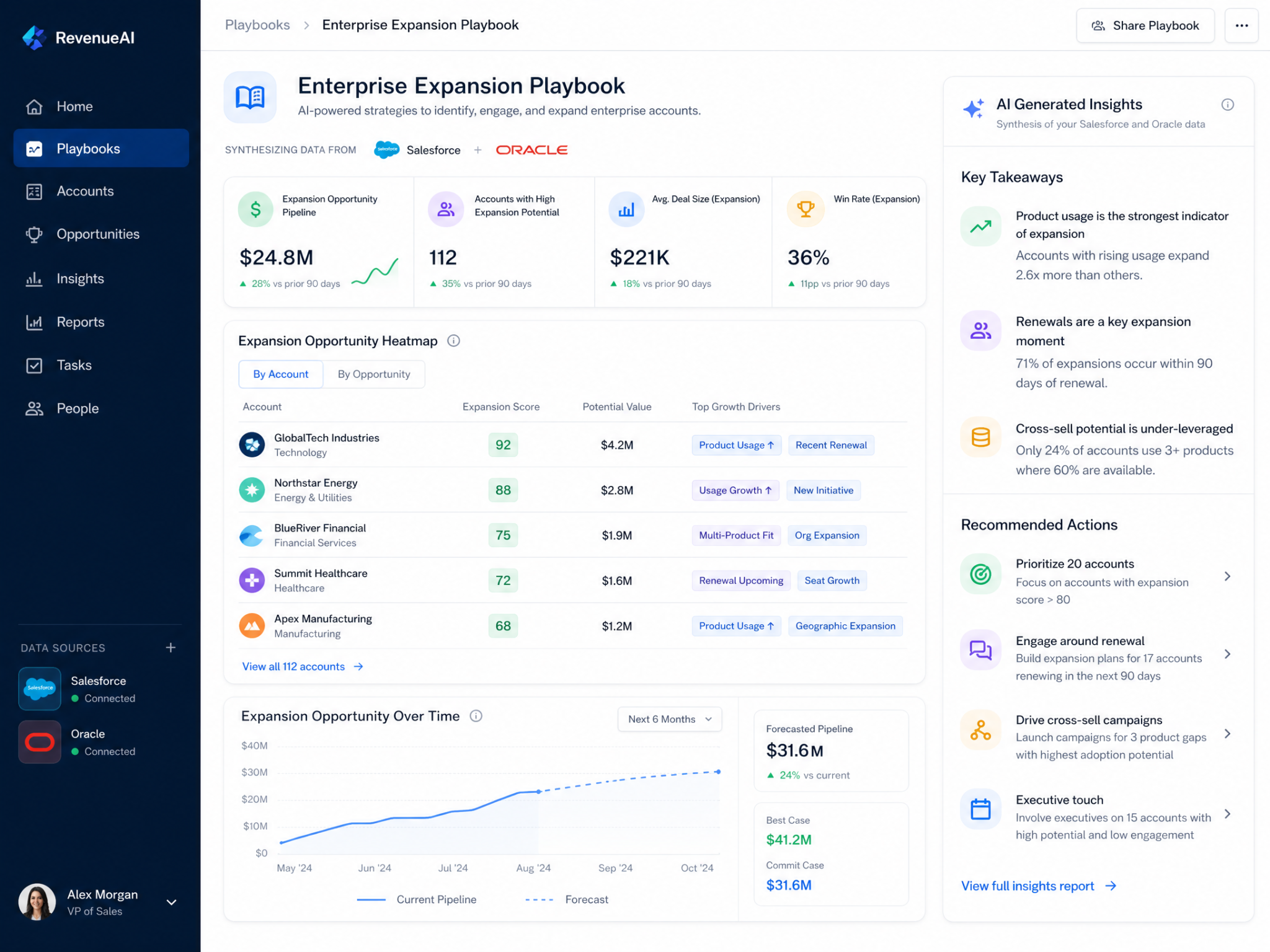
Reference Architecture for Enterprise AI Connectors
-
– Sources and Sinks: SaaS (Salesforce, ServiceNow), Data (Snowflake), Messaging (Kafka), On-prem (SAP).
– Control Plane: Catalog, policy-as-code (OPA), secrets (Vault), identity (Okta, Entra ID).
– Data Plane: Connectors (SDK/iPaaS), transformation (dbt/Spark), transport (HTTP/gRPC/Kafka).
– AI Assistance: Prompt library (this guide), retrieval/caching, deterministic templates, review gates.
– Observability: Tracing, metrics (SLO/SLA), structured logs, lineage, run status dashboards.
Core Non-Functionals to Encode in Prompts
-
– Security: least privilege, token scoping, secrets hygiene, no PII echo, encryption-in-transit/at-rest.
– Reliability: idempotency, retries/backoff, circuit breaking, at-least/at-most/exactly-once semantics.
– Scalability: rate limiting, concurrency windows, partition-aware consumption, batch sizing.
– Compliance: audit trails, SOX change management, GDPR/CCPA data minimization, retention policies.
– Operability: runbooks, alerts with actionability, canaries, feature flags, progressive rollouts.
Navigation: enterprise AI connectors • ChatGPT Work prompts • Connector Security Baselines • Observability Standards • Data Governance
Prompt Principles for Enterprise-Grade Outputs
Prompts for enterprise AI connectors must be deterministic, role-aware, and policy-aligned. The following principles shape each ChatGPT Work prompt in this article:
-
– Explicit role and context: Define the system, stakeholders, constraints, and success measures.
– Structured variables: Use {{ variables }} to localize environment-specific inputs and avoid ambiguity.
– Non-functional requirements (NFRs): Bake in SLAs, security expectations, and operational targets.
– Acceptance criteria and output schemas: Specify what “good” looks like in a reviewable format.
– Safety and compliance guardrails: Include secrets hygiene, PII handling, and auditability requirements.
– Testability: Add test vectors, mocks, and clear pass/fail conditions where relevant.
– Traceability: Version, label, and cross-link outputs to tickets, changes, and runbooks via Change Management.
When implementing these advanced strategies, it is often helpful to reference our deeper analysis on Prompt Catalog, which explores the technical nuances of The Complete Guide to GPT-5.5’s Four Model Tiers: Base, Pro, Instant Mini, and When to Use Each in the context of modern AI workflows.
35 ChatGPT-5.6 Work Prompts for Enterprise Automation Connectors
Below are 35 copy-ready ChatGPT Work prompts, grouped by lifecycle stage. Each includes clear usage guidance, variables, and acceptance criteria. Replace {{ placeholders }} with your context and paste directly into ChatGPT-5.6.
Category A — Discovery and Landscape (1–5)
Landscape Inventory and Integration Map
When to use: Early discovery to map systems, data types, protocols, and key integration points across departments.
Role: Enterprise Integration Architect
Goal: Produce a current-state landscape of {{ business_unit }} integration endpoints and connector needs.

Inputs:
- Business unit: {{ business_unit }}
- Systems in scope: {{ system_list }}
- Known workflows/use cases: {{ use_case_list }}
- Integration types: (batch|real-time|event-driven), protocols supported: {{ protocol_list }}
- Constraints: {{ constraints }}

Tasks:
1) Create a system catalog with: name, owner, data domains, APIs, events, auth model, SLAs.
2) Identify integration candidates and categorize (source/sink/bidirectional).
3) Note compliance classifications (PII/PCI/PHI/None) and data residency.
4) Summarize technical risks and readiness.
5) Provide a prioritized connector backlog with rationale.

Output: JSON with keys [catalog, candidates, risks, backlog]. Include no secrets or PII.
Acceptance: Clear owners; unambiguous protocols; priority tagged P0/P1/P2; rationale linked to value, risk, effort.
Guardrails: Never invent endpoints. Flag unknowns in 'risks.unknowns'.
Why it works: Establishes a single source of truth for enterprise AI connectors and guides resource allocation. See Application Portfolio Management.
Data Flow and Trust Boundaries Diagram (Textual)
When to use: Security review and design scoping when diagrams aren’t allowed as images.
Role: Security-Aware Integration Designer
Goal: Describe trust boundaries and data flows for the {{ connector_name }} connector in text for diagram-as-code.

Inputs: connector_name: {{ connector_name }}, source: {{ source_system }}, target: {{ target_system }}, auth: {{ auth_model }}, data_classes: {{ data_classes }}, region: {{ region }}

Tasks:
- Enumerate components and trust zones (Public, DMZ, Corp, Restricted).
- Describe data flows with direction, protocol, encryption, and authentication.
- Identify boundary crossings and required controls (WAF, mTLS, DLP).
- Provide a Mermaid and PlantUML text block for diagram-as-code.

Output:
- List: components, zones, flows, controls.
- Code: mermaid sequence diagram + PlantUML component diagram.
Acceptance: No plaintext secrets, explicit cipher suites or TLS minimums, region-specific notes.
Tip: Use with Threat Modeling and store as code to version changes.
Event Catalog and Change Data Capture (CDC) Readiness
When to use: Evaluate event-driven options versus polling for lower latency and cost.
Role: Event Integration Analyst
Goal: Build an event catalog and CDC readiness assessment for {{ source_system }} → {{ target_system }}.

Inputs: source_system: {{ source_system }}, target_system: {{ target_system }}, topics/buses: {{ messaging_platform }}, SLAs: {{ latency_SLA }}, throughput: {{ event_volume }}

Deliverables:
1) Event types: name, schema, key fields, order guarantees, dedupe keys.
2) CDC feasibility: log-based? API-based? vendor support? latency trade-offs.
3) Consumer group strategy and partitioning.
4) Error handling: poison queues, DLQ policies.
5) Cost model: egress fees, storage, compute, reprocessing.

Output: Markdown report with tables.
Acceptance: Includes schema evolution strategy and backfill plan. Aligns with {{ governance_policy }}.
Outcome: A clear recommendation for events vs. batch connectors. Integrate with Data Lineage.
Integration Readiness Checklist (System-Level)
When to use: Gate keeping before new connector development starts.
Role: Integration Readiness Reviewer
Goal: Score {{ system_name }} for connector readiness.

Inputs: system_name: {{ system_name }}, api_docs_url: {{ api_docs_url }}, sandbox_available: {{ sandbox_available }}, quota: {{ quota_details }}, auth: {{ auth_model }}

Checklist Sections (score 0-5 each):
- API Quality (OpenAPI, consistency, pagination, filtering)
- Authentication (OAuth2/OIDC support, scoping, token rotation)
- Idempotency/Concurrency (PUT/PATCH semantics, idempotency keys)
- Events/Webhooks (retries, signatures, dedupe)
- Observability (request IDs, logs, metrics)
- Sandbox/Test Data (availability, realism, reset)
- Compliance (PII minimization, retention)
- Support/SLA (contact paths, uptime, change notices)
Output: JSON { "scores": {...}, "summary": "...", "risks": [...], "go/no-go": "GO|NO-GO|GO-WITH-CAVEATS" }
Acceptance: Evidence links only. No secrets. Note missing docs explicitly.
Use with: Vendor Risk Management and API Governance.
Prioritized Integration Backlog with ROI Model
When to use: Create an executive-ready plan for connector sequencing.
Role: Product/Portfolio Manager
Goal: Prioritize the connector backlog with ROI.

Inputs: candidates: {{ candidate_list }}, benefits: {{ benefit_drivers }}, costs: {{ cost_factors }}, constraints: {{ constraints }}, timeline: {{ timeline }}

Tasks:
- Score value (automation hours saved, error reduction, revenue impact), cost (build, run, risk).
- Map dependencies and readiness from discovery outputs.
- Produce a 2-quarter roadmap with milestones and risk mitigations.

Output: Table (CSV or Markdown) + narrative summary + Gantt-like milestone list.
Acceptance: Transparent assumptions; sensitivity analysis; clear P0/P1 alignment.
Related: Roadmapping Standards and Executive Summaries.
Category B — Requirements and Scoping (6–10)
Connector Scoping Document (CSD)
When to use: Formalize scope, SLAs, dependencies, and acceptance criteria.
Role: Connector Lead
Goal: Author the Connector Scoping Document for {{ connector_name }}.

Inputs: connector_name: {{ connector_name }}, source: {{ source_system }}, target: {{ target_system }}, SLA: {{ SLA_targets }}, compliance: {{ compliance_requirements }}, stakeholders: {{ stakeholder_list }}

Sections:
- Problem Statement and Outcomes
- In/Out of Scope
- Functional Requirements (endpoints, events, transforms)
- NFRs (SLA, RTO/RPO, throughput, cost ceilings)
- Security/Privacy (data classes, masking, retention)
- Operational Model (on-call, SLOs, alerts)
- Risks/Assumptions/Dependencies
- Acceptance Criteria and Test Strategy

Output: Markdown CSD with version, approvers, and Change Control ID.
Acceptance: Unambiguous scope; measurable criteria; alignment with {{ integration_policy }}.
Note: This anchors governance for all later phases and aligns with your ChatGPT Work prompts catalog.
API Capability Matrix and Gap Analysis
When to use: Determine feasibility and identify compensating controls.
Role: API Analyst
Goal: Create capability matrix for {{ source_system }} x {{ target_system }}.

Inputs: source_openapi: {{ source_openapi_url }}, target_openapi: {{ target_openapi_url }}, business_ops: {{ ops_requirements }}

Tasks:
- Enumerate required operations (CRUDL + query/filter/sort) by business need.
- Map to API operations; score coverage (Full/Partial/None).
- Identify gaps and propose patterns (staging tables, batch windows, compensating transactions).

Output: Matrix + narrative + risk register.
Acceptance: Links to docs; explicit fallbacks; clear error paths with retry/compensation.
Connect to: Compensating Transactions and Data Consistency Models.
Service Level Objectives and Error Budgets
When to use: Define SLOs with business alignment and observability hooks.
Role: SRE for Integrations
Goal: Set SLOs and error budgets for {{ connector_name }}.

Inputs: SLA_targets: {{ SLA_targets }}, business_hours: {{ business_hours }}, volume: {{ event_volume }}, criticality: {{ tier }}

Deliverables:
- User journeys (e.g., "order created → confirmed in ERP")
- SLOs: latency, freshness, success rate, coverage.
- Error budgets and policy (what actions when consumed).
- Alert thresholds and runbook pointers.

Output: YAML SLO spec compatible with {{ slo_tool }} + human-readable summary.
Acceptance: Time windows, paths, and aggregation are unambiguous; ties to alerting.
Link: SLO Handbook and Runbook Library.
Data Privacy Impact Assessment (DPIA) Draft
When to use: Pre-privacy and legal review to accelerate approvals.
Role: Privacy Analyst
Goal: Draft DPIA for {{ connector_name }}.

Inputs: data_categories: {{ data_categories }}, retention: {{ retention_policy }}, processors: {{ sub_processors }}, regions: {{ regions }}, purpose: {{ purpose }}

Sections:
- Description and purpose
- Lawful basis and legitimate interests
- Data minimization and masking strategy
- Data subject rights support (access, deletion)
- Cross-border transfer mechanisms
- Risks and mitigations

Output: DPIA draft in your org's template; risk heatmap.
Acceptance: No speculative claims; cite policies and controls; versioned.
Pair with: Records of Processing Activities and Data Retention.
Stakeholder RACI and Communication Plan
When to use: Prevent coordination failures for cross-team builds.
Role: Delivery Manager
Goal: RACI + comms plan for {{ connector_name }}.

Inputs: stakeholders: {{ stakeholders }}, cadences: {{ cadences }}, channels: {{ channels }}, approvals: {{ approvals }}

Deliverables:
- RACI table (Responsible, Accountable, Consulted, Informed).
- Meeting cadences and escalation paths.
- Change notification process.
Output: Markdown + CSV RACI.
Acceptance: One Accountable per area; escalation SLA defined.
Use with: Change Enablement and Incident Management.
Category C — Design and Mapping (11–15)
Field Mapping and Transformation Spec
When to use: Author the canonical mapping between systems with deterministic transforms.
Role: Data Integration Designer
Goal: Produce mapping spec from {{ source_system }} to {{ target_system }} for {{ object_type }}.

Inputs: source_schema: {{ source_schema_ref }}, target_schema: {{ target_schema_ref }}, rules: {{ business_rules }}, nullability: {{ nullability_prefs }}

Tasks:
- For each target field: source path(s), transformation function, default/null rules, validation.
- Include data type coercions and enumerations.
- Provide examples and edge cases.
Output: JSON mapping spec + human-readable table.
Acceptance: Every target field is mapped or explicitly 'unmapped' with reason.
Connect: Canonical Data Models and Transformation Library.
Idempotency, Ordering, and Deduplication Strategy
When to use: Prevent data corruption in retries and concurrent updates.
Role: Reliability Engineer
Goal: Define idempotency/dedupe for {{ connector_name }}.

Inputs: operations: {{ operation_list }}, idempotency_key: {{ key_strategy }}, ordering: {{ ordering_guarantee }}, transport: {{ transport }}

Deliverables:
- Idempotency key design per operation with examples.
- Deduping rules and window.
- Ordering and conflict resolution policy (last-write-wins, vector clock, versioning).
- Retry/backoff and circuit breaker thresholds.

Output: Policy document + pseudocode.
Acceptance: Edge cases covered (timeouts, partial failures, consumer restarts).
Reference: Exactly-Once Semantics and Retry Policies.
Pagination, Rate Limiting, and Backpressure Plan
When to use: Control throughput and avoid throttling.
Role: Performance Engineer
Goal: Plan pagination/rate control for {{ source_system }} API → {{ target_system }}.

Inputs: pagination: {{ pagination_type }}, quota: {{ api_quota }}, concurrency: {{ concurrency_limits }}, SLO: {{ freshness_target }}

Deliverables:
- Pagination strategy (offset/cursor/keyset) with example requests/responses.
- Dynamic rate control (token bucket/leaky bucket) with tuning guidance.
- Backpressure signaling between components.

Output: Config guide + algorithm outline.
Acceptance: Includes error scenarios (429/503) and recovery steps.
Link: Throughput Tuning and API Quota Management.
Security Design: AuthN/Z, Secrets, and Data Protection
When to use: Baseline security for a new connector.
Role: Security Architect
Goal: Security design for {{ connector_name }}.

Inputs: auth: {{ auth_model }}, scopes: {{ required_scopes }}, secrets_store: {{ secrets_store }}, data_classes: {{ data_classes }}, regions: {{ regions }}

Tasks:
- AuthN/Z flow diagrams; minimal scopes; token refresh/rotation.
- Secrets lifecycle (create, rotate, revoke) and ownership.
- Data protection (TLS v{{ tls_min }}, encryption at rest, masking, tokenization).
- Audit logging (fields, retention, secure transport).
Output: Security design doc + checklist.
Acceptance: No plaintext secrets; portable across {{ environments }}; control owners named.
Relate to: Zero Trust and Secrets Management.
Error Taxonomy and Handling Matrix
When to use: Standardize error semantics and operator actions.
Role: Ops Readiness Lead
Goal: Create error taxonomy for {{ connector_name }}.

Inputs: upstream_error_models: {{ upstream_models }}, downstream_error_models: {{ downstream_models }}, ops_policies: {{ ops_policies }}

Deliverables:
- Error classes (Transient, Permanent, Validation, Security, Quota, Dependency).
- Handling rules per class (retry, escalate, quarantine, drop).
- Operator playbook for each class with examples.

Output: Matrix + runbook references.
Acceptance: Mapped to alert severities and SLO impacts.
Use with: Incident Playbooks and Alert Taxonomy.
Category D — Build and Code Generation (16–20)
Connector Skeleton Generator (Language-Agnostic)
When to use: Bootstrap a consistent, review-ready repository.
Role: Integration Engineer
Goal: Generate a connector skeleton repo for {{ connector_name }}.

Inputs: language: {{ language }}, package_manager: {{ pkg_mgr }}, ci_cd: {{ ci_cd }}, license: {{ license }}, code_style: {{ code_style }}, observability: {{ obs_stack }}, secrets: {{ secrets_store }}

Tasks:
- Create folder structure (src, tests, config, docs, ops).
- Initialize linters, formatters, pre-commit hooks.
- Add env config templates (no secrets) and feature flags.
- Stub interface: fetch, transform, write; error handling; retries.
- Observability scaffolding (logs with context, metrics counters/histograms, tracing).
- CI: build, lint, test, SAST; PR template; CODEOWNERS.

Output: File tree + key file contents.
Acceptance: No live tokens; deterministic local run with mocks; LICENSE and README included.
Cross-reference: Engineering Standards and Observability Bootstrap.
OpenAPI/GraphQL Client Stubs with Resilience
When to use: Generate API clients that include retries, timeouts, and tracing by default.
Role: API Client Engineer
Goal: Produce resilient clients for {{ api_type }} API at {{ api_spec_url }}.

Inputs: api_type: (OpenAPI|GraphQL), api_spec_url: {{ api_spec_url }}, retry_policy: {{ retry_policy }}, timeouts: {{ timeouts }}, tracing: {{ tracing_lib }}, http_limits: {{ http_limits }}

Output:
- Client stub code with: retries/backoff/jitter, timeouts, circuit breaker, tracing propagation, pagination helpers.
- Unit tests with simulated failures.
Acceptance: Coverage ≥ {{ coverage_percent }}; no hard-coded secrets; type-safe responses.
Link: Resilience Patterns and API Client Guidelines.
Transformation Unit Tests from Mapping Spec
When to use: Derive tests automatically from the mapping definition.
Role: Test Engineer
Goal: Generate unit tests for {{ object_type }} transforms using mapping spec.

Inputs: mapping_spec_json: {{ mapping_spec_json }}, test_framework: {{ test_framework }}, edge_cases: {{ edge_cases }}

Output:
- Test cases covering nominal, null/defaults, coercions, enum mismatches, long strings, locales/timezones.
- Golden input/output fixtures.
Acceptance: Tests fail fast on unmapped fields; readable failure messages.
See also: Contract Testing and Data Quality.
Webhook Consumer with Signature Validation
When to use: Build secure webhook ingress for event-driven connectors.
Role: Platform Engineer
Goal: Implement a secure webhook consumer for {{ provider }} events.

Inputs: provider: {{ provider }}, signature_scheme: {{ signature_scheme }}, replay_window: {{ replay_window }}, queue: {{ queue_target }}, infra: {{ infra_stack }}

Output:
- Handler code with signature validation, timestamp check, replay prevention, idempotency.
- IaC resource definitions for scaling and DLQs.
- Sample curl with valid signature (non-secret).
Acceptance: Default deny; structured logs; unit tests for invalid signatures and clock skew.
Relate to: Webhook Security and Event-Driven Architecture.
Connector Configuration Schema and Policy
When to use: Standardize config across environments and tenants.
Role: Config Standards Owner
Goal: Define JSON Schema and policy for {{ connector_name }} configuration.

Inputs: config_items: {{ config_items }}, secrets_refs: {{ secrets_refs }}, envs: {{ envs }}, policy_engine: {{ policy_engine }}

Output:
- JSON Schema with types, defaults, enums, min/max, examples.
- Policy-as-code rules (e.g., OPA) to prevent risky configs (e.g., PII logging).
- Migration plan for schema evolution.
Acceptance: Backward-compatible; validation CLI snippet included.
Connect: Policy as Code and Configuration Management.
Category E — Testing and Quality (21–25)
End-to-End Test Plan with Mocks and Sandboxes
When to use: Validate whole flows without risking production data.
Role: QA Lead
Goal: E2E test plan for {{ connector_name }} using {{ sandbox_envs }} and {{ mock_tools }}.

Inputs: flows: {{ critical_flows }}, data_classes: {{ data_classes }}, SLAs: {{ SLA_targets }}

Output:
- Test matrix covering positive, negative, chaos, and performance cases.
- Mock/stub strategies; synthetic data generation plan.
- Entry/exit criteria and reporting cadence.
Acceptance: Data never exfiltrated; repeatable nightly run; linked defects workflow.
Use with: Test Data Management and Chaos Testing.
Contract Tests from OpenAPI/GraphQL Introspection
When to use: Detect breaking API changes before production incidents.
Role: Contract Test Engineer
Goal: Auto-generate contract tests for {{ api_name }}.

Inputs: api_spec: {{ api_spec_url_or_introspection }}, allowed_changes: {{ allowed_breaking_rules }}

Output:
- Contract test suite; snapshot of schemas.
- CI pipeline job configuration.
Acceptance: Fails on breaking changes (field removals, type narrowing); produces diff artifact.
Relate to: API Change Management and CI Quality Gates.
Performance and Load Test Scenarios
When to use: Prove SLAs with realistic traffic models.
Role: Performance Engineer
Goal: Define performance tests for {{ connector_name }}.

Inputs: target_QPS: {{ target_qps }}, payload_size: {{ payload_size }}, concurrency: {{ concurrency }}, spike_profile: {{ spike_profile }}, duration: {{ duration }}

Output:
- Scenarios: steady, burst, spike, soak.
- Tooling scripts outline (k6/JMeter/Locust).
- Success criteria: P50/P95/P99 latencies, error rate, saturation metrics.
Acceptance: Warm-up period, GC considerations, resource limits defined.
Pair with: Capacity Planning and Cost Modeling.
Data Quality Checks and Reconciliation Plan
When to use: Ensure correctness over time and after incidents.
Role: Data Quality Lead
Goal: DQ checks and reconciliation for {{ source_system }} → {{ target_system }}.

Inputs: key_entities: {{ key_entities }}, tolerances: {{ tolerances }}, schedule: {{ schedule }}

Output:
- Validations: completeness, uniqueness, referential integrity, timeliness.
- Reconciliation job design; sample SQL/queries.
- Alert thresholds and remediation steps.
Acceptance: Includes drift detection and backfill procedures.
Connect: Data Observability and Backfill Procedures.
Security Test Plan: Auth, Secrets, and Data Paths
When to use: Validate security assumptions before go-live.
Role: Security Test Engineer
Goal: Security test plan for {{ connector_name }}.

Inputs: threat_model: {{ threat_model_ref }}, scopes: {{ scopes }}, secrets_flow: {{ secrets_flow }}, data_paths: {{ data_paths }}

Output:
- Test cases: token misuse, scope overreach, replay attacks, injection vectors, PII leakage.
- Tooling: static scan, dependency audit, dynamic tests.
- Pass/fail criteria and remediation backlog.
Acceptance: Evidence redacted; traceability to controls.
Link: Security Testing and SSDLC.
Category F — Operations, Monitoring, and Runbooks (26–30)
Observability Spec: Logs, Metrics, and Traces
When to use: Define what to emit and how to interpret it.
Role: Observability Lead
Goal: Observability spec for {{ connector_name }}.

Inputs: tracing: {{ tracing_stack }}, logging: {{ logging_format }}, metrics: {{ metrics_backend }}, pii_policy: {{ pii_policy }}

Output:
- Log schema (fields, levels, redaction rules).
- Metrics (names, types, labels, units, SLO ties).
- Trace spans and attributes; sampling policy.
- Dashboards and example queries.
Acceptance: No PII in logs/metrics; dashboard links; alert runbooks referenced.
Use with: Log Redaction and Golden Signals.
Runbook: Alert to Actionable Resolution
When to use: Ensure on-call has step-by-step guidance.
Role: On-call Lead
Goal: Create runbook for {{ alert_name }} in {{ connector_name }}.

Inputs: alert_name: {{ alert_name }}, severity: {{ severity }}, detection_logic: {{ detection_logic }}, service_owner: {{ owner }}, escalation: {{ escalation_path }}

Output:
- Symptoms, diagnosis steps, likely causes.
- Commands/links to verify hypotheses.
- Safe remediation steps and rollbacks.
- Post-incident data checks and close-out tasks.
Acceptance: Clear time-to-action; no guesswork; copy-pasteable commands (no secrets).
Related: Incident Lifecycle and Postmortems.
Deployment Strategy and Change Management Plan
When to use: Plan safe rollouts with approvals and rollback.
Role: Release Manager
Goal: Deployment plan for {{ connector_name }}.

Inputs: environments: {{ envs }}, approvals: {{ approvals }}, change_windows: {{ windows }}, rollout: {{ rollout_strategy }}

Output:
- Pipeline stages with quality gates.
- Canary/feature flag plan; rollback strategy.
- Change record entries and communication plan.
Acceptance: Meets SOX/SOC2 controls; documented backout procedures.
Cross-link: Release Management and Change Advisory Board.
Capacity, Cost, and Scaling Playbook
When to use: Keep performance and costs aligned to demand.
Role: FinOps + SRE
Goal: Define capacity and cost plan for {{ connector_name }}.

Inputs: forecast: {{ volume_forecast }}, scaling: {{ scaling_model }}, budgets: {{ budgets }}, unit_costs: {{ unit_costs }}

Output:
- Scaling thresholds and policies.
- Cost dashboards and anomaly detection.
- Optimization tactics (batch size, compression, sampling).
Acceptance: Alert on unit-cost regressions; owner assigned for budget reviews.
Use with: FinOps and Autoscaling.
Business Continuity and Disaster Recovery (BC/DR)
When to use: Ensure resilience for regulated and mission-critical flows.
Role: Resilience Architect
Goal: BC/DR plan for {{ connector_name }}.

Inputs: RTO: {{ rto }}, RPO: {{ rpo }}, regions: {{ regions }}, dependencies: {{ dependencies }}

Output:
- Failure modes and blast radius analysis.
- Backup/restore and failover steps.
- DR runbook and test schedule.
Acceptance: Tested quarterly; evidence stored at DR Evidence Repo.
Link: Resilience Testing and Multi-Region Strategy.
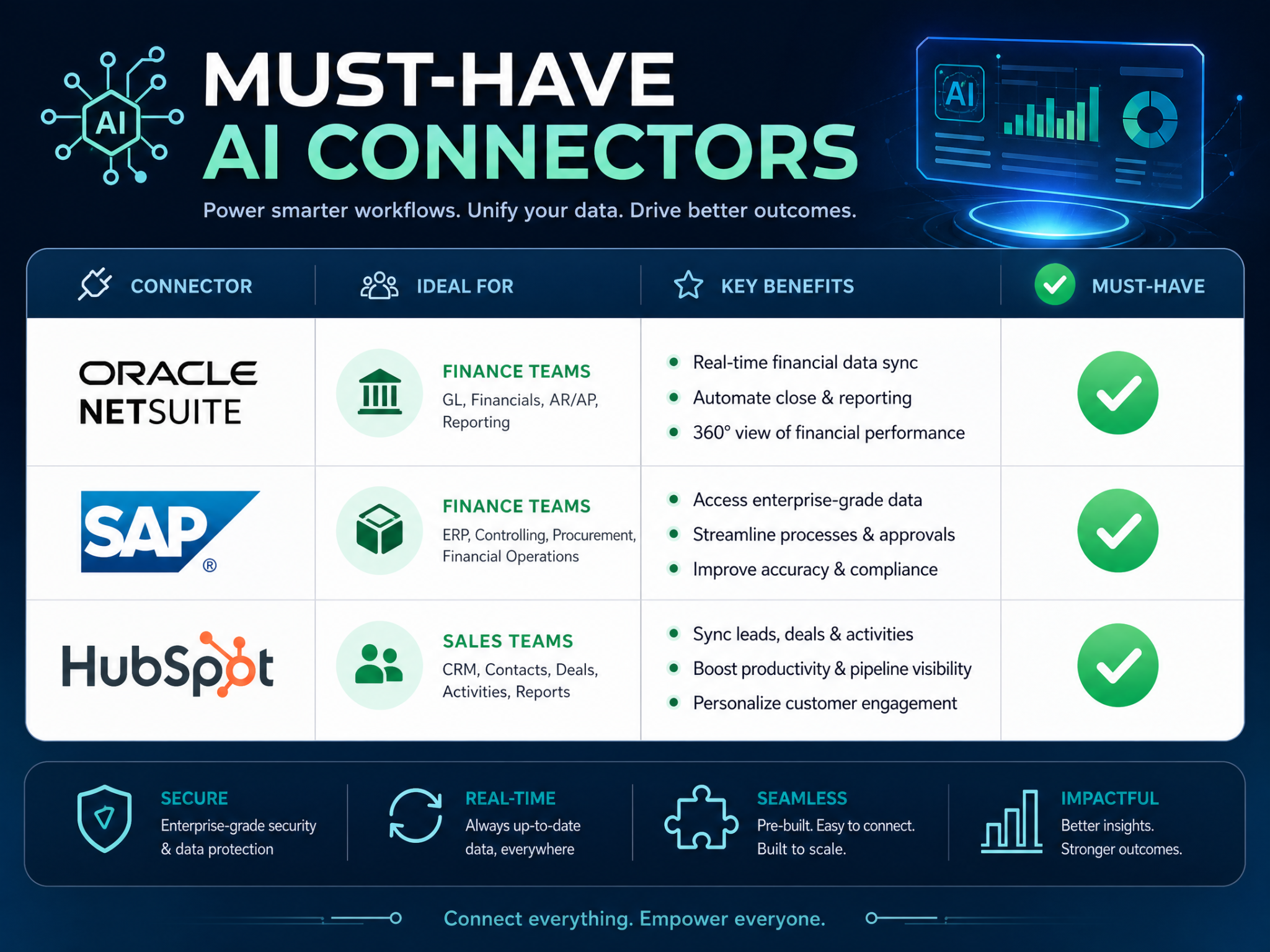
Category G — Security, Compliance, and Governance (31–35)
Least-Privilege Scopes and Access Review Pack
When to use: Gate API scopes and periodically recertify access.
Role: IAM Engineer
Goal: Define least-privilege scopes for {{ connector_name }} and prepare review pack.

Inputs: required_operations: {{ operations }}, provider_scopes: {{ provider_scopes }}, review_cycle: {{ cycle }}

Output:
- Scope-to-operation mapping; deny-by-default list.
- Access review packet: owners, justifications, expiry, recertification plan.
Acceptance: No wildcard scopes unless justified; expiry dates present.
Related: Access Reviews and Privileged Access.
Audit Logging and Evidence Collection Plan
When to use: Align with internal audit and regulatory expectations.
Role: Compliance Engineer
Goal: Define audit logging and evidence plan for {{ connector_name }}.

Inputs: controls: {{ control_frameworks }}, evidence_store: {{ evidence_store }}, retention: {{ retention }}

Output:
- What to log (who, what, when, where), redaction rules.
- Evidence artifacts list and storage location.
- Quarterly sampling and testing procedures.
Acceptance: Chain of custody documented; no PII in evidence.
Link: Audit Trails and Evidence Management.
Data Residency and Cross-Border Transfer Controls
When to use: Ensure compliant data movement across regions.
Role: Data Governance Lead
Goal: Residency controls for {{ data_classes }} in {{ regions }}.

Inputs: data_classes: {{ data_classes }}, regions: {{ regions }}, transfer_mechanism: {{ mechanism }}, masking_policy: {{ masking }}

Output:
- Residency map with allowed paths.
- Controls (masking, tokenization, anonymization) per path.
- Technical enforcement points (gateways, DLP).
Acceptance: Exceptions list with approvals and expiry.
Connect: Data Residency Policy and Cross-Border Guides.
Third-Party/Vendor Risk Assessment (TPRA) for Connectors
When to use: Onboard a new SaaS or iPaaS provider powering connectors.
Role: Vendor Risk Analyst
Goal: TPRA for {{ vendor_name }} related to {{ connector_name }}.

Inputs: vendor_name: {{ vendor_name }}, data_types: {{ data_types }}, locations: {{ locations }}, certifications: {{ certs }}

Output:
- Security posture summary; controls coverage; pen test recency.
- Breach/incident history; SLAs; data handling.
- Risk rating and mitigation plan.
Acceptance: References to third-party artifacts; internal sign-off path documented.
Use with: Supplier Security and Legal Review.
Go-Live Readiness Review (GLRR) Checklist
When to use: Final gate pre-production launch.
Role: Go-Live Chair
Goal: GLRR for {{ connector_name }}.

Inputs: scope_doc: {{ CSD_ref }}, test_reports: {{ test_refs }}, security: {{ security_signoffs }}, operations: {{ runbooks_refs }}, change_record: {{ change_id }}

Checklist:
- Requirements met; tests passed with evidence.
- SLOs/alerts configured; runbooks validated.
- Security controls certified; access reviews done.
- DR/backup proven; dashboards live.
- Communications and training completed.

Output: Pass/Conditional/Fail + follow-ups, owners, dates.
Acceptance: Evidence links; no placeholders remaining.
Relate to: Production Readiness and CAB Approval.
Connector Patterns and Design Choices
The prompts above assume a set of tried-and-true patterns for enterprise AI connectors. Choosing the right pattern reduces operational toil, improves reliability, and shortens incident MTTR. Here are the essentials to consider when applying the prompts.
Common Patterns
-
– Batch ETL/ELT: Nightly or hourly sync for analytical use cases; good with warehouse sinks (Snowflake, BigQuery). Use prompts 13, 24, 29 for throughput, DQ, and cost.
– Event-Driven Connectors: Real-time updates via webhooks or Kafka; lower latency but require robust idempotency (prompt 12) and DLQ policies (prompt 3, 15).
– Real-Time API Mediation: Request/response connectors for in-line experiences; SLOs and circuit breakers are critical (prompts 8, 17).
– Hybrid: Event-driven triggers feeding batch compaction (e.g., CDC events to micro-batches); balance cost and freshness.
Key Trade-offs
-
– Latency vs. Cost: Real-time adds infrastructure and operational complexity. Use prompt 23 to model impact and prompt 29 for FinOps alignment.
– Consistency vs. Availability: Decide per flow; capture in prompt 12 to make reconciliation predictable.
– Vendor Constraints vs. Standardization: A connector may adapt to each API’s quirks, but your observability and runbooks should not. Prompt 26 and 27 standardize the interface.
– Governance vs. Velocity: Pre-approved templates and ChatGPT Work prompts reduce bespoke effort while keeping auditability high. Tie to Governance Templates.
Security and Compliance Guardrails Embedded in the Prompts
Enterprise AI connectors must never leak secrets or PII, must use least-privilege access, and must remain audit-ready. The ChatGPT Work prompts here explicitly constrain outputs to be safe by default:
-
– Secrets hygiene: All prompts forbid including tokens or sensitive values; use placeholders and references to your secrets store.
– PII/PHI: Redaction and masking policies are always referenced; logs/metrics directives exclude sensitive data.
– Auth scopes and rotation: Prompts 14 and 31 push minimum scopes, rotation schedules, and ownership for tokens/keys.
– Audit trails: Prompts 26, 32 specify log fields, evidence handling, and retention alignment to your frameworks.
– Cross-border controls: Prompt 33 encodes region paths and DLP enforcement so architects don’t guess.
When implementing these advanced strategies, it is often helpful to reference our deeper analysis on Threat Modeling, which explores the technical nuances of The Complete Guide to GPT-5.5’s Four Model Tiers: Base, Pro, Instant Mini, and When to Use Each in the context of modern AI workflows.
Measuring Success: KPIs and ROI for Connectors
To justify investment and guide continuous improvement, pair your connector rollouts with measurable KPIs. Several prompts (5, 8, 23, 24, 26, 29) provide scaffolding to instrument and benchmark quality and cost.
Operational KPIs
-
– Freshness/Latency vs. SLO: P50/P95/P99 end-to-end.
– Success Rate: Percentage of successful transactions over total attempts.
– Error Budget Burn: Weekly/monthly trend and primary drivers.
– DLQ Size and Age: For event-driven connectors, track DLQ backlog and time-to-drain.
– On-Call Burden: Incidents per connector per month, MTTA/MTTR.
Business KPIs
-
– Automation Hours Saved: Baseline manual effort vs. automated path.
– Order-to-Cash or Lead-to-Opportunity Cycle Time: Pre/post connector metrics.
– Data Quality Score: Reconciliation deltas and completeness.
– Cost-to-Serve: Unit cost per transaction/event and trend.
When implementing these advanced strategies, it is often helpful to reference our deeper analysis on SLO Reviews, which explores the technical nuances of The Complete Guide to GPT-5.5’s Four Model Tiers: Base, Pro, Instant Mini, and When to Use Each in the context of modern AI workflows.
Troubleshooting and Anti-Patterns
Even with strong prompts, teams can fall into common traps. Here are frequent anti-patterns and how the ChatGPT Work prompts above help avoid them:
-
– Ad-hoc mappings without lineage: Use prompt 11 to formalize mapping with examples and reasons for unmapped fields.
– Retry storms during partial outages: Prompt 12 and 17 specify backoff, jitter, and breaker thresholds to avoid cascading failures.
– Over-broad API scopes: Prompt 31 enforces least-privilege and review cycles to shrink blast radius.
– Inconsistent logs and metrics: Prompt 26 standardizes names, labels, and data hygiene.
– No contract tests: Prompt 22 catches breaking API changes before runtime incidents.
– Shadow IT connectors: Prompt 4’s readiness score and prompt 5’s ROI backlog focus investments and governance.
For live incidents, anchor response in prompt 27 runbooks and feed learnings back into prompts 15, 26, and 30 for systemic hardening.
FAQ
How do I adapt these ChatGPT Work prompts to a specific vendor stack like MuleSoft or Boomi?
Fill in variables for runtime, policies, and observability tools. For iPaaS platforms, add deployment and governance constraints to prompts 16, 20, and 28 to reflect platform-specific lifecycles and guardrails.
Can I use these prompts with retrieval-augmented generation (RAG)?
Yes. Store your internal policies, templates, and OpenAPI/GraphQL specs in a retrieval index and reference them in inputs. Ensure your retrieval layer redacts secrets and respects data residency controls.
What about regulated industries (healthcare, finance)?
When implementing these advanced strategies, it is often helpful to reference our deeper analysis on Control Framework Mappings, which explores the technical nuances of The Complete Guide to GPT-5.5’s Four Model Tiers: Base, Pro, Instant Mini, and When to Use Each in the context of modern AI workflows.
How do I maintain prompt quality over time?
When implementing these advanced strategies, it is often helpful to reference our deeper analysis on Knowledge Management, which explores the technical nuances of The Complete Guide to GPT-5.5’s Four Model Tiers: Base, Pro, Instant Mini, and When to Use Each in the context of modern AI workflows.
Glossary
-
– ChatGPT Work prompts: Structured, role-aware prompts designed for deterministic, reviewable outputs suitable for enterprise workflows and governance.
– Enterprise AI connectors: Integration components that link enterprise systems and workflows, often incorporating AI assistance for design, testing, and operations.
– CDC (Change Data Capture): Technique capturing changes in source systems for downstream syncs, often via logs or APIs.
– DLQ (Dead Letter Queue): Queue holding failed messages for later inspection and replay.
– Idempotency: Property allowing safe retries without side effects beyond the first application.
– SLO/SLA: Service Level Objective/Agreement for reliability, latency, and availability targets.
– DPIA: Data Protection Impact Assessment required for certain processing activities involving personal data.
How to Use This Guide in Your Organization
-
– Centralize: Create a “Connectors” space in your docs; add this article; link sections via enterprise AI connectors and ChatGPT Work prompts.
– Standardize: Select mandatory prompts per lifecycle stage. For example, require prompts 6, 11, 14, 22, 26, 27, 35 before go-live.
– Automate: Build a small CLI or portal that injects your org defaults into {{ variables }} and posts outputs to your repos.
– Govern: Add approvers and evidence links per output; track drift between docs and code; audit quarterly.
– Improve: After each incident or change, update relevant prompts to encode new lessons learned.
The outcome is a shared language for high-quality connectors, reduced onboarding time, and a measurable uplift in reliability and compliance.
