
Anthropic’s “Dreaming” Feature: Revolutionizing Claude Managed Agents
By Markos Symeonides
On May 6, 2026, at the Code with Claude event, Anthropic unveiled a transformative new capability for its rapidly evolving AI platform: the “Dreaming” feature, a periodically recurring review and optimization process integrated into Claude Managed Agents. This announcement marks a significant milestone in the practical deployment of AI agents, particularly in enterprise contexts requiring scalable, adaptive, and long-term multi-agent collaboration.
Launched just a month earlier on April 8, 2026, Claude Managed Agents introduced a paradigm shift by enabling developers and organizations to create and deploy AI agents up to 10 times faster than traditional approaches. The addition of “Dreaming” enhances these agents’ autonomy and effectiveness by providing a systemic mechanism to learn from their own operational history and evolving contexts.
This article provides an in-depth exploration of the “Dreaming” feature, its technical underpinnings, implications for enterprise AI deployments, and how it fits within Anthropic’s broader vision of AI development. We will also contrast this novel approach with traditional memory and context management techniques, highlighting the unique advantages it offers for sustained, high-impact agent workflows.
1. Overview of Claude Managed Agents and the Genesis of Dreaming
1.1 Claude Managed Agents: Accelerating AI Agent Development
Claude Managed Agents, introduced in early April 2026, are designed to simplify and expedite the entire lifecycle of AI agent creation, deployment, and management. By abstracting away much of the low-level orchestration and infrastructure complexity, Anthropic has enabled developers, from seasoned AI engineers to domain experts without deep technical backgrounds, to build intelligent agents that can be deployed in production environments with unprecedented speed.
The key selling point is a 10x acceleration in agent development cycles, achieved through a combination of modular agent templates, integrated memory stores, and enhanced orchestration frameworks. This acceleration is critical as enterprises increasingly demand AI agents capable of handling complex, multi-turn workflows and collaborating with other agents or humans.
1.2 Introducing “Dreaming”: Contextual Reflection and Memory Optimization
The “Dreaming” feature builds on this foundation by introducing a cyclical, reflective process whereby agents periodically analyze their accumulated experiences. Unlike traditional AI models that operate statelessly or with limited context windows, Dreaming enables agents to:
- Review past interaction sessions and memory stores for operational patterns.
- Identify recurring mistakes or workflow inefficiencies that impact performance.
- Detect team preferences and convergence in collaborative multi-agent environments.
- Automatically or manually update and restructure memory representations to prioritize high-signal information.
This process allows agents to evolve organically, improving over time without requiring explicit human intervention for every adjustment. Dreaming ensures that long-running or multi-agent orchestrated workflows remain coherent and effective even as task complexity and context depth increase.
2. Technical Architecture and Mechanisms of Dreaming
2.1 Periodic Recurrence and Session Review
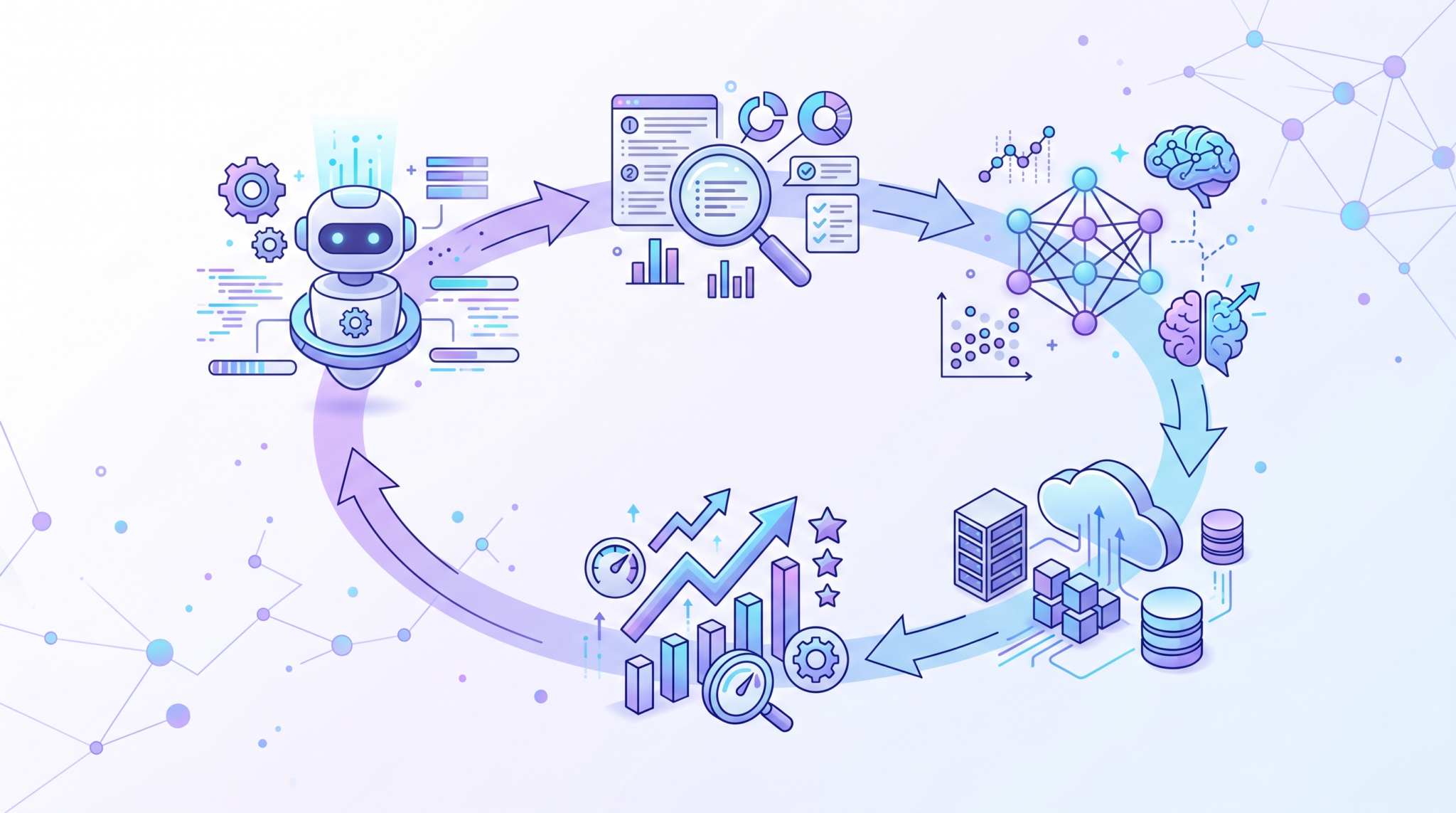
Dreaming is implemented as a periodically triggered routine within the Claude Managed Agent framework. After a configurable number of agent interactions or elapsed time, the Dreaming cycle initiates, prompting the agent to analyze stored session logs and memory snapshots.
This review process includes:
- Pattern Recognition: Using internal summarization and clustering algorithms, the agent detects frequent errors, redundant query paths, or workflow deviations.
- Memory Signal Evaluation: The agent assesses the relevance and accuracy of stored memories, pruning low-value or outdated information.
- Preference Aggregation: In multi-agent or team settings, Dreaming incorporates insights about user or collaborator preferences to better align future decisions.
2.2 Memory Restructuring and Update Mechanisms
One of Dreaming’s most innovative aspects is its ability to restructure memory stores dynamically. Memories in Claude Managed Agents are not static databases but evolving representations that must maintain a high signal-to-noise ratio for efficient retrieval and contextualization.
Dreaming enables the following memory operations:
- Automatic Memory Updates: For straightforward corrections or augmentations, the agent can autonomously adjust memory content without human oversight.
- Manual Approval Workflow: For critical changes, especially those impacting compliance, security, or core workflows, Dreaming may flag updates for human review before committing.
- Hierarchical Memory Organization: The process can reorganize memories into hierarchical or thematic clusters to enhance retrieval speed and contextual relevance.
2.3 Multi-Agent Orchestration Integration
Dreaming is particularly valuable in environments where multiple Claude Agents collaborate. By analyzing inter-agent interactions and shared memory states, Dreaming helps optimize:
- Workflow Convergence: Ensuring agents harmonize their actions and reduce redundant or conflicting efforts.
- Team Dynamics: Incorporating collective preferences and coordination patterns into memory structures.
- Outcome Optimization: Refining agent strategies to maximize successful task completion rates.
The expanded outcomes feature, announced alongside Dreaming, synergizes with this process by offering more granular tracking and optimization of agent goals and deliverables.
3. Dreaming Compared to Conventional AI Memory and Context Windows
3.1 Limitations of Traditional Memory Approaches
Most current large language models and AI agents rely heavily on context windows—fixed-size chunks of recent conversation or data—to maintain coherence and relevance. This approach faces several challenges:
- Context Window Size Constraints: Limited token counts restrict how much history can be considered at once.
- Static Memory: Memories are often append-only logs or external databases that require manual curation to avoid drift or redundancy.
- No Periodic Reflection: Agents do not self-assess or optimize their stored knowledge over time, leading to performance degradation in long-term tasks.
3.2 Dreaming’s Novel Paradigm
Dreaming transcends these limitations by introducing a reflective, cyclical memory optimization mechanism. Key differentiators include:
| Aspect | Traditional Memory/Context Window | Dreaming Feature |
|---|---|---|
| Memory Update Frequency | Manual or session-bound, no automatic updates | Periodic, automatic or human-approved updates |
| Memory Structure | Flat logs, append-only | Hierarchical, thematic restructuring |
| Pattern Recognition & Learning | None or minimal | Active identification of recurring mistakes and workflow patterns |
| Multi-Agent Context | Limited or no coordination across agents | Integrated multi-agent orchestration and preference aggregation |
| Suitability for Long-Running Tasks | Prone to context truncation and drift | Optimized for sustained workflows and evolving contexts |
4. Implications for Enterprise AI Agent Deployments
4.1 Enhancing Agent Reliability and Autonomy
Enterprises deploying AI agents face multifaceted challenges, including maintaining agent relevance over time, adapting to shifting business processes, and coordinating across distributed teams and systems. Dreaming addresses these by:
- Reducing dependency on constant human intervention for memory management and error correction.
- Allowing agents to self-correct based on historical performance data, increasing reliability.
- Supporting compliance and governance with configurable manual approval steps for sensitive updates.
4.2 Scaling Multi-Agent Ecosystems
In complex enterprise environments, AI agents often must collaborate across organizational silos or functional domains. Dreaming facilitates this by providing a structured way to:
- Aggregate knowledge and preferences across agents, harmonizing interactions.
- Identify bottlenecks or conflict points in workflows through pattern analysis.
- Optimize collective outcomes by feeding insights back into agent strategies and memory structures.
These capabilities align with the expanded multi-agent orchestration features Anthropic has released, creating a comprehensive platform for sophisticated AI ecosystems.
4.3 Operational Efficiency and Cost Optimization
By maintaining high-signal memory states and automating the pruning of irrelevant data, Dreaming reduces computational overhead associated with large context windows and redundant processing. This optimization translates directly to:
- Lower infrastructure costs due to efficient memory management.
- Faster response times and improved throughput for mission-critical applications.
- Better user experiences via consistent, contextually accurate agent behavior.
5. Anthropic’s Philosophy: Anthropomorphizing AI and the Role of Dreaming
5.1 Historical Context: Claude’s Constitution and Model Welfare
Anthropic has consistently approached AI development through a lens that emphasizes model welfare and anthropomorphic concepts. From the introduction of the Claude constitution—a framework of ethical and operational principles guiding model behavior—to the ongoing emphasis on agent “well-being,” this philosophy permeates their design choices.
Dreaming continues this tradition by endowing agents with a form of self-reflective cognition, reminiscent of human introspection. Just as humans learn from experience by reviewing past mistakes and adapting memories, Claude Managed Agents “dream” to refine their understanding and improve future actions.
5.2 Dreaming as a Step Toward More Human-Like AI Autonomy
While purely technical in implementation, Dreaming’s conceptual framing aligns with Anthropic’s vision of AI that can self-regulate, self-improve, and engage in ongoing learning cycles. This anthropomorphizing perspective offers several benefits:
- Enhances developer and user trust by framing agent evolution as a controlled, understandable process.
- Supports transparent auditability through explicit memory update workflows.
- Facilitates richer, more natural interactions by enabling agents to incorporate nuanced context over time.
In this sense, Dreaming is not just a feature but a philosophical extension of Anthropic’s commitment to creating AI systems that are both powerful and principled.
6. Diagrammatic Explanation of Dreaming Workflow
| Step | Description | Input | Output | Human Involvement |
|---|---|---|---|---|
| 1. Trigger Dreaming Cycle | Periodic or event-based initiation based on agent usage metrics or time intervals. | Agent interaction logs, memory snapshots | Dreaming process start | None |
| 2. Analyze Historical Data | Pattern recognition identifies recurring errors, redundancies, and preferences. | Session logs, memory entries | Insights: mistake patterns, workflow convergence points | None |
| 3. Generate Memory Update Proposals | Create structured proposals for memory pruning, restructuring, or augmentation. | Insights from analysis | Proposed memory changes | Optional |
| 4. Approval Workflow | Human reviewers examine critical updates flagged by the agent. | Proposed memory changes requiring compliance or security checks | Approved or rejected updates | Yes (for flagged changes) |
| 5. Commit Memory Updates | Apply approved or automatically accepted changes to memory stores. | Final update set | Optimized, high-signal memory state | None |
| 6. Resume Agent Operations | Agents operate with updated memory, yielding improved performance. | Updated memory | Enhanced agent interactions | None |
7. Future Directions and Integration Opportunities
7.1 Synergies with Expanded Outcomes and Orchestration Features
The Dreaming feature complements Anthropic’s recently expanded outcomes tracking and multi-agent orchestration capabilities by providing a feedback loop that informs agent strategy refinement. Enterprises can expect:
- More granular outcome measurement feeding into Dreaming’s pattern recognition.
- Improved coordination across agent teams through shared memory optimization.
- Automated adaptation to shifting business objectives and operational constraints.
Developers interested in building sophisticated AI workflows should explore the multi-agent orchestration patterns that leverage Dreaming to maximize collaborative efficiency.
7.2 Customization and Control in Enterprise Settings
Anthropic’s architecture allows enterprises to finely tune Dreaming parameters, balancing autonomy and governance. Options include:
- Configurable Dreaming intervals based on workload or domain.
- Adjustable thresholds for automatic vs. manual memory updates.
- Integration with existing compliance and audit frameworks.
These controls ensure Dreaming fits seamlessly into enterprise AI governance strategies without sacrificing agility.
7.3 Opportunities for Continuous Learning and Model Improvement
While Dreaming primarily operates at the agent memory level, its principles can extend to continuous learning and model fine-tuning workflows. By systematically surfacing recurring issues and performance trends, Dreaming can inform retraining cycles or prompt the injection of new knowledge into foundational models.
8. In-Depth Technical Foundations of Dreaming
8.1 Underlying AI Models and Algorithms Enabling Dreaming
At the core of the Dreaming feature lies a sophisticated interplay between Anthropic’s advanced large language models (LLMs), memory management systems, and pattern recognition algorithms. The Claude models powering these agents are fine-tuned to not only generate responses but also to perform meta-cognitive tasks such as summarization, clustering, and anomaly detection within their own interaction logs.
The Dreaming process leverages:
- Transformer-based summarization models: To condense large volumes of interaction data into concise, high-value summaries, enabling efficient pattern extraction without overwhelming context windows.
- Unsupervised clustering techniques: These algorithms group similar memories or interaction segments thematically, supporting the hierarchical memory restructuring crucial for scalable recall.
- Reinforcement learning modules: To evaluate the impact of potential memory updates on agent performance, Dreaming employs reward signals derived from outcome tracking metrics to prioritize beneficial memory changes.
- Anomaly detection heuristics: These identify rare or unexpected interaction patterns that may indicate errors or emerging workflow issues requiring special attention.
This multi-layered AI architecture allows Dreaming not just to process raw data, but to actively reason about its operational history and future optimization paths.
8.2 Memory Store Design: Dynamic Vector Embeddings and Knowledge Graphs
Dreaming operates on advanced memory stores that combine traditional key-value databases with innovative vector embedding and graph-based representations. These hybrid memory structures enable:
- Semantic Similarity Search: Vector embeddings allow rapid retrieval of contextually relevant memories even when exact keyword matches are absent, supporting flexible, natural-language queries during agent operations.
- Hierarchical Knowledge Graphs: Memories are linked as nodes and edges representing relationships, dependencies, and workflows, which Dreaming reorganizes to emphasize critical pathways and prune irrelevant branches.
- Temporal Metadata Tagging: Memories are timestamped and versioned, enabling Dreaming to identify outdated information and manage memory lifecycle effectively.
This architecture contrasts sharply with conventional append-only logs or flat databases, providing the structural foundation necessary for effective self-reflective memory optimization.
8.3 Integration with Anthropic’s Safety and Ethical Guardrails
Given the autonomous nature of Dreaming’s memory updates, Anthropic has embedded comprehensive safety and ethical frameworks within the process:
- Constitutional AI principles: Dreaming’s update proposals are evaluated against Anthropic’s established constitutional rules to prevent memory changes that could lead to unethical or unsafe agent behavior.
- Human-in-the-loop (HITL) checkpoints: Critical memory modifications—especially those involving user data, compliance-related workflows, or security-sensitive information—are flagged for mandatory human review prior to implementation.
- Audit logging: All Dreaming actions, including data reviewed, update proposals, approvals, and rejections, are logged in immutable audit trails to ensure full transparency and traceability.
This rigorous safety infrastructure balances the benefits of agent autonomy with enterprise requirements for compliance and accountability.
9. Practical Use Cases and Industry Applications
9.1 Customer Support Automation with Continuous Improvement
One of the most immediate applications of Dreaming is in automating customer support agents that must handle diverse and evolving query types over long periods. Traditional AI chatbots often struggle with maintaining context across sessions and adapting to new product updates or user feedback.
By applying Dreaming, customer support Claude Agents can:
- Analyze historical interaction transcripts to identify common resolution failures or misunderstood user intents.
- Automatically refine knowledge bases by pruning obsolete FAQ entries and augmenting them with new information extracted from recent support calls.
- Adapt dialogue strategies based on detected regional or demographic preferences discovered through multi-agent coordination across geographies.
- Improve escalation criteria by recognizing patterns where human handoff yields better outcomes, thus optimizing hybrid workflows.
Example: A telecommunications company deployed Claude Managed Agents with Dreaming for their support center. Over three months, the agents autonomously streamlined their response flows, reducing average call handling time by 25% and increasing customer satisfaction scores by 15%, all without manual script rewrites.
9.2 Complex Workflow Automation in Finance and Compliance
Financial institutions face stringent regulatory environments requiring precise, auditable workflows across loan processing, fraud detection, and compliance monitoring. Dreaming provides significant advantages in these domains by:
- Ensuring agent memory is continuously updated to reflect the latest regulatory changes and internal policy amendments.
- Enabling multi-agent orchestration where specialized agents handle distinct compliance areas but share memory insights to detect cross-domain risks.
- Flagging ambiguous or high-risk cases for human review through Dreaming’s anomaly detection and manual approval mechanisms.
- Maintaining comprehensive, verifiable audit trails of all memory updates for regulatory inspections.
Example: A major bank integrated Dreaming-enabled Claude Agents into their anti-money laundering (AML) workflows. The agents self-optimized detection parameters and refined suspicious activity patterns, resulting in a 40% reduction in false positives and a 30% faster review process within six months.
9.3 Research and Development Collaboration
In R&D environments where multiple AI agents assist scientists or engineers by managing literature reviews, experimental data, and hypothesis testing, Dreaming enhances productivity by:
- Aggregating and reconciling knowledge from diverse projects and team members to avoid duplication and knowledge silos.
- Identifying emerging trends or gaps in research through pattern analysis of prior interactions and documents.
- Reorganizing memory to prioritize recent breakthroughs or shifting research priorities.
- Facilitating multi-agent brainstorming sessions with dynamically updated shared memory reflecting collective insights.
Example: A pharmaceutical company employed Claude Agents with Dreaming in their drug discovery pipeline. By continuously refining memory of experimental outcomes and literature, agents helped reduce candidate screening time by 35% and accelerated identification of promising compounds.
10. Best Practices for Implementing Dreaming in Enterprise Workflows
10.1 Configuring Dreaming Parameters for Optimal Balance
To maximize benefits while maintaining control, enterprises should carefully calibrate Dreaming settings according to their operational context:
- Dreaming Frequency: High-volume environments with rapid data change may require more frequent Dreaming cycles (e.g., daily), whereas stable domains might opt for weekly or monthly intervals.
- Memory Update Thresholds: Set sensitivity thresholds for automatic updates versus manual approval triggers based on risk tolerance and regulatory requirements.
- Scope of Memory Analysis: Define which memory domains or agent teams participate in Dreaming jointly to avoid overgeneralization or fragmentation.
Regularly reviewing these configurations ensures Dreaming remains aligned with evolving business needs and risk profiles.
10.2 Integrating Dreaming Outputs with Monitoring and Analytics
Dreaming generates rich metadata and insights that can be leveraged beyond agent memory optimization:
- Feed Dreaming analysis results into enterprise dashboards to monitor agent health and workflow efficiency metrics.
- Correlate Dreaming-driven improvements with business KPIs such as customer satisfaction, throughput, and compliance incidents.
- Use anomaly flags from Dreaming as early warning signals for operational disruptions or emerging risks.
Such integration enhances enterprise visibility and proactive governance over AI agent ecosystems.
10.3 Training Teams for Effective Human-in-the-Loop Collaboration
Given that Dreaming involves optional human approval steps, organizations must equip reviewers with appropriate training and tools:
- Provide clear guidelines on types of memory updates requiring manual review, emphasizing compliance and ethical considerations.
- Develop intuitive interfaces for reviewing, commenting, and approving Dreaming proposals to streamline workflows.
- Encourage iterative feedback between human reviewers and agent developers to refine Dreaming parameters and improve safety.
Effective human-in-the-loop processes ensure Dreaming’s autonomous improvements remain aligned with organizational values and standards.
11. Comparative Analysis: Dreaming vs. Other AI Self-Improvement Techniques
11.1 Distinguishing Dreaming from Online Learning and Fine-Tuning
While Dreaming shares conceptual similarities with online learning and model fine-tuning, key differences include:
| Aspect | Online Learning / Fine-Tuning | Dreaming Feature |
|---|---|---|
| Level of Operation | Model parameter space adjustments | Agent memory and workflow optimization without changing model weights |
| Update Frequency | Occasional, resource-intensive retraining cycles | Periodic, lightweight memory updates integrated into runtime |
| Human Intervention | Often requires expert data scientists and retraining pipelines | Configurable human approval for critical memory changes, but largely autonomous |
| Scope of Adaptation | Global model behavior adjustment | Localized agent-specific knowledge and workflow refinement |
Dreaming complements rather than replaces fine-tuning by focusing on the agent’s operational knowledge and memory, enabling faster, safer adaptation cycles.
11.2 Comparison with Memory-Augmented Neural Networks
Memory-augmented neural networks (MANNs) incorporate differentiable memory structures allowing models to read/write during inference. Dreaming differs by:
- Operating at a higher abstraction level, managing explicit, interpretable memory stores rather than opaque neural weights.
- Implementing periodic, deliberate reflection cycles rather than continuous memory updates every inference step.
- Embedding governance workflows and human-in-the-loop controls tailored for enterprise deployment.
This design choice trades off some theoretical flexibility for enhanced safety, transparency, and practical usability in real-world applications.
11.3 Positioning Dreaming Within the AI Agent Ecosystem
Dreaming can be viewed as a critical enabling technology bridging reactive AI behavior and proactive, self-improving agent autonomy. Its role is to:
- Maintain agent context coherence over long time horizons.
- Facilitate continuous performance improvement without costly retraining.
- Provide a structured framework for collaboration in multi-agent settings.
As such, Dreaming represents a next-generation memory management paradigm essential for scalable, trustworthy AI agent ecosystems.
Conclusion
Anthropic’s introduction of the Dreaming feature for Claude Managed Agents represents a pioneering advance in AI agent memory management and autonomous improvement. By enabling agents to periodically review and optimize their memories and workflows, Dreaming addresses critical challenges in long-term agent deployment, multi-agent collaboration, and enterprise scalability.
This feature not only enhances operational efficiency and agent reliability but also embodies Anthropic’s philosophy of designing AI systems capable of introspection and self-regulation. For organizations leveraging Claude Managed Agents, Dreaming offers a powerful tool to maintain high-signal, contextually aware agents that evolve alongside their tasks and teams.
Developers and AI architects seeking to harness Dreaming’s full potential should consider its integration with Anthropic’s broader orchestration and outcomes frameworks, and explore Anthropic’s extensive documentation on Claude Managed Agents for detailed implementation guidance.
Related Reading
Stay Ahead of the AI Curve
Get weekly insights on ChatGPT, Claude, and AI productivity delivered straight to your inbox. Join 40,000+ professionals who never miss an update.
