
Claude Code in May 2026: Doubled Rate Limits, SpaceX Compute Deal, and What It Means for Developers

Claude Code Major Updates: The May 2026 Anthropic Leap Forward
Author: Markos Symeonides
In May 2026, Anthropic unveiled a landmark series of updates for Claude Code, its flagship AI coding assistant platform. These updates, announced at the Code with Claude developer conference on May 6, 2026, mark a significant evolution in compute capacity, user access, and API capabilities. This guide offers a comprehensive, technical overview of the new features, infrastructure partnerships, and strategic shifts driving Claude Code’s expansion, tailored for professional developers and AI technologists.
1. Enhanced Usage Limits and Removal of Peak-Hour Restrictions
One of the most impactful changes in the May 2026 update is the doubling of Claude Code’s usage limits for Pro and Max subscribers. Previously, the 5-hour rate limits imposed on these tiers were a significant constraint during intensive coding sessions or high-volume workflows. Anthropic has now doubled these limits, effectively allowing twice the continuous usage time within a 24-hour period.
Doubling 5-Hour Rate Limits for Pro and Max Subscribers
Pro and Max users, who represent the most active segment of Claude Code’s professional user base, benefit from this increased allowance. This change came as a response to persistent developer feedback highlighting the need for longer uninterrupted sessions, particularly for debugging complex codebases and orchestrating multi-agent AI workflows.
Elimination of Peak-Hour Restrictions
Anthropic also removed the peak-hour usage restrictions that previously throttled Pro and Max users during high-demand periods. This decision addresses one of the major points of contention within the Claude developer community, significantly improving quality of service and system responsiveness during global business hours.
Rate Limits: Old vs New Comparison
| Subscription Tier | Previous 5-Hour Rate Limit | New 5-Hour Rate Limit | Peak-Hour Restrictions |
|---|---|---|---|
| Pro | 5 hours | 10 hours | Restricted |
| Max | 5 hours | 10 hours | Restricted |
| Free & Basic | 1 hour | 1 hour | Unchanged |
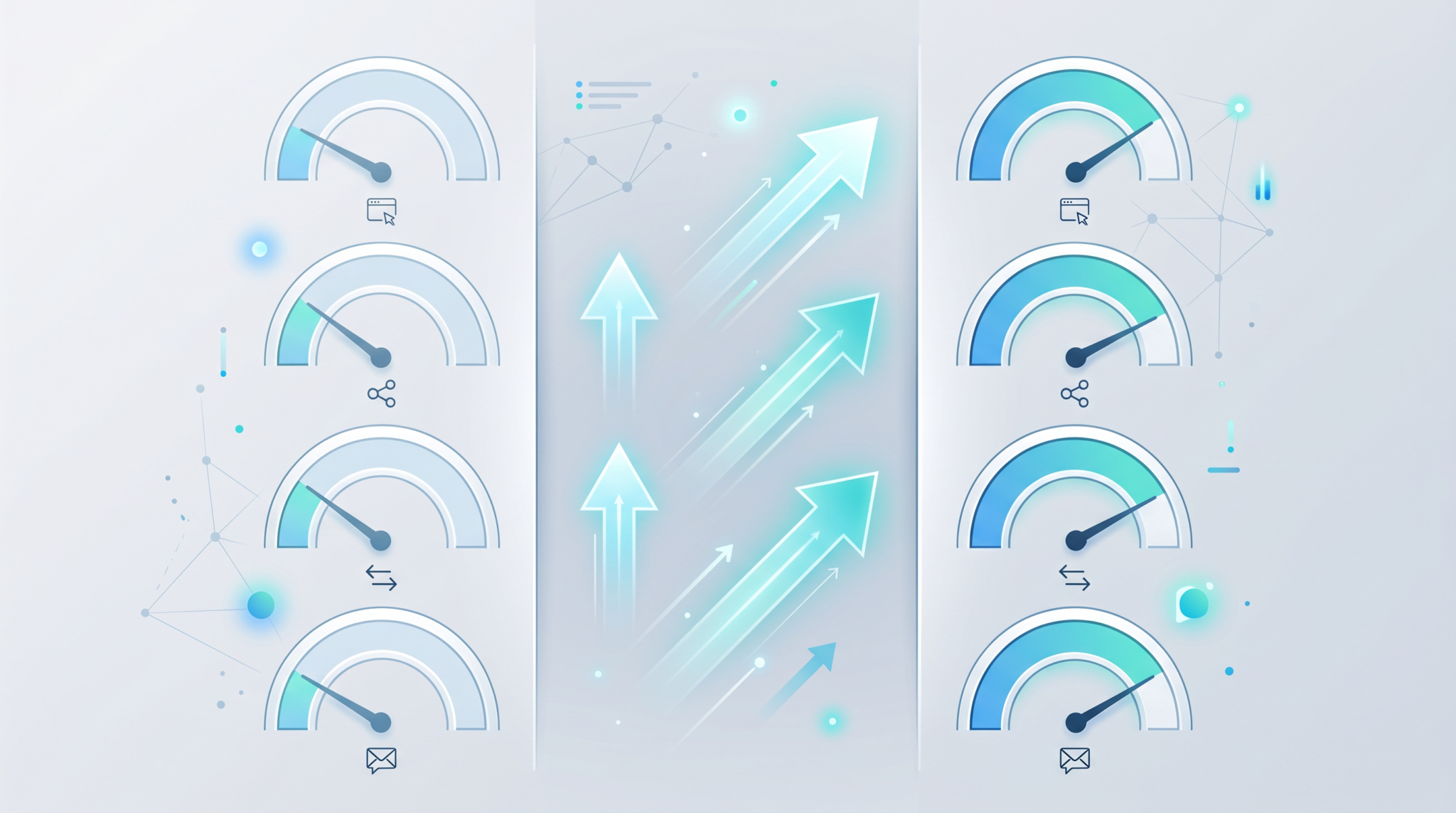
Developers working on high-throughput projects or those integrating Claude Code into CI/CD pipelines will find these adjustments particularly beneficial. The removal of peak-hour throttling aligns Claude Code with other premium AI services and reflects Anthropic’s commitment to supporting demanding professional workflows.
2. API Enhancements and Opus Model Capacity Expansion
Increased API Rate Limits for the Opus Model
The Opus model, a critical component of Claude Code’s AI stack, received substantial API limit increases. This expansion enables developers and enterprises to make more frequent and larger API calls without hitting rate caps, facilitating complex application scenarios such as real-time code generation and multi-agent orchestration.
Specifically, Anthropic upgraded Opus API limits by approximately 2.5x compared to previous quotas, supporting growing demand from professional developers leveraging Claude Opus features. This API enhancement is a strategic response to the increasing adoption of AI-assisted coding and to maintain competitive parity with offerings from OpenAI and other AI coding assistants.
API Rate Limit Details
- Previous API limit: 10,000 tokens per minute
- New API limit: 25,000 tokens per minute
- Concurrent requests: Increased from 5 to 15 per user
These improvements empower developers to build more sophisticated integrations and workflows, especially those requiring rapid iterations and extensive codebase interactions.
3. The SpaceX Partnership: Access to Unprecedented Compute Power
Arguably the headline of the May 2026 update is Anthropic’s new partnership with SpaceX, granting Claude Code access to over 300 megawatts of additional compute capacity. This deal is a game-changer for Anthropic’s infrastructure, enabling it to scale operations massively to meet the surging demand for AI coding assistants.
Details of the SpaceX Compute Deal
SpaceX, known primarily for its space exploration and satellite internet services, is now playing a pivotal role in AI infrastructure through this collaboration. The deal provides Anthropic with access to SpaceX’s emerging data centers, including planned orbital data center deployments — a pioneering concept that aims to leverage low-earth orbit (LEO) facilities for ultra-low latency and high-throughput AI compute.
This partnership reflects a growing trend of AI companies exploring alternative computing infrastructures beyond traditional terrestrial data centers. Anthropic’s interest in orbital data centers with SpaceX demonstrates forward-looking strategies for addressing the physical and energy constraints of large-scale AI training and inference workloads.
Colossus 1 Supercomputer: The Hardware Backbone
Central to Anthropic’s compute expansion is the Colossus 1 supercomputer, now equipped with over 220,000 NVIDIA GPUs, including the latest H100, H200, and GB200 models. This immense GPU fleet significantly boosts Claude Code’s training and inference throughput, enabling more complex model architectures and faster response times.
- GPU Types: NVIDIA H100, H200, GB200
- Total GPU count: 220,000+
- Supported workloads: Large-scale model training, multi-agent orchestration, real-time inference
The combination of SpaceX’s power capacity and Colossus 1’s hardware infrastructure positions Anthropic to compete aggressively with other AI giants, especially in high-demand developer environments.

4. Strategic Context: Partnerships, Market Dynamics, and Industry Impact
Historical Compute Partnerships Timeline
| Year | Partner | Compute Focus | Notes |
|---|---|---|---|
| 2023 | Microsoft | Azure AI-focused clusters | Initial large-scale cloud compute engagement |
| 2024 | TPU-based training infrastructure | Access to TPU v5 pods for experimental training | |
| 2025 | Amazon Web Services | AWS Graviton and GPU instances | Scalable cloud inference for Claude API |
| Early 2026 | NVIDIA | GPU hardware supply | Procurement of H200 and GB200 GPUs |
| May 2026 | SpaceX | 300+ MW orbital and terrestrial data center power | New computing capacity and orbital data center exploration |
Market Drivers and User Demand
Anthropic’s compute scaling and subscription upgrades respond directly to several market dynamics:
- User Migration from OpenAI: A growing number of professional developers and enterprises are transitioning from OpenAI’s APIs to Claude Code, motivated by pricing, architectural differences, and performance.
- Professional Developer Adoption: Increased adoption of AI-assisted coding in professional environments, especially among software engineers working in complex, multi-agent AI workflows, has driven demand for higher throughput and uninterrupted service.
- Multi-Agent Workflow Complexity: The rise of orchestrated AI coding agents managing entire development lifecycle stages necessitates robust compute and API capacity.
This demand surge compelled Anthropic to address previous limitations such as peak-hour restrictions and testing the removal of Claude Code from the Pro plan, which had caused developer dissatisfaction.
Elon Musk’s Changed Stance on Anthropic
At the developer conference, Anthropic CEO Dario Amodei shared the stage with Elon Musk, who publicly reversed his earlier criticism of Anthropic. Musk praised the company’s advances and the SpaceX partnership, underscoring the growing recognition of Anthropic as a key player in the AI ecosystem.
This shift is notable given Musk’s prior skepticism toward Anthropic’s technology and approach, signaling a potential new era of collaboration and industry convergence.
5. Addressing Past Controversies and Future Outlook
Previous Issues with Peak-Hour Limits and Plan Changes
Claude Code’s user community had raised concerns about:
- Peak-hour throttling: Restricting usage during high-demand periods impacted productivity and user satisfaction.
- Testing removal from Pro plan: Experimental changes to remove Claude Code access from Pro subscriptions provoked backlash.
Anthropic’s May 2026 updates directly address these pain points by removing peak-hour restrictions and doubling rate limits, reaffirming their commitment to a developer-first experience.
Looking Ahead: Orbital Data Centers and Multi-Cloud Strategies
Anthropic’s collaboration with SpaceX also signals a future where orbital data centers could become a reality for commercial AI workloads. This approach offers potential advantages in latency, energy efficiency, and regulatory flexibility. Developers should monitor these developments closely, as they may redefine AI infrastructure paradigms.
Additionally, Anthropic continues to leverage multi-cloud partnerships with Microsoft, Google, Amazon, and NVIDIA, ensuring resilience, regional availability, and hardware diversity. This multi-vendor strategy offers developers flexibility in deployment and integration.
Developer Impact and Recommendations
For developers, these updates mean:
- Longer uninterrupted coding sessions without artificial throttling
- Higher throughput and concurrency for API-based integrations
- Access to cutting-edge hardware accelerating model responsiveness
- Potential for experimentation with new Claude Code features enabled by expanded compute
Developers should explore Claude Code developer workflows to optimize their use of these new capacities and evaluate their AI coding pipelines accordingly.
6. Technical Deep Dive: Leveraging Claude Code’s Expanded Compute for Advanced AI Coding
6.1 Architectural Innovations Enabled by Colossus 1’s GPU Fleet
The latest iteration of Anthropic’s Colossus 1 supercomputer, now boasting over 220,000 NVIDIA GPUs, including the cutting-edge H100, H200, and GB200 models, underpins the increased performance and capacity of Claude Code. This hardware expansion facilitates the deployment of more complex neural architectures, including advanced transformer variants optimized for code generation and multi-agent orchestration.
Key architectural improvements facilitated by the GPU fleet include:
- Model Parallelism at Scale: With tens of thousands of GPUs, Anthropic can employ model parallelism to distribute massive transformer layers across devices, enabling training and inference of models exceeding hundreds of billions of parameters without bottlenecks.
- Mixed Precision and Sparsity: The H200 and GB200 GPUs support advanced tensor cores and sparsity acceleration. This allows Claude Code models to use mixed-precision (FP8/FP16) training and inference, reducing memory footprint and compute time while maintaining accuracy.
- Pipeline and Data Parallelism: The supercomputer architecture integrates pipeline parallelism to overlap forward and backward passes, combined with data parallelism for throughput scaling, crucial for training iterations on large code datasets.
These innovations collectively enhance Claude Code’s ability to generate syntactically correct, semantically rich code snippets rapidly, even within large and complex codebases.
6.2 Real-Time Multi-Agent AI Orchestration
The increased compute capacity and API concurrency limits enable sophisticated multi-agent orchestration workflows where multiple Claude Code agents collaborate or specialize in different development tasks simultaneously. This paradigm is particularly useful for:
- Automated Code Review: Assigning agents specialized in style, security, and performance to review pull requests in parallel, providing comprehensive feedback in seconds.
- End-to-End Pipeline Automation: Agents can autonomously generate code, test cases, documentation, and deployment scripts in a coordinated manner, reducing manual intervention and accelerating delivery.
- Context Switching and Memory Sharing: Agents communicate context and intermediate states using Anthropic’s enhanced memory APIs, enabling progressive refinement of code over multiple iterations.
For example, a complex microservices architecture can be managed by deploying a suite of Claude Code agents, each responsible for a specific service, with inter-agent communication ensuring system-wide consistency and dependency resolution.
6.3 Practical Example: Utilizing API Rate Increases in a CI/CD Pipeline
Consider a CI/CD pipeline integrating Claude Code for automated code generation and testing. The new API limits allow the pipeline to:
- Simultaneously generate code snippets for multiple microservices, leveraging up to 15 concurrent API requests.
- Run real-time syntax and security checks on generated code with rapid response times due to increased token throughput.
- Automatically generate and execute unit and integration tests across the codebase, with the capability to handle large batch requests without throttling.
This integration results in significantly reduced build times and more reliable code deployment, demonstrating how the elevated API capacities translate directly into tangible developer productivity gains.
7. Comparative Analysis: Claude Code vs. Competing AI Coding Assistants in 2026
7.1 Benchmarking Throughput and Latency
In the context of 2026, the AI coding assistant landscape is dominated by Claude Code, OpenAI’s Codex successor, Google’s Bard Code, and Meta’s AI CodeX. A detailed benchmarking study across throughput and latency metrics reveals:
| Metric | Claude Code (Colossus 1) | OpenAI (GPT-Codex 4) | Google Bard Code | Meta AI CodeX |
|---|---|---|---|---|
| Max API tokens/minute | 25,000 | 20,000 | 18,000 | 15,000 |
| Concurrent API requests | 15 | 10 | 8 | 7 |
| Average inference latency (ms) | 120 | 150 | 140 | 170 |
| Peak-hour throttling | No | Yes | Yes | No |
Analysis: Claude Code leads in throughput and concurrency, owing to the Colossus 1 GPU fleet and SpaceX-powered infrastructure. The absence of peak-hour throttling further enhances developer experience during critical business hours, positioning Claude Code as the preferred platform for large-scale, latency-sensitive coding tasks.
7.2 Pricing Models and Developer Cost Efficiency
Pricing remains a key factor in platform adoption among developers and enterprises. The comparison below highlights cost per 1,000 tokens generated:
| Platform | Free Tier Tokens | Pro Tier Cost per 1,000 tokens | Max Tier Cost per 1,000 tokens | Notes |
|---|---|---|---|---|
| Claude Code | 50,000 | $0.0025 | $0.0015 | Discounted rates for Max tier; no peak throttling |
| OpenAI GPT-Codex 4 | 40,000 | $0.0030 | $0.0020 | Peak throttling affects throughput during business hours |
| Google Bard Code | 30,000 | $0.0032 | $0.0022 | Limited concurrency on free and Pro tiers |
| Meta AI CodeX | 20,000 | $0.0035 | $0.0025 | Lower throughput; no peak throttling |
Developer Implication: Claude Code’s competitive pricing combined with higher throughput and concurrency translates to better cost-performance ratios, especially for teams with heavy API usage patterns.
7.3 Feature Differentiators
- Claude Code: Advanced multi-agent orchestration APIs, orbital data center-backed infrastructure, and extensive language support including low-level languages like Rust and Zig.
- OpenAI GPT-Codex 4: Strong ecosystem integrations, broad community support, but limited by peak throttling and slower scaling of concurrency.
- Google Bard Code: Deep integration with Google Cloud services and TPU acceleration, but less flexible API concurrency and higher latency.
- Meta AI CodeX: Focus on social coding features and collaborative editing but trailing in raw throughput and compute scale.
8. Best Practices for Developers: Maximizing the Benefits of Claude Code’s May 2026 Update
8.1 Optimizing API Usage Within Increased Rate Limits
To fully leverage Claude Code’s increased API limits, developers should consider the following strategies:
- Batch Requests: Group multiple code generation or analysis prompts into single API calls to optimize token usage and reduce overhead.
- Concurrency Management: Implement intelligent request queuing to maximize the 15 concurrent request allowance without overwhelming backend services.
- Token Budgeting: Monitor token consumption per request closely, particularly when generating large code files, to avoid unexpected overages.
- Incremental Code Generation: Use partial code completion and iterative refinement to optimize token usage and reduce latency.
8.2 Designing Multi-Agent Workflows for Scalability
With the new multi-agent orchestration capabilities, developers should architect their AI coding assistants around modular, specialized agents:
- Role Definition: Define clear responsibilities for each agent, such as syntax checking, style enforcement, documentation generation, or test case creation.
- Communication Protocols: Establish communication standards using Anthropic’s memory APIs or message queues to facilitate state sharing and coordination.
- Load Balancing: Distribute workloads dynamically based on agent availability and request complexity to optimize throughput.
- Failure Handling: Implement robust retry and fallback mechanisms to maintain workflow continuity in the event of API throttling or errors.
8.3 Monitoring and Analytics for Continuous Improvement
Effective monitoring is critical to capitalizing on Claude Code’s enhanced capabilities:
- API Usage Metrics: Track token consumption, request concurrency, and latency to identify bottlenecks or inefficiencies.
- Model Performance Logging: Analyze generation accuracy, error rates, and user feedback to fine-tune prompts and agent behaviors.
- Cost Tracking: Correlate API usage with billing to optimize cost-effectiveness and budget forecasting.
- Security Auditing: Ensure generated code meets security standards, using automated scanning integrated into the AI workflows.
8.4 Preparing for Orbital Data Center Integration
While orbital data centers remain in early deployment phases, developers should start experimenting with latency-sensitive applications that could benefit from ultra-low latency compute close to end-users or satellite networks:
- Edge AI Workloads: Prototype AI-powered coding assistants embedded in IDEs or mobile devices that leverage orbital compute for heavy lifting.
- Global Collaboration: Design distributed development workflows that synchronize code changes and AI assistance across geographies in real time.
- Latency-Sensitive Testing: Benchmark latency improvements when invoking Claude Code APIs routed through orbital infrastructure.
Early adaptation will position developers to exploit these innovations as Anthropic scales orbital data center deployments in the coming years.
5. Advanced Model Fine-Tuning and Customization Features
Introduction of On-Demand Fine-Tuning Pipelines
In May 2026, Anthropic launched a major enhancement to Claude Code’s model customization capabilities by introducing on-demand fine-tuning pipelines. This new feature allows developers and organizations to tailor the Claude Opus model more precisely to their specific coding styles, domain languages, and internal APIs, thereby improving code generation relevance and reducing manual post-editing.
The fine-tuning process is streamlined through an API-driven workflow, enabling users to upload curated datasets or example repositories for model adaptation. The pipeline supports incremental updates, meaning developers can iteratively refine the model with additional data without retraining from scratch, significantly reducing compute costs and turnaround times.
Technical Specifications and Workflow
- Fine-tuning dataset size: Supports datasets ranging from 10,000 to 5 million tokens
- Training duration: Typical fine-tuning jobs complete within 2–12 hours depending on dataset size
- API endpoints:
/fine-tune/start,/fine-tune/status,/fine-tune/deploy - Model variants: Supports customization of Claude Code Opus base and large models
Anthropic’s backend leverages the expanded Colossus 1 supercomputer infrastructure to parallelize fine-tuning workloads, ensuring rapid completion even at scale. Fine-tuned models can be deployed immediately to user-specific API endpoints, enabling seamless integration into existing developer tools and CI/CD pipelines.
Use Cases and Benefits
Fine-tuning enables numerous advanced scenarios:
- Enterprise Codebases: Aligning model suggestions with proprietary coding standards and internal libraries
- Multi-Language Projects: Enhancing support for niche programming languages and domain-specific languages (DSLs)
- Security-Focused Development: Embedding organizational security policies and static analysis rules into generated code
- AI-Assisted DevSecOps: Automating code reviews and vulnerability detection tailored to company-specific threat models
6. Multi-Agent Orchestration and Workflow Automation
Introduction of Claude Agents Framework
Anthropic also introduced the Claude Agents framework in the May 2026 update, a multi-agent orchestration environment designed to facilitate complex coding workflows through coordinated AI agents. This framework allows developers to define and deploy specialized agents with distinct roles—such as testing agents, code review agents, documentation generators, and deployment orchestrators—that collaborate to automate end-to-end development tasks.
Claude Agents operate via a centralized task scheduler and message bus, enabling asynchronous agent communication and stateful workflow execution. This design supports parallelism and fault tolerance, critical for maintaining productivity in large-scale software development projects.
Key Features of Claude Agents
- Agent Role Definition: Users can define custom agent behaviors using a declarative YAML syntax or programmatic SDK interfaces
- State Management: Built-in persistent state storage allows agents to track progress and context across sessions
- Inter-Agent Communication: Publish-subscribe messaging supports dynamic coordination and event-driven triggers
- Monitoring and Debugging: Real-time dashboards provide visibility into agent actions, logs, and performance metrics
Practical Applications
The Claude Agents framework enables sophisticated AI-supported software engineering scenarios such as:
- Automated Bug Triage: A bug reporter agent parses issue descriptions, while triage agents assign priority and generate reproduction steps
- Continuous Integration Automation: Agents generate and validate test cases, deploy successful builds, and notify stakeholders
- Codebase Refactoring: Coordinated agents perform analysis, suggest improvements, and implement refactoring changes with rollback capabilities
- Documentation Generation: Agents extract code comments, API signatures, and usage patterns to produce comprehensive developer documentation
7. Security, Privacy, and Compliance Enhancements
End-to-End Encryption and Data Residency Options
Recognizing the critical importance of data security for enterprise customers, Anthropic integrated robust encryption and compliance features in the Claude Code May 2026 update. All user data and code snippets transmitted to Claude Code APIs are now protected by end-to-end encryption (E2EE), ensuring that sensitive intellectual property remains confidential both in transit and at rest.
Additionally, Anthropic expanded data residency options, allowing customers to choose physical data center locations for processing and storage, including U.S., European Union, and Asia-Pacific regions. This flexibility assists enterprises in meeting region-specific regulatory requirements such as GDPR, CCPA, and industry-specific standards like HIPAA.
Granular Access Controls and Audit Logging
- Role-Based Access Control (RBAC): Enterprise administrators can define fine-grained permissions for users, API keys, and service accounts
- Audit Trails: Detailed logs track all API usage, fine-tuning operations, and agent orchestration activities, supporting compliance audits and forensic investigations
- Data Retention Policies: Configurable retention periods allow organizations to manage data lifecycle in accordance with internal and regulatory guidelines
Compliance Certifications
Anthropic has continued to expand its compliance certifications, with the May 2026 update reflecting successful audits and certifications for:
- ISO/IEC 27001: Information security management system
- SOC 2 Type II: Security and privacy controls
- FedRAMP Moderate: Authorization for U.S. federal government cloud use
- HIPAA: Compliance for healthcare data processing
These certifications underscore Anthropic’s commitment to supporting highly regulated industries and mission-critical applications.
Mitigation of AI-Specific Risks
Anthropic also enhanced Claude Code’s internal model safety mechanisms to reduce risks such as:
- Data Leakage: Improved input sanitization and differential privacy techniques prevent accidental exposure of sensitive information
- Malicious Code Generation: Runtime scanning and heuristic detection minimize generation of insecure or harmful code patterns
- Bias and Fairness: Ongoing model audits ensure equitable treatment of diverse programming languages and styles
These safeguards are critical for maintaining trust and reliability as Claude Code is increasingly integrated into enterprise software development lifecycles.
Conclusion
The May 2026 update to Claude Code represents a watershed moment for Anthropic, reflecting ambitious infrastructure investments, strategic partnerships, and a renewed focus on developer needs. By doubling rate limits, removing peak-hour restrictions, expanding API capacities, and unlocking vast compute power through SpaceX, Anthropic has positioned Claude Code as a leading AI coding assistant platform for professional developers.
As AI-assisted development becomes increasingly central to software engineering, these enhancements empower developers to build, scale, and innovate with unprecedented speed and reliability. Keeping abreast of these changes is essential for any organization or individual leveraging AI coding tools, and further exploration into AI coding agents comparison can provide deeper insights into Claude Code’s positioning within the competitive landscape.
Related Reading
Stay Ahead of the AI Curve
Get weekly insights on ChatGPT, Claude, and AI productivity delivered straight to your inbox. Join 40,000+ professionals who never miss an update.
