
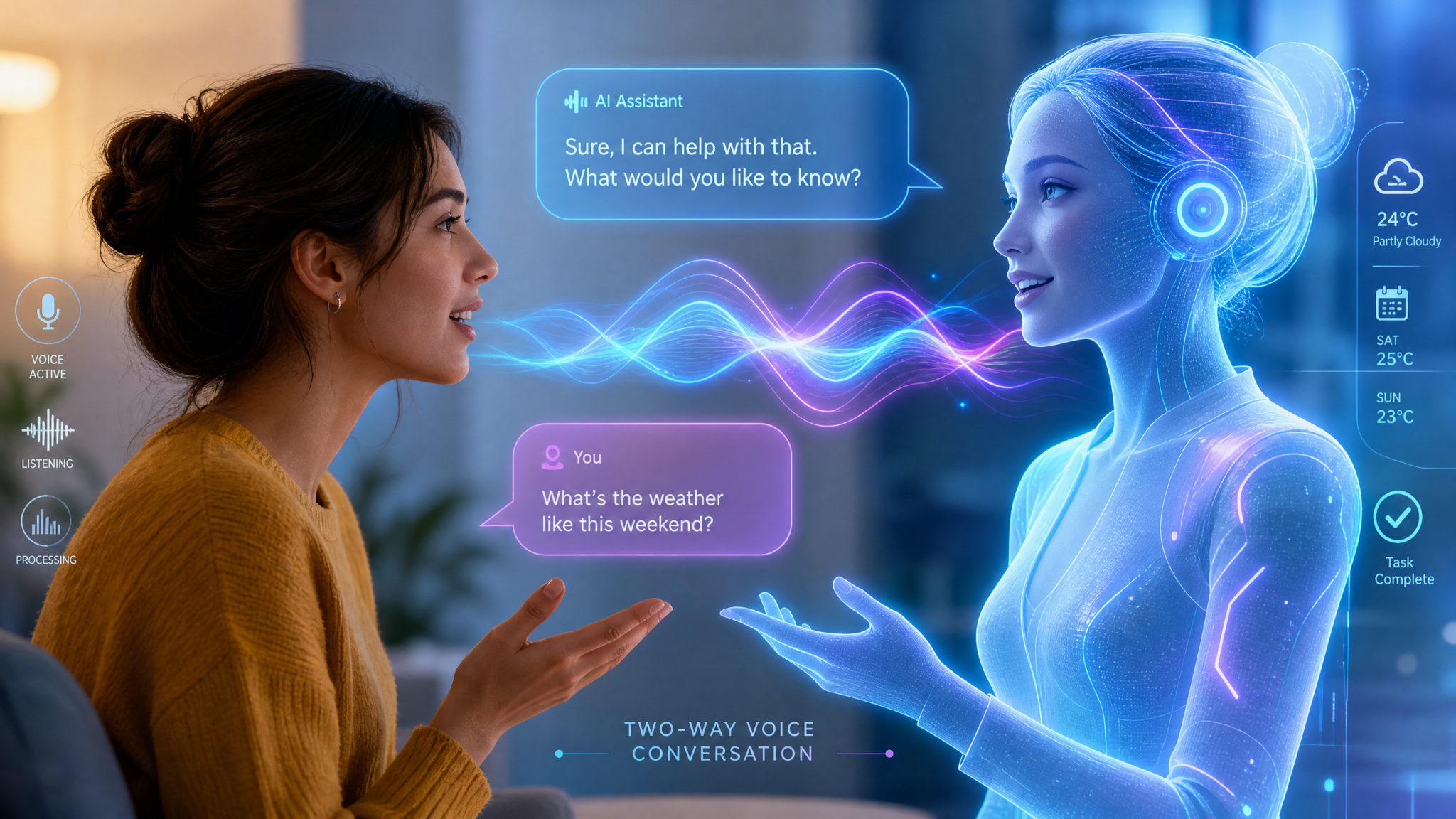
The landscape of human-AI interaction is undergoing a profound transformation, spearheaded by OpenAI’s latest innovation: GPT-Live-1. Launched as the new generation of voice models powering ChatGPT, GPT-Live-1 redefines conversational AI by moving beyond stilted, turn-based exchanges to deliver an experience that mirrors natural human dialogue. This groundbreaking model introduces a full-duplex architecture, enabling it to listen and speak simultaneously — a capability that dramatically enhances the fluidity and responsiveness of AI conversations. The implications of this advancement are far-reaching, integrating AI more seamlessly into daily life, from hands-free assistance to complex problem-solving tasks. This article explores the technical marvels of GPT-Live-1, its architectural innovations, performance metrics, and what it means for the future of human-AI interaction.
The Dawn of Natural Conversation: Understanding GPT-Live-1
GPT-Live-1 represents a significant leap forward in conversational AI technology. Designed to make interactions feel less like commanding a machine and more like conversing with a human, this model emphasizes natural, real-time voice communication. It overcomes key limitations of earlier voice AI systems, such as delayed responses and rigid turn-taking. The true significance of GPT-Live-1 lies not only in its enhanced capabilities but also in its potential to transform how we use AI across personal, educational, and professional contexts.
The Core Innovation: Full-Duplex Architecture
The centerpiece of GPT-Live-1 is its full-duplex architecture. Borrowed from telecommunications, full-duplex enables simultaneous two-way communication, akin to a natural phone conversation where both parties can hear and speak at the same time. This stands in stark contrast to traditional half-duplex systems requiring users to take turns speaking.
Previous voice AI models operated mostly in half-duplex mode—waiting for the user to finish speaking before responding—resulting in unnatural delays and awkward pauses. GPT-Live-1 continuously processes incoming audio while generating output speech, allowing it to interject with natural acknowledgments like “mhmm” or “yeah,” engage in rapid back-and-forth dialogue, or pause patiently when the user thinks. This continuous, dynamic processing makes conversations feel remarkably human-like and responsive.
Delegation for Deeper Work
Another key innovation is GPT-Live-1’s ability to intelligently delegate complex tasks. While it excels at fluid conversational flow, queries requiring extensive reasoning, web searches, or multi-step problem-solving are transparently offloaded to more powerful frontier models (e.g., GPT-5.5). This decoupled approach retains conversational immediacy without sacrificing analytical depth, as background computations return results seamlessly integrated into the dialogue.
Beyond the Basics: Architectural Advances and Performance
Understanding GPT-Live-1’s innovation requires a brief look at the evolution of voice AI and how this model advances past its predecessors.
Evolution of Voice AI Systems
Earlier voice AI systems, known as cascaded voice systems, relied on a linear pipeline: Speech-to-text (STT) conversion, large language model processing, then text-to-speech (TTS) synthesis. While innovative, this caused latency and potential information loss, leading to choppy, unnatural interaction.
Next-generation turn-based voice models, including ChatGPT’s Advanced Voice Mode, integrated audio processing and generation inside a single model, reducing latency and smoothing responses. However, they still required clear turn-taking, often misinterpreting pauses or background noise as speech ends, limiting conversational naturalness.
GPT-Live-1 revolutionizes voice AI with continuous interaction: simultaneously listening and speaking, making multiple conversational decisions per second. This enables behaviors such as polite interruptions, thoughtful pauses, and active listening cues, enriching the dialogue experience.
Performance Metrics and Evaluations
OpenAI’s extensive human evaluations highlight GPT-Live-1’s superiority. Both GPT-Live-1 and its smaller variant, GPT-Live-1 mini, significantly outperform Advanced Voice Mode in conversations lasting 5–10 minutes, measured by pleasantness, conversational flow, turn-taking, and naturalness.
Objective benchmarks further validate these improvements:
- GPQA: Demonstrated expert-level scientific reasoning across biology, chemistry, and physics.
- BrowseComp: Showcased enhanced web search and information retrieval capabilities.
- τ³-Voice Telecom (internal): Excelled in multi-turn telecom support tasks.
These results reflect GPT-Live-1’s improved reasoning, comprehension, and conversational management, making it a powerful voice AI assistant.
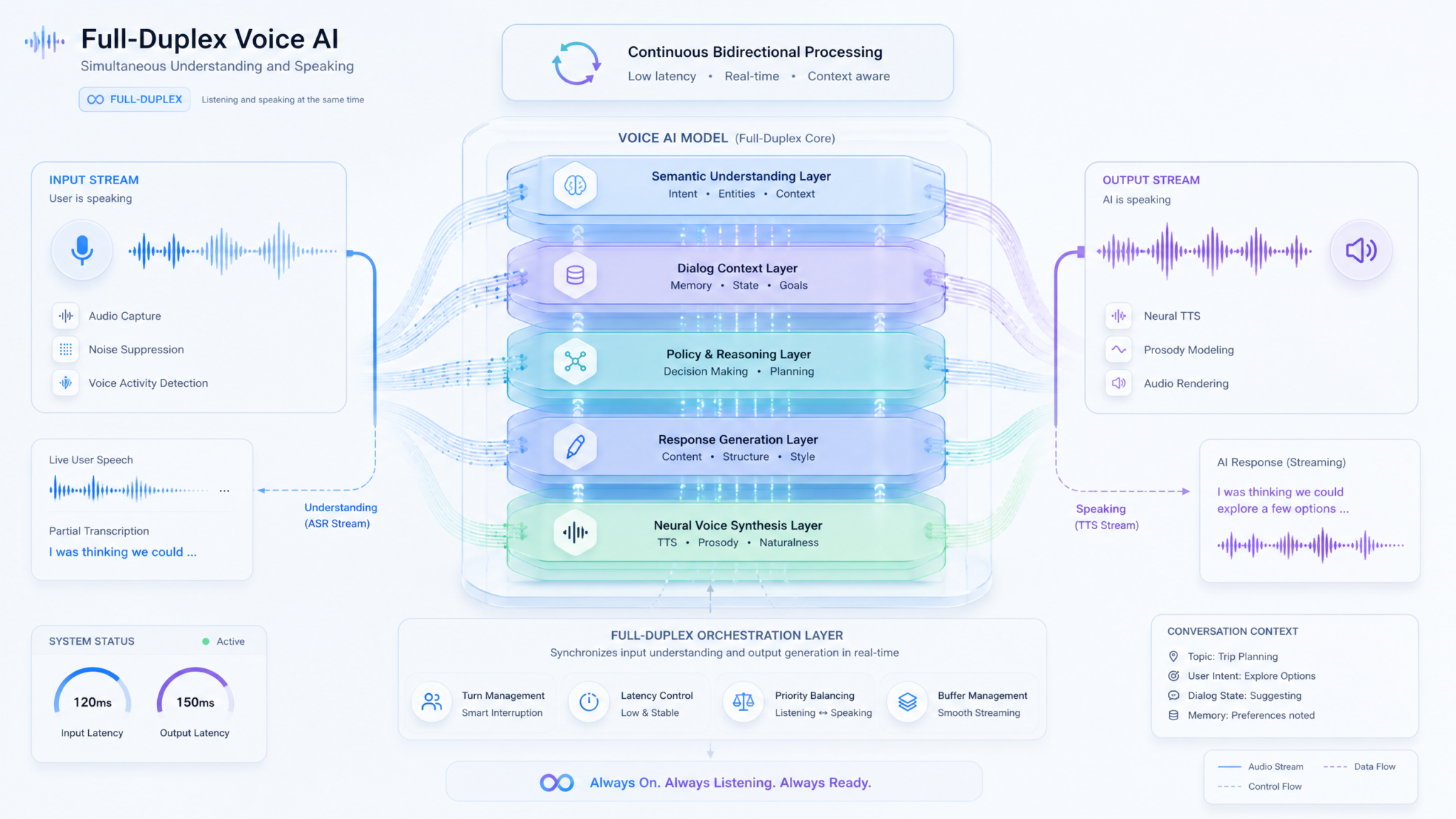
Comparison of Voice AI Architectures
| Feature | Cascaded Voice Systems | Turn-Based Voice Models | GPT-Live-1 (Full-Duplex) |
|---|---|---|---|
| Listening & Speaking | Sequential (STT then TTS) | Sequential (wait for user to finish) | Simultaneous |
| Conversational Flow | Slow, stilted, long pauses | Smoother but rigid, unnatural interruptions | Fast, natural, expressive, active listening |
| Information Loss | Possible across models | Reduced | Minimized through continuous processing |
| Complex Task Handling | Directly by LLM, causing delays | Directly by LLM, causing delays | Delegated to frontier models in background |
| Responsiveness | Low | Medium | High (real-time) |
Transforming User Experience: The New ChatGPT Voice
With over 150 million weekly users engaging with ChatGPT’s voice features, GPT-Live-1 dramatically enhances daily AI interactions—whether for quick questions, language learning, storytelling, or hands-free assistance.
More Natural Conversations
GPT-Live-1’s most noticeable improvement is conversational naturalness. Users can interrupt ChatGPT with questions, pause thoughtfully, or request slower speech. The model actively uses conversational cues like “mhmm” and “got it” to demonstrate engagement, making AI feel more like a responsive partner. Additionally, OpenAI has remastered ChatGPT’s nine distinct voices for GPT-Live-1, delivering richer, clearer audio experiences.
Smarter Answers
Integrated with OpenAI’s frontier models, GPT-Live-1 offers layered reasoning options. Users can request ‘Instant’ quick answers or ‘Medium’ and ‘High’ reasoning levels for complex queries, balancing speed with depth. This flexibility ensures ChatGPT meets diverse conversational needs seamlessly.
Better Listening
Unlike prior voice AIs prone to premature interruption or misinterpretation of pauses, GPT-Live-1 intelligently waits and respects explicit listen commands. Enhanced noise filtering better isolates user intent amidst background sounds, creating a more reliable and courteous voice assistant experience.
Visual Answers at a Glance
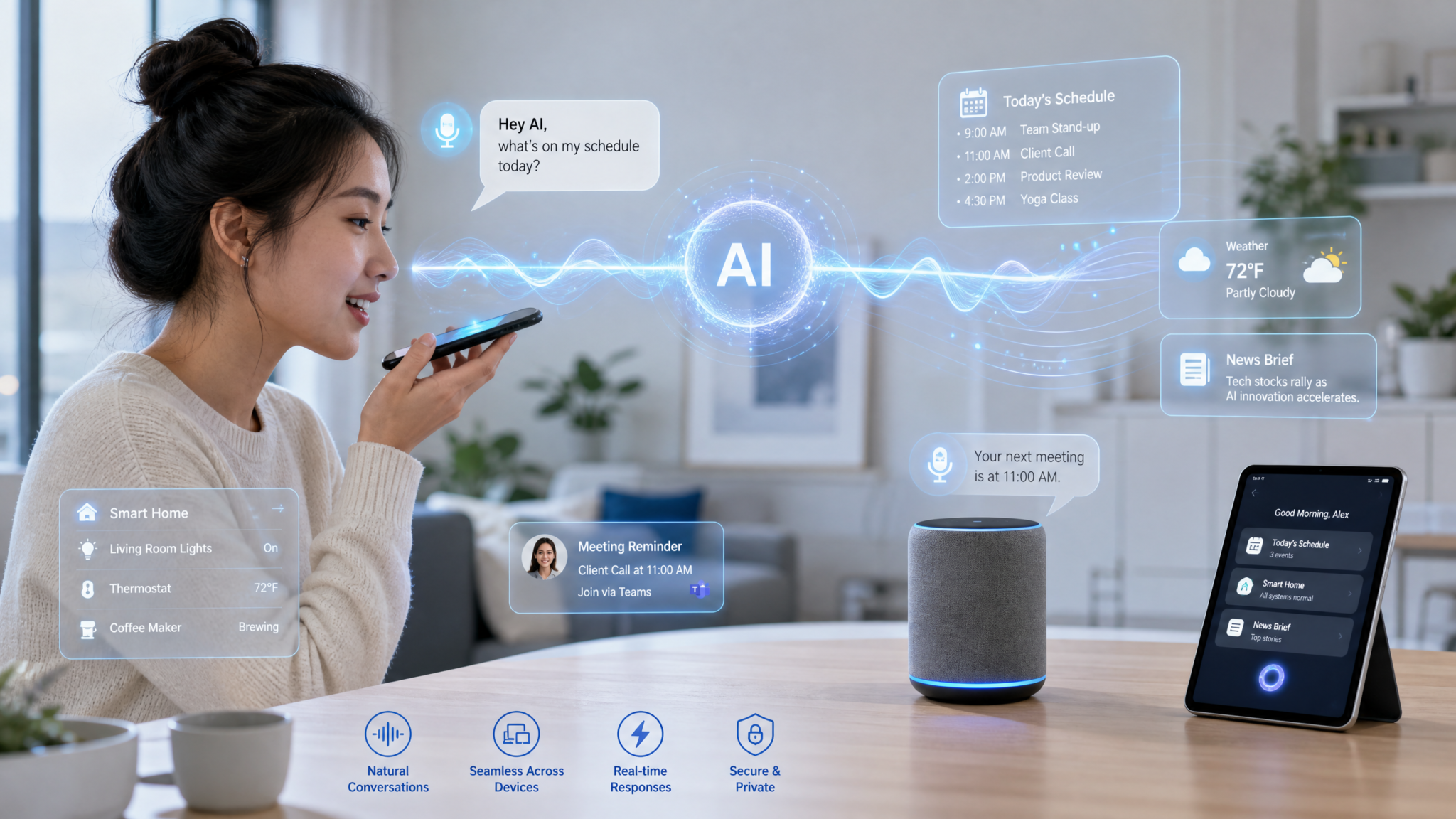
Recognizing that some information is best conveyed visually, GPT-Live-1 now displays rich visual cards—ideal for weather updates, stock market data, and sports scores. This multimodal approach integrates search, memory, image recognition, and file uploads for an intuitive, versatile ChatGPT Voice interface.
Broader Impact and Future Implications of GPT-Live-1
GPT-Live-1 is more than an incremental upgrade—it marks a new era of AI voice capabilities with wide-reaching implications.
Business Use Cases
In customer support, fluid conversation enables faster issue resolution and higher satisfaction by handling interruptions and clarifications naturally. For language learning, real-time practice with adaptive feedback offers immersive educational opportunities. In accessibility, GPT-Live-1 facilitates hands-free control for users with disabilities, fostering inclusivity. Furthermore, its adept delegation enables assistants to manage complex tasks like project management, scheduling, and advanced data analysis, revolutionizing agentic AI workflows.
Ethical Considerations and Safety Measures
OpenAI prioritizes safety with comprehensive audio-native testing, targeting risks such as self-harm, psychosis, emotional dependency, violence, and explicit content. Real-time safeguards steer conversations toward safety, provide resource referrals, or terminate voice interaction if needed. Teen users benefit from tailored behavior models and parental controls. Importantly, GPT-Live-1 forbids voice impersonation by using a fixed set of predefined voices, preserving ethical integrity.
Comparison with GPT-Realtime-2 (API Model)
Alongside GPT-Live-1 for ChatGPT end users, OpenAI introduced GPT-Realtime-2, a developer-focused API voice model. With GPT-5-class reasoning, GPT-Realtime-2 empowers developers to build custom real-time voice applications featuring translation, transcription, parallel tool usage, and advanced context management with adjustable reasoning levels. Together, these models represent OpenAI’s vision for expanding voice AI—GPT-Live-1 delivering polished user experiences, and GPT-Realtime-2 enabling versatile developer innovation. GPT-Realtime-2 API Deep Dive
Frequently Asked Questions about GPT-Live-1
Q1: What is the main difference between GPT-Live-1 and previous ChatGPT voice models?
GPT-Live-1’s full-duplex architecture enables simultaneous listening and speaking, creating a far more natural and fluid conversation compared to turn-based or cascaded voice AI.
Q2: How does GPT-Live-1 handle complex queries?
It delegates complex reasoning, web searches, or multi-step tasks to more powerful frontier models like GPT-5.5 running in the background, while maintaining smooth, real-time dialogue.
Q3: Is GPT-Live-1 available to all ChatGPT users?
GPT-Live-1 is rolling out globally on iOS, Android, and ChatGPT.com. It is the default voice model for Go, Plus, and Pro subscribers, while Free users default to GPT-Live-1 mini.
Q4: What safety measures protect GPT-Live-1 users?
OpenAI employs extensive safety testing, real-time response steering, age-appropriate protections for teens, parental controls, and anti-impersonation safeguards.
Q5: Can GPT-Live-1 be used for voice impersonation?
No. The model uses predefined voices only and incorporates multiple layers of protection to prevent voice imitation of real individuals.
Summary
GPT-Live-1 marks a revolution in voice-based AI interaction by introducing full-duplex conversation, enabling natural, dynamic, and uninterrupted dialogues. Its architecture combines fluid conversational ability with the power to delegate complex tasks, delivering smarter, faster, and more engaging experiences. Beyond enhancing daily interactions with ChatGPT Voice, GPT-Live-1 lays the foundation for transformative applications across education, customer support, accessibility, and enterprise AI. OpenAI’s robust safety mechanisms ensure this advancement is both responsible and ethical. For users and developers alike, GPT-Live-1 sets a new standard for what voice AI can achieve.
Related Articles on chatgptaihub.com
- ChatGPT Enterprise Deployment Playbook: How to Roll Out AI Across Your Organization Without Losing Control
- Hands-Free AI Coding: The Complete Guide to Voice-Controlled Development with GPT-Live and Codex Desktop
- 25 ChatGPT-5.5 Prompts for Personal Health and Fitness Optimization Using Apple Health Data
Useful Links
- OpenAI Official Announcement: Introducing GPT-Live
- OpenAI Official Announcement: Advancing Voice Intelligence with New Models in the API
- MindStudio AI Blog: What Is GPT-Live-1? OpenAI’s Full-Duplex Voice Model Explained
- TechCrunch: OpenAI Releases New Voice Models for More Natural Live Conversations
- GetBluejay AI: Voice AI Agent Architecture Patterns
References
[1] OpenAI. (2026, July 8). Introducing GPT-Live. https://openai.com/index/introducing-gpt-live/
[2] OpenAI. (2026, May 7). Advancing Voice Intelligence with New Models in the API. https://openai.com/index/advancing-voice-intelligence-with-new-models-in-the-api/
