
How to Choose Between OpenAI Codex and Claude Code for AI-Powered Development in 2026
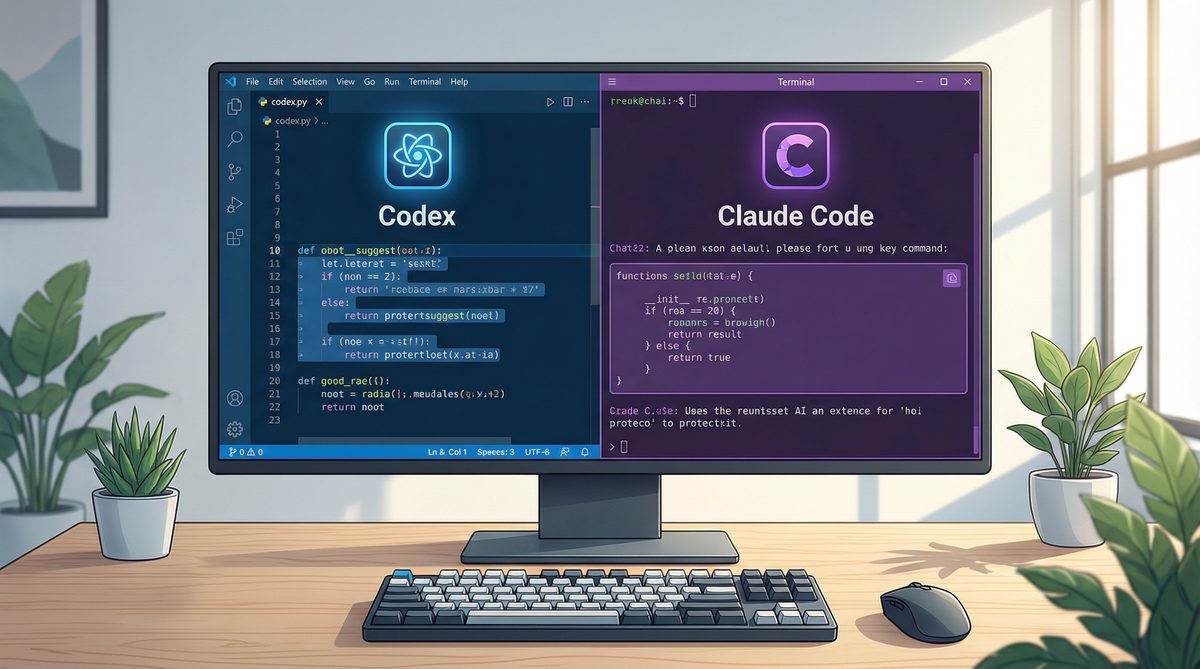
⚡ The Brief
- What it is: A comparison of AI-powered development tools, OpenAI Codex and Claude Code, for 2026.
- Who it’s for: Developers seeking to enhance their coding workflow with advanced AI tools.
- Key takeaways: Understand the core functionalities, agentic capabilities, and ecosystem support of Codex and Claude Code.
- Pricing/Cost: Pricing varies based on usage, with potential subscription models for enterprise features.
- Bottom line: Choose the tool that aligns with your development needs and ecosystem preferences.
✓ Instant access✓ No spam✓ Unsubscribe anytime
The landscape of AI-powered development tools is evolving at an unprecedented pace. As we look towards 2026, developers face a critical choice between powerful code generation and assistance models like OpenAI Codex and Anthropic’s Claude Code. Both offer compelling capabilities, but their fundamental architectures, deployment strategies, and strategic positioning have diverged significantly, making an informed decision crucial for long-term project success and developer workflow efficiency.
This tutorial will delve deep into the nuances of OpenAI Codex and Claude Code, providing a comprehensive comparison tailored for developers. We will explore their core functionalities, discuss their unique agentic capabilities, and analyze the critical differences in their availability and ecosystem support, particularly in light of recent policy shifts from their respective parent companies. Understanding these distinctions is paramount for selecting the right tool to integrate into your AI-powered development stack.
Understanding OpenAI Codex: The Mac-Native Agentic Powerhouse

OpenAI Codex has cemented its position as a leading AI model for code generation and understanding. By 2026, its evolution has led to a robust, dedicated macOS application, positioning it as an agentic multi-task coding solution. This native application provides a seamless, integrated experience for developers working within the Apple ecosystem, offering a level of system-level integration and performance optimization that terminal-based solutions often struggle to match.
Core Capabilities and Features of OpenAI Codex (macOS App)
The macOS application for OpenAI Codex is designed to be a developer’s co-pilot, capable of handling complex, multi-step coding tasks. Its agentic capabilities mean it can not only generate code snippets but also understand project context, debug issues, refactor existing codebases, and even interact with local development environments. This goes beyond simple auto-completion or suggestion; Codex can act as an intelligent agent, executing tasks that require a deeper understanding of programming logic and project goals.
- Agentic Multi-Task Coding: The defining feature of the macOS app is its ability to perform agentic tasks. This includes generating entire functions or classes based on natural language descriptions, fixing bugs identified in error logs, optimizing performance bottlenecks, and even writing unit tests. The agent can break down complex problems into smaller, manageable steps and execute them iteratively.
- Deep macOS Integration: Being a native application, Codex leverages macOS APIs for a superior user experience. This includes integration with the file system, clipboard, and even other development tools installed on the system. This allows for fluid interaction, such as automatically copying generated code to a specific file or reading existing code from a project directory.
- Contextual Awareness: Codex excels at maintaining context across multiple files and project directories. It can understand the relationships between different modules and components, leading to more accurate and relevant code suggestions and generations. This contextual understanding is crucial for large-scale software projects.
- Interactive Debugging Assistance: The macOS app provides interactive debugging assistance, where Codex can analyze error messages, suggest potential fixes, and even guide the developer through the debugging process. This significantly reduces the time spent on troubleshooting.
- Code Refactoring and Optimization: Beyond generating new code, Codex can intelligently refactor existing code for improved readability, maintainability, and performance. It can identify anti-patterns and suggest more efficient algorithms or data structures.
Availability and Ecosystem: OpenAI’s Strategic Shift
One of the most significant factors influencing the choice of OpenAI Codex in 2026 is its increased availability. OpenAI has strategically made Codex more accessible, not just through its dedicated macOS application but also through expanded API access for enterprise clients. This move reflects OpenAI’s commitment to embedding Codex deeply into developer workflows and making it a foundational tool for AI-powered software development. The dedicated macOS app is a testament to this, providing a highly optimized, low-latency experience that is difficult to replicate with web-based or terminal-only solutions. For developers heavily invested in the Apple ecosystem, this native application offers unparalleled convenience and performance, making it a highly attractive option for agentic coding tasks. For those looking to further streamline their AI-powered development, particularly in generating production-ready backend services at significantly reduced costs, our guide on how to Turn Prototypes into Production Apps 20x Cheaper: AutoBE + Qwen 3.5 + OpenRouter Setup Guide details using AutoBE with Qwen 3.5 via OpenRouter.
Exploring Claude Code: The Terminal-Based Agentic Solution
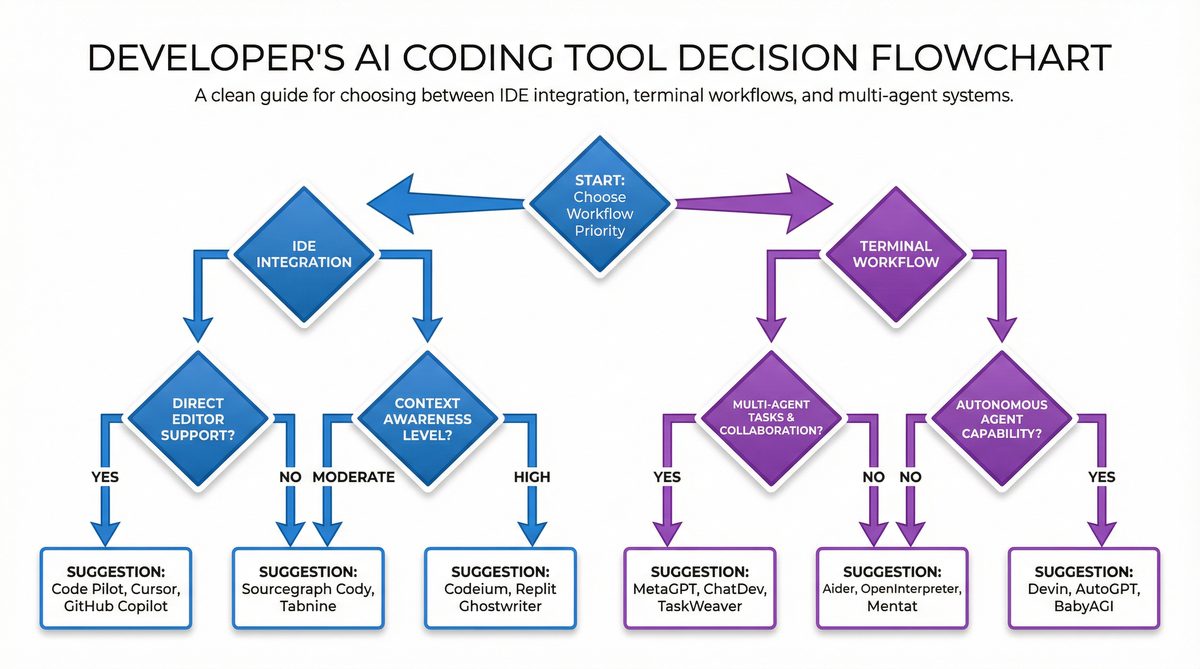
Anthropic’s Claude Code, while equally powerful in its underlying language model capabilities, has taken a different strategic path for developer interaction. By 2026, Claude Code is primarily positioned as a terminal-based agentic coding product. This means developers interact with Claude Code directly through their command line interface, leveraging its generative and analytical capabilities within a text-only environment. While this approach might seem less graphically rich than a dedicated macOS app, it offers distinct advantages in terms of universality, scriptability, and integration into existing shell-based workflows.
Core Capabilities and Features of Claude Code (Terminal-Based)
Despite its terminal-centric nature, Claude Code is a highly sophisticated agentic coding tool. Its strengths lie in its natural language understanding, robust code generation, and ability to execute complex coding tasks through textual prompts and responses.
- Agentic Coding via CLI: Claude Code allows developers to issue natural language commands directly in the terminal. For instance, a developer could type “
claude code create a Python script to parse CSV and output JSON” and receive the generated code directly in their terminal, or piped to a file. - Universal Accessibility: Being terminal-based, Claude Code is inherently platform-agnostic. It can be accessed from any operating system (macOS, Linux, Windows via WSL) that supports a command-line interface, making it a versatile choice for diverse development environments.
- Scriptability and Automation: The terminal interface makes Claude Code highly scriptable. Developers can integrate Claude Code commands into build pipelines, CI/CD workflows, or custom automation scripts, enabling automated code generation, testing, and even deployment assistance. This is a significant advantage for DevOps teams and those focused on infrastructure as code.
- Strong Natural Language Understanding: Claude Code, powered by Anthropic’s advanced language models, excels at understanding nuanced natural language prompts. This allows for highly descriptive and less rigid command structures, making it intuitive for developers to articulate their coding needs.
- Focused Code Generation and Analysis: While it might lack the visual integration of a GUI, Claude Code is incredibly powerful for generating specific code blocks, analyzing existing code for vulnerabilities or inefficiencies, and providing detailed explanations of complex algorithms.
Availability and Ecosystem: Anthropic’s Policy Shift
A critical factor for Claude Code’s adoption in 2026 is Anthropic’s policy decision in April 2026 to ban third-party agents from accessing Claude Pro/Max. This move has significant implications. While it means Claude Code remains a powerful first-party solution, it limits the ecosystem of external tools and services that can leverage Claude’s advanced capabilities for agentic coding. Developers cannot build custom agents on top of Claude Pro/Max to perform multi-task operations, which stands in stark contrast to OpenAI’s more open approach to API access for agentic applications. This decision by Anthropic emphasizes a controlled, first-party experience, ensuring consistency and potentially higher security, but at the cost of broader third-party innovation. For developers who prioritize a highly customizable and extensible agentic framework, this policy difference is a major consideration. This open approach by OpenAI, which allows for the integration of AI to accelerate development workflows, is further explored in our article detailing How to Use OpenAI Codex in ChatGPT for Full-Stack Development Projects, where we discuss leveraging AI for various full-stack tasks. Understanding the ethical implications of AI code generation is also crucial, and our analysis of The Future of Artificial Intelligence: Trends, Applications, and Ethical Considerations examines how responsible AI development practices shape the tools and frameworks that developers rely on daily.
Comparative Analysis: OpenAI Codex vs. Claude Code in 2026
Get Free Access to 40,000+ AI Prompts
Join 40,000+ AI professionals. Get instant access to our curated Notion Prompt Library with prompts for ChatGPT, Claude, Codex, Gemini, and more — completely free.
Get Free Access Now →No spam. Instant access. Unsubscribe anytime.
To help you make an informed decision, let’s directly compare OpenAI Codex (macOS app) and Claude Code (terminal-based) across key dimensions relevant to AI-powered development in 2026.
User Experience and Integration
- OpenAI Codex (macOS): Offers a rich, integrated graphical user interface (GUI). Its native macOS app provides a seamless experience, integrating with the operating system’s features, visual editors, and other installed development tools. This leads to a more intuitive and visually guided workflow, especially for developers who prefer a graphical environment.
- Claude Code (Terminal): Provides a command-line interface (CLI). This offers a lightweight, highly efficient, and keyboard-centric workflow. While it lacks visual cues, it excels in speed, resource efficiency, and scriptability, appealing to developers who are comfortable with the terminal and prefer automation.
Agentic Capabilities and Multi-Tasking
- OpenAI Codex (macOS): Designed for agentic multi-task coding within its dedicated application. It can autonomously perform sequences of actions, interact with the local environment, and manage project context across multiple files, offering a more holistic “co-developer” experience.
- Claude Code (Terminal): While also agentic, its multi-tasking is typically driven by sequential commands or integrated into scripts. It can understand and execute complex coding tasks, but the orchestration of these tasks across a larger project might require more explicit scripting from the developer due to its terminal-based nature and Anthropic’s agent policy.
Availability and Ecosystem Strategy
- OpenAI Codex: Increased availability, particularly with its dedicated macOS app and expanded API access for custom integrations. OpenAI encourages an ecosystem where developers can build upon Codex, offering flexibility for varied use cases and third-party tools.
- Claude Code: Availability is strong as a first-party tool, but Anthropic’s ban on third-party agents from Claude Pro/Max significantly curtails the development of external agentic tools that leverage Claude’s most advanced models. This means developers are more reliant on Anthropic’s direct offerings for agentic functionality.
Performance and Resource Usage
- OpenAI Codex (macOS): As a native application, it can be highly optimized for macOS hardware, potentially offering superior performance and lower latency for complex tasks, especially those involving local file system interactions or large codebases. However, it might consume more system resources than a purely terminal-based solution.
- Claude Code (Terminal): Generally more lightweight in terms of system resource consumption. Its text-based interaction means less overhead, which can be beneficial for developers working on less powerful machines or in remote server environments. Performance is largely dependent on API latency.
Choosing the Right Tool for Your Project
The decision between OpenAI Codex and Claude Code in 2026 hinges on several factors:
| Feature/Consideration | OpenAI Codex (macOS App) | Claude Code (Terminal-Based) |
|---|---|---|
| User Interface | Graphical (macOS native app) | Command Line Interface (CLI) |
| Agentic Multi-tasking | Integrated within app, interacts with local environment | Via commands & scripts, less direct local interaction |
| Platform Compatibility | Primarily macOS (native app) | Cross-platform (macOS, Linux, Windows via WSL) |
| Ecosystem & 3rd Party Agents | Open, encourages third-party integrations & custom agents | Closed for Claude Pro/Max (no 3rd party agents) |
| Integration with IDE/Tools | Deep macOS system & app integration | Via shell scripts, piping, and CLI tools |
| Best For | macOS developers seeking visual, integrated, autonomous coding assistance across complex projects. | Developers preferring CLI, automation, platform-agnostic tools, and focused code generation/analysis. |
If you are a macOS developer who values a rich, integrated graphical experience with deep system interaction for agentic multi-tasking, OpenAI Codex’s dedicated application is likely your stronger choice. Its increased availability and emphasis on a broad ecosystem make it a flexible and powerful co-development partner. As AI continues to evolve and reshape various industries, understanding its implications for careers and business strategies becomes paramount. For a comprehensive look at how artificial intelligence is transforming employment landscapes and what professionals, from job seekers to CEOs, need to know to adapt and thrive, delve into The Great Reshaping: AI and the Future of Work in 2026 — A Complete Guide for Professionals and Businesses.
Conversely, if you prefer a lean, terminal-based workflow, require cross-platform compatibility, prioritize scriptability for automation, or operate in an environment where resource efficiency is paramount, Claude Code will be an excellent fit. However, be mindful of Anthropic’s policy on third-party agents, which may limit certain advanced multi-tasking integrations.
Ultimately, the “best” choice is subjective and depends on your specific development environment, project requirements, and personal workflow preferences. Both OpenAI Codex and Claude Code represent the cutting edge of AI-powered development, and understanding their unique strengths and strategic directions in 2026 will empower you to make the most informed decision for your coding journey.
Access 40,000+ AI Prompts for ChatGPT, Claude & Codex — Free!
Subscribe to get instant access to our complete Notion Prompt Library — the largest curated collection of prompts for ChatGPT, Claude, OpenAI Codex, and other leading AI models. Optimized for real-world workflows across coding, research, content creation, and business.
Access Free Prompt Library🕐 Instant∞ Unlimited🎁 Free
Frequently Asked Questions
What are the main differences between Codex and Claude Code?
Codex is optimized for macOS with agentic capabilities, offering deep integration and performance optimization. Claude Code, on the other hand, focuses on cross-platform compatibility and ethical AI practices, providing robust support for diverse development environments. Both have unique strengths depending on your project needs.
How does OpenAI Codex integrate with macOS?
OpenAI Codex's macOS application offers seamless system-level integration, allowing developers to leverage its agentic capabilities directly within their native development environment. This integration enhances performance and provides a cohesive experience, making it a powerful tool for developers using Apple hardware.
What are agentic capabilities in AI development tools?
Agentic capabilities refer to an AI's ability to perform complex, multi-step tasks autonomously. In the context of Codex, this includes generating code, debugging, refactoring, and interacting with development environments, all based on natural language prompts. This capability significantly enhances productivity and workflow efficiency.
Is Claude Code suitable for all development environments?
Yes, Claude Code is designed to be cross-platform, making it suitable for a wide range of development environments. It emphasizes ethical AI practices and offers robust support, making it a versatile choice for developers who prioritize these aspects in their workflow.
What is the role of prompt engineering in using these tools?
Prompt engineering involves crafting effective prompts to guide AI models in generating desired outputs. Techniques like chain-of-thought, structured outputs, and system prompts are crucial for maximizing the capabilities of tools like Codex and Claude Code, ensuring accurate and contextually relevant results.
How do recent policy shifts affect Codex and Claude Code?
Recent policy shifts have influenced the strategic positioning and availability of both tools. OpenAI and Anthropic have adjusted their deployment strategies to align with evolving ethical standards and market demands, impacting how these tools are integrated and utilized in development workflows.
