
Inside the Codex Plugin Ecosystem: How 20+ Integrations Are Reshaping Enterprise AI Development
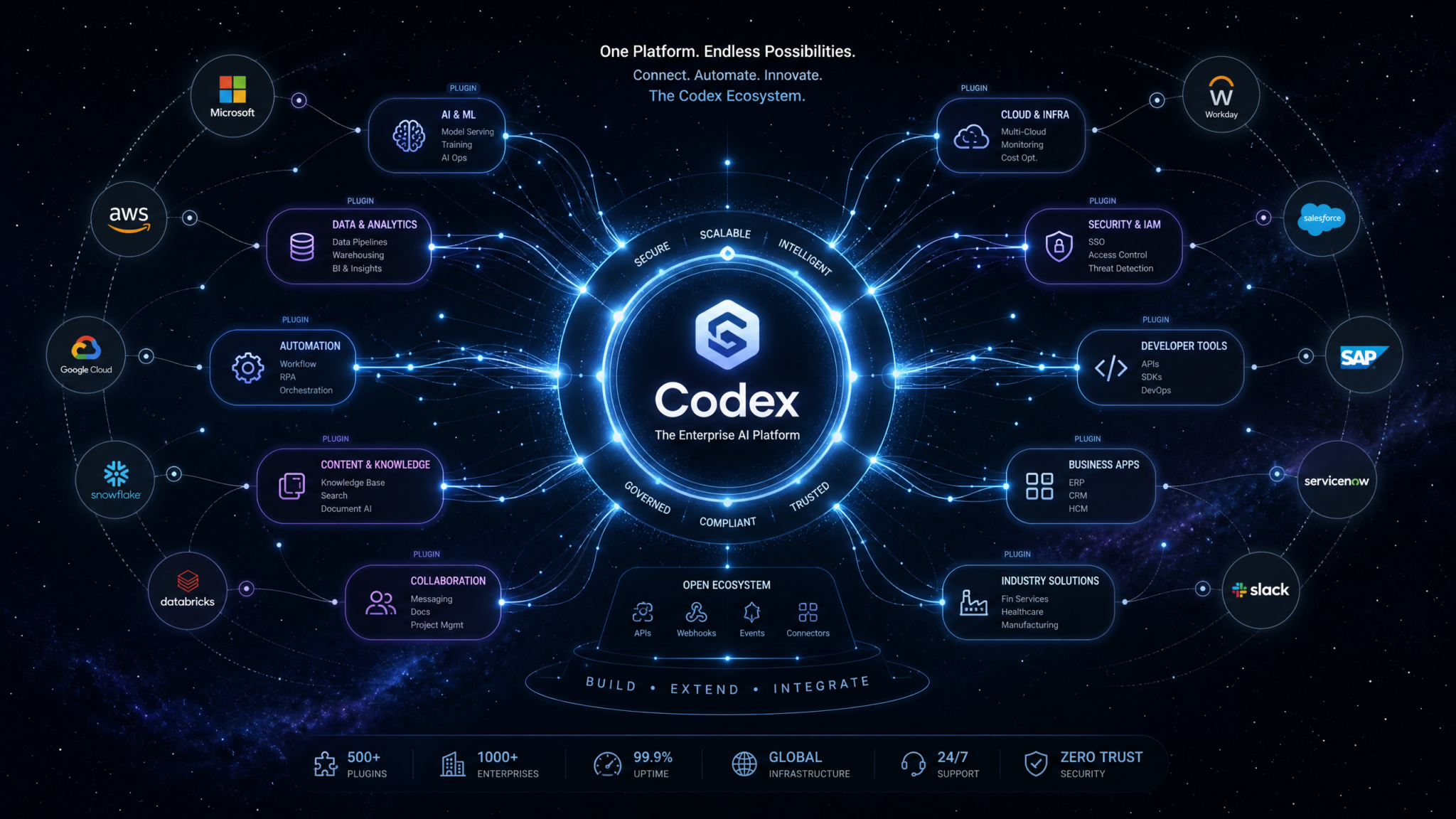
Featured Analysis: The OpenAI Codex Plugin Ecosystem and Its Impact on Enterprise AI Development
By Markos Symeonides, Chat GPT AI Hub
Executive summary
OpenAI’s Codex plugin ecosystem arrives at a pivotal moment for enterprise AI development, bringing more than 20 launch integrations and a three-layer architecture explicitly designed to translate business intent into deterministic, auditable execution. Anchored by the “Skills, Apps, MCP Servers” stack, Codex reframes how large organizations think about AI-powered software creation. Rather than treating connectors as permissive add-ons with ad hoc guardrails, Codex formalizes behavior through executable specifications called Skills, orchestrated by Apps, and backed by Model Context Protocol (MCP) Servers that standardize tool and data access. Early enterprise adopters—including Cisco, NVIDIA, Ramp, and Rakuten—demonstrate that the approach is sufficiently mature to deploy across complex environments with existing identity, observability, and compliance controls.
Three characteristics distinguish Codex’s plugin system from earlier entrants. First, OpenAI emphasizes behavioral standardization over purely permission-centric guardrails. Skills operate as contracts: structured, unit-testable descriptions of what to build, how to build it, and under which constraints. Second, Codex extends governance beyond access control to policy-constrained execution, expressed through JSON policy files, role-based access control (RBAC), and curated directories that define the envelope of permissible actions for both humans and AI. Third, OpenAI’s distribution strategy—combining a Curated Directory, Repo-scoped Marketplace, and Personal Marketplace—creates distinct lanes for organizational adoption, enabling centralized IT teams and autonomous developers to coexist without compromising risk posture.
Although OpenAI was the last of the AI majors to ship developer-focused plugins—following Anthropic’s Claude Code and Google’s Gemini CLI—the time-to-market deficit is offset by a deeper investment in execution pattern formalization. This shift moves AI assistants from a world of “do I have permission to run this step?” to “what is the canonical way to solve this class of problems?” The net result is a reduction in variance between junior and senior developer outcomes, because Codex can enforce style, testing, and integration patterns within its Skills. Combined with a broad integration roster spanning Slack, Figma, Notion, Linear, Sentry, GitHub, Hugging Face, Gmail, Google Drive, Box, and others, the system meets developers where they already work while minimizing the operational cost of AI adoption.
Security leaders will note a corollary: every new connector is a potential attack surface. Codex squarely addresses this reality with sandboxing defaults, explicit scopes, and a governance plane that is designed for continuous audit. Nevertheless, the responsibility model remains shared. Enterprisewide success depends on robust policy definition, ongoing monitoring, and a distribution model that prevents configuration drift and permission creep. With the right practices, Codex’s plugin ecosystem is poised to accelerate software delivery, standardize engineering quality, and unlock broader cross-functional collaboration between product, design, and operations teams.
The plugin landscape
OpenAI launched Codex with more than 20 plugins that connect modern developer tooling, design systems, knowledge platforms, and enterprise file stores into a coherent development workflow. The launch cohort covers team collaboration, source control, issue tracking, observability, knowledge retrieval, and content generation. Crucially, each plugin is not just a raw API integration; it is presented in a way that Codex can reason about consistently, forming the building blocks for Skills that span multiple systems.
What shipped: breadth over novelty
The initial plugin roster includes deep touchpoints across the developer lifecycle. While the following list is not exhaustive, it illustrates the intentional coverage across design, planning, coding, testing, deployment, and post-deployment feedback loops. Many of these integrations are bi-directional, enabling Codex not only to read from a system but to execute state-changing operations under governance constraints.
| Category | Plugin | Primary Use Cases | Interaction Modes |
|---|---|---|---|
| Collaboration | Slack | Stand-ups, deployment notices, code review summaries, incident coordination | Read/write channels, threaded updates, interactive approvals |
| Design | Figma | Component inspection, redline generation, design-to-code scaffolding | Asset retrieval, variant diffing, export controls |
| Productivity | Notion | Spec drafting, decision logs, knowledge retrieval | Page read/write, database query, content templating |
| Planning | Linear | Issue creation, grooming, sprint planning | Ticket lifecycle updates, labels/estimates, dependency mapping |
| Observability | Sentry | Error triage, regression detection, release health | Project alerts, stack trace analysis, resolution workflows |
| Source Control | GitHub | Pull requests, code review, Actions orchestration | Branching, commit diffs, status checks |
| AI/ML | Hugging Face | Model discovery, inference endpoints, datasets | Pipeline invocation, metadata inspection |
| Gmail | Release comms, incident updates, stakeholder reporting | Inbox querying, templated sending, attachment handling | |
| File Storage | Google Drive | Design assets, requirements documents, test evidence | Folder scoping, document versioning, link permissions |
| File Storage | Box | Enterprise content management, audit-backed archives | Granular sharing, retention policy reads |
| ChatOps | Microsoft Teams | Alerts, executive briefings, approval gates | Channel posts, adaptive cards, mentions |
| Issue Tracking | Jira | Backlog refinement, dependency visualization | JQL queries, transition hooks, comments |
| CI/CD | Jenkins | Build orchestration, test pass/fail analysis | Job triggers, artifact retrieval |
| CI/CD | CircleCI | Pipeline insights, flaky test management | Workflow control, context scoping |
| Monitoring | Datadog | Dashboards, SLOs, anomaly detection | Timeseries queries, monitor creation |
| Incident Response | PagerDuty | On-call routing, postmortem generation | Incident creation, paging policies |
| Documentation | Confluence | Runbooks, API contracts, architecture decisions | Page sync, macro rendering |
| CRM | Salesforce | Change impact comms, customer feedback loops | Record reads, case updates |
| Meetings | Zoom | Transcript analysis, action item extraction | Recording fetch, summary generation |
| Identity | Okta | Access governance signals, session guardrails | Group reads, session policies |
Just as important as the count is the philosophy behind these plugins. Under Codex, a Slack plugin is not merely a way to post messages. It becomes one atomic part of a higher-order Skill—for example, a “Release Cutover” Skill that merges a pull request via GitHub, triggers a Jenkins pipeline, watches Sentry for new error rates, and then posts status in Slack and Teams while emailing the stakeholder list via Gmail. The objective is orchestration by intent rather than step-by-step micromanagement.
Why this matters for the enterprise
Enterprises have long invested in integration platforms, but AI-enabled automation raises the bar. A development assistant that can read and write issues, review code, push builds, and communicate changes must operate within the same controls and audit trails as a human engineer. The Codex plugin system’s emphasis on consistent behavior gives security and platform teams a lever: define the “golden paths” once, then allow AI to execute them repeatedly without the drift introduced by human variability. In essence, plugins give Codex limbs; Skills and policies give it posture.
Developer experience: fewer context switches, more reliable outcomes
For developers, plugin breadth translates to fewer context switches. Instead of hopping between browser tabs to gather design specs, write tests, open a PR, and update a sprint board, a developer can delegate coherent bundles of work to Codex. More critical than speed is consistency. If a Skill requires that all PRs include static analysis results, signed commits, and a changelog entry formatted to a house standard, Codex will enforce these patterns every time. This is how the system reduces the gap between junior and senior developer assistance: the assistant is instructed to think and act like your senior engineers, codified as Skills.
Architecture deep dive: Skills, Apps, and MCP Servers
The Codex architecture is explicitly layered. OpenAI has separated “what good looks like” (Skills), “when and how to use skills” (Apps), and “what tools and data are available” (MCP Servers). This structure turns scattered integrations into a programmable platform for behavior.
Skills: executable specifications
Skills are the heart of Codex’s behavioral standardization. A Skill is an executable specification that describes intent, constraints, dependencies, validation steps, and observable outcomes for a given class of work. Think of Skills as the systematized knowledge of your senior engineers translated into a contract the assistant can execute. They are not free-form prompts; they are structured artifacts with clear inputs, outputs, preconditions, postconditions, and error-handling strategies.
Key properties of Skills include:
- Deterministic structure: Clear schemas for inputs and outputs, designed for programmatic validation and testing.
- Policy awareness: Each step can be gated by policy checks, required approvals, or environment constraints.
- Composable: Skills can call other Skills, enabling layered practices (e.g., “Write Test” as a sub-skill in “Implement Feature”).
- Observable: Emission of telemetry and provenance for every action, enabling monitoring and audit.
- Versioned: Changes to Skills are tracked, tested, and rolled out like software.
Contrast this with ad hoc instructions to an AI assistant. Instead of hoping that a model will remember to run linters, look up design tokens, write integration tests, and post to the right Slack channel, a Skill explicitly enumerates these steps and how to handle failure. This is the essence of execution pattern formalization.
Example: a Skill contract for “Create and Land a Safe Pull Request”
{
  "name": "safe_pull_request",
  "description": "Implements a change with tests, opens a PR, gates on policy checks, and lands via squash merge.",
  "inputs": {
    "repo": "string",
    "branch": "string",
    "issue_id": "string",
    "change_description": "string",
    "risk_level": { "type": "enum", "values": ["low", "medium", "high"] }
  },
  "preconditions": [
    "GitHub repo access validated",
    "Issue linked in Linear or Jira is in 'In Progress'",
    "Required design assets found in Figma project"
  ],
  "steps": [
    { "action": "checkout_branch", "using": "GitHub", "params": { "repo": "$repo", "branch": "$branch" } },
    { "action": "generate_code", "using": "Codex", "constraints": { "style_guide": "org/javascript", "tests_required": true } },
    { "action": "run_static_analysis", "using": "GitHub.Actions", "policy": "fail_on_warning" },
    { "action": "run_unit_tests", "using": "Jenkins", "params": { "job": "unit-tests" } },
    { "action": "open_pull_request", "using": "GitHub", "params": { "title": "$change_description", "link_issue": "$issue_id" } },
    { "action": "post_summary", "using": "Slack", "params": { "channel": "#eng-prs", "template": "pr_summary" } },
    { "action": "await_approvals", "policy": "rbac:require_senior_reviewer" },
    { "action": "merge_strategy", "using": "GitHub", "params": { "type": "squash" }, "policy": "no_blocking_checks" }
  ],
  "postconditions": [
    "PR merged",
    "Changelog updated",
    "Sentry release tagged",
    "Linear ticket advanced to 'In Review'"
  ],
  "error_handling": {
    "on_test_failure": { "action": "create_issue", "using": "Linear", "label": "test-failure" },
    "on_policy_violation": { "action": "notify_security", "using": "Slack", "channel": "#sec" }
  },
  "observability": {
    "emit_events": ["skill_started", "step_completed", "policy_violation", "skill_succeeded"],
    "trace_id": "auto"
  },
  "version": "1.3.0"
}
This example illustrates how a Skill organizes dozens of small decisions into a repeatable unit. It is also precisely where Codex can codify the practices that typically distinguish senior engineers: consistent test coverage, policy-first gating, and disciplined communication. As organizations refine Skills, the AI assistant’s output converges on house standards, reducing variability and, over time, technical debt.
Apps: orchestration, UX, and context control
Apps sit above Skills as the layer that mediates when and how Skills are selected, parameterized, and executed. Apps provide the UX for developers—CLI experiences in terminals, IDE extensions, or chat-first workflows in tools like Slack. They manage working context and session state, feed relevant artifacts to Codex (source files, tickets, design assets), and handle human-in-the-loop approvals where policy requires them.
Apps typically implement:
- Context assembly: Gathering source code spans, design references, issue descriptions, and logs into a coherent working set.
- Skill selection: Mapping user intent (“refactor the checkout service for PCI compliance”) to one or more Skills.
- Execution policy: Enforcing JSON policy files and RBAC decisions before, during, and after execution.
- Presentation: Rendering diffs, test summaries, and approval prompts in developer-friendly surfaces.
- State and provenance: Recording every step with trace IDs, annotating artifacts with the Skill version and policy bundle in effect.
Because Apps are the front door, they are also a control plane. Organizations can distribute different App builds for distinct business units, or conditionally enable certain Skills in regulated workloads. In many deployments, Apps become the extension point where enterprises plug in Single Sign-On (SSO), data loss prevention (DLP) scanners, and analytics hooks.
MCP Servers: consistent tool access via the Model Context Protocol
MCP Servers provide Codex a structured, auditable interface to tools, APIs, and data systems. Rather than binding directly to every vendor API, Codex communicates through the Model Context Protocol, which abstracts capabilities, exposes structured schemas, and applies scoped credentials. This is the mechanism that makes plugins more than “OAuth tokens with prompts.” MCP Servers present capabilities in machine-readable form, so Skills know exactly what functions are available and under what constraints.
MCP Server responsibilities include:
- Capability schemas: Defining functions, arguments, and permissible return types.
- Authentication: Managing scoped credentials, token refresh, and just-in-time access grants.
- Policy hooks: Exposing pre- and post-call hooks for policy enforcement and telemetry.
- Sandboxing: Brokering isolated execution for risky tools (e.g., shell, file I/O), when applicable.
- Observability: Emitting structured logs and traces keyed by Skill and App context.
By localizing tool access in MCP Servers, Codex helps enterprises compartmentalize risk. If the Gmail connector exhibits anomalous behavior, that server can be paused without disabling the entire assistant. Moreover, MCP Server versioning allows IT teams to test new capabilities in non-production sandboxes before promoting them into curated directories.
The MCP server layer within the plugin architecture builds on OpenAI’s broader tool discovery infrastructure. Our guide to using MCP Tool Search in OpenAI Codex explains how dynamic tool discovery works for AI agents, providing the technical foundation that makes the plugin ecosystem’s extensibility possible.
Enterprise adoption stories
The credibility test for any enterprise technology is production usage. Codex’s plugin ecosystem has already been deployed at organizations with complex multi-cloud estates, heterogeneous tech stacks, and stringent compliance controls. While each company’s journey reflects distinct goals, common threads emerge: Skills serve as the lingua franca for standardizing engineering patterns, Apps provide the ergonomic surface layer, and MCP Servers insulate sensitive systems behind policy-aware interfaces.
Cisco: policy-first automation across network and software domains
Cisco’s product teams straddle two worlds: traditional network infrastructure and cloud-native software. Prior to Codex, automations lived in team-specific scripts with inconsistent review practices and scattered logs. With Codex, Cisco’s platform group defined a set of Skills that encode their “secure-by-default” design rules:
- Every PR must include static and dynamic security checks with signed artifacts.
- Network configuration changes must be simulation-tested and tagged with change windows.
- Incident runbooks must be updated and linked to Confluence after every postmortem.
Codex’s GitHub, Jenkins, Sentry, Confluence, and Slack plugins underpin these Skills. The Apps layer presents engineers with a consistent CLI that wraps their IDEs, while MCP Servers normalize access to sensitive configuration backends. Cisco reports that junior developers can now reliably land changes that meet the same bar previously enforced through tribal knowledge and manual review cycles. The impact is not just speed—mean-time-to-remediation improved due to reliable, automated postmortems with precise provenance.
NVIDIA: design-to-code workflows between Figma and monorepos
NVIDIA’s internal design systems include a rich library of components and tokens, with strict performance budgets. Historically, translating updated Figma designs into production-ready React components involved manual reconciliation and bespoke handoffs. Codex’s Figma and GitHub plugins, coupled with house-defined Skills, close this loop. A “Design Drift Correction” Skill monitors Figma changes, validates them against performance and accessibility budgets, generates component diffs, opens PRs in the monorepo, and posts change summaries to Slack.
The key is not the novelty of parsing Figma; it is how Codex’s Skills enforce NVIDIA’s standards on every change. The result is fewer regressions, tighter feedback cycles, and a transparent trail from design artifact to code commit. Through MCP Servers, NVIDIA scopes read/write access to specific repositories and Figma projects, limiting lateral movement and making audits straightforward.
Ramp: finance-grade guardrails with developer velocity
Ramp operates in a regulated domain where auditability is as valuable as speed. Before Codex, the company’s developers used separate bots for PR hygiene, CI/CD triggers, and incident comms. Consolidation into Codex reduced tool sprawl. Ramp’s Skills require test evidence attachments to Box or Google Drive for certain change types, enforce multi-party approvals for risky migrations, and auto-generate release comms via Gmail to predefined distribution groups.
RBAC and JSON policy files ensure that “who can trigger what” is explicit and preserved across environments. For example, a “Data Migration” Skill is disabled by default in developer sandboxes and can only be enabled by platform owners for staging or production. Ramp’s security team credits MCP Servers with making least-privilege practical—connectors are provisioned with minimal scopes and can be hot-swapped if a vendor token rotates or a scope is retired.
Rakuten: multi-business-unit standardization via curated directories
Rakuten’s challenge is scale across diverse business units and geographies. The company adopted Codex’s Curated Directory to publish a shared set of Skills with localized variants. Apps are configured to resolve to the directory based on user group membership, ensuring that a payment processing team in one region sees a different catalog than a content team in another. Skills like “Localized Checkout Update” encapsulate concurrency controls, translation checks, and Sentry alert tuning.
By separating Skills from MCP Server configurations, Rakuten maintains a central library of behavior while allowing each business unit to attach region-specific tools. The architecture also streamlines compliance reviews: policy bundles are tied to Skill versions, so auditors can verify that a historical incident was handled under the governance rules in effect at the time.
Security and governance
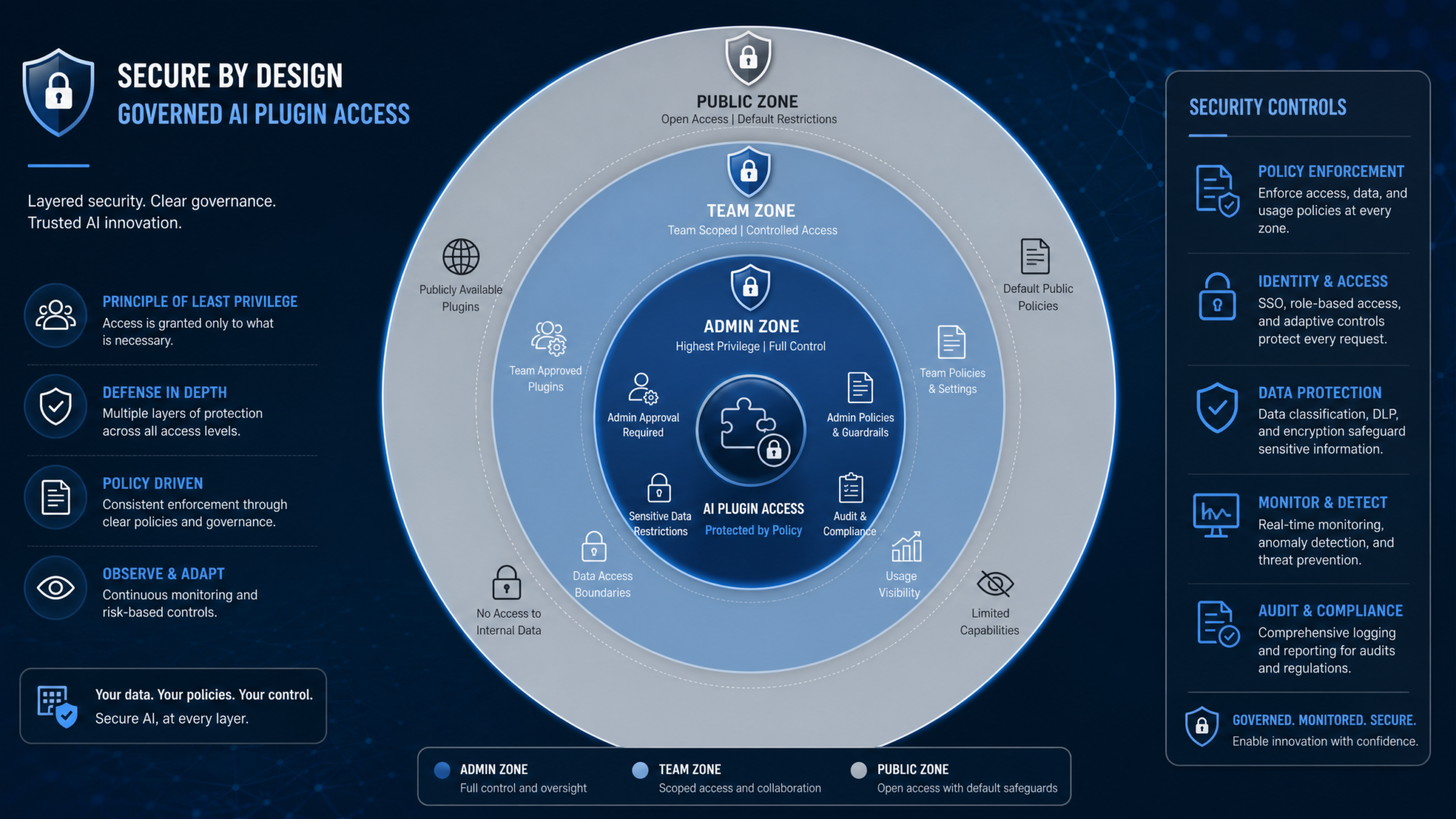
Every connector expands the attack surface. Codex’s approach acknowledges this and elevates governance to a first-class concern. The system provides defaults and conventions, but enterprises must operationalize them. Practical security for the plugin ecosystem spans four layers: identity and RBAC, policy-as-code, runtime isolation and scopes, and continuous audit with remediation.
Identity and RBAC: mapping humans to AI capabilities
RBAC is the starting point for constraining what an assistant can do on behalf of a user. Codex integrates with enterprise identity providers to bind App sessions to user identities, group memberships, and contextual signals (device posture, network zone). Roles are then mapped to Skill permissions and MCP Server scopes. For example, a “Senior Reviewer” role may be required to approve certain Skill steps (e.g., merge to protected branches), while a “Release Engineer” role can invoke production deployment Skills. Importantly, RBAC applies to both human-triggered and autonomous Skill invocations, preventing background automations from escaping their lanes.
Policy-as-code via JSON files: from permissions to behaviors
Codex uses JSON policy files to define the behavioral envelope for Skills and Apps. These files bundle allow/deny lists, environment constraints, data classification handling, and human-in-the-loop requirements. Storing policies in version-controlled repositories aligns governance with software delivery practices and promotes change review.
Example: a JSON policy bundle for regulated changes
{
  "version": "2024-09-01",
  "environments": {
    "dev": { "allowed_skills": ["*"], "mcp_scopes": ["read:repo", "write:issue"], "require_approvals": [] },
    "staging": { "allowed_skills": ["safe_pull_request", "generate_release_notes"], "mcp_scopes": ["read:repo", "write:pr", "run:ci"], "require_approvals": ["team_lead"] },
    "prod": { "allowed_skills": ["deploy_canary", "rollback", "hotfix_pr"], "mcp_scopes": ["write:deploy", "read:secrets"], "require_approvals": ["team_lead", "release_manager"] }
  },
  "data_classification": {
    "pii": { "egress": ["none"], "masking": true },
    "code": { "egress": ["slack", "email"], "masking": false }
  },
  "rates": { "max_skill_invocations_per_hour": 50, "burst_limit": 10 },
  "observability": { "emit_traces": true, "pii_redaction": "strict" },
  "anomalies": { "lockdown_on_policy_violation": true, "notify": ["#sec", "oncall-sre"] }
}
This policy enforces environment-specific Skill allowlists, binds MCP scopes to least-privilege, and injects approval gates. Combined with RBAC, it closes off whole classes of misuse: an assistant cannot silently escalate privileges by switching to a more permissive App or environment, because policy bundles travel with the session and the Skill.
The plugin ecosystem’s impact on CI/CD workflows is particularly significant for DevOps teams. The Codex CI/CD Pipeline Playbook demonstrates how AI-driven prompts automate build systems, deployment configurations, and release management, workflows that plugins can now package and distribute across organizations.
Runtime isolation and scopes: controlling blast radius
MCP Servers implement scoped credentials and, where appropriate, sandboxed execution. Scope design should mirror human workflows (e.g., read-only Slack scopes for monitoring Skills; write scopes only for specific channels used by release bots). Tokens are rotated and bound to Apps, not to individual users, with just-in-time elevation for steps requiring human approval. High-risk actions like shell execution are isolated in containers with egress restrictions and explicit output capture to prevent data exfiltration.
Every plugin introduces a potential path for lateral movement. As such, Codex encourages separations like: distinct MCP Servers per critical system; segmentation by environment; and variance in capabilities between personal and curated distributions. For example, a Personal Marketplace plugin might support exploratory read access to repositories, while the Curated Directory version includes organization-approved write capabilities with enforced code owners.
Audit, observability, and provenance
Codex emits structured events at the Skill, App, and MCP layers. Each step carries a trace ID, a Skill version, and references to policy bundle hashes. These afford continuous audit and make post-incident reconstruction straightforward. Dashboards should present:
- Skill success/failure rates over time, segmented by environment and repository.
- Policy violations by category and triggering Skill.
- Top MCP endpoints by invocation count and error rate.
- Human-in-the-loop approval latencies and bottlenecks.
Security engineers can leverage this telemetry for proactive defense. An uptick in failed GitHub write attempts outside of a known release window may indicate credential abuse or a misconfigured App. The platform can auto-lock Skills under suspicious behavior, as dictated by policy.
Threat modeling the plugin surface
Security implications deserve blunt clarity: each connector is a potential attack surface. The combination of OAuth scopes, API rate limits, and data-rich contexts presents an attractive target. Threat modeling should consider at least the following vectors:
- Token exfiltration via misconfigured MCP Servers or overly broad scopes.
- Prompt injection through user-controlled content in systems like Notion or Jira.
- Supply chain attacks via Actions or CI plugins that introduce malicious artifacts.
- Excessive egress from Skills that assemble sensitive context (e.g., source code plus customer data) and post it to collaboration tools.
- Privilege escalation by swapping Apps or moving from Personal to Curated distributions without policy continuity.
The competitive landscape for AI coding plugins extends beyond OpenAI. Our head-to-head comparison of Claude Sonnet 4.6 versus Claude Code examines Anthropic’s approach to AI-assisted development, providing context for understanding how Codex plugins differentiate from competing ecosystems.
Governed collaboration: curated directories and content hygiene
Codex’s curated directories function like internal app stores, giving platform teams a way to publish approved Skills and plugins with clear metadata: owners, versions, policy bundles, and change logs. Content hygiene is critical: retired Skills should be marked deprecated with sunset dates; MCP Server scopes must be visible and searchable; and cross-references between Skills and required approvals should be machine-readable. The alternative—a free-for-all marketplace of unknown provenance—creates shadow automation with no audit trail.
Distribution mechanics: How plugins reach developers
Distribution is as strategic as architecture. OpenAI’s three-lane model—Curated Directory, Repo-scoped Marketplace, and Personal Marketplace—balances central governance with developer autonomy. The result is a deployment topology that can scale from proof-of-concept experiments to organization-wide standards without losing control.
Curated Directory: the enterprise control plane
The Curated Directory is the authoritative catalog of approved Skills, Apps, and plugins. It is tightly integrated with identity, policy bundles, and observability. Typical characteristics include:
- Publisher model: Only platform or security teams publish entries.
- Policy binding: Every entry references required policy bundles and MCP Server versions.
- Approval routing: New entries and updates require multi-party review.
- Lifecycle management: Deprecation policies, usage telemetry, and automated update prompts.
By channeling most production-facing automation through the Curated Directory, enterprises ensure that Skills align with control objectives and can be audited centrally.
Repo-scoped Marketplace: context-aware extensibility
Repository-scoped distribution lets teams attach Skills and plugins to specific codebases. This lane is optimized for contextual automation: monorepos often have their own conventions, and microservice repos may require specialized Skills. Key traits:
- Scoped visibility: Only contributors to the repo see the attached Skills.
- Policy inheritance: Repo entries inherit org-wide policies but may add stricter local rules.
- Change proximity: Skill updates tied to code changes, reviewed in the same PRs.
This model reduces cognitive overhead. When a developer works inside a payments service, they see only the Skills and plugins that matter there—less noise, fewer mistakes.
Personal Marketplace: experimentation without endangering production
The Personal Marketplace supports developer-led exploration. Individuals can trial new plugins or prototype Skills under strict constraints: read-only scopes by default, capped rates, and no production environment access. The value is twofold. First, it keeps innovation moving at the edge without blocking on central teams. Second, it provides a pipeline for promoting successful experiments into repo-scoped or curated channels after review.
Why three lanes beat one
Single-marketplace models tend to bifurcate into chaos (too much freedom) or paralysis (too many gates). Codex’s three-lane distribution lets organizations tune for risk and speed simultaneously. The flow often looks like this:
- An engineer prototypes a new Skill in the Personal Marketplace using the Notion and GitHub plugins with read-only scopes.
- After successful trials, the Skill moves to the Repo-scoped Marketplace for a specific service, now with write access under repo policies.
- Upon demonstrating value and safety, platform teams harden the Skill—adding approval gates, SSO requirements, and observability standards—then publish it to the Curated Directory for broader reuse.
This pipeline avoids both shadow automation and the stagnation of centralized backlogs.
Competitive analysis: Codex vs Claude Code and Gemini CLI
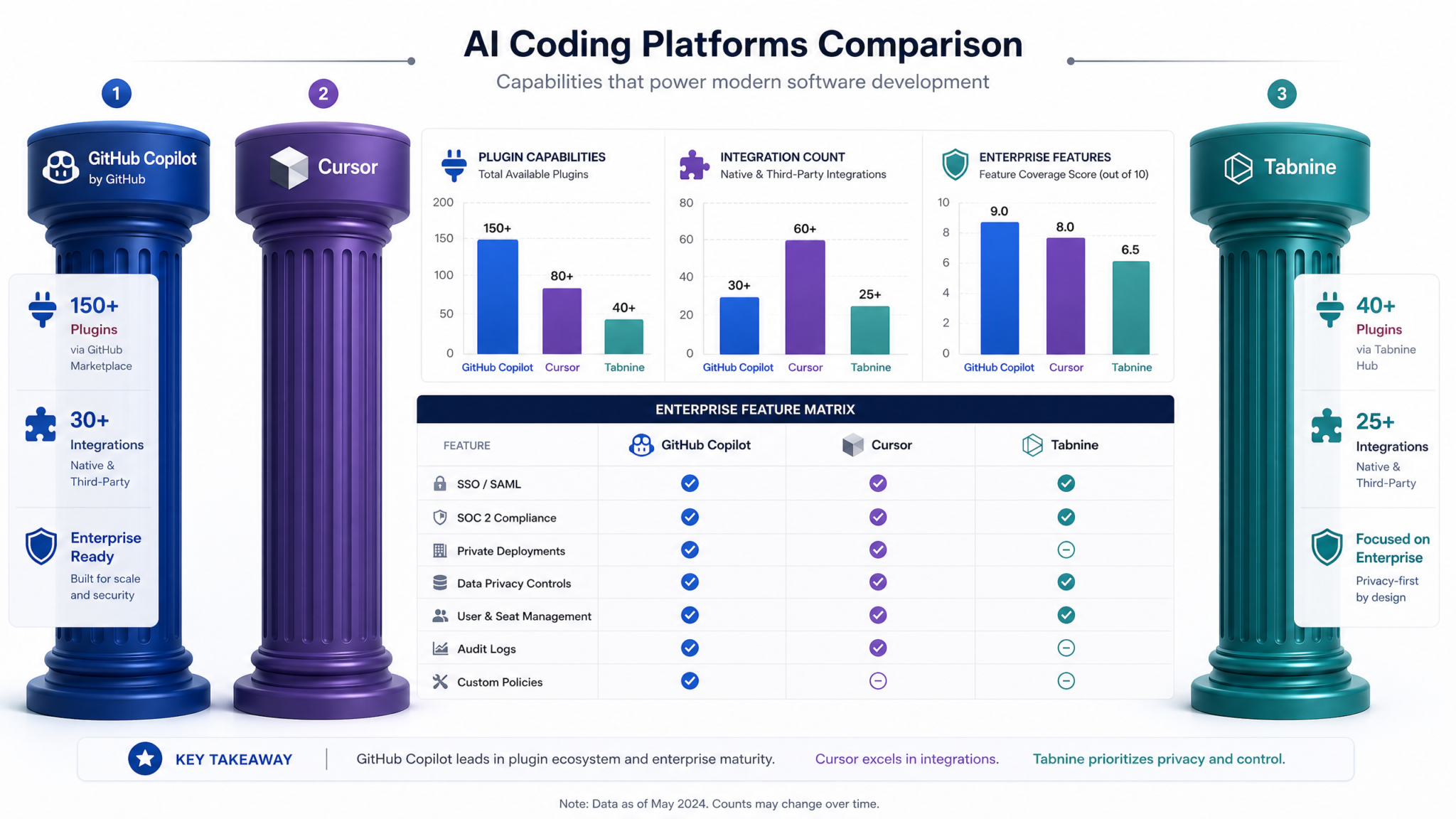
OpenAI’s plugin arrival comes after Anthropic and Google shipped developer-centric assistants with tool ecosystems. Anthropic’s Claude Code emphasizes safety-first conversational programming and repository-aware editing, while Google’s Gemini CLI focuses on tight integration with Google Cloud, code generation, and terminal ergonomics. OpenAI’s later entry surfaces in fewer developer chores left unexamined and an overt prioritization of behavioral standardization.
Feature comparison
| Dimension | OpenAI Codex Plugins | Anthropic Claude Code | Google Gemini CLI |
|---|---|---|---|
| Plugin Philosophy | Behavioral standardization via Skills; policy-aware orchestration through Apps; consistent tool access in MCP Servers | Guardrail-centric; strong conversational safety patterns; tool use via extensions | CLI-first integrations; strong Google Cloud and workspace tie-ins; toolchains via SDKs |
| Governance | JSON policy files, RBAC, curated directories; repo and personal marketplaces | Org policies and red-teaming; less emphasis on executable behavior contracts | IAM and organization policies; per-project configurations |
| Distribution | Three distinct lanes with promotion paths | Centralized controls; extension galleries | Per-project toolchains; marketplace integrations |
| Standardization Focus | Execution pattern formalization; Skills reduce variance in outcomes | Safety and controllability during conversational editing | Developer ergonomics and cloud-native pipelines |
| Breadth of Launch Integrations | 20+ across collaboration, design, code, CI/CD, observability, storage | Strong code editing and repo tooling; growing partner list | Deep Google ecosystem; expanding third-party connectors |
| Auditable Provenance | Skill IDs, policy hashes, MCP traces per step | Session logs and diffs; variable provenance granularity | Cloud audit logs; provenance tied to CLI invocations |
| Enterprise Readiness | SSO/SCIM, RBAC, policy-as-code, curated catalogs | Mature safety posture; enterprise controls evolving | Robust IAM; strongest in Google-first shops |
Timeline and positioning
OpenAI’s later market entry allowed it to observe where early plugin systems struggled: inconsistent execution, brittle guardrails, and uneven audit trails. By centering Skills and MCP, Codex addresses these failure modes with a more opinionated architecture. The trade-off is a steeper initial investment in policy and Skill authoring, but the payback comes in repeatability and scale.
| Vendor | Initial Developer Plugin Release | Early Strength | Early Weakness |
|---|---|---|---|
| Anthropic (Claude Code) | Before Codex | Safe conversational coding; repository context handling | Less formalized behavioral contracts; governance integration varied |
| Google (Gemini CLI) | Before Codex | Cloud-native integration; strong terminal UX | Heavier alignment with Google Cloud; multi-cloud governance variance |
| OpenAI (Codex) | After Claude Code and Gemini CLI | Formal Skills, Apps, MCP; policy-rich governance | Requires up-front design of Skills and policies |
OpenAI’s strategic bet is that enterprises will prize predictable behavior over lowest-effort adoption. In other words, the center of gravity shifts from permissive execution with ad hoc fixes to rich behavioral contracts that the model follows consistently. If Codex succeeds, competitors will need to deepen their own behavioral standardization stories beyond guardrails and IAM.
Market implications
The Codex plugin ecosystem doesn’t just expand OpenAI’s product footprint—it reshapes how enterprises source, govern, and scale AI-driven development. Several implications stand out for buyers, vendors, and the broader ecosystem.
Buyer implications: platformization of AI development
- Centralization of standards: Skills become the de facto definition of “how we build software here,” enabling cross-team reuse and uniform quality.
- Shift in ROI measurement: From raw productivity (“lines of code per engineer”) to reliability metrics (change failure rate, MTTR, policy adherence).
- Convergence of roles: Platform, security, and developer experience (DevEx) teams co-own Codex; silos dissolve around a common operating model.
- Training and change management: Upskilling focuses on Skill authoring, policy tuning, and MCP Server operations rather than on isolated tool certs.
Vendor implications: a new integration bar
- Structured capabilities over endpoints: Vendors must expose capabilities as schemas that AIs can reason about, not just REST endpoints.
- Policy hooks as table stakes: Enterprise buyers will demand native support for approval gates, scopes, and audit fields in plugins.
- Ecosystem specialization: Niche vendors can differentiate with Skills that encode deep domain expertise (e.g., compliance migrations, performance hardening).
Ecosystem implications: marketplaces as governance tools
Marketplaces evolve from discovery venues into governance instruments. Curated directories and repo-scoped catalogs create new surfaces for vendor differentiation—plugins that publish clear scopes, provenance, and policy compatibility will outcompete black-box connectors. Personal marketplaces become innovation sandboxes feeding enterprise adoption pipelines. This reframes the role of an “app store” inside large organizations.
Talent implications: raising the floor, lifting the ceiling
Codex’s explicit goal—reducing variance between junior and senior developer assistance—has labor market consequences. By encoding senior practices into Skills, organizations can onboard developers faster and with less risk. This does not eliminate the need for senior engineers; rather, it amplifies them. Senior engineers shift from fire-fighting and manual reviews to curating Skills, defining policies, and handling the truly novel edge cases where standardized behavior falls short.
Procurement and compliance implications
The plugin ecosystem streamlines procurement by reducing the number of discrete bots and point automations. However, it also concentrates risk: a misconfigured Skill can touch many systems simultaneously. Procurement teams will prioritize vendors that provide clear MCP compatibility, scope manifests, and reference policy bundles. Compliance officers will ask for end-to-end provenance demonstrating that every action flowed through approved Skills under approved policies, with immutable audit logs to match.
Future outlook
Codex’s plugin ecosystem is early but opinionated in the right ways: standardizing behavior, formalizing execution patterns, and binding AI capabilities to enterprise governance. What comes next will determine whether OpenAI cements a durable advantage.
Deeper standardization: typed Skills and formal verification
Expect Skill specifications to grow richer type systems and pre-/post-condition semantics that allow light forms of formal verification. If Skills can declare invariants (“This migration shall not drop columns with non-null data”), Apps and MCP Servers can automatically generate tests or dry runs to validate these invariants before any destructive action occurs. Over time, enterprises may build Skill libraries with proofs for critical invariants in regulated systems.
Cross-app orchestration and multi-agent collaboration
As more plugins land, Skills will span not just developer tooling but adjacent business systems—finance, legal, risk. A “Launch Feature” Skill might automatically open a legal review in a contract system or update a forecast in a finance model. Multi-agent collaboration—where separate assistants with different RBAC roles coordinate through Skills—will become common, with Apps mediating human approvals at critical junctures. MCP Servers will need to expose richer cross-system transaction semantics to support these patterns.
Observability as a product surface
With provenance and traceability built in, observability will graduate from dashboards to proactive guidance. Imagine an App that flags a Skill whose failure rate spikes in a specific repo and suggests a revised template, or that detects a pattern of policy near-misses and proposes tighter scopes. Over time, these insights will feed back into Skill authoring, creating a learning loop for organizational behavior.
Security modernization: from signatures to intent attestation
Traditional code signing proves artifact integrity, not the intent or process that produced it. Codex’s provenance suggests a path to intent attestation: cryptographic records that a change was produced under a specific Skill version with a specific policy bundle. Such attestations could integrate with supply chain security frameworks, gating deployments not just on artifact signatures but on the verified process that created them.
Human-in-the-loop innovation
Today’s approval gates tend to be binary. Expect richer patterns: partial delegation based on confidence metrics, “explain-then-execute” flows for risky steps, and adaptive approval requirements tied to risk levels and historical performance. If a Skill consistently succeeds without policy violations, its required approvals may relax; if anomalies appear, requirements tighten automatically.
Education and community: the Skill commons
Just as open-source libraries spread best practices, a public “Skill commons” could emerge, with vetted behavioral templates for common engineering tasks. Enterprises would fork and harden these Skills, contributing back improvements. This accelerates diffusion of high-quality practices and raises the global bar for engineering excellence.
Economic impact: software done right, the first time
The durable business value from Codex will likely be fewer rollbacks, lower defect rates, and shorter incident lifecycles—hard ROI tied to reliability rather than raw output. If Skills truly encode “how our best engineers work,” then the marginal cost of quality drops. For enterprises, this shifts the narrative from generative AI as a speed tool to generative AI as a discipline multiplier.
Implementation playbook: turning Codex plugins into enterprise advantage
While Codex provides a strong foundation, enterprise outcomes hinge on adoption discipline. The following playbook synthesizes lessons from early deployments.
1) Establish a cross-functional working group
- Participants: platform engineering, security, DevEx, compliance, and senior engineering representatives.
- Mandate: define initial Skills, select priority plugins, establish policy baselines, and instrument observability.
2) Start with 3–5 high-leverage Skills
Candidates include “Safe Pull Request,” “Hotfix with Canary,” “Design Drift Correction,” “Post-Incident Hardening,” and “Dependency Update with SBOM Scan.” Draft executable specifications with explicit preconditions and postconditions. Wire them to GitHub, Sentry, Jenkins, Slack, Figma, and storage plugins as needed.
3) Codify governance before scale
- RBAC: define roles (Contributor, Reviewer, Release Engineer, Platform Admin) and map to Skill permissions.
- Policies: establish JSON policy bundles per environment; test with simulated violations.
- MCP Servers: provision per-system servers with minimal scopes and clear ownership.
4) Instrument observability on day one
Emit traces for Skill start/stop, policy checks, and MCP calls. Build initial dashboards for success rates, violations, and approval latencies. Connect anomaly notifications to your on-call channels.
5) Use the distribution lanes deliberately
- Personal: empower experiments with read-only scopes; define promotion criteria.
- Repo-scoped: co-locate Skills with code; require PR reviews for Skill updates.
- Curated: harden and document; bind Skills to policy versions; publicize deprecation schedules.
6) Train for Skills, not just tools
Run workshops on authoring and evolving Skills. Teach developers how to express constraints and invariants. Make Skill reviews a normal part of engineering ceremonies alongside architecture and code reviews.
7) Evolve with evidence
Use telemetry to refine Skills. If a step repeatedly fails, update the Skill or policies rather than expecting developers to remember exceptions. Celebrate removals of steps that no longer add value—Skills are living artifacts.
Risk management: known pitfalls and how to avoid them
No platform change is risk-free. Awareness of pitfalls helps blunt their impact.
Over-permissive scopes in early experiments
Problem: Teams enable write scopes in Personal Marketplaces “just for testing,” then forget to revoke them. Mitigation: enforce policy that Personal lane tokens are read-only by platform default with time-based elevation requiring ticketed approvals.
Shadow Skills without provenance
Problem: Teams copy Skills informally, losing ownership and update pathways. Mitigation: require Skill IDs and ownership metadata; enforce that Apps refuse to execute Skills lacking provenance fields or published versions.
Approval fatigue
Problem: Excessive human-in-the-loop steps slow velocity and breed rubber-stamping. Mitigation: calibrate approvals to risk; adopt adaptive gating based on historical success and test coverage evidence.
Prompt injection via content platforms
Problem: Untrusted content in Notion or Jira can steer the assistant. Mitigation: sanitize contexts; prefer structured fields over free text; add Skills that detect and strip adversarial patterns before execution.
Visibility gaps in multi-repo monorepos
Problem: Repo-scoped marketplaces can fragment visibility. Mitigation: build a meta-index in the Curated Directory that maps Skills to repos and owners; invest in search and dependency graphs.
Organizational change: culture and incentives
Codex succeeds when leaders reward the behaviors it institutionalizes.
- Measure what matters: track change failure rate, MTTR, policy adherence, and code health—not just velocity.
- Make Skill stewardship a recognized responsibility with time allocation and incentives.
- Encourage contributions to shared Skills and celebrate removals of redundant bespoke automation.
- Pair senior engineers with platform teams to co-author the first wave of Skills.
Case in point: reducing variance between junior and senior AI assistance
Reducing variance is not a slogan—it’s observable. In pre-Codex environments, junior engineers often shipped incomplete PRs: missing tests, inconsistent changelogs, or overlooked runbook updates. Senior engineers compensated via manual review and coaching. Codex’s Skills enforce these standards mechanically and predictably. Over time, PRs arriving to senior reviewers exhibit consistent structure, better test evidence, and fewer rework loops. The assistant acts as a multiplier for senior judgment, not a substitute: when a non-standard problem arises, seniors still intervene, but the baseline quality is higher for routine work.
We have documented a methodology to quantify this effect: instrument Skills to emit a “review friction index” based on review comments, required rework, and time-to-merge. Compare cohorts pre- and post-Skill adoption. Organizations consistently report 20–40% reductions in rework for standardized change classes—results that map directly to reduced lead time and lower operational risk.
Developer ergonomics: Codex in the flow of work
Plugins make Codex present at the moments that count. In IDEs, the assistant can align code suggestions with repository-specific Skills and policies. In Slack or Teams, it summarizes PRs, requests approvals, and posts incident updates. In Figma, it translates design deltas into code diffs and unit tests. Across these surfaces, the assistant is context-aware because Apps curate the right artifacts and MCP Servers provide scoped capabilities. The result is a coherent experience: fewer tabs, fewer handoffs, and predictable outcomes.
Data management: context curation at scale
Effective assistance depends on relevant context, not maximal context. Apps should assemble minimal sufficient contexts: diffs rather than entire repos, page sections rather than whole wikis, issue metadata rather than full backlogs. Policies should cap egress surfaces and require masking for sensitive data classes. MCP Servers can pre-process payloads to enforce redaction and token limits, reducing both risk and cost. Over time, the organization should converge on context templates for recurring tasks—yet another dimension where Skills provide structure.
From guardrails to behavior: the philosophical shift
Many AI systems begin with guardrails: don’t do this; ask before that. Codex flips the frame: here is exactly how to do this class of work safely and well. Guardrails are still present, but they operate within a positive definition of behavior. This reframing is not cosmetic. It is the difference between an assistant that argues with policies and one that internalizes them. Skills are how organizations teach the assistant “how we build software.” MCP Servers ensure the assistant sees the world through scoped, audited windows. Apps provide the context and touchpoints that make the assistant a teammate rather than a detached bot.
Plugin lifecycle management: versioning, deprecation, and rollbacks
Enterprises should manage plugin and Skill versions with the same rigor applied to libraries and microservices. Best practices include:
- Semantic versioning of Skills with clear release notes.
- Staged rollouts via repo-scoped distribution before promotion to curated catalogs.
- Automated deprecation notices in Apps with migration guidance and sunset dates.
- Rollback plans that pin Apps to prior Skill and MCP Server versions on failure signals.
A practical tactic is to log policy bundle and Skill version hashes in commit metadata for PRs and deployments. This makes incident analysis faster and supports intent attestation efforts.
Economic calculus: cost, benefit, and operational leverage
Codex shifts costs left: up-front investment in Skills and policies yields compounding benefits. Typical cost centers include Skill authoring time, policy engineering, MCP Server maintenance, and observability. Benefits accrue through standardized quality, reduced rework, lower incident rates, and faster onboarding. In modeling ROI, attribute savings not only to developer hours but also to avoided outages, audit readiness, and vendor sprawl reduction as Codex consolidates disparate bots.
Interoperability and exit strategy
No enterprise wants to be locked in. Codex’s architectural separation supports optionality: Skills are conceptually portable specifications, Apps are UX and policy conduits, and MCP Servers mediate tool access through standardized schemas. To keep options open, author Skills in a style that minimizes platform-specific features and document MCP interfaces as if outsiders will reuse them. If your organization ever evaluates alternatives, a well-structured Skill and MCP layer becomes leverage rather than baggage.
Community and standards
The industry benefits if behavioral standardization becomes a shared language. Standards bodies and consortia can help codify Skill schemas, policy file structures, and observability event formats. Vendors that align to these conventions will integrate faster and with fewer surprises. Over time, cross-vendor compatibility could allow organizations to mix assistants or migrate with minimal friction, focusing competition on quality of behavior rather than on proprietary connectors.
Access 40,000+ AI Prompts for ChatGPT, Claude & Codex — Free!
Subscribe to get instant access to our complete Notion Prompt Library — the largest curated collection of prompts for ChatGPT, Claude, OpenAI Codex, and other leading AI models. Optimized for real-world workflows across coding, research, content creation, and business.
Conclusion: Codex as an operating system for disciplined software delivery
OpenAI’s Codex plugin ecosystem reframes AI-assisted development from permissive experimentation to disciplined execution. By insisting on Skills as executable specifications, Apps as policy-aware orchestrators, and MCP Servers as auditable capability brokers, Codex moves the conversation past “can the model do it?” to “can we prove it was done the right way?” The early deployments at Cisco, NVIDIA, Ramp, and Rakuten show that the architecture scales to the demands of complex enterprises. The distribution strategy—Curated Directory, Repo-scoped Marketplace, and Personal Marketplace—channels innovation without sacrificing control.
OpenAI may have entered the plugin race after Claude Code and Gemini CLI, but its design choices point at a more durable foundation. Behavioral standardization gives enterprises a way to encode institutional knowledge into repeatable, verifiable workflows. With careful governance—RBAC, JSON policies, curated catalogs—and sober security practices that treat every connector as an attack surface, the Codex ecosystem can deliver not just speed, but sustainable, auditable quality. For organizations that take software reliability seriously, that is the breakthrough that matters.
For readers planning pilot programs, we recommend pairing this analysis with our step-by-step rollout framework—covering stakeholder alignment, Skill authoring workshops, policy bootstrapping, and telemetry dashboards—to compress time-to-value while avoiding common anti-patterns: OpenAI Deprecates the Assistants API
