
1. Introduction: Meta’s Bold Bet on AI Superintelligence
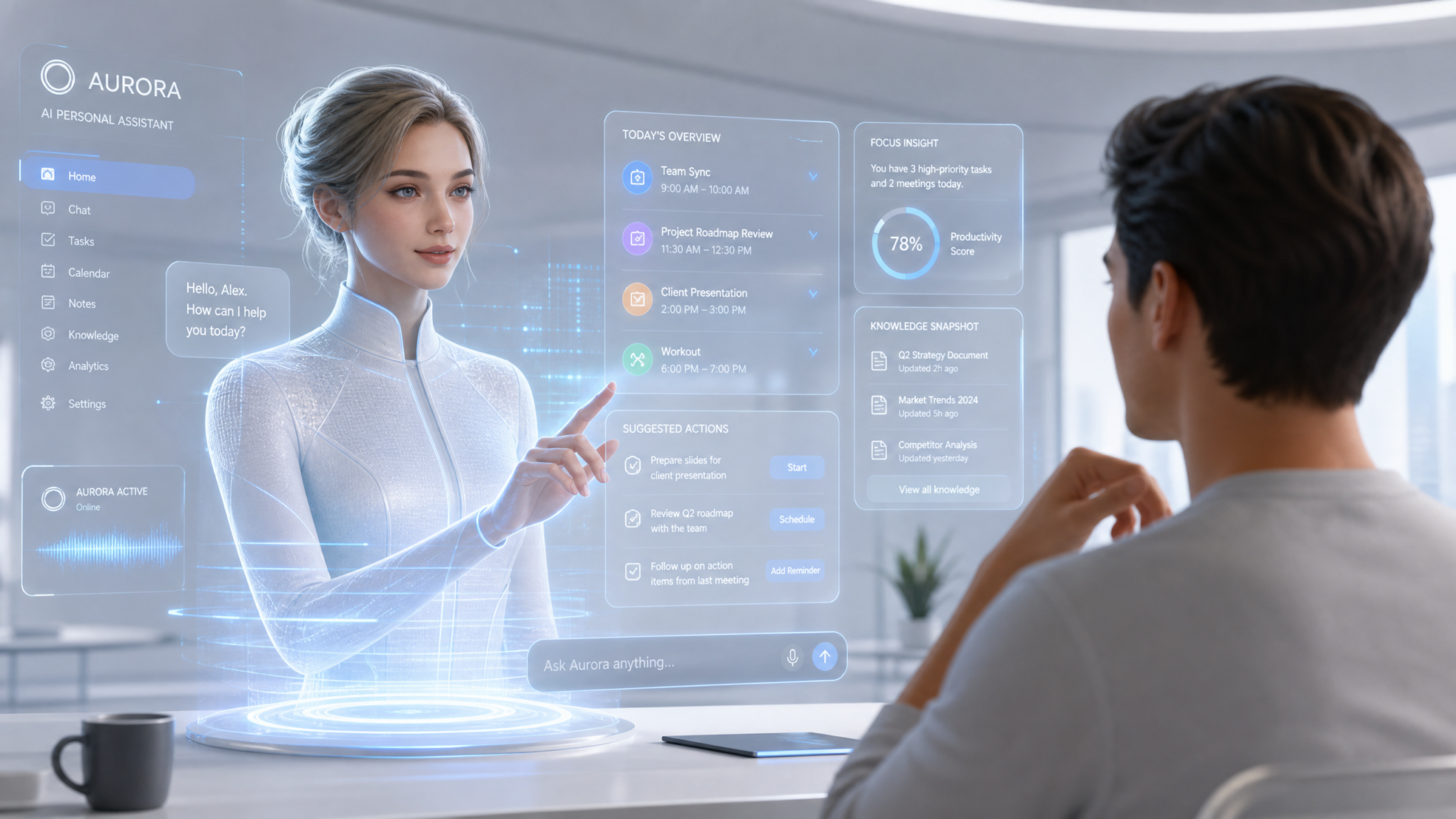
Meta Platforms, under the visionary leadership of Mark Zuckerberg, is embarking on an ambitious and unprecedented journey into the realm of artificial intelligence. With a staggering $130 billion capital expenditure planned for 2026, the tech giant is not merely participating in the AI race but aggressively reshaping its trajectory. This monumental investment signals a profound commitment to developing what Zuckerberg calls “personal superintelligence” – an AI paradigm aimed at augmenting individual human capabilities and experiences across Meta’s expansive ecosystem of platforms.[1] This isn’t about incremental improvements; it’s a fundamental shift in how users interact with technology, moving toward a future where AI acts as a deeply integrated, intuitive extension of their will and intellect.
In this article, we explore Meta’s multifaceted AI strategy for 2026, examining the strategic rationale behind this colossal investment, the technological infrastructure underway, and the transformative potential of personal superintelligence. We analyze how Meta plans to fuel its internal AI ambitions — enhancing everything from content moderation and recommendation algorithms to immersive metaverse experiences — while positioning itself as a pivotal AI enabler for external businesses and developers. The implications of this strategy are far-reaching, reshaping both the AI competitive landscape and human-AI interaction paradigms.
2. The Strategic Imperative: Why Meta is All-In on AI
Meta’s aggressive pivot toward AI is a calculated response to evolving technological landscapes and strategic lessons. Its history, marked by landmark innovations and notable challenges, has underscored the necessity of owning fundamental technological layers. From social networking dominance to the capital-intensive metaverse pursuit, Meta has sought technological self-sufficiency, especially in the rapidly advancing field of artificial intelligence.[2]
The current AI boom represents both an existential threat and an unprecedented opportunity. Competitors are rapidly advancing AI capabilities, risking the disruption of Meta’s core platforms and capturing future growth areas. By committing $130 billion, Meta aims to secure a leading position in AI development, ensuring control over its products’ destiny in an AI-first world. This is not just about keeping pace — it’s about setting the pace, building innovation moats, and deeply embedding AI within every aspect of user experience.
This includes:
- Enhancing user engagement through more personalized content feeds.
- Improving ad system efficacy.
- Developing entirely new AI-powered features that differentiate Meta’s offerings.
Moreover, this serves as a defensive and offensive strategy, ensuring Meta leads the AI arms race, and fosters a self-reinforcing ecosystem that attracts users and developers alike.
3. Building the Foundation: Meta’s $130 Billion AI Infrastructure
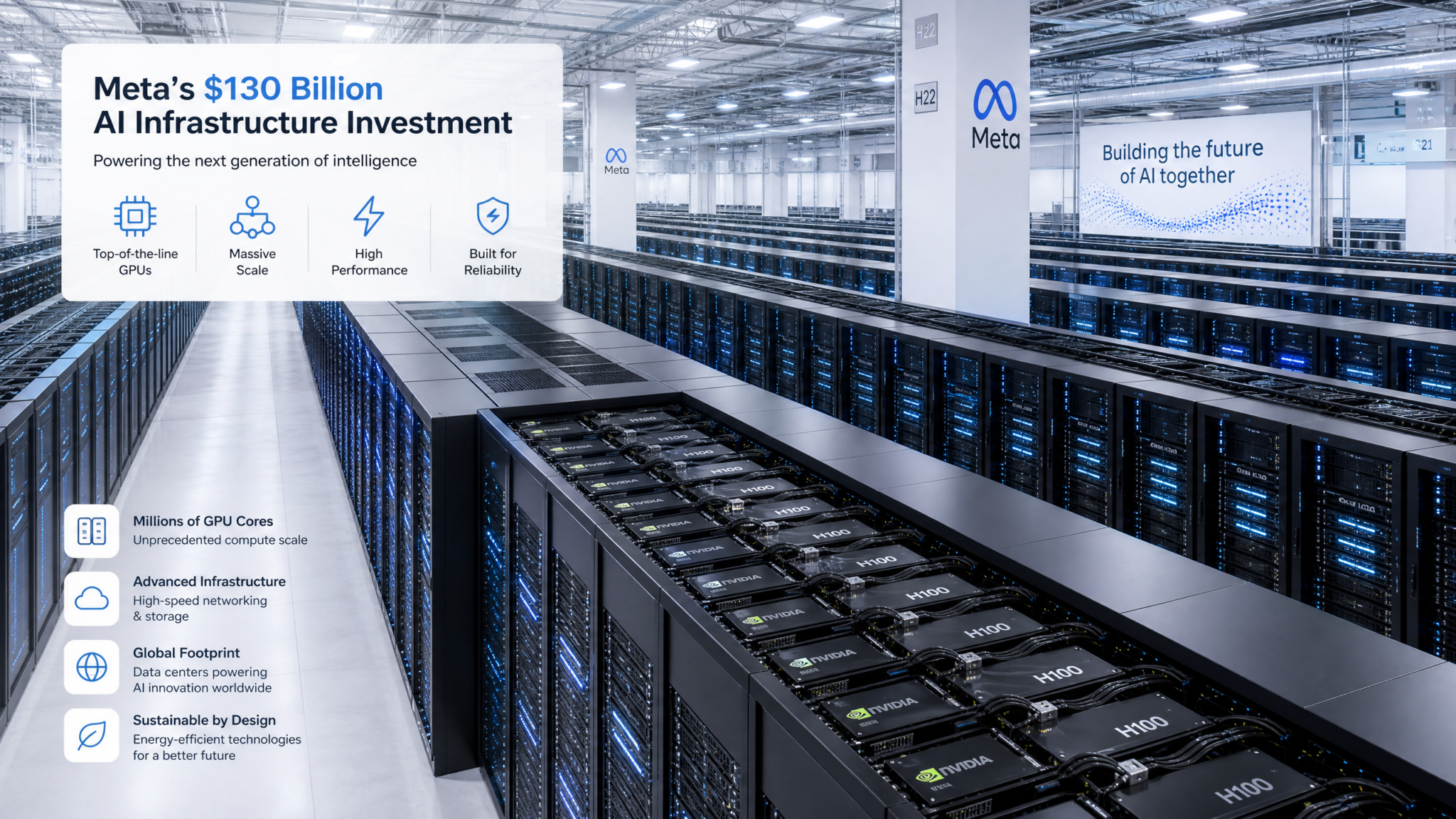
The $130 billion expenditure floor slated for 2026 embodies Meta’s unprecedented commitment to physical and digital AI infrastructure. This investment focuses on acquiring and deploying vast quantities of AI-specific hardware — especially advanced GPUs — and constructing hyperscale data centers optimized for training and running large language models (LLMs) and complex AI systems.[3] Such scale eclipses many national technology budgets and highlights Meta’s firm belief that leadership in AI hinges on unrivaled computational power.
Key benefits of this infrastructure investment include:
- Unmatched Processing Power: Enables rapid training and iteration of AI models with billions to trillions of parameters, advancing generative AI, recommendation engines, and multimodal systems.
- Operational Independence: Reduces reliance on external cloud providers, boosting data security, cost efficiency, and performance tailored to Meta’s AI workloads.
- Talent Magnet: Attracts top-tier AI researchers and engineers driven by access to state-of-the-art computational resources and research environments.
Owning the full AI stack, from custom silicon to software frameworks, offers Meta a unique competitive advantage to accelerate innovation and maintain stringent security and privacy controls. This holistic ecosystem supports breakthroughs in generative AI, multimodal intelligence, and creating truly personalized AI agents.
4. The Vision of Personal Superintelligence: AI for Everyone
Central to Meta’s 2026 strategy is the ambitious vision of delivering “personal superintelligence” to billions of users worldwide. Unlike enterprise-focused or generic AI models, Meta aims for AI that enhances individual human experiences and productivity within its social ecosystems. This AI companion will deeply understand users’ context, preferences, and goals — providing proactive assistance across communication, content creation, information retrieval, and even emotional support.[4]
Think of an AI that seamlessly manages your digital life — summarizing long email threads, drafting responses, generating personalized social content, or co-creating immersive metaverse experiences. Achieving this demands state-of-the-art conversational AI coupled with sophisticated multimodal capabilities to interpret/generate text, images, audio, and video.
Meta’s ongoing investment in foundational models like Llama and generative AI research are stepping stones toward realizing this vision: a personalized AI that acts as an extension of yourself, learning, adapting, and empowering you to focus on creativity and meaningful pursuits. This AI will evolve alongside the user, becoming an indispensable part of one’s digital identity.
The Pillars of Personal Superintelligence:
- Contextual Understanding: AI that learns and adapts to individual behaviors, preferences, and emotional states, ensuring personalized, privacy-conscious assistance.
- Multimodal Interaction: Seamless communication via text, voice, images, and video, mimicking natural human exchanges.
- Proactive Assistance: Anticipates needs and automates tasks, streamlining workflows and reducing cognitive load.
- Ethical Integration: Commitment to privacy, fairness, transparency, and safeguarding against misuse to build lasting user trust.
5. Meta as an AI Enabler: Renting Superintelligence to Others
Beyond internal applications, Meta’s 2026 AI strategy incorporates positioning itself as a critical AI enabler for businesses and developers. Its massive computational infrastructure and advanced AI models represent valuable assets to external stakeholders. This dual focus enables Meta to amortize investments, create new revenue streams, and foster a broad innovation ecosystem.[5]
Key components of this approach include:
- Model-as-a-Service (MaaS): Allowing developers access to fine-tuned versions of Llama and other generative models to build their own AI-powered applications without heavy infrastructure costs.
- AI Infrastructure-as-a-Service (AIaaS): Providing cloud-based access to high-powered AI training and deployment hardware, optimized for AI workloads beyond generic cloud solutions.
- Developer Ecosystem: Offering SDKs, APIs, hackathons, grants, and comprehensive developer support to stimulate robust innovation on the Meta AI stack.
This strategy mirrors successful approaches by other tech leaders, creating virtuous network effects by transforming internal capabilities into widely used external platforms. Meta’s ambition is to make its AI infrastructure pervasive and foundational across the next-generation AI application landscape.
Competitive Landscape: Meta vs. The Giants
The race for AI superintelligence is intense, with major tech players focusing on distinct strategies:
| Company | Primary AI Focus | Key Investment Areas | Strategic Differentiator |
|---|---|---|---|
| Meta | Personal Superintelligence, Social AI, Metaverse | GPUs, Data Centers, Foundational Models (Llama), AI Research | User-centric AI integration across social platforms and metaverse; AI as a service. |
| General AI, Search, Cloud AI, Enterprise Solutions | TPUs, Cloud Infrastructure, LLMs (Gemini), AI Research (DeepMind) | Integration with vast data ecosystem, cloud services, and enterprise AI. | |
| Microsoft | Enterprise AI, Cloud AI (Azure), Productivity Tools | OpenAI Partnership, Cloud Infrastructure, Custom AI Chips | Leveraging existing enterprise software and customer base. |
| Amazon | Cloud AI (AWS), E-commerce AI, Voice Assistants (Alexa) | Custom AI Chips (Inferentia, Trainium), Cloud Services, Robotics | Dominance in cloud computing, e-commerce, and smart devices. |
6. Challenges and Opportunities: Navigating the Future of AI
While Meta’s AI strategy is groundbreaking, it comes with formidable challenges:
- Technological Complexity: Developing truly adaptive, context-aware AI with emotional intelligence and common sense reasoning.
- Ethical and Privacy Concerns: Balancing data-driven personalization with user privacy, fairness, and transparency to build trust.
- Talent Competition: Attracting and retaining top AI talent amid fierce industry rivalry requires compelling culture and compensation.
- Regulatory Environment: Navigating evolving international laws and ethical standards for responsible AI deployment.
Conversely, the opportunities are vast. Successful personal superintelligence could unlock new levels of human creativity, productivity, and connection. Meta’s integrated approach — both consuming and providing AI capabilities — positions it uniquely to accelerate innovation internally and industry-wide. Potential impacts span social interaction, education, entertainment, accessibility, and digital work, ushering in a new era where AI serves as a personal digital co-pilot.
7. Conclusion: Meta’s AI Odyssey
Meta’s $130 billion AI investment for 2026 is more than capital expenditure; it’s a clear declaration of leadership intent in the next technological era. By focusing on personal superintelligence while empowering other developers, Meta is setting a comprehensive and ambitious course. This journey will pose technical, ethical, and competitive challenges, but the rewards — a world where AI powers billions of enriched digital experiences — are equally profound.
The success of this odyssey will hinge on technological breakthroughs, trust-building, ethical stewardship, and an open ecosystem that invites innovation. The choices Meta makes now will shape not only its future but potentially the very nature of human-AI collaboration for years to come.
[Related: 25 ChatGPT-5.5 Prompts for Personal Health and Fitness Optimization Using Apple Health Data]
8. Frequently Asked Questions (FAQ)
Q1: What is ‘personal superintelligence’ in Meta’s context?
Personal superintelligence refers to an AI system designed to intimately understand and augment an individual user’s capabilities and experiences within Meta’s platforms. It acts as a proactive, personalized AI assistant that helps with communication, content creation, information retrieval, and more, adapting dynamically to user preferences and contexts to make digital life seamless and efficient.
Q2: Why is Meta investing $130 billion in AI for 2026?
This investment is a strategic effort to secure Meta’s leadership in AI by acquiring cutting-edge hardware and building hyperscale data centers. It ensures the company can develop and deploy advanced AI models at scale, reduce dependence on external cloud providers, and attract premier AI talent, all essential for delivering innovative, deeply integrated AI experiences.
Q3: How does Meta plan to ‘rent’ its AI capabilities to others?
Meta offers its sophisticated AI models and infrastructure via services such as Model-as-a-Service (MaaS), AI Infrastructure-as-a-Service (AIaaS), and a comprehensive developer ecosystem with SDKs and APIs. This allows external businesses and developers to leverage Meta’s AI technologies without massive capital investments, helping build a broader AI ecosystem.
Q4: What are the main challenges Meta faces with this AI strategy?
Key challenges include managing the immense scale and cost of investment, keeping pace with rapid technological changes, addressing data privacy and ethical concerns, competing for top AI talent, and overcoming technical hurdles in achieving truly intelligent, adaptive AI systems.
Q5: How will Meta’s AI strategy impact the metaverse?
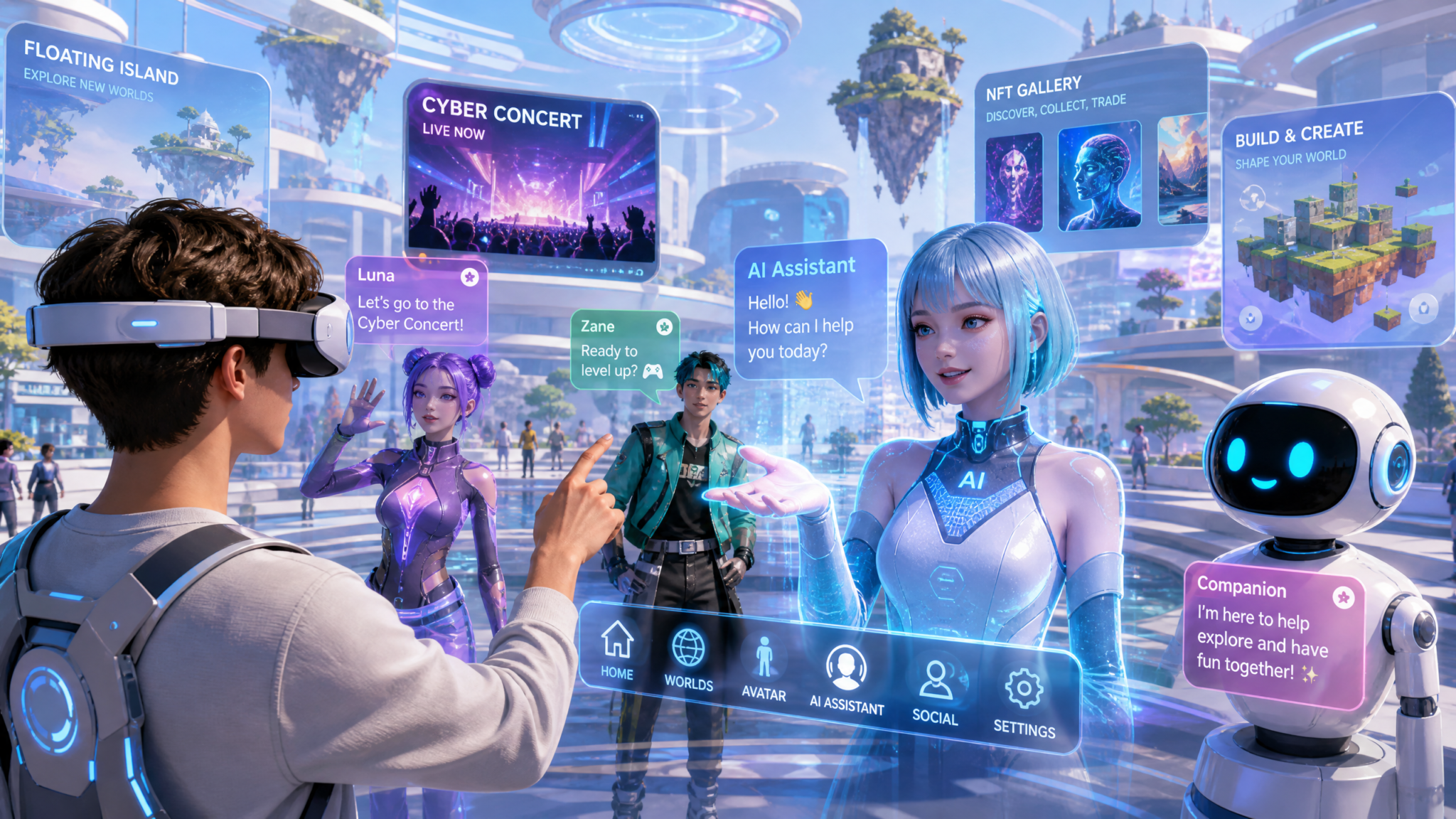
Meta’s AI strategy will enable more immersive, personalized, and dynamic metaverse experiences. AI will power realistic virtual worlds, intelligent avatars, natural language interaction, and allow users to co-create content with AI companions, making the metaverse more engaging and accessible.
9. Useful Links
- Meta AI Official Website
- Meta Platforms Investor Relations
- The Future of AI: Superintelligence
- AI Ethics Guidelines
- Large Language Models Explained
