

Understanding the AI-Powered Cyber Threat Landscape Facing Japanese Banks
The financial sector in Japan, like many global markets, is a prime target for increasingly sophisticated cyber threats. The rise of AI-driven attack mechanisms has transformed the landscape from traditional hacking attempts to highly automated, intelligent incursions that leverage generative models and machine learning techniques. Japanese banks, custodians of vast amounts of sensitive financial and personal data, face unique challenges as adversaries employ AI tools to execute phishing campaigns, deepfake voice and video fraud, and evasive malware.
AI-powered threats typically utilize generative adversarial networks (GANs), transformer-based language models, and reinforcement learning to craft highly convincing social engineering attacks. For instance, phishing emails generated by large language models (LLMs) can mimic corporate communication styles flawlessly, drastically increasing the likelihood of user compromise. Deepfake audio impersonations of executives or trusted individuals enable novel fraud vectors such as CEO fraud and social engineering-based wire transfer scams.
Japan’s banking sector also contends with regulatory and cultural factors that influence its cyber defense posture. The high level of customer trust and the expectation of privacy impose strict compliance constraints, while the sophistication of attackers demands proactive, intelligent defense mechanisms. Understanding the full scope of AI-powered cyber threats is paramount for effective mitigation.
- Phishing with AI-generated content: LLMs like GPT-5.5 enable attackers to create personalized, context-aware messages that bypass traditional spam filters.
- Deepfake-enabled fraud: Voice and video deepfakes simulate executives to manipulate employees into unauthorized actions.
- Automated malware evolution: AI systems dynamically modify malware signatures to evade detection.
- Social engineering at scale: AI bots conduct large-scale, adaptive social engineering campaigns targeting bank employees and customers.
In response, Japanese banks have partnered with OpenAI to gain access to GPT-5.5, integrating its advanced AI capabilities to detect, analyze, and neutralize these emergent threats in real time.
GPT-5.5: The Next Generation AI Model Empowering Cyber Defense
OpenAI’s GPT-5.5 represents a significant leap in generative AI, featuring enhanced contextual understanding, multimodal input processing, and real-time inference capabilities. Unlike previous iterations, GPT-5.5 integrates specialized cybersecurity modules trained on vast corpora of threat intelligence, malware signatures, and behavioral analytics. This makes it uniquely suited for identifying AI-generated cyber threats that traditional security tools fail to detect.
Key technical advances in GPT-5.5 relevant to cybersecurity include:
- Contextual Semantic Analysis: GPT-5.5’s transformer architecture can dissect email and communication semantics to expose subtle anomalies indicative of AI-generated phishing content.
- Multimodal Deepfake Detection: By processing audio, video, and textual data simultaneously, GPT-5.5 can flag deepfake attempts with high precision.
- Adaptive Threat Intelligence Synthesis: The model dynamically integrates real-time global threat feeds, enabling it to anticipate attacker behaviors and emerging malware variants.
- Explainable AI Outputs: GPT-5.5 provides interpretable alerts and justifications to cybersecurity analysts, facilitating faster decision-making and remediation.
Japanese banks leverage these capabilities by embedding GPT-5.5 into their security information and event management (SIEM) systems, endpoint detection & response (EDR) platforms, and transaction monitoring workflows.
Architectural Integration of GPT-5.5 in Japanese Banking Cybersecurity Systems
The deployment of GPT-5.5 within Japanese banks follows a layered architecture designed to maximize threat detection sensitivity while preserving operational performance and compliance with data privacy laws.
Core components of the architecture include:
- Data Ingestion Layer: Aggregates multi-channel data streams such as email logs, transaction records, voice call transcripts, and security alerts.
- Preprocessing & Feature Extraction: Normalizes data, extracts semantic features, and encodes multimodal inputs for GPT-5.5 consumption.
- GPT-5.5 AI Engine: Executes deep analysis leveraging pretrained cybersecurity modules and fine-tuned threat detection models.
- Alert Prioritization & Correlation: Combines GPT-5.5 output with heuristic rules to reduce false positives and prioritize high-risk incidents.
- Analyst Dashboard & Response Automation: Presents explainable insights to security teams and triggers automated containment workflows where appropriate.
This architecture supports a continuous learning loop where GPT-5.5 refines its threat detection models based on analyst feedback and newly discovered attack patterns. Data residency and privacy are maintained through on-premises deployment or secure cloud environments compliant with Japan’s APPI (Act on the Protection of Personal Information).
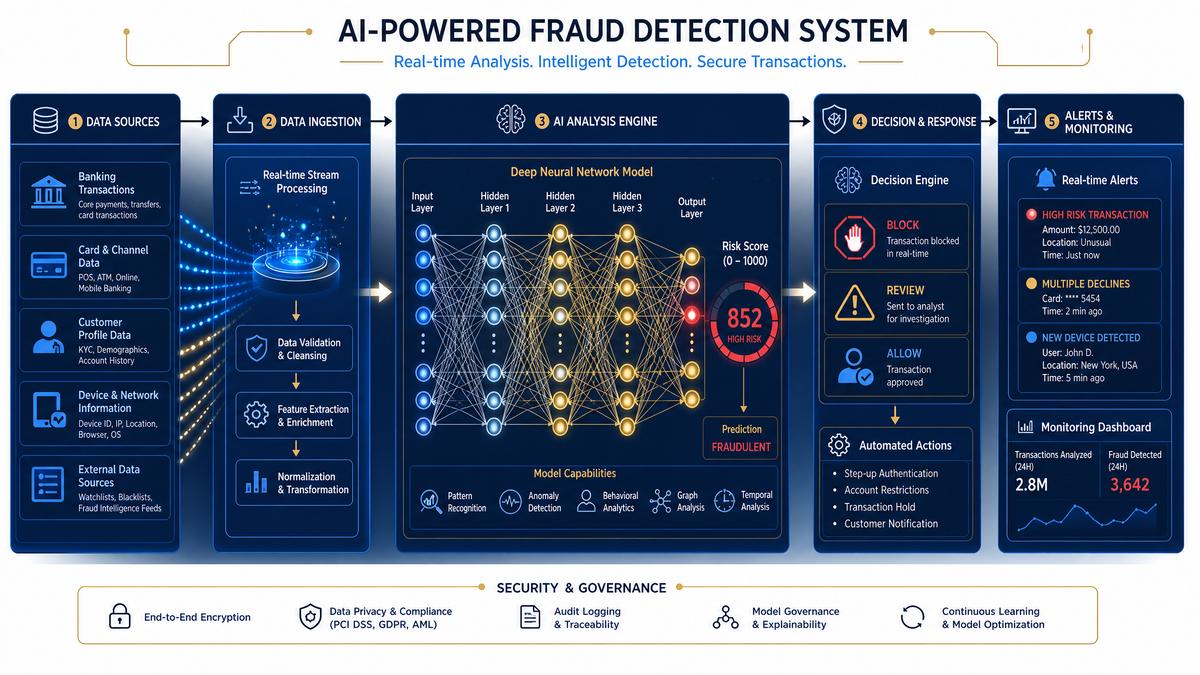
Use Case 1: Transaction Monitoring Enhanced by GPT-5.5
Traditional transaction monitoring systems rely heavily on static rule sets and anomaly detection algorithms, which struggle against increasingly sophisticated fraud attempts masked by AI-generated behaviors. GPT-5.5 introduces a paradigm shift by analyzing transaction context with natural language processing and pattern recognition capabilities that emulate expert human analysts.
How GPT-5.5 Detects AI-Driven Transaction Fraud
By ingesting transaction metadata combined with customer communication logs, GPT-5.5 identifies subtle patterns such as:
- Uncharacteristic transaction narratives generated by AI phishing scripts.
- Temporal anomalies where AI bots conduct fraudulent transactions during atypical hours.
- Behavioral changes in account holders’ communication styles preceding fraud.
The model can generate risk scores enriched with qualitative explanations, such as highlighting language inconsistencies or unusual transaction chains that would typically evade conventional systems.
Practical Implementation Example
Below is a simplified Python code snippet illustrating how GPT-5.5 can be integrated via API to score suspicious transactions:
import openai

def score_transaction(transaction_details, communication_logs):
    prompt = f"""
    Analyze the following transaction and related communications for fraud indicators:
    Transaction: {transaction_details}
    Communications: {communication_logs}
    Provide a risk score (0-100) and explain your reasoning.
    """
    response = openai.ChatCompletion.create(
        model="gpt-5.5-cybersec",
        messages=[{"role": "user", "content": prompt}],
        temperature=0.2,
        max_tokens=300
    )
    return response['choices'][0]['message']['content']

# Example usage
transaction = "Wire transfer of JPY 10 million to new beneficiary"
communications = "Email from account holder requesting urgent transfer"
print(score_transaction(transaction, communications))
This application enhances detection accuracy, reduces false positives, and expedites fraud investigation processes.
Use Case 2: Fraud Detection Through Multimodal Deepfake Analysis
Deepfake technology poses an existential threat to identity verification and fraud prevention in banking. GPT-5.5’s multimodal capabilities allow it to simultaneously process audio, video, and textual data streams to detect synthetic media used in fraudulent schemes.
Technical Approach to Deepfake Detection
GPT-5.5 combines advanced techniques to identify deepfakes, including:
- Temporal Inconsistencies: Detecting unnatural blinking, lip-sync mismatches, and voice prosody anomalies in video and audio streams.
- Semantic Discrepancies: Cross-referencing spoken content with known facts and expected communication patterns.
- Metadata Analysis: Examining encoding artifacts and file signatures indicative of synthetic generation.
These analyses are fused to produce a deepfake confidence score that informs risk-based authentication decisions.
Comparison Table: Traditional vs GPT-5.5 Deepfake Detection
| Feature | Traditional Detection Methods | GPT-5.5 AI-Driven Detection |
|---|---|---|
| Input Modalities | Primarily video or audio only | Multimodal (video, audio, text) |
| Detection Accuracy | Moderate, many false negatives | High, reduced false positives and negatives |
| Adaptability | Static heuristics | Dynamic learning from evolving deepfake techniques |
| Explainability | Limited, black-box outputs | Detailed reasoning and anomaly highlighting |
By deploying GPT-5.5, Japanese banks have significantly mitigated risks associated with executive impersonation and social engineering frauds.
Use Case 3: Threat Intelligence and Incident Response Automation
Effective cybersecurity requires not only detection but also rapid response. GPT-5.5 enables Japanese banks to automate the synthesis of threat intelligence and orchestrate incident response workflows.
Threat Intelligence Synthesis
GPT-5.5 continuously ingests open-source intelligence (OSINT), internal security logs, and global threat feeds. It correlates disparate data points to identify emerging attack campaigns and zero-day vulnerabilities. The model’s NLP capabilities extract actionable insights from unstructured data sources such as hacker forums and dark web chatter.
Incident Response Automation
Upon detecting a threat, GPT-5.5 generates detailed incident reports, recommended remediation steps, and, where appropriate, triggers automated playbooks. These playbooks can include:
- Isolating compromised endpoints.
- Revoking suspicious user sessions.
- Deploying targeted patches or configuration changes.
This automation reduces mean time to detect (MTTD) and mean time to respond (MTTR), critical metrics for cybersecurity efficacy.
Sample Incident Response Playbook Snippet (YAML)
playbook:
  name: "AI-Powered Phishing Incident"
  triggers:
    - detection: "GPT-5.5 Phishing Alert"
      severity: high
  steps:
    - name: "Isolate Endpoint"
      action: isolate_device
      parameters:
        device_id: "{{device_id}}"
    - name: "Notify Security Team"
      action: send_alert
      parameters:
        channel: "Slack"
        message: "Phishing incident detected and endpoint isolated."
    - name: "User Password Reset"
      action: reset_password
      parameters:
        user_id: "{{user_id}}"
Integrating GPT-5.5 with Security Orchestration, Automation and Response (SOAR) platforms amplifies operational efficiency and resilience.
Regulatory and Compliance Landscape in Japan Surrounding AI and Cybersecurity
Japan’s regulatory framework for cybersecurity and data protection is among the most rigorous globally, influencing how banks deploy AI-powered defenses like GPT-5.5.
Key Regulations Impacting AI-Driven Cybersecurity
- Act on the Protection of Personal Information (APPI): Governs personal data handling, requiring banks to implement strict data security measures and ensure transparency in AI usage.
- Financial Instruments and Exchange Act: Enforces cybersecurity standards for financial institutions, mandating continuous monitoring and incident reporting.
- Cybersecurity Basic Act: Establishes principles for national cybersecurity strategy, encouraging adoption of advanced technologies like AI.
Compliance Challenges and Solutions
Japanese banks must balance AI model deployment with privacy preservation. GPT-5.5 implementations typically utilize data minimization, anonymization, and secure enclave processing to comply with APPI. Additionally, explainability features in GPT-5.5 assist in regulatory audits by providing transparent decision rationales.
Moreover, banks engage in regular dialogue with regulatory bodies to ensure responsible AI adoption and adherence to evolving cybersecurity guidelines.
Lessons Learned for Global Enterprises from the Japanese Banking Sector’s GPT-5.5 Deployment
The pioneering use of GPT-5.5 by Japanese banks offers valuable insights for global enterprises seeking to enhance cybersecurity against AI-enabled threats.
- Proactive AI Integration: Early adoption and continuous model fine-tuning are essential to keep pace with adversarial AI evolution.
- Multimodal Threat Detection: Combining analysis of text, audio, and video provides superior detection capabilities compared to siloed approaches.
- Human-AI Collaboration: Explainable AI outputs enable security analysts to trust and effectively act on machine-generated alerts.
- Regulatory Alignment: Embedding compliance considerations into AI architecture from inception mitigates legal and operational risks.
- Automation with Oversight: Automating repetitive response tasks improves response times, but human oversight remains critical for complex incidents.
Global enterprises can leverage these lessons to build robust, AI-augmented cybersecurity frameworks tailored to their regulatory and threat environments.
Best Practices for Implementing GPT-5.5 in Enterprise Cybersecurity
Successful GPT-5.5 deployment requires a strategic approach encompassing technical, organizational, and governance dimensions.
Technical Recommendations
- Data Quality: Curate high-fidelity training datasets including diverse threat scenarios to fine-tune GPT-5.5 modules.
- Model Monitoring: Continuously monitor model performance and retrain to address concept drift caused by new threat tactics.
- Secure Integration: Ensure API endpoints and data pipelines are encrypted and access-controlled.
- Latency Optimization: Deploy GPT-5.5 inference engines close to data sources to minimize detection delays.
Organizational and Governance Recommendations
- Cross-functional Teams: Foster collaboration between cybersecurity, compliance, and AI specialists.
- Explainability Training: Train analysts to interpret GPT-5.5 outputs effectively.
- Ethical AI Use: Establish policies governing AI decisions to prevent bias and ensure fairness.
- Incident Simulation: Regularly conduct red team exercises simulating AI-powered attacks to test defenses.
By following these best practices, enterprises can harness GPT-5.5’s full potential while mitigating operational risks.
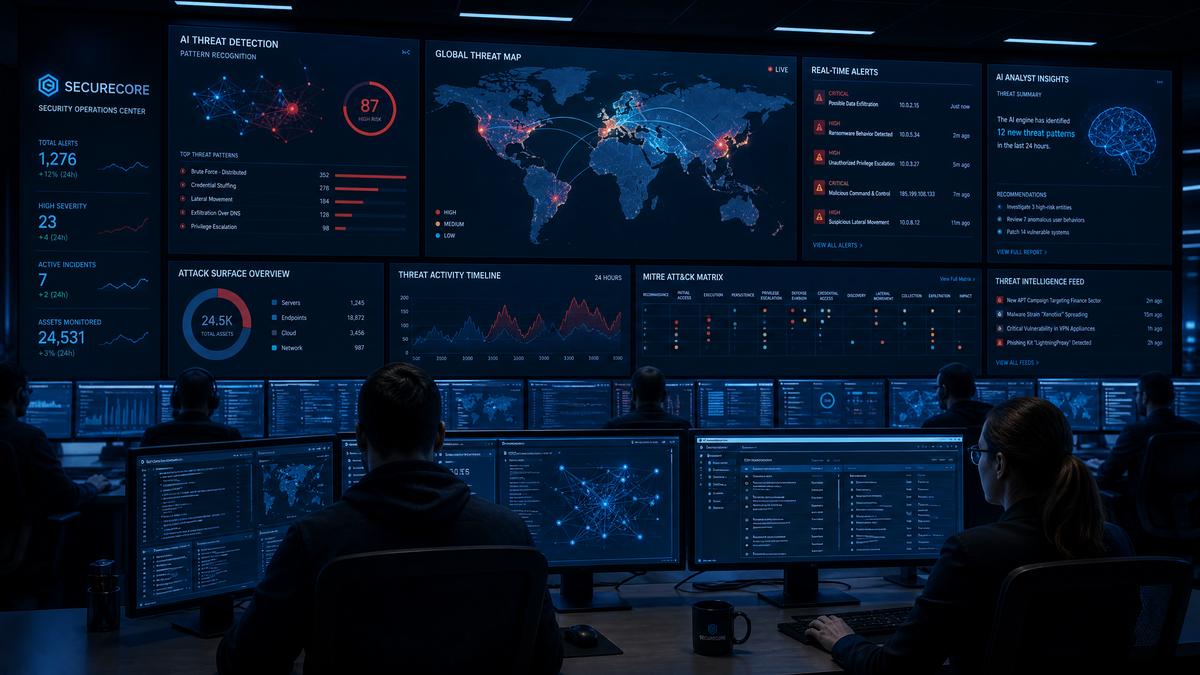
Future Outlook: The Evolving Role of GPT-5.5 and Beyond in Cyber Defense
As cyber threats become more intelligent and automated, the role of AI models like GPT-5.5 will expand beyond detection to active defense and offense. Anticipated future developments include:
- Autonomous Threat Hunting: GPT-5.5-enabled agents proactively seek indicators of compromise across global networks.
- Real-time Deepfake Prevention: Integration with biometric authentication systems to block synthetic media fraud instantly.
- Collaborative AI Ecosystems: Cross-industry sharing of anonymized threat intelligence powered by federated GPT-5.5 models.
- AI-Driven Cybersecurity Policy: Dynamic regulatory frameworks that leverage AI insights for real-time compliance enforcement.
Japanese banks’ early adoption sets a precedent for global financial institutions to embrace AI not only as a tool but as a strategic partner in cybersecurity.
Advanced AI-Driven Attack Scenarios Targeting Japanese Banks
Beyond standard phishing and deepfake fraud, Japanese banks are increasingly encountering AI-powered threats that leverage complex multi-layered strategies. These attacks often combine AI models with traditional hacking techniques to orchestrate campaigns that are difficult to detect and mitigate.
1. AI-Augmented Credential Stuffing and Account Takeover
Credential stuffing involves using leaked usernames and passwords to gain unauthorized access. Attackers are now using AI to automate the process of testing credentials, intelligently adjusting attack speed and vectors based on real-time feedback to avoid detection by rate limiting or anomaly detection systems.
For example, an AI system might:
- Identify patterns in login attempts to optimize timing and IP address rotation
- Use natural language processing to generate believable login attempts or error messages to evade user suspicion
- Exploit biometric authentication systems by generating synthetic fingerprint or facial data using GANs
This combination creates a high risk of account takeover, where fraudsters gain control over customer accounts, enabling unauthorized transactions or data exfiltration.
2. AI-Powered Supply Chain Attacks
Japanese banks rely on numerous third-party vendors and software providers. Attackers are deploying AI to analyze software update patterns and craft malicious updates that blend seamlessly with legitimate ones.
- AI models analyze historical update metadata to mimic signatures and timing.
- Generative models produce code snippets that evade static and dynamic malware detection.
- Reinforcement learning agents test payload delivery methods to maximize infection rates.
This creates a stealthy supply chain attack vector that can compromise entire banking networks before detection.
3. Automated Insider Threat Detection Evasion
Insider threats remain a significant concern. Sophisticated attackers use AI to simulate normal insider behavior patterns, creating synthetic logs and communications that evade anomaly detection systems.
AI can generate:
- Fake email chains mimicking typical employee language
- Network traffic patterns consistent with legitimate business processes
- Automated manipulation of access logs to hide unauthorized activity
This level of evasion requires banks to deploy more advanced behavioral analytics combined with human expertise to identify subtle signs of compromise.
Implementation Architectures for AI-Powered Cyber Defense in Banking
Japanese banks are adopting multi-layered architectures that integrate GPT-5.5-based models with traditional cybersecurity tools to counter AI-driven threats effectively. Below is an overview of a recommended architecture.
| Architecture Component | Functionality | Example Tools/Technologies |
|---|---|---|
| AI Threat Intelligence Platform | Aggregates and analyzes threat data using GPT-5.5 to identify emerging AI-powered threats. | Custom GPT-5.5 models, SIEM integration, threat feeds |
| Behavioral Analytics Engine | Monitors user and system behavior to detect anomalies indicative of insider threats or compromised accounts. | UEBA tools, GPT-5.5 anomaly detection modules |
| Automated Incident Response | Uses AI to triage, prioritize, and initiate containment steps automatically. | SOAR platforms integrated with GPT-5.5 for natural language processing |
| Deepfake Detection Module | Identifies synthetic audio/video fraud attempts through multimodal analysis. | GAN detection algorithms, speech forensics AI |
| Secure Customer Interaction Layer | Applies AI to authenticate users and filter communications to prevent phishing. | AI-powered MFA, conversational AI verification |
Sample GPT-5.5 Integration Code Snippet for Phishing Email Detection
import openai

def detect_phishing_email(email_text):
    response = openai.Completion.create(
        model="gpt-5.5",
        prompt=f"Analyze the following email text for phishing indicators:\n\"\"\"\n{email_text}\n\"\"\"\nProvide a risk score from 0 (safe) to 10 (high risk) and a brief explanation.",
        max_tokens=100,
        temperature=0.2
    )
    result = response.choices[0].text.strip()
    return result

# Example usage
email_content = "Dear customer, please verify your account by clicking this link..."
print(detect_phishing_email(email_content))
This example demonstrates how GPT-5.5 can be used programmatically to assess the risk level of inbound emails in real time, enhancing the bank’s spam and phishing filtering capabilities.
Analyzing the Return on Investment (ROI) for AI-Driven Cybersecurity Solutions
Implementing GPT-5.5 and related AI technologies in cybersecurity requires significant investment. However, Japanese banks can realize tangible ROI through:
- Reduction in successful phishing and fraud attempts: AI detection decreases financial losses and customer churn.
- Operational efficiency gains: Automated incident response reduces human analyst workload and accelerates remediation.
- Regulatory compliance cost savings: AI-assisted monitoring and reporting streamline audit processes.
- Brand reputation protection: Minimizing breaches preserves customer trust and market position.
Below is a sample ROI comparison of two approaches over a 3-year period:
| Metric | Traditional Cybersecurity | AI-Enhanced Cybersecurity (with GPT-5.5) | Improvement |
|---|---|---|---|
| Annual Cyber Fraud Losses (JPY millions) | 500 | 150 | 70% Reduction |
| Incident Response Time (hours) | 12 | 4 | 66% Faster |
| Security Analyst FTEs Required | 20 | 12 | 40% Reduction |
| Compliance Audit Preparation Cost (JPY millions) | 80 | 50 | 37.5% Savings |
These figures demonstrate that while upfront costs for AI integration can be high, the operational and loss-prevention benefits justify the investment within a few years.
Regulatory Compliance and Ethical Considerations When Deploying GPT-5.5 in Banking Security
Japanese banks must navigate a complex regulatory environment when integrating GPT-5.5 for cybersecurity purposes. Key considerations include:
- Personal Data Protection: Compliance with Japan’s Act on the Protection of Personal Information (APPI) mandates strict handling of customer data. AI models must be designed to minimize data exposure and comply with anonymization requirements.
- Explainability and Auditability: Regulators require transparent AI decision-making processes, especially in automated incident response. Banks should implement explainability frameworks for GPT-5.5 outputs.
- Bias and Fairness: AI systems must be monitored to avoid discriminatory impacts, particularly in customer interaction layers where AI influences access or authentication decisions.
- Third-Party Vendor Management: Using external AI service providers requires thorough due diligence and contractual safeguards to align with cybersecurity and data privacy standards.
“Ensuring regulatory compliance is not just a checkbox exercise but a continuous commitment to responsible AI use in safeguarding financial systems.” – Cybersecurity Compliance Expert, Tokyo
Ongoing collaboration with regulatory bodies and adoption of frameworks such as the Financial Services Agency’s (FSA) guidelines on AI usage will help banks maintain compliance while leveraging advanced technologies.
Practical Recommendations for Japanese Banks to Strengthen AI-Driven Cyber Defenses
Based on industry best practices and emerging research, the following actionable steps are recommended:
- Integrate GPT-5.5 with Existing Security Infrastructure: Avoid siloed deployments by embedding AI models into SIEM, SOAR, and endpoint protection platforms to leverage unified threat intelligence.
- Continuous Model Training and Validation: Regularly update GPT-5.5 models with latest threat data and validate outputs against known attack patterns to maintain detection accuracy.
- Multi-Modal Threat Analysis: Combine text, audio, and video analysis capabilities to detect deepfake fraud and multi-channel social engineering attacks.
- Employee Awareness and Training: Use AI-generated simulations of phishing and social engineering attacks to train staff on recognizing sophisticated threats.
- Implement Layered Authentication: Augment MFA with AI-based behavioral biometrics to detect and block credential stuffing and account takeover attempts.
- Establish Cross-Functional AI Governance: Create committees involving cybersecurity, compliance, and ethical AI specialists to oversee GPT-5.5 deployment and risk management.
These recommendations aim to create a robust, adaptive defense posture that leverages the full capabilities of GPT-5.5 while minimizing operational risks.
Real-World Case Study: Successful Deployment of GPT-5.5 at a Major Japanese Bank
A leading Japanese bank recently implemented a GPT-5.5-based AI threat intelligence system to combat rising AI-powered phishing campaigns. Key outcomes included:
- Phishing Detection Accuracy: Increased from 75% to 92% within six months, significantly reducing successful attacks.
- Incident Response Efficiency: Automated triage reduced analyst workload by 35%, enabling faster containment.
- Customer Impact: Decreased fraud-related customer complaints by 40%, improving satisfaction and trust.
The bank integrated GPT-5.5 with their existing SIEM and deployed custom fine-tuned models trained on Japanese-language threat data. They also incorporated a deepfake detection module to identify voice fraud attempts during customer service calls.
“Leveraging GPT-5.5 transformed our security operations. The AI’s ability to understand subtle linguistic nuances in phishing attempts helped us stay ahead of attackers.” – Head of Cybersecurity, Japanese Bank
This case underscores the transformative potential of GPT-5.5 when strategically applied within the banking sector.
For a deeper exploration of related concepts, our comprehensive article on How Databricks Set a New State-of-the-Art with GPT-5.5 Enterprise Agents: Revolutionizing AI-Driven Enterprise Workflows provides detailed analysis, practical examples, and expert recommendations that complement the strategies discussed in this section.
Access 40,000+ AI Prompts for ChatGPT, Claude & Codex — Free!
Subscribe to get instant access to our complete Notion Prompt Library — the largest curated collection of prompts for ChatGPT, Claude, OpenAI Codex, and other leading AI models. Optimized for real-world workflows across coding, research, content creation, and business.
Conclusion: Strategic Imperatives for Enterprises Facing AI-Driven Cyber Threats
The infusion of GPT-5.5 into Japanese banking cybersecurity exemplifies a transformative approach to combating AI-powered cyber threats. This collaboration demonstrates how cutting-edge generative AI can be harnessed to detect sophisticated phishing, deepfakes, and fraud with unprecedented accuracy and speed.
For enterprises worldwide, the key takeaways are clear:
- Invest in AI models specifically tailored for cybersecurity applications.
- Adopt multimodal detection strategies incorporating text, audio, and video.
- Ensure AI integration aligns with regulatory and ethical standards.
- Promote human-AI synergy through explainability and training.
- Leverage automation to accelerate incident response without sacrificing oversight.
As adversaries continue to evolve their tactics using AI, organizations must likewise evolve their defenses. GPT-5.5’s deployment by Japanese banks provides a replicable blueprint for building resilient, intelligent cybersecurity architectures capable of safeguarding critical financial ecosystems in the AI era.
For more information on advanced AI applications in cybersecurity, explore our in-depth guides on
For a deeper exploration of related concepts, our comprehensive article on How Databricks Set a New State-of-the-Art with GPT-5.5 Enterprise Agents: Revolutionizing AI-Driven Enterprise Workflows provides detailed analysis, practical examples, and expert recommendations that complement the strategies discussed in this section.
,
For a deeper exploration of related concepts, our comprehensive article on Codex Hooks and Programmatic Access Tokens: Enterprise Automation Guide provides detailed analysis, practical examples, and expert recommendations that complement the strategies discussed in this section.
, and
For a deeper exploration of related concepts, our comprehensive article on Prompting GPT-5.5 for Cybersecurity: Vulnerability Research and Detection Rule Engineering Techniques provides detailed analysis, practical examples, and expert recommendations that complement the strategies discussed in this section.
.
