
OpenAI Codex and GPT-5.5 Land on AWS: What Amazon Bedrock Integration Means for Enterprise AI

OpenAI Frontier Models and Codex Now Generally Available on AWS via Amazon Bedrock: A New Era for Enterprise AI
June 1, 2026 — In a landmark announcement, Amazon Web Services (AWS) announced the general availability of OpenAI’s latest frontier language models—GPT-5.5 and GPT-5.4—as well as the Codex AI coding assistant, integrated via the Amazon Bedrock platform. This strategic collaboration marks a significant milestone in enterprise AI adoption, promising unprecedented capabilities for developers, businesses, and security teams alike. For more details, see our guide on Does ChatGPT Give the Same Answers to Everyone? How much ….
The integration of OpenAI’s advanced frontier models into AWS through Amazon Bedrock represents a pivotal evolution in how enterprises harness artificial intelligence at scale. Historically, organizations seeking state-of-the-art natural language processing (NLP) and code generation models faced significant hurdles: infrastructure overhead, complex API management, security compliance, and latency concerns. With OpenAI’s GPT-5.5, GPT-5.4, and Codex now natively accessible within AWS’s robust cloud ecosystem, these challenges are substantially mitigated, ushering in a new paradigm for AI innovation and operational efficiency.
Contextualizing the Significance of GPT-5.5 and Codex on AWS
GPT-5.5, the latest iteration in OpenAI’s series of generative pretrained transformers, pushes the boundaries of language understanding, contextual reasoning, and multi-modal capabilities. Building on its predecessor GPT-5.4, GPT-5.5 incorporates enhanced few-shot learning, improved long-context comprehension (up to 128k tokens), and fine-grained control mechanisms that allow enterprises to customize responses without retraining the entire model. This marks a departure from traditional model deployment, where customization often demands extensive engineering resources and costly re-training cycles.
Codex, OpenAI’s AI-powered coding assistant, complements GPT-5.5 by automating complex programming tasks, supporting over a dozen programming languages, and enabling seamless integration with development environments. The Codex instance available on AWS Bedrock offers enterprises the ability to accelerate software development lifecycles, reduce human error, and democratize coding expertise across technical and non-technical teams.
Amazon Bedrock: The Foundation for Enterprise AI Acceleration
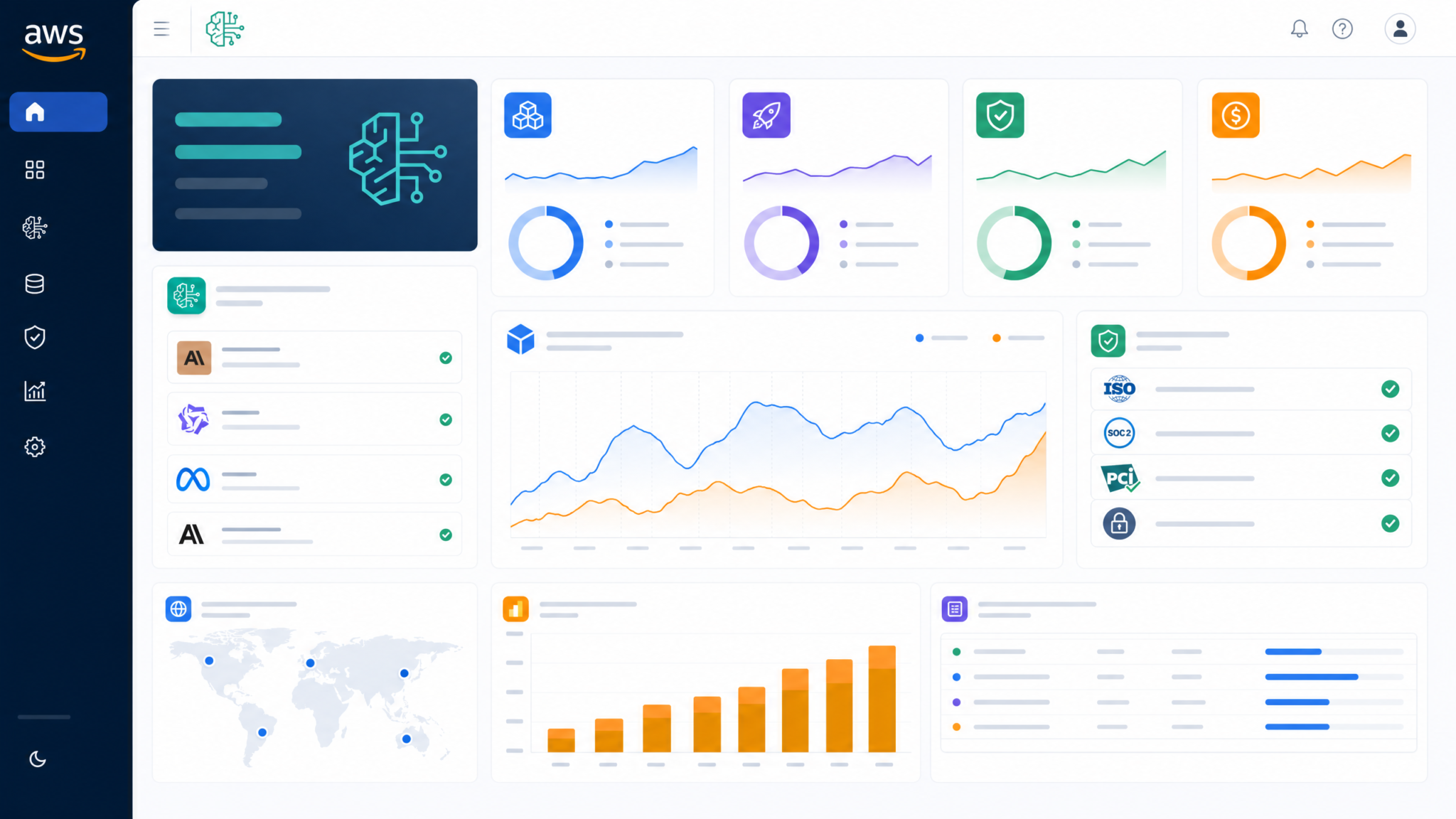
Amazon Bedrock serves as a managed service that allows enterprises to build and scale generative AI applications using foundation models from leading AI providers, including OpenAI, AI21 Labs, and Anthropic, without managing any underlying infrastructure. The general availability of OpenAI’s GPT-5.5, GPT-5.4, and Codex models on Bedrock provides customers with the following key advantages:
- Seamless Integration: Developers can invoke OpenAI models directly through simple API calls within their existing AWS environment, leveraging AWS Identity and Access Management (IAM) for granular security controls.
- Scalability & Reliability: Bedrock’s serverless architecture automatically scales to meet demand, ensuring low-latency inference even during peak workloads.
- Data Privacy & Compliance: Enterprises retain full control over their data, with Bedrock ensuring that inputs and outputs remain within the customer’s AWS Virtual Private Cloud (VPC), a critical requirement for regulated industries.
- Cost Efficiency: Pay-as-you-go pricing models coupled with optimized resource utilization help reduce the total cost of ownership compared to self-managed AI infrastructure.
Real-World Enterprise Use Cases Enabled by OpenAI Models on AWS
The confluence of OpenAI’s frontier models and AWS infrastructure unlocks transformative applications across multiple sectors:
| Industry | Use Case | Description | Impact |
|---|---|---|---|
| Financial Services | Automated Compliance Monitoring | GPT-5.5 analyzes vast volumes of transaction data and regulatory texts to detect anomalous patterns and ensure adherence to evolving financial regulations. | Reduces manual review time by 70%, decreases compliance risks, and accelerates audit cycles. |
| Healthcare | Clinical Documentation Assistance | Codex-powered tools generate structured medical records from physician dictations, integrating with Electronic Health Records (EHR) systems via AWS Lambda functions. | Improves documentation accuracy and frees up 30% of physician time for direct patient care. |
| Retail | Personalized Customer Engagement | GPT-5.5 drives conversational AI chatbots that provide real-time product recommendations and resolve complex customer queries using multi-turn dialogue. | Enhances customer satisfaction scores by 15%, and boosts conversion rates. |
| Software Development | Accelerated Code Generation & Review | Developers leverage Codex APIs to auto-generate boilerplate code, conduct automated code reviews, and integrate CI/CD pipelines with AI-powered suggestions. | Reduces development cycle times by up to 40%, and improves code quality. |
Technical Deep Dive: Accessing GPT-5.5 and Codex via Amazon Bedrock

To illustrate the technical simplicity and power of this integration, consider the following example demonstrating how a developer can invoke GPT-5.5 using the AWS SDK for Python (Boto3):
import boto3

# Initialize Bedrock client
bedrock = boto3.client('bedrock')

# Define the prompt for GPT-5.5
prompt = "Summarize the latest trends in enterprise AI adoption."

# Make the API call to invoke GPT-5.5
response = bedrock.invoke_model(
    modelId='openai-gpt-5.5',
    contentType='application/json',
    accept='application/json',
    body=json.dumps({
        "prompt": prompt,
        "max_tokens": 200,
        "temperature": 0.7
    })
)

# Parse and print the generated summary
result = json.loads(response['body'].read())
print(result['text'])
This snippet showcases how developers can seamlessly integrate advanced NLP capabilities within their existing AWS workflows without the need for complex infrastructure setup or model management.
Comparative Advantages: OpenAI Models on AWS Bedrock vs. Standalone Deployments
| Feature | OpenAI Models on AWS Bedrock | Standalone OpenAI API Access |
|---|---|---|
| Infrastructure Management | Fully managed by AWS; no server provisioning required | User responsible for API key management and scaling |
| Security & Compliance | Data stays within AWS VPC, enabling enterprise-grade compliance | Data routed through OpenAI’s endpoints; limited VPC integration |
| Latency & Performance | Optimized for AWS regions with low latency to other AWS services | Dependent on internet connectivity and OpenAI endpoint load |
| Integration | Tight integration with AWS ecosystem (IAM, Lambda, S3, SageMaker) | Standalone API requiring additional glue code for AWS services |
| Pricing Model | Pay-as-you-go with consolidated AWS billing and cost optimization tools | Separate billing from OpenAI; may lack enterprise cost management features |
Strategic Implications for Enterprise AI Strategies
The availability of OpenAI’s most advanced models on AWS Bedrock fundamentally shifts enterprise AI strategies from cautious experimentation to production-grade deployments. Enterprises can now:
- Rapidly prototype and iterate: With easy access to GPT-5.5 and Codex, product teams can quickly develop AI-infused applications without lengthy procurement or infrastructure build-outs.
- Ensure regulatory compliance: Especially in sectors such as healthcare, finance, and government, the ability to keep data within AWS regions and VPCs reduces legal and compliance risks.
- Empower diverse teams: From data scientists and developers to business analysts and security professionals, the models’ versatility enables wide-ranging use cases and cross-functional collaboration.
- Leverage AWS AI ecosystem: Bedrock’s integration with AWS services such as SageMaker, Comprehend, and Lookout for Metrics enables comprehensive AI solutions that combine generative, analytical, and monitoring capabilities.
In summary, the general availability of OpenAI’s GPT-5.5, GPT-5.4, and Codex models on AWS via Amazon Bedrock is more than a technical integration—it is a catalyst for transforming enterprise AI. Organizations can now confidently embed cutting-edge generative AI into mission-critical applications, driving innovation, operational excellence, and competitive differentiation at unprecedented speed and scale.
Introduction: The Convergence of OpenAI Frontier Models and Amazon Bedrock
In the rapidly evolving landscape of artificial intelligence, the integration of advanced large language models (LLMs) into enterprise-grade platforms marks a pivotal moment for AI adoption at scale. OpenAI’s frontier models, including the latest iterations GPT-5.5 and GPT-5.4, exemplify the state-of-the-art in generative AI, pushing the boundaries of natural language understanding, contextual reasoning, and multi-modal generation. These models are engineered to support a diverse array of applications ranging from nuanced conversational agents and automated content creation to sophisticated decision support systems that require deep contextual comprehension and real-time adaptability.
Simultaneously, OpenAI’s Codex, a specialized AI system optimized for programming and software development tasks, has revolutionized how developers write, debug, and optimize code. Codex’s ability to translate natural language prompts into executable code snippets, suggest improvements, and even generate entire functions or modules accelerates development cycles and reduces the cognitive load on technical teams. Its proficiency spans multiple programming languages and frameworks, enabling cross-domain applicability that enhances productivity in software engineering environments.
Amazon Bedrock, AWS’s foundational AI service, is designed to democratize access to these sophisticated generative AI capabilities by abstracting away the complexities typically associated with deploying and managing large-scale machine learning infrastructure. Bedrock offers a fully managed, scalable, and secure environment where enterprises can seamlessly integrate foundation models from various providers — including OpenAI’s cutting-edge offerings — into their existing workflows without the overhead of infrastructure provisioning, model tuning, or compliance management.
The convergence of OpenAI’s frontier models and Codex with Amazon Bedrock creates a synergistic ecosystem that empowers organizations to harness the power of generative AI within a governed, enterprise-ready framework. This integration not only broadens accessibility to advanced AI tools but also ensures adherence to stringent security, privacy, and regulatory standards critical for industries such as finance, healthcare, and government sectors.
Technical Overview: OpenAI’s Frontier Models and Codex
The GPT-5.5 model, the flagship in OpenAI’s latest series, incorporates several architectural and training enhancements over its predecessors, including:
- Expanded Context Window: GPT-5.5 supports input sequences exceeding 100k tokens, enabling applications that require understanding and generation over vast documents, codebases, or multi-turn dialogues.
- Multimodal Capabilities: Beyond pure text, GPT-5.5 can process and generate content encompassing images, code, and structured data, facilitating richer interactions and more complex task execution.
- Enhanced Reasoning: Incorporation of improved chain-of-thought reasoning and symbolic manipulation techniques allows GPT-5.5 to tackle advanced problem-solving tasks with higher accuracy.
Codex, as a derivative of the GPT architecture, specializes in code-related tasks with specific optimizations:
- Language Coverage: Supports over a dozen programming languages including Python, JavaScript, Java, C#, and SQL.
- Contextual Code Synthesis: Generates code snippets, entire functions, or boilerplate code based on natural language descriptions.
- Interactive Debugging Assistance: Can identify potential bugs, suggest fixes, and explain code behavior in human-readable terms.
Amazon Bedrock: Enterprise-Grade AI Platform
Amazon Bedrock abstracts the complexities of foundation model deployment, offering:
- Model Agnosticism: Enables access to a curated selection of foundation models from multiple providers, allowing enterprises to choose models tailored to their specific use cases.
- Scalability and Reliability: Built on AWS’s robust infrastructure, Bedrock supports high-throughput, low-latency inference workloads with auto-scaling capabilities.
- Security and Compliance: Incorporates AWS-native security features including VPC integration, encryption at rest and in transit, and compliance certifications (e.g., HIPAA, SOC 2, GDPR).
- Seamless Integration: Provides APIs and SDKs that simplify embedding foundation models into existing enterprise applications, data pipelines, and analytics workflows.
Why This Integration Matters: Enterprise AI Transformation
The fusion of OpenAI’s frontier models with Amazon Bedrock heralds a new paradigm in enterprise AI deployment, characterized by several key advantages:
- Accelerated Innovation Cycles: Developers and data scientists can leverage GPT-5.5’s advanced reasoning and Codex’s programming assistance directly within their AWS environments, dramatically shortening development timeframes for AI-powered applications.
- Cost and Operational Efficiency: By offloading infrastructure management to Bedrock, enterprises reduce operational overhead, enabling focus on AI model integration and application logic rather than hardware provisioning or scaling challenges.
- Improved Security Posture: Running OpenAI models within the controlled AWS ecosystem provides enhanced data governance, auditability, and compliance alignment, addressing common enterprise concerns around data privacy and risk management.
- Use Case Diversity: From automating customer support with intelligent chatbots to generating personalized marketing content, optimizing code quality, and enabling complex research simulations, the combined platform supports a broad spectrum of industry verticals and functional domains.
Real-World Example: Automating Financial Report Generation
Consider a multinational financial institution seeking to automate the generation of quarterly earnings reports. Traditionally, this process involves manual data consolidation, financial analysis, and narrative writing — tasks that are time-consuming and prone to human error. Leveraging the OpenAI GPT-5.5 model via Amazon Bedrock, the institution can implement a pipeline where:
- Financial data from disparate sources (e.g., databases, spreadsheets) is ingested and pre-processed.
- GPT-5.5 interprets the consolidated data, performs trend analysis, and generates human-readable narratives that summarize key insights.
- Codex assists in automating the generation of associated code for data extraction and report formatting, integrating seamlessly with existing BI tools.
- The entire process executes within a secure AWS environment, ensuring compliance with financial regulations and data privacy policies.
This approach not only reduces report turnaround time from days to hours but also enhances accuracy and enables dynamic scenario modeling by quickly iterating over different data inputs.
Step-by-Step Integration Workflow
Here is a high-level workflow illustrating how enterprises can integrate OpenAI models with Amazon Bedrock:
- Model Selection: Choose the appropriate OpenAI frontier model or Codex variant within the Bedrock console or via API.
- Configuration: Set desired parameters such as temperature, max tokens, and context window size based on the application requirements.
- API Integration: Embed Bedrock API calls into enterprise applications or backend services to invoke the selected model for inference.
- Security Setup: Configure IAM roles, VPC endpoints, and encryption policies to safeguard data and control access.
- Monitoring and Logging: Enable CloudWatch metrics and logging to track usage, performance, and anomalies.
- Optimization: Iterate on prompt engineering and fine-tune pipeline components to maximize output quality and efficiency.
Comparison Table: OpenAI Codex vs. GPT-5.5 on Amazon Bedrock
| Feature | OpenAI Codex | GPT-5.5 |
|---|---|---|
| Primary Use Case | Code generation, debugging assistance, code completion | General-purpose language understanding, generation, reasoning |
| Supported Inputs | Natural language prompts for code, code snippets | Natural language, code, images, structured data |
| Programming Languages Covered | Python, JavaScript, Java, C#, SQL, and more | Indirect support through text/code generation |
| Context Window Size | Up to 64k tokens | Up to 100k+ tokens |
| Ideal Enterprise Scenarios | Developer productivity tools, automated code refactoring, API generation | Customer service automation, content creation, complex decision support |
| Integration Complexity on Bedrock | Moderate – requires prompt engineering focused on coding tasks | Low to moderate – flexible prompt design for diverse applications |
In summary, the integration of OpenAI’s frontier models and Codex into Amazon Bedrock is a landmark development that significantly lowers barriers for enterprises seeking to embed advanced generative AI into their operations. By combining OpenAI’s leading-edge AI capabilities with AWS’s secure, scalable, and compliant infrastructure, organizations can unlock new levels of innovation, efficiency, and competitive advantage in the AI era.
Enterprise Deployment: Seamless Access to Advanced AI at Scale
The integration of OpenAI’s cutting-edge models, including Codex and the newly released GPT-5.5, into the Amazon Bedrock ecosystem marks a pivotal evolution in enterprise AI deployment. This collaboration not only democratizes access to some of the most powerful large language models (LLMs) available but also provides enterprises with a robust, scalable, and secure platform to operationalize AI at unprecedented scale. By embedding these frontier AI capabilities directly into existing workflows and applications, businesses can accelerate digital transformation initiatives while maintaining stringent control over data governance and compliance.
Amazon Bedrock serves as a foundational layer that abstracts away the traditionally daunting operational complexities associated with managing and scaling LLMs. Enterprises no longer need to invest heavily in bespoke infrastructure or grapple with the nuances of model lifecycle management. Instead, they can focus on delivering AI-powered innovation that drives tangible business outcomes. This section delves into the multifaceted benefits of this integration, offering a comprehensive analysis of how enterprises can leverage this synergy for scalable, customizable, and reliable AI deployments.
Operational Scalability: Elastic AI Infrastructure Without the Overhead
One of the most significant challenges enterprises face when adopting AI at scale is the operational burden of provisioning, maintaining, and optimizing infrastructure tailored for large models. Amazon Bedrock’s serverless approach eliminates the need for upfront capital expenditure on specialized hardware such as GPUs or TPUs. Instead, enterprises access OpenAI’s models via fully managed APIs that scale elastically based on demand.
This elasticity is critical for handling fluctuating workloads in real time. For example, an e-commerce platform might experience dramatic spikes in chatbot interactions during seasonal sales or product launches. With Bedrock, AI services automatically scale to accommodate these surges, ensuring consistent performance without manual intervention. Moreover, the pay-as-you-go pricing model optimizes costs by charging only for actual usage, thereby reducing financial risk associated with over-provisioning.
To illustrate, consider the following simplified workflow for integrating GPT-5.5 into an enterprise customer support system:
import boto3

# Initialize Bedrock client
bedrock = boto3.client('bedrock-runtime')

def generate_response(user_input):
    response = bedrock.invoke_model(
        modelId='openai-gpt-5-5',
        contentType='application/json',
        accept='application/json',
        body=json.dumps({
            'prompt': user_input,
            'max_tokens': 256,
            'temperature': 0.7
        })
    )
    return json.loads(response['body'])['generated_text']

# Example usage
user_query = "How do I reset my password?"
print(generate_response(user_query))
In this example, the enterprise leverages Bedrock’s runtime API to invoke GPT-5.5 dynamically, without needing to manage any underlying infrastructure. The model scales seamlessly with the number of incoming queries, supporting millions of interactions if necessary.
Customizability and Control: Tailoring AI to Enterprise-Specific Domains
While generic LLMs excel in broad language understanding, enterprises require domain-specific expertise to unlock maximum value. Amazon Bedrock’s integration with OpenAI’s GPT-5.5 and Codex models provides advanced customization capabilities, including fine-tuning and prompt engineering, enabling organizations to align models precisely with their unique operational contexts.
For instance, a financial institution can fine-tune GPT-5.5 on proprietary datasets comprising regulatory documents, market analyses, and customer interaction logs. This specialized tuning improves the model’s ability to interpret complex financial queries, detect fraud patterns, or generate compliant reports. Similarly, healthcare providers can adapt Codex to assist with clinical documentation and automate coding for billing, reducing administrative overhead and minimizing errors.
Beyond fine-tuning, prompt engineering offers a flexible, non-intrusive way to steer model behavior dynamically. Enterprises can craft sophisticated prompts that embed business rules, context, and desired response formats, enabling effective AI-driven decision support without retraining. Consider a manufacturing company integrating Codex for automated code generation on programmable logic controllers (PLCs):
prompt = """
You are an expert PLC programmer. Generate ladder logic code to control a conveyor belt that stops if an object sensor detects blockage.
"""

response = bedrock.invoke_model(
    modelId='openai-codex',
    contentType='application/json',
    accept='application/json',
    body=json.dumps({
        'prompt': prompt,
        'max_tokens': 150,
        'temperature': 0.2
    })
)
print(json.loads(response['body'])['generated_text'])
This approach accelerates engineering workflows by automating code snippets generation customized to specific operational requirements, while maintaining complete control over output quality.
Lower Latency and Reliability: Leveraging AWS’s Global Infrastructure for Real-Time AI
Latency and reliability are critical factors for enterprise AI applications, especially those embedded in customer-facing interfaces or mission-critical automation pipelines. AWS’s extensive global infrastructure ensures that AI model endpoints are deployed close to end-users, minimizing network latency. This proximity is essential for real-time use cases such as conversational agents, interactive code completion in IDEs, and dynamic content generation.
Moreover, AWS’s robust availability zones and fault-tolerant architecture guarantee high uptime, enabling enterprises to build resilient AI services that meet stringent SLAs. The combination of Bedrock and AWS CloudWatch also provides comprehensive monitoring and alerting capabilities, allowing operational teams to detect anomalies, optimize performance, and manage costs proactively.
For example, a telecommunications provider using GPT-5.5-powered chatbots to handle millions of customer queries daily benefits from sub-100ms response times due to AWS’s edge locations. This ensures smooth, uninterrupted customer experiences even during peak hours.
Real-World Enterprise Success Stories
Several global enterprises have already begun to reap the benefits of this integration. Amgen, a leader in biotechnology, emphasizes how access to OpenAI’s latest models through AWS Bedrock accelerates drug discovery workflows. By embedding GPT-5.5’s advanced natural language understanding into their research pipelines, Amgen’s scientists can quickly analyze vast volumes of scientific literature, generate hypotheses, and design experiments, all while adhering to strict regulatory compliance frameworks. Amgen’s Chief AI Officer stated:
“Accessing OpenAI’s latest models via AWS Bedrock allows us to accelerate our drug discovery pipelines with AI-driven insights while maintaining the rigorous compliance standards our industry demands.”
Similarly, Autodesk, renowned for its design and engineering software, highlights the transformative impact on creative workflows. By integrating GPT-5.5 and Codex through AWS, Autodesk’s engineering teams have streamlined prototyping and automated repetitive coding tasks, enabling faster iteration cycles and boosting innovation velocity. Their Head of AI Integration commented:
“Integrating GPT-5.5 and Codex through AWS simplifies AI adoption across our engineering teams, enabling faster prototyping and code automation.”
Comparative Analysis: Traditional AI Deployment vs. Amazon Bedrock Integration
| Aspect | Traditional AI Deployment | Amazon Bedrock Integration |
|---|---|---|
| Infrastructure Management | Requires dedicated GPU/TPU clusters, on-premises or cloud VMs, with significant setup and maintenance effort. | Fully managed, serverless access to OpenAI models with automatic scaling and maintenance handled by AWS. |
| Scalability | Limited by hardware capacity; scaling often requires manual intervention and capital investment. | Elastic scaling on-demand, adapting seamlessly to workload fluctuations with pay-as-you-go pricing. |
| Customization | Custom model training requires complex data pipelines, significant expertise, and long development cycles. | Supports fine-tuning, prompt engineering, and domain adaptation via streamlined APIs. |
| Latency & Reliability | Subject to network variability and infrastructure downtime risks; requires custom solutions for geo-distribution. | Leverages AWS global edge locations and fault-tolerant architecture for low-latency, high-availability AI services. |
| Security & Compliance | Responsibility lies entirely with enterprise; requires extensive security controls and auditing. | Built-in AWS security frameworks, encryption in transit and at rest, and compliance certifications ease governance. |
Step-by-Step Deployment Blueprint for Enterprises
- Assessment & Planning: Evaluate business use cases where AI can add value—customer service, automation, decision support, etc. Identify data sources and compliance requirements.
- Provision Amazon Bedrock Access: Set up AWS accounts with appropriate permissions and enable Amazon Bedrock service.
- Model Selection: Choose the appropriate OpenAI models (GPT-5.5 or Codex) based on workload characteristics—text generation, code synthesis, summarization, etc.
- Data Preparation: Aggregate domain-specific datasets for fine-tuning or prompt engineering. Ensure data quality and compliance adherence.
- Integration & Testing: Develop API clients to invoke Bedrock models within existing applications. Perform rigorous testing for accuracy, latency, and fault tolerance.
- Monitoring & Optimization: Utilize AWS CloudWatch and Bedrock metrics to monitor usage, performance, and cost. Iterate on prompts and fine-tuning to optimize outcomes.
- Scale & Secure: Roll out AI capabilities across the enterprise with appropriate access controls, encryption, and audit logging.
By following this blueprint, enterprises can mitigate common AI adoption risks and unlock the full potential of OpenAI’s models backed by AWS’s robust infrastructure.
In summary, the convergence of OpenAI Codex and GPT-5.5 with Amazon Bedrock offers enterprises a transformative pathway to deploy advanced AI seamlessly and at scale. This integration empowers organizations to innovate rapidly, respond dynamically to market demands, and maintain rigorous operational standards—heralding a new era of intelligent enterprise applications built on the strongest foundations of AI and cloud technology.
Security, Compliance, and Governance: Enterprise-Grade AI Assurance
As enterprises increasingly integrate generative AI technologies into their workflows, the paramount concerns around security, compliance, and governance become critical determinants for adoption. This is especially true when deploying sophisticated models like OpenAI Codex and GPT-5.5 at scale within complex organizational environments. The collaboration between AWS and OpenAI, through the Amazon Bedrock platform, addresses these challenges head-on by embedding comprehensive, enterprise-grade assurances that not only satisfy stringent regulatory requirements but also enable organizations to confidently operationalize AI at scale.
Below, we provide a detailed examination of the key pillars underpinning this AI assurance framework, along with concrete examples and technical mechanisms that enterprises can leverage to achieve robust security, comprehensive compliance, and effective governance.
-
Data Residency and Privacy:
One of the foundational assurances provided by AWS Bedrock integration is the ability for enterprises to retain full control over the geographic location of their AI workloads and data storage. AWS’s global infrastructure spans dozens of regions worldwide, enabling organizations to select specific data centers that comply with local laws and regulations governing data sovereignty, such as the General Data Protection Regulation (GDPR) in the European Union or the Health Insurance Portability and Accountability Act (HIPAA) in the United States.
For example, a healthcare provider operating under HIPAA mandates can deploy GPT-5.5-powered clinical decision support tools exclusively within AWS regions designated as HIPAA-eligible, such as the US East (N. Virginia) or US West (Oregon) regions. This ensures that Protected Health Information (PHI) never leaves approved facilities, minimizing risk exposure.
Moreover, AWS offers encryption at rest and in transit by default, using services like AWS Key Management Service (KMS) to securely store and manage cryptographic keys. Enterprises can integrate customer-managed keys (CMKs) to maintain granular control over encryption, allowing them to meet compliance audits requiring proof of data confidentiality.
-
Access Control and Identity Management:
Security governance in AI deployments critically depends on controlling who can interact with AI models and how those interactions are managed. The seamless integration of OpenAI models within the AWS ecosystem leverages AWS Identity and Access Management (IAM) for fine-grained access control. This enables enterprises to implement role-based access controls (RBAC) and attribute-based access controls (ABAC), ensuring that only authorized personnel or systems can invoke or manage AI endpoints.
Consider a financial institution using OpenAI Codex for automated code generation in their DevOps pipelines. With IAM policies, the organization can restrict model invocation to specific DevOps engineers or automated systems, while denying access from general user groups. Combined with AWS CloudTrail, all API calls to Bedrock endpoints are logged, providing a detailed audit trail for compliance and forensic investigations.
Below is a sample IAM policy snippet restricting AI model invocation to a designated role:
{
  "Version": "2012-10-17",
  "Statement": [
    {
      "Effect": "Allow",
      "Action": "bedrock:InvokeModel",
      "Resource": "arn:aws:bedrock:region:account-id:model/OpenAI-GPT-5.5",
      "Condition": {
        "StringEquals": {
          "aws:PrincipalTag/Department": "AI-DevOps"
        }
      }
    }
  ]
}
Such policies allow enterprises to enforce strict separation of duties, minimize insider threat risks, and comply with regulations requiring controlled access to sensitive systems.
-
Model Usage Monitoring and Logging:
Continuous monitoring and logging of AI model interactions are essential for operational transparency, security incident detection, and compliance adherence. AWS Bedrock offers integrated telemetry, enabling enterprises to capture detailed logs of every AI request and response, including metadata such as timestamps, user identities, input prompts, and generated outputs.
This data can be streamed into AWS services like CloudWatch or Kinesis for real-time analysis and anomaly detection. For instance, organizations can implement automated alerts for unusual model invocation rates that may indicate credential compromise or misuse.
Furthermore, Bedrock integrates with AWS Security Hub and AWS Config, enabling enterprises to assess their AI governance posture continuously. These services assist in identifying misconfigurations or policy violations related to AI usage and generate actionable remediation insights.
Below is an example architecture for AI usage monitoring:
Component Functionality AWS Bedrock Hosts and manages OpenAI models; captures AI request/response logs AWS CloudTrail Records API activity and user identities for audit purposes AWS CloudWatch Logs & Metrics Aggregates telemetry data; enables real-time monitoring and alerting AWS Security Hub Correlates security findings and compliance status; provides dashboards -
Content Filtering and Ethical Guardrails:
AI-generated content can pose risks of generating biased, harmful, or inappropriate outputs if left unchecked. OpenAI’s newest models integrated within AWS Bedrock incorporate multi-layered safety mechanisms designed to proactively mitigate such risks.
At the core, the models use reinforcement learning from human feedback (RLHF) and advanced content moderation filters to identify and suppress unsafe responses. Enterprises can further customize these filters and guardrails based on their domain-specific ethical frameworks and compliance obligations.
For example, a financial services firm can establish stricter content policies to prevent the generation of misleading financial advice or insider information disclosures, whereas a media company might focus on avoiding biased or inflammatory language.
Moreover, AWS Bedrock supports the integration of post-processing pipelines that allow enterprises to insert custom validation steps—for instance, leveraging Amazon Comprehend for sentiment analysis or third-party AI fairness tools to audit outputs before they are delivered to end-users.
Below is a simplified conceptual flow illustrating content filtering:
Input Prompt
    ↓
OpenAI GPT-5.5 Model
    ↓
Initial AI Output
    ↓
Content Filtering Layer
    ├─ Toxicity Detection
    ├─ Bias Mitigation
    ├─ Compliance Checks
    ↓
Final Output Delivered to Application
These enterprise-grade assurances have profoundly resonated in highly regulated industries, where data sensitivity and regulatory compliance are non-negotiable. For instance, Amgen’s leadership highlighted during their recent AI adoption briefing, “AWS’s comprehensive compliance certifications, including HITRUST and SOC 2, combined with the rigorous security controls embedded in Bedrock, provide us the confidence to deploy cutting-edge AI solutions while preserving patient data integrity and regulatory compliance.”
Similarly, Autodesk underscored the critical importance of governance in creative and intellectual property-intensive sectors, emphasizing that “the ability to enforce strict access controls, monitor AI usage, and implement ethical guardrails within the AWS Bedrock environment enables us to innovate responsibly without compromising our proprietary assets.”
In summary, the AWS and OpenAI partnership delivers a cohesive, multi-dimensional security, compliance, and governance framework tailored for enterprise AI. By leveraging AWS’s robust infrastructure, identity management, monitoring capabilities, and OpenAI’s advanced model safety features, organizations can confidently integrate AI into mission-critical applications while meeting the highest standards of data protection, regulatory compliance, and ethical responsibility.
Future Cybersecurity Innovations: Introducing ‘Daybreak’ and ‘Codex Security’
As enterprises accelerate the adoption of AI technologies, especially generative models like OpenAI Codex and GPT-5.5 on AWS through Amazon Bedrock, the cybersecurity landscape must evolve to address the emerging threats intrinsic to these sophisticated systems. Recognizing this imperative, AWS and OpenAI have collaboratively developed a next-generation cybersecurity framework centered on two pioneering solutions: ‘Daybreak’ and ‘Codex Security’. These innovations represent a paradigm shift in securing AI-driven environments, blending advanced threat intelligence with AI-native defensive mechanisms to safeguard enterprises against novel attack vectors.
Scheduled for a phased rollout over the coming 12 months, Daybreak and Codex Security are designed not only to protect AI workloads but also to embed security as a foundational aspect of AI lifecycle management. This strategic integration anticipates and mitigates risks arising from adversarial exploits, data leakage, and the inadvertent introduction of vulnerabilities through AI-assisted development. The following sections unpack the technical architecture, operational capabilities, and real-world applications of these solutions in comprehensive detail.
Daybreak: Proactive Threat Detection and AI Behavior Analytics
Daybreak is engineered as an AI-centric cybersecurity sentinel that provides continuous, real-time monitoring and behavioral analytics specifically tailored for generative AI workloads. Traditional security tools often struggle to interpret the dynamic and opaque nature of AI model interactions; Daybreak addresses this by leveraging machine learning models trained on vast datasets of benign and malicious AI use cases, enabling it to discern subtle deviations indicating potential compromise or misuse.
Technical Architecture: At its core, Daybreak employs a multi-layered detection framework:
- Input-Output Correlation Analysis: Daybreak continuously captures and analyzes the inputs (prompts, API calls) and outputs (model-generated responses) of AI services running on AWS Bedrock. By establishing baseline interaction patterns, it can detect anomalies such as prompt injections designed to manipulate model behavior or outputs that leak sensitive information.
- Usage Pattern Monitoring: It tracks metrics such as query frequency, user access patterns, and geographic origin, flagging unusual spikes or access anomalies indicative of scraping, brute force attacks, or compromised credentials.
- Adversarial Attack Detection: Utilizing adversarial machine learning techniques, Daybreak simulates potential attack vectors to anticipate and recognize attempts to exploit model vulnerabilities, including poisoning or evasion attacks.
Key Functionalities and Advanced Features:
- Real-time Anomaly Detection: Daybreak’s anomaly detection engine utilizes unsupervised learning algorithms such as Isolation Forests and Autoencoders to identify outliers in high-dimensional AI interaction data. For example, an abnormal surge in prompt complexity targeting a model’s knowledge base could indicate reconnaissance for exploitation.
- Automated Incident Response: When suspicious activity is detected, Daybreak triggers predefined containment workflows through integration with
AWS Security HubandAWS Lambda. These actions may include: - Automatically revoking API keys or temporary credentials associated with the suspicious client
- Throttling request rates to prevent denial-of-service conditions
- Quarantining affected model instances or initiating rollback to secure checkpoints
- Explainability and Forensics: To support compliance and incident investigations, Daybreak maintains comprehensive audit trails that chronicle AI decision pathways and security events. This includes timestamped logs detailing:
- Input prompts and corresponding outputs flagged as suspicious
- Detected anomalies with confidence scores and contextual metadata
- Automated response actions taken and their outcomes
Real-World Use Case: Consider a financial institution deploying GPT-5.5 for customer service automation. Daybreak would monitor for adversarial prompts attempting to extract Personally Identifiable Information (PII) or manipulate transaction approvals. Upon detecting such an anomaly—say, a crafted prompt designed to bypass authentication logic—Daybreak could immediately revoke the offending client’s access, alert security teams, and provide forensic data for incident analysis.
Step-by-Step Detection Workflow:
- Data Ingestion: Daybreak ingests real-time AI interaction logs from Amazon Bedrock endpoints.
- Baseline Modeling: Builds behavioral profiles for normal AI usage patterns per user and application.
- Anomaly Scoring: Applies anomaly detection models to identify deviations.
- Alert Generation: Generates alerts with context and severity ranking.
- Automated Response: Executes preconfigured remediation workflows or escalates to security operations centers (SOCs).
Codex Security: Hardened AI-Assisted Software Development
As AI-assisted coding tools like OpenAI Codex become integral to software development lifecycles, the risk of embedding security vulnerabilities unknowingly during automated code generation escalates. Codex Security addresses this critical challenge by embedding security-first principles directly into AI-powered development workflows, thereby bridging the gap between rapid innovation and robust software assurance.
Core Capabilities and Integration Strategies:
- Vulnerability Detection: Codex Security employs static analysis augmented by machine learning to scrutinize AI-generated code snippets in real-time. It identifies common and complex security issues such as:
- SQL, NoSQL, and command injection vulnerabilities
- Usage of deprecated or vulnerable third-party libraries
- Improper authentication, authorization, and session management practices
- Hardcoded secrets or misconfigured cryptographic functions
- Secure Coding Recommendations: When potential vulnerabilities are detected, Codex Security provides inline, context-aware suggestions that educate developers on secure coding best practices. For example, it may recommend parameterized queries instead of string concatenation to prevent injection attacks, or advise on the use of environment variables for secret management.
- Seamless CI/CD Pipeline Integration: Codex Security integrates with popular DevSecOps tools such as AWS CodePipeline, Jenkins, GitLab CI, and Snyk, enabling continuous security validation during the build, test, and deployment phases. This ensures that any AI-generated code undergoes rigorous security checks before production release.
Comparative Table: Traditional Static Analysis vs. Codex Security AI-Assisted Analysis
| Feature | Traditional Static Analysis | Codex Security AI-Assisted Analysis |
|---|---|---|
| Scope of Analysis | Predefined rule sets, limited context awareness | Contextual understanding of AI-generated code semantics |
| Detection of Novel Vulnerabilities | Limited to known signatures and patterns | Adaptive detection of emerging security flaws via machine learning |
| Developer Guidance | Static warnings, often generic | Inline, contextual recommendations tailored to generated code |
| Integration with AI Coding Tools | Not applicable | Native integration with Codex and similar AI code generators |
| Continuous Validation | Manual or scheduled scans | Real-time scanning within CI/CD pipelines and code editors |
Example Code Snippet with Codex Security Annotations:
def authenticate_user(username, password):
    # Vulnerable: Directly embedding user input in SQL query
    query = f"SELECT * FROM users WHERE username = '{username}' AND password = '{password}'"
    result = database.execute(query)
    if result:
        return True
    return False

# Codex Security Suggestion:
# Replace with parameterized query to prevent SQL injection
def authenticate_user_secure(username, password):
    query = "SELECT * FROM users WHERE username = %s AND password = %s"
    result = database.execute(query, (username, password))
    if result:
        return True
    return False
Operational Workflow:
- Code Generation: Developer invokes OpenAI Codex to generate or autocomplete code snippets within the IDE or development environment.
- Real-Time Security Scanning: Codex Security analyzes the generated code instantaneously, flagging vulnerabilities or insecure patterns before the code is committed.
- Inline Recommendations: Developers receive actionable, context-aware suggestions directly in their editor, facilitating immediate remediation.
- CI/CD Integration: During build and deployment, Codex Security performs comprehensive scans, ensuring no insecure AI-generated code enters production.
Real-World Application: A healthcare software provider using GPT-5.5 to accelerate development of patient management modules can leverage Codex Security to ensure compliance with HIPAA security standards. By identifying insecure data handling or weak authentication logic early, the organization reduces risk and maintains regulatory compliance while benefiting from AI-driven productivity gains.
Strategic Implications for Enterprise AI Security:
Together, Daybreak and Codex Security represent a comprehensive cybersecurity ecosystem that spans AI operational monitoring and AI-assisted development. This dual approach anticipates the full spectrum of security challenges posed by generative AI adoption:
- Preventing exploitation of AI models in production environments, through continuous behavioral analytics and incident response automation.
- Mitigating security risks embedded in the software development pipeline by ensuring AI-generated code adheres to the highest security standards.
- Enhancing transparency and auditability via detailed forensic data and explainable AI methodologies.
- Facilitating regulatory compliance by providing documented security controls and traceability across AI interactions and code generation.
By embedding these innovations into the Amazon Bedrock and AWS ecosystem, organizations can confidently scale AI initiatives while maintaining a robust security posture. This not only accelerates innovation cycles but also aligns with enterprise governance and risk management frameworks, marking a significant milestone in the maturation of enterprise AI security.
Implications for the Enterprise AI Landscape
The integration of OpenAI’s most advanced models, including GPT-5.5 and Codex, into the AWS Bedrock platform marks a transformative milestone in the enterprise AI domain. This development fundamentally alters how organizations approach AI adoption, governance, innovation, and security at scale. By providing seamless access to frontier AI capabilities within a robust cloud environment, AWS Bedrock catalyzes a new era where enterprises can harness state-of-the-art models without the historical overhead of infrastructure management or regulatory complexity.
Below, we explore in detail the multifaceted implications of this integration across four critical dimensions, supplemented with illustrative examples, technical insights, and strategic considerations for enterprise stakeholders.
-
Reduced Friction in AI Adoption:
One of the most immediate and impactful benefits of OpenAI’s models on AWS Bedrock is the significant reduction of operational and technical barriers that have traditionally impeded AI adoption in enterprises.
Infrastructure Abstraction & Scalability: AWS Bedrock abstracts away the underlying compute and networking complexities, allowing organizations to invoke GPT-5.5 and Codex models via simple API calls. This means enterprises no longer need to provision GPUs, manage model updates, or architect distributed AI pipelines manually. For example, a financial services firm can now integrate GPT-5.5’s natural language understanding capabilities into their fraud detection workflows with minimal DevOps overhead, accelerating time to value.
Embedded Security and Compliance: AWS Bedrock includes built-in compliance certifications (e.g., SOC 2, HIPAA, GDPR), ensuring that data processed through OpenAI models adheres to stringent regulatory requirements. This embedded compliance mitigates risks and simplifies audit processes for enterprises operating in highly regulated sectors such as healthcare and banking.
Developer Experience & Tooling: The integration offers pre-built SDKs and sample code snippets that streamline experimentation and deployment. For instance, a developer can use the AWS SDK to initiate a Codex-powered code generation task with the following Python snippet:
import boto3

bedrock = boto3.client('bedrock')

response = bedrock.invoke_model(
    modelId='openai-codex-001',
    contentType='application/json',
    accept='application/json',
    input='{"prompt":"Generate Python code for a REST API using Flask."}'
)

print(response['body'].read().decode())
This ease of use significantly lowers the entry threshold, enabling a broader developer base to innovate using frontier AI.
-
Heightened Trust and Governance:
Trustworthiness and governance are paramount in enterprise AI, particularly where models influence critical decisions or handle sensitive data. AWS Bedrock’s integration with OpenAI models sets a new benchmark for responsible AI deployment through a multi-layered governance framework.
Granular Access Controls: Enterprises can leverage AWS Identity and Access Management (IAM) policies to enforce least privilege access to AI model endpoints. This ensures that only authorized users and applications can invoke GPT-5.5 or Codex, reducing attack surfaces.
Audit Logging and Monitoring: Bedrock integrates with AWS CloudTrail and CloudWatch to provide comprehensive logs of model invocations, data inputs, and outputs. This transparency is crucial for forensic analysis and compliance reporting. For example, a healthcare provider using GPT-5.5 for clinical decision support can demonstrate traceability of AI recommendations during regulatory audits.
Bias Mitigation and Ethical AI: OpenAI and AWS jointly emphasize continuous model evaluation and mitigation strategies to address biases. Enterprises can configure bias detection pipelines that analyze model outputs for fairness and accuracy, leveraging tools like Amazon SageMaker Clarify integrated with Bedrock workflows. This proactive approach helps maintain ethical standards and align with corporate social responsibility goals.
-
Enhanced Innovation Velocity:
Access to the latest GPT-5.5 and Codex models on a scalable cloud platform accelerates enterprise innovation across multiple dimensions:
Rapid Prototyping and Deployment: Developers can quickly build and iterate on AI-powered applications without waiting for backend infrastructure readiness. For example, a retail company can prototype a GPT-5.5-powered customer support chatbot that understands complex queries and context, reducing resolution times and improving customer satisfaction.
Automation of Complex Processes: Codex’s advanced code generation capabilities enable enterprises to automate tedious and repetitive software development tasks, such as generating boilerplate code or automating data pipeline orchestration. This boosts developer productivity and reduces time-to-market for new AI-driven features.
Unlocking New Business Models: The combination of natural language understanding and code generation paves the way for innovative AI-as-a-Service offerings. For instance, a logistics company could create a dynamic route optimization system that combines GPT-5.5’s reasoning with Codex-generated scripts to adapt to real-time traffic data.
Comparison Table: Innovation Impact
Use Case Traditional Approach With AWS Bedrock + GPT-5.5/Codex Impact Customer Support Automation Rule-based chatbots with limited context understanding Context-aware GPT-5.5 conversational agents with real-time learning Improved customer satisfaction, reduced support costs Software Development Manual coding and code reviews Codex-assisted code generation and debugging suggestions Accelerated development cycles, fewer bugs Data Analytics Static dashboards and manual report generation Natural language querying and automated insight extraction Faster decision-making, democratized data access -
Future-Proof Security Posture:
Security in AI workloads is an evolving challenge, especially as threat actors develop sophisticated attacks targeting model vulnerabilities, such as data poisoning or adversarial inputs. AWS and OpenAI’s roadmap, including initiatives like Daybreak and Codex Security, reflects a forward-thinking approach to these emerging risks.
Daybreak Framework: This upcoming feature will provide real-time anomaly detection for AI model behavior, alerting enterprises to suspicious or anomalous inputs and outputs that could indicate a security incident or model drift. For example, if a GPT-5.5-powered chatbot begins generating inconsistent or malicious responses, Daybreak can trigger automated remediation workflows.
Codex Security Enhancements: Codex Security modules will enable enterprises to perform static and dynamic analysis of AI-generated code to detect vulnerabilities, insecure patterns, and compliance violations before deployment. This capability is critical for preventing the propagation of security flaws introduced via AI-assisted development.
Integration with Existing Security Tools: Bedrock’s AI security features integrate with AWS Security Hub, GuardDuty, and other AWS native security services, allowing unified monitoring and incident response across the enterprise security landscape.
Step-by-Step Security Workflow Example:
- Developers generate application code using Codex via Bedrock APIs.
- Generated code automatically undergoes Codex Security static analysis.
- If vulnerabilities are detected, the system flags issues and suggests fixes.
- Once cleared, code is deployed to production with continuous monitoring enabled.
- Daybreak monitors AI model outputs for anomalies and triggers alerts if suspicious activity is detected.
This layered security approach ensures that enterprises can confidently embed frontier AI models into their mission-critical workflows without compromising on security or compliance.
Strategic Recommendations for Enterprises:
To fully capitalize on the transformative potential of OpenAI models on AWS Bedrock, enterprises should adopt a holistic strategy encompassing governance, developer enablement, and continuous innovation:
- Establish AI Governance Frameworks: Define policies for data privacy, model usage, and ethical AI to manage risk and ensure regulatory alignment.
- Invest in Developer Training and Tooling: Equip teams with the skills and tools needed to effectively utilize GPT-5.5 and Codex APIs, fostering a culture of experimentation and rapid iteration.
- Integrate AI Security Best Practices: Leverage Bedrock’s emerging security features and integrate them with existing security infrastructure to maintain a robust security posture.
- Monitor and Measure AI Impact: Implement metrics and KPIs to evaluate the business value generated by AI initiatives, enabling data-driven investment decisions.
By embracing these strategic imperatives, enterprises can unlock unprecedented efficiencies, innovation, and competitive advantage in the evolving AI-driven digital economy.
Conclusion
The strategic partnership between AWS and OpenAI, culminating in the general availability of GPT-5.5, GPT-5.4, and Codex on the Amazon Bedrock platform, represents a pivotal milestone in the evolution of enterprise artificial intelligence. This integration is not merely a technical collaboration; it signifies the convergence of state-of-the-art generative AI models with one of the most robust, secure, and scalable cloud infrastructures available today. By embedding OpenAI’s advanced language models into AWS’s Bedrock service, organizations are now empowered to innovate rapidly while maintaining stringent compliance and governance standards critical to enterprise operations.
This fusion effectively redefines the AI adoption paradigm for enterprises by addressing three fundamental challenges that have historically impeded widespread AI integration: accessibility, security, and scalability. Amazon Bedrock abstracts the complexity of managing AI infrastructure, allowing enterprises to seamlessly deploy and customize models like GPT-5.5 and Codex without the overhead of provisioning dedicated hardware or managing lifecycle operations. For example, Amgen leverages this integration to accelerate drug discovery by using GPT-5.5’s natural language understanding to analyze scientific literature and generate hypotheses, significantly reducing research timelines. Similarly, Autodesk integrates Codex to automate code generation within their design software, streamlining development workflows and enhancing productivity.
From a technical perspective, the Bedrock integration offers enterprises a comprehensive, managed environment where advanced AI models operate within a secure, compliant framework that meets rigorous industry standards such as HIPAA, GDPR, and FedRAMP. The platform’s built-in encryption, fine-grained access controls, and audit logging capabilities ensure that sensitive data processed by AI models remains protected, mitigating risks associated with data leaks or unauthorized access. This is particularly crucial for sectors like healthcare, finance, and government, where regulatory compliance is non-negotiable.
Step-by-Step Integration Workflow:
- Model Selection and Customization: Enterprises begin by selecting the appropriate OpenAI model—GPT-5.5 for general-purpose language understanding or Codex for code generation—available on Bedrock.
- Data Preparation and Fine-Tuning: Using AWS’s data labeling and preprocessing tools, organizations prepare domain-specific datasets to fine-tune models, enhancing relevance and accuracy.
- Security Configuration: Administrators configure identity and access management (IAM) roles, encryption keys, and compliance policies to secure model endpoints.
- Deployment and Monitoring: The customized models are deployed through Bedrock’s managed API endpoints, with CloudWatch and AWS Security Hub monitoring performance, usage, and security events.
- Continuous Improvement: Feedback loops and telemetry data enable iterative model refinement, ensuring sustained alignment with enterprise goals and evolving regulatory requirements.
Moreover, the introduction of advanced cybersecurity initiatives such as Daybreak and Codex Security underscores a maturing AI ecosystem that proactively anticipates and mitigates emerging threats inherent in large-scale AI deployments. Daybreak, for instance, integrates anomaly detection and real-time threat intelligence to identify and neutralize adversarial attacks or model misuse scenarios before they impact business operations. Codex Security extends this protection by implementing rigorous code audit trails and vulnerability scanning for AI-generated code outputs, ensuring operational integrity and reducing the risk of introducing exploitable software flaws.
These cybersecurity capabilities are not isolated features but integral components of a holistic enterprise AI governance framework. They enable organizations to confidently adopt AI while maintaining control over data privacy, ethical use, and risk management. This is particularly important as regulatory scrutiny intensifies globally, with governments proposing stricter AI oversight to safeguard societal interests.
To contextualize the tangible benefits of this integration, consider the following comparison table highlighting key enterprise AI capabilities before and after leveraging OpenAI models on Amazon Bedrock:
| Capability | Pre-Integration (Traditional AI Deployment) | Post-Integration (OpenAI on Amazon Bedrock) |
|---|---|---|
| Model Accessibility | Requires extensive in-house ML expertise and infrastructure setup | Instant access to cutting-edge GPT-5.5 and Codex models via managed APIs |
| Scalability | Limited by on-premises hardware and manual scaling efforts | Elastic scaling with AWS’s global cloud infrastructure |
| Security & Compliance | Complex to implement and audit; high risk of data exposure | Built-in compliance frameworks, encryption, and governance controls |
| Customization | Time-consuming and resource-intensive fine-tuning | Streamlined fine-tuning workflows with AWS tooling integration |
| Operational Efficiency | Manual deployment and maintenance overhead | Automated deployment, monitoring, and security management |
Furthermore, the ability to integrate these sophisticated models within existing enterprise ecosystems is greatly enhanced through Bedrock’s compatibility with AWS’s extensive suite of services such as Lambda, SageMaker, and API Gateway. For example, developers can implement event-driven architectures where GPT-5.5 processes customer support tickets in real-time via Lambda functions, generating insightful responses or routing requests intelligently. Similarly, Codex can be embedded within DevOps pipelines to automate code reviews and generate infrastructure-as-code templates, accelerating continuous integration and deployment (CI/CD) cycles.
From a developer standpoint, the following code snippet demonstrates a simple invocation of a GPT-5.5 model endpoint through AWS SDK, illustrating ease of integration:
import boto3

# Initialize Bedrock client
bedrock = boto3.client('bedrock')

# Define the prompt for GPT-5.5
prompt = "Generate a summary of the latest quarterly earnings report for a tech company."

response = bedrock.invoke_model(
    ModelId='gpt-5.5',
    ContentType='application/json',
    Body=json.dumps({
        'prompt': prompt,
        'max_tokens': 150,
        'temperature': 0.7
    })
)

summary = json.loads(response['Body'].read().decode('utf-8'))['generated_text']
print("Summary:", summary)
This concise example underscores how enterprises can rapidly prototype and deploy AI-powered capabilities without deep expertise in underlying model architectures or infrastructure management.
In conclusion, the integration of OpenAI’s GPT-5.5, GPT-5.4, and Codex models within Amazon Bedrock is a transformative development that elevates the enterprise AI landscape to new heights. It not only democratizes access to some of the most advanced language models available but also embeds them within a secure, compliant, and scalable cloud ecosystem tailored for mission-critical applications. Organizations that harness this synergy stand to gain unparalleled advantages in innovation velocity, risk mitigation, and operational efficiency.
As enterprises continue to navigate the complexities and opportunities presented by AI, the AWS-OpenAI alliance offers a compelling, future-proof foundation for building intelligent applications that are not only powerful but also trustworthy and sustainable in the long term.
For a deeper exploration of best practices around enterprise AI integration, governance, and security, we invite readers to consult our comprehensive resources on Enterprise AI Governance and Secure AI Deployment Strategies. These guides provide invaluable insights into crafting policies, risk frameworks, and deployment architectures that maximize the value and safety of AI implementations.
📚 Related Articles You Might Enjoy
🚀 Stay Ahead with ChatGPT AI Hub
Get the latest GPT-5.5 tutorials, Codex guides, and AI news delivered to your inbox every week.
