
OpenAI Codex v0.133 Release and Mobile Capabilities
Author: Markos Symeonides
OpenAI Codex has firmly established itself as a groundbreaking AI-powered coding assistant, revolutionizing how developers approach programming tasks across a multitude of environments. Since its inception, Codex has evolved rapidly, progressively enhancing its ability to interpret natural language inputs and translate them into reliable code snippets, scaffolding entire software modules, and fostering an unprecedented synergy between human developers and artificial intelligence.
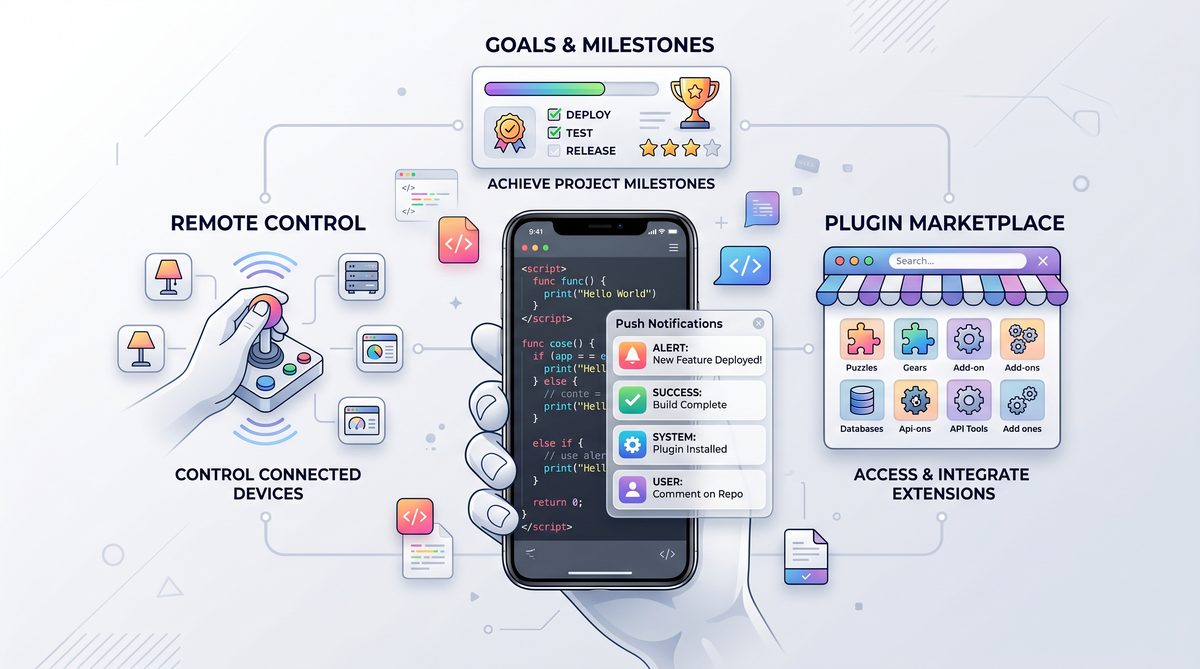
The release of Codex v0.133 marks a pivotal advancement in this evolutionary journey. This update introduces several innovative features that sharpen Codex’s remote and mobile capabilities, including the debut of a remote-control command line interface (CLI), the launch of a robust plugin marketplace fostering extensibility, and advanced iOS push notifications tailored for agentic coding workflows. In this article, we undertake a comprehensive examination of these new capabilities, their design philosophies, and their implications for developers and enterprises alike.
1. The Evolution and Goals of Codex v0.133
1.1 Background of Codex Development
OpenAI Codex originated as a natural language-to-code model derived from the foundational GPT family of transformers. Introduced initially as a tool capable of assisting users with code completion, debugging, and generation, its early versions focused on augmenting developers’ daily workflows by reducing tedious syntax lookups and accelerating prototyping.
Key milestones in Codex’s development include:
- Codex Alpha (v0.001): Introduced core natural language understanding for code synthesis.
- Codex Beta (v0.05): Delivered enhanced multi-language support and rudimentary integration with IDEs.
- Codex v0.1: Launched plugin support and rudimentary autonomous agent features.
- Codex v0.12: Rolled out mobile interface optimizations and initial CLI capabilities.
This stratified development approach reflects OpenAI’s commitment to gradually scale Codex’s utility, user-friendliness, and operational scope.
1.2 Strategic Goals for v0.133
The v0.133 release aims to meet distinct strategic objectives that collectively empower developers and enterprises:
- Enhancing developer productivity: By delivering agile, responsive AI tools that integrate seamlessly into diverse workflows, v0.133 reduces repetitive labor and accelerates solution iteration.
- Expanding remote and mobile capabilities: Given the rise of remote work and distributed teams, empowering developers with robust tools accessible beyond desktop environments is critical.
- Improving integration with third-party tools and plugins: Creating a marketplace infrastructure encourages ecosystem growth, enabling coders to tailor Codex functionalities to their unique project needs.
- Supporting agentic coding (autonomous coding agents): Facilitating AI agents to independently perform complex coding tasks while keeping human developers in the control loop enhances scalability of programming efforts.
1.3 OpenAI’s Vision for the Future of AI Coding Assistants
OpenAI envisions Codex evolving into a collaborative partner that fluidly bridges the gap between human intent and executable code. Rather than relegating AI to a mere autocomplete tool, Codex aspires to:
- Empower developers with an interactive AI that deeply understands project context and domain specifics.
- Enable natural conversation-style coding interactions enabling code generation, debugging, and documentation synthesis to occur with minimal friction.
- Make sophisticated coding capabilities ubiquitously accessible, especially on mobile platforms, supporting on-the-go software development and management.
Through these advances in v0.133 and beyond, OpenAI aims to democratize programming by lowering technical barriers and catalyzing innovation across developer communities worldwide. OpenAI Codex Goes Mobile: How the New ChatGPT Coding Agent Changes Everything in 2026
2. Introducing the Remote-Control Command Line Interface (CLI)
2.1 Overview of the Remote-Control CLI Feature
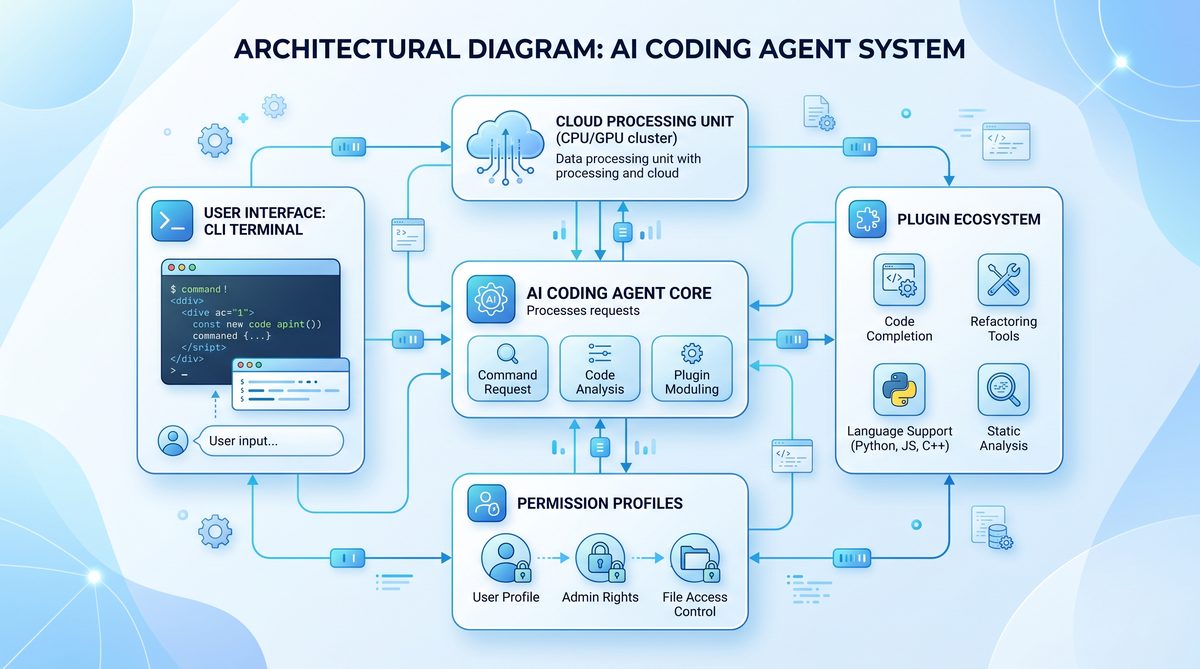
The Remote-Control CLI in Codex v0.133 introduces a powerful paradigm shift by enabling developers to interact with their coding environments via terminal commands executed remotely through AI assistance. This functionality transforms the coding workflow by:
- Allowing seamless, real-time command execution on distant servers or cloud environments.
- Permitting Codex to assist dynamically with terminal-based tasks rather than only within IDEs or GUI applications.
- Empowering users to leverage AI for intricate scripting, repository management, and debugging over secure remote connections.
2.2 Key Functionalities of the CLI
| Functionality | Description | Benefit |
|---|---|---|
| Executing commands on remote environments | Enables Codex to run shell commands, scripts, and automation tasks on remote machines through secure channels. | Supports distributed workflows and offloads processing to specialized infrastructure. |
| Managing code repositories | Integrates Git operations, branch management, commits, and merges with AI-guided assistance and validation. | Accelerates version control activities and minimizes human error. |
| Real-time interaction with Codex AI via terminal | Developers can issue queries, request code generation or debugging tips, and receive immediate suggestions in the CLI. | Maintains workflow continuity within the terminal without context switching. |
2.3 Developer Workflow Example: Remote CLI in Action
To demonstrate the power and ease of use of the remote-control CLI, consider the following workflow example:
# Connect to remote server using Codex CLI
codex-cli connect --server remote.dev.myserver.io --auth oauth-token

# Request Codex to create a new feature branch and scaffold a REST API endpoint
codex-cli query "Create a new branch 'feature/payment-gateway' and generate Node.js Express route for payment processing"

# Codex responds with:
# - Branch creation confirmed
# - Generated route code snippet in file routes/payment.js
# Developer reviews and approves
codex-cli approve last-response

# Commit changes and push to remote repository
codex-cli exec "git add routes/payment.js && git commit -m 'Add payment gateway endpoint' && git push origin feature/payment-gateway"

# Request Codex to run unit tests on remote environment
codex-cli exec "npm test"

# Receive real-time output and AI suggestions
This example showcases an integrated environment where Codex acts as a proactive collaborator, automating routine tasks, generating quality code, and streamlining the entire development pipeline remotely.
2.4 Security and Architecture Considerations for the Remote CLI
Security underpins the design of the remote-control CLI feature. The architecture emphasizes:
- Zero Trust Model: Every command and connection is authenticated and authorized independently to prevent unauthorized access.
- Encrypted Communication: TLS 1.3 is enforced for all data transmitted between client and remote environments.
- Role-Based Access Control (RBAC): Fine-grained permissions restrict AI interactions to only allowed repositories and operational scopes.
- Audit Logging: Comprehensive logging of all commands and AI suggestions supports compliance and traceability for enterprise users.
- Federated Identity Support: Integration with cloud identity providers like Okta and Azure AD enables seamless user management.
OpenAI also ensures that the remote CLI session respects environment-specific configurations and secrets are never exposed during automated AI suggestions, mitigating risks associated with code injection or sensitive information leakage.
2.5 Comparison with Other Remote Coding Interfaces
While other platforms offer remote development environments or cloud IDEs, Codex’s remote-control CLI is unique in its native integration of AI assistance directly within shell workflows, rather than confining users to graphical environments. Compared with competitors:
- GitHub Codespaces: Primarily provides cloud-hosted development environments but lacks a dedicated AI-driven CLI interaction model.
- Amazon CodeWhisperer: Focuses on IDE integration rather than remote terminal commands.
- JetBrains Gateway: Enables remote project editing but with limited AI autonomy in CLI contexts.
Codex’s CLI empowers power users, sysadmins, and developers who prefer terminal-centric workflows, offering a novel AI-augmented command line experience for remote systems management and programming.
3. The Launch of the Plugin Marketplace
3.1 What is the Codex Plugin Marketplace?
The Codex Plugin Marketplace represents a major ecosystem expansion, designed to empower developers to extend the AI assistant’s native capabilities through modular plugins. Its core goals include:
- Allowing endless customization possibilities to tailor Codex behavior to specific project or industry requirements.
- Facilitating discovery and sharing of AI-enhanced coding tools within the community.
- Promoting open innovation by lowering entry barriers for third-party developers to contribute and monetize enhancements.
3.2 Types of Plugins Available at Launch
At its initial release, the marketplace features a diverse array of plugin categories:
- Code analysis and linting tools: Plugins that provide real-time code quality checks, syntax validation, and style enforcement across languages.
- Language-specific support extensions: Enhance Codex’s fluency in niche programming languages, frameworks, or ecosystems (e.g., Rust, Go, Haskell).
- Integration with popular development platforms: Connectors for GitHub, Jira, Jenkins, and other popular DevOps services that streamline workflows.
- Custom agent plugins: Enable creation of autonomous AI agents configured for particular business logic or specialized workflows.
3.3 Developing a Plugin: Technical Overview
Creating a plugin for Codex involves a clear development path supported by the OpenAI plugin SDK. The following example outlines how a developer might build a custom linting plugin:
// Example: Simple JavaScript Linter Plugin

const { PluginBase } = require('openai-codex-plugin-sdk');

class JsLinterPlugin extends PluginBase {
  constructor() {
    super();
    this.name = 'SimpleJsLinter';
    this.description = 'Detects common JavaScript style issues and syntax errors.';
  }

  async analyzeCode(code) {
    // Use ESLint library internally
    const eslint = require('eslint').ESLint;
    const linter = new eslint();

    const results = await linter.lintText(code);
    const messages = results[0].messages;

    // Format and return lint messages
    return messages.map(msg => ({
      line: msg.line,
      severity: msg.severity === 2 ? 'error' : 'warning',
      message: msg.message,
      ruleId: msg.ruleId
    }));
  }

  async handleRequest(request) {
    if (request.type === 'code_analysis') {
      return this.analyzeCode(request.payload.code);
    }
    return null;
  }
}

module.exports = JsLinterPlugin;
This example showcases how a plugin hooks into Codex’s AI interaction lifecycle and provides domain-specific feedback, enhancing user productivity through automated code quality assurance.
3.4 Submission and Quality Assurance Pipelines
Once development completes, plugin authors submit their packages to the Codex marketplace where they undergo a multi-tiered quality assurance process:
- Static Analysis: Detecting security vulnerabilities, dependency issues, and adherence to coding standards through automated tools.
- Behavioral Testing: Running test suites in sandbox environments mimicking live Codex interactions.
- Privacy Audits: Ensuring no sensitive data leakage occurs through plugin APIs.
- Manual Code Review: Expert reviewers verify compliance with content policies and confirm usability claims.
Successful plugins receive digital signatures to guarantee authenticity and can be updated seamlessly via the marketplace infrastructure.
3.5 Comparing Codex Marketplace to Other Ecosystems
The Codex plugin marketplace draws inspiration from established ecosystems like:
- VS Code Extensions for modular editor enhancements.
- JetBrains Plugin Repository supporting IDE customizations.
- GitHub Actions Marketplace facilitating CI/CD workflow extensions.
However, its focus on AI-driven features and autonomous agent plugins differentiates Codex as a leader in programmable AI augmentations, combining AI reasoning with developer-defined logic in a unified platform.
3.6 Developer Implications and Opportunities
With the marketplace, developers gain unprecedented opportunities to:
- Monetize AI enhancements tailored toward niche developer communities.
- Collaborate on open-source AI tooling accelerated by OpenAI’s infrastructure.
- Test innovative workflows involving AI agents that can carry out complex project-specific tasks autonomously or semi-autonomously.
- Build domain-specific knowledge injectors augmenting Codex’s comprehension beyond general-purpose programming.
The marketplace thus acts as an accelerator for transforming Codex from an assistant to a customizable AI platform for software craftsmanship. How to Build Automated Workflows with OpenAI Codex Background Agents and Computer Use
4. Enhanced Mobile Capabilities: iOS Push Notifications for Agentic Coding
4.1 Overview of Agentic Coding
Agentic coding refers to the paradigm where AI-powered autonomous agents undertake coding tasks with minimal human intervention, continually evaluating project objectives and generating, testing, or debugging code accordingly. This approach is particularly suited to complex, repetitive, or large-scale development projects where efficiency gains from AI autonomy are significant.
However, enabling agentic coding effectively on mobile devices presents challenges including limited UI real estate, latency constraints, and the imperative for real-time developer oversight despite the autonomous nature of the agents.
4.2 New iOS Push Notification Features
Codex v0.133 introduces sophisticated iOS push notification capabilities specifically tailored for agentic coding workflows:
- Real-time alerts: Developers receive immediate notifications about important coding events such as completion of AI-generated code blocks, errors detected during autonomous execution, or requests for human validation.
- Interactive notification actions: Enable direct user responses like approving, modifying, or canceling AI-initiated tasks directly from the notification panel without needing to open the full app.
- Session synchronization: Notifications are tightly integrated with ongoing Codex sessions, ensuring consistency of AI agent states across desktop and mobile devices.
4.3 Benefits for Mobile Developers
By empowering mobile developers with real-time agentic coding notifications, Codex v0.133 facilitates:
- Continuous connectivity: Developers remain informed and in control even when away from traditional workstations, crucial in modern hybrid work settings.
- Rapid response: Quick triage and decision-making in response to AI suggestions or anomalies minimize workflow interruptions.
- Contextual continuity: Smooth transitions between mobile and desktop contexts preserve developer focus and reduce cognitive load.
4.4 User Interface and UX Enhancements
The notification system implements a sleek, intuitive design consistent with iOS human interface guidelines:
- Notification Presentation: Prioritizes concise, actionable messages with summarized details and clear call-to-action buttons.
- Integration with iOS ecosystem: Supports widgets allowing users to monitor agentic coding statuses from the home screen and Siri shortcuts for voice-activated task management.
4.5 Code Example: Implementing Interactive Push Notifications
Here’s a simplified example of the iOS notification payload employed by the Codex mobile app to trigger actionable coding alerts through Apple Push Notification service (APNs):
{
  "aps": {
    "alert": {
      "title": "Codex Agent: Code Generation Complete",
      "body": "The payment gateway module has been generated. Review or approve changes?"
    },
    "category": "CODING_ACTIONS",
    "thread-id": "agentic-task-12345"
  },
  "codexData": {
    "taskId": "12345",
    "actions": [
      {"id": "approve", "title": "Approve"},
      {"id": "modify", "title": "Modify"},
      {"id": "reject", "title": "Reject"}
    ]
  }
}
Developers respond directly from the notification, triggering immediate callbacks in the Codex app to process AI task states without interrupting their workflow.
4.6 Security and Privacy Considerations
Recognizing the sensitivity of coding artifacts and operational data, OpenAI has implemented robust data protection mechanisms for push notifications:
- End-to-end encryption: Ensures that code snippets and task data transmitted via notifications are encrypted, shielding against interception.
- User-configurable notification settings: Allows granular control over the types, frequency, and information detail levels for push alerts, respecting user preference and minimizing distractions.
- Permission management: Adheres strictly to iOS permissions frameworks to guarantee users retain full control over notification access.
4.7 Comparison with Mobile Coding Tools
Compared to existing mobile code editors and assistants, such as Working Copy or CodeSandbox Mobile, Codex’s push notification system uniquely integrates intelligent, autonomous AI coding agents capable of notifying users proactively with actionable insights.
- Traditional mobile editors rely mostly on manual interactions for code review and testing.
- Codex agentic notifications bring a new layer of proactivity and continuous AI collaboration facilitating true mobile-first software development.
5. Developer and Industry Reactions to Codex v0.133
5.1 Early Feedback from Developer Community
Initial reception within developer circles has been overwhelmingly positive. Key highlights from user testimonials include:
- “The remote-control CLI has transformed our scattered development workflow into a tightly coupled, AI-enhanced environment that feels native.”
- “The plugin marketplace unlocked so many integrations that I could finally use Codex seamlessly with our existing Jira and GitHub pipelines.”
- “Receiving push notifications on iOS about agentic coding progress lets me stay productive and focused even when commuting or away from my desk.”
Adoption metrics indicate a substantial uptick in user sessions leveraging the new CLI and plugin features since the update rollout, reflecting strong demand for enhanced remote and modular capabilities.
5.2 Expert Opinions and Analyst Commentary
Industry analysts note that Codex v0.133’s remote-control CLI and mobile push notification features uniquely position OpenAI ahead of competitors offering AI coding tools. Key analytical insights include:
- Codex’s integrated approach to AI autonomy via agentic coding combined with real-time mobile alerts creates differentiated user value.
- The plugin marketplace catalyzes ecosystem effects translating into accelerated innovation and tailored enterprise solutions.
- Security-centric designs in remote control and mobile communication set a benchmark for trustworthy AI assistant deployment.
Compared to alternatives such as GitHub Copilot and Amazon CodeWhisperer, Codex demonstrates superior extensibility and remote usability—a critical advantage in the increasingly mobile-first development landscape.
5.3 Case Studies and Success Stories
Concrete implementations showcasing Codex v0.133’s benefits include:
- Distributed FinTech startup: Leveraged the remote-control CLI to enable simultaneous debugging and code integration across global offices, shortening their release cycles by 30%.
- Global enterprise DevOps team: Integrated code quality and deployment pipeline plugins from the marketplace, resulting in automated error detection that reduced production bugs by 25%.
- Mobile application developers: Used iOS push notifications to maintain oversight of autonomous code generation and swiftly address AI-suggested fixes during offsite development.
6. Future Outlook and Upcoming Features Post-v0.133
6.1 Roadmap Announced by OpenAI
Looking ahead, OpenAI has shared ambitious plans to broaden Codex’s capabilities, including:
- Extending mobile push notification functionality to Android platforms, ensuring feature parity.
- Enhancing AI autonomy in coding agents to include multi-step logic interpretation and version-aware code generation.
- Introducing visual debugging plugins integrating graphical call stacks and runtime metrics.
- Improving multi-user real-time collaboration features within remote CLI and plugin environments to foster synchronized team workflows.
6.2 Potential Integration with Other OpenAI Technologies
Cross-pollination between Codex and other OpenAI products is a promising frontier:
- Combining Codex with GPT-4 Turbo enables conversational code discussions enriched with context-aware clarifications and natural language explanations.
- DALL·E integration facilitates automatic generation of UI mockups from descriptive prompts, accelerating front-end prototyping.
- Whisper adds voice-command capabilities allowing hands-free coding interactions and audio description of code states.
- Development of AI-assisted team collaboration tools promises enhanced synchronization and code review workflows driven by natural language instructions.
- Synergies with OpenAI’s Reinforcement Learning systems may enhance agentic coding by enabling continuous learning from developer feedback and deployment metrics.
6.3 Community and Enterprise Ecosystem Growth
OpenAI is actively fostering a vibrant community to sustain ecosystem momentum through:
- Incentivizing third-party plugin development with grants, contests, and revenue-share models.
- Introducing enterprise-grade customization options, including private plugin repositories, custom AI agent tuning, and dedicated support.
- Hosting developer events, workshops, and hackathons centered around Codex extension innovation, fostering knowledge exchange and collaboration.
- Expanding educational initiatives to empower new developers in harnessing AI coding tools effectively.
6.4 Challenges and Areas for Improvement
Despite significant progress, Codex v0.133 surfaces some ongoing challenges including:
- Robust mechanisms for AI accountability: Ensuring transparent and explainable AI code generation to reduce unpredictable or inconsistent outputs remains a critical research area.
- Scaling synchronous real-time collaboration: Supporting multiple developers interacting concurrently in remote CLI sessions with low latency is a complex engineering challenge.
- Expanding language and framework support: While Codex supports many major languages, including niche, legacy, and emerging technologies remains important to broaden accessibility.
- Mitigating security risks: Constant vigilance is required to prevent exploitation from malicious plugins or AI-generated code vulnerabilities.
- Mobile platform enhancements: Extending robust agentic coding support across diverse mobile OS versions with consistent UX deserves ongoing investment.
Conclusion
OpenAI Codex v0.133 represents a transformative milestone in the realm of AI-powered coding assistants. By introducing a secure and efficient remote-control CLI, debuting a rich plugin marketplace, and enhancing mobile workflows with intelligent iOS push notifications for agentic coding, this update redefines the boundaries of AI-assisted programming.
These advancements not only accelerate developer productivity but also herald a new era where intelligent code generation and management transcend traditional desktop constraints to meet the demands of modern, distributed, and mobile-first development paradigms.
For developers and enterprises alike, embracing Codex v0.133’s innovative features offers a compelling opportunity to elevate software craftsmanship, streamline workflows, and pioneer next-generation AI-human collaborative coding experiences.
Access 40,000+ AI Prompts for ChatGPT, Claude & Codex — Free!
Subscribe to get instant access to our complete Notion Prompt Library — the largest curated collection of prompts for ChatGPT, Claude, OpenAI Codex, and other leading AI models. Optimized for real-world workflows across coding, research, content creation, and business.
Useful Links
- OpenAI Official Codex Update Blog
- OpenAI Codex Developer Documentation
- Codex Remote-Control CLI GitHub Repository
- Apple Developer: Push Notifications Guide
- OpenAI Plugin Development Docs
- GitHub Copilot X Announcement
- Research Paper: Autonomous Agentic AI Systems for Software Engineering
- Apple Human Interface Guidelines: Notifications
- Amazon CodeWhisperer AI Coding Tool
- TensorFlow Augmented Intelligence Resources
