
OpenAI Launches $100 Pro Tier and Codex Chrome Extension

OpenAI has recently unveiled two groundbreaking offerings that promise to redefine AI-assisted development workflows and user capabilities: a new $100/month ChatGPT Pro subscription tier and the Codex Chrome Extension. These advancements not only significantly enhance usage limits and performance but also introduce powerful new features such as agentic web testing and multi-tab contextual awareness. This comprehensive article explores the technical details, historical context, market impact, and future implications of these developments, providing developers and technology professionals with an authoritative resource on the cutting edge of AI innovation.
History of OpenAI: From Research Lab to AI Powerhouse
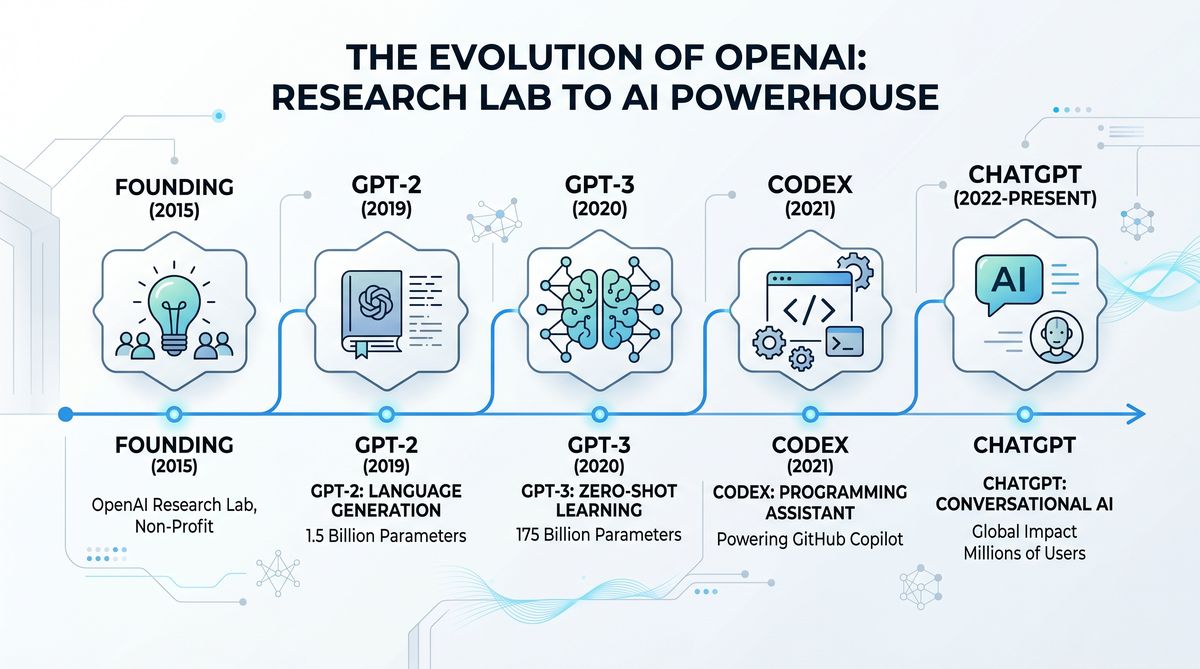
OpenAI was founded in December 2015 by a group of high-profile technology leaders including Elon Musk, Sam Altman, Greg Brockman, Ilya Sutskever, Wojciech Zaremba, and John Schulman. The original mission was to ensure that artificial general intelligence (AGI) benefits all of humanity, with a commitment to openness and safety in AI development. Initially structured as a non-profit, OpenAI rapidly evolved to balance research transparency with the commercial viability needed to fund increasingly resource-intensive AI models.
In its early years, OpenAI focused on foundational research in reinforcement learning, natural language processing, and computer vision. Breakthroughs such as the development of the OpenAI Five Dota 2 bot in 2018 demonstrated the potential of reinforcement learning at scale. However, it was the introduction of the GPT (Generative Pre-trained Transformer) series that truly catapulted OpenAI into mainstream recognition. GPT-2, released in 2019, showed unprecedented ability in language generation but was initially withheld due to concerns over misuse. GPT-3, launched in 2020, marked a paradigm shift with its 175 billion parameters, enabling a wide array of applications from chatbots to code generation.
OpenAI’s transition from research lab to a capped-profit company in 2019 allowed it to attract significant investments from Microsoft and other partners. This shift facilitated the development of more powerful models and commercial products like the Azure OpenAI Service. The launch of ChatGPT in late 2022, a conversational AI based on GPT-3.5, showcased user-friendly AI interaction and sparked widespread adoption across industries. The recent $100 Pro tier and Codex Chrome Extension build on this rich legacy, offering enhanced capabilities for developers and enterprises alike.
Throughout its history, OpenAI has prioritized safety and ethical considerations, establishing internal review processes and releasing guidelines for responsible AI usage. This ethos continues to influence the design and deployment of new products, balancing innovation with societal impact. Understanding OpenAI’s journey provides crucial context for appreciating the significance of the latest offerings and their potential role in the AI ecosystem moving forward.
As OpenAI continues to push the boundaries of what AI can achieve, its history underscores the importance of collaboration between researchers, developers, policymakers, and users. The company’s evolution reflects a broader trend towards democratizing advanced AI technologies while managing risks inherent to powerful automation. This background sets the stage for a detailed exploration of the Codex technology and the newly announced Pro subscription tier.
The Evolution of Codex: From Code Generation to Agentic Web Testing
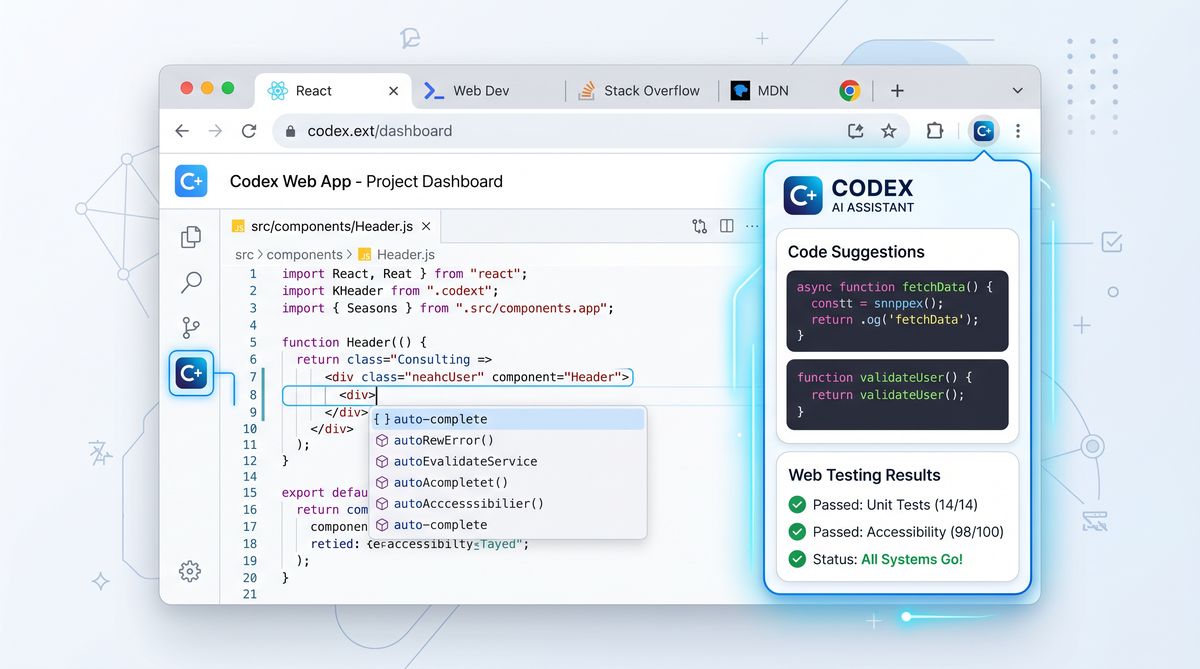
OpenAI Codex represents a specialized offspring of the GPT-3 architecture, fine-tuned specifically for programming tasks. Initially introduced in mid-2021, Codex demonstrated remarkable capabilities in interpreting natural language prompts and generating syntactically correct, functional code in multiple programming languages. This capability effectively blurred the lines between human intent and machine execution, enabling novel workflows in software development, automation, and testing.
Codex’s early adoption was fueled by integrations into platforms like GitHub Copilot, which quickly became an indispensable tool for developers by providing real-time code completions and suggestions. The underlying model was trained on a massive corpus of publicly available source code from GitHub repositories, combined with natural language data, allowing it to understand context, best practices, and common programming patterns. This foundation enabled a leap from simple code snippets to complex, multi-step programming tasks.
The latest evolution of Codex, exemplified by the new Codex Chrome Extension, extends its capabilities beyond static code generation. The extension introduces agentic web testing — a paradigm where Codex acts autonomously within a browser environment, executing tasks such as multi-tab interactions, dynamic content parsing, and cross-site automation. This reflects a shift from passive coding assistant to active agent capable of reasoning about web contexts and performing complex user-simulated behaviors.
Technically, this advancement involves embedding Codex with enhanced contextual awareness across browser tabs and real-time DOM manipulation capabilities. The extension leverages browser APIs and advanced prompt engineering to maintain state, handle asynchronous events, and chain commands intelligently. This makes Codex a powerful tool for automated testing, web scraping, UI validation, and even exploratory data collection — functions traditionally requiring bespoke scripting and manual oversight.
The transition from code generation to agentic operation marks a significant milestone in AI development tools. It enables developers to prototype, test, and deploy web-based workflows faster and with greater reliability. Moreover, it opens new possibilities for AI-driven quality assurance and user simulation in continuous integration pipelines. As this technology matures, it is expected to become a cornerstone in the toolsets of modern web developers, QA engineers, and product teams.
Future of AI in Web Development: Transforming Workflows and Capabilities
The introduction of the $100 Pro tier and the Codex Chrome Extension highlights a broader trend: the increasing integration of AI into all facets of web development. AI-driven tools are not only augmenting productivity but also enabling entirely new paradigms of interaction, testing, and deployment. This section discusses the transformative potential of AI in web development, including anticipated technological advancements and industry impacts.
Enhanced AI models, like those powering the new Pro tier, provide developers with substantially higher usage limits and faster response times, enabling more complex and iterative workflows. For instance, the 5x higher limits allow for prolonged coding sessions, bulk refactoring, and comprehensive testing without throttling, while the 10x Codex usage facilitates extensive automated code generation and debugging. These improvements reduce friction and accelerate the software development lifecycle.
Agentic AI, as exemplified by the Codex Chrome Extension, represents a shift towards autonomous tools capable of reasoning about user intent and environmental context. In practical terms, this means AI can navigate websites, simulate user interactions, and verify UI behavior across multiple tabs and platforms. Developers can leverage this to automate regression tests, validate accessibility compliance, and monitor live production environments, thereby improving software quality and reducing manual effort.
The future also includes tighter integration of AI with popular development environments and continuous integration/continuous deployment (CI/CD) pipelines. AI agents will not only generate code but also review pull requests, detect security vulnerabilities, and suggest architectural improvements. Natural language interfaces will become more sophisticated, allowing developers to describe desired functionality in plain English and receive ready-to-deploy solutions, fundamentally changing how software is created.
Moreover, AI-driven personalization and adaptive interfaces will transform user experiences on the web. By analyzing user behavior in real-time, AI can dynamically adjust UI components, optimize performance, and tailor content delivery. This creates a feedback loop where AI not only assists developers but also enhances end-user engagement and satisfaction. As AI models continue to improve, their role in web development will expand from support tools to core components of the development ecosystem.
However, this future also brings challenges including ensuring model accuracy, managing computational costs, and addressing security concerns related to automated code generation and testing. Developers will need to balance these factors while adopting AI-driven workflows. The $100 Pro tier’s expanded resource availability and the Codex Chrome Extension’s agentic capabilities represent important steps towards addressing these challenges, providing a robust platform for innovation.
Ethical Implications of Agentic Web Testing with AI
The emergence of agentic web testing, powered by AI models like OpenAI’s Codex Chrome Extension, raises critical ethical questions that developers and organizations must confront. Autonomous AI agents capable of interacting with web environments introduce risks and responsibilities that extend beyond traditional automated testing. This section explores key ethical considerations related to privacy, security, transparency, and accountability.
First, there is the issue of user privacy. Agentic AI systems often require access to dynamic web content, user data, and authenticated sessions to perform meaningful tests. Ensuring that these systems do not inadvertently expose sensitive information or violate user consent is paramount. Developers must implement strict data handling policies, anonymization techniques, and compliance with regulations such as GDPR and CCPA when deploying agentic testing tools.
Second, security concerns arise from the AI’s ability to execute potentially unsafe commands or interact with external systems autonomously. Without proper safeguards, agentic AI could be exploited to perform malicious actions such as unauthorized data extraction, injection of harmful scripts, or disruption of services. It is essential to design these tools with robust permission models, activity logging, and fail-safe mechanisms to prevent abuse.
Transparency is another ethical dimension. Users and stakeholders should be clearly informed when AI agents are performing automated web interactions, including the scope and intent of such actions. This transparency builds trust and allows for informed consent. Furthermore, developers should document AI behaviors and decision-making processes to facilitate auditing and debugging, ensuring that AI actions can be traced and understood.
Accountability is closely linked to transparency. When autonomous AI agents perform testing or other web interactions, responsibility for errors, unintended consequences, or ethical breaches must be clearly assigned. Organizations should establish governance frameworks that define oversight roles, incident response protocols, and continuous monitoring to mitigate risks associated with agentic AI operations.
Finally, the broader societal impact of agentic AI in web environments must be considered. While such technology offers tremendous efficiency gains, it could also displace certain roles or create dependencies on opaque systems. Ethical AI development requires balancing innovation with fairness, inclusivity, and human oversight to ensure that the benefits of automation are widely shared and do not exacerbate existing inequalities.
Technical Specifications and Usage Details of the $100 Pro Tier and Codex Chrome Extension
The newly launched $100 Pro tier of ChatGPT and the Codex Chrome Extension come with concrete technical enhancements designed to meet the demands of professional developers and enterprises. Understanding these specifications is critical for evaluating their suitability for various use cases.
ChatGPT $100 Pro Tier: Enhanced Limits and Performance
- Usage Limits: The Pro tier offers a 5x increase in token limits compared to the standard subscription. This translates to approximately 1.25 million tokens per month, allowing for extended conversations, detailed prompts, and complex multi-turn interactions without interruption.
- Throughput and Latency: Users benefit from priority access to OpenAI’s servers, resulting in significantly reduced latency and higher throughput. This is crucial for real-time development workflows and interactive debugging sessions.
- Codex Usage Multiplier: Codex API usage is increased by 10x, enabling large-scale code generation, testing automation, and batch processing. This supports use cases such as enterprise code audits, AI-powered software synthesis, and continuous integration testing.
- Advanced Model Access: Subscribers receive early access to the latest GPT and Codex model improvements, including experimental features and optimized architectures tailored for coding and reasoning tasks.
- Dedicated Support: Pro users have access to priority technical support and onboarding assistance, facilitating smoother integration into existing development environments.
Codex Chrome Extension: Features and Functionalities
- Agentic Web Testing: The extension enables Codex to autonomously interact with web pages, simulate user behaviors, and perform multi-step testing scenarios across tabs.
- Multi-Tab Context Awareness: Codex maintains state and context across multiple browser tabs, allowing complex workflows such as form filling, data validation, and cross-page navigation.
- Real-Time DOM Interaction: The extension can parse and manipulate the Document Object Model (DOM) dynamically, injecting scripts, extracting data, and responding to page events.
- Customizable Command Sets: Developers can define bespoke commands and test cases using natural language prompts or structured input, enabling flexible automation tailored to specific applications.
- Integration with Developer Tools: The extension interfaces seamlessly with browser developer consoles and CI/CD pipelines, allowing scripted execution and reporting of test results.
Comparison Table: Standard vs. $100 Pro Tier
| Feature | Standard ChatGPT Subscription | $100 Pro Tier |
|---|---|---|
| Monthly Token Limit | 250,000 tokens | 1,250,000 tokens (5x increase) |
| Codex API Usage | Base usage | 10x base usage |
| Response Latency | Standard | Priority, reduced latency |
| Model Access | GPT-3.5 standard models | Early access to latest GPT and Codex models |
| Customer Support | Community support | Priority technical support |
These specifications underscore the target audience for the Pro tier and Codex Chrome Extension: professional developers, AI researchers, and enterprises requiring robust, scalable AI tools integrated into their development ecosystems. The increased limits, performance enhancements, and advanced agentic capabilities empower users to push the boundaries of AI-assisted software engineering.
Step-by-Step Guide: Getting Started with the Codex Chrome Extension for Agentic Web Testing
To harness the full potential of the Codex Chrome Extension, developers should follow a systematic approach to installation, configuration, and usage. The following detailed guide outlines best practices for onboarding and effective deployment.
Step 1: Installation and Setup
- Visit the official OpenAI or Chrome Web Store page to download the Codex Chrome Extension.
- Install the extension and grant necessary permissions for browser tab access and DOM manipulation.
- Link the extension to your OpenAI account with Pro tier subscription credentials to unlock full functionality.
Step 2: Configuring Test Scenarios
- Define the scope of your test by specifying URLs, tabs, and workflows you want Codex to automate.
- Create prompt templates that describe the desired agentic actions in natural language, e.g., “Navigate to the login page, fill in credentials, submit, and verify dashboard loading.”
- Optionally, customize command sets using JSON or YAML to add structured instructions and assertions.
Step 3: Executing Agentic Tests
- Invoke the extension’s execution mode to deploy Codex agents across selected tabs.
- Monitor real-time logs and DOM changes via the browser’s developer console integrated with the extension.
- Review AI-generated outputs, error messages, and success indicators to validate test outcomes.
Step 4: Integrating with Development Pipelines
- Export test results and logs in standardized formats (e.g., JSON, XML) for CI/CD integration.
- Set up automated triggers to run agentic tests on code commits, deployments, or scheduled intervals.
- Use the extension’s API hooks to integrate with issue trackers and alerting systems for proactive quality assurance.
Step 5: Iteration and Optimization
- Analyze test failures and refine prompt templates to improve AI understanding and accuracy.
- Leverage usage analytics provided by the Pro tier dashboard to optimize test coverage and resource allocation.
- Stay updated with OpenAI’s ongoing extension updates and Pro tier feature releases to incorporate new capabilities.
Following these steps ensures that developers can maximize the efficiency, reliability, and scope of their AI-driven web testing efforts. The agentic nature of the Codex Chrome Extension makes iterative refinement especially important, as it learns from interactions and adapts to complex, evolving web environments.
Market Impact and Industry Adoption
The release of OpenAI’s $100 Pro tier and Codex Chrome Extension is poised to influence multiple facets of the tech industry. These offerings respond to growing demand for AI-powered developer tools and reflect broader trends in automation, cloud computing, and AI democratization.
Early adopters include software development firms, quality assurance teams, and AI research labs seeking scalable, high-performance AI capabilities. The increased usage limits and agentic functionalities enable these organizations to accelerate product development cycles, reduce manual testing overhead, and improve software reliability. This can translate into faster time-to-market, higher software quality, and cost savings.
From a competitive perspective, OpenAI’s Pro tier sets a new benchmark for premium AI services, encouraging other AI providers to enhance their offerings. The inclusion of agentic web testing capabilities also differentiates OpenAI’s ecosystem, potentially attracting partnerships and integrations with major development platforms and cloud providers.
Moreover, the extension’s ability to automate multi-tab workflows and dynamic web interactions aligns with the needs of modern web applications that rely heavily on asynchronous data loading, microservices, and complex front-end frameworks. This positions OpenAI as a leader in AI-assisted web development tools, capable of addressing challenges that traditional automation tools struggle with.
However, adoption will depend on factors such as pricing, ease of integration, and perceived reliability of AI-generated outputs. OpenAI’s commitment to providing dedicated support and continuous feature updates will be critical to maintaining user trust and expanding the Pro tier’s user base. Additionally, community engagement and developer feedback will drive iterative improvements, ensuring that the platform evolves in alignment with real-world requirements.
Useful Links
- OpenAI’s Official ChatGPT Blog
- GitHub Copilot Documentation
- Google Chrome Extensions Developer Guide
- W3C WebDriver Specification
- Google AI Principles and Ethics
OpenAI’s new Pro tier and Codex Chrome Extension mark a significant milestone in the evolution of AI-powered development tools. By combining enhanced usage capabilities with novel agentic web testing features, these products empower developers to build, test, and deploy web applications more efficiently and intelligently than ever before. The historical context, technical details, and ethical considerations detailed herein provide a comprehensive foundation for understanding and leveraging these innovations in professional workflows.
To explore related advanced AI functionalities, best integration practices, and community insights, consider visiting How to Build a Research Assistant with OpenAI Codex in 2026: Step-by-Step. For deeper technical dives into Codex’s architecture and training methodologies, refer to Schema-First ChatGPT Prompts for Data Analysis: The 2026 Pattern Library. Additionally, for guidance on ethical AI deployment in enterprise environments, review GPT-5.5 Instant: OpenAI’s New Default Model Brings Reduced Hallucinations and Deeper Memory to ChatGPT.
Access 40,000+ AI Prompts for ChatGPT, Claude & Codex — Free!
Subscribe to get instant access to our complete Notion Prompt Library — the largest curated collection of prompts for ChatGPT, Claude, OpenAI Codex, and other leading AI models. Optimized for real-world workflows across coding, research, content creation, and business.
