
OpenAI’s Financial Crisis: Why the Company Is Burning $8 Billion Per Year and What the Pre-Bailout Plan Means for ChatGPT Users
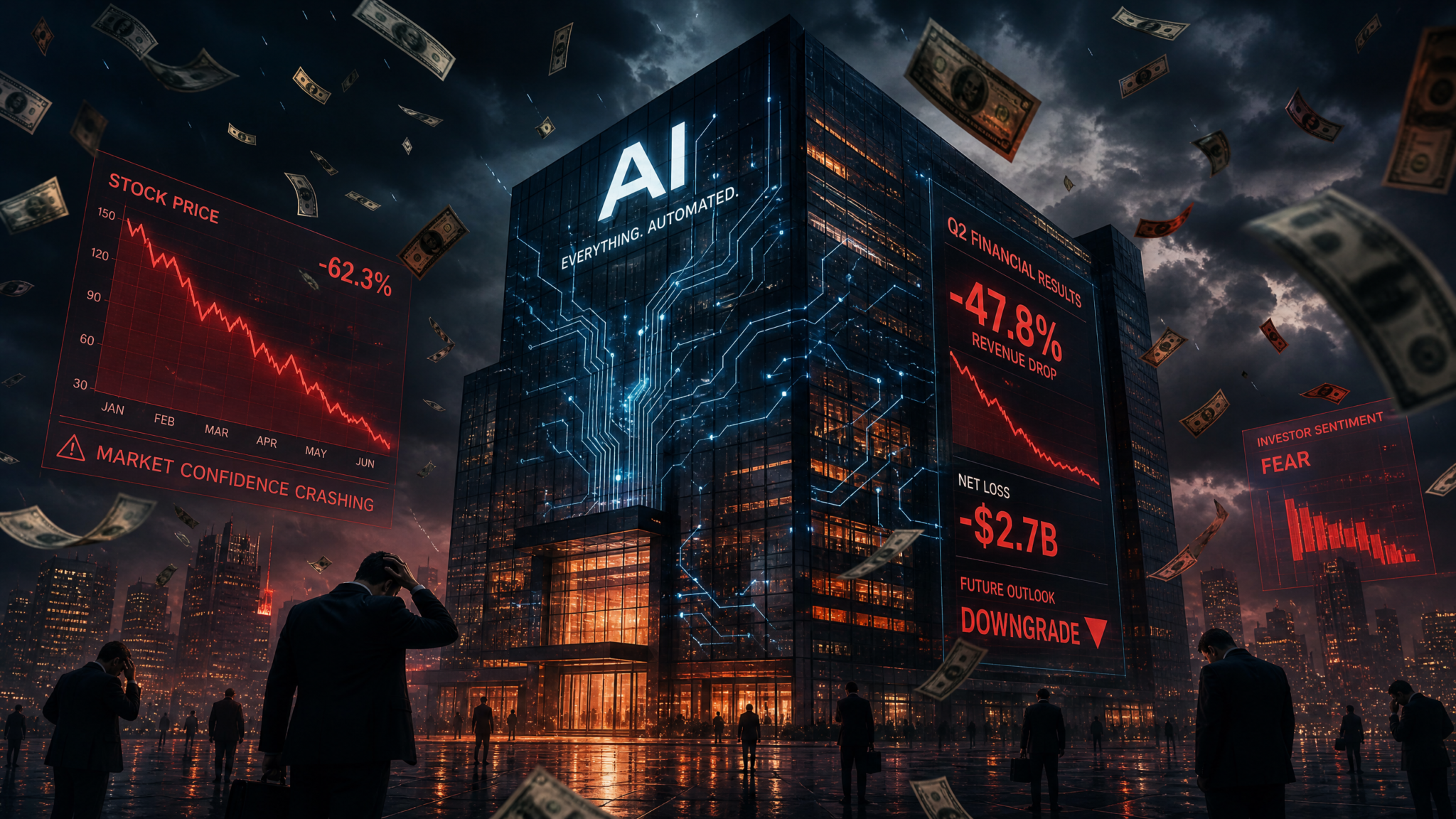
OpenAI is burning through cash at a rate that would make even the most seasoned Silicon Valley investor pause. With annual losses projected to exceed $8 billion in 2025 and operational costs spiraling as the company races toward artificial general intelligence, the organization that gave the world ChatGPT finds itself at a critical financial crossroads. The tension between its non-profit origins, its commercial ambitions, and the sheer computational cost of frontier AI development has created a financial pressure cooker — one that is already reshaping how ordinary users experience ChatGPT, what features they can access, and how much they will pay for the privilege of using the most advanced AI system in the world.
The Numbers Behind the Crisis: Breaking Down OpenAI’s $8 Billion Burn Rate
To understand OpenAI’s financial predicament, you need to start with the raw numbers — and they are staggering. According to financial disclosures and reporting from The New York Times, The Information, and Bloomberg, OpenAI’s operational losses reached approximately $5 billion in 2024, with projections for 2025 indicating losses could surpass $8 billion annually. This is not a company quietly bleeding money in the background; this is a deliberate, high-velocity cash burn that reflects the extraordinary cost of building and running frontier AI models at scale.
Revenue tells only half the story. OpenAI reportedly generated approximately $3.7 billion in annualized revenue as of late 2024, with projections suggesting the company could reach $11.6 billion in annual revenue by end of 2025 — a figure that sounds impressive until you stack it against the cost structure. The company’s expenses are dominated by three categories: compute infrastructure (primarily Microsoft Azure GPU clusters), research and engineering talent, and the operational overhead of serving hundreds of millions of users globally.
| Financial Metric | 2023 Estimate | 2024 Reported | 2025 Projection |
|---|---|---|---|
| Annual Revenue | ~$1.6B | ~$3.7B (annualized) | ~$11.6B (projected) |
| Annual Operating Loss | ~$540M | ~$5B | ~$8B+ |
| Compute Costs | ~$700M | ~$3B+ | ~$5B+ (estimated) |
| Headcount Costs | ~$300M | ~$1.5B | ~$2B+ (estimated) |
| Total Funding Raised | ~$11B cumulative | ~$17.9B cumulative | ~$40B+ (post-SoftBank) |
The compute cost alone is a jaw-dropping figure. Training a single frontier model like GPT-4 is estimated to have cost between $50 million and $100 million in raw compute. But training costs are almost a rounding error compared to inference costs — the ongoing expense of actually running the model every time a user sends a message. With ChatGPT reportedly serving over 200 million weekly active users as of early 2025, and with GPT-4o and o-series reasoning models consuming vastly more compute per query than earlier models, the inference bill compounds daily. Analysts at Bernstein Research estimated in late 2024 that OpenAI’s inference costs alone could be running at $700,000 to $1 million per day for its most capable models.
The Microsoft Relationship: Lifeline or Leash?
No analysis of OpenAI’s finances is complete without examining its relationship with Microsoft, which has committed over $13 billion in total investment and provides the Azure cloud infrastructure that powers ChatGPT globally. This relationship is simultaneously OpenAI’s greatest asset and a source of significant structural tension. Microsoft receives a revenue share from OpenAI’s commercial products and has preferential access to OpenAI’s models for its own Copilot products — an arrangement that critics argue fundamentally compromises OpenAI’s independence.
The compute arrangement is particularly complex. Rather than paying cash for Azure infrastructure, OpenAI receives compute credits as part of its investment deal, which means the true cash cost of its infrastructure is partially obscured in standard financial reporting. However, as OpenAI scales and its compute demands grow beyond what the existing credit arrangement covers, it must either negotiate expanded terms with Microsoft or seek additional infrastructure partnerships — which is precisely what the Stargate project represents. How to Use OpenAI Codex Goal Mode for End-to-End Project Automation
The Stargate initiative, announced in January 2025 with a headline figure of $500 billion in AI infrastructure investment over four years (with $100 billion committed immediately), is partly a response to this infrastructure dependency. By partnering with SoftBank, Oracle, and other investors to build dedicated AI data centers, OpenAI is attempting to reduce its dependence on Microsoft’s Azure while simultaneously securing the compute capacity it believes it will need to train and run AGI-level systems. But Stargate is not free money — it is an infrastructure investment that OpenAI will need to pay to use, adding another layer of long-term financial obligation to an already stressed balance sheet.
The Pre-Bailout Restructuring: What It Actually Means
In early 2025, OpenAI completed what many observers are calling a “pre-bailout” corporate restructuring — a fundamental reorganization of its legal and governance structure that was explicitly designed to make the company more attractive to traditional institutional investors and sovereign wealth funds. The restructuring involved converting OpenAI’s unusual “capped profit” structure into a more conventional Public Benefit Corporation (PBC) model, a move that has profound implications for both the company’s mission and its financial sustainability.
Under the original structure, OpenAI operated as a non-profit controlling entity with a capped-profit subsidiary. Investors in the subsidiary were limited to a maximum return of 100x their investment (later reduced to lower multiples for newer investors), with any excess profits theoretically flowing back to the non-profit mission. In practice, this structure made it extremely difficult to raise capital from pension funds, sovereign wealth funds, and other institutional investors who require standard equity structures and uncapped return potential.
“The restructuring is essentially OpenAI acknowledging that you cannot build a $100 billion company on non-profit governance principles. The capped-profit model was always a fiction — a way to tell the world you were different while still raising venture capital. The PBC conversion is just making the commercial reality explicit.” — Technology analyst, quoted in The Information, February 2025
The conversion to a PBC structure is significant for several reasons. First, it unlocks access to a much larger pool of capital — institutional investors who were legally or structurally prohibited from investing in the original entity can now participate. Second, it changes the incentive structure for OpenAI’s leadership and employees, whose equity compensation is now tied to conventional equity value rather than the complex calculations of the capped-profit model. Third, and most controversially, it arguably weakens the non-profit board’s ability to enforce the original mission of ensuring AGI benefits all of humanity — a concern that was central to the dramatic boardroom crisis of November 2023.
SoftBank’s $40 Billion Bet: Rescue or Reckoning?
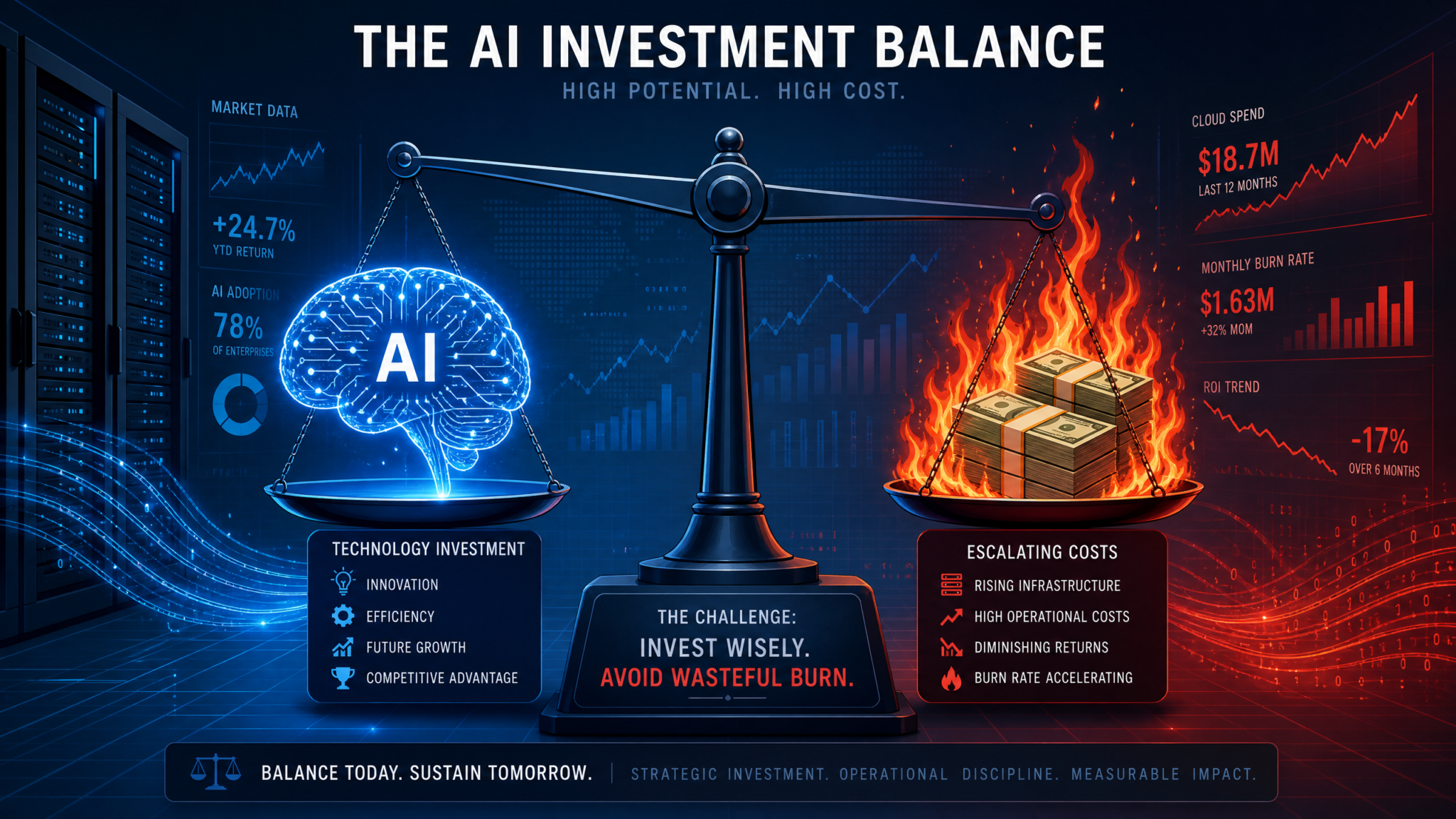
The centerpiece of OpenAI’s current financial strategy is the $40 billion funding round led by SoftBank, which closed in early 2025 at a reported valuation of $300 billion. This is the largest private funding round in technology history by a significant margin, and it has bought OpenAI considerable runway — but it has also come with strings attached that reveal the depth of the company’s financial precarity.
SoftBank’s investment was structured in tranches, with $10 billion delivered immediately and the remaining $30 billion contingent on OpenAI completing its corporate restructuring by the end of 2025. This contingency structure is itself revealing: SoftBank’s due diligence team clearly identified the governance and legal structure as a material risk, and the conditional nature of the investment created enormous pressure on OpenAI’s leadership to complete the PBC conversion on an accelerated timeline. The message from the investment community was unambiguous — the old structure was incompatible with the scale of capital OpenAI needs.
SoftBank CEO Masayoshi Son has been characteristically bullish about the investment, describing artificial general intelligence as “the most transformative technology in human history” and positioning the bet as central to SoftBank’s Vision Fund strategy. But Son’s track record with transformative technology bets — WeWork, Uber, and numerous other Vision Fund investments that required significant write-downs — has made some analysts skeptical about whether the valuation reflects fundamental value or speculative enthusiasm.
At a $300 billion valuation, OpenAI is priced at roughly 26x its projected 2025 revenue of $11.6 billion. For context, Microsoft trades at approximately 13x revenue, Google at approximately 7x revenue. The premium embedded in OpenAI’s valuation reflects the market’s belief in its ability to capture an outsized share of the AI economy — but it also creates enormous pressure to grow revenue at a rate that justifies the multiple. If revenue growth disappoints, the next funding round will be at a lower valuation, triggering a down round that would damage employee morale, create adverse incentives, and potentially accelerate the departure of key talent.
How Costs Are Being Passed to Users: The New Pricing Reality
For ChatGPT users, the most tangible consequence of OpenAI’s financial pressure is a systematic restructuring of how access to advanced features is priced and rationed. The company has implemented a series of changes over the past 18 months that collectively represent a significant shift in the value proposition of both free and paid tiers. ChatGPT Go vs Plus vs Pro in 2026: Which Plan Actually Fits Your Workflow
The most significant pricing change was the introduction of ChatGPT Pro at $200 per month in December 2024, a tier specifically designed to capture value from the company’s most intensive users. Pro subscribers receive unlimited access to the o1 pro mode reasoning model, which uses significantly more compute per query than standard GPT-4o. The $200 price point is not arbitrary — it reflects OpenAI’s attempt to ensure that its heaviest users are paying something closer to the actual compute cost of their usage, rather than being subsidized by the broader subscriber base.
| Subscription Tier | Monthly Price | Key Limitations | Target User |
|---|---|---|---|
| Free | $0 | GPT-4o with usage caps, no o-series models, limited features | Casual users, evaluation |
| Plus | $20/month | Higher GPT-4o limits, limited o1/o3 access, 50 image gens/day | Regular users, professionals |
| Pro | $200/month | Unlimited o1 pro, extended thinking, priority access | Power users, researchers |
| Team | $25-30/user/month | Business features, admin controls, higher limits | Small to medium teams |
| Enterprise | Custom pricing | Custom limits, security features, SLA guarantees | Large organizations |
Beyond subscription tiers, OpenAI has implemented increasingly sophisticated usage throttling mechanisms that effectively create a soft paywall for advanced features. Free tier users now encounter usage limits on GPT-4o that redirect them to GPT-4o mini — a significantly less capable model — during peak hours or after a certain number of messages. This degradation of the free experience is a deliberate strategy to convert free users to paid subscribers, but it also risks alienating the broad user base that has been central to ChatGPT’s cultural dominance.
The API pricing structure has also been restructured to better reflect compute costs. The introduction of tiered pricing for the o-series reasoning models — where o1, o3, and o3-mini carry significantly higher per-token costs than GPT-4o — reflects the reality that these models consume 5-10x more compute per query due to their extended chain-of-thought reasoning processes. Developers building applications on top of OpenAI’s API are now facing substantially higher costs for equivalent functionality, which is driving some to evaluate alternatives including Anthropic’s Claude, Google’s Gemini, and open-source models like Meta’s Llama.
The Token Credit System: Understanding OpenAI’s New Economy
One of the less-discussed but increasingly important aspects of OpenAI’s monetization strategy is the expansion of its token credit system for API users. Rather than simple flat-rate pricing, OpenAI has moved toward a more complex economy where different model capabilities carry different token costs, and where high-volume users can negotiate committed use discounts in exchange for spending guarantees.
This system creates interesting dynamics for developers and enterprises. On one hand, the ability to optimize costs by routing different types of queries to different models — using GPT-4o mini for simple tasks and o3 for complex reasoning — gives sophisticated users more control over their spending. On the other hand, the complexity of the pricing structure creates a significant cognitive overhead and makes it difficult for smaller developers to predict and manage their costs effectively.
The introduction of usage-based features within the consumer ChatGPT product — such as the allocation of a limited number of “advanced” queries per day for Plus subscribers — is essentially bringing the token economy to consumer users in a simplified form. When a Plus subscriber runs out of o1 queries for the day and gets redirected to GPT-4o, they are experiencing the consumer-facing manifestation of OpenAI’s compute cost management strategy. Understanding ChatGPT’s 2026 Usage Limits: Rate Limits, Token Budgets, and How to Maximize Your Allowance
What Happens If Funding Dries Up: Scenario Analysis
The question that no one at OpenAI wants to answer publicly, but that every serious analyst is modeling privately, is: what happens if the funding environment shifts and OpenAI cannot raise its next round at a valuation that makes sense? The company’s burn rate means it needs to raise substantial new capital approximately every 12-18 months at current spending levels. Even with the $40 billion SoftBank round, the runway is finite — and the conditions that make that runway longer or shorter are largely outside OpenAI’s control.
Scenario one: The optimistic case. Revenue growth continues at its current trajectory, reaching $25-30 billion annually by 2027. The company achieves meaningful progress toward AGI, which creates defensible competitive advantages that justify its premium pricing and valuation. The IPO markets recover, allowing OpenAI to access public capital markets at a valuation that provides permanent financial stability. In this scenario, the current financial stress is simply the price of being first to the frontier.
Scenario two: The muddling-through case. Revenue growth slows as competition from Google, Anthropic, Meta, and Chinese AI companies intensifies. OpenAI maintains its position as the premium provider but faces increasing price pressure in the API market. The company achieves profitability at a smaller scale by cutting costs — reducing headcount, slowing research spending, and focusing on commercial products over pure research. This scenario likely involves significant changes to the free tier and possibly the discontinuation of some experimental features.
Scenario three: The distress case. A major AI model from a competitor — Google’s Gemini Ultra, Anthropic’s Claude, or a Chinese model — achieves capability parity with GPT-5 at significantly lower cost. Enterprise customers begin switching API providers at scale. Revenue growth stalls while costs remain high. OpenAI is forced to seek emergency financing, potentially at a significantly lower valuation (a “down round”), triggering talent departures and a crisis of confidence. In this scenario, Microsoft’s role as the company’s primary infrastructure provider and largest investor would likely result in a much deeper integration between the two companies — or potentially an outright acquisition.
“The existential risk for OpenAI isn’t that AI doesn’t work — it’s that AI works so well that commoditization happens faster than the company can build defensible moats. If GPT-5 is amazing but so is Gemini 2.0 Ultra and Claude 4, enterprise customers will simply choose on price, and OpenAI’s cost structure doesn’t support price competition.” — AI industry analyst, speaking at the Cerebral Valley conference, 2025
Scenario four: The acquisition case. Microsoft, which already has a deep financial and technical relationship with OpenAI, moves to acquire the company outright. This would resolve the financial uncertainty permanently but would represent the complete abandonment of OpenAI’s mission as an independent entity focused on the benefit of humanity. The regulatory environment — particularly in the EU and UK, where AI market concentration is a live concern — would make such an acquisition legally complex and potentially blocked. Nevertheless, it remains a scenario that serious analysts model.
The AGI Mission vs. Commercial Viability: An Irreconcilable Tension?
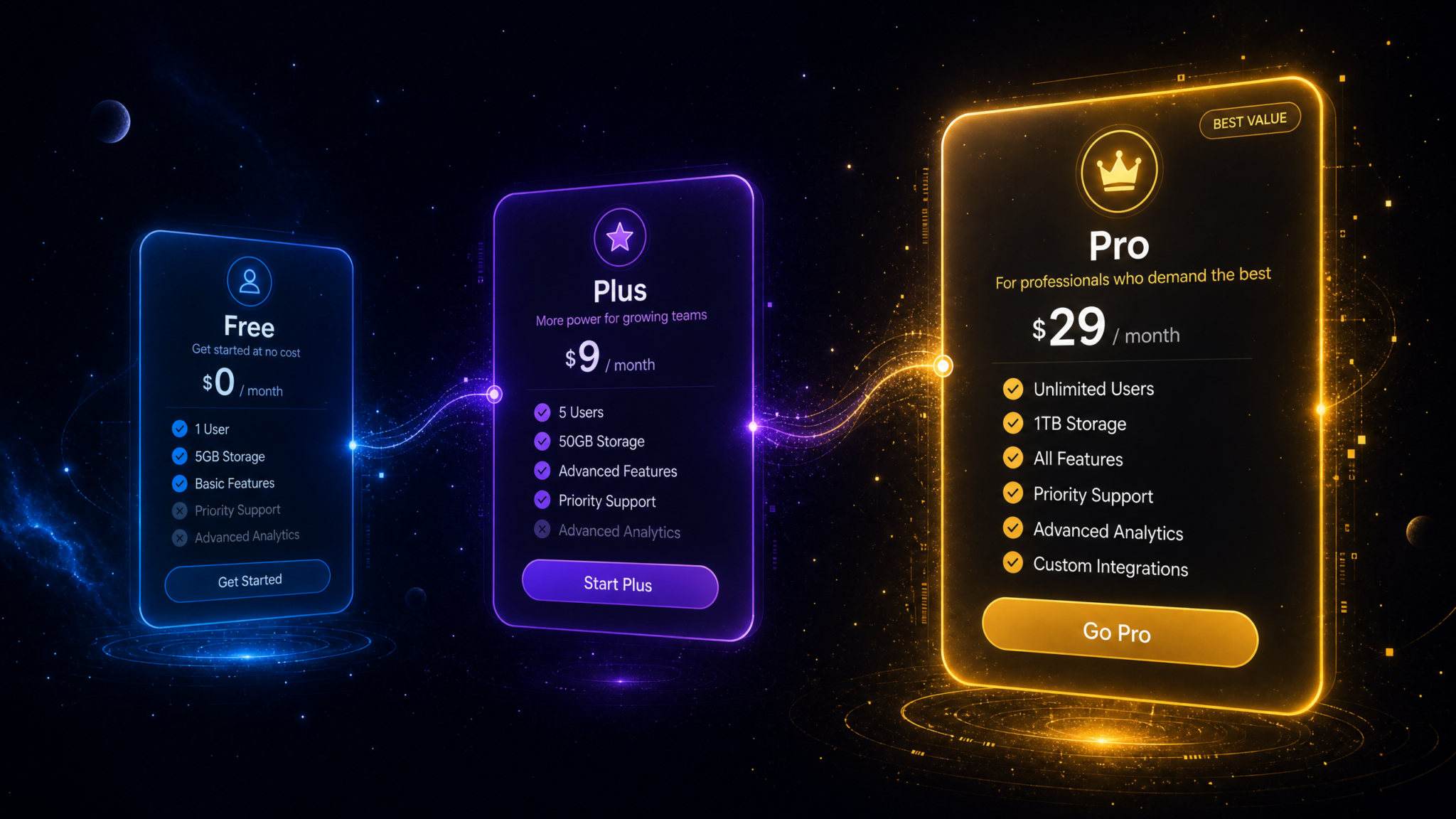
At the heart of OpenAI’s financial crisis lies a fundamental philosophical tension that has been present since the company’s founding but has become impossible to ignore at the current scale. OpenAI was created with an explicit mission: to ensure that artificial general intelligence benefits all of humanity. This mission implies a responsibility to make AI broadly accessible, to prioritize safety research over commercial optimization, and to avoid concentrating the benefits of AGI in the hands of a small number of shareholders.
But building AGI — if that is indeed what OpenAI is doing — costs extraordinary amounts of money. The compute required to train and run frontier models doubles roughly every six months as the company pushes capability boundaries. Safety research, interpretability work, and alignment research are expensive and do not directly generate revenue. The researchers capable of doing this work command compensation packages in the millions of dollars annually. None of this is compatible with the financial profile of a non-profit operating on donations and grants.
The result is a company that has, step by step, made a series of compromises with its original mission in the name of financial survival. The partnership with Microsoft, the capped-profit structure, the PBC conversion, the $200/month Pro tier, the API pricing that puts frontier models out of reach for many researchers and small developers — each of these decisions made sense in isolation as a financial necessity, but collectively they represent a significant drift from the founding vision of democratizing AI.
Sam Altman has defended these compromises consistently, arguing that an OpenAI that runs out of money cannot benefit anyone, and that commercial success is a prerequisite for mission success. This argument has a certain logic — a bankrupt OpenAI would indeed be unable to do safety research or ensure beneficial AGI development. But critics, including several of OpenAI’s own founders and early employees who have departed, argue that the commercial pressures have already distorted the company’s research priorities in ways that increase rather than decrease the risks of advanced AI.
The departure of key safety-focused researchers — including the entire “superalignment” team led by Ilya Sutskever and Jan Leike, who left in 2024 citing concerns about the balance between safety and commercial priorities — is the most concrete evidence that the tension between mission and viability is not merely theoretical. Leike’s public resignation statement, in which he wrote that “safety culture and processes have taken a back seat to shiny products,” was a significant public relations crisis that OpenAI has not fully recovered from. White House Asks OpenAI to Delay GPT-5.6 Public Release: What the Safety Pause Means for Enterprise AI Roadmaps and Deployment Timelines
The Competitive Landscape: Why OpenAI Cannot Simply Cut Costs
One might reasonably ask: why doesn’t OpenAI simply reduce its burn rate by cutting costs? The answer lies in the competitive dynamics of frontier AI development, which create a brutal race-to-the-top in terms of compute spending. If OpenAI reduces its training runs to save money, it risks falling behind Google DeepMind, Anthropic, Meta AI, and Chinese competitors like DeepSeek and Zhipu AI in model capability. In an industry where capability is the primary competitive differentiator, falling behind even temporarily can have permanent consequences for market position.
Access 40,000+ AI Prompts for ChatGPT, Claude & Codex — Free!
Subscribe to get instant access to our complete Notion Prompt Library — the largest curated collection of prompts for ChatGPT, Claude, OpenAI Codex, and other leading AI models. Optimized for real-world workflows across coding, research, content creation, and business.
The DeepSeek moment of January 2025 illustrated this dynamic vividly. When DeepSeek released its R1 reasoning model — which demonstrated capability competitive with OpenAI’s o1 at a fraction of the training cost — it triggered a significant stock market reaction and forced a serious rethinking of assumptions about the relationship between compute spending and model capability. For a brief moment, it seemed possible that the compute-intensive approach to frontier AI might not be the only viable path, and that more efficient training techniques could allow smaller-budget competitors to match OpenAI’s capabilities.
OpenAI’s response to DeepSeek was instructive: rather than treating it as vindication for a potential cost-cutting strategy, the company accelerated its model releases (rushing out o3-mini and GPT-4.5 in quick succession) and doubled down on its compute investment thesis through the Stargate announcement. The implicit message was that efficiency improvements would be used to do more with the same compute budget, not to reduce the compute budget. This response reflects a genuine belief within OpenAI that the path to AGI requires continued scaling — a belief that, if correct, makes cost reduction incompatible with mission success.
Timeline of OpenAI’s Financial Evolution
- 2015: OpenAI founded as a non-profit with $1 billion in pledged donations from Elon Musk, Sam Altman, and others. Mission: ensure AGI benefits all of humanity.
- 2019: OpenAI creates “capped-profit” subsidiary to raise venture capital. Microsoft invests $1 billion. First major commercial compromise of the non-profit structure.
- 2021: OpenAI raises $1 billion additional funding. GPT-3 API launch begins generating meaningful commercial revenue. Total funding reaches approximately $3 billion.
- 2023 (January): Microsoft announces $10 billion investment over multiple years. ChatGPT reaches 100 million users in record time. Revenue begins scaling rapidly.
- 2023 (November): Board crisis. Sam Altman briefly fired and rehired. Governance failures expose deep tensions between commercial and mission priorities. Ilya Sutskever and other key researchers begin questioning direction.
- 2024 (Q1-Q2): OpenAI raises $6.6 billion at $157 billion valuation. Annual revenue reaches approximately $3.7 billion annualized. Annual losses reach approximately $5 billion.
- 2024 (Q4): ChatGPT Pro tier launched at $200/month. o1 and o1 pro models released. Safety team departures become public. Restructuring discussions begin.
- 2025 (January): Stargate announced with $500 billion headline figure. SoftBank $40 billion funding round announced at $300 billion valuation. PBC restructuring timeline set.
- 2025 (Q2-Q3): GPT-4.5 and o3 series released. API pricing restructured. Free tier further limited. Annual burn rate projected at $8 billion+.
Implications for ChatGPT Features and the User Experience
For the hundreds of millions of people who use ChatGPT daily, OpenAI’s financial situation translates into a set of concrete changes that are already visible and will likely intensify over the next 12-24 months. Understanding these changes — and the financial logic behind them — is essential for users who want to make informed decisions about how they use and pay for AI tools.
The free tier will continue to be degraded as a conversion mechanism. OpenAI has a financial incentive to ensure that free users experience the product as good enough to be useful (to maintain the user base and the data flywheel) but not so good that they have no reason to upgrade. This means free users will likely face increasingly aggressive usage caps, more frequent redirections to less capable models during peak hours, and the removal of features (like image generation and advanced data analysis) that are expensive to provide at scale.
The Plus tier at $20/month is likely to face a price increase within the next 12-18 months. The current $20 price point was set in February 2023, when GPT-4 was the primary model and the cost structure was very different. With o-series reasoning models now part of the Plus offering, the compute cost per Plus subscriber has increased substantially. A price increase to $25-30/month would be financially logical and is widely anticipated by industry analysts.
Advanced features will increasingly be gated behind higher tiers. The pattern established with o1 pro mode (Pro tier only) and Sora video generation (Plus and above) will likely continue. Each new capability that requires significant compute will be introduced at a higher tier first, with the possibility of eventually being made available to lower tiers as the cost of the underlying compute decreases.
Enterprise and API pricing will become more differentiated. OpenAI is increasingly focused on enterprise revenue, which offers higher margins and more predictable cash flows than consumer subscriptions. Expect to see continued investment in enterprise features — security, compliance, custom deployment options, dedicated capacity — that justify premium pricing for large organizations. The API will likely see continued price optimization, with popular models seeing price reductions (to compete with alternatives) while new frontier models are priced at a premium.
The Path to Profitability: Is It Actually Achievable?
OpenAI’s own financial projections, as reported by various media outlets, suggest the company expects to reach breakeven or profitability sometime between 2026 and 2029 — a wide range that reflects genuine uncertainty about the trajectory of both revenue and costs. The path to profitability depends on several variables that are difficult to predict with confidence.
On the revenue side, the key question is whether OpenAI can successfully monetize the enterprise market at scale. Consumer subscriptions, while growing, have a natural ceiling — there are only so many people willing to pay $20/month for an AI assistant, and competition from Google (which bundles Gemini with Google One) and Microsoft (which bundles Copilot with Microsoft 365) creates pricing pressure. Enterprise contracts, by contrast, can be worth millions of dollars annually and have stickier retention characteristics. OpenAI’s enterprise revenue is growing rapidly but remains a minority of total revenue.
On the cost side, the key question is whether inference costs will continue to fall at the rate that semiconductor improvements and software optimization have historically delivered. If inference costs fall by 10x over the next two years — as some optimistic projections suggest — the economics of serving hundreds of millions of users could shift dramatically. But this assumes that OpenAI’s users continue to use models of roughly current capability; if users migrate to more capable (and more expensive) models as they become available, the cost savings from efficiency improvements could be entirely offset by the higher cost of serving more capable models.
The honest assessment is that OpenAI’s path to profitability is plausible but not certain, and it depends heavily on maintaining competitive leadership in model capability while simultaneously reducing the cost of serving those capabilities. This is a difficult needle to thread, and the company’s financial history — losses that have grown faster than revenue — suggests it has not yet found the right balance.
What ChatGPT Power Users Should Do Right Now
For sophisticated users who rely on ChatGPT for professional work, the financial dynamics described in this article have practical implications for how you should structure your AI tool strategy. Diversification is no longer just a nice-to-have — it is a financial risk management strategy.
Consider maintaining accounts with at least two frontier AI providers. Anthropic’s Claude, Google’s Gemini Advanced, and Microsoft’s Copilot Pro all offer capabilities that overlap significantly with ChatGPT Plus. If OpenAI implements a significant price increase or degrades the Plus tier further, having an established account with an alternative means you can migrate workflows without disruption. The switching costs for most ChatGPT use cases are lower than many users assume — most prompts and workflows can be adapted to work with alternative models with modest effort.
For API users and developers, the case for multi-provider architecture is even stronger. Building applications that are tightly coupled to OpenAI’s API creates significant vendor lock-in and exposure to pricing changes. Abstraction layers like LangChain, LlamaIndex, and LiteLLM make it significantly easier to route queries to different providers based on cost and capability requirements. The investment in building a provider-agnostic architecture will pay dividends as the AI market continues to evolve.
Monitor the restructuring timeline closely. The completion of OpenAI’s PBC conversion and the release of the next set of financial disclosures will provide important signals about the company’s trajectory. If the restructuring is completed smoothly and the next funding round is secured at or above the current valuation, that is a positive signal for stability. If the restructuring faces delays or the next round is at a lower valuation, that is a warning sign that warrants reassessment of your dependence on OpenAI’s products.
Frequently Asked Questions
Is OpenAI actually going bankrupt?
No, OpenAI is not in imminent danger of bankruptcy. With approximately $40 billion raised in its most recent funding round and revenue growing rapidly toward a projected $11.6 billion annually, the company has substantial runway. The “financial crisis” framing refers to the structural challenge of achieving profitability at scale, not an immediate liquidity crisis. The concern is longer-term: if the company cannot achieve profitability before its current capital is exhausted and market conditions prevent another large funding round, it would face serious financial stress. Current runway, assuming the full SoftBank commitment is delivered, is estimated at 3-5 years at current burn rates.
Why does ChatGPT cost so much to run?
The primary cost driver is compute — specifically, the thousands of high-end NVIDIA H100 and A100 GPUs required to run inference (generate responses) for hundreds of millions of users simultaneously. Each query to a frontier model like GPT-4o requires a significant amount of GPU processing time, and the o-series reasoning models that “think” before responding require 5-10x more compute per query. Additionally, OpenAI must maintain redundant infrastructure for reliability, pay for data storage and networking at massive scale, and continuously train new models to remain competitive — each training run consuming tens of millions of dollars in compute costs.
Will ChatGPT Plus prices go up?
Most industry analysts expect a price increase for ChatGPT Plus within the next 12-18 months. The current $20/month price has been unchanged since February 2023, despite the significant increase in the capabilities (and associated compute costs) included in the tier. A move to $25-30/month would align with the pricing of comparable services from Google and Microsoft and would be financially logical given OpenAI’s cost structure. The company will likely try to accompany any price increase with new feature additions to soften the impact on subscriber retention.
What does the corporate restructuring mean for OpenAI’s safety mission?
The conversion from a capped-profit structure to a Public Benefit Corporation (PBC) has generated significant debate about its implications for OpenAI’s safety mission. PBC status requires the company to consider the interests of society alongside shareholder returns, but it provides weaker legal protections for non-commercial mission priorities than the original non-profit structure. Critics argue that the restructuring effectively subordinates safety and beneficial AI development to commercial imperatives. OpenAI maintains that the PBC structure preserves its mission while enabling the capital access needed to pursue it. The departure of key safety researchers in 2024 suggests that internal concerns about this balance are genuine and unresolved.
How does OpenAI’s financial situation compare to its main competitors?
OpenAI’s financial position is actually stronger than most of its direct AI competitors, though the comparison is complicated by different corporate structures. Anthropic, OpenAI’s most direct rival in frontier models, is also burning cash at a significant rate and relies on investments from Google ($2 billion) and Amazon ($4 billion+) for both capital and compute. The key difference is that Anthropic has not yet tried to scale a consumer product at the same level as ChatGPT, which limits both its revenue and its costs. Google DeepMind and Meta AI operate as divisions of profitable parent companies, giving them essentially unlimited capital for AI research — a structural advantage that independent AI companies like OpenAI and Anthropic cannot match. This is one reason why the pressure to achieve commercial viability is so acute for OpenAI: it is competing against divisions of trillion-dollar companies that do not need to be profitable in their own right.
Article by Markos Symeonides. Last updated 2025. All financial figures are based on publicly reported information and analyst estimates. OpenAI does not publicly disclose detailed financial statements.
