
The Rise of AI Super Apps: How OpenAI and Anthropic Are Reshaping Development
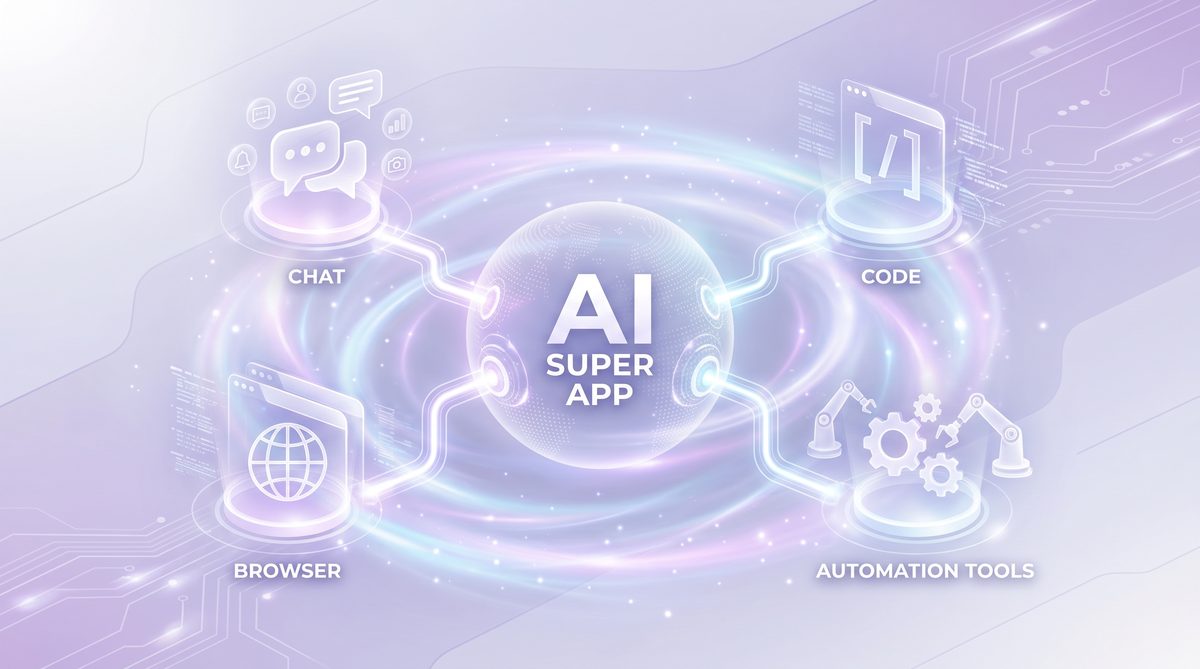
The artificial intelligence landscape is undergoing a profound transformation as leading innovators like OpenAI and Anthropic push the boundaries of what AI applications can achieve. Central to this evolution is the emergence of AI “super apps,” integrated platforms that unify multiple AI capabilities into seamless experiences. These super apps are not merely incremental upgrades but represent paradigm shifts in how developers, enterprises, and end-users interact with AI technologies. This article explores the rise of AI super apps, focusing on OpenAI’s ambitious fusion of ChatGPT, Codex, and the Atlas browser, alongside Anthropic’s pioneering Model Context Protocol (MCP) ecosystem. We also analyze recent security challenges, market dynamics, and the expanding enterprise adoption that underscores the critical importance of these developments.
The Concept and Evolution of AI Super Apps
The term “super app” originated in the mobile app ecosystem, describing platforms like WeChat that consolidated messaging, payments, social media, and more into a single interface. AI super apps extend this concept into the realm of artificial intelligence by integrating diverse AI models and functionalities into unified platforms. Instead of switching between isolated AI tools, users can access a broad range of AI-powered services — from natural language understanding to code generation and intelligent browsing — within one cohesive environment.
This integration is driven by several factors:
- Complexity Management: AI capabilities have proliferated rapidly, and managing multiple APIs or interfaces can be cumbersome for developers and enterprises.
- Enhanced User Experience: Combining AI functions reduces friction, enabling smoother workflows and richer interactions.
- Data Synergy: Unified platforms can leverage shared context and data more effectively, improving the overall intelligence and personalization of the system.
- Competitive Positioning: As AI becomes a core component of digital infrastructure, companies strive to offer holistic solutions rather than fragmented tools.
OpenAI and Anthropic are at the forefront of this trend, adopting distinct but complementary strategies to build AI super apps that cater to developers, enterprises, and consumers alike.
OpenAI’s Unified Super App: ChatGPT + Codex + Atlas Browser
OpenAI has been a trailblazer in AI since its inception, and its latest initiative is the development of a unified super app that integrates its flagship models: ChatGPT, Codex, and the Atlas browser. This combination is designed to serve as a comprehensive AI assistant for a range of tasks, from conversational interaction to coding assistance and intelligent web navigation.
ChatGPT: The Conversational Core
At the heart of OpenAI’s super app lies ChatGPT, a conversational agent based on the GPT architecture. ChatGPT excels at natural language understanding and generation, facilitating tasks such as answering questions, drafting emails, brainstorming ideas, and offering tutoring in multiple domains. Its broad adoption across industries has proven the viability of conversational AI as a foundational component.
Codex: AI-Powered Coding Assistant
Codex extends OpenAI’s capabilities into software development, translating natural language prompts into code across multiple programming languages. Integrated into tools like GitHub Copilot, Codex accelerates developer productivity by automating boilerplate code generation, debugging support, and code reviews. Within the super app, Codex enables users to switch seamlessly from conversational queries to coding tasks without leaving the platform.
Atlas Browser: Intelligent Web Navigation
The Atlas browser represents OpenAI’s venture into AI-enhanced web browsing. Unlike traditional browsers, Atlas incorporates deep learning models to understand user intent, summarize content, extract relevant information, and automate interactions with websites. This capability transforms the browsing experience into an intelligent exploration, where AI aids in research, data gathering, and decision-making.
Synergistic Integration
By combining ChatGPT, Codex, and Atlas into a single interface, OpenAI’s super app offers a holistic environment where users can:
- Engage in natural conversations to clarify objectives or gather information.
- Generate, review, and refine code snippets in real-time.
- Navigate and interact with web content intelligently, with AI summarizing and contextualizing data.
This synergy represents a major leap forward in AI usability, reducing cognitive load and streamlining workflows. Developers can prototype software with AI assistance, verify external data through Atlas, and iterate on ideas using ChatGPT — all without switching contexts or interfaces.
The strategic implications are profound: OpenAI positions itself not only as an AI model provider but as a platform ecosystem that can lock in users and enterprises through comprehensive, integrated AI experiences.
Anthropic’s Model Context Protocol (MCP): Building an AI Ecosystem
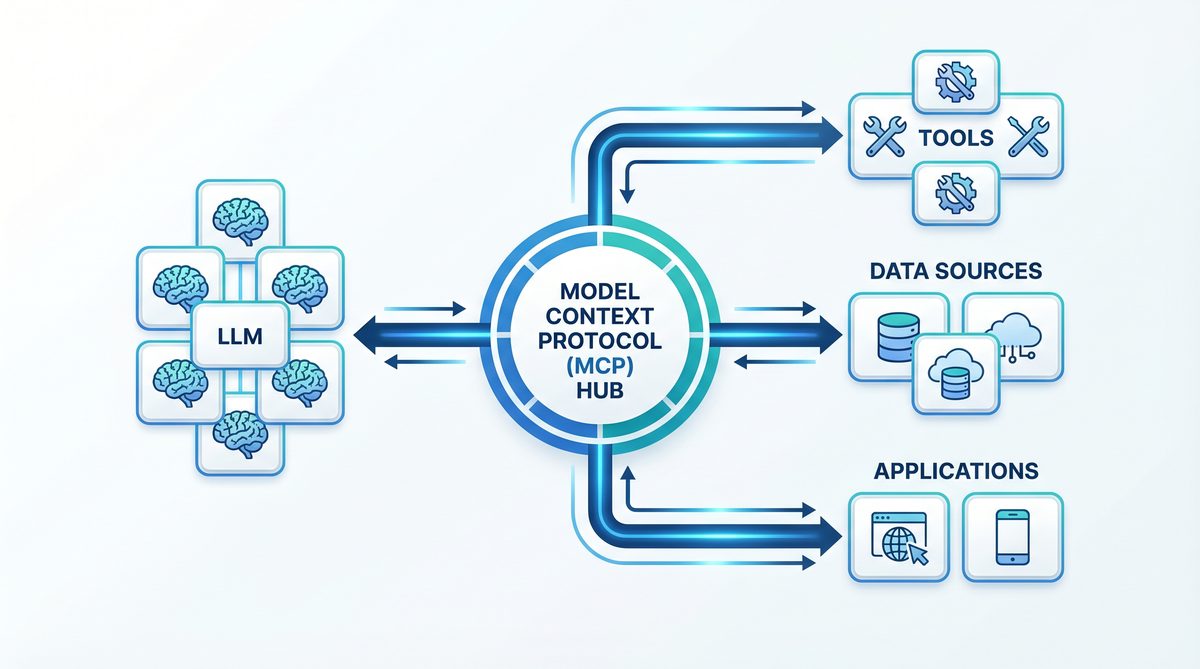
Anthropic, a leading AI research company founded by former OpenAI researchers, has taken a different approach centered on interoperability and context management via its Model Context Protocol (MCP). MCP is a standardized framework designed to enable diverse AI models and tools to share and maintain context seamlessly across sessions and applications.
What is MCP?
The Model Context Protocol is essentially a communication standard that allows AI models to exchange contextual information in a structured, secure, and scalable manner. Instead of treating each AI interaction as an isolated event, MCP maintains conversation histories, user preferences, and domain-specific knowledge across multiple models and platforms.
This protocol facilitates the creation of an AI ecosystem where:
- Different AI services can collaborate by sharing relevant context dynamically.
- Developers can build modular AI applications that leverage multiple specialized models without losing coherence.
- End-users benefit from persistent, personalized AI assistants that improve over time.
MCP’s Role in Anthropic’s Super App Vision
Anthropic is leveraging MCP as the foundation for its own AI super app ecosystem, which aims to rival OpenAI’s integrated platform. The vision is to create a marketplace of AI capabilities where models can be plugged in and orchestrated around shared context. This approach promotes flexibility and innovation by allowing the ecosystem to evolve organically as new models and tools emerge.
For example, a user might interact with an Anthropic-powered assistant that pulls on a specialized legal reasoning model, a coding helper, and a summarization engine — all coordinated through MCP to maintain a unified conversation thread and personalized experience.
MCP Vulnerability and Its Impact
In late 2023, a significant vulnerability was discovered within the MCP ecosystem, affecting over 150 million downloads across various AI applications relying on this protocol. The vulnerability allowed malicious actors to intercept and manipulate context data exchanged between models, potentially exposing sensitive user information and corrupting AI responses.
This security incident highlighted the challenges of emerging AI protocols and ecosystems, especially as they scale rapidly in adoption. Anthropic responded swiftly by issuing patches, collaborating with security researchers, and reinforcing encryption and authentication mechanisms within MCP.
The incident has prompted the AI community to reexamine security best practices for interconnected AI systems, emphasizing:
- Robust end-to-end encryption for model context data.
- Continuous vulnerability assessments and third-party audits.
- Transparent communication with users regarding security updates.
Despite the setback, MCP remains a promising framework for federated AI applications. The rapid resolution and transparency demonstrated by Anthropic have helped maintain trust among developers and enterprises.
Enterprise AI Adoption: The Growing Demand for Super Apps
The rise of AI super apps is occurring within the context of explosive enterprise adoption of AI technologies. According to Deloitte’s 2026 Global AI Adoption Survey, enterprise AI adoption is projected to grow by more than 50% year-over-year. This accelerated uptake is driven by enterprises seeking to harness AI to automate operations, enhance customer experiences, and unlock new revenue streams.
Why Enterprises Are Embracing AI Super Apps
Enterprises face a complex AI landscape with numerous point solutions, which can lead to operational silos, integration challenges, and inconsistent user experiences. AI super apps offer a way to consolidate these capabilities into unified platforms that deliver:
- Operational Efficiency: Streamlining workflows through integrated AI assistance reduces manual effort and error rates.
- Data Unification: Centralizing AI models around shared context enables better insights and decision-making.
- Scalability: Super apps provide robust infrastructure to support growing AI demands across departments.
- Security and Compliance: Unified platforms can enforce consistent security policies and audit trails.
For example, a large financial institution may deploy an AI super app that combines conversational AI for customer service, predictive analytics for risk management, and automated code generation for internal software development. This integrated approach reduces complexity and accelerates innovation.
Case Study: Claude Code User and Enterprise Billing
A striking example of enterprise AI adoption is highlighted by a New York Times report detailing a single user of Anthropic’s Claude Code model racking up a monthly bill exceeding $150,000. This anecdote underscores the scale at which enterprises are leveraging AI super apps for mission-critical applications. High usage volumes reflect both the utility and the cost considerations associated with deploying advanced AI models at scale.
Such cases emphasize the importance of cost management, model optimization, and tailored service plans as enterprises balance AI innovation with budget constraints.
The rapid enterprise adoption trajectory also fuels competition between AI leaders, as detailed in the next section.
Competitive Dynamics: OpenAI vs. Anthropic
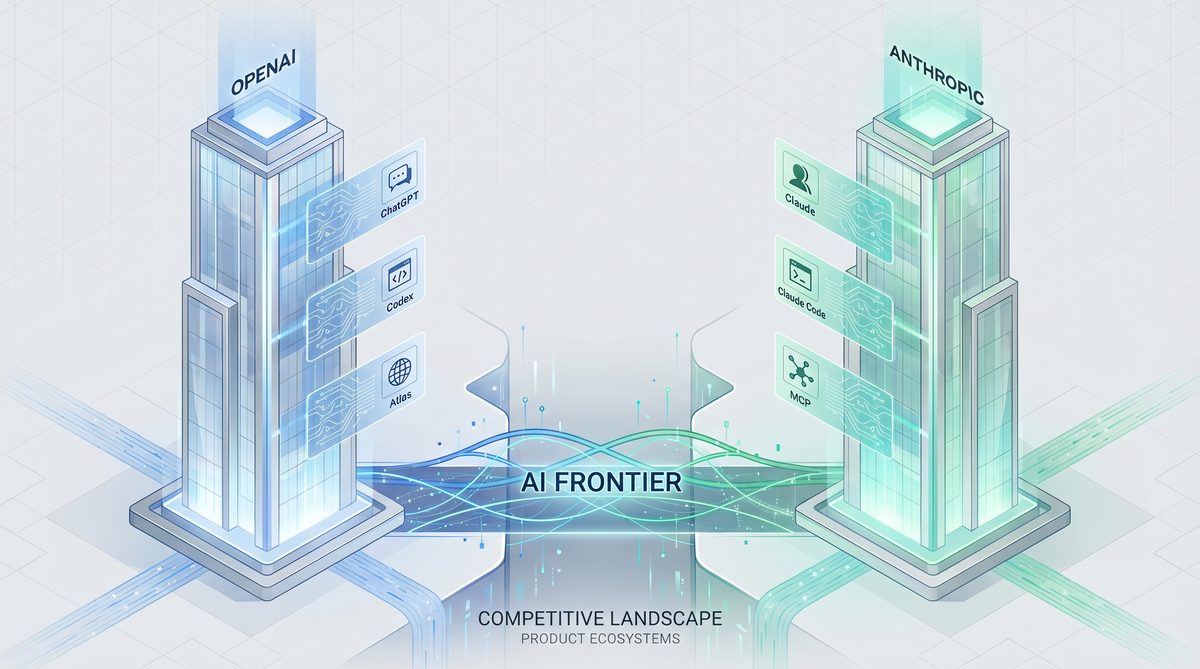
The race to dominate the AI super app market is intensifying, with OpenAI and Anthropic emerging as two of the most influential contenders. Each company has distinct strengths and strategic focuses that shape their competitive positioning.
OpenAI’s Advantages
- Brand and Market Penetration: OpenAI’s early breakthroughs with GPT models have established it as a household name in AI.
- Integrated Model Suite: The combination of ChatGPT, Codex, and Atlas offers a tightly integrated user experience.
- Extensive Developer Ecosystem: OpenAI’s APIs and partnerships, such as with Microsoft, provide broad reach and integration opportunities.
- Enterprise Focus: OpenAI’s tailored enterprise offerings and security features cater to organizational needs.
Anthropic’s Strengths
- Research-Centric Approach: Anthropic emphasizes safety, interpretability, and principled AI development.
- MCP Ecosystem: The Model Context Protocol fosters interoperability and modular AI composition.
- Ethical AI Focus: Anthropic’s commitment to AI alignment and transparency resonates with regulatory and public concerns.
- Emerging Market Share: Growing adoption of Anthropic models in specialized enterprise applications.
Strategic Implications
The competition drives innovation but also presents challenges:
- Interoperability vs. Integration: Anthropic’s modular MCP approach contrasts with OpenAI’s integrated super app, raising questions about which model will dominate.
- Security and Trust: MCP’s recent vulnerability highlights that security is a critical battleground.
- Pricing and Access: Pricing models, such as the high costs noted in the Claude Code user case, influence enterprise adoption.
- Regulatory Landscape: Both companies must navigate evolving AI regulations that may impact deployment strategies.
Ultimately, the winner in this space will be the platform that balances innovation, usability, security, and affordability while addressing the nuanced needs of diverse user bases.
Technical Deep Dive: Architectures and Protocols Behind AI Super Apps
Understanding the underlying technologies behind AI super apps is essential for developers and enterprises aiming to leverage these platforms effectively.
OpenAI’s Model Fusion Architecture
OpenAI’s super app relies on a multi-model fusion architecture where distinct AI models operate both independently and collaboratively. Key technical components include:
- Unified API Gateway: A centralized interface routes user requests to the appropriate model (ChatGPT, Codex, Atlas) based on intent detection.
- Contextual State Management: Shared conversation states enable models to build upon previous interactions, preserving continuity across tasks.
- Real-Time Model Orchestration: Dynamic invocation of models allows seamless transitions, e.g., from conversational queries to code generation.
- Data Privacy Controls: User data is anonymized and encrypted to comply with enterprise security requirements.
This architecture supports extensibility, allowing OpenAI to incorporate new models and capabilities as they develop.
Anthropic’s MCP Protocol Stack
Anthropic’s MCP consists of a layered protocol stack designed to manage AI context sharing securely and efficiently:
- Context Serialization Layer: Standardizes the format for representing conversation history and metadata.
- Secure Transport Layer: Ensures encrypted and authenticated transfer of context data between models and applications.
- Session Management Layer: Maintains continuity across user sessions with versioning and rollback capabilities.
- Access Control Layer: Implements fine-grained permissions to safeguard sensitive information within context exchanges.
The open nature of MCP encourages third-party developers to create interoperable AI components, fostering a vibrant ecosystem.
Challenges and Future Directions
Despite their promise, AI super apps face several challenges that will shape their evolution over the coming years.
Scalability and Latency
Integrating multiple large-scale AI models in real-time demands significant computational resources and low-latency infrastructure. Balancing model complexity with responsiveness remains a technical hurdle.
Data Privacy and Compliance
Handling sensitive user data across multiple AI services raises privacy concerns. Compliance with regulations such as GDPR, CCPA, and emerging AI-specific frameworks requires robust governance mechanisms.
Model Alignment and Safety
Ensuring that AI super apps behave ethically and safely is paramount. This includes avoiding biased outputs, preventing misuse, and maintaining transparency in AI decision-making processes.
User Adoption and Trust
Convincing users and enterprises to adopt comprehensive AI super apps depends on demonstrating tangible benefits, ease of use, and trustworthy AI behavior.
Future Innovations
- Personalized AI Agents: Super apps will likely evolve into personalized AI agents that adapt dynamically to individual user needs.
- Cross-Platform Integration: Extending interoperability to IoT devices, augmented reality, and other emerging tech.
- Decentralized AI Architectures: Exploring federated learning and on-device AI to enhance privacy and reduce reliance on centralized servers.
- Regulatory Collaboration: Working closely with policymakers to shape responsible AI frameworks that support innovation.
Developers and enterprises must stay informed and agile to harness the full potential of AI super apps while navigating these evolving challenges.
Useful Links and Resources
Here are some valuable resources to help you explore the topics covered in this article:
- OpenAI Platform
- Anthropic Research
- Model Context Protocol (MCP)
- Google DeepMind
- Hugging Face Hub
- AI Index Report 2026
Conclusion
The rise of AI super apps marks a transformative chapter in artificial intelligence, driven by visionary efforts from OpenAI and Anthropic. By integrating powerful models and enabling seamless context sharing, these platforms are redefining how AI is accessed, developed, and applied across industries. While technical, security, and regulatory challenges remain, the accelerating enterprise adoption and innovative ecosystems signal a future where AI super apps become indispensable tools for developers and organizations.
For those interested in exploring the nuances of AI model architectures, security protocols, and enterprise strategies, our detailed coverage of ChatGPT Enterprise vs Claude for Business in 2026: The Complete Decision Guide provides valuable insights into the foundations underpinning these super app ecosystems.
Moreover, understanding cost optimization techniques and enterprise deployment models is critical as highlighted in our analysis of From Prompts to AI Skills: How to Build Reusable Prompt Workflows for ChatGPT, Claude, and Codex, which discusses strategies to balance AI utility and expenditure in large-scale applications.
Finally, for developers aiming to integrate or build upon these super apps, our comprehensive guide to AI interoperability standards and best practices at Claude Code vs OpenAI Codex: The Complete 2026 Comparison Guide for AI-Powered Development offers actionable frameworks to accelerate your AI projects.
Useful Links
- OpenAI Official Website
- OpenAI GitHub Repository
- Anthropic Official Website
- Deloitte Global AI Adoption Survey 2026
- New York Times: AI Usage and Billing Report
- Anthropic MCP Technical Paper
- OpenAI Developer Documentation
- Google AI Security Blog: MCP Vulnerability Analysis
- WeChat: The Original Super App Inspiration
🕐 Instant∞ Unlimited🎁 Free
Get Free Access to 40,000+ AI Prompts
Join 40,000+ AI professionals. Get instant access to our curated Notion Prompt Library with prompts for ChatGPT, Claude, Codex, Gemini, and more — completely free.
Get Free Access Now →No spam. Instant access. Unsubscribe anytime.
