
Case Study: Analyzing AI Infrastructure in SpaceX’s S-1 IPO Filing
How Vertically Integrated AI, Autonomous Systems, and Massive Compute Clusters Propel Aerospace Engineering and Inform Enterprise Innovation
1. Introduction: The Intersection of Aerospace and AI
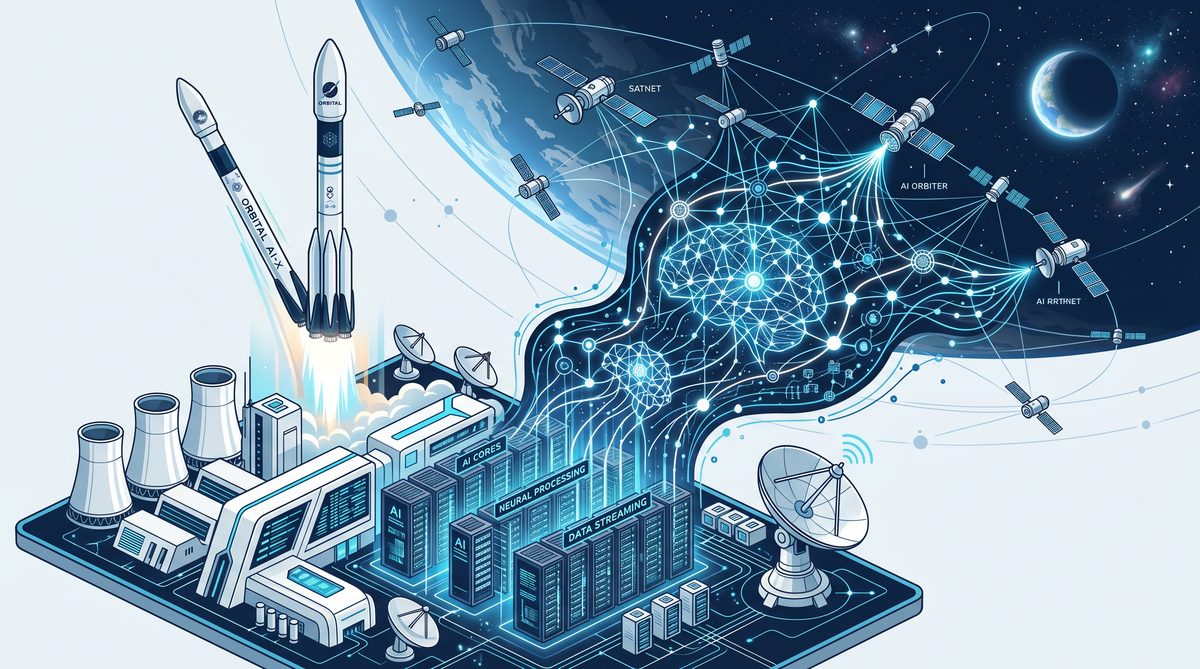
SpaceX’s recent S-1 IPO filing has drawn significant attention not only for its financial and strategic outlook but also for the granular insights it offers into the company’s AI infrastructure. This document provides an unprecedented glimpse into how SpaceX leverages cutting-edge AI technologies—particularly vertically integrated AI models, autonomous systems, and massive compute clusters—to revolutionize aerospace engineering. This case study unpacks these components and explores their implications for aerospace and beyond. Enterprise companies across various industries stand to learn valuable lessons from SpaceX’s approach, particularly regarding AI scalability, integration, and operational efficiency.
In this introduction, we set the scene: aerospace engineering has always been at the forefront of technology, demanding precision, resilience, and adaptability in complex environments. The infusion of AI, supported by powerful compute infrastructure and tightly coupled systems, has shifted paradigms allowing for new levels of autonomy, optimization, and innovation.
Before we dive deeper, it is important to note where enterprises can start exploring AI infrastructure strategies of their own. See our article on building scalable AI architectures for foundational context.
2. Vertically Integrated AI Models at SpaceX: Architecture and Advantages
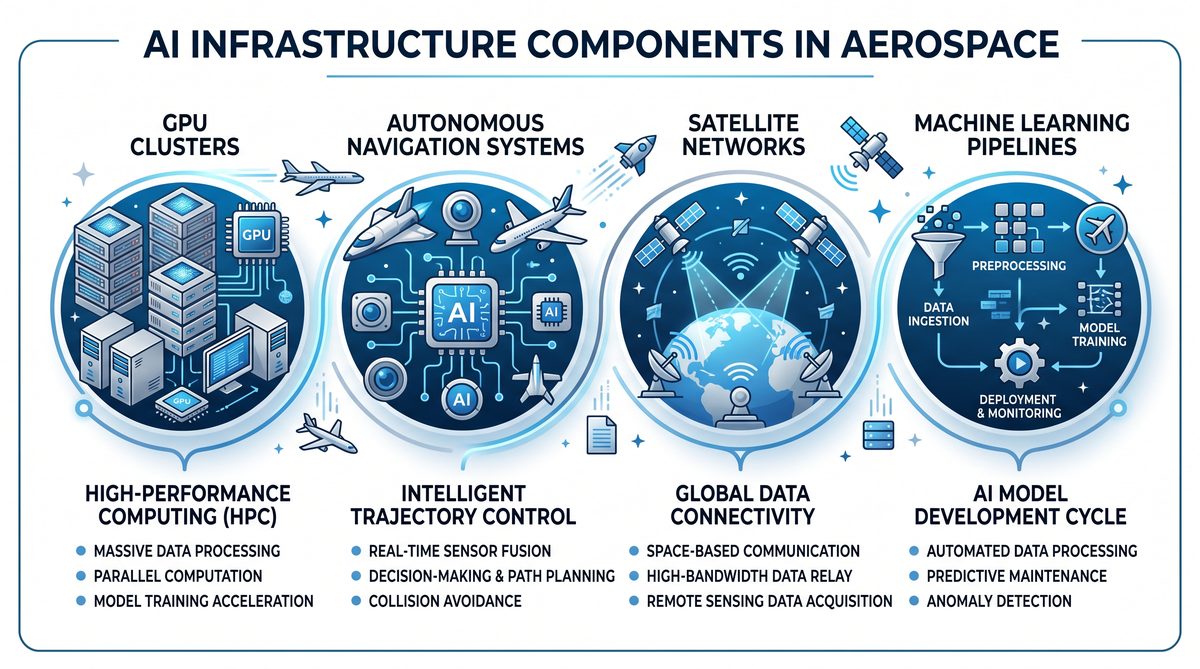
One of the most striking revelations in the SpaceX S-1 IPO filing is the description of their vertically integrated AI models. Unlike traditional AI deployments that often rely heavily on third-party platforms or fragmented toolchains, SpaceX’s approach is to tightly integrate the entire AI model lifecycle—from data ingestion, processing, training, to deployment—within their own hardware and software ecosystem. This vertical integration contributes to superior performance, security, and iterative agility.
2.1 The Architecture of Vertically Integrated AI
SpaceX has built proprietary AI models specifically engineered to meet aerospace challenges such as flight trajectory optimization, predictive maintenance, real-time hazard detection, and autonomous vehicle navigation. These models incorporate multi-modal data, including sensor fusion data streams from satellites, rockets, and starship prototypes.
In terms of infrastructure, SpaceX has developed custom AI pipelines that allow direct coupling between model training on its compute clusters and immediate deployment to edge devices used in launches or space operations. This reduces latency and data transfer overhead while enabling continuous learning from real-flight data.
2.2 Benefits Over Conventional AI Approaches
- Performance Efficiency: Custom-tailored models aligned with specific aerospace tasks maximize compute efficiency and predictive accuracy.
- Security and Control: Full ownership from data to deployment minimizes attack surfaces and increases intellectual property protection.
- Rapid Iteration: Direct integration of training and deployment pipelines facilitates quick feedback loops and faster model improvements.
- Scalability: By controlling the entire AI stack, SpaceX can scale compute and operational needs without dependency on external vendors.
This vertical integration approach contrasts with many enterprise AI deployments that depend on modular or SaaS solutions, making SpaceX’s model a valuable point of study. Companies looking to optimize AI workflows should consider the trade-offs and efficiencies of vertical integration.
3. Autonomous Systems: AI Driving Real-World Aerospace Innovation
The integration of AI-powered autonomous systems in aerospace is not new, but SpaceX’s S-1 filing illustrates a leap in sophistication and mission-critical application. Autonomous systems encompass software and hardware working in concert to execute complex aerospace tasks with minimal human intervention.
3.1 Use Cases Highlighted in the Filing
SpaceX emphasizes AI-driven automation for their Starship launches, drone ship landings, and satellite constellation management. Their autonomous systems manage everything from precision landing trajectories to anomaly detection and fault mitigation during flights.
These systems depend on AI models trained on vast datasets collected from prior launches, simulations, and real-time telemetry. The autonomous approach facilitates:
- Reduced Human Error: Eliminating or minimizing manual controls during critical phases reduces risks associated with pilot error or delayed decision-making.
- Operational Scalability: Autonomous vehicles and spacecraft can operate more frequently and efficiently without linear increases in human oversight costs.
- Adaptive Learning: Machine learning allows autonomous systems to adapt dynamically to changing external conditions that are difficult to simulate perfectly.
3.2 Engineering Challenges and AI Solutions
Aerospace environments pose unique engineering challenges: extreme temperatures, rapid dynamics, signal latency, and unpredictable variables. SpaceX uses resilient AI architectures that incorporate redundancy, real-time anomaly detection, and decision auditing to meet these challenges.
Autonomous systems are integrated with hardware controllers at granular levels, enabling AI to interface directly with propulsion, navigation, and sensor subsystems. This deep hardware-software integration is key to achieving the stringent safety and reliability standards required in aerospace.
Enterprises can draw parallels for complex autonomous applications in manufacturing robotics, logistics automation, and IoT-enabled devices by prioritizing integration between AI decision-making layers and physical control hardware.
4. Massive Compute Clusters Powering Aerospace AI at Scale
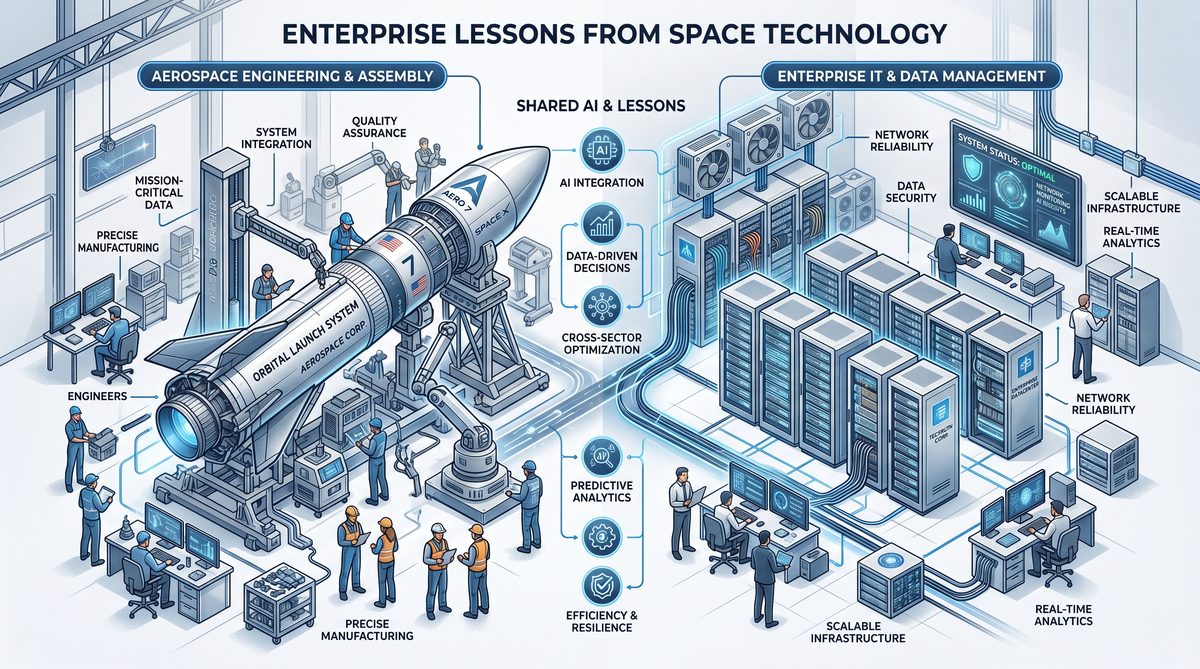
Underpinning SpaceX’s AI and autonomous system capabilities is their investment in massive compute clusters capable of performing exascale-class workloads. The S-1 filing describes SpaceX’s large-scale, in-house data centers optimized for AI training and inferencing specific to aerospace datasets.
4.1 Overview of SpaceX’s Compute Infrastructure
SpaceX’s compute clusters comprise thousands of GPUs and specialized AI accelerators connected by ultra-high-speed interconnect fabrics designed to support distributed training of large neural networks. These clusters are co-located closely with relevant data acquisition points, such as simulation facilities and launch control centers to minimize data latency.
Custom software frameworks orchestrate distributed training jobs, real-time inferencing, and data lifecycle management. This in-house approach bypasses reliance on third-party cloud providers for mission-critical AI compute.
4.2 Impact on Aerospace Engineering and Enterprise AI Strategies
- Speed of Innovation: Massive compute power enables rapid experimentation and scaling of AI models, fueling accelerated product development cycles.
- Real-Time Responsiveness: Close coupling of compute with operational workflows supports real-time decisioning during flights and simulations.
- Cost Efficiency: While capital intensive initially, owning compute clusters can reduce long-term expenses compared to cloud-based options and improve data governance.
- Custom Optimization: Control over hardware and software stack allows for customized tuning tailored to the specific needs of aerospace workloads.
For enterprise companies, this underscores the value of evaluating when to invest in on-premises high-performance compute versus hybrid or cloud strategies. Industries with sensitive data or latency constraints may find parallels in SpaceX’s rationale.
To deepen your understanding of compute cluster strategies for enterprise AI, explore our detailed guide here.
5. Lessons for Enterprise: Applying SpaceX’s AI Infrastructure Principles
The AI infrastructure insights revealed in SpaceX’s IPO filing translate into potent lessons for enterprises across sectors:
5.1 Embrace Vertical Integration Where Possible
Enterprises should assess which AI components—model development, deployment, monitoring, and hardware control—can be integrated end-to-end. Vertical integration reduces friction and increases system robustness, especially for mission-critical applications.
5.2 Develop Autonomous Systems with Strong Hardware-Software Coupling
Design AI systems that interfaces closely with operational hardware to ensure responsiveness and resiliency. This can enhance automation in robotics, manufacturing, and logistics.
5.3 Invest in Scalable, Purpose-Built Compute Infrastructure
While cloud solutions provide flexibility, consider hybrid or dedicated compute solutions that provide performance and control tailored to specific AI workloads. Evaluate long-term cost and strategic value.
5.4 Prioritize Data Integration and Real-Time Feedback Loops
SpaceX’s success is partly due to continuous learning from real-time telemetry and operational data. Enterprises should develop infrastructure to capture, process, and feed data back rapidly into AI pipelines to enable continuous improvement.
For companies embarking on AI integration journeys, the roadmap outlined in SpaceX’s filing serves as inspiration and blueprint. Further insights into implementing AI in complex enterprises are available in our article on enterprise AI transformation strategies.
Useful Links
- SpaceX Official Technology Page
- Advanced AI Models for Aerospace Applications – arXiv
- AI Infrastructure Overview by NVIDIA
- Vertical Integration Explained – IBM Cloud
- AI Technology and Innovation Insights – McKinsey
- Autonomous Systems in Aerospace Engineering – ScienceDirect
- What Enterprises Can Learn from SpaceX About AI and Automation – Forbes
- How to Design Massive AI Compute Clusters – Data Center Knowledge
Access 40,000+ AI Prompts for ChatGPT, Claude & Codex — Free!
Subscribe to get instant access to our complete Notion Prompt Library — the largest curated collection of prompts for ChatGPT, Claude, OpenAI Codex, and other leading AI models. Optimized for real-world workflows across coding, research, content creation, and business.
