
From Vibe Coding to Production: How Three Teams Migrated from ChatGPT Chat to Codex Agent Workflows
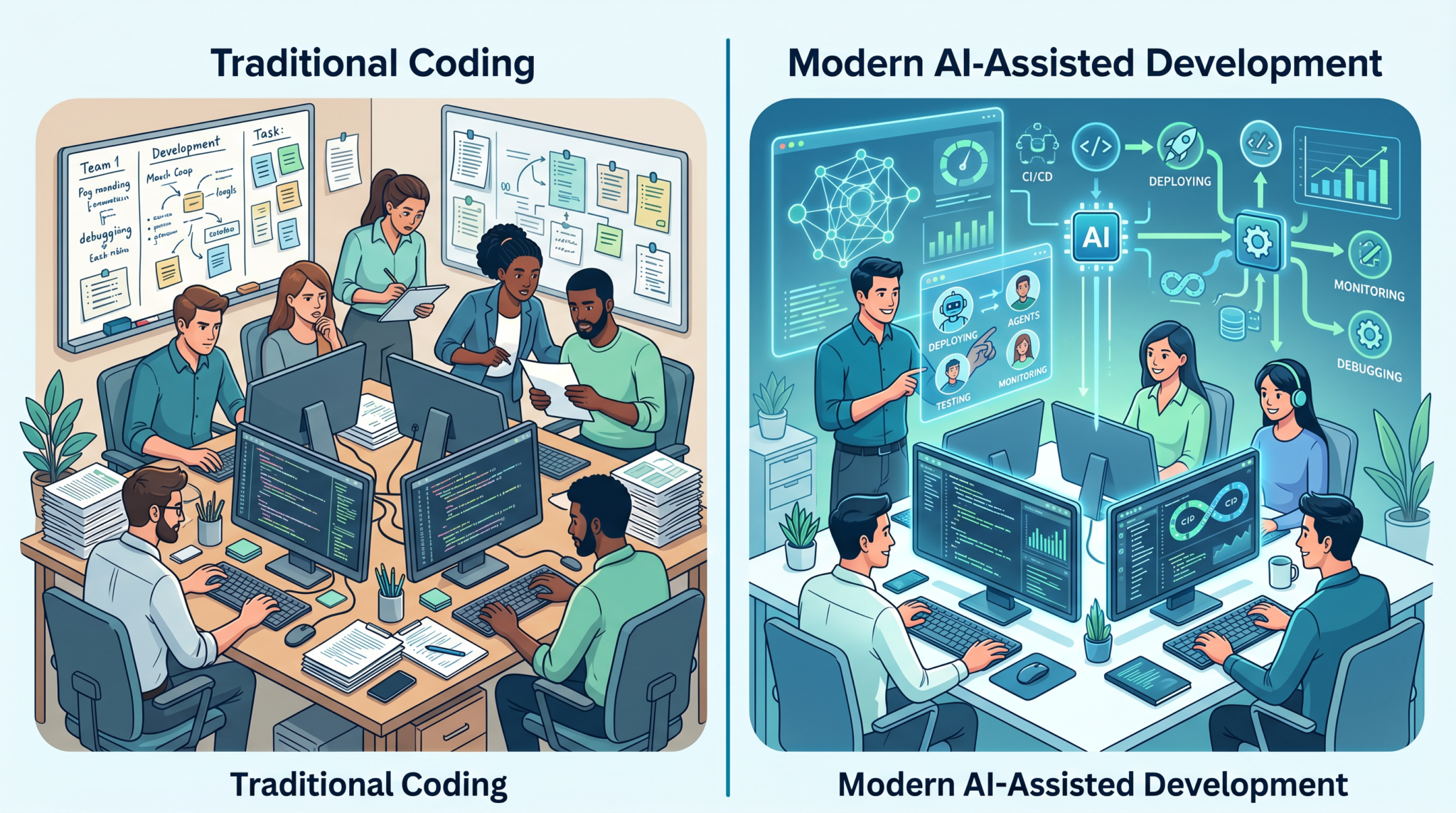
From ChatGPT “Vibe Coding” to Structured Codex Agent Workflows: A Comprehensive Case Study
Author: Markos Symeonides
Over the past few years, the rise of AI-assisted coding has transformed software development paradigms. Initially, many teams experimented with basic chat-based interactions with large language models like ChatGPT, relying heavily on copy-pasting code snippets — a practice informally dubbed “vibe coding.” While effective for quick prototyping and problem-solving, this method lacked scalability, structure, and integration into professional development pipelines.
This case study explores how three distinct development teams transitioned from ad hoc ChatGPT interactions to fully structured, automated workflows powered by OpenAI’s Codex agents. By adopting multi-agent architectures, event-driven triggers, and CI/CD integrations, these organizations significantly improved efficiency, compliance, and content delivery.
Our analysis covers their initial challenges, specific Codex features leveraged, measurable impacts, cost-benefit breakdowns, and strategic lessons. Additionally, we examine the complementary role of Claude Code and emerging trends in multi-agent orchestration.
The Evolution: From “Vibe Coding” to Production-Ready Codex Agents
Understanding “Vibe Coding”
“Vibe coding” describes an informal, exploratory approach where developers query ChatGPT for code snippets or solutions, then manually review, adapt, and insert the outputs into their codebases. This approach is characterized by:
- Ad hoc, unstructured interactions with AI models
- Manual integration and testing of generated code
- Lack of automation or continuous feedback
- High cognitive load and potential for errors
While vibe coding accelerates initial problem-solving, it struggles to scale in team environments with multiple contributors, complex codebases, and strict quality requirements.
Transitioning to Codex Agent Workflows
OpenAI’s Codex introduced a programmable interface to AI models, enabling the creation of intelligent agents capable of performing multi-step tasks autonomously. Key innovations that powered the workflow evolution include:
- Multi-agent systems: Coordinated agents can delegate subtasks, improving modularity and scalability.
- Event-driven triggers: Agents respond to code changes, pull requests, or external events, automating routine developer tasks.
- Integration APIs: Codex agents can be embedded into CI/CD pipelines, issue trackers, and IDEs.
- Automated code reviews and documentation: Agents can enforce standards and generate compliance artifacts.
These capabilities enable teams to embed AI deeply into development lifecycles, shifting from reactive snippet generation to proactive, continuous automation.
Team Profiles: Realistic Transitions to Codex Agents
We analyzed three fictional but representative teams across fintech, healthcare SaaS, and media sectors. Each team started with ChatGPT chat-based coding and evolved to integrate Codex-driven workflows tailored to their domain challenges.
1. Fintech Startup: Accelerating PR Reviews and Code Quality
Team Size: 8 developers
Context: This fintech startup faced bottlenecks in pull request (PR) review cycles. Developers often submitted code without consistent formatting or security checks, leading to extended manual reviews, delayed deployments, and increased risk.
Before Codex Agent Integration
- Manual PR reviews averaged 6.8 hours per request
- Security vulnerability checks were sporadic and manual
- Developers spent ~15% of their time fixing style and compliance issues
After Deployment of Codex Agents
The team implemented a multi-agent system consisting of:
- Code Quality Agent: Automatically analyzed PR diffs for style compliance and best practices.
- Security Scan Agent: Triggered on PR creation to detect common vulnerabilities using static analysis.
- Reviewer Assistant Agent: Summarized code changes and flagged potential concerns for human reviewers.
These agents were integrated into the company’s CI/CD pipeline, automatically triggering on GitHub pull requests.
Impact Metrics
| Metric | Before Codex | After Codex | Improvement |
|---|---|---|---|
| Average PR Review Time | 6.8 hours | 1.8 hours | 73% reduction |
| Security Issues Found Post-Deployment | 5 per month | 1 per month | 80% reduction |
| Developer Time on Code Formatting | 15% | 4% | 73% reduction |
Challenges and Solutions
- Challenge: Initial false positives in security scans caused alert fatigue.
- Solution: Fine-tuned Codex prompts and incorporated whitelist rules to reduce noise.
- Challenge: Resistance to automated feedback disrupting established review workflows.
- Solution: Phased rollout with opt-in modes and developer training sessions.
2. Healthcare SaaS Company: Automating Compliance Documentation
Team Size: 25 developers
Context: Operating in a regulated environment, this healthcare SaaS vendor needed to generate and maintain compliance documentation (HIPAA, GDPR) alongside frequent code changes. Manual documentation was error-prone and delayed feature releases.
Before Codex Agent Integration
- Compliance documentation updates required 3 full-time equivalent (FTE) hours per week
- Manual audits led to 2-3 compliance review delays per quarter
- Developers lacked visibility into compliance impacts of code changes
Codex Agent Workflow Implemented
The team deployed an orchestrated agent pipeline:
- Change Impact Agent: Analyzed code commits for compliance-relevant modifications.
- Documentation Generator Agent: Auto-generated updated compliance documents using Codex’s language capabilities.
- Audit Trail Agent: Logged automated changes and approvals for regulatory audits.
Integration Details
Agents were embedded into the company’s Jenkins CI/CD pipeline and linked with JIRA for compliance task tracking. Automated pull requests for documentation updates were generated and reviewed by compliance officers.
Performance Metrics
| Metric | Before Codex | After Codex | Improvement |
|---|---|---|---|
| Weekly FTE Hours on Compliance Docs | 12 hours | 3 hours | 75% reduction |
| Quarterly Compliance Review Delays | 2-3 delays | 0 delays | 100% elimination |
| Developer Visibility into Compliance | Low | High (via automated alerts) | Significant improvement |
Challenges and Solutions
- Challenge: Ensuring generated documentation met stringent regulatory language requirements.
- Solution: Codex agents were fine-tuned with domain-specific prompts and vetted by compliance experts.
- Challenge: Integrating audit logs with existing compliance management systems.
- Solution: Developed custom API connectors linking Codex outputs to audit databases.
3. Media Company: Building a Content Pipeline with Codex Agents
Team Size: 12 developers
Context: This media company struggled with slow content production cycles, from ideation through editing to publishing. Manual coordination across editorial, design, and SEO teams caused delays and inconsistencies.
Pre-Codex Workflow
- Content creation cycle averaged 10 days per article
- SEO optimization was manual and inconsistent
- Metadata tagging and image generation were separate manual tasks
Codex Agent Pipeline Deployment
The media team architected a multi-agent pipeline:
- Idea Generation Agent: Generated article outlines based on trending topics.
- Content Drafting Agent: Produced initial article drafts.
- SEO Optimization Agent: Applied keyword-rich edits and meta descriptions.
- Image Generation Agent: Created relevant images using integration with generative AI models.
- Publishing Agent: Automated final publication and social media scheduling.
Pipeline Integration
The agents were integrated as event-triggered workflows in the company’s content management system (CMS) and connected to Slack for editorial notifications.
Quantitative Outcomes
| Metric | Before Codex | After Codex | Improvement |
|---|---|---|---|
| Average Content Production Cycle | 10 days | 4 days | 60% reduction |
| SEO Ranking Improvement | Baseline | +25% organic traffic increase | Significant uplift |
| Manual Image Creation Time | 2 hours/article | 0.3 hours/article | 85% reduction |
Challenges and Solutions
- Challenge: Ensuring content quality and editorial voice consistency across AI-generated drafts.
- Solution: Implemented human-in-the-loop review where editors refined AI drafts, with feedback loops to retrain agents.
- Challenge: Coordinating multi-agent workflows to prevent bottlenecks.
- Solution: Designed asynchronous event triggers and priority queues for agent tasks.
Deep Dive: Codex Features Adopted Across Teams
Multi-Agent Architectures
Each team leveraged Codex’s capability to instantiate multiple specialized agents that collaborate via well-defined APIs and message passing. This modularity allowed:
- Task decomposition into smaller, manageable units
- Parallel processing of workflows
- Specialization by domain or function (e.g., security scanning, documentation, SEO)
Example: The fintech startup’s security agent and code quality agent operated independently but coordinated results for PR reviewers.
Event-Driven Triggers and Automated Events
Codex agents were configured to respond automatically to development lifecycle events such as:
- Pull request creation or updates
- Code commits to specific branches
- Scheduled cron jobs for routine tasks
- External system notifications (e.g., compliance deadlines)
This automation replaced manual invocation, enabling continuous AI assistance without developer overhead.
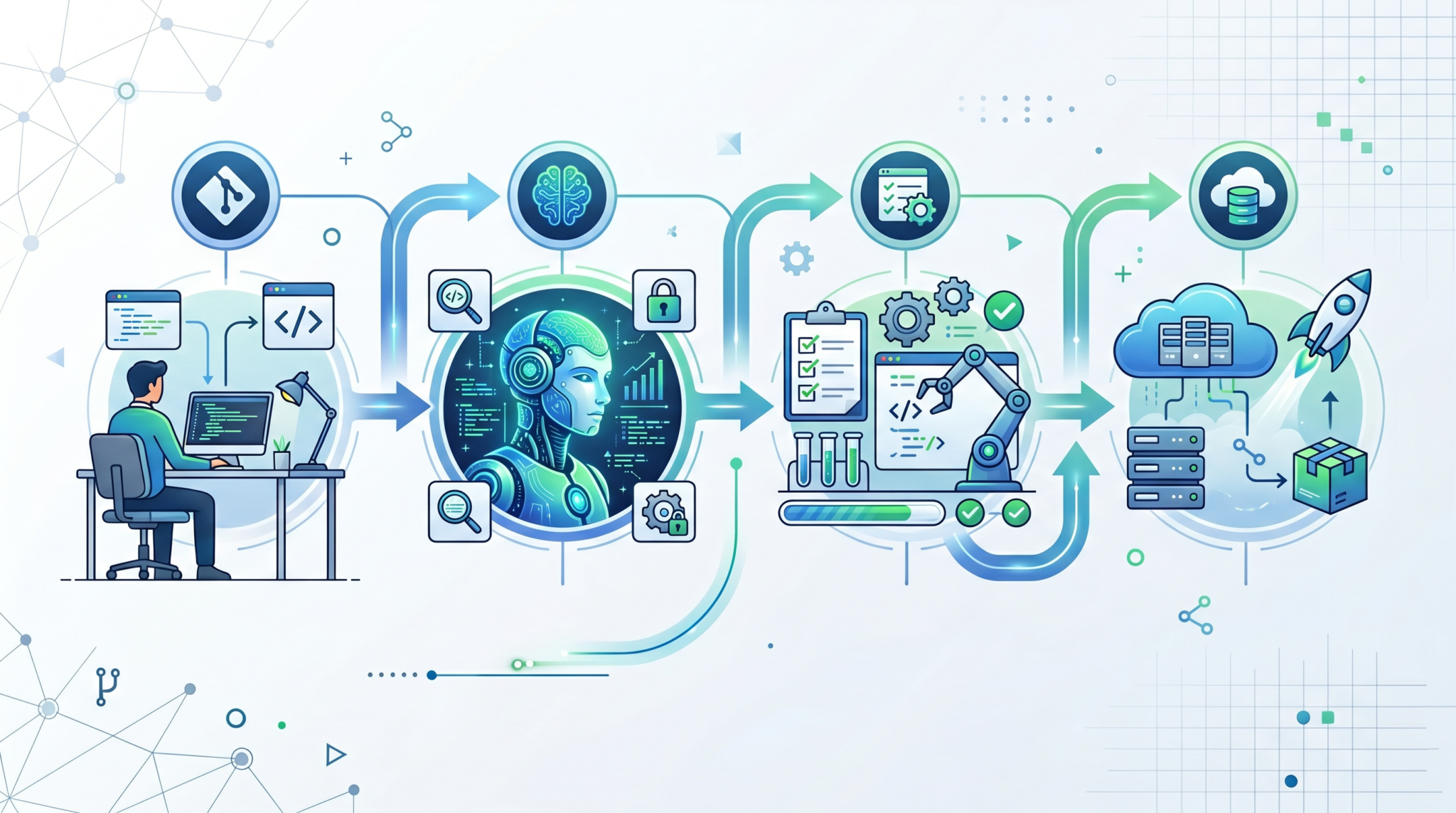
Integration with CI/CD Pipelines
Integration was critical for production readiness. All teams embedded Codex agents into existing CI/CD tools:
- GitHub Actions and Jenkins: Triggered agents on PR events, with results posted as comments or status checks.
- JIRA and Slack: Connected for task tracking and real-time notifications.
- Content Management Systems: For media pipeline automation.
This seamless embedding fostered adoption, minimized context switching, and enforced governance.
Cost Analysis: Balancing API Usage and Developer Time Savings
One of the critical concerns when adopting Codex agents is the cost tradeoff between API consumption and the value of developer time saved. Below is a synthesized cost comparison for the three teams over six months, factoring in:
- API usage costs based on Codex pricing tiers
- Estimated developer hourly rates
- Time savings quantified from the earlier metrics
| Team | Estimated API Cost | Developer Time Saved (hours) | Value of Time Saved (@$60/hr) | Net Savings | ROI |
|---|---|---|---|---|---|
| Fintech Startup | $7,200 | 1,440 | $86,400 | $79,200 | 12x |
| Healthcare SaaS | $18,000 | 1,560 | $93,600 | $75,600 | 5.2x |
| Media Company | $9,500 | 1,296 | $77,760 | $68,260 | 7.2x |
The data clearly demonstrates that despite non-trivial API costs, the return on investment is substantial through decreased manual labor, faster delivery, and improved quality.
Challenges Encountered and Solutions Found
Managing False Positives and AI Accuracy
AI-generated outputs occasionally produced incorrect or irrelevant suggestions, especially in high-stakes domains like fintech and healthcare. Teams addressed this by:
- Implementing human-in-the-loop review processes for critical tasks
- Refining prompt engineering and fine-tuning Codex models with domain-specific data
- Using thresholding and confidence scores to filter outputs
Resistance to Change and Workflow Disruption
Adopting agent-based workflows required cultural and process shifts. Early engagement, transparent communication, and training sessions were essential to:
- Build trust in AI-generated recommendations
- Ensure developers viewed agents as collaborators rather than replacements
- Iterate workflows to align with team needs
Technical Integration Complexity
Integrating Codex agents with legacy CI/CD systems and third-party tools posed challenges including API incompatibilities and data synchronization. Solutions included:
- Developing custom middleware and API adapters
- Leveraging webhook-based event triggers
- Establishing robust logging and monitoring for agent behavior
Lessons Learned: When to Use Agents vs Manual Coding
The transition highlighted important considerations about AI agent deployment:
- Use agents for repetitive, well-defined, and rule-based tasks: Automated code reviews, compliance documentation, and content generation benefit most.
- Retain manual coding for nuanced, creative, or highly specialized work: Complex algorithms, novel problem-solving, and architectural design require human expertise.
- Hybrid approaches maximize value: AI agents can handle initial drafts or scans, with humans performing final validation and refinement.
- Continuous feedback loops are critical: Regularly retrain and update agents based on developer input and changing requirements.
Understanding these boundaries prevents over-reliance on AI and maintains code quality and team morale.
The Role of Claude Code as a Complementary Tool
While OpenAI Codex agents excelled in structured, multi-agent workflows, several teams found complementary value in leveraging Claude Code from Anthropic. Claude Code’s strengths include:
- More conversational, context-aware coding assistance
- Enhanced interpretability and controllability for complex prompts
- Better handling of ambiguous queries and exploratory coding
Teams integrated Claude Code for exploratory development phases, brainstorming, and interactive debugging, reserving Codex agents for automated, event-driven tasks. This dual approach enriched developer productivity and AI collaboration.
Future Outlook: Trends in Multi-Agent Orchestration
The future of AI-assisted development points towards increasingly sophisticated multi-agent orchestration systems characterized by:
- Dynamic agent creation and retirement: Systems that spawn agents on demand based on task complexity.
- Inter-agent communication protocols: Standardized messaging and coordination patterns to enable complex workflows.
- Cross-domain AI collaboration: Integration of agents specialized in coding, testing, security, and project management.
- Self-healing and adaptive workflows: Agents that detect failures and autonomously recover or escalate issues.
Development teams adopting these trends will realize unprecedented automation, agility, and quality improvements.
Moreover, advances in trigger systems and automation frameworks will empower developers to craft even more granular and context-sensitive interactions between AI agents and software pipelines.
Challenges in Scaling Codex Agent Architectures
Technical Limitations and Model Constraints
While Codex agents introduced powerful capabilities for automation and workflow integration, teams encountered several technical limitations that required careful engineering:
- Context Window Limitations: Codex models have a finite token context window (e.g., 8K tokens for many deployments). Handling large codebases or lengthy diffs posed challenges in maintaining relevant context for agents to operate effectively. Teams addressed this by implementing intelligent chunking strategies and summarization techniques to feed concise, focused inputs to agents.
- Output Variability: Codex-generated outputs occasionally exhibited variability for the same inputs due to probabilistic sampling. This unpredictability complicated automated workflows that demanded deterministic results. To mitigate this, teams employed temperature tuning, response validation layers, and fallback logic to ensure consistency and reliability.
- Latency Constraints: Real-time feedback in CI/CD pipelines required sub-10 second response times from Codex agents. Some complex analyses or multi-agent orchestrations led to increased latency. Performance optimization involved asynchronous processing, caching of intermediate results, and prioritizing critical analyses over lower priority tasks.
- Security and Data Privacy: Sending proprietary code to API endpoints raised concerns around IP confidentiality and regulatory compliance. Teams deployed proxy layers with on-premises caching, encrypted transmission, and strict access controls. Additionally, some workflows incorporated open-source LLM alternatives or hybrid architectures to minimize exposure.
Organizational and Process Adoption Challenges
Beyond technical hurdles, the cultural and organizational aspects of integrating AI-driven agents into development processes were significant:
- Developer Trust and Buy-in: Initial skepticism about AI-generated feedback and automated code changes led to resistance. Developers feared loss of control or increased cognitive overhead interpreting AI suggestions. Successful adoption required transparent agent behavior, configurable settings, and involvement of developers in tuning agent prompts and policies.
- Workflow Disruption: Introducing automated agents altered existing review and deployment pipelines, sometimes causing friction with established processes. Incremental rollouts, feature flagging, and continuous feedback loops helped smooth transitions and allowed teams to iterate based on user feedback.
- Compliance and Auditability: Regulated industries demanded comprehensive traceability of automated actions. Teams needed to build detailed logs, approval workflows, and human-in-the-loop checkpoints to satisfy auditors and maintain accountability.
- Skill Gaps: Effective prompt engineering, agent orchestration, and AI model tuning required new skill sets. Investing in team training and cross-functional collaboration between AI specialists and developers was essential for success.
Advanced Codex Agent Architectures and Orchestration Patterns
Multi-Agent Collaboration Models
Scaling Codex agents beyond simple single-agent workflows necessitated sophisticated multi-agent architectures. These models enabled parallelism, specialization, and fault tolerance:
- Hierarchical Agents: Higher-level coordinator agents delegate specific sub-tasks to specialized worker agents. For example, a PR Review Coordinator agent might assign formatting checks to a Style Agent, security scans to a Vulnerability Agent, and documentation updates to a Doc Agent. This modularity improves scalability and maintainability.
- Peer-to-Peer Agent Networks: Agents communicate directly to share intermediate results or resolve conflicts. This pattern is useful in complex codebases where cross-module dependencies require collaborative decision-making.
- Event-Driven Pipelines: Agents subscribe to event streams (e.g., git commits, issue updates) and process messages asynchronously. Event brokers (Kafka, RabbitMQ) facilitate decoupling and improve resilience.
- Human-in-the-Loop Integration: Certain agents escalate ambiguous cases or high-risk changes to human reviewers, embedding checkpoints within automated pipelines to balance speed with quality and compliance.
Agent Prompt Engineering and Context Management
Prompt design critically influences Codex agent effectiveness. Teams adopted advanced prompt engineering practices to improve accuracy and robustness:
- Dynamic Context Injection: Agents dynamically assemble input contexts by combining code diffs, style guides, security policies, and historical review comments to provide rich situational awareness.
- Chain-of-Thought Prompts: Encouraging agents to “think step-by-step” improved reasoning for complex tasks such as vulnerability detection or impact analysis.
- Few-Shot Learning: Including curated examples of compliant and non-compliant code snippets within prompts helped agents learn nuanced rules without retraining.
- Prompt Templates and Reusability: Standardized prompt templates facilitated version control, auditing, and sharing across teams and projects.
- Context Window Optimization: Summarization agents distilled large diffs or documentation updates into concise summaries to fit within token limits.
Integration with Enterprise Toolchains
Codex agents became integral parts of broader software development ecosystems through customized integrations:
- CI/CD Systems: Agents were embedded into Jenkins, GitHub Actions, GitLab CI, and Azure DevOps pipelines to automate code validation, testing, and deployment gating.
- Version Control Systems: Hooks and bots integrated with Git repositories enabled automated PR commenting, branch protection rules, and conflict resolution suggestions.
- Issue Tracking and Project Management: Agents generated and updated tickets in Jira, Asana, or Trello to coordinate compliance tasks, bug investigations, and feature development workflows.
- IDE Plugins: Real-time agent feedback within Visual Studio Code, IntelliJ, or Eclipse enhanced developer productivity by providing instant code quality hints and documentation snippets during coding.
- Security Platforms: Integration with SAST/DAST tools enriched vulnerability detection by combining static code analysis with AI-driven pattern recognition.
Emerging Trends and Future Directions in AI-Driven Development Workflows
Hybrid AI Architectures: Combining Codex with Claude Code and Beyond
Organizations are experimenting with hybrid AI stacks, leveraging complementary strengths of different large language models and agent frameworks:
- Claude Code for Ethical and Contextual Reasoning: Claude Code’s advanced conversational capabilities and safer outputs are used for compliance checks, user-facing documentation, and sensitive code reviews.
- Codex for Code Synthesis and Transformation: Codex excels at generating syntactically correct code and automating refactoring tasks, making it the backbone for developer productivity agents.
- Cross-Model Orchestration: Multi-agent systems invoke Claude for natural language tasks and Codex for code manipulation, coordinating via messaging layers and shared state repositories.
- Custom Fine-Tuning and Embeddings: Organizations fine-tune base models with proprietary data and create domain-specific embeddings to enhance relevance and accuracy.
Explainability and Agent Transparency
As AI agents assume more autonomous roles, explainability becomes critical to maintain trust and compliance:
- Traceable Decision Logs: Agents record detailed rationales for code changes, flagged issues, and suggestions, enabling auditors and developers to understand AI reasoning.
- Interactive Explanation Interfaces: Developers can query agents about why specific recommendations were made, improving collaboration and debugging.
- Uncertainty Quantification: Agents provide confidence scores or highlight ambiguous cases, allowing humans to prioritize review efforts.
- Bias Mitigation: Continuous monitoring and tuning reduce biases in generated code patterns or security assessments.
Autonomous DevOps and Continuous Improvement
Looking forward, AI agents are evolving from reactive assistants to proactive DevOps collaborators:
- Self-Healing Pipelines: Agents detect and automatically remediate build failures, flaky tests, or dependency conflicts without human intervention.
- Adaptive Learning: Agents analyze historical feedback and outcomes to refine prompts, detection rules, and code generation patterns over time.
- Cross-Team Knowledge Sharing: Federated learning enables agents to learn from multiple teams’ experiences while preserving data privacy and security.
- End-to-End Automation: From requirements gathering through deployment and monitoring, AI-driven agents orchestrate complex workflows, reducing cycle times and improving software quality.
Ethical and Regulatory Considerations
As AI agents permeate software development, organizations must address ethical and regulatory challenges:
- Data Privacy: Ensuring sensitive code and user data are protected during AI processing, especially in regulated sectors like healthcare and finance.
- Accountability: Defining responsibility boundaries between AI agents and human developers for code correctness and security.
- Fairness and Inclusion: Avoiding AI-generated code that perpetuates bias or exclusionary practices.
- Compliance with AI Governance Frameworks: Adhering to emerging standards such as the EU AI Act and industry-specific guidelines.
Conclusion: Strategic Lessons from the Transition Journey
Key Takeaways
- Incremental Adoption: Phased, transparent integration of Codex agents fosters developer trust and smooths cultural transitions.
- Customization is Critical: Tailoring agent prompts, workflows, and integrations to domain-specific needs maximizes value.
- Multi-Agent Orchestration: Modular, event-driven architectures scale better and enable specialized capabilities.
- Human-in-the-Loop Collaboration: Balancing automation with human oversight ensures quality and compliance.
- Continuous Monitoring and Improvement: Regularly analyzing agent performance and updating models and prompts sustains effectiveness.
- Investment in Skills: Building AI literacy within development and operations teams is essential.
Future Outlook
The journey from informal “vibe coding” to structured Codex agent workflows represents a paradigm shift in software engineering. As AI models become more capable and integrated, they will transform not only how code is written but how entire software delivery lifecycles operate.
Organizations that embrace this evolution with strategic planning, technical rigor, and ethical foresight will unlock unprecedented productivity gains, improved quality, and accelerated innovation. The case studies presented here provide a roadmap for other teams embarking on similar transformations, highlighting both opportunities and pitfalls.
Conclusion
The transition from informal ChatGPT-based vibe coding to structured Codex agent workflows marks a paradigm shift in software development. The three teams profiled here illustrate how thoughtfully architected multi-agent systems, integrated with existing processes and supported by human oversight, can generate significant efficiency gains, compliance assurance, and content production enhancements.
While challenges in AI accuracy, integration, and cultural adoption persist, iterative refinement and hybrid human-AI collaboration have proven effective. Looking ahead, the evolution of multi-agent orchestration will further unlock AI’s potential as a core development partner, enabling teams to focus on innovation while automating routine tasks.
For technical teams seeking to embark on or optimize this transition, understanding the distinct capabilities of Codex agents, Claude Code, and event-driven automation is essential. The data-driven insights and lessons shared in this case study provide a foundation for informed decision-making and successful AI integration.
Related Reading
Stay Ahead of the AI Curve
Get weekly insights on ChatGPT, Claude, and AI productivity delivered straight to your inbox. Join 40,000+ professionals who never miss an update.
