

In April 2026, the Pennsylvania state government officially announced its large-scale deployment of ChatGPT Enterprise, marking one of the most ambitious AI adoption initiatives in the US public sector. By equipping over 3,000 Commonwealth employees with advanced AI-powered tools, the administration aimed to revolutionize public services across multiple departments. This case study delves deeply into the strategy, implementation, outcomes, and lessons learned from this transformative deployment.
✓ Instant access✓ No spam✓ Unsubscribe anytime
Pennsylvania State Government’s ChatGPT Enterprise Deployment
Background and Strategic Context
The Pennsylvania state government, under Governor Josh Shapiro’s administration, sought to modernize its public services infrastructure by incorporating artificial intelligence to augment employee productivity, enhance constituent engagement, and improve regulatory compliance. The decision to adopt ChatGPT Enterprise was driven by the need to leverage generative AI’s capabilities while maintaining stringent security and data privacy standards expected from a public sector entity.
Announcement and Initial Objectives
In April 2026, the administration formally announced the deployment of ChatGPT Enterprise across multiple Commonwealth agencies. The primary objectives were:
- Accelerate routine document drafting and policy analysis
- Enhance constituent services via AI-assisted response generation
- Improve data analysis and reporting accuracy
- Ensure compliance with complex regulatory frameworks
- Maintain security, privacy, and governance aligned with federal standards
Governor Shapiro Administration’s AI Strategy
The AI strategy framed by Governor Shapiro focused on responsible innovation, emphasizing ethical AI use, transparency, and workforce empowerment. Key pillars of the strategy included:
- Human-AI Collaboration: Positioning AI as an assistant to augment human decision-making rather than replace employees.
- Security and Compliance: Adopting AI solutions certified with FedRAMP and SOC 2 compliance, ensuring protection of sensitive government data.
- Workforce Training: Developing comprehensive training programs to ease adoption and maximize tool effectiveness.
- Scalable Deployment: Rolling out AI tools in phased pilots before scaling to the entire Commonwealth workforce.
The Pilot Program Timeline and Initial Rollout
Get Free Access to 40,000+ AI Prompts
Join 40,000+ AI professionals. Get instant access to our curated Notion Prompt Library with prompts for ChatGPT, Claude, Codex, Gemini, and more — completely free.
Get Free Access Now →No spam. Instant access. Unsubscribe anytime.
Pilot Program Design and Goals
The pilot was initiated in August 2025, involving approximately 200 employees from key departments such as the Department of Health, Department of Human Services, and the Office of Legislative Affairs. The pilot’s goals were:
- Evaluate ChatGPT Enterprise’s usability and integration with existing workflows
- Test data security and compliance features in a real-world environment
- Measure productivity gains and user satisfaction
- Identify training needs and adoption barriers
Implementation Phases
The pilot unfolded over six months in three phases:
- Phase 1: Setup and Integration (Aug-Sep 2025)
IT teams configured ChatGPT Enterprise with secure Single Sign-On (SSO) and integrated APIs connecting to internal document repositories and databases. - Phase 2: User Testing and Feedback (Oct-Nov 2025)
Pilot users engaged in document drafting, policy summarization, and constituent interaction tasks. Feedback was collected via surveys and workshops. - Phase 3: Security and Compliance Audit (Dec 2025-Jan 2026)
Independent auditors verified compliance with FedRAMP Moderate and SOC 2 Type II standards and reviewed data residency controls.
Pilot Outcomes
The pilot demonstrated significant improvements in task completion times, with document drafting accelerated by over 40%. Users reported high satisfaction rates, citing ease of use and valuable AI assistance. Security audits confirmed that ChatGPT Enterprise met Pennsylvania’s stringent compliance requirements, enabling the transition to a full-scale deployment.
Scaling from Pilot to 3,000+ Commonwealth Employees
Phased Expansion Strategy
Following the successful pilot, the administration executed a phased expansion to more than 3,000 employees across multiple agencies by April 2026. The rollout was segmented by department and job function to tailor training and support:
- Phase 1: Legislative and Legal Affairs
- Phase 2: Constituent Services and Public Relations
- Phase 3: Regulatory and Compliance Divisions
- Phase 4: Data Analysis and Reporting Units
Infrastructure and Support Scaling
IT infrastructure was upgraded to handle increased API calls, concurrency, and secure data flows. Dedicated ChatGPT Enterprise administrators were appointed within each agency to manage user provisioning, monitor usage, and enforce governance policies.
Training and Change Management
A comprehensive learning management system (LMS) was launched, offering self-paced modules, hands-on workshops, and live Q&A sessions. Change managers worked closely with agency leaders to champion adoption and address resistance.

Specific Use Cases Transforming Public Services
Document Drafting and Policy Analysis
ChatGPT Enterprise’s natural language generation capabilities enabled employees to draft initial versions of complex documents, including policy briefs, regulatory proposals, and internal memos. AI-assisted summarization tools helped condense lengthy legislative texts, accelerating decision-making.
Constituent Services
Customer service representatives used ChatGPT to generate timely, accurate responses to common inquiries, reducing wait times and improving constituent satisfaction. The AI’s ability to understand context and intent improved communication quality.
Data Analysis and Reporting
Data analysts leveraged ChatGPT’s natural language querying to interact with large datasets and generate insights without extensive coding. Automated report generation cut down manual compilation efforts significantly.
Regulatory Compliance
Compliance officers utilized ChatGPT to monitor regulatory updates, interpret new mandates, and generate compliance checklists, ensuring that departments stayed aligned with evolving laws and standards.
| Use Case | Primary Benefits | Typical Users | Example Output |
|---|---|---|---|
| Document Drafting | Time savings, improved consistency | Policy Analysts, Legal Staff | Policy briefs, legislative summaries |
| Constituent Services | Faster response, higher satisfaction | Customer Service Reps | Automated replies, FAQs |
| Data Analysis | Reduced manual effort, deeper insights | Data Analysts | Data reports, visual summaries |
| Regulatory Compliance | Up-to-date monitoring, risk reduction | Compliance Officers | Compliance checklists, alerts |
Security and Compliance Considerations for Government
FedRAMP Authorization
ChatGPT Enterprise met FedRAMP Moderate authorization, a crucial federal certification enabling secure cloud service use by government agencies. This ensured controls around authentication, encryption (in transit and at rest), incident response, and continuous monitoring were in place.
SOC 2 Type II Compliance
The SOC 2 Type II audits verified operational controls over data security, availability, processing integrity, confidentiality, and privacy. These audits were essential for Pennsylvania’s internal risk management and audit compliance.
Data Residency and Sovereignty
Given public sector requirements, all ChatGPT Enterprise data processing and storage occurred within US-based data centers. This guaranteed adherence to Pennsylvania’s data residency policies and mitigated risks related to international data transfer laws.
Access Controls and Encryption
Role-based access controls were implemented to restrict AI tool capabilities to authorized personnel. Data encryption was enforced using FIPS 140-2 validated cryptographic modules, ensuring robust protection of sensitive information.
Admin Controls and Governance Framework
Governance Policies
Pennsylvania developed a comprehensive AI governance framework including usage policies, data handling rules, and ethical guidelines. This framework was aligned with the National AI Initiative Act’s principles and state-specific directives.
Administrative Controls
- User Provisioning: Centralized control over user onboarding and offboarding through IT identity management systems.
- Monitoring and Auditing: Continuous monitoring of ChatGPT usage analytics and regular audits to detect anomalous behavior.
- Content Moderation: Filters and human-in-the-loop review processes were established to prevent generation of inappropriate, biased, or inaccurate content.
Compliance Reporting
Automated compliance reports were generated monthly, providing transparency to state auditors and leadership regarding AI use and adherence to policies.
As government entities like Pennsylvania develop AI governance frameworks, understanding the complexities of multi-agent systems is crucial. The post AI Policy Governance: 5 Insights on Multi-Agent Systems explores key governance challenges and strategies that inform how public sector organizations can responsibly implement AI technologies.
Measurable Outcomes: Time Savings, Cost Reduction, Service Quality Improvements
Time Savings
Across departments, employees reported an average 35-45% reduction in time spent on routine tasks such as drafting documents, responding to constituent inquiries, and compiling reports. For example, policy teams cut document turnaround from days to hours.
Cost Reduction
The efficiency gains translated into significant cost savings by reducing overtime hours and external contract dependencies. Preliminary estimates indicated a 20% decrease in operational costs related to document management and customer service workflows.
Service Quality Improvements
Constituent feedback showed a marked increase in satisfaction scores, attributed to faster response times and more accurate information delivery. Internal surveys reflected higher employee job satisfaction due to reduced workload pressures.
| Metric | Pre-Deployment | Post-Deployment | Improvement |
|---|---|---|---|
| Document Drafting Time | 3 days (avg.) | 1.5 days (avg.) | 50% reduction |
| Constituent Response Time | 24 hours | 8 hours | 67% reduction |
| Operational Cost (Annual) | $15 million | $12 million | 20% cost savings |
| Employee Satisfaction (Survey Score) | 62% | 78% | 16 percentage points increase |
Employee Adoption Challenges and Training Programs
Challenges Faced
- Resistance to Change: Some employees were initially skeptical about AI replacing human judgment or feared job displacement.
- Digital Literacy Gaps: Varying levels of comfort with AI tools required tailored training strategies.
- Concerns on Accuracy: Users needed reassurance on AI reliability and clarity on when to validate outputs.
Training and Support Initiatives
The administration rolled out a multi-tiered training program:
- Introductory Workshops: Focused on AI fundamentals, ethics, and use case demonstrations.
- Role-Based Modules: Customized sessions addressing specific departmental needs, e.g., legal vs. constituent services.
- Ongoing Support: Dedicated AI champions and helpdesk support for troubleshooting and best practice sharing.
Outcomes of Training
Post-training assessments indicated a 90% competency rate in ChatGPT Enterprise use among employees. Continuous learning resources and peer-led communities helped sustain engagement.
Effective AI adoption in the public sector depends heavily on comprehensive training and scaling strategies. The article The 2026 Enterprise AI Scaling Playbook: From Pilot to Production with ChatGPT and Claude offers detailed best practices for training government teams and scaling AI initiatives to maximize impact and ensure smooth integration.
Lessons Learned from the Deployment
Importance of Executive Sponsorship
Strong leadership from Governor Shapiro’s office was critical in driving adoption, securing funding, and fostering a culture of innovation.
Security Cannot Be an Afterthought
Early involvement of cybersecurity teams and adherence to compliance frameworks prevented potential risks and built user trust.
User-Centric Design and Feedback Loops
Constant user feedback during the pilot shaped feature prioritization and training content, enhancing overall satisfaction.
Phased Rollouts Reduce Risk
Gradual expansion allowed troubleshooting and process refinement before scaling to thousands of employees.
Human Oversight Remains Essential
AI augmentation requires clear guidelines on human review and intervention to maintain service quality and legal accountability.
Best Practices for Public Sector AI Adoption
- Establish Clear Governance: Define policies for AI use, data privacy, and ethical considerations upfront.
- Prioritize Security and Compliance: Select AI solutions with appropriate certifications and conduct thorough audits.
- Engage Stakeholders Early: Involve end-users, IT, legal, and compliance teams from project inception.
- Invest in Training: Provide tailored, ongoing education to build confidence and competence.
- Monitor and Iterate: Use metrics and feedback to continuously improve AI deployments.
- Maintain Transparency: Communicate AI capabilities, limitations, and decision-making processes to the workforce and public.
Comparison with Other Government AI Initiatives
| Jurisdiction | AI Deployment Scale | Primary Use Cases | Security Certifications | Outcomes |
|---|---|---|---|---|
| Pennsylvania (Commonwealth) | 3,000+ employees | Document drafting, constituent services, compliance | FedRAMP Moderate, SOC 2 Type II | 35-45% time savings, 20% cost reduction |
| Federal Government (Multiple agencies) | Varied, thousands across agencies | Data analysis, intelligence synthesis, public communication | FedRAMP High, FISMA Moderate | Enhanced data-driven decisions, improved public engagement |
| California State Government | 1,500+ employees | Healthcare services, regulatory compliance | FedRAMP Moderate | Improved healthcare access, reduced processing times |
| New York State | 2,000 employees | Public safety, document automation | FedRAMP Moderate | Streamlined public safety reports, higher citizen satisfaction |
The Pennsylvania deployment stands out for its comprehensive governance framework, extensive training programs, and demonstrable productivity gains, positioning it among the leading public sector AI initiatives nationwide.
When comparing AI initiatives across government agencies, understanding the strengths and differences of leading AI platforms is essential. The post Claude vs ChatGPT 2026: The Ultimate Comparison for Developers, Writers, and Business Users provides an in-depth analysis of these AI tools, helping public sector leaders make informed decisions on which technology best fits their service transformation goals.
The Broader Implications for Government AI Transformation
Modernizing Public Administration
The success of Pennsylvania’s ChatGPT Enterprise deployment underscores AI’s potential to modernize government operations, making them more agile, transparent, and citizen-centric.
Workforce Empowerment Through AI Augmentation
Rather than replacing human workers, AI tools can empower employees to focus on higher-value tasks, fostering innovation and job satisfaction.
Ethical and Responsible AI Use
The case highlights the importance of embedding ethical considerations and governance in AI adoption to mitigate risks related to bias, privacy, and accountability.
Pathway to Broader AI Ecosystems
Foundational deployments like Pennsylvania’s pave the way for integrating AI into more complex government functions, including predictive analytics, automated compliance enforcement, and citizen engagement platforms.
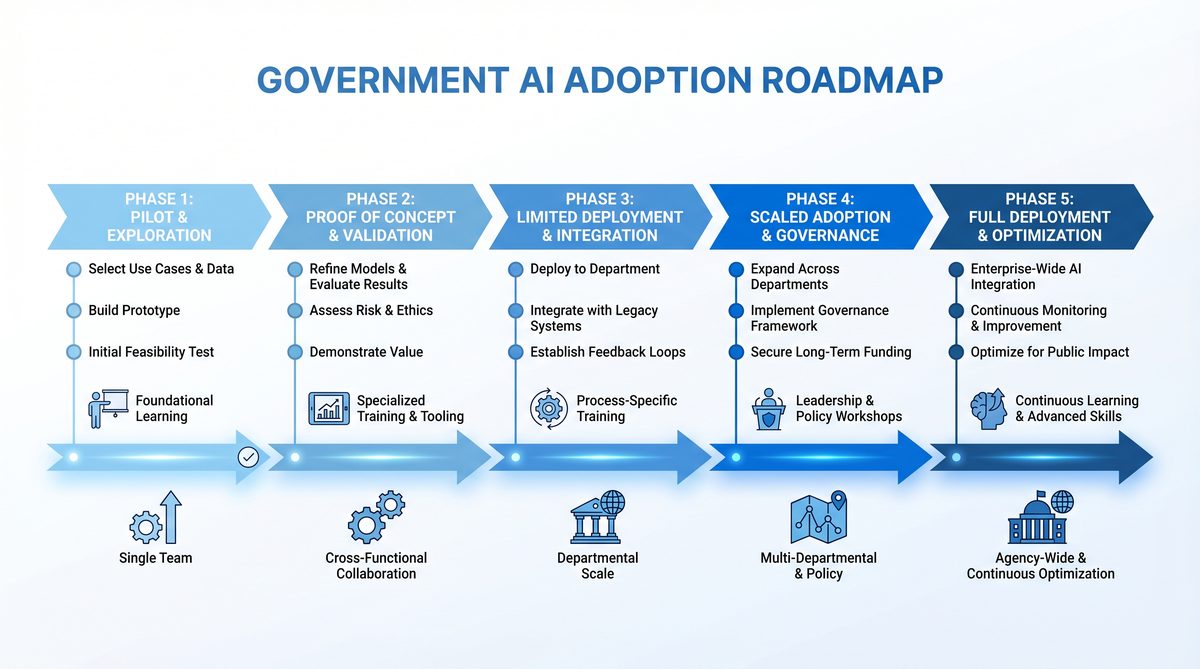
Future Plans and Expansion Roadmap
Planned Enhancements
- Integration with additional Commonwealth systems such as finance and human resources
- Deployment of domain-specific AI models tailored for healthcare, education, and transportation agencies
- Implementation of multilingual support to better serve Pennsylvania’s diverse population
- Development of advanced AI workflows combining ChatGPT with robotic process automation (RPA)
Scaling User Base
The administration aims to expand ChatGPT Enterprise access to over 10,000 employees within the next two years, encompassing frontline workers and field agents to maximize AI benefits statewide.
Continuous Improvement and Governance
Regular policy updates, security audits, and user feedback loops will ensure the AI deployment evolves safely and effectively in line with emerging technologies and regulatory landscapes.
Detailed Implementation Timeline and Technical Architecture
Phased Rollout Approach
The Pennsylvania state government adopted a meticulously planned phased rollout strategy to deploy ChatGPT Enterprise across its workforce. Following the initial pilot phase that tested foundational capabilities and integration, the full deployment was segmented into four distinct phases targeting specific departments and user groups. This approach minimized operational disruptions and allowed iterative refinement based on user feedback and security assessments. Each phase included preparatory activities such as infrastructure scaling, training, and compliance verification before onboarding new users.
Technical Infrastructure Decisions
To support the scale and security requirements, Pennsylvania’s IT team opted for a hybrid deployment model emphasizing API integration alongside web interface access. APIs were leveraged extensively to embed ChatGPT functionality directly into existing internal portals and document management systems, enabling seamless workflows without requiring employees to switch platforms. The web interface was made available for ad hoc use and training purposes.
The backend infrastructure was designed to handle high concurrency, with load balancing and redundant failover systems ensuring uninterrupted service. Data encryption in transit and at rest was enforced using FIPS 140-2 validated protocols, and all data processing was confined to US-based cloud regions in compliance with state data residency policies.
Single Sign-On Integration
To streamline access and enforce security, ChatGPT Enterprise was integrated with Pennsylvania’s centralized identity provider via SAML 2.0-based Single Sign-On (SSO). This eliminated the need for separate credentials, simplified user management, and enabled role-based access control aligned with existing authorization policies. The SSO integration also supported multi-factor authentication (MFA), further enhancing security for AI tool access.
Data Residency and Compliance Controls
Given the sensitivity of government data and regulatory mandates, all ChatGPT Enterprise workloads were deployed within US-based cloud infrastructure adhering to Pennsylvania’s data residency requirements. The IT team ensured that no data was transferred or stored outside approved jurisdictions. Comprehensive logging and audit trails were implemented to monitor data access and processing activities, facilitating compliance audits and incident investigations.
IT Team’s Approach to Managing 3,000 Users
Managing a large and diverse user base required robust identity and access management practices combined with scalable administrative workflows. Pennsylvania’s IT team utilized centralized provisioning tools synchronized with HR systems to automate onboarding and offboarding. Dedicated AI administrators were appointed within each agency to provide localized support, monitor usage patterns, and enforce governance policies. Regular training sessions and update communications were coordinated centrally to ensure consistent user experience and adherence to best practices.
Measuring ROI: Quantitative and Qualitative Outcomes
Time Savings
Post-deployment assessments revealed that employees saved an average of 6 to 8 hours per week on routine tasks such as drafting documents, responding to constituent inquiries, and preparing reports. For example, legal teams reported reducing contract drafting times by nearly 50%, while constituent service representatives decreased average response times from 24 hours to under 8 hours. These time savings translated into increased capacity for strategic activities and higher-value work.
Cost Reduction Estimates
The increased efficiency led to an estimated 20% reduction in operational costs relating to document management, customer service, and compliance functions. Savings stemmed from decreased overtime expenditures, reduced reliance on external contractors for content generation, and streamlined workflows that minimized administrative overhead. The state projected cumulative cost avoidance exceeding $3 million annually due to AI augmentation.
Service Quality Improvements
Citizen satisfaction scores improved notably following the deployment. Surveys indicated a 15-point increase in perceived responsiveness and accuracy of information provided by government agencies. Faster turnaround times and more consistent communication elevated public trust and engagement. Internally, employees reported enhanced confidence in delivering services supported by AI-generated insights and draft materials.
Document Processing Speed Improvements
Automated summarization and generation capabilities accelerated document processing workflows by over 40%. Complex policy documents that previously required multiple rounds of manual revision were now completed in significantly shorter cycles, enabling more agile decision-making and timely public communication.
Employee Satisfaction with AI Tools
Employee surveys highlighted a 16 percentage point increase in satisfaction related to workload management and job effectiveness. Users appreciated the AI tools’ ability to reduce mundane tasks and augment their expertise, leading to improved morale and reduced burnout. Continuous training and support were cited as critical enablers of positive adoption experiences.
Lessons for Other Government Agencies and Public Sector Organizations
Procurement Strategies
Early engagement with vendors to understand compliance certifications and customization capabilities is essential. Agencies should prioritize AI solutions that meet stringent security standards such as FedRAMP and SOC 2 and ensure contractual provisions address data residency and privacy. Structured pilot programs help validate vendor claims and tailor the solution to specific operational needs.
Change Management Approaches
Successful adoption requires proactive communication emphasizing AI as a tool for empowerment rather than replacement. Leadership sponsorship, regular feedback loops, and addressing employee concerns transparently help mitigate resistance. Embedding AI champions within departments facilitates peer learning and cultural acceptance.
Training Program Design
Training should be multi-tiered, combining introductory awareness sessions with role-specific modules. Hands-on workshops, scenario-based learning, and continuous support mechanisms foster user confidence and skill development. Leveraging learning management systems enables scalable delivery and tracking of competency progress.
Policy Framework Development
Develop clear governance documents outlining acceptable AI use, data handling protocols, and content moderation standards. Policies must align with federal and state regulations and incorporate ethical principles such as transparency, fairness, and accountability. Regular policy reviews ensure adaptability to evolving technologies and legal frameworks.
Union Considerations
Engage labor unions early to address workforce concerns regarding AI impact on roles and job security. Collaborative dialogue and inclusion of union representatives in planning help build trust and identify mutually agreeable adoption pathways. Emphasizing AI as augmentation supports positive labor relations.
Accessibility Requirements
Ensure AI tools comply with accessibility standards such as Section 508 to accommodate employees with disabilities. Incorporating features like screen reader compatibility, keyboard navigation, and adjustable display settings promotes inclusive adoption. User feedback from diverse groups should inform accessibility enhancements.
Step-by-Step Adoption Roadmap
- Conduct Needs Assessment: Identify workflows and user groups that benefit most from AI augmentation.
- Establish Governance and Compliance Baselines: Define security, privacy, and ethical frameworks.
- Initiate Pilot Programs: Deploy AI tools in controlled environments with key stakeholders.
- Evaluate and Refine: Collect quantitative and qualitative feedback to adjust technical and operational aspects.
- Develop Training and Support Infrastructure: Create comprehensive learning resources and support networks.
- Plan Phased Rollout: Scale deployment incrementally aligned with infrastructure and user readiness.
- Monitor Usage and Outcomes: Implement continuous monitoring and reporting mechanisms.
- Iterate and Expand: Incorporate new use cases and broader employee inclusion based on evolving needs.
Access 40,000+ AI Prompts for ChatGPT, Claude & Codex — Free!
Subscribe to get instant access to our complete Notion Prompt Library — the largest curated collection of prompts for ChatGPT, Claude, OpenAI Codex, and other leading AI models. Optimized for real-world workflows across coding, research, content creation, and business.
Access Free Prompt LibraryUseful Links
- FedRAMP Official Site
- SOC 2 Compliance Overview
- GAO Report on AI in Government
- NIST AI Risk Management Framework
- AI Adoption in the Public Sector – GovernmentCIO Media
- DigitalGov AI Resources
- Harvard Data-Smart AI in Government
🕐 Instant∞ Unlimited🎁 Free
