
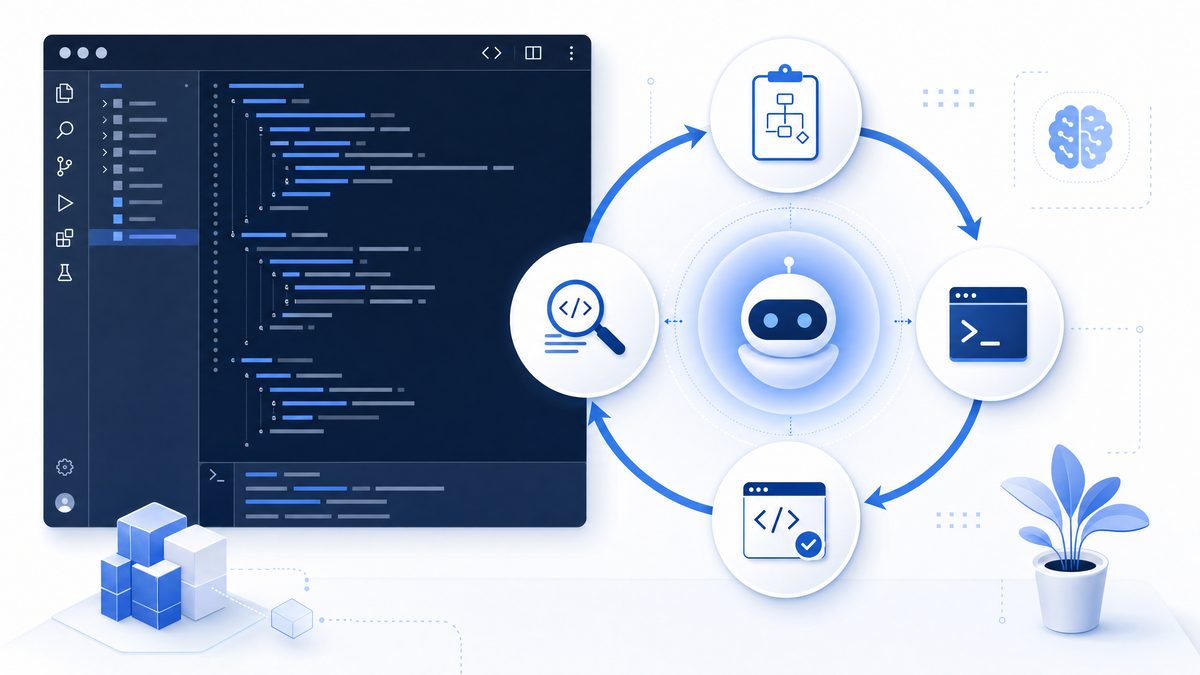
Introduction to OpenAI Codex’s /goal Feature and Why Prompting It Differently Matters
OpenAI Codex has revolutionized how developers interact with AI-powered code generation. With the release of version 0.128.0 on April 30, 2026, Codex introduced a groundbreaking feature called /goal. Unlike traditional prompt-response interactions, the /goal feature enables persistent, autonomous workflows driven by a continuous planning and execution loop known as the Ralph loop: plan → act → test → review → iterate. This paradigm shift allows Codex not only to generate isolated code snippets but also to manage entire feature development cycles, debugging sessions, or deployment pipelines over extended periods without user intervention.
Mastering advanced prompting techniques for /goal is critical because it operates on fundamentally different principles than standard Codex prompts. Crafting effective /goal prompts unlocks the full power of autonomous, multi-step workflows that can persist across sessions, intelligently manage context, and integrate seamlessly with your app-server APIs for runtime continuation and interactive TUI (Text User Interface) controls.
This comprehensive guide offers an in-depth exploration of advanced prompting strategies tailored specifically to /goal. It ensures that developers and teams maximize productivity and reliability when automating complex software engineering tasks using OpenAI Codex.
Understanding How /goal Differs from Standard Codex Prompts
Traditional Codex prompts typically involve one-shot or short interactions where a user submits a request and immediately receives a direct code output. These prompts function within a hard boundary: once the response is generated, the context resets for the next prompt. In contrast, /goal prompts initiate a persistent workflow with a soft stop boundary. Instead of abruptly ending, the model pauses only at logical checkpoints, allowing continuation or adjustment.
This design enables the AI to:
- Maintain state and context over long-running sessions: Codex remembers prior steps, decisions, and outputs.
- Execute the Ralph loop autonomously: Continuously cycle through planning, acting, testing, reviewing, and iterating without user input.
- Interact with runtime environments and external tools via integrated APIs: Perform live code execution, debugging, deployment, or other side effects.
- Pause and resume workflows on demand: Flexibly manage complex tasks without losing progress.
- Produce summaries to self-correct and adapt: Generate interim reports to refine direction.
For example, one user reported leaving a /goal workflow running unattended for 18 hours, during which Codex autonomously shipped 14 out of 18 planned features. This level of autonomy and persistence is unattainable with standard prompt-response interactions and requires expertly crafted prompts to harness effectively.
Anatomy of an Effective /goal Prompt
Crafting a high-impact /goal prompt requires understanding the essential components that guide Codex through its autonomous workflow. Each prompt should contain the following elements:
- Clear Goal Definition: A concise, unambiguous statement of the objective. For example, “Develop a full-stack user authentication module with OAuth2 support.”
- Scope and Constraints: Specify boundaries such as supported languages, frameworks, performance targets, or security requirements.
- Initial Planning Instructions: Direct the AI to outline a plan before acting, e.g., “Begin by drafting a feature list and architectural components.”
- Testing and Validation Criteria: Define how the AI should test or verify its outputs, including unit tests, integration tests, or code style guidelines.
- Review and Iteration Guidelines: Encourage the AI to self-assess and improve its work continually.
- Runtime Environment Details: Include contextual information about APIs, toolchains, deployment environments, or cloud infrastructure.
Below is an abstracted example prompt structure for /goal:
/goal
Objective: [Clear Goal Definition]
Constraints: [Scope and Constraints]
Plan: Outline the steps to achieve the objective.
Test: Specify test cases and validation strategies.
Review: Assess code quality and compliance.
Iterate: Refine based on testing and review outcomes.
Runtime: Provide environment and API details.
Embedding these components empowers Codex’s /goal feature to manage complex, multi-step workflows autonomously with minimal supervision and maximum reliability.
20 Advanced /goal Prompts for Diverse Software Engineering Tasks
The following section presents 20 expertly crafted /goal prompts organized by category. Each prompt includes the full prompt text, an explanation of why it is effective, and the expected behavior of the /goal workflow.
Full-Stack Feature Development
1. User Authentication with OAuth2 and JWT
/goal
Objective: Implement a secure user authentication system supporting OAuth2 login flows and JWT-based session management.
Constraints: Use Node.js with Express on the backend, React on the frontend, and MongoDB as the database.
Plan: Break down into frontend login components, backend OAuth2 integration, JWT issuance, and token validation middleware.
Test: Include unit tests for API endpoints and frontend components; integration tests for OAuth2 workflows.
Review: Ensure adherence to OWASP security best practices and code style consistency.
Iterate: Fix any security lapses or bugs discovered during testing.
Runtime: Backend runs on Node 18, MongoDB 6.0; frontend uses React 18.
Why It Works: This prompt is specific in technology stack and security requirements, guiding Codex to plan modular components and integrate comprehensive testing. The explicit constraints and runtime details contextualize execution perfectly.
Expected Behavior: Codex autonomously outlines the architecture, generates backend and frontend code, writes tests, performs reviews, and iterates until the authentication system is robust and secure.
2. Real-Time Chat Application with WebSockets
/goal
Objective: Build a real-time chat application supporting multiple chat rooms and user presence indicators.
Constraints: Use Python with FastAPI backend, Vue.js frontend, and Redis for pub/sub messaging.
Plan: Design backend WebSocket endpoints, frontend chat UI, and Redis integration for message brokering.
Test: Automate functional tests for message delivery, user presence, and reconnection logic.
Review: Validate scalability considerations and code modularity.
Iterate: Optimize message throughput and reduce latency.
Runtime: Backend deployed on AWS Lambda with Redis managed service.
Why It Works: The prompt clearly defines the real-time aspect and technology stack, enabling Codex to plan asynchronous event handling and state management with precision.
Expected Behavior: The AI plans and implements WebSocket-enabled chat features, integrates Redis for pub/sub messaging, tests message flow, and optimizes based on performance metrics.
3. E-commerce Product Recommendation Engine
/goal
Objective: Develop a product recommendation engine using collaborative filtering for an e-commerce platform.
Constraints: Implement in Python using scikit-learn; integrate with existing Django backend and PostgreSQL database.
Plan: Extract user-item interaction data, train collaborative filtering models, expose recommendations via REST API.
Test: Validate recommendation accuracy with precision and recall metrics; include API endpoint tests.
Review: Ensure model explainability and code documentation.
Iterate: Improve model performance with hyperparameter tuning.
Runtime: Backend runs on Python 3.11 with PostgreSQL 14.
Why It Works: The prompt explicitly outlines machine learning tasks and integration points, guiding Codex to plan data extraction, model training, and API delivery sequentially.
Expected Behavior: Codex autonomously extracts data, trains models, builds API endpoints, tests recommendations, and iteratively improves model accuracy.
4. Mobile App Feature: Offline Data Sync
/goal
Objective: Implement offline data synchronization for a React Native mobile app with a Firebase backend.
Constraints: Support bidirectional sync, conflict resolution, and minimize data usage.
Plan: Create local storage mechanisms, sync engine with conflict resolution logic, and UI feedback components.
Test: Automate sync conflict scenarios and data consistency checks across devices.
Review: Optimize for battery consumption and network efficiency.
Iterate: Refine conflict handling and UI responsiveness.
Runtime: React Native 0.71, Firebase Firestore.
Why It Works: This prompt highlights critical mobile sync challenges with specific constraints, prompting Codex to focus on offline-first architecture and efficient data reconciliation.
Expected Behavior: Codex plans and builds local caching, sync logic, conflict resolution, tests synchronization scenarios, and optimizes performance.
Bug Fixing and Debugging
5. Fix Memory Leak in Background Worker
/goal
Objective: Identify and fix a memory leak in a Python Celery background worker processing image uploads.
Constraints: Use Python 3.10, Celery 5.2, and Redis broker; maintain current task queue architecture.
Plan: Analyze task lifecycle, locate resource mismanagement, patch code to release memory properly.
Test: Monitor memory usage under load; verify no task failures or regressions.
Review: Confirm fixes do not degrade performance or reliability.
Iterate: Optimize resource cleanup further if needed.
Runtime: Worker runs on Kubernetes pod with limited memory.
Why It Works: The prompt directs Codex to focus on memory profiling and task lifecycle analysis, critical for locating leaks in asynchronous workers.
Expected Behavior: Codex investigates task code, identifies reference cycles or unclosed resources, applies fixes, validates memory usage, and iterates to ensure stability.
6. Debug Intermittent API Timeout
/goal
Objective: Debug and resolve intermittent timeout errors in a REST API built with Go and Gin framework.
Constraints: Maintain current architecture; timeouts occur sporadically under moderate load.
Plan: Trace request handling, identify bottlenecks or deadlocks, and apply fixes.
Test: Simulate load with stress tests; monitor response times and error rates.
Review: Ensure fixes maintain low latency and throughput.
Iterate: Deploy improvements and monitor for recurrence.
Runtime: API deployed on Google Cloud Run.
Why It Works: By specifying intermittent timeouts and environment, this prompt encourages Codex to trace concurrency issues or resource exhaustion.
Expected Behavior: Codex inspects code paths, identifies slow operations or blocking calls, patches code, verifies improvements under simulated load.
7. Resolve UI Rendering Glitch on Safari
/goal
Objective: Fix a CSS rendering glitch on Safari browsers affecting button alignment in a Vue.js SPA.
Constraints: Support Safari versions 15 and above; maintain cross-browser compatibility.
Plan: Identify CSS rules causing misalignment; test fixes in Safari and other major browsers.
Test: Visual regression tests using automated screenshot comparison.
Review: Ensure no regressions in layout or functionality.
Iterate: Refine CSS and component structure for robustness.
Runtime: SPA built with Vue 3, Tailwind CSS.
Why It Works: The prompt targets a specific browser issue and instructs Codex to use cross-browser testing, which helps isolate and confirm fixes.
Expected Behavior: Codex diagnoses CSS incompatibilities, proposes fixes, generates visual tests, and iterates to achieve consistent UI rendering.
Testing and QA Automation
8. Automate End-to-End Tests for Checkout Flow
/goal
Objective: Create automated end-to-end tests for the checkout process in a React/Node.js e-commerce app.
Constraints: Use Cypress testing framework; cover cart validation, payment processing, and order confirmation.
Plan: Map user interactions, implement test scripts simulating realistic scenarios.
Test: Validate test coverage and reliability; integrate with CI pipeline.
Review: Analyze flaky tests and optimize for stability.
Iterate: Extend tests to cover edge cases and error handling.
Runtime: CI runs on GitHub Actions with Node 18.
Why It Works: This prompt specifies test framework and critical checkout components, pushing Codex to simulate realistic user flows and robustness.
Expected Behavior: Codex develops Cypress scripts that automate the checkout flow, integrates tests into CI, and refines them to eliminate flakiness.
9. Generate Load Testing Scripts for API
/goal
Objective: Develop load testing scripts for a REST API to validate scalability and response under peak traffic.
Constraints: Use k6.io framework; simulate 1000 concurrent users over 10 minutes.
Plan: Identify critical API endpoints, script realistic user behavior patterns.
Test: Execute load tests; collect performance metrics and error rates.
Review: Analyze bottlenecks and suggest improvements.
Iterate: Refine scripts based on test outcomes.
Runtime: API runs on AWS ECS Fargate.
Why It Works: This prompt guides Codex to focus on performance testing with specified concurrency and duration, crucial for realistic stress simulations.
Expected Behavior: Codex creates k6 scripts that simulate complex user behavior, executes the tests, gathers data, and iterates to improve test fidelity.
10. Implement Visual Regression Testing
/goal
Objective: Set up visual regression testing for a Next.js web application to catch UI regressions during development.
Constraints: Use Percy or Chromatic; integrate with existing Jest test suites.
Plan: Configure visual snapshot capturing for key pages and components.
Test: Automate baseline image generation and compare against new builds.
Review: Establish alerting for visual discrepancies.
Iterate: Refine test coverage and thresholds for false positives.
Runtime: Tests run on Vercel CI environment.
Why It Works: The prompt instructs Codex to integrate visual testing tools with existing frameworks, streamlining UI quality assurance.
Expected Behavior: Codex configures visual testing pipelines, generates snapshot tests, monitors diffs, and iterates to reduce noise.
Refactoring and Optimization
11. Refactor Monolithic Service into Microservices
/goal
Objective: Decompose a monolithic Node.js backend into microservices with well-defined APIs.
Constraints: Preserve existing functionality; use Docker containers orchestrated by Kubernetes.
Plan: Identify service boundaries, define API contracts, migrate code incrementally.
Test: Validate inter-service communication and data consistency.
Review: Assess service scalability and fault tolerance.
Iterate: Optimize deployment and monitoring configurations.
Runtime: Kubernetes cluster on Azure AKS.
Why It Works: This prompt sets a complex architectural goal with constraints and testing needs, guiding Codex to plan incremental migration carefully.
Expected Behavior: Codex maps service boundaries, extracts microservices, generates deployment manifests, tests integration, and refines orchestration.
12. Optimize SQL Queries for Performance
/goal
Objective: Analyze and optimize slow-running SQL queries in a PostgreSQL 14 database.
Constraints: Maintain data correctness and compatibility with existing ORM (Prisma).
Plan: Profile queries using EXPLAIN ANALYZE, suggest indexing, rewrite queries as needed.
Test: Benchmark query execution times pre- and post-optimization.
Review: Ensure ORM compatibility and maintainability.
Iterate: Repeat profiling after changes to confirm improvements.
Runtime: Backend uses Node.js 18 with Prisma ORM.
Why It Works: The prompt demands detailed profiling and ORM-aware optimization, a nuanced task requiring iterative refinement.
Expected Behavior: Codex profiles queries, proposes indexing and rewrites, benchmarks results, and iterates to maximize performance.
13. Refactor Legacy Python Code to Async/Await
/goal
Objective: Convert synchronous I/O-bound legacy Python 3.7 codebase to use async/await for improved concurrency.
Constraints: Preserve existing APIs; use asyncio and aiohttp libraries.
Plan: Identify blocking calls, refactor functions to async coroutines, update call hierarchy.
Test: Ensure functional parity with synchronous version through unit and integration tests.
Review: Audit for concurrency bugs and performance gains.
Iterate: Optimize event loop usage and error handling.
Runtime: Backend runs on Ubuntu 22.04 servers.
Why It Works: The prompt explicitly targets concurrency improvements with constraints, prompting Codex to plan a systematic async migration.
Expected Behavior: Codex refactors code, updates call stacks, generates tests, audits concurrency correctness, and iterates for performance.
Documentation and Code Review
14. Generate Comprehensive API Documentation
/goal
Objective: Produce detailed API documentation for a RESTful service built with Flask.
Constraints: Use OpenAPI 3.0 specification; include request/response schemas and example payloads.
Plan: Extract endpoint details, write descriptive summaries, generate Swagger UI-compatible docs.
Test: Validate documentation accuracy against implemented endpoints.
Review: Ensure clarity, completeness, and consistency.
Iterate: Update docs to reflect API changes.
Runtime: Flask 2.2 application deployed on Heroku.
Why It Works: The prompt precisely specifies documentation standards and validation criteria, enabling Codex to generate and verify API docs effectively.
Expected Behavior: Codex extracts endpoint metadata, generates OpenAPI specs, produces Swagger UI docs, validates correctness, and iterates with changes.
15. Perform Automated Code Review for Security Vulnerabilities
/goal
Objective: Review the application repository for security vulnerabilities and produce verified fixes.
Constraints: Preserve public APIs and existing behavior; do not expose secrets or modify production data.
Plan: Map trust boundaries, inspect authentication and authorization paths, scan dependencies, and prioritize findings by impact.
Test: Add focused tests that reproduce each confirmed weakness and verify the corresponding fix.
Review: Reject speculative findings, document residual risks, and keep changes narrowly scoped.
Iterate: Re-run analysis and tests after each patch until confirmed findings are resolved or explicitly deferred.
Runtime: Work in an isolated development environment with read-only access to security logs.
Why It Works: The prompt requires evidence before remediation and separates confirmed vulnerabilities from speculative warnings. It also protects public interfaces and production data.
Expected Behavior: Codex traces sensitive data flows, validates findings, creates targeted patches and regression tests, and records any risk that requires human review.
16. Review a Large Pull Request for Correctness and Maintainability
/goal
Objective: Review a large pull request for correctness, maintainability, and unintended behavior changes.
Constraints: Do not rewrite unrelated code; distinguish blocking defects from optional improvements.
Plan: Summarize the change, map modified code paths, inspect call sites, and identify affected tests and documentation.
Test: Run the relevant test suites and add focused tests for uncovered failure paths when appropriate.
Review: Cite exact files and code paths for every finding; remove comments that cannot be supported by evidence.
Iterate: Reassess findings after fixes and produce a concise final review summary.
Runtime: Use an isolated checkout of the pull request with the repository's existing development tools.
Why It Works: This structure prevents an unfocused style review. It asks Codex to understand the change first, verify findings, and separate required fixes from suggestions.
Expected Behavior: Codex builds a change map, examines affected behavior, runs relevant checks, proposes bounded fixes, and returns an evidence-based review.
Deployment, Migration, and Operations
17. Execute a Backward-Compatible Database Schema Migration
/goal
Objective: Implement a backward-compatible database schema migration for a live application.
Constraints: Existing application instances must continue working during rollout; avoid destructive changes until rollback is no longer required.
Plan: Inspect current schemas and access patterns, design staged migration steps, and define rollback checkpoints.
Test: Validate old and new application paths against representative data; test migration restart and rollback behavior.
Review: Check locking risk, data integrity, deployment ordering, and observability.
Iterate: Resolve failed checks and rehearse the migration in an isolated environment before preparing production instructions.
Runtime: Use a sanitized database snapshot and the repository's existing migration tooling.
Why It Works: The prompt treats schema work as a staged compatibility problem rather than a single edit. Explicit rollback and restart checks reduce the chance of an irreversible migration.
Expected Behavior: Codex studies data access patterns, creates phased schema and application changes, tests mixed-version behavior, and documents rollout and rollback steps.
18. Repair a Failing Continuous Integration Pipeline
/goal
Objective: Diagnose and repair a continuous integration pipeline that fails inconsistently across jobs.
Constraints: Preserve required quality gates; do not hide failures with unconditional retries or skipped tests.
Plan: Group failures by signature, reproduce them locally where possible, and inspect job dependencies, caches, and environment assumptions.
Test: Run affected jobs repeatedly in an isolated environment and verify that intentional test failures still stop the pipeline.
Review: Confirm that fixes address root causes and do not weaken validation.
Iterate: Remove sources of nondeterminism, rerun the pipeline, and document any unresolved infrastructure dependency.
Runtime: Use repository configuration, redacted job logs, and non-production credentials supplied through the existing secret mechanism.
Why It Works: The prompt prohibits cosmetic fixes that merely suppress failures. It directs Codex to classify evidence, reproduce defects, and preserve the pipeline’s enforcement role.
Expected Behavior: Codex correlates job failures, identifies unstable assumptions, patches scripts or tests, validates failure detection, and records remaining external dependencies.
19. Diagnose and Contain a Production Incident
/goal
Objective: Diagnose a production incident, propose the safest containment action, and prepare a verified permanent fix.
Constraints: Begin with read-only investigation; require explicit approval before any production mutation or rollback.
Plan: Establish a timeline, correlate logs and recent changes, rank hypotheses, and define evidence that confirms or rejects each one.
Test: Reproduce the leading hypothesis in an isolated environment and verify containment and recovery procedures.
Review: Evaluate blast radius, rollback safety, data integrity, and monitoring gaps.
Iterate: Update the hypothesis from new evidence, prepare the smallest safe patch, and draft a post-incident report.
Runtime: Use redacted telemetry, deployment history, and a production-like staging environment.
Why It Works: The prompt creates a clear boundary between investigation and production changes. Hypothesis ranking and explicit approval checkpoints keep the workflow evidence-driven.
Expected Behavior: Codex assembles an incident timeline, tests likely causes, recommends a bounded containment step, validates a permanent fix, and documents follow-up work.
20. Coordinate a Repository-Wide Dependency Upgrade
/goal
Objective: Upgrade a shared dependency across a multi-package repository while preserving application behavior.
Constraints: Follow the repository's compatibility requirements; do not combine unrelated refactoring with the upgrade.
Plan: Inventory direct and transitive usage, identify breaking changes from available local documentation, and order package updates by dependency relationships.
Test: Run package-level tests, integration tests, build checks, and representative application workflows after each migration stage.
Review: Inspect lockfile changes, deprecated usage, configuration changes, and rollback feasibility.
Iterate: Fix failures in small batches, checkpoint completed packages, and produce a final compatibility report.
Runtime: Use an isolated branch, the repository's package manager, and cached or approved dependency sources.
Why It Works: This prompt divides a broad upgrade into traceable stages and prevents unrelated cleanup from obscuring failures. Checkpoints make the task easier to resume after a pause.
Expected Behavior: Codex maps dependency usage, updates packages in a controlled order, runs validation after each stage, and summarizes compatibility issues and remaining manual decisions.
Conclusion
Effective /goal prompts define the objective, boundaries, evidence, approval points, and completion criteria before autonomous work begins. For long sessions, small checkpoints and reproducible tests give the workflow a reliable basis for deciding what to do next.
Treat every prompt as an execution contract. State what Codex may change, what it must verify, when it must stop, and what final artifacts it should produce.
