
Mastering Multi-Agent Orchestration with Claude: A Comprehensive Prompting Guide
Mastering Multi-Agent Orchestration with Claude: A Comprehensive Prompting Guide
On May 6, 2026, Anthropic publicly launched the beta version of its revolutionary multi-agent orchestration system during the Code with Claude event, marking a transformative milestone in AI collaboration technology. Unlike conventional single-agent AI models, Claude’s multi-agent orchestration harnesses an interconnected network of specialized AI agents working in harmony—under a lead agent’s guidance—to tackle complex tasks with unparalleled efficiency and precision.
This comprehensive guide dives deeply into Claude’s multi-agent orchestration architecture, effective prompting strategies, best practices, and actionable examples for developers, AI practitioners, and enthusiasts. By mastering these techniques, you’ll be empowered to design sophisticated AI workflows that significantly outperform traditional single-agent approaches.
Understanding Claude’s Multi-Agent Orchestration Architecture
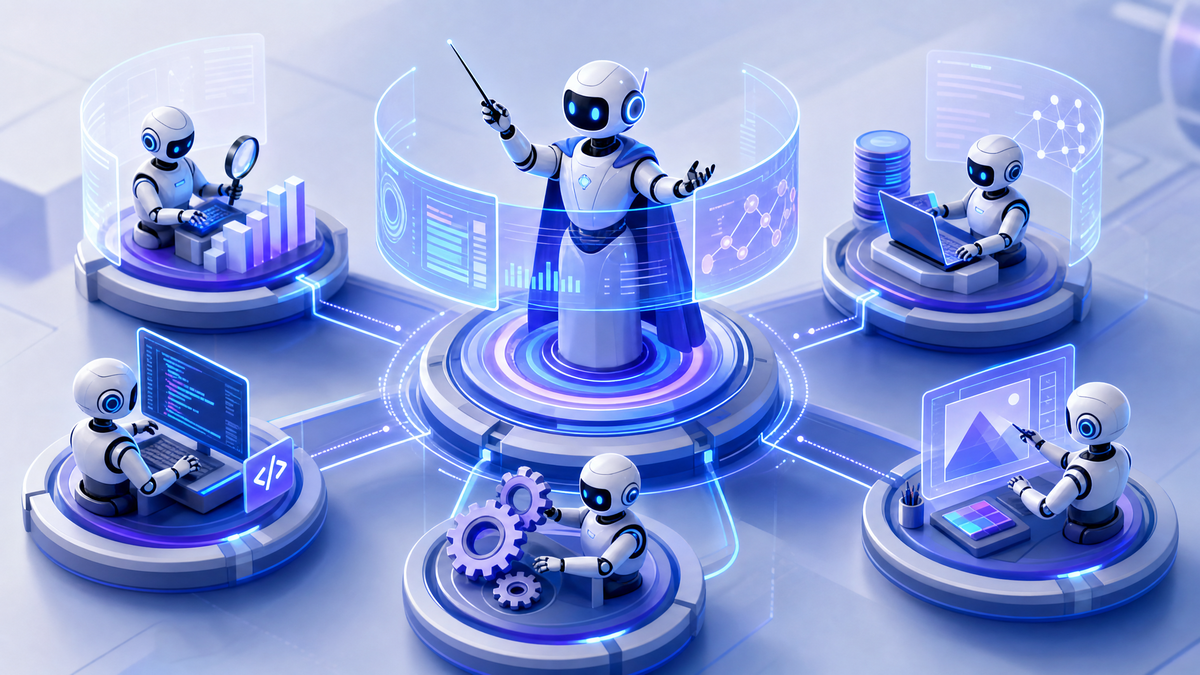
The genius behind Claude’s orchestration lies in its modular design: a hierarchical network where a lead agent orchestrates the workflow and delegates subtasks to multiple specialist sub-agents. Each sub-agent operates with its unique configuration, making the entire system scalable and adaptable across myriad applications.
Lead Agent: Task Decomposition and Delegation
The lead agent serves as the central coordinator, meticulously breaking down complex, multifaceted goals into well-defined subtasks — a process known as task decomposition. This decomposition enables concurrent processing, reduces cognitive overload on individual agents, and greatly enhances manageability.
For example, given the challenge of summarizing a voluminous technical report, the lead agent might deconstruct the mission into subtasks such as:
- Identify and extract core technical concepts
- Generate detailed technical summaries for each section
- Highlight potential action points and recommendations
Each subtask is then assigned to a dedicated sub-agent specializing in the respective domain.
Specialist Sub-Agents: Independent Context Windows and Expertise
Specialist sub-agents operate autonomously in isolated context windows. This compartmentalization ensures no context bleed among agents, preserving output clarity and reducing bias accumulation — a common issue in monolithic AI systems.
Each sub-agent is equipped with:
- A tailored system prompt set to optimize behavior for its target domain
- Access to specialized tools or APIs as necessary
- Dedicated memory/context windows to handle inputs and outputs effectively
For instance, a data extraction sub-agent employs high-precision prompts emphasizing accuracy and comprehensiveness, while a creative rewriting sub-agent prioritizes natural language fluency and stylistic polish.
Traceability and Transparency with Claude Console
Integral to the architecture is the comprehensive logging system available via the Claude Console. Every agent interaction, delegated task, and output is recorded, providing invaluable traceability and auditability. This feature streamlines troubleshooting, quality assurance, and iterative enhancement of prompting strategies.
Such transparency establishes trust and accountability — essential qualities in enterprise-grade AI orchestration systems.
Combining modular specialization, parallelism, and traceability, Claude’s multi-agent orchestration empowers next-generation AI workflows that are both robust and versatile.
[IMAGE_PLACEHOLDER_SECTION_1]Orchestration Patterns and Optimal Use Cases
Anthropic’s multi-agent framework supports multiple orchestration patterns aligning with diverse problem domains and workflow requirements. Familiarity with these paradigms lets you craft AI systems tailored for speed, accuracy, or creativity.
Common Orchestration Patterns
- Parallel Investigation: Simultaneous exploration of different problem facets by multiple sub-agents. Ideal for tasks requiring broad data collection or perspective diversity, such as market analysis or multi-angle literature reviews.
- Single-Threaded Synthesis: Following independent investigations, a lead or synthesis agent consolidates inputs into a cohesive output. Ensures consistency and quality while handling complex integration.
- Advisor-Executor Model: Inspired by GitHub Copilot’s architecture, this pattern delegates task execution to a streamlined executor agent, overseen by a larger, mentor-like advisor agent guiding decisions and problem-solving.
- Iterative Refinement: Agents collaborate cyclically to progressively enhance outputs, with feedback loops orchestrated by the lead agent—perfect for creative content generation or error-sensitive workflows.
Real-World Application: Netflix’s Software Pipeline Optimization
Netflix employs Claude’s multi-agent orchestration to concurrently analyze hundreds of software build logs, pinpointing issues rapidly and automating troubleshooting steps. This use case exemplifies multi-agent parallelism reducing latency and scaling complex engineering workflows at enterprise level.
[IMAGE_PLACEHOLDER_SECTION_2]Comprehensive Prompt Templates and Configuration Examples
Effective prompting is the cornerstone of harnessing Claude’s multi-agent orchestration. Below we provide detailed templates for lead agents and sub-agents, complete with explanations to tailor them for specific domains.
Lead Agent Task Decomposition Prompt Template
You are the Lead Agent responsible for decomposing complex tasks into logical subtasks. Your goal is to:
- Analyze the main task.
- Break it down into well-defined, actionable subtasks.
- Provide clear descriptions for each subtask.

Main Task: {Insert main task here}

Please list subtasks in numbered format:

1. Subtask name: Description
2. Subtask name: Description
...
Use Case: This prompt guides the lead agent to produce a detailed task breakdown, facilitating efficient delegation and specialization downstream.
Specialist Sub-Agent System Prompt Template
You are a specialized {domain} expert AI agent. Your objective is to:
- Execute the assigned subtask accurately.
- Use your domain expertise to optimize output quality.
- Adhere to the following guidelines: {Insert subtask-specific instructions}.

Input data: {Insert subtask input}

Please provide a detailed and precise output based on the above.
Example Domains: Data Extraction Specialist, Creative Rewriter, Technical Summarizer, Code Reviewer
Advanced Configuration Snippets
In addition to prompting, configuring system parameters—such as temperature, context window size, and tool access—is vital for optimal sub-agent performance. Below is a sample JSON configuration for a creative rewriting sub-agent:
{
  "model": "claude-v2-creative",
  "temperature": 0.85,
  "max_tokens": 1500,
  "system_prompt": "Prioritize fluency, engagement, and vivid language while preserving original meaning.",
  "tool_access": ["thesaurus-api", "grammar-checker"]
}
Best Practices for Effective Multi-Agent Prompting and Orchestration
- Maintain Clear and Specific Subtask Definitions: Ambiguity in subtasks leads to inconsistent outputs. Use well-structured prompts that explicitly state success criteria.
- Optimize Context Windows: Tailor context window sizes and truncate irrelevant data to balance depth and efficiency.
- Leverage Parallelism Judiciously: While parallel processing accelerates tasks, too many agents can complicate synchronization. Find the right balance based on task complexity.
- Use Traceability for Iterative Refinement: Constantly review Claude Console logs to identify bottlenecks or misaligned agent behaviors and adjust prompts accordingly.
- Implement Fallback and Error Handling Agents: Design agents that monitor outputs and flag inconsistencies or failures for human review or automated retries.
Frequently Asked Questions (FAQs)
What is multi-agent orchestration in Claude?
It is a system where a lead agent coordinates multiple specialized sub-agents, each handling specific subtasks independently but collaboratively, enabling complex problem-solving via modular AI workflows.
How does Claude prevent context bleed between agents?
By assigning each sub-agent its own isolated context window and system prompt, Claude ensures that information and biases do not spill over between agents.
Can I customize the tools accessible to each sub-agent?
Yes. You can configure each sub-agent with specific APIs, knowledge bases, or utilities tailored to its subtask.
Is Claude Console available for all users?
Claude Console is provided to users during the beta phase and offers crucial transparency into agent interactions. Availability may vary as the system evolves.
What applications benefit most from multi-agent orchestration?
Use cases include large-scale data analysis, software development workflows, creative content generation, technical summarization, investigative research, and any complex tasks requiring modular AI collaboration.
Useful Links
- Anthropic Official Website
- Anthropic Blog: Multi-Agent Orchestration Overview
- ChatGPT AI Hub: Usage Guide for Claude Multi-Agent
- Claude Agent Sample Repositories
- Case Study: Netflix’s Multi-Agent Pipeline
Conclusion
Claude’s multi-agent orchestration ushers in a new era of AI collaboration, where modularity, specialization, and seamless parallelism enable tackling tasks previously infeasible for single-agent models. By mastering the art of intelligent prompting, strategic orchestration pattern selection, and system configuration detailed in this guide, developers and AI enthusiasts can build adaptable and powerful AI workflows.
Whether designing a multi-faceted research assistant, a complex data processing pipeline, or creative content teams, leveraging Claude’s architecture unlocks possibilities limited only by your imagination and ingenuity.
Start experimenting today—your journey to mastering multi-agent AI orchestration has just begun!
“`